Reduce Sedimentation in Slurries Using Thixotropic Agents
MAR 17, 20269 MIN READ
Generate Your Research Report Instantly with AI Agent
Patsnap Eureka helps you evaluate technical feasibility & market potential.
Thixotropic Agent Technology Background and Objectives
Sedimentation in slurries represents a persistent challenge across numerous industrial applications, from mining and mineral processing to pharmaceuticals and construction materials. The phenomenon occurs when solid particles suspended in liquid media settle under gravitational forces, leading to phase separation that compromises product quality, operational efficiency, and equipment performance. Traditional approaches to combat sedimentation have relied primarily on mechanical agitation, particle size modification, and conventional thickening agents, yet these methods often prove inadequate for complex industrial requirements.
The emergence of thixotropic agents as a solution to sedimentation control represents a significant advancement in rheological engineering. Thixotropy, characterized by time-dependent viscosity changes under applied stress, offers unique advantages for slurry stabilization. These materials exhibit high viscosity at rest, effectively suspending particles and preventing settlement, while demonstrating reduced viscosity under shear stress, facilitating pumping, mixing, and processing operations.
The historical development of thixotropic technology traces back to early colloidal chemistry research in the 1920s, with initial applications focused on paints and coatings. However, the systematic application to industrial slurry systems gained momentum only in recent decades as understanding of molecular mechanisms and material science advanced. Key breakthroughs included the development of synthetic clay minerals, modified silicates, and polymer-based thixotropic systems specifically designed for harsh industrial environments.
Current technological objectives center on developing next-generation thixotropic agents that demonstrate enhanced performance characteristics while addressing environmental and economic constraints. Primary goals include achieving superior suspension efficiency with minimal additive concentrations, maintaining long-term stability under varying temperature and pH conditions, and ensuring compatibility with diverse chemical environments. Additionally, there is growing emphasis on developing bio-based and environmentally sustainable thixotropic formulations.
The strategic importance of advancing thixotropic agent technology extends beyond immediate sedimentation control benefits. Enhanced slurry stability directly impacts operational costs through reduced maintenance requirements, improved product consistency, and decreased material waste. Furthermore, effective sedimentation control enables the processing of higher solid content slurries, potentially revolutionizing efficiency standards across multiple industries while supporting sustainability initiatives through reduced water consumption and waste generation.
The emergence of thixotropic agents as a solution to sedimentation control represents a significant advancement in rheological engineering. Thixotropy, characterized by time-dependent viscosity changes under applied stress, offers unique advantages for slurry stabilization. These materials exhibit high viscosity at rest, effectively suspending particles and preventing settlement, while demonstrating reduced viscosity under shear stress, facilitating pumping, mixing, and processing operations.
The historical development of thixotropic technology traces back to early colloidal chemistry research in the 1920s, with initial applications focused on paints and coatings. However, the systematic application to industrial slurry systems gained momentum only in recent decades as understanding of molecular mechanisms and material science advanced. Key breakthroughs included the development of synthetic clay minerals, modified silicates, and polymer-based thixotropic systems specifically designed for harsh industrial environments.
Current technological objectives center on developing next-generation thixotropic agents that demonstrate enhanced performance characteristics while addressing environmental and economic constraints. Primary goals include achieving superior suspension efficiency with minimal additive concentrations, maintaining long-term stability under varying temperature and pH conditions, and ensuring compatibility with diverse chemical environments. Additionally, there is growing emphasis on developing bio-based and environmentally sustainable thixotropic formulations.
The strategic importance of advancing thixotropic agent technology extends beyond immediate sedimentation control benefits. Enhanced slurry stability directly impacts operational costs through reduced maintenance requirements, improved product consistency, and decreased material waste. Furthermore, effective sedimentation control enables the processing of higher solid content slurries, potentially revolutionizing efficiency standards across multiple industries while supporting sustainability initiatives through reduced water consumption and waste generation.
Market Demand for Anti-Sedimentation Slurry Solutions
The global slurry management market faces increasing pressure to address sedimentation challenges across multiple industrial sectors. Mining operations, particularly in mineral processing and tailings management, represent the largest demand segment for anti-sedimentation solutions. These operations require consistent slurry transport and storage without particle settling, which can lead to pipeline blockages, equipment damage, and operational inefficiencies.
Chemical processing industries demonstrate substantial demand for thixotropic agent solutions, especially in paint and coating manufacturing, pharmaceutical production, and specialty chemical synthesis. These sectors require precise control over slurry rheological properties to maintain product quality and manufacturing consistency. The growing emphasis on automated production processes has intensified the need for reliable anti-sedimentation technologies.
Construction and building materials sectors show expanding market requirements for slurry stabilization solutions. Concrete admixtures, ceramic manufacturing, and advanced building material production increasingly rely on thixotropic agents to prevent segregation during mixing, transport, and application phases. The global infrastructure development boom has accelerated demand in this segment.
Oil and gas industries present significant market opportunities for anti-sedimentation technologies, particularly in drilling mud formulations and enhanced oil recovery operations. These applications require specialized thixotropic agents capable of maintaining suspension properties under extreme temperature and pressure conditions while ensuring environmental compliance.
The pharmaceutical and cosmetics industries represent high-value market segments demanding sophisticated anti-sedimentation solutions. These sectors require biocompatible thixotropic agents that maintain product stability without compromising safety or efficacy standards. Regulatory compliance requirements drive demand for advanced formulation technologies.
Environmental remediation projects create emerging market demand for eco-friendly anti-sedimentation solutions. Soil stabilization, waste treatment, and contaminated site cleanup operations require thixotropic agents that provide effective sedimentation control while meeting stringent environmental regulations.
Market growth drivers include increasing industrial automation, stricter quality control requirements, and growing awareness of operational efficiency benefits. The trend toward sustainable manufacturing practices has created demand for bio-based and environmentally friendly thixotropic agents, opening new market opportunities for innovative solutions.
Chemical processing industries demonstrate substantial demand for thixotropic agent solutions, especially in paint and coating manufacturing, pharmaceutical production, and specialty chemical synthesis. These sectors require precise control over slurry rheological properties to maintain product quality and manufacturing consistency. The growing emphasis on automated production processes has intensified the need for reliable anti-sedimentation technologies.
Construction and building materials sectors show expanding market requirements for slurry stabilization solutions. Concrete admixtures, ceramic manufacturing, and advanced building material production increasingly rely on thixotropic agents to prevent segregation during mixing, transport, and application phases. The global infrastructure development boom has accelerated demand in this segment.
Oil and gas industries present significant market opportunities for anti-sedimentation technologies, particularly in drilling mud formulations and enhanced oil recovery operations. These applications require specialized thixotropic agents capable of maintaining suspension properties under extreme temperature and pressure conditions while ensuring environmental compliance.
The pharmaceutical and cosmetics industries represent high-value market segments demanding sophisticated anti-sedimentation solutions. These sectors require biocompatible thixotropic agents that maintain product stability without compromising safety or efficacy standards. Regulatory compliance requirements drive demand for advanced formulation technologies.
Environmental remediation projects create emerging market demand for eco-friendly anti-sedimentation solutions. Soil stabilization, waste treatment, and contaminated site cleanup operations require thixotropic agents that provide effective sedimentation control while meeting stringent environmental regulations.
Market growth drivers include increasing industrial automation, stricter quality control requirements, and growing awareness of operational efficiency benefits. The trend toward sustainable manufacturing practices has created demand for bio-based and environmentally friendly thixotropic agents, opening new market opportunities for innovative solutions.
Current Challenges in Slurry Sedimentation Control
Slurry sedimentation control faces significant technical challenges that limit industrial efficiency and operational reliability across multiple sectors. The fundamental issue stems from the inherent tendency of suspended particles to settle under gravitational forces, leading to phase separation that compromises product quality and process continuity. Traditional approaches often fail to provide sustainable solutions due to the complex interplay between particle characteristics, fluid dynamics, and chemical interactions.
Particle size distribution heterogeneity presents a primary obstacle in maintaining stable slurry systems. When particles of varying sizes coexist, differential settling rates create stratified layers that are difficult to re-suspend uniformly. This phenomenon is particularly problematic in mining operations, ceramic manufacturing, and pharmaceutical formulations where consistent particle distribution is critical for product performance.
Rheological instability under varying shear conditions poses another significant challenge. Many slurries exhibit unpredictable flow behavior when subjected to different mixing intensities or transport velocities. The lack of shear-dependent viscosity control often results in either excessive energy consumption during high-shear mixing or rapid sedimentation during low-shear storage periods.
Temperature sensitivity of existing anti-sedimentation additives creates operational constraints in industrial environments. Conventional stabilizers frequently lose effectiveness under temperature fluctuations, leading to inconsistent performance and requiring costly climate control systems. This limitation is especially pronounced in outdoor storage facilities and seasonal manufacturing operations.
Chemical compatibility issues between traditional stabilizers and slurry components often restrict formulation flexibility. Many existing solutions introduce unwanted side reactions or interfere with downstream processing steps, forcing manufacturers to compromise between sedimentation control and final product quality.
Scale-up difficulties from laboratory to industrial applications represent a persistent challenge. Solutions that demonstrate effectiveness in small-scale testing frequently fail to maintain performance in large-volume systems due to inadequate mixing efficiency, residence time variations, and equipment limitations. This scalability gap significantly increases development costs and implementation risks for new sedimentation control strategies.
Particle size distribution heterogeneity presents a primary obstacle in maintaining stable slurry systems. When particles of varying sizes coexist, differential settling rates create stratified layers that are difficult to re-suspend uniformly. This phenomenon is particularly problematic in mining operations, ceramic manufacturing, and pharmaceutical formulations where consistent particle distribution is critical for product performance.
Rheological instability under varying shear conditions poses another significant challenge. Many slurries exhibit unpredictable flow behavior when subjected to different mixing intensities or transport velocities. The lack of shear-dependent viscosity control often results in either excessive energy consumption during high-shear mixing or rapid sedimentation during low-shear storage periods.
Temperature sensitivity of existing anti-sedimentation additives creates operational constraints in industrial environments. Conventional stabilizers frequently lose effectiveness under temperature fluctuations, leading to inconsistent performance and requiring costly climate control systems. This limitation is especially pronounced in outdoor storage facilities and seasonal manufacturing operations.
Chemical compatibility issues between traditional stabilizers and slurry components often restrict formulation flexibility. Many existing solutions introduce unwanted side reactions or interfere with downstream processing steps, forcing manufacturers to compromise between sedimentation control and final product quality.
Scale-up difficulties from laboratory to industrial applications represent a persistent challenge. Solutions that demonstrate effectiveness in small-scale testing frequently fail to maintain performance in large-volume systems due to inadequate mixing efficiency, residence time variations, and equipment limitations. This scalability gap significantly increases development costs and implementation risks for new sedimentation control strategies.
Current Thixotropic Solutions for Slurry Stability
01 Use of organophilic clay minerals as thixotropic agents
Organophilic clay minerals, such as modified bentonite and hectorite, can be incorporated into formulations to provide thixotropic properties and prevent sedimentation. These materials create a three-dimensional network structure that suspends particles and prevents settling during storage. The clay minerals are typically treated with quaternary ammonium compounds to enhance their compatibility with organic systems and improve their anti-settling performance.- Use of organophilic clay as thixotropic agent: Organophilic clays, such as modified bentonite and hectorite, are commonly used as thixotropic agents to prevent sedimentation in various formulations. These clays are treated with organic compounds to enhance their compatibility with organic systems. They provide excellent suspension properties by forming a gel-like structure that prevents settling of solid particles. The organophilic nature allows them to be dispersed effectively in non-aqueous systems, making them ideal for paints, coatings, and drilling fluids.
- Incorporation of fumed silica for anti-sedimentation: Fumed silica is an effective thixotropic agent that prevents sedimentation by creating a three-dimensional network structure in liquid formulations. This material has a high surface area and forms hydrogen bonds with surrounding molecules, resulting in increased viscosity at rest and reduced viscosity under shear stress. The use of fumed silica is particularly beneficial in preventing settling of pigments and other solid components in coatings, adhesives, and sealants.
- Application of polymeric thickeners: Polymeric thickeners, including associative thickeners and cellulose derivatives, are utilized to control sedimentation in liquid formulations. These polymers increase the viscosity of the system and create a yield stress that prevents particle settling. They work by forming temporary networks through physical interactions or chemical associations. Polymeric thickeners are widely used in water-based systems such as paints, cosmetics, and pharmaceutical suspensions to maintain uniform distribution of active ingredients.
- Use of modified urea compounds: Modified urea compounds serve as effective thixotropic agents by forming hydrogen-bonded networks that prevent sedimentation. These compounds can self-assemble into fibrillar structures that create a gel matrix, suspending particles throughout the formulation. The reversible nature of hydrogen bonding provides excellent thixotropic behavior, allowing the material to flow under shear and recover its structure at rest. This technology is particularly useful in solvent-based coatings and inks.
- Combination of multiple anti-settling agents: The synergistic use of multiple anti-settling agents can provide enhanced sedimentation control compared to single-component systems. Combinations may include mixtures of clays with polymers, or silica with waxes, to achieve optimal rheological properties. This approach allows formulators to balance different performance requirements such as storage stability, application properties, and final film characteristics. The multi-component strategy is particularly effective in complex formulations where a single thixotropic agent may not provide adequate performance.
02 Application of fumed silica for sedimentation control
Fumed silica and precipitated silica can be used as thixotropic agents to control sedimentation in various formulations. These materials form hydrogen-bonded networks that provide suspension stability and prevent particle settling. The silica particles create a gel-like structure at rest that breaks down under shear, allowing for easy application while maintaining stability during storage.Expand Specific Solutions03 Incorporation of polyamide waxes and derivatives
Polyamide waxes and their derivatives can function as effective thixotropic agents to prevent sedimentation. These materials provide rheological control through the formation of reversible physical networks. The polyamide structures interact with the formulation components to create a stable suspension system that resists settling while maintaining appropriate flow properties during application.Expand Specific Solutions04 Use of hydrogenated castor oil and derivatives
Hydrogenated castor oil and its derivatives serve as thixotropic agents that prevent sedimentation through the formation of crystalline networks. These materials create a structured system that suspends particles and prevents settling. The three-dimensional network formed by these agents provides excellent anti-sagging properties and maintains formulation stability over extended storage periods.Expand Specific Solutions05 Application of synthetic polymeric thickeners
Synthetic polymeric thickeners, including polyurethanes and acrylic polymers, can be utilized as thixotropic agents to control sedimentation. These polymers provide rheology modification through various mechanisms including association and entanglement. They offer excellent suspension stability and prevent particle settling while allowing for controlled flow behavior under different shear conditions.Expand Specific Solutions
Key Players in Rheology Modifier Industry
The thixotropic agents market for slurry sedimentation control represents a mature technology sector experiencing steady growth across multiple industrial applications. The industry has evolved from early development to widespread commercial adoption, with market expansion driven by increasing demand from oil and gas, construction, and specialty chemicals sectors. Key players demonstrate varying levels of technological sophistication, with established giants like Halliburton Energy Services, Schlumberger Technology, and BASF Coatings leading through comprehensive R&D capabilities and global market presence. Chinese entities including China National Petroleum Corp. and CNPC Bohai Drilling Engineering represent significant regional players with strong domestic market positions. Specialty chemical companies such as BYK-Chemie, Lamberti SpA, and Kao Corp. contribute advanced formulation expertise, while academic institutions like University of Tokyo and University of Stavanger provide fundamental research support, indicating a well-established innovation ecosystem with high technological maturity.
Halliburton Energy Services, Inc.
Technical Solution: Halliburton has developed advanced thixotropic fluid systems for drilling applications that utilize organoclay-based rheology modifiers and synthetic polymers to control sedimentation in weighted drilling muds. Their technology incorporates temperature-stable thixotropic agents that maintain gel strength at static conditions while providing low viscosity during circulation. The company's approach combines bentonite clay systems with specialized additives including xanthan gum derivatives and modified lignosulfonates to create shear-thinning behavior that prevents barite sag and maintains uniform particle distribution in high-density slurries used in deepwater drilling operations.
Strengths: Extensive field experience and proven performance in harsh drilling environments with temperature resistance up to 200°C. Weaknesses: High cost of specialized additives and potential environmental concerns with synthetic polymer components.
Sika Technology AG
Technical Solution: Sika has developed thixotropic admixture systems for construction slurries and concrete applications that utilize modified clay minerals and cellulose-based thickening agents to prevent segregation and bleeding in cementitious systems. Their technology combines organically modified montmorillonite clays with hydroxypropyl methylcellulose derivatives to create stable suspension systems that maintain workability while preventing settlement of aggregates and additives. The system provides controlled rheological behavior that allows for easy pumping and placement while developing sufficient gel strength during rest periods to maintain homogeneity in vertical applications and underwater concrete placement.
Strengths: Proven performance in construction applications with excellent compatibility with cement systems and environmentally friendly formulations. Weaknesses: Limited applicability to non-cementitious slurries and potential reduction in mechanical properties of hardened concrete at higher dosages.
Core Patents in Thixotropic Sedimentation Control
Thixotropic agent and method for producing same
PatentWO2013133091A1
Innovation
- A thixotropic agent containing a clay mineral compound with a phyllosilicate mineral having alkali or alkaline earth metal ions and a metal complex compound formed by binding an organic ligand to the interlayer metal ion, which is stable and effective in a wide pH range, including water-based solvents.

Oil based concentrated slurries and methods for making and using same
PatentInactiveUS20080318812A1
Innovation
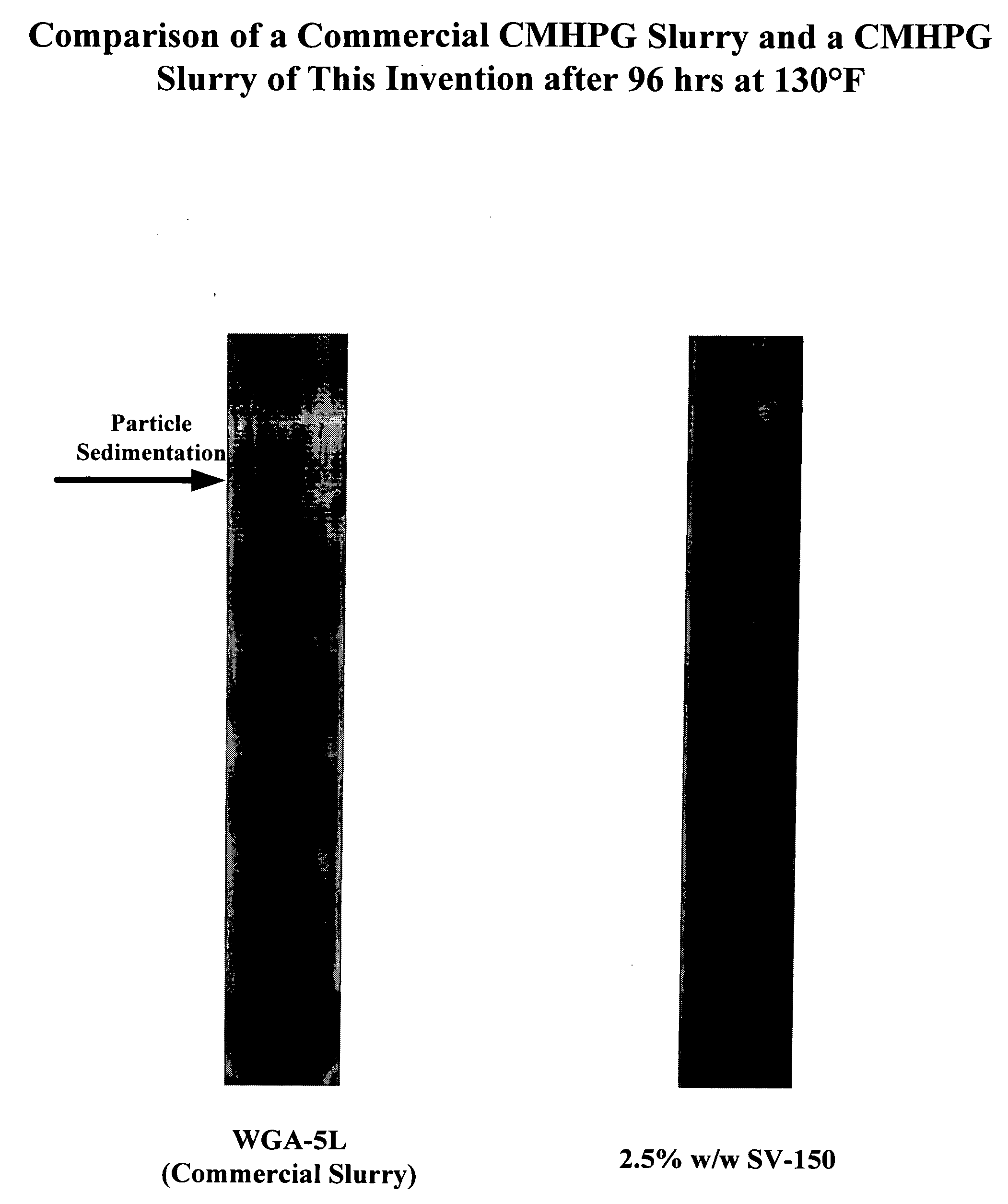
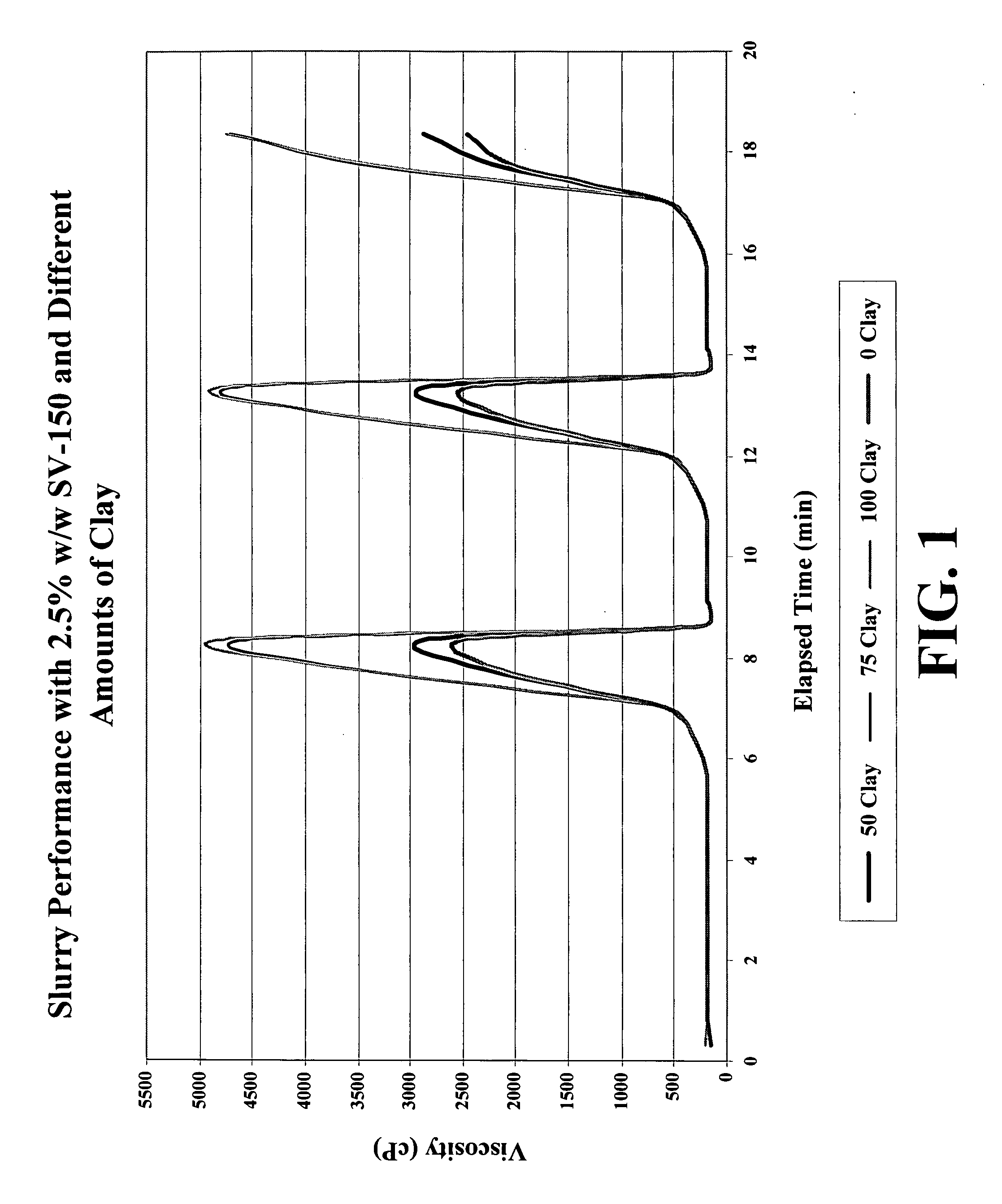
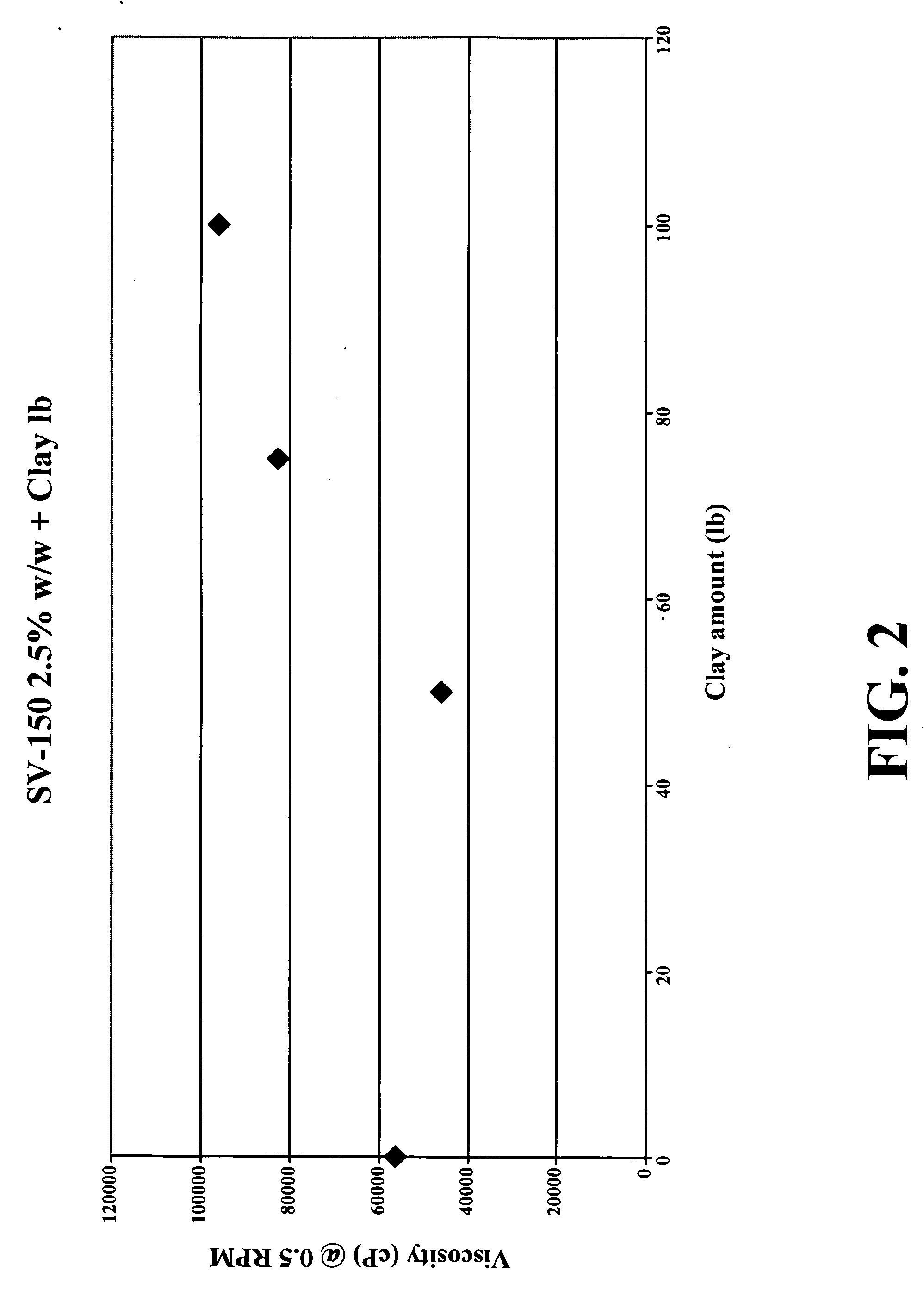
- The use of an oil-based slurry composition incorporating a hydrocarbon base fluid and an effective amount of a polymeric suspension agent, such as a di-block star hydrocarbon soluble polymer, which synergistically interacts with particulate materials to reduce settling rates and maintain stability at temperatures up to 150°F by imparting thixotropic behavior and increasing viscosity.

Environmental Impact of Thixotropic Additives
The environmental implications of thixotropic additives used in slurry sedimentation control present a complex landscape of considerations that span from production to disposal phases. These additives, while effective in maintaining suspension stability, introduce various environmental challenges that require careful evaluation across multiple impact categories.
Aquatic ecosystem effects represent a primary concern when thixotropic agents enter water bodies through industrial discharge or accidental release. Many synthetic thixotropic compounds exhibit varying degrees of persistence in aquatic environments, with some demonstrating bioaccumulation potential in marine organisms. Clay-based thixotropic agents generally show lower toxicity profiles compared to synthetic polymeric alternatives, though their impact on sediment composition and benthic communities requires ongoing assessment.
Soil contamination risks emerge when slurries containing thixotropic additives are applied in construction or mining operations. Certain organic thixotropic compounds may alter soil pH levels and microbial activity, potentially affecting plant growth and soil fertility over extended periods. The mobility of these additives through soil layers varies significantly based on molecular structure and environmental conditions, influencing groundwater contamination potential.
Air quality considerations primarily involve volatile organic compounds released during slurry handling and processing. Some thixotropic formulations contain solvents or processing aids that contribute to atmospheric emissions, though modern formulations increasingly emphasize low-volatility alternatives to minimize respiratory and atmospheric impacts.
Biodegradability characteristics vary substantially among different thixotropic agent categories. Natural clay-based additives typically demonstrate superior environmental compatibility, while synthetic polymeric thixotropes may persist for extended periods under certain environmental conditions. Recent developments in bio-based thixotropic agents show promising degradation profiles, though their performance characteristics may require optimization for specific applications.
Regulatory frameworks governing thixotropic additive environmental impact continue evolving, with increasing emphasis on lifecycle assessment approaches. Current regulations focus primarily on acute toxicity parameters, though emerging standards are incorporating chronic exposure effects and ecosystem-level impacts into evaluation criteria.
Aquatic ecosystem effects represent a primary concern when thixotropic agents enter water bodies through industrial discharge or accidental release. Many synthetic thixotropic compounds exhibit varying degrees of persistence in aquatic environments, with some demonstrating bioaccumulation potential in marine organisms. Clay-based thixotropic agents generally show lower toxicity profiles compared to synthetic polymeric alternatives, though their impact on sediment composition and benthic communities requires ongoing assessment.
Soil contamination risks emerge when slurries containing thixotropic additives are applied in construction or mining operations. Certain organic thixotropic compounds may alter soil pH levels and microbial activity, potentially affecting plant growth and soil fertility over extended periods. The mobility of these additives through soil layers varies significantly based on molecular structure and environmental conditions, influencing groundwater contamination potential.
Air quality considerations primarily involve volatile organic compounds released during slurry handling and processing. Some thixotropic formulations contain solvents or processing aids that contribute to atmospheric emissions, though modern formulations increasingly emphasize low-volatility alternatives to minimize respiratory and atmospheric impacts.
Biodegradability characteristics vary substantially among different thixotropic agent categories. Natural clay-based additives typically demonstrate superior environmental compatibility, while synthetic polymeric thixotropes may persist for extended periods under certain environmental conditions. Recent developments in bio-based thixotropic agents show promising degradation profiles, though their performance characteristics may require optimization for specific applications.
Regulatory frameworks governing thixotropic additive environmental impact continue evolving, with increasing emphasis on lifecycle assessment approaches. Current regulations focus primarily on acute toxicity parameters, though emerging standards are incorporating chronic exposure effects and ecosystem-level impacts into evaluation criteria.
Cost-Performance Optimization Strategies
The implementation of thixotropic agents for sedimentation control requires careful balance between performance effectiveness and economic viability. Cost-performance optimization begins with agent selection strategies that consider both unit costs and dosage requirements. Synthetic thixotropic agents like fumed silica and organoclays typically offer superior performance but command higher prices, while natural alternatives such as bentonite and xanthan gum provide cost-effective solutions with moderate performance levels.
Dosage optimization represents a critical factor in achieving cost efficiency. Excessive agent concentrations lead to unnecessary material costs and potential processing complications, while insufficient dosages fail to provide adequate sedimentation control. Establishing optimal concentration ranges through systematic testing protocols enables manufacturers to minimize agent consumption while maintaining required performance standards. This approach typically reduces material costs by 15-25% compared to conservative over-dosing practices.
Processing integration strategies significantly impact overall cost-effectiveness. Incorporating thixotropic agents during initial slurry preparation eliminates the need for separate mixing equipment and reduces energy consumption. Pre-dispersed agent formulations, despite higher unit costs, often provide superior cost-performance ratios by ensuring uniform distribution and eliminating mixing-related inefficiencies.
Performance monitoring systems enable dynamic optimization of agent usage based on real-time slurry conditions. Automated dosing systems equipped with rheological sensors can adjust agent concentrations according to varying operational parameters, preventing both under-performance and material waste. These systems typically achieve 10-20% cost reductions while improving consistency.
Alternative formulation approaches offer additional optimization opportunities. Hybrid systems combining multiple thixotropic mechanisms can achieve superior performance at lower total costs compared to single-agent solutions. Synergistic combinations of inorganic and organic thixotropic agents often provide enhanced effectiveness while reducing dependency on expensive specialty chemicals.
Long-term cost considerations include storage stability, shelf life, and handling requirements. Agents requiring specialized storage conditions or having limited shelf life may present hidden costs that offset apparent price advantages. Comprehensive cost analysis should encompass procurement, storage, handling, and disposal expenses to accurately assess total ownership costs and guide optimal selection decisions.
Dosage optimization represents a critical factor in achieving cost efficiency. Excessive agent concentrations lead to unnecessary material costs and potential processing complications, while insufficient dosages fail to provide adequate sedimentation control. Establishing optimal concentration ranges through systematic testing protocols enables manufacturers to minimize agent consumption while maintaining required performance standards. This approach typically reduces material costs by 15-25% compared to conservative over-dosing practices.
Processing integration strategies significantly impact overall cost-effectiveness. Incorporating thixotropic agents during initial slurry preparation eliminates the need for separate mixing equipment and reduces energy consumption. Pre-dispersed agent formulations, despite higher unit costs, often provide superior cost-performance ratios by ensuring uniform distribution and eliminating mixing-related inefficiencies.
Performance monitoring systems enable dynamic optimization of agent usage based on real-time slurry conditions. Automated dosing systems equipped with rheological sensors can adjust agent concentrations according to varying operational parameters, preventing both under-performance and material waste. These systems typically achieve 10-20% cost reductions while improving consistency.
Alternative formulation approaches offer additional optimization opportunities. Hybrid systems combining multiple thixotropic mechanisms can achieve superior performance at lower total costs compared to single-agent solutions. Synergistic combinations of inorganic and organic thixotropic agents often provide enhanced effectiveness while reducing dependency on expensive specialty chemicals.
Long-term cost considerations include storage stability, shelf life, and handling requirements. Agents requiring specialized storage conditions or having limited shelf life may present hidden costs that offset apparent price advantages. Comprehensive cost analysis should encompass procurement, storage, handling, and disposal expenses to accurately assess total ownership costs and guide optimal selection decisions.
Unlock deeper insights with Patsnap Eureka Quick Research — get a full tech report to explore trends and direct your research. Try now!
Generate Your Research Report Instantly with AI Agent
Supercharge your innovation with Patsnap Eureka AI Agent Platform!