

Reducing Energy Consumption: Advanced Coolant Manifold Techniques
MAY 27, 20269 MIN READ
Generate Your Research Report Instantly with AI Agent
Patsnap Eureka helps you evaluate technical feasibility & market potential.
Advanced Coolant Manifold Energy Reduction Background and Goals
The evolution of coolant manifold technology has been intrinsically linked to the growing demands for energy efficiency across multiple industrial sectors. Traditional coolant distribution systems, originally designed for basic thermal management, have undergone significant transformation as industries face mounting pressure to reduce operational costs and environmental impact. The historical development of coolant manifolds began with simple pipe networks in the early 20th century, progressing through various iterations of improved materials and design methodologies.
Contemporary coolant manifold systems represent a critical intersection between thermal engineering and energy conservation. The technology has evolved from passive distribution networks to sophisticated systems incorporating advanced materials, intelligent flow control mechanisms, and integrated monitoring capabilities. This evolution reflects the broader industrial shift toward sustainable manufacturing practices and the recognition that thermal management systems can serve as significant energy optimization opportunities.
The primary technical objectives for advanced coolant manifold energy reduction encompass multiple performance dimensions. Foremost among these is the minimization of pumping energy requirements through optimized flow distribution and reduced pressure losses. This involves developing manifold geometries that eliminate turbulence-inducing features while maintaining uniform coolant distribution across all connected circuits. Additionally, the integration of variable flow control systems aims to match coolant delivery precisely to real-time thermal loads, preventing energy waste from over-circulation.
Temperature maintenance efficiency represents another crucial goal, focusing on minimizing heat loss during coolant transport and distribution. Advanced insulation techniques, coupled with optimized manifold sizing, seek to reduce the energy required to maintain target temperatures throughout the system. The implementation of smart routing algorithms further enhances efficiency by directing coolant flow through the most thermally efficient pathways based on current operating conditions.
System-level integration objectives emphasize the development of predictive control capabilities that anticipate thermal demands and adjust manifold operations proactively. This includes the incorporation of machine learning algorithms that optimize flow patterns based on historical performance data and real-time sensor feedback. The ultimate goal involves creating self-optimizing coolant manifold systems that continuously adapt to changing operational requirements while maintaining minimal energy consumption profiles.
Contemporary coolant manifold systems represent a critical intersection between thermal engineering and energy conservation. The technology has evolved from passive distribution networks to sophisticated systems incorporating advanced materials, intelligent flow control mechanisms, and integrated monitoring capabilities. This evolution reflects the broader industrial shift toward sustainable manufacturing practices and the recognition that thermal management systems can serve as significant energy optimization opportunities.
The primary technical objectives for advanced coolant manifold energy reduction encompass multiple performance dimensions. Foremost among these is the minimization of pumping energy requirements through optimized flow distribution and reduced pressure losses. This involves developing manifold geometries that eliminate turbulence-inducing features while maintaining uniform coolant distribution across all connected circuits. Additionally, the integration of variable flow control systems aims to match coolant delivery precisely to real-time thermal loads, preventing energy waste from over-circulation.
Temperature maintenance efficiency represents another crucial goal, focusing on minimizing heat loss during coolant transport and distribution. Advanced insulation techniques, coupled with optimized manifold sizing, seek to reduce the energy required to maintain target temperatures throughout the system. The implementation of smart routing algorithms further enhances efficiency by directing coolant flow through the most thermally efficient pathways based on current operating conditions.
System-level integration objectives emphasize the development of predictive control capabilities that anticipate thermal demands and adjust manifold operations proactively. This includes the incorporation of machine learning algorithms that optimize flow patterns based on historical performance data and real-time sensor feedback. The ultimate goal involves creating self-optimizing coolant manifold systems that continuously adapt to changing operational requirements while maintaining minimal energy consumption profiles.
Market Demand for Energy-Efficient Thermal Management Systems
The global thermal management systems market is experiencing unprecedented growth driven by escalating energy costs and stringent environmental regulations. Industries across sectors are actively seeking advanced coolant manifold technologies to address mounting pressure for energy efficiency improvements. Data centers, which consume substantial amounts of energy for cooling operations, represent a particularly lucrative segment demanding innovative thermal solutions.
Automotive manufacturers are increasingly prioritizing energy-efficient thermal management as electric vehicle adoption accelerates. Advanced coolant manifold techniques offer critical advantages in battery thermal regulation and overall vehicle energy optimization. The transition toward electrification has created substantial demand for sophisticated cooling systems that can maintain optimal operating temperatures while minimizing energy consumption.
Industrial manufacturing facilities face growing operational cost pressures, making energy-efficient thermal management systems essential for maintaining competitiveness. Advanced coolant manifold technologies enable precise temperature control while reducing overall energy expenditure. Manufacturing processes requiring consistent thermal conditions are driving adoption of these sophisticated cooling solutions.
The electronics industry presents significant market opportunities as device miniaturization increases thermal density challenges. Advanced coolant manifold techniques provide targeted cooling solutions for high-performance computing applications, telecommunications equipment, and consumer electronics. Market demand continues expanding as thermal management becomes increasingly critical for device reliability and performance.
Renewable energy systems, particularly solar and wind installations, require efficient thermal management to optimize energy conversion and equipment longevity. Advanced coolant manifold technologies support these applications by maintaining optimal operating temperatures while minimizing parasitic energy losses.
Healthcare facilities and pharmaceutical manufacturing represent emerging market segments where precise thermal control is essential. Advanced coolant manifold systems offer the reliability and efficiency required for critical applications while reducing operational costs.
Market drivers include rising energy costs, environmental sustainability initiatives, and technological advancement requirements. The convergence of these factors creates substantial demand for innovative thermal management solutions that deliver measurable energy savings while maintaining or improving performance standards across diverse industrial applications.
Automotive manufacturers are increasingly prioritizing energy-efficient thermal management as electric vehicle adoption accelerates. Advanced coolant manifold techniques offer critical advantages in battery thermal regulation and overall vehicle energy optimization. The transition toward electrification has created substantial demand for sophisticated cooling systems that can maintain optimal operating temperatures while minimizing energy consumption.
Industrial manufacturing facilities face growing operational cost pressures, making energy-efficient thermal management systems essential for maintaining competitiveness. Advanced coolant manifold technologies enable precise temperature control while reducing overall energy expenditure. Manufacturing processes requiring consistent thermal conditions are driving adoption of these sophisticated cooling solutions.
The electronics industry presents significant market opportunities as device miniaturization increases thermal density challenges. Advanced coolant manifold techniques provide targeted cooling solutions for high-performance computing applications, telecommunications equipment, and consumer electronics. Market demand continues expanding as thermal management becomes increasingly critical for device reliability and performance.
Renewable energy systems, particularly solar and wind installations, require efficient thermal management to optimize energy conversion and equipment longevity. Advanced coolant manifold technologies support these applications by maintaining optimal operating temperatures while minimizing parasitic energy losses.
Healthcare facilities and pharmaceutical manufacturing represent emerging market segments where precise thermal control is essential. Advanced coolant manifold systems offer the reliability and efficiency required for critical applications while reducing operational costs.
Market drivers include rising energy costs, environmental sustainability initiatives, and technological advancement requirements. The convergence of these factors creates substantial demand for innovative thermal management solutions that deliver measurable energy savings while maintaining or improving performance standards across diverse industrial applications.
Current State and Challenges in Coolant Manifold Energy Consumption
The global coolant manifold industry currently faces significant energy efficiency challenges across multiple sectors, with data centers, automotive systems, and industrial manufacturing representing the largest energy consumption segments. Traditional coolant manifold designs typically exhibit energy losses ranging from 15-30% due to inefficient flow distribution, thermal bridging, and suboptimal pump operations. Current market analysis indicates that conventional manifold systems consume approximately 2.5-4.2 kW per cooling loop in typical data center applications, representing substantial operational costs and environmental impact.
Existing coolant manifold technologies predominantly rely on passive distribution methods that create uneven flow patterns and pressure drops throughout the system. These conventional approaches result in overcooling in some zones while undercooling others, forcing operators to increase overall system capacity to meet peak cooling demands. The lack of intelligent flow control mechanisms leads to continuous high-energy pump operations regardless of actual cooling requirements.
Thermal management inefficiencies represent another critical challenge in current coolant manifold implementations. Most existing systems suffer from poor thermal conductivity at connection points, inadequate insulation strategies, and suboptimal material selection that contributes to heat loss. These factors collectively reduce overall system coefficient of performance by 20-35% compared to theoretical optimal values.
Flow dynamics present substantial technical obstacles in contemporary coolant manifold designs. Turbulent flow patterns, cavitation issues, and pressure imbalances create energy penalties that compound across large-scale installations. Current computational fluid dynamics studies reveal that traditional manifold geometries generate unnecessary pressure drops of 0.8-1.5 bar, directly translating to increased pumping energy requirements.
Manufacturing and material constraints further limit the advancement of energy-efficient coolant manifold solutions. Traditional fabrication methods restrict design complexity, preventing the implementation of optimized internal geometries that could significantly improve energy performance. Additionally, cost pressures often force the selection of standard materials rather than advanced composites or specialized alloys that offer superior thermal and hydraulic properties.
Integration challenges with existing infrastructure create additional barriers to implementing advanced coolant manifold technologies. Legacy systems often lack the necessary sensors, control interfaces, and communication protocols required for intelligent energy management. Retrofitting existing installations with energy-efficient manifold solutions requires substantial modifications that many organizations find economically prohibitive.
Regulatory and standardization gaps also impede progress in coolant manifold energy efficiency improvements. Current industry standards primarily focus on safety and basic performance metrics rather than comprehensive energy consumption benchmarks, limiting the development of truly optimized solutions.
Existing coolant manifold technologies predominantly rely on passive distribution methods that create uneven flow patterns and pressure drops throughout the system. These conventional approaches result in overcooling in some zones while undercooling others, forcing operators to increase overall system capacity to meet peak cooling demands. The lack of intelligent flow control mechanisms leads to continuous high-energy pump operations regardless of actual cooling requirements.
Thermal management inefficiencies represent another critical challenge in current coolant manifold implementations. Most existing systems suffer from poor thermal conductivity at connection points, inadequate insulation strategies, and suboptimal material selection that contributes to heat loss. These factors collectively reduce overall system coefficient of performance by 20-35% compared to theoretical optimal values.
Flow dynamics present substantial technical obstacles in contemporary coolant manifold designs. Turbulent flow patterns, cavitation issues, and pressure imbalances create energy penalties that compound across large-scale installations. Current computational fluid dynamics studies reveal that traditional manifold geometries generate unnecessary pressure drops of 0.8-1.5 bar, directly translating to increased pumping energy requirements.
Manufacturing and material constraints further limit the advancement of energy-efficient coolant manifold solutions. Traditional fabrication methods restrict design complexity, preventing the implementation of optimized internal geometries that could significantly improve energy performance. Additionally, cost pressures often force the selection of standard materials rather than advanced composites or specialized alloys that offer superior thermal and hydraulic properties.
Integration challenges with existing infrastructure create additional barriers to implementing advanced coolant manifold technologies. Legacy systems often lack the necessary sensors, control interfaces, and communication protocols required for intelligent energy management. Retrofitting existing installations with energy-efficient manifold solutions requires substantial modifications that many organizations find economically prohibitive.
Regulatory and standardization gaps also impede progress in coolant manifold energy efficiency improvements. Current industry standards primarily focus on safety and basic performance metrics rather than comprehensive energy consumption benchmarks, limiting the development of truly optimized solutions.
Existing Energy-Efficient Coolant Manifold Solutions
01 Advanced manifold design and configuration optimization
Innovative manifold designs focus on optimizing the internal geometry, flow paths, and structural configurations to enhance coolant distribution efficiency. These designs incorporate advanced engineering principles to minimize pressure drops, reduce flow resistance, and improve overall thermal management performance. The optimization includes considerations for manifold shape, internal channels, and connection points to achieve better energy efficiency.- Advanced manifold design and configuration optimization: Advanced coolant manifold systems utilize optimized geometric configurations and flow channel designs to improve coolant distribution efficiency. These designs focus on reducing pressure drops, minimizing flow resistance, and ensuring uniform coolant distribution across multiple cooling zones. The manifold configurations incorporate sophisticated internal structures and flow paths that enhance thermal management while reducing energy consumption through improved hydraulic efficiency.
- Integrated cooling system control and monitoring: Smart control systems are integrated into coolant manifolds to monitor and regulate coolant flow, temperature, and pressure in real-time. These systems employ sensors, actuators, and control algorithms to optimize cooling performance based on operational demands. The intelligent control mechanisms automatically adjust coolant distribution to minimize energy consumption while maintaining optimal thermal conditions across different operating scenarios.
- Variable flow rate and adaptive cooling technologies: Variable flow rate systems enable dynamic adjustment of coolant circulation based on thermal load requirements. These technologies incorporate adaptive mechanisms that can modify coolant flow patterns and rates to match real-time cooling demands. The systems utilize advanced valve configurations, flow control devices, and feedback mechanisms to optimize energy efficiency by providing cooling only where and when needed.
- Heat recovery and thermal energy management: Advanced coolant manifold systems incorporate heat recovery mechanisms to capture and reuse waste thermal energy. These systems feature heat exchangers, thermal storage components, and energy recovery devices that extract useful energy from the cooling process. The recovered thermal energy can be redirected for other applications, significantly reducing overall energy consumption and improving system efficiency.
- Multi-zone cooling optimization and energy-efficient materials: Multi-zone cooling systems enable independent thermal management of different areas or components through segmented manifold designs. These systems utilize energy-efficient materials with enhanced thermal conductivity and reduced weight to minimize pumping energy requirements. The manifold construction incorporates advanced materials and coatings that improve heat transfer efficiency while reducing parasitic energy losses throughout the cooling circuit.
02 Flow control and distribution systems
Advanced flow control mechanisms are implemented to regulate coolant distribution across multiple channels or zones within the manifold system. These systems utilize sophisticated control valves, flow regulators, and distribution networks to ensure optimal coolant flow rates and pressure management. The technology focuses on maintaining consistent performance while minimizing energy consumption through intelligent flow management strategies.Expand Specific Solutions03 Energy-efficient pumping and circulation technologies
Modern coolant manifold systems incorporate energy-efficient pumping mechanisms and circulation technologies to reduce overall power consumption. These innovations include variable speed pumps, smart circulation controls, and optimized pump placement strategies. The focus is on maintaining adequate coolant flow while minimizing the energy required for circulation and achieving better system efficiency.Expand Specific Solutions04 Thermal management and heat exchange optimization
Advanced thermal management techniques are employed to maximize heat transfer efficiency within coolant manifold systems. These approaches include enhanced heat exchange surfaces, optimized coolant pathways, and improved thermal interface designs. The technology aims to achieve better cooling performance while reducing the energy required for maintaining desired temperature levels across the system.Expand Specific Solutions05 Smart monitoring and control systems integration
Integration of intelligent monitoring and control systems enables real-time optimization of coolant manifold performance and energy consumption. These systems utilize sensors, feedback mechanisms, and automated control algorithms to continuously adjust operating parameters. The technology provides adaptive control capabilities that respond to changing conditions while maintaining optimal energy efficiency and system performance.Expand Specific Solutions
Key Players in Thermal Management and Coolant Systems Industry
The advanced coolant manifold techniques market is in a mature development stage, driven by increasing energy efficiency demands across automotive, aerospace, and industrial sectors. The market demonstrates significant scale with established players spanning multiple industries, from automotive giants like Ford Global Technologies LLC, General Motors LLC, and Honda Motor Co., Ltd. to aerospace leaders including Pratt & Whitney Canada Corp. and GE Avio Srl. Technology maturity varies considerably across applications, with automotive thermal management systems showing high sophistication through companies like Hanon Systems and NIDEC Corp., while emerging areas like precision liquid cooling represented by Iceotope Group Ltd. indicate ongoing innovation. Industrial automation leaders such as ABB Ltd. and Caterpillar Inc. contribute established cooling solutions, while research institutions like Xi'an Jiaotong University drive fundamental advances, creating a competitive landscape characterized by both incremental improvements and breakthrough innovations.
International Business Machines Corp.
Technical Solution: IBM has developed advanced thermal management solutions for their enterprise computing systems, focusing on intelligent coolant distribution manifolds that utilize machine learning algorithms to predict thermal hotspots and preemptively adjust cooling flows. Their manifold design incorporates micro-channel heat exchangers with variable flow control valves that can reduce cooling energy consumption by up to 30% in data center environments. The system features redundant coolant pathways and smart sensors that monitor temperature, pressure, and flow rates across multiple zones. IBM's approach integrates with their AI-powered infrastructure management platform to optimize cooling efficiency based on workload patterns and environmental conditions, achieving significant energy savings while maintaining system reliability.
Strengths: AI-driven predictive cooling optimization with proven 30% energy reduction and enterprise-grade reliability features. Weaknesses: Complex integration requirements and high dependency on proprietary software platforms limiting third-party compatibility.
Google LLC
Technical Solution: Google has implemented advanced coolant manifold techniques across their global data center infrastructure, utilizing custom-designed liquid cooling systems that achieve Power Usage Effectiveness (PUE) ratings as low as 1.06. Their manifold design incorporates machine learning-optimized flow control systems that dynamically adjust coolant distribution based on server workloads and ambient conditions. The company's approach includes innovative heat recovery systems that capture waste heat from coolant loops for facility heating, further reducing overall energy consumption. Google's manifold technology features modular design principles allowing for rapid deployment and maintenance, with automated leak detection and self-healing capabilities that minimize downtime while maximizing cooling efficiency across their massive computing infrastructure.
Strengths: Proven large-scale deployment with industry-leading PUE of 1.06 and innovative heat recovery integration for maximum energy efficiency. Weaknesses: Highly customized solutions designed for specific Google infrastructure may not be easily adaptable to other organizations' requirements.
Core Innovations in Advanced Manifold Design Technologies
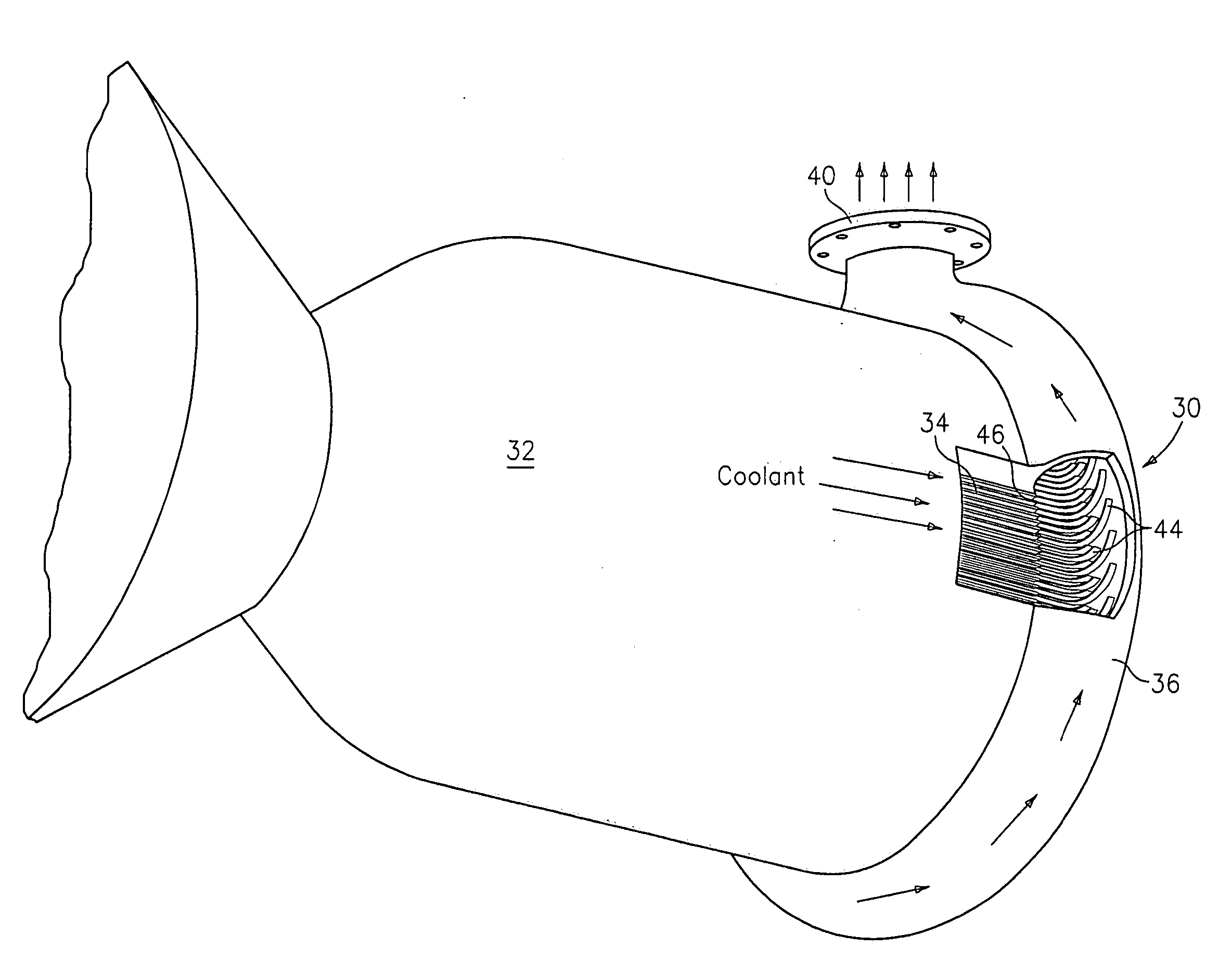
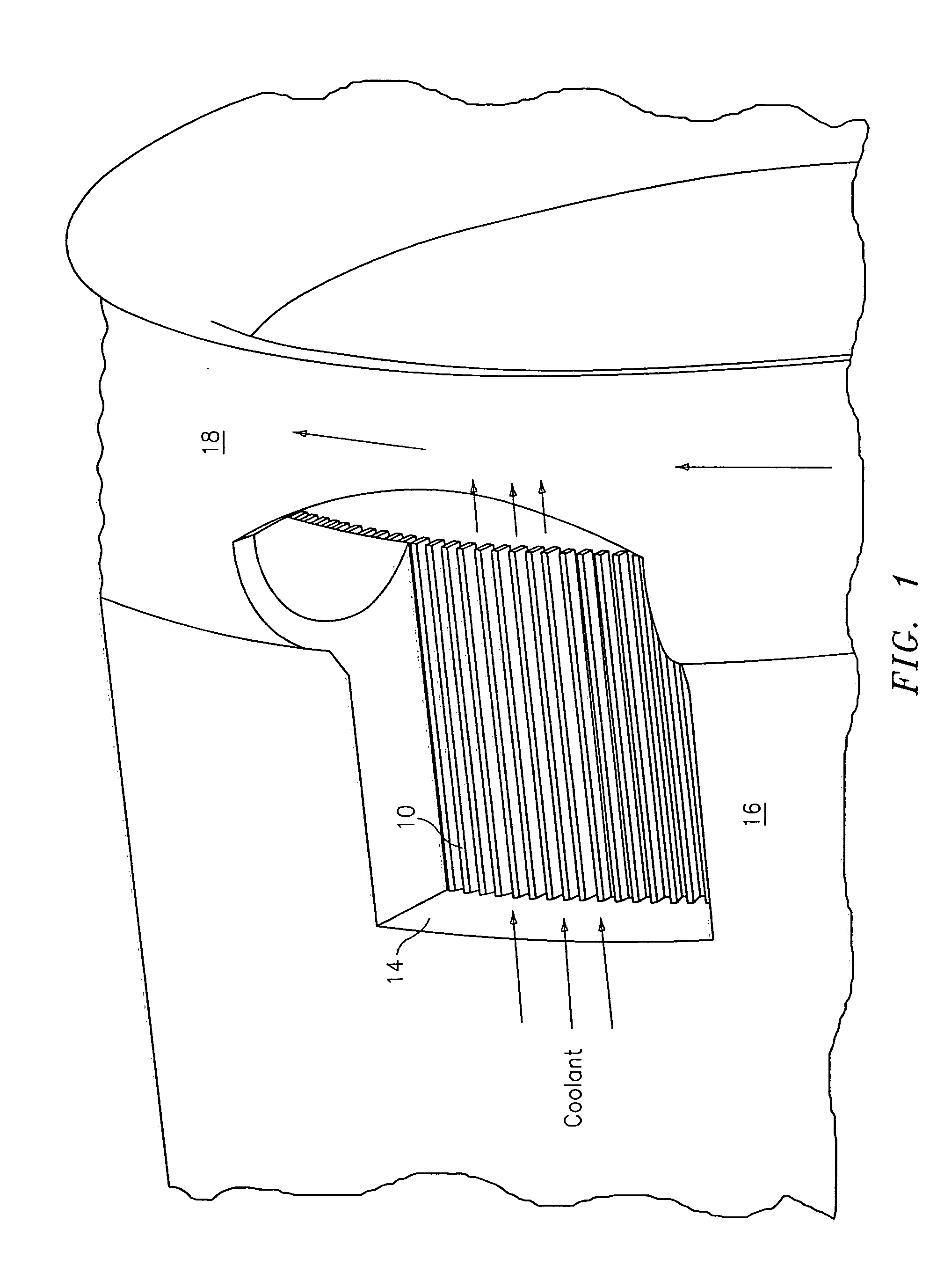
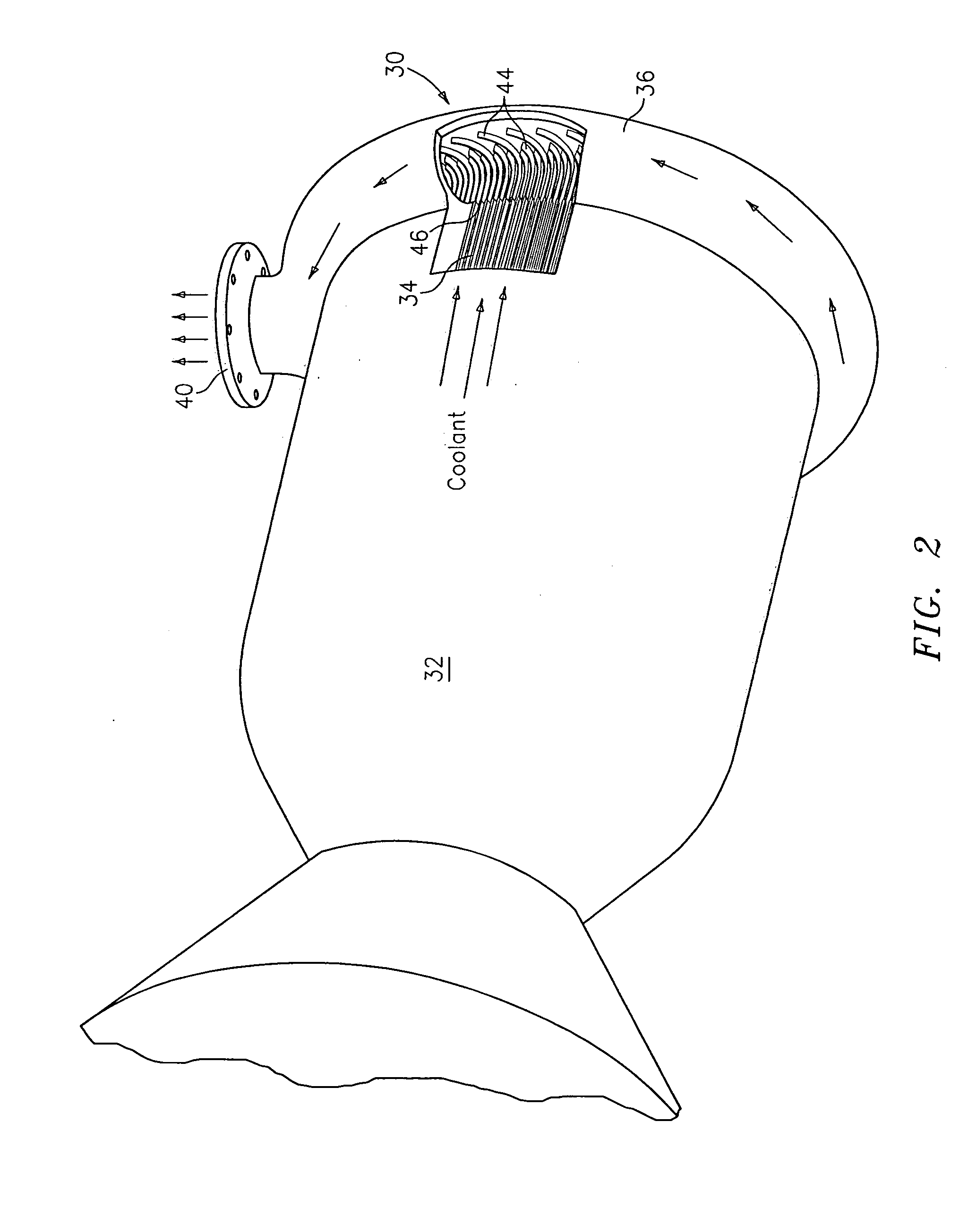
Toroidal coolant-collection manifold
PatentInactiveEP1564398B1
Innovation
- Incorporation of turning vanes within the torroidal coolant-collection manifold to guide coolant flow from radial or axial to tangential direction, reducing pressure loss and enhancing pressure uniformity.


Enhanced performance torroidal coolant-collection manifold
PatentActiveUS20050178106A1
Innovation
- Incorporation of turning vanes within the torroidal coolant-collection manifold to redirect coolant flow from radial or axial to tangential, minimizing sudden expansion and mixing losses and promoting uniform pressure distribution.

Environmental Regulations Impact on Coolant System Design
Environmental regulations have fundamentally transformed coolant system design paradigms across multiple industries, driving unprecedented innovation in advanced coolant manifold techniques. The implementation of stringent environmental standards, particularly those targeting greenhouse gas emissions and ozone depletion potential, has necessitated comprehensive redesigns of traditional cooling architectures. Regulatory frameworks such as the European F-Gas Regulation, the Montreal Protocol amendments, and emerging carbon neutrality mandates have established clear timelines for phasing out high-GWP refrigerants, compelling manufacturers to develop manifold systems compatible with next-generation coolants.
The transition from conventional refrigerants to environmentally sustainable alternatives has introduced significant design challenges for coolant manifolds. Low-GWP refrigerants often exhibit different thermodynamic properties, requiring manifold geometries that accommodate altered pressure differentials, flow characteristics, and heat transfer coefficients. These regulatory-driven material changes demand enhanced sealing technologies, corrosion-resistant components, and modified flow distribution patterns to maintain system efficiency while meeting environmental compliance standards.
Regulatory pressure has accelerated the adoption of smart manifold technologies that optimize coolant distribution based on real-time environmental impact assessments. Advanced control algorithms now integrate regulatory compliance metrics directly into operational parameters, automatically adjusting flow rates and pressure distributions to minimize environmental footprint while maintaining thermal performance. This regulatory-technology convergence has spawned innovative manifold designs featuring variable geometry configurations and adaptive flow control mechanisms.
The economic implications of environmental regulations have created market incentives for manifold manufacturers to invest heavily in sustainable design methodologies. Compliance costs associated with traditional high-impact coolants have made advanced manifold techniques economically viable, driving rapid commercialization of previously experimental technologies. Regulatory frameworks increasingly favor integrated system approaches that demonstrate measurable environmental benefits, positioning advanced coolant manifolds as critical components in achieving regulatory compliance while maintaining competitive performance standards.
Future regulatory trends indicate even stricter environmental requirements, with emerging legislation targeting lifecycle carbon footprints and circular economy principles. These evolving standards are already influencing next-generation manifold designs that incorporate recyclable materials, modular architectures for component reuse, and integrated monitoring systems for environmental impact tracking throughout operational lifecycles.
The transition from conventional refrigerants to environmentally sustainable alternatives has introduced significant design challenges for coolant manifolds. Low-GWP refrigerants often exhibit different thermodynamic properties, requiring manifold geometries that accommodate altered pressure differentials, flow characteristics, and heat transfer coefficients. These regulatory-driven material changes demand enhanced sealing technologies, corrosion-resistant components, and modified flow distribution patterns to maintain system efficiency while meeting environmental compliance standards.
Regulatory pressure has accelerated the adoption of smart manifold technologies that optimize coolant distribution based on real-time environmental impact assessments. Advanced control algorithms now integrate regulatory compliance metrics directly into operational parameters, automatically adjusting flow rates and pressure distributions to minimize environmental footprint while maintaining thermal performance. This regulatory-technology convergence has spawned innovative manifold designs featuring variable geometry configurations and adaptive flow control mechanisms.
The economic implications of environmental regulations have created market incentives for manifold manufacturers to invest heavily in sustainable design methodologies. Compliance costs associated with traditional high-impact coolants have made advanced manifold techniques economically viable, driving rapid commercialization of previously experimental technologies. Regulatory frameworks increasingly favor integrated system approaches that demonstrate measurable environmental benefits, positioning advanced coolant manifolds as critical components in achieving regulatory compliance while maintaining competitive performance standards.
Future regulatory trends indicate even stricter environmental requirements, with emerging legislation targeting lifecycle carbon footprints and circular economy principles. These evolving standards are already influencing next-generation manifold designs that incorporate recyclable materials, modular architectures for component reuse, and integrated monitoring systems for environmental impact tracking throughout operational lifecycles.
Sustainability Considerations in Advanced Thermal Management
Sustainability considerations have become paramount in advanced thermal management systems, particularly as industries face increasing pressure to reduce environmental impact while maintaining operational efficiency. Advanced coolant manifold techniques represent a critical intersection between thermal performance optimization and environmental responsibility, requiring careful evaluation of lifecycle impacts, material selection, and energy consumption patterns.
The environmental footprint of coolant manifold systems extends beyond operational energy consumption to encompass manufacturing processes, material sourcing, and end-of-life disposal considerations. Traditional manifold designs often rely on energy-intensive materials such as aluminum or copper, which require significant energy inputs during extraction and processing. Advanced techniques increasingly favor sustainable alternatives, including recycled metals, bio-based composite materials, and additive manufacturing processes that minimize material waste during production.
Circular economy principles are driving innovation in manifold design, emphasizing modularity, repairability, and component reusability. Modern systems incorporate standardized interfaces and replaceable components that extend system lifespan and reduce the need for complete system replacement. This approach significantly reduces the embodied carbon footprint while maintaining thermal performance standards.
Energy efficiency optimization through advanced manifold techniques directly contributes to sustainability goals by reducing operational carbon emissions. Intelligent flow distribution systems, variable geometry manifolds, and adaptive cooling strategies can achieve 15-30% energy savings compared to conventional fixed-geometry designs. These improvements translate to substantial reductions in greenhouse gas emissions over the system lifecycle.
Refrigerant selection and management represent another critical sustainability dimension. Advanced manifold systems increasingly support natural refrigerants with low global warming potential, such as CO2 and ammonia-based solutions. Leak detection and prevention technologies integrated into manifold designs minimize refrigerant losses, further reducing environmental impact.
The integration of renewable energy sources with advanced thermal management systems creates additional sustainability opportunities. Solar-assisted cooling systems, geothermal integration, and waste heat recovery mechanisms can be seamlessly incorporated into modern manifold architectures, creating net-positive energy systems in optimal conditions.
The environmental footprint of coolant manifold systems extends beyond operational energy consumption to encompass manufacturing processes, material sourcing, and end-of-life disposal considerations. Traditional manifold designs often rely on energy-intensive materials such as aluminum or copper, which require significant energy inputs during extraction and processing. Advanced techniques increasingly favor sustainable alternatives, including recycled metals, bio-based composite materials, and additive manufacturing processes that minimize material waste during production.
Circular economy principles are driving innovation in manifold design, emphasizing modularity, repairability, and component reusability. Modern systems incorporate standardized interfaces and replaceable components that extend system lifespan and reduce the need for complete system replacement. This approach significantly reduces the embodied carbon footprint while maintaining thermal performance standards.
Energy efficiency optimization through advanced manifold techniques directly contributes to sustainability goals by reducing operational carbon emissions. Intelligent flow distribution systems, variable geometry manifolds, and adaptive cooling strategies can achieve 15-30% energy savings compared to conventional fixed-geometry designs. These improvements translate to substantial reductions in greenhouse gas emissions over the system lifecycle.
Refrigerant selection and management represent another critical sustainability dimension. Advanced manifold systems increasingly support natural refrigerants with low global warming potential, such as CO2 and ammonia-based solutions. Leak detection and prevention technologies integrated into manifold designs minimize refrigerant losses, further reducing environmental impact.
The integration of renewable energy sources with advanced thermal management systems creates additional sustainability opportunities. Solar-assisted cooling systems, geothermal integration, and waste heat recovery mechanisms can be seamlessly incorporated into modern manifold architectures, creating net-positive energy systems in optimal conditions.
Unlock deeper insights with Patsnap Eureka Quick Research — get a full tech report to explore trends and direct your research. Try now!
Generate Your Research Report Instantly with AI Agent
Supercharge your innovation with Patsnap Eureka AI Agent Platform!