

Regulations and Standards for Graphene Coating Export
OCT 24, 202510 MIN READ
Generate Your Research Report Instantly with AI Agent
Patsnap Eureka helps you evaluate technical feasibility & market potential.
Graphene Coating Export Regulatory Background and Objectives
Graphene coating technology has emerged as a revolutionary advancement in materials science over the past decade. Since its initial isolation in 2004, graphene has transitioned from a laboratory curiosity to a commercially viable coating material with exceptional properties including corrosion resistance, thermal conductivity, and mechanical strength. The global regulatory landscape governing graphene coatings has evolved in response to its increasing industrial applications across automotive, aerospace, electronics, and medical sectors.
The regulatory framework for graphene coating exports is currently fragmented across different jurisdictions, with varying approaches to classification and control. Major regulatory bodies including the European Chemicals Agency (ECHA), the U.S. Environmental Protection Agency (EPA), and China's Ministry of Ecology and Environment have established preliminary guidelines for nanomaterials that encompass graphene coatings. The EU's REACH regulation specifically addresses nanomaterials including graphene through its substance registration requirements, while the U.S. operates under the Toxic Substances Control Act (TSCA) framework.
Historical development of graphene export regulations shows a progressive tightening of controls, particularly as applications have expanded into sensitive sectors. Initial regulatory approaches treated graphene coatings as general chemical substances, but recent years have seen more specialized frameworks emerge that account for the unique properties and potential risks of nanomaterials. This evolution reflects growing awareness of both the commercial potential and possible environmental and health implications of widespread graphene adoption.
The primary objective of current regulatory efforts is to establish harmonized international standards that balance innovation promotion with risk management. Regulatory bodies aim to create frameworks that ensure safety while avoiding unnecessary barriers to trade and technological development. This includes standardizing testing protocols, classification systems, and labeling requirements across major markets to reduce compliance complexity for exporters.
Key technical challenges in the regulatory landscape include the lack of standardized methods for characterizing graphene coatings, insufficient toxicological data for comprehensive risk assessment, and the rapid pace of innovation outstripping regulatory development. These challenges are compounded by the diverse forms of graphene-based materials, each potentially requiring different regulatory approaches.
Looking forward, regulatory trends indicate movement toward a tiered approach based on risk profiles, with greater scrutiny for applications with direct human exposure. International collaboration through organizations like the International Organization for Standardization (ISO) and the Organization for Economic Cooperation and Development (OECD) is accelerating to develop consensus-based standards that can be adopted globally, potentially simplifying the export compliance landscape for manufacturers and distributors of graphene coating technologies.
The regulatory framework for graphene coating exports is currently fragmented across different jurisdictions, with varying approaches to classification and control. Major regulatory bodies including the European Chemicals Agency (ECHA), the U.S. Environmental Protection Agency (EPA), and China's Ministry of Ecology and Environment have established preliminary guidelines for nanomaterials that encompass graphene coatings. The EU's REACH regulation specifically addresses nanomaterials including graphene through its substance registration requirements, while the U.S. operates under the Toxic Substances Control Act (TSCA) framework.
Historical development of graphene export regulations shows a progressive tightening of controls, particularly as applications have expanded into sensitive sectors. Initial regulatory approaches treated graphene coatings as general chemical substances, but recent years have seen more specialized frameworks emerge that account for the unique properties and potential risks of nanomaterials. This evolution reflects growing awareness of both the commercial potential and possible environmental and health implications of widespread graphene adoption.
The primary objective of current regulatory efforts is to establish harmonized international standards that balance innovation promotion with risk management. Regulatory bodies aim to create frameworks that ensure safety while avoiding unnecessary barriers to trade and technological development. This includes standardizing testing protocols, classification systems, and labeling requirements across major markets to reduce compliance complexity for exporters.
Key technical challenges in the regulatory landscape include the lack of standardized methods for characterizing graphene coatings, insufficient toxicological data for comprehensive risk assessment, and the rapid pace of innovation outstripping regulatory development. These challenges are compounded by the diverse forms of graphene-based materials, each potentially requiring different regulatory approaches.
Looking forward, regulatory trends indicate movement toward a tiered approach based on risk profiles, with greater scrutiny for applications with direct human exposure. International collaboration through organizations like the International Organization for Standardization (ISO) and the Organization for Economic Cooperation and Development (OECD) is accelerating to develop consensus-based standards that can be adopted globally, potentially simplifying the export compliance landscape for manufacturers and distributors of graphene coating technologies.
Global Market Demand Analysis for Graphene Coatings
The global market for graphene coatings has witnessed substantial growth in recent years, driven by the material's exceptional properties and expanding applications across various industries. Current market analysis indicates that the graphene coatings sector is experiencing a compound annual growth rate of approximately 38% between 2021 and 2026, significantly outpacing traditional coating technologies.
The automotive and aerospace industries represent the largest demand segments, collectively accounting for nearly 40% of the global graphene coating market. These sectors particularly value graphene's corrosion resistance, thermal conductivity, and lightweight characteristics that contribute to improved fuel efficiency and extended component lifespan. The maritime industry has also emerged as a rapidly growing consumer, with shipbuilders increasingly adopting graphene coatings to combat biofouling and reduce maintenance costs.
Regional analysis reveals that Asia-Pacific currently dominates the market with over 45% share, led by China, Japan, and South Korea's aggressive investments in advanced materials. North America follows with approximately 30% market share, while Europe represents about 20% of global demand, with particularly strong growth in Germany and the UK where regulatory support for sustainable materials is robust.
Consumer electronics manufacturers have demonstrated increasing interest in graphene coatings for their water-repellent and electromagnetic interference shielding properties. This segment is projected to be the fastest-growing application area over the next five years as miniaturization trends continue to drive demand for advanced protective solutions.
Market research indicates that price sensitivity remains a significant factor influencing adoption rates. While premium industries readily absorb the higher costs of graphene-enhanced products, mass-market penetration faces challenges due to production scale limitations and resulting price premiums. However, as manufacturing processes mature and economies of scale improve, price barriers are expected to diminish substantially by 2025.
Regulatory developments are significantly shaping market dynamics. Countries with clearer regulatory frameworks for nanomaterials, such as the EU with its REACH regulation, are experiencing more structured market growth. Conversely, regions with regulatory uncertainty show more fragmented adoption patterns despite technical interest.
Customer feedback analysis reveals that performance consistency and long-term stability remain key concerns for potential adopters. Industries with extended product lifecycles, such as infrastructure and aerospace, require extensive validation data before widespread implementation, creating a temporary barrier to market expansion that testing laboratories and certification bodies are actively addressing.
The automotive and aerospace industries represent the largest demand segments, collectively accounting for nearly 40% of the global graphene coating market. These sectors particularly value graphene's corrosion resistance, thermal conductivity, and lightweight characteristics that contribute to improved fuel efficiency and extended component lifespan. The maritime industry has also emerged as a rapidly growing consumer, with shipbuilders increasingly adopting graphene coatings to combat biofouling and reduce maintenance costs.
Regional analysis reveals that Asia-Pacific currently dominates the market with over 45% share, led by China, Japan, and South Korea's aggressive investments in advanced materials. North America follows with approximately 30% market share, while Europe represents about 20% of global demand, with particularly strong growth in Germany and the UK where regulatory support for sustainable materials is robust.
Consumer electronics manufacturers have demonstrated increasing interest in graphene coatings for their water-repellent and electromagnetic interference shielding properties. This segment is projected to be the fastest-growing application area over the next five years as miniaturization trends continue to drive demand for advanced protective solutions.
Market research indicates that price sensitivity remains a significant factor influencing adoption rates. While premium industries readily absorb the higher costs of graphene-enhanced products, mass-market penetration faces challenges due to production scale limitations and resulting price premiums. However, as manufacturing processes mature and economies of scale improve, price barriers are expected to diminish substantially by 2025.
Regulatory developments are significantly shaping market dynamics. Countries with clearer regulatory frameworks for nanomaterials, such as the EU with its REACH regulation, are experiencing more structured market growth. Conversely, regions with regulatory uncertainty show more fragmented adoption patterns despite technical interest.
Customer feedback analysis reveals that performance consistency and long-term stability remain key concerns for potential adopters. Industries with extended product lifecycles, such as infrastructure and aerospace, require extensive validation data before widespread implementation, creating a temporary barrier to market expansion that testing laboratories and certification bodies are actively addressing.
International Regulatory Landscape and Technical Barriers
The global regulatory landscape for graphene coating exports is characterized by a complex interplay of national and international standards, reflecting the novel nature of this advanced material. Currently, there is no unified global regulatory framework specifically addressing graphene coatings, resulting in a fragmented approach across different jurisdictions. Major economic regions including the European Union, United States, and China have established distinct regulatory pathways that manufacturers must navigate.
In the European Union, graphene coatings fall under the purview of the REACH (Registration, Evaluation, Authorization and Restriction of Chemicals) regulation, which requires comprehensive safety assessments and registration for nanomaterials. The EU's approach emphasizes the precautionary principle, demanding extensive toxicological and environmental impact data before market approval. Additionally, the EU has implemented specific labeling requirements for products containing nanomaterials, including graphene-based coatings.
The United States regulatory framework operates through multiple agencies, primarily the Environmental Protection Agency (EPA) under the Toxic Substances Control Act (TSCA) and the Food and Drug Administration (FDA) for applications in food contact materials or medical devices. The EPA has established the Significant New Use Rule (SNUR) that may apply to novel graphene applications, requiring manufacturers to notify the agency before introducing certain graphene-based products to the market.
Asian markets present varying degrees of regulatory stringency. Japan has established the world's first graphene quality standards through its Industrial Standards Committee, while China has developed GB/T standards specific to graphene materials that exporters must comply with. South Korea has implemented a registration system similar to REACH for nanomaterials including graphene.
Technical barriers to trade are particularly pronounced in the graphene coating sector. These include divergent testing methodologies across jurisdictions, inconsistent classification of graphene-based materials, and varying threshold limits for safety assessments. The lack of internationally harmonized standards for characterizing graphene quality, purity, and performance creates significant challenges for exporters seeking multi-market access.
International standardization efforts are gradually emerging through organizations such as the International Organization for Standardization (ISO), which has established technical committee ISO/TC 229 focused on nanotechnologies. This committee has published several standards relevant to graphene, including ISO/TS 80004-13:2017 that provides terminology and definitions for graphene and related materials. However, the pace of standardization lags behind technological development, creating regulatory uncertainty.
Compliance costs represent a significant barrier, particularly for small and medium enterprises. The extensive testing requirements, documentation processes, and market-specific certifications can substantially increase time-to-market and development expenses for graphene coating products intended for international distribution.
In the European Union, graphene coatings fall under the purview of the REACH (Registration, Evaluation, Authorization and Restriction of Chemicals) regulation, which requires comprehensive safety assessments and registration for nanomaterials. The EU's approach emphasizes the precautionary principle, demanding extensive toxicological and environmental impact data before market approval. Additionally, the EU has implemented specific labeling requirements for products containing nanomaterials, including graphene-based coatings.
The United States regulatory framework operates through multiple agencies, primarily the Environmental Protection Agency (EPA) under the Toxic Substances Control Act (TSCA) and the Food and Drug Administration (FDA) for applications in food contact materials or medical devices. The EPA has established the Significant New Use Rule (SNUR) that may apply to novel graphene applications, requiring manufacturers to notify the agency before introducing certain graphene-based products to the market.
Asian markets present varying degrees of regulatory stringency. Japan has established the world's first graphene quality standards through its Industrial Standards Committee, while China has developed GB/T standards specific to graphene materials that exporters must comply with. South Korea has implemented a registration system similar to REACH for nanomaterials including graphene.
Technical barriers to trade are particularly pronounced in the graphene coating sector. These include divergent testing methodologies across jurisdictions, inconsistent classification of graphene-based materials, and varying threshold limits for safety assessments. The lack of internationally harmonized standards for characterizing graphene quality, purity, and performance creates significant challenges for exporters seeking multi-market access.
International standardization efforts are gradually emerging through organizations such as the International Organization for Standardization (ISO), which has established technical committee ISO/TC 229 focused on nanotechnologies. This committee has published several standards relevant to graphene, including ISO/TS 80004-13:2017 that provides terminology and definitions for graphene and related materials. However, the pace of standardization lags behind technological development, creating regulatory uncertainty.
Compliance costs represent a significant barrier, particularly for small and medium enterprises. The extensive testing requirements, documentation processes, and market-specific certifications can substantially increase time-to-market and development expenses for graphene coating products intended for international distribution.
Current Compliance Frameworks and Certification Processes
01 Graphene coating methods for electronic devices
Various methods for applying graphene coatings to electronic components and devices to enhance their performance. These coatings can improve conductivity, provide electromagnetic shielding, and increase durability of electronic parts. The techniques include chemical vapor deposition, solution-based methods, and direct transfer processes that enable uniform graphene layers on different substrates used in electronics manufacturing.- Graphene coating for electronic devices: Graphene coatings can be applied to electronic devices to enhance their performance and durability. These coatings provide excellent electrical conductivity, thermal management, and protection against environmental factors. The thin graphene layers can be used in various electronic components such as batteries, displays, and semiconductors, improving their efficiency and extending their lifespan.
- Corrosion-resistant graphene coatings: Graphene coatings offer superior corrosion resistance for metal surfaces due to their impermeable nature and chemical stability. These coatings form a protective barrier that prevents the penetration of corrosive agents such as water, oxygen, and chemicals. The application of graphene-based protective layers significantly extends the service life of metal components in harsh environments while maintaining their structural integrity.
- Graphene coating manufacturing methods: Various manufacturing techniques have been developed for applying graphene coatings to different substrates. These methods include chemical vapor deposition (CVD), spray coating, dip coating, and roll-to-roll processing. Each technique offers specific advantages in terms of coating uniformity, adhesion, thickness control, and scalability for industrial applications. The selection of an appropriate method depends on the substrate material and the desired properties of the final coated product.
- Functionalized graphene coatings: Functionalization of graphene coatings involves the modification of graphene's surface with various chemical groups or nanoparticles to enhance specific properties. These modifications can improve the coating's hydrophobicity, adhesion to substrates, antimicrobial activity, or compatibility with other materials. Functionalized graphene coatings can be tailored for specific applications such as self-cleaning surfaces, biomedical devices, or advanced composite materials.
- Graphene coatings for energy applications: Graphene coatings play a crucial role in various energy applications due to their exceptional electrical and thermal properties. These coatings can enhance the performance of solar cells, fuel cells, and energy storage devices. By incorporating graphene layers into these systems, energy conversion efficiency can be improved, and power density can be increased. Additionally, graphene coatings can protect energy components from degradation, extending their operational lifetime.
02 Corrosion-resistant graphene coatings
Graphene coatings developed specifically for corrosion protection of metal surfaces and structures. These coatings leverage graphene's impermeability to gases and liquids to create effective barriers against corrosive environments. The formulations often include functionalized graphene oxide or reduced graphene oxide that can be applied through spraying, dipping, or electrodeposition techniques to provide long-lasting protection for industrial equipment and infrastructure.Expand Specific Solutions03 Graphene-based thermal management coatings
Specialized graphene coatings designed for thermal management applications. These coatings utilize graphene's exceptional thermal conductivity to dissipate heat efficiently from various surfaces. The formulations can be applied to heat-generating components in electronics, automotive parts, or industrial equipment to prevent overheating and improve operational efficiency. Some variants incorporate additional materials to enhance thermal transfer properties or adhesion to specific substrates.Expand Specific Solutions04 Graphene coating manufacturing processes
Industrial-scale manufacturing processes for producing graphene coatings with consistent quality and properties. These include roll-to-roll production methods, spray coating techniques, and automated deposition systems that enable cost-effective application of graphene on various substrates. The processes focus on controlling layer thickness, ensuring uniform coverage, and maintaining the structural integrity of graphene during application to achieve desired functional properties in the final coated products.Expand Specific Solutions05 Functionalized graphene coatings for specific applications
Specially modified graphene coatings with added functional groups or composite structures designed for specific industrial applications. These include hydrophobic/hydrophilic coatings, antibacterial surfaces, and wear-resistant layers. The functionalization processes alter graphene's surface chemistry to enhance particular properties such as adhesion, biocompatibility, or chemical resistance. These specialized coatings can be tailored for use in medical devices, automotive components, or consumer electronics to provide unique performance characteristics.Expand Specific Solutions
Key Regulatory Bodies and Industry Stakeholders
The graphene coating export market is currently in a growth phase, characterized by increasing regulatory frameworks and standards development. The market size is expanding rapidly due to graphene's versatile applications across industries, though precise valuation remains challenging due to its emerging nature. Technologically, the field shows varying maturity levels among key players. Research institutions like Fujian Institute and Columbia University are advancing fundamental science, while commercial entities demonstrate different capabilities: Global Graphene Group and Directa Plus have established production processes; Lockheed Martin and Toray Industries integrate graphene into advanced applications; and specialized firms like AKHAN Semiconductor and Avadain focus on specific high-performance implementations. This competitive landscape reflects a technology transitioning from research to commercial application with evolving international trade standards.
Lockheed Martin Corp.
Technical Solution: Lockheed Martin has developed a sophisticated regulatory compliance framework for graphene coatings used in aerospace and defense applications. Their technical approach addresses the dual-use nature of advanced materials like graphene under International Traffic in Arms Regulations (ITAR) and Export Administration Regulations (EAR). The company has implemented a multi-tier classification system for different graphene coating formulations based on performance characteristics and potential applications, enabling precise compliance with export control regimes. Their technical documentation includes detailed end-use certificates and verification protocols that satisfy requirements for controlled materials. Lockheed Martin has also developed specialized testing methodologies that demonstrate compliance with aerospace industry standards (AS9100) while simultaneously addressing nanomaterial-specific regulations across different jurisdictions.
Strengths: Exceptional expertise in navigating defense-related export controls for advanced materials; sophisticated classification systems for different graphene formulations. Weaknesses: Their compliance systems are heavily optimized for defense applications, potentially creating overhead for commercial applications of the same technologies.
Global Graphene Group, Inc.
Technical Solution: Global Graphene Group has developed a comprehensive regulatory compliance framework for their graphene coating exports that addresses multiple international jurisdictions. Their technical approach includes detailed material characterization protocols that align with ISO/IEC standards for nanomaterials (ISO/TS 80004) and specific testing methodologies for graphene coatings (ISO/TR 19733). The company has implemented an advanced traceability system that documents the entire supply chain from raw material sourcing to final export, enabling compliance with both US export controls and international regulations such as EU REACH and RoHS directives. Their technical documentation includes detailed safety data sheets that conform to the UN Globally Harmonized System of Classification and Labeling of Chemicals (GHS), facilitating customs clearance across different regulatory environments.
Strengths: Comprehensive compliance with multiple international standards simultaneously; advanced traceability systems that facilitate customs clearance. Weaknesses: Their compliance framework may create higher administrative overhead and potentially increase time-to-market for new coating products compared to competitors with less rigorous systems.
Critical Export Control Mechanisms and Documentation
Process for coating a substrate with a carbon-based material
PatentActiveUS20200290083A1
Innovation
- A process involving cleaning and activating the substrate with VUV radiation and oxidizing radical species to increase wettability, followed by applying a graphene oxide (GO) dispersion and converting it into a graphene-like coating using VUV radiation in an inert atmosphere, potentially with reactive gases to form defect-free or functionalized coatings.
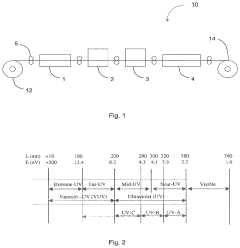
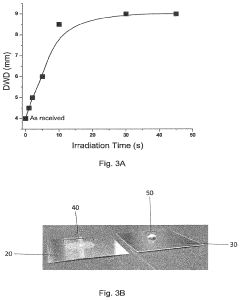
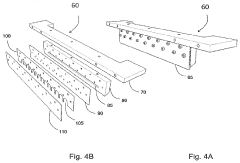
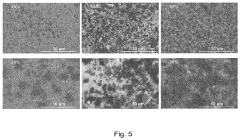
A method of providing a graphene coating on a carbon steel substrate
PatentWO2018085988A1
Innovation
- Development of a graphene coating method for carbon steel substrates with low Ni content, which was previously challenging in the field.
- Implementation of a specific heating and rapid cooling process (above 800°C followed by cooling below 700°C at a rate of at least 1°C/s) to effectively form graphene coatings.
- Achievement of significant anti-corrosion properties with the graphene coating, reducing corrosion rate by 54.8% on carbon steel.


Environmental and Safety Compliance Requirements
The export of graphene coatings is subject to stringent environmental and safety compliance requirements across different jurisdictions. These regulations aim to mitigate potential risks associated with nanomaterials while ensuring sustainable development of the graphene industry. At the international level, organizations such as the International Organization for Standardization (ISO) have developed specific standards for nanomaterials, including ISO/TS 80004-13:2017, which provides guidelines for graphene and related 2D materials characterization.
In the European Union, graphene coatings fall under the Registration, Evaluation, Authorization and Restriction of Chemicals (REACH) regulation, requiring manufacturers and importers to register substances produced or imported in quantities over one ton per year. The EU has also implemented the Classification, Labeling and Packaging (CLP) Regulation, mandating proper hazard communication for nanomaterials. Additionally, the EU's Biocidal Products Regulation (BPR) applies to graphene coatings with antimicrobial properties, requiring specific authorization procedures.
The United States regulates graphene coatings primarily through the Toxic Substances Control Act (TSCA), administered by the Environmental Protection Agency (EPA). Companies must submit premanufacture notices (PMNs) for new chemical substances, including nanomaterials like graphene. The Occupational Safety and Health Administration (OSHA) has established workplace exposure limits and safety protocols for handling nanomaterials, though specific standards for graphene are still evolving.
In Asia, countries like China, Japan, and South Korea have developed their own regulatory frameworks. China's Ministry of Ecology and Environment regulates graphene under its Measures for Environmental Management of New Chemical Substances. Japan employs the Chemical Substances Control Law (CSCL), while South Korea implements the Act on Registration and Evaluation of Chemicals (K-REACH).
Environmental compliance for graphene coating exports includes waste management protocols, emissions control during manufacturing, and proper disposal methods. Many jurisdictions require environmental impact assessments before granting permits for large-scale production facilities. Water quality standards must be met, as graphene particles could potentially contaminate aquatic ecosystems if improperly managed.
Worker safety regulations mandate appropriate personal protective equipment (PPE), specialized ventilation systems, and regular health monitoring for personnel handling graphene materials. Training programs on safe handling procedures are typically required by occupational health authorities. Emergency response protocols must be established to address potential spills or accidental releases.
Transportation of graphene coatings across borders must comply with international dangerous goods regulations, including proper packaging, labeling, and documentation requirements. The United Nations' Globally Harmonized System of Classification and Labelling of Chemicals (GHS) provides standardized hazard communication elements that many countries have adopted into their regulatory frameworks.
In the European Union, graphene coatings fall under the Registration, Evaluation, Authorization and Restriction of Chemicals (REACH) regulation, requiring manufacturers and importers to register substances produced or imported in quantities over one ton per year. The EU has also implemented the Classification, Labeling and Packaging (CLP) Regulation, mandating proper hazard communication for nanomaterials. Additionally, the EU's Biocidal Products Regulation (BPR) applies to graphene coatings with antimicrobial properties, requiring specific authorization procedures.
The United States regulates graphene coatings primarily through the Toxic Substances Control Act (TSCA), administered by the Environmental Protection Agency (EPA). Companies must submit premanufacture notices (PMNs) for new chemical substances, including nanomaterials like graphene. The Occupational Safety and Health Administration (OSHA) has established workplace exposure limits and safety protocols for handling nanomaterials, though specific standards for graphene are still evolving.
In Asia, countries like China, Japan, and South Korea have developed their own regulatory frameworks. China's Ministry of Ecology and Environment regulates graphene under its Measures for Environmental Management of New Chemical Substances. Japan employs the Chemical Substances Control Law (CSCL), while South Korea implements the Act on Registration and Evaluation of Chemicals (K-REACH).
Environmental compliance for graphene coating exports includes waste management protocols, emissions control during manufacturing, and proper disposal methods. Many jurisdictions require environmental impact assessments before granting permits for large-scale production facilities. Water quality standards must be met, as graphene particles could potentially contaminate aquatic ecosystems if improperly managed.
Worker safety regulations mandate appropriate personal protective equipment (PPE), specialized ventilation systems, and regular health monitoring for personnel handling graphene materials. Training programs on safe handling procedures are typically required by occupational health authorities. Emergency response protocols must be established to address potential spills or accidental releases.
Transportation of graphene coatings across borders must comply with international dangerous goods regulations, including proper packaging, labeling, and documentation requirements. The United Nations' Globally Harmonized System of Classification and Labelling of Chemicals (GHS) provides standardized hazard communication elements that many countries have adopted into their regulatory frameworks.
Intellectual Property Protection in Cross-Border Trade
Intellectual property protection represents a critical dimension in the cross-border trade of graphene coating technologies. The unique properties of graphene have led to a surge in patent applications globally, with major research institutions and corporations securing intellectual property rights for various applications of graphene coatings. These patents cover manufacturing processes, application methods, and specific formulations that enhance performance characteristics.
When exporting graphene coatings internationally, companies must navigate a complex landscape of intellectual property regimes that vary significantly across jurisdictions. The World Intellectual Property Organization (WIPO) provides a framework through the Patent Cooperation Treaty (PCT), which facilitates patent protection across multiple countries simultaneously. However, enforcement mechanisms and protection standards differ substantially between regions.
China, the United States, and the European Union have emerged as the primary patent holders for graphene coating technologies, creating potential barriers for new market entrants. Companies must conduct thorough freedom-to-operate analyses before engaging in cross-border trade to avoid infringement claims that could result in costly litigation or trade restrictions.
Trade secret protection represents another crucial aspect of intellectual property management in graphene coating exports. Many companies opt to protect proprietary formulations and manufacturing processes as trade secrets rather than patents, particularly when innovations might be reverse-engineered from the final product. The Agreement on Trade-Related Aspects of Intellectual Property Rights (TRIPS) provides minimum standards for trade secret protection, but enforcement varies significantly across borders.
Licensing agreements have become increasingly important tools for facilitating legal cross-border trade of graphene coating technologies. These agreements allow for technology transfer while maintaining intellectual property rights and generating revenue streams through royalties. Strategic licensing can help companies access new markets while controlling how their technologies are implemented.
Recent international disputes over graphene coating technologies highlight the need for robust intellectual property strategies. Several high-profile cases involving unauthorized use of patented graphene coating formulations have resulted in import bans and substantial financial penalties. These cases underscore the importance of conducting comprehensive intellectual property due diligence before engaging in cross-border trade activities.
Harmonization efforts through bilateral and multilateral trade agreements are gradually improving intellectual property protection standards globally. These agreements increasingly include specific provisions for emerging technologies like graphene coatings, providing more predictable legal frameworks for international trade. Companies engaged in graphene coating exports must stay informed about these evolving agreements to ensure compliance and maximize protection.
When exporting graphene coatings internationally, companies must navigate a complex landscape of intellectual property regimes that vary significantly across jurisdictions. The World Intellectual Property Organization (WIPO) provides a framework through the Patent Cooperation Treaty (PCT), which facilitates patent protection across multiple countries simultaneously. However, enforcement mechanisms and protection standards differ substantially between regions.
China, the United States, and the European Union have emerged as the primary patent holders for graphene coating technologies, creating potential barriers for new market entrants. Companies must conduct thorough freedom-to-operate analyses before engaging in cross-border trade to avoid infringement claims that could result in costly litigation or trade restrictions.
Trade secret protection represents another crucial aspect of intellectual property management in graphene coating exports. Many companies opt to protect proprietary formulations and manufacturing processes as trade secrets rather than patents, particularly when innovations might be reverse-engineered from the final product. The Agreement on Trade-Related Aspects of Intellectual Property Rights (TRIPS) provides minimum standards for trade secret protection, but enforcement varies significantly across borders.
Licensing agreements have become increasingly important tools for facilitating legal cross-border trade of graphene coating technologies. These agreements allow for technology transfer while maintaining intellectual property rights and generating revenue streams through royalties. Strategic licensing can help companies access new markets while controlling how their technologies are implemented.
Recent international disputes over graphene coating technologies highlight the need for robust intellectual property strategies. Several high-profile cases involving unauthorized use of patented graphene coating formulations have resulted in import bans and substantial financial penalties. These cases underscore the importance of conducting comprehensive intellectual property due diligence before engaging in cross-border trade activities.
Harmonization efforts through bilateral and multilateral trade agreements are gradually improving intellectual property protection standards globally. These agreements increasingly include specific provisions for emerging technologies like graphene coatings, providing more predictable legal frameworks for international trade. Companies engaged in graphene coating exports must stay informed about these evolving agreements to ensure compliance and maximize protection.
Unlock deeper insights with Patsnap Eureka Quick Research — get a full tech report to explore trends and direct your research. Try now!
Generate Your Research Report Instantly with AI Agent
Supercharge your innovation with Patsnap Eureka AI Agent Platform!