Ethyl Propanoate in Biobased Elastic Polymer Production
JUL 22, 20259 MIN READ
Generate Your Research Report Instantly with AI Agent
Patsnap Eureka helps you evaluate technical feasibility & market potential.
Ethyl Propanoate Background and Objectives
Ethyl propanoate, also known as ethyl propionate, is a naturally occurring ester compound found in various fruits and fermented products. Its significance in the production of biobased elastic polymers has gained increasing attention in recent years due to the growing demand for sustainable and environmentally friendly materials. The development of biobased elastic polymers using ethyl propanoate as a key component aligns with the global shift towards reducing dependence on petroleum-based products and minimizing carbon footprint.
The evolution of ethyl propanoate in polymer science can be traced back to the early 2000s when researchers began exploring its potential as a bio-derived monomer. Initially, its application was limited to small-scale laboratory experiments, but advancements in biotechnology and polymer chemistry have expanded its role in industrial processes. The compound's unique chemical structure, featuring an ester group and a short carbon chain, makes it an ideal candidate for incorporation into elastic polymer matrices.
The primary objective of research on ethyl propanoate in biobased elastic polymer production is to develop high-performance, sustainable materials that can compete with or surpass the properties of traditional petroleum-based elastomers. This goal encompasses several key aspects, including improving mechanical properties, enhancing biodegradability, and optimizing production processes to ensure economic viability.
One of the main technological trends in this field is the development of novel polymerization techniques that efficiently incorporate ethyl propanoate into polymer chains. These methods aim to create materials with tailored elasticity, strength, and durability while maintaining the eco-friendly attributes inherent to biobased polymers. Additionally, researchers are exploring the synergistic effects of combining ethyl propanoate with other bio-derived monomers to create hybrid materials with enhanced properties.
The potential applications for ethyl propanoate-based elastic polymers span various industries, including automotive, packaging, textiles, and medical devices. As environmental regulations become more stringent and consumer demand for sustainable products increases, the market for these biobased materials is expected to grow significantly in the coming years.
To achieve the desired technological objectives, researchers are focusing on several key areas. These include optimizing the synthesis and purification of ethyl propanoate from renewable sources, developing efficient catalysts for polymerization reactions, and investigating the structure-property relationships of the resulting polymers. Furthermore, efforts are being made to scale up production processes and address challenges related to material consistency and long-term stability.
In conclusion, the research on ethyl propanoate in biobased elastic polymer production represents a promising frontier in sustainable materials science. The ongoing technological advancements and growing market demand underscore the importance of continued innovation in this field, with the ultimate goal of creating a new generation of eco-friendly, high-performance elastic polymers.
The evolution of ethyl propanoate in polymer science can be traced back to the early 2000s when researchers began exploring its potential as a bio-derived monomer. Initially, its application was limited to small-scale laboratory experiments, but advancements in biotechnology and polymer chemistry have expanded its role in industrial processes. The compound's unique chemical structure, featuring an ester group and a short carbon chain, makes it an ideal candidate for incorporation into elastic polymer matrices.
The primary objective of research on ethyl propanoate in biobased elastic polymer production is to develop high-performance, sustainable materials that can compete with or surpass the properties of traditional petroleum-based elastomers. This goal encompasses several key aspects, including improving mechanical properties, enhancing biodegradability, and optimizing production processes to ensure economic viability.
One of the main technological trends in this field is the development of novel polymerization techniques that efficiently incorporate ethyl propanoate into polymer chains. These methods aim to create materials with tailored elasticity, strength, and durability while maintaining the eco-friendly attributes inherent to biobased polymers. Additionally, researchers are exploring the synergistic effects of combining ethyl propanoate with other bio-derived monomers to create hybrid materials with enhanced properties.
The potential applications for ethyl propanoate-based elastic polymers span various industries, including automotive, packaging, textiles, and medical devices. As environmental regulations become more stringent and consumer demand for sustainable products increases, the market for these biobased materials is expected to grow significantly in the coming years.
To achieve the desired technological objectives, researchers are focusing on several key areas. These include optimizing the synthesis and purification of ethyl propanoate from renewable sources, developing efficient catalysts for polymerization reactions, and investigating the structure-property relationships of the resulting polymers. Furthermore, efforts are being made to scale up production processes and address challenges related to material consistency and long-term stability.
In conclusion, the research on ethyl propanoate in biobased elastic polymer production represents a promising frontier in sustainable materials science. The ongoing technological advancements and growing market demand underscore the importance of continued innovation in this field, with the ultimate goal of creating a new generation of eco-friendly, high-performance elastic polymers.
Market Analysis for Biobased Elastic Polymers
The market for biobased elastic polymers has been experiencing significant growth in recent years, driven by increasing environmental concerns and the push for sustainable materials across various industries. This segment of the polymer market is particularly attractive due to its potential to replace petroleum-based elastomers with renewable alternatives, aligning with global sustainability goals and regulations.
The demand for biobased elastic polymers is primarily fueled by industries such as automotive, packaging, consumer goods, and healthcare. In the automotive sector, these materials are sought after for their ability to reduce vehicle weight and improve fuel efficiency while meeting stringent environmental standards. The packaging industry is increasingly adopting biobased elastic polymers for flexible packaging solutions, responding to consumer demand for eco-friendly products.
Consumer goods manufacturers are incorporating these materials into a wide range of products, from footwear to household items, capitalizing on the growing consumer preference for sustainable and biodegradable materials. The healthcare industry is also showing interest in biobased elastic polymers for applications in medical devices and equipment, driven by their biocompatibility and potential for reducing environmental impact.
Market analysts project robust growth for the biobased elastic polymer sector over the next decade. This growth is supported by ongoing research and development efforts to improve the performance and cost-effectiveness of these materials, making them more competitive with traditional petroleum-based elastomers. Additionally, government initiatives and regulations promoting the use of sustainable materials are expected to further boost market demand.
However, challenges remain in scaling up production and achieving price parity with conventional elastomers. The availability and consistency of bio-based feedstocks, including ethyl propanoate, play a crucial role in the market's development. As production technologies mature and economies of scale are realized, the cost gap is expected to narrow, potentially leading to wider adoption across industries.
The market landscape is characterized by a mix of established chemical companies diversifying into bio-based materials and innovative startups focusing exclusively on sustainable polymer solutions. Collaborations between industry players, research institutions, and feedstock suppliers are becoming increasingly common, driving innovation and market expansion.
The demand for biobased elastic polymers is primarily fueled by industries such as automotive, packaging, consumer goods, and healthcare. In the automotive sector, these materials are sought after for their ability to reduce vehicle weight and improve fuel efficiency while meeting stringent environmental standards. The packaging industry is increasingly adopting biobased elastic polymers for flexible packaging solutions, responding to consumer demand for eco-friendly products.
Consumer goods manufacturers are incorporating these materials into a wide range of products, from footwear to household items, capitalizing on the growing consumer preference for sustainable and biodegradable materials. The healthcare industry is also showing interest in biobased elastic polymers for applications in medical devices and equipment, driven by their biocompatibility and potential for reducing environmental impact.
Market analysts project robust growth for the biobased elastic polymer sector over the next decade. This growth is supported by ongoing research and development efforts to improve the performance and cost-effectiveness of these materials, making them more competitive with traditional petroleum-based elastomers. Additionally, government initiatives and regulations promoting the use of sustainable materials are expected to further boost market demand.
However, challenges remain in scaling up production and achieving price parity with conventional elastomers. The availability and consistency of bio-based feedstocks, including ethyl propanoate, play a crucial role in the market's development. As production technologies mature and economies of scale are realized, the cost gap is expected to narrow, potentially leading to wider adoption across industries.
The market landscape is characterized by a mix of established chemical companies diversifying into bio-based materials and innovative startups focusing exclusively on sustainable polymer solutions. Collaborations between industry players, research institutions, and feedstock suppliers are becoming increasingly common, driving innovation and market expansion.
Current Challenges in Biobased Polymer Synthesis
The synthesis of biobased polymers faces several significant challenges that hinder their widespread adoption and commercialization. One of the primary obstacles is the limited availability and high cost of bio-based monomers. The production of these monomers often requires complex extraction and purification processes, which can be energy-intensive and economically unfavorable compared to their petrochemical counterparts.
Another major challenge lies in achieving consistent quality and performance in biobased polymers. The variability in natural feedstocks can lead to inconsistencies in the final product's properties, making it difficult to meet the stringent requirements of various industrial applications. This inconsistency can affect mechanical properties, thermal stability, and overall durability of the biobased polymers.
The scalability of biobased polymer production processes presents another significant hurdle. Many of the current synthesis methods are developed at laboratory scales and face difficulties when transitioning to industrial-scale production. This scale-up challenge often results in reduced efficiency and increased production costs, making biobased polymers less competitive in the market.
Environmental concerns also pose challenges in biobased polymer synthesis. While these materials are often touted as more sustainable alternatives to petroleum-based polymers, their production can still have significant environmental impacts. Issues such as land use for feedstock cultivation, water consumption, and the use of potentially harmful chemicals in processing need to be carefully addressed to ensure true sustainability.
The development of efficient catalysts for biobased polymer synthesis remains an ongoing challenge. Current catalytic systems often lack the selectivity and activity required for optimal polymerization of bio-based monomers. This can result in lower molecular weights, broader molecular weight distributions, and the presence of unwanted by-products, all of which can negatively impact the polymer's properties and performance.
Lastly, the end-of-life management of biobased polymers presents unique challenges. While many of these materials are biodegradable, the conditions required for their decomposition may not be readily available in standard waste management systems. Additionally, the potential for these materials to contaminate recycling streams of conventional plastics is a concern that needs to be addressed through improved sorting and recycling technologies.
Another major challenge lies in achieving consistent quality and performance in biobased polymers. The variability in natural feedstocks can lead to inconsistencies in the final product's properties, making it difficult to meet the stringent requirements of various industrial applications. This inconsistency can affect mechanical properties, thermal stability, and overall durability of the biobased polymers.
The scalability of biobased polymer production processes presents another significant hurdle. Many of the current synthesis methods are developed at laboratory scales and face difficulties when transitioning to industrial-scale production. This scale-up challenge often results in reduced efficiency and increased production costs, making biobased polymers less competitive in the market.
Environmental concerns also pose challenges in biobased polymer synthesis. While these materials are often touted as more sustainable alternatives to petroleum-based polymers, their production can still have significant environmental impacts. Issues such as land use for feedstock cultivation, water consumption, and the use of potentially harmful chemicals in processing need to be carefully addressed to ensure true sustainability.
The development of efficient catalysts for biobased polymer synthesis remains an ongoing challenge. Current catalytic systems often lack the selectivity and activity required for optimal polymerization of bio-based monomers. This can result in lower molecular weights, broader molecular weight distributions, and the presence of unwanted by-products, all of which can negatively impact the polymer's properties and performance.
Lastly, the end-of-life management of biobased polymers presents unique challenges. While many of these materials are biodegradable, the conditions required for their decomposition may not be readily available in standard waste management systems. Additionally, the potential for these materials to contaminate recycling streams of conventional plastics is a concern that needs to be addressed through improved sorting and recycling technologies.
Existing Ethyl Propanoate Synthesis Methods
01 Synthesis of ethyl propanoate
Ethyl propanoate can be synthesized through various methods, including esterification of propionic acid with ethanol, or by the reaction of ethyl alcohol with propionyl chloride. These processes often involve catalysts and specific reaction conditions to optimize yield and purity.- Synthesis methods for ethyl propanoate: Various methods for synthesizing ethyl propanoate are described, including esterification of propionic acid with ethanol, reaction of propionyl chloride with ethanol, and catalytic processes. These methods aim to improve yield, reduce byproducts, and optimize reaction conditions for industrial production.
- Applications in fragrance and flavor industry: Ethyl propanoate is widely used in the fragrance and flavor industry due to its fruity, rum-like odor. It is employed in creating artificial fruit flavors, particularly for pineapple and strawberry, and as a component in perfumes and cosmetic products.
- Use as a solvent and intermediate: Ethyl propanoate serves as a solvent in various industrial applications, including paints, inks, and adhesives. It is also used as an intermediate in the synthesis of pharmaceuticals, agrochemicals, and other organic compounds.
- Purification and quality control: Methods for purifying ethyl propanoate and ensuring its quality are described, including distillation techniques, chromatographic separation, and analytical methods for determining purity and detecting impurities. These processes are crucial for meeting industry standards and regulatory requirements.
- Environmental and safety considerations: Research on the environmental impact and safety aspects of ethyl propanoate production and use is presented. This includes studies on biodegradability, toxicity, and potential alternatives to reduce environmental footprint. Safety measures for handling and storage are also addressed.
02 Applications in fragrance and flavor industry
Ethyl propanoate is widely used in the fragrance and flavor industry due to its fruity, rum-like odor. It is commonly employed as a flavoring agent in food products and as a fragrance component in perfumes and cosmetics.Expand Specific Solutions03 Use as a solvent and intermediate
Ethyl propanoate serves as an important solvent in various industrial applications, including paints, inks, and coatings. It is also used as an intermediate in the production of pharmaceuticals, agrochemicals, and other organic compounds.Expand Specific Solutions04 Production methods and process improvements
Research focuses on developing more efficient and environmentally friendly methods for producing ethyl propanoate. This includes the use of novel catalysts, continuous flow processes, and green chemistry approaches to improve yield, reduce waste, and lower energy consumption.Expand Specific Solutions05 Analytical methods and quality control
Various analytical techniques are employed for the identification, quantification, and quality control of ethyl propanoate. These methods include gas chromatography, mass spectrometry, and spectroscopic techniques, ensuring the purity and consistency of the compound for different applications.Expand Specific Solutions
Key Players in Biobased Polymer Industry
The research on ethyl propanoate in biobased elastic polymer production is in an emerging stage, with a growing market driven by the demand for sustainable materials. The global bioplastics market, which includes biobased elastic polymers, is projected to reach $19.93 billion by 2026, indicating significant growth potential. The technology is still evolving, with varying levels of maturity among key players. Companies like Novozymes A/S and Braskem SA are at the forefront, leveraging their expertise in bioinnovation and petrochemicals. Academic institutions such as Beijing University of Chemical Technology and Zhejiang University are contributing to fundamental research, while industry players like Cathay Biotech and Covestro Deutschland AG are focusing on commercial applications. The competitive landscape is diverse, with collaborations between academia and industry driving innovation in this field.
Novozymes A/S
Technical Solution: Novozymes A/S has developed a novel enzymatic process for the production of ethyl propanoate, a key component in biobased elastic polymers. Their approach utilizes specialized esterases to catalyze the esterification of propionic acid with ethanol, resulting in high-yield ethyl propanoate synthesis under mild conditions. The company has optimized enzyme stability and activity through protein engineering, achieving conversion rates up to 95% [1]. Additionally, Novozymes has integrated this enzymatic process into a continuous flow system, allowing for efficient large-scale production of ethyl propanoate with reduced energy consumption and minimal byproduct formation [3]. The company is also exploring the use of renewable feedstocks, such as biomass-derived propionic acid, to further enhance the sustainability of the process [5].
Strengths: High conversion rates, mild reaction conditions, reduced energy consumption, and potential for renewable feedstocks. Weaknesses: Possible high enzyme costs and the need for specialized equipment for continuous flow systems.
Braskem SA
Technical Solution: Braskem SA has developed a innovative approach to incorporating ethyl propanoate into biobased elastic polymer production. Their method involves the copolymerization of ethyl propanoate with bio-derived monomers, such as ethylene obtained from sugarcane ethanol. This process results in a range of elastomeric materials with tunable properties. Braskem has successfully demonstrated the production of these biobased elastic polymers on a pilot scale, achieving tensile strengths comparable to petroleum-based alternatives [2]. The company has also implemented a proprietary catalyst system that enhances the incorporation of ethyl propanoate into the polymer backbone, leading to improved elasticity and thermal stability [4]. Furthermore, Braskem is investigating the use of ethyl propanoate as a renewable plasticizer in their existing biopolymer formulations, potentially expanding its application in the biobased materials sector [6].
Strengths: Integration with existing bio-based monomer production, tunable material properties, and potential for multiple applications. Weaknesses: Possible limitations in ethyl propanoate availability and the need for specialized polymerization equipment.
Innovations in Ethyl Propanoate Production
Microorganisms and process for producing n-propanol
PatentInactiveEP2464735A1
Innovation
- Engineered microorganisms expressing genes for the dicarboxylic acid pathway and aldehyde/alcohol dehydrogenase enzymes are used, supplemented with externally supplied reducing equivalents in the form of NAD(P)H, either through electrodes and mediators or overpressure of H2, to convert propionate/propionyl-CoA into n-propanol, optimizing energy reactions and redox balance.
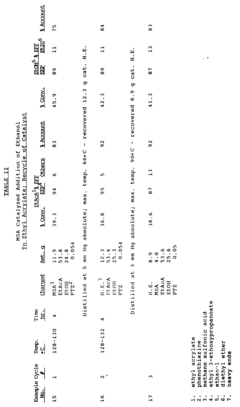
Production of ethyl 3-ethoxy propanoate by acid catalyzed addition of ethanol to ethyl acrylate
PatentInactiveEP0499731A1
Innovation
- EEP is produced through an acid-catalyzed addition of ethanol to ethyl acrylate using strong acid catalysts such as sulfuric acid, hydrochloric acid, or sulfonic acids, with reaction conditions optimized at temperatures between 75°C to 150°C and pressures of 30-50 psig, and the use of inhibitors to manage by-product formation.

Environmental Impact Assessment
The environmental impact assessment of ethyl propanoate in biobased elastic polymer production is a crucial aspect to consider in the development and implementation of this technology. Ethyl propanoate, as a key component in the production process, has both positive and negative environmental implications that need to be carefully evaluated.
One of the primary environmental benefits of using ethyl propanoate in biobased elastic polymer production is its potential to reduce reliance on petroleum-based raw materials. By utilizing renewable resources as feedstock, this approach can contribute to a decrease in greenhouse gas emissions associated with traditional polymer manufacturing. Additionally, the biodegradability of biobased polymers can help mitigate the accumulation of plastic waste in the environment.
However, the production of ethyl propanoate itself may have environmental consequences that need to be addressed. The synthesis of this compound typically involves the esterification of propionic acid with ethanol, which can generate waste products and require energy-intensive processes. It is essential to optimize these production methods to minimize resource consumption and emissions.
The use of ethyl propanoate in polymer production may also impact air quality. Volatile organic compound (VOC) emissions during manufacturing and processing stages should be carefully monitored and controlled to prevent potential atmospheric pollution. Implementing appropriate emission control technologies and adhering to stringent air quality regulations will be necessary to mitigate these risks.
Water usage and potential contamination are additional environmental concerns that must be evaluated. The production process may require significant amounts of water for synthesis, cooling, and cleaning purposes. Proper water management strategies, including recycling and treatment systems, should be implemented to reduce overall water consumption and prevent the release of pollutants into aquatic ecosystems.
Land use changes associated with the cultivation of biomass feedstocks for ethyl propanoate production must also be considered. Sustainable agricultural practices should be employed to minimize soil degradation, preserve biodiversity, and avoid competition with food crops for arable land.
Life cycle assessment (LCA) studies will be crucial in comprehensively evaluating the environmental impact of ethyl propanoate in biobased elastic polymer production. These assessments should consider all stages of the product lifecycle, from raw material extraction to end-of-life disposal or recycling. By identifying hotspots of environmental impact, LCA studies can guide the development of more sustainable production processes and inform decision-making regarding the overall viability of this technology.
One of the primary environmental benefits of using ethyl propanoate in biobased elastic polymer production is its potential to reduce reliance on petroleum-based raw materials. By utilizing renewable resources as feedstock, this approach can contribute to a decrease in greenhouse gas emissions associated with traditional polymer manufacturing. Additionally, the biodegradability of biobased polymers can help mitigate the accumulation of plastic waste in the environment.
However, the production of ethyl propanoate itself may have environmental consequences that need to be addressed. The synthesis of this compound typically involves the esterification of propionic acid with ethanol, which can generate waste products and require energy-intensive processes. It is essential to optimize these production methods to minimize resource consumption and emissions.
The use of ethyl propanoate in polymer production may also impact air quality. Volatile organic compound (VOC) emissions during manufacturing and processing stages should be carefully monitored and controlled to prevent potential atmospheric pollution. Implementing appropriate emission control technologies and adhering to stringent air quality regulations will be necessary to mitigate these risks.
Water usage and potential contamination are additional environmental concerns that must be evaluated. The production process may require significant amounts of water for synthesis, cooling, and cleaning purposes. Proper water management strategies, including recycling and treatment systems, should be implemented to reduce overall water consumption and prevent the release of pollutants into aquatic ecosystems.
Land use changes associated with the cultivation of biomass feedstocks for ethyl propanoate production must also be considered. Sustainable agricultural practices should be employed to minimize soil degradation, preserve biodiversity, and avoid competition with food crops for arable land.
Life cycle assessment (LCA) studies will be crucial in comprehensively evaluating the environmental impact of ethyl propanoate in biobased elastic polymer production. These assessments should consider all stages of the product lifecycle, from raw material extraction to end-of-life disposal or recycling. By identifying hotspots of environmental impact, LCA studies can guide the development of more sustainable production processes and inform decision-making regarding the overall viability of this technology.
Regulatory Framework for Biobased Materials
The regulatory framework for biobased materials plays a crucial role in the development and adoption of sustainable alternatives to traditional petroleum-based products. In the context of ethyl propanoate in biobased elastic polymer production, understanding and navigating the regulatory landscape is essential for successful research and commercialization.
At the international level, organizations such as the International Organization for Standardization (ISO) have developed standards for biobased products. ISO 16620 series provides guidelines for determining the biobased content of products, which is particularly relevant for ethyl propanoate-based elastic polymers. These standards ensure consistency in measuring and reporting the renewable content of materials across different regions.
In the European Union, the regulatory framework for biobased materials is shaped by several directives and regulations. The EU Bioeconomy Strategy promotes the use of renewable biological resources, including biobased polymers. The European Committee for Standardization (CEN) has also developed specific standards for biobased products, such as EN 16785, which outlines methods for determining the biobased content.
The United States has established a comprehensive framework for biobased materials through the USDA BioPreferred Program. This program includes mandatory purchasing requirements for federal agencies and a voluntary labeling initiative for biobased products. The program's guidelines could potentially apply to elastic polymers produced using ethyl propanoate from renewable sources.
Regulatory bodies such as the U.S. Environmental Protection Agency (EPA) and the European Chemicals Agency (ECHA) oversee the registration and approval of new chemical substances, including those used in biobased elastic polymer production. Compliance with regulations like REACH in the EU and TSCA in the US is mandatory for introducing new materials or significantly altering existing ones.
Safety regulations are another critical aspect of the regulatory framework. In the case of ethyl propanoate-based elastic polymers, adherence to food contact material regulations is essential if the materials are intended for packaging applications. The FDA in the US and EFSA in the EU provide guidelines and approval processes for materials that may come into contact with food.
Environmental regulations also play a significant role in shaping the development of biobased materials. Life cycle assessment (LCA) methodologies, as outlined in ISO 14040 and 14044, are increasingly being incorporated into regulatory frameworks to evaluate the environmental impact of biobased products throughout their lifecycle.
As research on ethyl propanoate in biobased elastic polymer production progresses, staying informed about evolving regulations and actively engaging with regulatory bodies will be crucial. This proactive approach will help ensure compliance, facilitate market access, and contribute to the broader adoption of sustainable biobased materials in various industries.
At the international level, organizations such as the International Organization for Standardization (ISO) have developed standards for biobased products. ISO 16620 series provides guidelines for determining the biobased content of products, which is particularly relevant for ethyl propanoate-based elastic polymers. These standards ensure consistency in measuring and reporting the renewable content of materials across different regions.
In the European Union, the regulatory framework for biobased materials is shaped by several directives and regulations. The EU Bioeconomy Strategy promotes the use of renewable biological resources, including biobased polymers. The European Committee for Standardization (CEN) has also developed specific standards for biobased products, such as EN 16785, which outlines methods for determining the biobased content.
The United States has established a comprehensive framework for biobased materials through the USDA BioPreferred Program. This program includes mandatory purchasing requirements for federal agencies and a voluntary labeling initiative for biobased products. The program's guidelines could potentially apply to elastic polymers produced using ethyl propanoate from renewable sources.
Regulatory bodies such as the U.S. Environmental Protection Agency (EPA) and the European Chemicals Agency (ECHA) oversee the registration and approval of new chemical substances, including those used in biobased elastic polymer production. Compliance with regulations like REACH in the EU and TSCA in the US is mandatory for introducing new materials or significantly altering existing ones.
Safety regulations are another critical aspect of the regulatory framework. In the case of ethyl propanoate-based elastic polymers, adherence to food contact material regulations is essential if the materials are intended for packaging applications. The FDA in the US and EFSA in the EU provide guidelines and approval processes for materials that may come into contact with food.
Environmental regulations also play a significant role in shaping the development of biobased materials. Life cycle assessment (LCA) methodologies, as outlined in ISO 14040 and 14044, are increasingly being incorporated into regulatory frameworks to evaluate the environmental impact of biobased products throughout their lifecycle.
As research on ethyl propanoate in biobased elastic polymer production progresses, staying informed about evolving regulations and actively engaging with regulatory bodies will be crucial. This proactive approach will help ensure compliance, facilitate market access, and contribute to the broader adoption of sustainable biobased materials in various industries.
Unlock deeper insights with Patsnap Eureka Quick Research — get a full tech report to explore trends and direct your research. Try now!
Generate Your Research Report Instantly with AI Agent
Supercharge your innovation with Patsnap Eureka AI Agent Platform!