Ethyl Propanoate Interactions with Biological Membranes
JUL 22, 20259 MIN READ
Generate Your Research Report Instantly with AI Agent
Patsnap Eureka helps you evaluate technical feasibility & market potential.
Background and Objectives
Ethyl propanoate, also known as ethyl propionate, is an organic compound widely used in the food and fragrance industries due to its fruity aroma. In recent years, there has been growing interest in understanding the interactions between this ester and biological membranes, as these interactions play a crucial role in various physiological processes and potential applications in drug delivery systems.
The study of ethyl propanoate's interactions with biological membranes is rooted in the broader field of membrane biophysics, which has seen significant advancements over the past few decades. Biological membranes are complex structures composed of lipids, proteins, and carbohydrates, forming a selective barrier that regulates the passage of molecules in and out of cells. Understanding how small organic molecules like ethyl propanoate interact with these membranes is essential for predicting their behavior in biological systems and developing novel applications.
The primary objective of this research is to elucidate the mechanisms by which ethyl propanoate interacts with biological membranes at the molecular level. This includes investigating the partitioning behavior of the compound between aqueous and lipid phases, its effects on membrane fluidity and permeability, and any potential structural changes induced in the membrane. Additionally, the research aims to explore how these interactions may influence cellular processes and the potential implications for drug delivery and toxicology.
Recent technological advancements have significantly enhanced our ability to study membrane-molecule interactions. High-resolution imaging techniques, such as atomic force microscopy and cryo-electron microscopy, now allow researchers to visualize membrane structures with unprecedented detail. Spectroscopic methods, including nuclear magnetic resonance (NMR) and fluorescence spectroscopy, provide valuable insights into the dynamics of membrane-molecule interactions. Computational approaches, such as molecular dynamics simulations, have also become powerful tools for modeling these complex systems at the atomic level.
The growing interest in this field is driven by several factors. First, there is a need to better understand the mechanisms of action for various drugs and chemicals that interact with cellular membranes. This knowledge can lead to the development of more effective and targeted therapies. Second, the food and fragrance industries are constantly seeking ways to optimize the delivery and release of flavor and aroma compounds, many of which are esters like ethyl propanoate. Lastly, environmental concerns have sparked interest in understanding how various chemicals, including esters, may affect biological systems in ecosystems.
As we delve deeper into this research, we anticipate uncovering new insights that could have far-reaching implications across multiple disciplines, including pharmacology, toxicology, food science, and environmental science. The findings from this study may pave the way for innovative approaches in drug delivery, flavor encapsulation, and the assessment of environmental impacts of organic compounds.
The study of ethyl propanoate's interactions with biological membranes is rooted in the broader field of membrane biophysics, which has seen significant advancements over the past few decades. Biological membranes are complex structures composed of lipids, proteins, and carbohydrates, forming a selective barrier that regulates the passage of molecules in and out of cells. Understanding how small organic molecules like ethyl propanoate interact with these membranes is essential for predicting their behavior in biological systems and developing novel applications.
The primary objective of this research is to elucidate the mechanisms by which ethyl propanoate interacts with biological membranes at the molecular level. This includes investigating the partitioning behavior of the compound between aqueous and lipid phases, its effects on membrane fluidity and permeability, and any potential structural changes induced in the membrane. Additionally, the research aims to explore how these interactions may influence cellular processes and the potential implications for drug delivery and toxicology.
Recent technological advancements have significantly enhanced our ability to study membrane-molecule interactions. High-resolution imaging techniques, such as atomic force microscopy and cryo-electron microscopy, now allow researchers to visualize membrane structures with unprecedented detail. Spectroscopic methods, including nuclear magnetic resonance (NMR) and fluorescence spectroscopy, provide valuable insights into the dynamics of membrane-molecule interactions. Computational approaches, such as molecular dynamics simulations, have also become powerful tools for modeling these complex systems at the atomic level.
The growing interest in this field is driven by several factors. First, there is a need to better understand the mechanisms of action for various drugs and chemicals that interact with cellular membranes. This knowledge can lead to the development of more effective and targeted therapies. Second, the food and fragrance industries are constantly seeking ways to optimize the delivery and release of flavor and aroma compounds, many of which are esters like ethyl propanoate. Lastly, environmental concerns have sparked interest in understanding how various chemicals, including esters, may affect biological systems in ecosystems.
As we delve deeper into this research, we anticipate uncovering new insights that could have far-reaching implications across multiple disciplines, including pharmacology, toxicology, food science, and environmental science. The findings from this study may pave the way for innovative approaches in drug delivery, flavor encapsulation, and the assessment of environmental impacts of organic compounds.
Market Analysis
The market for ethyl propanoate and its interactions with biological membranes is experiencing significant growth, driven by its diverse applications in pharmaceuticals, cosmetics, and food industries. As a key ingredient in flavoring agents and fragrances, ethyl propanoate's market demand is closely tied to consumer preferences and the expanding processed food sector.
In the pharmaceutical industry, the research on ethyl propanoate's interactions with biological membranes has gained traction due to its potential in drug delivery systems. The ability of this compound to interact with cell membranes makes it a promising candidate for enhancing drug absorption and efficacy. This has led to increased investment in research and development activities, particularly in the field of targeted drug delivery.
The cosmetics industry has also shown growing interest in ethyl propanoate, primarily due to its pleasant fruity aroma and potential skin-penetrating properties. As consumers increasingly demand natural and effective skincare products, the market for ingredients that can enhance the delivery of active compounds through the skin barrier has expanded.
In the food industry, ethyl propanoate continues to be a popular flavoring agent, particularly in fruit-flavored products. The compound's natural occurrence in fruits like apples and pears makes it an attractive option for manufacturers seeking to create authentic fruit flavors. The clean label trend and consumer preference for natural ingredients have further boosted the demand for ethyl propanoate in this sector.
The global market for esters, including ethyl propanoate, is projected to grow steadily over the next few years. This growth is attributed to the increasing use of esters in various end-use industries, including pharmaceuticals, personal care, and food & beverages. The Asia-Pacific region is expected to witness the highest growth rate, driven by rapid industrialization and increasing consumer spending power in countries like China and India.
However, the market faces challenges related to regulatory compliance and safety concerns. As research on ethyl propanoate's interactions with biological membranes progresses, there is a growing need for comprehensive safety assessments to ensure its appropriate use in consumer products. This has led to increased collaboration between industry players and research institutions to address these concerns and develop standardized testing protocols.
The competitive landscape of the ethyl propanoate market is characterized by the presence of both large multinational corporations and smaller specialized chemical companies. Key players are focusing on research and development to explore new applications and improve production processes. Strategic partnerships and collaborations are becoming increasingly common as companies seek to leverage each other's expertise and resources in this rapidly evolving field.
In the pharmaceutical industry, the research on ethyl propanoate's interactions with biological membranes has gained traction due to its potential in drug delivery systems. The ability of this compound to interact with cell membranes makes it a promising candidate for enhancing drug absorption and efficacy. This has led to increased investment in research and development activities, particularly in the field of targeted drug delivery.
The cosmetics industry has also shown growing interest in ethyl propanoate, primarily due to its pleasant fruity aroma and potential skin-penetrating properties. As consumers increasingly demand natural and effective skincare products, the market for ingredients that can enhance the delivery of active compounds through the skin barrier has expanded.
In the food industry, ethyl propanoate continues to be a popular flavoring agent, particularly in fruit-flavored products. The compound's natural occurrence in fruits like apples and pears makes it an attractive option for manufacturers seeking to create authentic fruit flavors. The clean label trend and consumer preference for natural ingredients have further boosted the demand for ethyl propanoate in this sector.
The global market for esters, including ethyl propanoate, is projected to grow steadily over the next few years. This growth is attributed to the increasing use of esters in various end-use industries, including pharmaceuticals, personal care, and food & beverages. The Asia-Pacific region is expected to witness the highest growth rate, driven by rapid industrialization and increasing consumer spending power in countries like China and India.
However, the market faces challenges related to regulatory compliance and safety concerns. As research on ethyl propanoate's interactions with biological membranes progresses, there is a growing need for comprehensive safety assessments to ensure its appropriate use in consumer products. This has led to increased collaboration between industry players and research institutions to address these concerns and develop standardized testing protocols.
The competitive landscape of the ethyl propanoate market is characterized by the presence of both large multinational corporations and smaller specialized chemical companies. Key players are focusing on research and development to explore new applications and improve production processes. Strategic partnerships and collaborations are becoming increasingly common as companies seek to leverage each other's expertise and resources in this rapidly evolving field.
Current Challenges
The research on ethyl propanoate interactions with biological membranes faces several significant challenges that hinder progress in this field. One of the primary obstacles is the complexity of biological membrane structures, which makes it difficult to isolate and study the specific interactions of ethyl propanoate. The heterogeneous nature of cell membranes, composed of various lipids, proteins, and carbohydrates, creates a dynamic environment that complicates the analysis of individual molecular interactions.
Another challenge lies in the development of appropriate experimental models that accurately represent biological membranes while allowing for controlled studies of ethyl propanoate interactions. Current in vitro models, such as liposomes or supported lipid bilayers, may not fully capture the complexity of natural cell membranes, potentially leading to discrepancies between laboratory findings and in vivo behavior.
The limited sensitivity and resolution of existing analytical techniques pose additional hurdles in studying ethyl propanoate-membrane interactions at the molecular level. While advanced microscopy and spectroscopy methods have improved our ability to observe these interactions, there is still a need for more sophisticated tools that can provide real-time, high-resolution data on the dynamics of ethyl propanoate within membrane environments.
Furthermore, the transient nature of some ethyl propanoate-membrane interactions presents a challenge in capturing and quantifying these events. Short-lived or weak interactions may be difficult to detect and characterize using current methodologies, potentially overlooking important aspects of the compound's behavior in biological systems.
The influence of environmental factors, such as pH, temperature, and ionic strength, on ethyl propanoate-membrane interactions adds another layer of complexity to the research. These variables can significantly affect the behavior of both the compound and the membrane, making it challenging to establish consistent experimental conditions and interpret results across different studies.
Lastly, the translation of in vitro findings to in vivo applications remains a significant challenge. The behavior of ethyl propanoate in complex biological systems may differ from that observed in simplified experimental models, necessitating the development of more sophisticated approaches to bridge this gap and ensure the relevance of research findings to real-world applications.
Another challenge lies in the development of appropriate experimental models that accurately represent biological membranes while allowing for controlled studies of ethyl propanoate interactions. Current in vitro models, such as liposomes or supported lipid bilayers, may not fully capture the complexity of natural cell membranes, potentially leading to discrepancies between laboratory findings and in vivo behavior.
The limited sensitivity and resolution of existing analytical techniques pose additional hurdles in studying ethyl propanoate-membrane interactions at the molecular level. While advanced microscopy and spectroscopy methods have improved our ability to observe these interactions, there is still a need for more sophisticated tools that can provide real-time, high-resolution data on the dynamics of ethyl propanoate within membrane environments.
Furthermore, the transient nature of some ethyl propanoate-membrane interactions presents a challenge in capturing and quantifying these events. Short-lived or weak interactions may be difficult to detect and characterize using current methodologies, potentially overlooking important aspects of the compound's behavior in biological systems.
The influence of environmental factors, such as pH, temperature, and ionic strength, on ethyl propanoate-membrane interactions adds another layer of complexity to the research. These variables can significantly affect the behavior of both the compound and the membrane, making it challenging to establish consistent experimental conditions and interpret results across different studies.
Lastly, the translation of in vitro findings to in vivo applications remains a significant challenge. The behavior of ethyl propanoate in complex biological systems may differ from that observed in simplified experimental models, necessitating the development of more sophisticated approaches to bridge this gap and ensure the relevance of research findings to real-world applications.
Existing Methodologies
01 Chemical synthesis and reactions
Ethyl propanoate is involved in various chemical synthesis processes and reactions. It can be used as a reagent or intermediate in the production of other compounds. The interactions of ethyl propanoate in these processes are important for understanding its reactivity and potential applications in organic synthesis.- Chemical synthesis and reactions: Ethyl propanoate is involved in various chemical synthesis processes and reactions. It can be used as a reagent or intermediate in the production of other compounds. The interactions of ethyl propanoate in these processes are important for understanding its reactivity and potential applications in organic synthesis.
- Flavor and fragrance applications: Ethyl propanoate is widely used in the flavor and fragrance industry due to its fruity aroma. Its interactions with other compounds can affect the overall scent profile of a product. Understanding these interactions is crucial for developing new fragrances and flavoring agents.
- Solvent properties and interactions: As a solvent, ethyl propanoate interacts with various substances, affecting their solubility and other properties. These interactions are important in industrial processes, such as extraction or purification. The solvent properties of ethyl propanoate can be influenced by its interactions with other compounds in solution.
- Environmental and biological interactions: The interactions of ethyl propanoate with environmental factors and biological systems are of interest for assessing its impact and potential applications. This includes its biodegradability, interactions with microorganisms, and potential effects on various ecosystems.
- Analytical methods and detection: Various analytical methods are used to study the interactions of ethyl propanoate with other compounds or materials. These methods help in detecting, quantifying, and characterizing ethyl propanoate in different matrices, which is important for quality control and research purposes.
02 Flavor and fragrance applications
Ethyl propanoate is widely used in the flavor and fragrance industry due to its fruity aroma. Its interactions with other compounds can affect the overall scent profile of a product. Understanding these interactions is crucial for developing new flavors and fragrances with desired characteristics.Expand Specific Solutions03 Solvent properties and interactions
As a solvent, ethyl propanoate interacts with various substances, affecting their solubility and other properties. Its interactions with other solvents and solutes are important in formulation development for industries such as pharmaceuticals, cosmetics, and coatings.Expand Specific Solutions04 Environmental and biological interactions
The interactions of ethyl propanoate with environmental factors and biological systems are of interest for assessing its impact on ecosystems and human health. This includes its biodegradation, potential toxicity, and interactions with various organisms and biological molecules.Expand Specific Solutions05 Analytical methods and detection
Various analytical methods are employed to study the interactions of ethyl propanoate with other compounds and to detect its presence in different matrices. These methods are crucial for quality control, environmental monitoring, and research purposes in industries where ethyl propanoate is used or produced.Expand Specific Solutions
Key Industry Players
The research on ethyl propanoate interactions with biological membranes is in an early developmental stage, with a growing market potential as the understanding of membrane interactions advances. The competitive landscape is primarily dominated by academic institutions and research organizations, reflecting the fundamental nature of this research. Key players include the University of California, Zhejiang University of Technology, Cornell University, and Queen Mary University of London, indicating a global interest in this field. The technology's maturity is still evolving, with companies like LG Chem and Shell Internationale Research Maatschappij potentially exploring applications in materials science and petrochemicals. As the research progresses, it may attract more interest from pharmaceutical companies like Janssen Biotech and Pfizer for potential drug delivery applications.
The Regents of the University of California
Technical Solution: The University of California has conducted extensive research on ethyl propanoate interactions with biological membranes. Their approach involves using advanced spectroscopic techniques, including fluorescence spectroscopy and nuclear magnetic resonance (NMR), to study the molecular-level interactions between ethyl propanoate and model membrane systems. They have developed lipid bilayer models that closely mimic biological membranes, allowing for detailed analysis of how ethyl propanoate penetrates and affects membrane structure and function. Their studies have revealed that ethyl propanoate can alter membrane fluidity and permeability, potentially impacting cellular processes[1][3]. Additionally, they have explored the use of molecular dynamics simulations to complement experimental findings, providing insights into the energetics and kinetics of ethyl propanoate-membrane interactions[2].
Strengths: Comprehensive approach combining experimental and computational methods. Access to state-of-the-art research facilities. Weaknesses: May focus more on fundamental research rather than immediate practical applications.
Cornell University
Technical Solution: Cornell University's research on ethyl propanoate interactions with biological membranes focuses on the compound's impact on membrane transport processes. They have developed innovative microfluidic devices to study the real-time effects of ethyl propanoate on membrane permeability and ion channel function[1]. Their approach includes the use of patch-clamp electrophysiology techniques to measure changes in membrane conductance in the presence of ethyl propanoate. Cornell researchers have also investigated the potential use of ethyl propanoate as a permeation enhancer for drug delivery across biological barriers, such as the blood-brain barrier[2]. Their studies have shown that ethyl propanoate can temporarily increase membrane permeability without causing long-term damage to cellular structures, making it a promising candidate for targeted drug delivery systems[3].
Strengths: Strong focus on practical applications in drug delivery. Cutting-edge microfluidic technology for membrane studies. Weaknesses: May have limited focus on the broader ecological impacts of ethyl propanoate.
Key Research Findings
Electroporation and electrophoresis system and method for achieving molecular penetration into cells in vivo
PatentInactiveUS7668592B2
Innovation
- The use of a combination of high-intensity and low-intensity pulses to induce electroporation and electrophoretic movement of molecules, with the low-intensity pulses facilitating molecule adherence and movement within the interstitial space and through the permeabilized membrane, reducing the intensity and duration of pulses required for effective delivery.


Metabolic engineering of membrane proteins to improve escherichia coli membrane integrity and production of fatty acids
PatentInactiveUS20180371404A1
Innovation
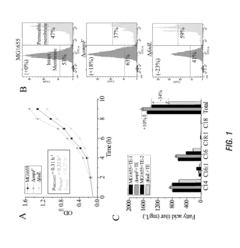
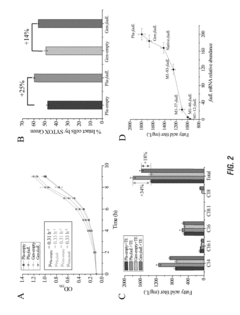
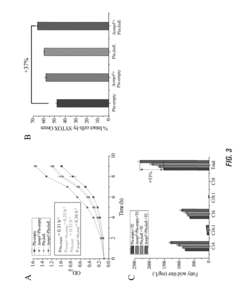
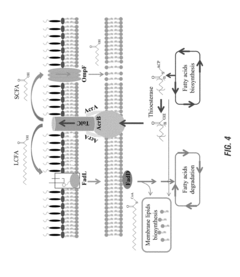
- Modulating the outer membrane proteins FADL and OmpF in bacteria to enhance membrane integrity and fatty acid production, achieved through specific genetic modifications such as overexpressing FADL and reducing OmpF activity, which increases membrane integrity and fatty acid tolerance.
Regulatory Considerations
The regulatory landscape surrounding ethyl propanoate and its interactions with biological membranes is complex and multifaceted. As a chemical compound used in various industries, including food and fragrance, ethyl propanoate is subject to regulatory oversight by multiple agencies worldwide.
In the United States, the Food and Drug Administration (FDA) plays a crucial role in regulating ethyl propanoate's use in food products. The FDA has classified ethyl propanoate as Generally Recognized as Safe (GRAS) for its intended use as a flavoring substance. However, its use in food applications must still comply with good manufacturing practices and adhere to specific concentration limits.
The Environmental Protection Agency (EPA) also has regulatory authority over ethyl propanoate, particularly concerning its potential environmental impact and workplace safety. Under the Toxic Substances Control Act (TSCA), the EPA requires manufacturers and importers to report certain information about ethyl propanoate production and use.
In the European Union, the European Food Safety Authority (EFSA) has evaluated ethyl propanoate and approved its use as a food flavoring agent. The European Chemicals Agency (ECHA) oversees the registration, evaluation, authorization, and restriction of chemicals, including ethyl propanoate, under the REACH regulation.
When it comes to research on ethyl propanoate's interactions with biological membranes, regulatory considerations extend to laboratory practices and ethical guidelines. Researchers must adhere to Good Laboratory Practice (GLP) standards, which ensure the quality and integrity of non-clinical laboratory studies. These standards are enforced by regulatory bodies such as the FDA in the US and the European Medicines Agency (EMA) in the EU.
Furthermore, if the research involves animal testing or human subjects, additional regulatory frameworks come into play. In the US, the Institutional Animal Care and Use Committee (IACUC) oversees animal research, while the Institutional Review Board (IRB) reviews and monitors human subject research. Similar bodies exist in other countries, such as the Animal Welfare and Ethical Review Body (AWERB) in the UK.
Researchers must also consider intellectual property regulations when conducting studies on ethyl propanoate and biological membranes. Patent laws and trade secret protections may impact the disclosure and commercialization of research findings. Additionally, international collaborations in this field must navigate cross-border regulations on data sharing and material transfer.
As the understanding of ethyl propanoate's interactions with biological membranes advances, regulatory bodies may update their guidelines and restrictions. Researchers and industry professionals must stay informed about these evolving regulations to ensure compliance and maximize the potential applications of their findings.
In the United States, the Food and Drug Administration (FDA) plays a crucial role in regulating ethyl propanoate's use in food products. The FDA has classified ethyl propanoate as Generally Recognized as Safe (GRAS) for its intended use as a flavoring substance. However, its use in food applications must still comply with good manufacturing practices and adhere to specific concentration limits.
The Environmental Protection Agency (EPA) also has regulatory authority over ethyl propanoate, particularly concerning its potential environmental impact and workplace safety. Under the Toxic Substances Control Act (TSCA), the EPA requires manufacturers and importers to report certain information about ethyl propanoate production and use.
In the European Union, the European Food Safety Authority (EFSA) has evaluated ethyl propanoate and approved its use as a food flavoring agent. The European Chemicals Agency (ECHA) oversees the registration, evaluation, authorization, and restriction of chemicals, including ethyl propanoate, under the REACH regulation.
When it comes to research on ethyl propanoate's interactions with biological membranes, regulatory considerations extend to laboratory practices and ethical guidelines. Researchers must adhere to Good Laboratory Practice (GLP) standards, which ensure the quality and integrity of non-clinical laboratory studies. These standards are enforced by regulatory bodies such as the FDA in the US and the European Medicines Agency (EMA) in the EU.
Furthermore, if the research involves animal testing or human subjects, additional regulatory frameworks come into play. In the US, the Institutional Animal Care and Use Committee (IACUC) oversees animal research, while the Institutional Review Board (IRB) reviews and monitors human subject research. Similar bodies exist in other countries, such as the Animal Welfare and Ethical Review Body (AWERB) in the UK.
Researchers must also consider intellectual property regulations when conducting studies on ethyl propanoate and biological membranes. Patent laws and trade secret protections may impact the disclosure and commercialization of research findings. Additionally, international collaborations in this field must navigate cross-border regulations on data sharing and material transfer.
As the understanding of ethyl propanoate's interactions with biological membranes advances, regulatory bodies may update their guidelines and restrictions. Researchers and industry professionals must stay informed about these evolving regulations to ensure compliance and maximize the potential applications of their findings.
Environmental Impact
The environmental impact of ethyl propanoate interactions with biological membranes is a critical aspect to consider in research and applications. This compound, commonly used as a flavoring agent and solvent, has the potential to affect ecosystems and organisms through various pathways.
When released into the environment, ethyl propanoate can partition into different compartments, including air, water, and soil. In the atmosphere, it undergoes photochemical degradation, contributing to the formation of ground-level ozone and other secondary pollutants. The half-life of ethyl propanoate in air is estimated to be relatively short, typically a few days, which limits its long-range transport potential.
In aquatic environments, ethyl propanoate's moderate water solubility allows it to dissolve and potentially interact with aquatic organisms. Its low octanol-water partition coefficient suggests limited bioaccumulation potential in aquatic food chains. However, the compound's ability to interact with biological membranes raises concerns about its effects on aquatic life, particularly on sensitive species or during critical life stages.
Soil contamination by ethyl propanoate can occur through spills or improper disposal. In soil, the compound is expected to have high mobility due to its physicochemical properties. This mobility increases the risk of groundwater contamination, potentially affecting drinking water sources and subterranean ecosystems.
The biodegradability of ethyl propanoate is an important factor in assessing its environmental persistence. Studies have shown that the compound is readily biodegradable under aerobic conditions, with microbial communities capable of metabolizing it as a carbon source. This characteristic helps mitigate long-term environmental accumulation but may also lead to temporary oxygen depletion in affected water bodies during rapid biodegradation processes.
Ecotoxicological studies on ethyl propanoate have revealed varying degrees of toxicity to different organisms. Aquatic invertebrates and fish may experience acute or chronic effects depending on exposure concentrations and duration. The compound's interaction with biological membranes can disrupt cellular functions, potentially leading to physiological stress or mortality in exposed organisms.
Plant life can also be affected by ethyl propanoate exposure. Foliar contact or root uptake may interfere with plant growth and development, although the extent of these effects can vary widely among species. The compound's volatility may contribute to phytotoxic effects through air-to-leaf transfer, particularly in areas with high atmospheric concentrations.
In conclusion, while ethyl propanoate's environmental impact is moderated by its relatively rapid degradation and low bioaccumulation potential, its interactions with biological membranes warrant careful consideration in risk assessments and environmental management strategies. Continued research is necessary to fully understand the long-term ecological consequences of its presence in various environmental compartments and to develop appropriate mitigation measures where needed.
When released into the environment, ethyl propanoate can partition into different compartments, including air, water, and soil. In the atmosphere, it undergoes photochemical degradation, contributing to the formation of ground-level ozone and other secondary pollutants. The half-life of ethyl propanoate in air is estimated to be relatively short, typically a few days, which limits its long-range transport potential.
In aquatic environments, ethyl propanoate's moderate water solubility allows it to dissolve and potentially interact with aquatic organisms. Its low octanol-water partition coefficient suggests limited bioaccumulation potential in aquatic food chains. However, the compound's ability to interact with biological membranes raises concerns about its effects on aquatic life, particularly on sensitive species or during critical life stages.
Soil contamination by ethyl propanoate can occur through spills or improper disposal. In soil, the compound is expected to have high mobility due to its physicochemical properties. This mobility increases the risk of groundwater contamination, potentially affecting drinking water sources and subterranean ecosystems.
The biodegradability of ethyl propanoate is an important factor in assessing its environmental persistence. Studies have shown that the compound is readily biodegradable under aerobic conditions, with microbial communities capable of metabolizing it as a carbon source. This characteristic helps mitigate long-term environmental accumulation but may also lead to temporary oxygen depletion in affected water bodies during rapid biodegradation processes.
Ecotoxicological studies on ethyl propanoate have revealed varying degrees of toxicity to different organisms. Aquatic invertebrates and fish may experience acute or chronic effects depending on exposure concentrations and duration. The compound's interaction with biological membranes can disrupt cellular functions, potentially leading to physiological stress or mortality in exposed organisms.
Plant life can also be affected by ethyl propanoate exposure. Foliar contact or root uptake may interfere with plant growth and development, although the extent of these effects can vary widely among species. The compound's volatility may contribute to phytotoxic effects through air-to-leaf transfer, particularly in areas with high atmospheric concentrations.
In conclusion, while ethyl propanoate's environmental impact is moderated by its relatively rapid degradation and low bioaccumulation potential, its interactions with biological membranes warrant careful consideration in risk assessments and environmental management strategies. Continued research is necessary to fully understand the long-term ecological consequences of its presence in various environmental compartments and to develop appropriate mitigation measures where needed.
Unlock deeper insights with Patsnap Eureka Quick Research — get a full tech report to explore trends and direct your research. Try now!
Generate Your Research Report Instantly with AI Agent
Supercharge your innovation with Patsnap Eureka AI Agent Platform!