Hexagonal Boron Nitride's Function in Temperature-Regulating Apparel
MAR 8, 20269 MIN READ
Generate Your Research Report Instantly with AI Agent
PatSnap Eureka helps you evaluate technical feasibility & market potential.
Hexagonal Boron Nitride Thermal Management Background and Goals
The development of advanced thermal management materials has become increasingly critical in modern textile applications, driven by growing consumer demands for adaptive clothing solutions and enhanced comfort across diverse environmental conditions. Traditional textile materials often fail to provide adequate thermal regulation, leading to discomfort during temperature fluctuations and limiting their effectiveness in specialized applications such as athletic wear, outdoor gear, and protective clothing.
Hexagonal boron nitride (h-BN) has emerged as a promising candidate for next-generation thermal management applications due to its unique combination of properties. This two-dimensional material exhibits exceptional thermal conductivity along its basal plane, reaching values comparable to graphene while maintaining electrical insulation properties. Unlike carbon-based alternatives, h-BN demonstrates remarkable chemical stability and biocompatibility, making it particularly suitable for direct-contact textile applications.
The historical evolution of thermal management in textiles has progressed from passive insulation materials to active thermal regulation systems. Early approaches relied primarily on natural fibers and basic synthetic materials with limited thermal control capabilities. The introduction of phase change materials marked a significant advancement, followed by the development of smart textiles incorporating electronic components. However, these solutions often suffered from durability issues, weight penalties, or complex manufacturing requirements.
Recent breakthroughs in nanomaterial synthesis and processing have opened new possibilities for integrating advanced materials like h-BN into textile structures. The ability to produce high-quality h-BN nanosheets through various synthesis methods, including chemical vapor deposition and liquid-phase exfoliation, has made large-scale textile applications increasingly feasible.
The primary technical objectives for incorporating h-BN into temperature-regulating apparel center on achieving efficient bidirectional heat transfer while maintaining textile flexibility and durability. Key goals include developing stable dispersion methods for h-BN integration into fiber matrices, optimizing thermal conductivity pathways within fabric structures, and ensuring long-term performance under repeated washing and mechanical stress cycles.
Furthermore, the research aims to establish scalable manufacturing processes that can economically produce h-BN-enhanced textiles while meeting industry standards for comfort, breathability, and aesthetic appeal. Understanding the fundamental mechanisms of thermal regulation through h-BN networks will enable the design of application-specific solutions ranging from lightweight athletic wear to heavy-duty protective equipment.
Hexagonal boron nitride (h-BN) has emerged as a promising candidate for next-generation thermal management applications due to its unique combination of properties. This two-dimensional material exhibits exceptional thermal conductivity along its basal plane, reaching values comparable to graphene while maintaining electrical insulation properties. Unlike carbon-based alternatives, h-BN demonstrates remarkable chemical stability and biocompatibility, making it particularly suitable for direct-contact textile applications.
The historical evolution of thermal management in textiles has progressed from passive insulation materials to active thermal regulation systems. Early approaches relied primarily on natural fibers and basic synthetic materials with limited thermal control capabilities. The introduction of phase change materials marked a significant advancement, followed by the development of smart textiles incorporating electronic components. However, these solutions often suffered from durability issues, weight penalties, or complex manufacturing requirements.
Recent breakthroughs in nanomaterial synthesis and processing have opened new possibilities for integrating advanced materials like h-BN into textile structures. The ability to produce high-quality h-BN nanosheets through various synthesis methods, including chemical vapor deposition and liquid-phase exfoliation, has made large-scale textile applications increasingly feasible.
The primary technical objectives for incorporating h-BN into temperature-regulating apparel center on achieving efficient bidirectional heat transfer while maintaining textile flexibility and durability. Key goals include developing stable dispersion methods for h-BN integration into fiber matrices, optimizing thermal conductivity pathways within fabric structures, and ensuring long-term performance under repeated washing and mechanical stress cycles.
Furthermore, the research aims to establish scalable manufacturing processes that can economically produce h-BN-enhanced textiles while meeting industry standards for comfort, breathability, and aesthetic appeal. Understanding the fundamental mechanisms of thermal regulation through h-BN networks will enable the design of application-specific solutions ranging from lightweight athletic wear to heavy-duty protective equipment.
Market Demand for Advanced Temperature-Regulating Textiles
The global textile industry is experiencing a paradigm shift toward functional and smart fabrics, with temperature-regulating apparel emerging as a high-growth segment driven by evolving consumer expectations and technological advancements. This market transformation reflects increasing demand for clothing that adapts to environmental conditions and enhances wearer comfort across diverse applications.
Consumer awareness of performance textiles has expanded significantly beyond traditional athletic wear into everyday apparel, workwear, and specialized applications. Modern consumers prioritize garments that offer multi-functional benefits, including thermal management, moisture control, and adaptive comfort features. This trend is particularly pronounced among active lifestyle demographics and professionals working in temperature-variable environments.
The outdoor recreation and sports apparel sectors represent primary demand drivers for advanced temperature-regulating textiles. Growing participation in outdoor activities, coupled with increasing performance expectations from athletic wear, has created substantial market opportunities. Professional applications including military uniforms, industrial workwear, and medical textiles also demonstrate strong demand for materials offering superior thermal regulation capabilities.
Healthcare and wellness applications present emerging market opportunities, particularly for textiles that support thermoregulation in medical garments, elderly care products, and therapeutic applications. The aging global population and increased focus on health-conscious living contribute to expanding demand in these specialized segments.
Technological convergence between materials science and textile manufacturing has enabled development of sophisticated thermal management solutions. Market demand increasingly favors textiles incorporating advanced materials that provide passive temperature regulation without compromising traditional fabric properties such as breathability, durability, and aesthetic appeal.
Regional market dynamics vary significantly, with developed markets emphasizing premium performance features while emerging markets focus on cost-effective solutions. Climate considerations also influence regional demand patterns, with extreme temperature environments driving adoption of advanced thermal management textiles.
The integration of nanotechnology and advanced materials like hexagonal boron nitride represents a significant opportunity to address current market limitations. Existing temperature-regulating textiles often rely on phase-change materials or synthetic fiber modifications that may compromise fabric hand-feel, washability, or long-term performance stability.
Market growth projections indicate sustained expansion driven by technological innovation, increasing consumer sophistication, and expanding application areas beyond traditional performance wear into mainstream fashion and functional apparel categories.
Consumer awareness of performance textiles has expanded significantly beyond traditional athletic wear into everyday apparel, workwear, and specialized applications. Modern consumers prioritize garments that offer multi-functional benefits, including thermal management, moisture control, and adaptive comfort features. This trend is particularly pronounced among active lifestyle demographics and professionals working in temperature-variable environments.
The outdoor recreation and sports apparel sectors represent primary demand drivers for advanced temperature-regulating textiles. Growing participation in outdoor activities, coupled with increasing performance expectations from athletic wear, has created substantial market opportunities. Professional applications including military uniforms, industrial workwear, and medical textiles also demonstrate strong demand for materials offering superior thermal regulation capabilities.
Healthcare and wellness applications present emerging market opportunities, particularly for textiles that support thermoregulation in medical garments, elderly care products, and therapeutic applications. The aging global population and increased focus on health-conscious living contribute to expanding demand in these specialized segments.
Technological convergence between materials science and textile manufacturing has enabled development of sophisticated thermal management solutions. Market demand increasingly favors textiles incorporating advanced materials that provide passive temperature regulation without compromising traditional fabric properties such as breathability, durability, and aesthetic appeal.
Regional market dynamics vary significantly, with developed markets emphasizing premium performance features while emerging markets focus on cost-effective solutions. Climate considerations also influence regional demand patterns, with extreme temperature environments driving adoption of advanced thermal management textiles.
The integration of nanotechnology and advanced materials like hexagonal boron nitride represents a significant opportunity to address current market limitations. Existing temperature-regulating textiles often rely on phase-change materials or synthetic fiber modifications that may compromise fabric hand-feel, washability, or long-term performance stability.
Market growth projections indicate sustained expansion driven by technological innovation, increasing consumer sophistication, and expanding application areas beyond traditional performance wear into mainstream fashion and functional apparel categories.
Current State of hBN Integration in Smart Textile Applications
The integration of hexagonal boron nitride (hBN) into smart textile applications represents an emerging frontier in advanced materials science, with current developments primarily concentrated in research institutions and specialized material companies. Leading organizations such as the National Institute for Materials Science in Japan, MIT's Department of Materials Science, and companies like Applied Nanostructured Solutions have pioneered initial applications of hBN in textile matrices. The technology remains largely in the experimental and prototype phases, with limited commercial deployment due to manufacturing complexities and cost considerations.
Current integration methods predominantly focus on coating and embedding techniques, where hBN nanoparticles are incorporated into synthetic fibers during the spinning process or applied as surface treatments to existing textile substrates. Research teams at Stanford University and the University of Manchester have demonstrated successful integration of hBN into polyester and nylon fibers, achieving thermal conductivity improvements of 15-25% compared to untreated materials. These early implementations primarily target high-performance applications in aerospace and military sectors, where cost sensitivity is lower than consumer markets.
The geographical distribution of hBN textile research shows concentration in North America, East Asia, and Europe, with China leading in production capacity and the United States dominating fundamental research. South Korean companies like LG Chem and Japanese firms including Showa Denko have established pilot production lines for hBN-enhanced fibers, though output remains limited to specialized applications. European research initiatives, particularly through Horizon Europe funding, focus on sustainable integration methods and environmental impact assessment.
Manufacturing challenges currently limit widespread adoption, including difficulties in achieving uniform dispersion of hBN particles within fiber matrices and maintaining particle integrity during textile processing. The hydrophobic nature of hBN requires surface functionalization to ensure compatibility with textile manufacturing processes, adding complexity and cost to production workflows. Additionally, quality control mechanisms for verifying hBN distribution and thermal performance in finished textiles remain underdeveloped, creating barriers for industrial scaling.
Recent technological advances have addressed some integration challenges through the development of modified hBN particles with enhanced surface chemistry and improved processing techniques. Plasma treatment methods and chemical vapor deposition approaches show promise for creating more uniform hBN distributions within textile structures, though these methods require significant capital investment and specialized expertise.
Current integration methods predominantly focus on coating and embedding techniques, where hBN nanoparticles are incorporated into synthetic fibers during the spinning process or applied as surface treatments to existing textile substrates. Research teams at Stanford University and the University of Manchester have demonstrated successful integration of hBN into polyester and nylon fibers, achieving thermal conductivity improvements of 15-25% compared to untreated materials. These early implementations primarily target high-performance applications in aerospace and military sectors, where cost sensitivity is lower than consumer markets.
The geographical distribution of hBN textile research shows concentration in North America, East Asia, and Europe, with China leading in production capacity and the United States dominating fundamental research. South Korean companies like LG Chem and Japanese firms including Showa Denko have established pilot production lines for hBN-enhanced fibers, though output remains limited to specialized applications. European research initiatives, particularly through Horizon Europe funding, focus on sustainable integration methods and environmental impact assessment.
Manufacturing challenges currently limit widespread adoption, including difficulties in achieving uniform dispersion of hBN particles within fiber matrices and maintaining particle integrity during textile processing. The hydrophobic nature of hBN requires surface functionalization to ensure compatibility with textile manufacturing processes, adding complexity and cost to production workflows. Additionally, quality control mechanisms for verifying hBN distribution and thermal performance in finished textiles remain underdeveloped, creating barriers for industrial scaling.
Recent technological advances have addressed some integration challenges through the development of modified hBN particles with enhanced surface chemistry and improved processing techniques. Plasma treatment methods and chemical vapor deposition approaches show promise for creating more uniform hBN distributions within textile structures, though these methods require significant capital investment and specialized expertise.
Existing hBN-Based Solutions for Thermal Regulation in Fabrics
01 Hexagonal boron nitride as thermal interface material
Hexagonal boron nitride can be utilized as a thermal interface material due to its excellent thermal conductivity properties. It facilitates efficient heat dissipation and temperature management in electronic devices and components. The material can be formulated into composites or coatings to enhance thermal management performance in various applications requiring temperature regulation.- Hexagonal boron nitride as thermal interface material: Hexagonal boron nitride can be utilized as a thermal interface material due to its excellent thermal conductivity properties. It facilitates efficient heat dissipation in electronic devices and components by providing a conductive pathway between heat-generating components and heat sinks. The material can be formulated into pastes, films, or composites to enhance thermal management in various applications, effectively regulating temperature in high-performance systems.
- Hexagonal boron nitride in polymer composites for thermal regulation: Hexagonal boron nitride can be incorporated into polymer matrices to create composite materials with enhanced thermal conductivity and temperature regulation capabilities. These composites maintain the mechanical properties of the polymer while significantly improving heat dissipation. The uniform dispersion of hexagonal boron nitride particles within the polymer enables effective thermal management in applications such as electronic packaging, automotive components, and thermal insulation materials.
- Hexagonal boron nitride coatings for temperature control: Hexagonal boron nitride can be applied as a coating material to provide thermal regulation and temperature control on various substrates. These coatings offer high thermal conductivity, chemical stability, and resistance to thermal shock. The coating technology enables uniform heat distribution and dissipation across surfaces, making it suitable for applications in aerospace, electronics cooling, and high-temperature industrial processes where precise temperature management is critical.
- Hexagonal boron nitride in phase change materials for thermal energy storage: Hexagonal boron nitride can be combined with phase change materials to enhance thermal energy storage and temperature regulation systems. The addition of hexagonal boron nitride improves the thermal conductivity of phase change materials, enabling faster heat transfer rates during charging and discharging cycles. This combination is particularly effective in applications requiring stable temperature maintenance, such as building climate control, battery thermal management, and solar energy storage systems.
- Hexagonal boron nitride nanostructures for advanced thermal management: Nanostructured forms of hexagonal boron nitride, including nanosheets and nanotubes, can be engineered for advanced thermal management applications. These nanostructures exhibit superior thermal conductivity and large surface areas, enabling highly efficient heat transfer and temperature regulation at the nanoscale. They can be integrated into electronic devices, sensors, and microelectromechanical systems to address thermal challenges in miniaturized and high-power-density applications.
02 Hexagonal boron nitride in polymer composites for thermal management
Hexagonal boron nitride can be incorporated into polymer matrices to create composite materials with enhanced thermal conductivity and temperature regulation capabilities. These composites are designed to provide effective heat transfer while maintaining mechanical properties. The addition of hexagonal boron nitride particles improves the thermal performance of polymeric materials used in heat-sensitive applications.Expand Specific Solutions03 Surface modification of hexagonal boron nitride for improved thermal properties
Surface treatment and functionalization of hexagonal boron nitride particles can enhance their dispersion in various matrices and improve thermal conductivity. Modified hexagonal boron nitride exhibits better compatibility with host materials, leading to more effective temperature regulation. These modifications can include chemical treatments or coating processes that optimize the thermal management performance.Expand Specific Solutions04 Hexagonal boron nitride in thermal insulation applications
Hexagonal boron nitride can be employed in thermal insulation systems where controlled temperature regulation is required. Its unique structure provides both thermal conductivity in certain directions and insulation properties in others. This dual functionality makes it suitable for applications requiring selective heat management and temperature control in high-temperature environments.Expand Specific Solutions05 Hexagonal boron nitride nanostructures for advanced thermal regulation
Nanostructured forms of hexagonal boron nitride, including nanosheets and nanotubes, offer enhanced thermal management capabilities due to their high surface area and unique morphology. These nanostructures can be integrated into advanced materials and devices for precise temperature control. The nanoscale dimensions enable improved thermal transport properties and more efficient heat dissipation in miniaturized systems.Expand Specific Solutions
Key Players in hBN Production and Smart Textile Manufacturing
The hexagonal boron nitride (hBN) temperature-regulating apparel market represents an emerging sector in the early development stage, characterized by significant research activity but limited commercial deployment. The market remains nascent with substantial growth potential as thermal management solutions gain importance across various applications. Technology maturity varies considerably across stakeholders, with established chemical manufacturers like Denka Corp., Tokuyama Corp., and 3M Innovative Properties Co. possessing advanced material synthesis capabilities, while companies such as DuPont de Nemours and Rogers Corp. demonstrate sophisticated material engineering expertise. Leading research institutions including MIT, Fudan University, KAIST, and Harbin Institute of Technology are driving fundamental research breakthroughs in hBN applications. Specialized materials companies like BGT Materials Ltd. and Tengjin New Material Technology represent the bridge between research and commercialization, though widespread market adoption remains limited by production scalability and cost considerations.
3M Innovative Properties Co.
Technical Solution: 3M has developed innovative h-BN composite materials for smart textile applications, incorporating their proprietary microreplication technology to create structured surfaces that enhance thermal regulation. Their approach involves embedding h-BN nanoparticles into specialized polymer films and coatings that can be integrated into fabric systems. The technology utilizes h-BN's unique thermal properties to create phase-change-like behavior in textiles, where the material actively responds to temperature variations. Their h-BN-based solutions include breathable membranes and coating systems that provide both thermal management and moisture control for advanced apparel applications.
Strengths: Strong R&D capabilities and diverse material processing technologies. Weaknesses: Complex manufacturing processes may limit scalability for mass market applications.
Fudan University
Technical Solution: Fudan University has conducted extensive research on h-BN integration in temperature-regulating textiles, focusing on developing scalable synthesis methods for h-BN-polymer composite fibers. Their research involves creating h-BN-enhanced electrospun nanofibers with controlled thermal conductivity properties for smart clothing applications. The university's approach includes surface modification of h-BN particles to improve dispersion in textile matrices and developing weaving techniques that optimize thermal management performance. Their work demonstrates significant improvements in thermal regulation efficiency while maintaining fabric breathability and comfort properties essential for wearable applications.
Strengths: Strong fundamental research in nanomaterials and textile engineering. Weaknesses: Academic focus with limited direct commercial manufacturing capabilities.
Core Patents in hBN Thermal Conductivity for Textile Applications
Boron nitride-based heat-radiating filler having enhanced vertical thermal conductivity, heat-radiating sheet, and manufacturing method therefor
PatentWO2019194421A1
Innovation
- Fusing hexagonal boron nitride to the surface of wire-shaped glass fibers using a binder, such as silica aerogel or boehmite sol, and optionally adding talc to enhance vertical thermal conductivity and reduce manufacturing costs, while allowing for easier orientation to achieve isotropic thermal conductivity.


Functional sheath-core bicomponent fiber comprising hexagonal boron nitride
PatentWO2020159409A1
Innovation
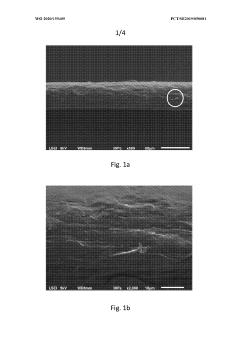
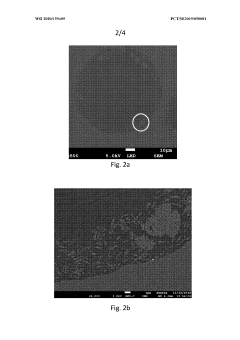
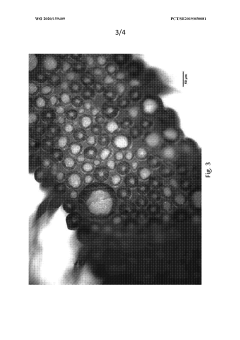
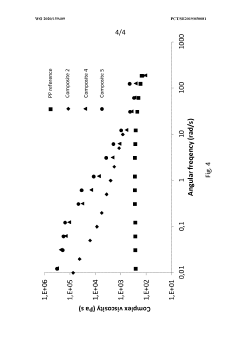
- A sheath-core bicomponent fiber design where hexagonal boron nitride is incorporated in the core, combined with a thermoplastic polymer and a coupling agent, allowing for higher loadings and improved spinnability while maintaining mechanical properties, with a sheath comprising a different thermoplastic polymer to enhance thermal conductivity.
Environmental Impact Assessment of hBN Manufacturing Processes
The manufacturing of hexagonal boron nitride for temperature-regulating apparel applications presents significant environmental considerations that require comprehensive assessment. The production processes involve high-temperature synthesis methods, chemical vapor deposition, and various purification techniques that collectively generate substantial environmental impacts across multiple dimensions.
Energy consumption represents the most significant environmental burden in hBN manufacturing. The synthesis of high-quality hBN typically requires temperatures exceeding 1800°C, demanding intensive energy input from fossil fuel or electrical sources. Chemical vapor deposition processes, commonly employed for producing uniform hBN films, operate at temperatures between 1000-1400°C for extended periods, resulting in considerable carbon footprint generation. The energy intensity of these processes is estimated to be 15-25 times higher than conventional textile material production.
Chemical precursor utilization introduces additional environmental concerns through raw material extraction and processing. Boron-containing compounds such as boron trioxide and ammonia borane require energy-intensive purification processes. Nitrogen sources, including ammonia and nitrogen gas, contribute to greenhouse gas emissions during production and transportation. The synthesis reactions often generate byproducts including hydrogen gas, water vapor, and unreacted precursors that require proper management and disposal protocols.
Waste stream management poses complex challenges due to the chemical nature of manufacturing residues. Unreacted boron compounds and nitrogen-containing byproducts require specialized treatment to prevent environmental contamination. Solvent-based purification processes generate organic waste streams that demand careful handling and disposal. The crystalline structure of hBN makes material recycling technically challenging, potentially leading to increased waste generation compared to conventional textile materials.
Water resource utilization occurs primarily during cooling processes and chemical purification stages. High-temperature synthesis requires substantial cooling water volumes, potentially affecting local water resources. Chemical washing and purification steps consume additional water resources while generating contaminated wastewater streams containing boron compounds and organic solvents.
Air quality impacts emerge from high-temperature processing and chemical handling operations. Volatile organic compounds released during synthesis and purification processes contribute to atmospheric pollution. Particulate matter generation during mechanical processing and handling of hBN powders requires effective filtration and containment systems to prevent environmental release.
The environmental impact assessment reveals that while hBN offers superior performance characteristics for temperature-regulating apparel, its manufacturing processes require significant environmental mitigation strategies to achieve sustainable production scales for commercial textile applications.
Energy consumption represents the most significant environmental burden in hBN manufacturing. The synthesis of high-quality hBN typically requires temperatures exceeding 1800°C, demanding intensive energy input from fossil fuel or electrical sources. Chemical vapor deposition processes, commonly employed for producing uniform hBN films, operate at temperatures between 1000-1400°C for extended periods, resulting in considerable carbon footprint generation. The energy intensity of these processes is estimated to be 15-25 times higher than conventional textile material production.
Chemical precursor utilization introduces additional environmental concerns through raw material extraction and processing. Boron-containing compounds such as boron trioxide and ammonia borane require energy-intensive purification processes. Nitrogen sources, including ammonia and nitrogen gas, contribute to greenhouse gas emissions during production and transportation. The synthesis reactions often generate byproducts including hydrogen gas, water vapor, and unreacted precursors that require proper management and disposal protocols.
Waste stream management poses complex challenges due to the chemical nature of manufacturing residues. Unreacted boron compounds and nitrogen-containing byproducts require specialized treatment to prevent environmental contamination. Solvent-based purification processes generate organic waste streams that demand careful handling and disposal. The crystalline structure of hBN makes material recycling technically challenging, potentially leading to increased waste generation compared to conventional textile materials.
Water resource utilization occurs primarily during cooling processes and chemical purification stages. High-temperature synthesis requires substantial cooling water volumes, potentially affecting local water resources. Chemical washing and purification steps consume additional water resources while generating contaminated wastewater streams containing boron compounds and organic solvents.
Air quality impacts emerge from high-temperature processing and chemical handling operations. Volatile organic compounds released during synthesis and purification processes contribute to atmospheric pollution. Particulate matter generation during mechanical processing and handling of hBN powders requires effective filtration and containment systems to prevent environmental release.
The environmental impact assessment reveals that while hBN offers superior performance characteristics for temperature-regulating apparel, its manufacturing processes require significant environmental mitigation strategies to achieve sustainable production scales for commercial textile applications.
Safety Standards for Nanomaterial Integration in Wearable Textiles
The integration of hexagonal boron nitride (h-BN) nanomaterials into temperature-regulating apparel necessitates comprehensive safety standards to ensure consumer protection and regulatory compliance. Current international frameworks primarily rely on existing nanomaterial guidelines from organizations such as ISO, ASTM, and OEKO-TEX, which provide foundational principles but require specific adaptations for h-BN applications in textiles.
Dermal exposure assessment represents a critical component of safety evaluation for h-BN-integrated fabrics. Standard protocols must establish maximum allowable particle release rates during normal wear conditions, washing cycles, and mechanical stress. The unique layered structure of h-BN requires specialized testing methodologies to evaluate potential skin penetration and irritation effects, particularly considering prolonged contact periods typical in apparel applications.
Inhalation safety standards focus on airborne particle release during textile manufacturing, processing, and end-of-life disposal. Established threshold limit values for h-BN nanoparticles must account for occupational exposure in production facilities and potential consumer exposure during fabric handling. Current guidelines suggest maintaining particle concentrations below 0.5 mg/m³ for workplace environments, though specific limits for consumer textiles remain under development.
Biocompatibility testing protocols require adaptation of existing ISO 10993 standards for textile-specific applications. These modified standards must evaluate cytotoxicity, sensitization potential, and systemic toxicity through standardized test methods including MTT assays, patch testing, and chronic exposure studies. The chemically inert nature of h-BN generally supports favorable biocompatibility profiles, but comprehensive validation remains essential.
Environmental safety considerations encompass lifecycle assessment protocols for h-BN nanomaterial release into water systems and soil during textile washing and disposal. Emerging standards address ecotoxicity testing using standardized organisms such as Daphnia magna and Pseudokirchneriella subcapitata to evaluate environmental impact thresholds.
Quality control standards mandate consistent characterization of h-BN particle size distribution, surface chemistry, and structural integrity throughout the textile manufacturing process. These specifications ensure predictable performance while maintaining safety parameters within established limits for commercial temperature-regulating apparel applications.
Dermal exposure assessment represents a critical component of safety evaluation for h-BN-integrated fabrics. Standard protocols must establish maximum allowable particle release rates during normal wear conditions, washing cycles, and mechanical stress. The unique layered structure of h-BN requires specialized testing methodologies to evaluate potential skin penetration and irritation effects, particularly considering prolonged contact periods typical in apparel applications.
Inhalation safety standards focus on airborne particle release during textile manufacturing, processing, and end-of-life disposal. Established threshold limit values for h-BN nanoparticles must account for occupational exposure in production facilities and potential consumer exposure during fabric handling. Current guidelines suggest maintaining particle concentrations below 0.5 mg/m³ for workplace environments, though specific limits for consumer textiles remain under development.
Biocompatibility testing protocols require adaptation of existing ISO 10993 standards for textile-specific applications. These modified standards must evaluate cytotoxicity, sensitization potential, and systemic toxicity through standardized test methods including MTT assays, patch testing, and chronic exposure studies. The chemically inert nature of h-BN generally supports favorable biocompatibility profiles, but comprehensive validation remains essential.
Environmental safety considerations encompass lifecycle assessment protocols for h-BN nanomaterial release into water systems and soil during textile washing and disposal. Emerging standards address ecotoxicity testing using standardized organisms such as Daphnia magna and Pseudokirchneriella subcapitata to evaluate environmental impact thresholds.
Quality control standards mandate consistent characterization of h-BN particle size distribution, surface chemistry, and structural integrity throughout the textile manufacturing process. These specifications ensure predictable performance while maintaining safety parameters within established limits for commercial temperature-regulating apparel applications.
Unlock deeper insights with PatSnap Eureka Quick Research — get a full tech report to explore trends and direct your research. Try now!
Generate Your Research Report Instantly with AI Agent
Supercharge your innovation with PatSnap Eureka AI Agent Platform!