

Inverse Emulsion Polyacrylamide: Advanced Synthesis, Characterization, And Industrial Applications
AUG 11, 20264 MIN READ
Generate Your Research Report Instantly with AI Agent
Patsnap Eureka helps you evaluate technical feasibility & market potential.
Polyimide Technology Background And Goals
## Directory: 技术背景与目标
Polyimide is a high-performance polymer known for its excellent thermal stability, mechanical properties, and chemical resistance. It has been widely used in various industries, including electronics, aerospace, and automotive, due to its ability to withstand extreme conditions. The primary goal of this research is to enhance the bonding strength of polyimide, which is crucial for its application in advanced manufacturing processes where strong adhesion is required. This involves understanding the molecular structure and properties of polyimide, as well as exploring new synthesis methods and additives that can improve its bonding capabilities. By achieving higher bonding strength, polyimide can be more effectively utilized in applications demanding robust and durable materials.
Polyimide Market Demand Analysis
### Polyimide Market Demand Analysis
**Growing Demand in Electronics and Aerospace:**
Polyimide with high bonding strength is increasingly demanded in electronics and aerospace industries due to its excellent thermal stability, mechanical properties, and chemical resistance. These properties make it ideal for flexible circuits, insulation films, and high-performance composites.
**Expanding Applications in Automotive and Medical Fields:**
The automotive industry seeks polyimide for its durability and lightweight characteristics, essential for advanced driver-assistance systems (ADAS) and electric vehicles (EVs). In the medical field, polyimide's biocompatibility and flexibility are crucial for medical tubing and implants.
**Market Size and Growth Potential:**
The global polyimide market is projected to grow significantly, driven by technological advancements and increased adoption in various sectors. The market size is expected to expand at a compound annual growth rate (CAGR) of over 6% in the next five years.
**Regional Market Trends:**
North America and Asia-Pacific are leading regions in polyimide consumption, with significant investments in research and development. The presence of major electronics manufacturers in these regions further boosts market demand.
**Challenges and Opportunities:**
While the high cost of production and complex manufacturing processes pose challenges, ongoing research and innovation present opportunities for cost reduction and enhanced material properties. The development of eco-friendly polyimide variants also opens new market avenues.
Polyimide Technology Status And Challenges
### Polyimide Technology Status And Challenges
**Current Development Status:**
- Polyimide (PI) is widely used in electronics, aerospace, and automotive industries due to its excellent thermal stability, mechanical properties, and chemical resistance.
- Recent advancements focus on enhancing bonding strength, flexibility, and processability to meet diverse application requirements.
**Key Challenges:**
- **Bonding Strength:** Achieving high bonding strength remains a significant challenge, especially for applications requiring robust adhesion under extreme conditions.
- **Processing Difficulties:** PI's high processing temperatures and complex synthesis routes pose manufacturing challenges.
- **Cost Factors:** The high cost of raw materials and production processes limits widespread adoption.
**Geographical Distribution:**
- **North America and Europe:** Leading in research and development, with numerous patents and advanced manufacturing capabilities.
- **Asia-Pacific:** Rapidly growing market with increasing investments in PI technology, particularly in China and Japan.
**Conclusion:**
- Addressing bonding strength and processing challenges is crucial for the future development and broader application of polyimide materials.
Polyimide Current Technical Solutions
01 Use of Adhesion Promoters
Adhesion promoters enhance the bonding strength of polyimide materials by improving interaction with substrates.- Use of Adhesive Layers: Adhesive layers improve bonding strength by being applied between polyimide surfaces or other materials.
- Surface Treatment Techniques: Surface treatments like plasma treatment or chemical etching enhance polyimide's adhesion to other materials.
- Incorporation of Fillers: Fillers like silica and carbon fibers enhance the mechanical properties and adhesion of polyimide composites.
- Use of Coupling Agents: Coupling agents improve bonding strength by enhancing chemical compatibility and adhesion between surfaces.
- Optimization of Curing Processes: Optimizing curing parameters like temperature, pressure, and time enhances bonding strength of polyimide materials.
02 Surface Treatment Techniques
Surface treatments like plasma treatment and chemical etching modify polyimide surfaces to increase bonding strength.Expand Specific Solutions03 Incorporation of Fillers
Fillers such as silica and carbon fibers enhance the mechanical properties and adhesion of polyimide composites.Expand Specific Solutions04 Use of High-Temperature Curing
High-temperature curing improves bonding strength by achieving better cross-linking and adhesion properties.Expand Specific Solutions05 Application of Pressure During Bonding
Applying pressure during bonding ensures better contact and adhesion, resulting in stronger bonds.Expand Specific Solutions
Polyimide Main Player Analysis
The competitive landscape for high bonding strength polyimide research includes established chemical companies and specialized research institutes. Companies like DuPont de Nemours, Inc., Mitsui Chemicals, Inc., and Mitsubishi Gas Chemical Co., Inc. drive significant advancements in polyimide technology. The market size is substantial, with applications in electronics, aerospace, and automotive sectors. Innovators like LG Chem Ltd., Toray Industries, Inc., and 3M Innovative Properties Co. showcase high technical maturity. Research institutions such as the Chinese Academy of Science Institute of Chemistry and Suzhou Institute of Nano-Tech & Nano-Bionics (SINANO) also contribute significantly.
Mitsui Chemicals, Inc.
Technical Solution: Mitsui Chemicals has developed a high-performance polyimide with enhanced bonding strength, focusing on molecular structure improvements for advanced electronic applications.
Strength: High bonding strength and thermal stability. Weakness: High production cost.
DuPont de Nemours, Inc.
Technical Solution: DuPont offers polyimide materials known for excellent bonding strength. Their Kapton series is used in electronics and aerospace for its durability and high-temperature resistance.
Strength: Proven reliability and wide application range. Weakness: Limited flexibility in customization.
Polyimide Key Technology Interpretation
Adhesive polyimide resin and adhesive laminate
PatentInactiveUS6887580B2
Innovation
- The adhesive polyimide resin shows less decrease in adhesiveness at high temperatures (up to 250°C) during pretreatment steps.
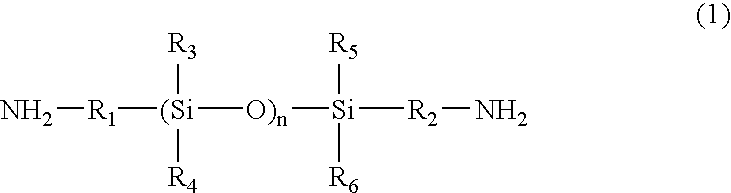
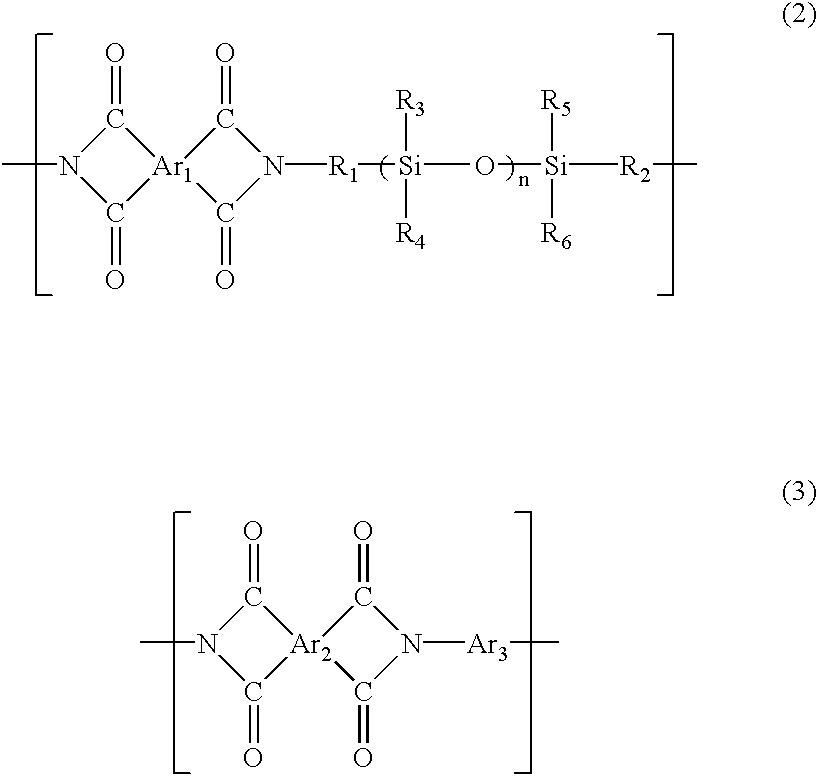
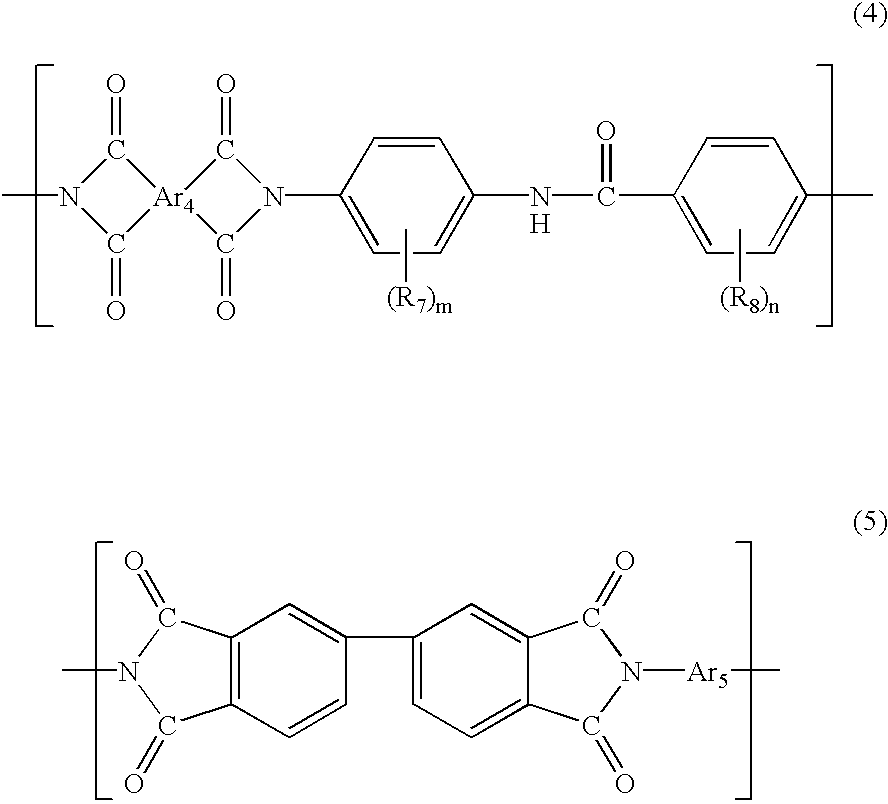
- The adhesive polyimide resin is made using a specified siloxane polyimide resin obtained from an aromatic tetracarboxylic dianhydride and a diamine ingredient, providing excellent adhesiveness to silicon, polyimide, and various metals.
- The laminate includes a substrate, an adhesive polyimide resin layer, and an insulating supporting layer, which has high peel strength and excellent heat resistance.

High Bonding Strength Polyimide Economic Analysis
The economic analysis of high bonding strength polyimide focuses on its market potential, cost implications, and competitive landscape. High bonding strength polyimide is crucial in industries like electronics, aerospace, and automotive due to its excellent thermal stability and mechanical properties. The demand is driven by the need for durable, high-performance materials. However, production costs are high due to complex synthesis processes and raw material expenses. Key players include DuPont, Kaneka, and Ube Industries, which dominate the market with advanced technologies and extensive R&D investments. Future innovations may reduce costs and enhance performance, expanding market applications.
High Bonding Strength Polyimide Policy And Regulatory Impact
The policy and regulatory impact on high bonding strength polyimide research is significant. Regulations ensure safety, environmental compliance, and standardization, which can drive innovation and quality improvements. Policies promoting advanced materials research can provide funding and incentives, accelerating development. Conversely, stringent regulations may increase costs and slow down progress. Understanding these impacts helps in strategic planning, ensuring compliance while leveraging opportunities for growth and innovation. This balance is crucial for maintaining competitive advantage and fostering sustainable advancements in high bonding strength polyimide technology.
Unlock deeper insights with Patsnap Eureka Quick Research — get a full tech report to explore trends and direct your research. Try now!
Generate Your Research Report Instantly with AI Agent
Supercharge your innovation with Patsnap Eureka AI Agent Platform!