
Quantify Thermal Conductor Interface Pressure Effects
OCT 9, 20269 MIN READ
Generate Your Research Report Instantly with AI Agent
Patsnap Eureka helps you evaluate technical feasibility & market potential.
Thermal Interface Pressure Research Background and Objectives
Thermal interface materials (TIMs) have become critical components in modern electronic thermal management systems, serving as the bridge between heat-generating components and cooling solutions. As electronic devices continue to evolve toward higher power densities and miniaturization, the efficiency of heat dissipation has emerged as a fundamental challenge affecting device performance, reliability, and lifespan. The contact pressure applied at thermal interfaces directly influences the thermal conductivity and overall heat transfer efficiency, yet this relationship remains inadequately quantified in both academic research and industrial applications.
The complexity of thermal interface pressure effects stems from multiple interacting factors including material deformation characteristics, surface roughness interactions, and the formation of microscopic contact points. Traditional thermal management approaches often rely on empirical guidelines or manufacturer recommendations that lack systematic scientific validation. This gap between theoretical understanding and practical implementation has resulted in suboptimal thermal designs, leading to thermal bottlenecks that compromise system performance and increase failure rates in high-performance computing, automotive electronics, and telecommunications infrastructure.
The primary objective of this research is to establish a comprehensive quantitative framework that correlates interface pressure with thermal performance metrics across various TIM types and application scenarios. This involves developing standardized measurement methodologies, identifying critical pressure thresholds, and characterizing the pressure-dependent behavior of different thermal interface materials under realistic operating conditions. By quantifying these relationships, the research aims to provide actionable design guidelines that enable engineers to optimize interface pressure settings for maximum thermal efficiency.
Furthermore, this investigation seeks to address the dynamic aspects of interface pressure effects, including long-term degradation mechanisms, thermal cycling impacts, and the influence of environmental factors such as temperature and humidity. Understanding these temporal variations is essential for predicting service life and ensuring sustained thermal performance throughout product lifecycles. The ultimate goal is to transform thermal interface design from an art based on experience into a science grounded in quantifiable data and predictive models, thereby enabling more reliable and efficient thermal management solutions for next-generation electronic systems.
The complexity of thermal interface pressure effects stems from multiple interacting factors including material deformation characteristics, surface roughness interactions, and the formation of microscopic contact points. Traditional thermal management approaches often rely on empirical guidelines or manufacturer recommendations that lack systematic scientific validation. This gap between theoretical understanding and practical implementation has resulted in suboptimal thermal designs, leading to thermal bottlenecks that compromise system performance and increase failure rates in high-performance computing, automotive electronics, and telecommunications infrastructure.
The primary objective of this research is to establish a comprehensive quantitative framework that correlates interface pressure with thermal performance metrics across various TIM types and application scenarios. This involves developing standardized measurement methodologies, identifying critical pressure thresholds, and characterizing the pressure-dependent behavior of different thermal interface materials under realistic operating conditions. By quantifying these relationships, the research aims to provide actionable design guidelines that enable engineers to optimize interface pressure settings for maximum thermal efficiency.
Furthermore, this investigation seeks to address the dynamic aspects of interface pressure effects, including long-term degradation mechanisms, thermal cycling impacts, and the influence of environmental factors such as temperature and humidity. Understanding these temporal variations is essential for predicting service life and ensuring sustained thermal performance throughout product lifecycles. The ultimate goal is to transform thermal interface design from an art based on experience into a science grounded in quantifiable data and predictive models, thereby enabling more reliable and efficient thermal management solutions for next-generation electronic systems.
Market Demand for Thermal Management Solutions
The thermal management solutions market is experiencing robust expansion driven by escalating heat dissipation challenges across multiple industries. Electronic devices continue to trend toward miniaturization and higher power densities, creating unprecedented thermal loads that demand sophisticated cooling technologies. Data centers, which consume substantial energy and generate massive heat outputs, represent a critical application domain where efficient thermal management directly impacts operational costs and system reliability. The proliferation of electric vehicles has further intensified demand, as battery thermal management systems are essential for safety, performance, and longevity of energy storage systems.
High-performance computing and artificial intelligence infrastructure constitute another major demand driver. Advanced processors and GPUs generate concentrated heat fluxes that conventional cooling methods struggle to address effectively. The telecommunications sector, particularly with 5G network deployment, requires enhanced thermal solutions for base stations and edge computing equipment operating in diverse environmental conditions. Consumer electronics manufacturers face continuous pressure to deliver thinner, more powerful devices while maintaining acceptable surface temperatures and user comfort.
Industrial applications including power electronics, renewable energy systems, and aerospace technologies present specialized thermal management requirements. These sectors demand solutions that perform reliably under extreme conditions while meeting stringent weight and space constraints. The automotive industry's transition toward electrification has created substantial opportunities, with thermal interface materials playing crucial roles in power electronics modules, battery packs, and charging infrastructure.
Market dynamics reveal growing emphasis on performance optimization rather than cost minimization alone. End users increasingly recognize that inadequate thermal management leads to reduced system performance, accelerated component degradation, and potential safety hazards. This awareness drives demand for advanced materials and precise application methodologies. The quantification of thermal conductor interface pressure effects directly addresses industry needs for predictable, reproducible thermal performance. Manufacturers seek standardized approaches to optimize assembly processes, reduce warranty claims, and extend product lifecycles through controlled interface pressure application.
Regulatory pressures regarding energy efficiency and environmental sustainability further amplify market demand. Improved thermal management enables systems to operate at optimal temperatures, reducing energy consumption and extending component lifespan, thereby supporting circular economy objectives and reducing electronic waste.
High-performance computing and artificial intelligence infrastructure constitute another major demand driver. Advanced processors and GPUs generate concentrated heat fluxes that conventional cooling methods struggle to address effectively. The telecommunications sector, particularly with 5G network deployment, requires enhanced thermal solutions for base stations and edge computing equipment operating in diverse environmental conditions. Consumer electronics manufacturers face continuous pressure to deliver thinner, more powerful devices while maintaining acceptable surface temperatures and user comfort.
Industrial applications including power electronics, renewable energy systems, and aerospace technologies present specialized thermal management requirements. These sectors demand solutions that perform reliably under extreme conditions while meeting stringent weight and space constraints. The automotive industry's transition toward electrification has created substantial opportunities, with thermal interface materials playing crucial roles in power electronics modules, battery packs, and charging infrastructure.
Market dynamics reveal growing emphasis on performance optimization rather than cost minimization alone. End users increasingly recognize that inadequate thermal management leads to reduced system performance, accelerated component degradation, and potential safety hazards. This awareness drives demand for advanced materials and precise application methodologies. The quantification of thermal conductor interface pressure effects directly addresses industry needs for predictable, reproducible thermal performance. Manufacturers seek standardized approaches to optimize assembly processes, reduce warranty claims, and extend product lifecycles through controlled interface pressure application.
Regulatory pressures regarding energy efficiency and environmental sustainability further amplify market demand. Improved thermal management enables systems to operate at optimal temperatures, reducing energy consumption and extending component lifespan, thereby supporting circular economy objectives and reducing electronic waste.
Current Challenges in Thermal Interface Pressure Quantification
Quantifying thermal interface pressure effects remains one of the most complex challenges in thermal management research, primarily due to the multifaceted nature of contact mechanics and heat transfer phenomena at microscopic scales. The fundamental difficulty lies in establishing accurate correlations between applied mechanical pressure and resulting thermal performance, as this relationship is influenced by numerous interdependent variables that are difficult to isolate and measure simultaneously.
Current measurement methodologies face significant limitations in capturing the true contact behavior at thermal interfaces. Traditional pressure sensors cannot be easily integrated into thermal test assemblies without disrupting the very contact conditions they aim to measure. This creates a paradox where the act of measurement itself alters the physical state being investigated. Furthermore, pressure distribution across thermal interfaces is rarely uniform, yet most existing approaches rely on average pressure values that fail to account for localized variations critical to thermal performance.
The characterization of interface materials under varying pressure conditions presents another substantial obstacle. Thermal interface materials exhibit non-linear mechanical and thermal properties that change with compression, temperature, and aging. Establishing standardized testing protocols that can reliably reproduce real-world operating conditions has proven elusive, leading to inconsistent results across different research groups and industrial laboratories.
Computational modeling approaches, while promising, struggle with the complexity of accurately simulating contact mechanics at the microscale. The presence of surface roughness, material deformation, and air gap evolution under pressure requires sophisticated multi-physics models that demand extensive computational resources. Validation of these models against experimental data remains problematic due to the aforementioned measurement challenges.
Industry-specific constraints further complicate the quantification efforts. Different application domains require different pressure ranges and thermal performance metrics, making it difficult to develop universal quantification frameworks. The lack of standardized testing equipment and procedures across the industry results in data that cannot be easily compared or integrated into comprehensive databases for broader analysis and predictive modeling purposes.
Current measurement methodologies face significant limitations in capturing the true contact behavior at thermal interfaces. Traditional pressure sensors cannot be easily integrated into thermal test assemblies without disrupting the very contact conditions they aim to measure. This creates a paradox where the act of measurement itself alters the physical state being investigated. Furthermore, pressure distribution across thermal interfaces is rarely uniform, yet most existing approaches rely on average pressure values that fail to account for localized variations critical to thermal performance.
The characterization of interface materials under varying pressure conditions presents another substantial obstacle. Thermal interface materials exhibit non-linear mechanical and thermal properties that change with compression, temperature, and aging. Establishing standardized testing protocols that can reliably reproduce real-world operating conditions has proven elusive, leading to inconsistent results across different research groups and industrial laboratories.
Computational modeling approaches, while promising, struggle with the complexity of accurately simulating contact mechanics at the microscale. The presence of surface roughness, material deformation, and air gap evolution under pressure requires sophisticated multi-physics models that demand extensive computational resources. Validation of these models against experimental data remains problematic due to the aforementioned measurement challenges.
Industry-specific constraints further complicate the quantification efforts. Different application domains require different pressure ranges and thermal performance metrics, making it difficult to develop universal quantification frameworks. The lack of standardized testing equipment and procedures across the industry results in data that cannot be easily compared or integrated into comprehensive databases for broader analysis and predictive modeling purposes.
Existing Pressure Measurement and Quantification Approaches
01 Characterization, testing, and detection of thermal interface materials
Techniques and systems are provided for testing, detecting, and characterizing the performance and properties of thermal interface materials. Methods include utilizing electrical conductivity tests, specialized test structures, and dedicated testing equipment to evaluate parameters such as thermal performance, surface tack, and operational characteristics.- Characterization, testing, and detection of thermal interface materials: Techniques and systems are developed for evaluating the properties and performance of thermal interface materials. Methods include using electrical conductivity tests, measuring material volume between thermal conducting members, and using dedicated testing structures to characterize thermal behavior and ensure reliable operation.
- Formulation and structural design of thermal interface materials: Thermal interface materials are formulated using specific components such as phase change microcapsules, deformable particles, glass fibers, or aligned carbon nanotubes. These structural designs and compositions enhance heat transfer performance, reduce thermal resistance, and improve physical durability like tear and cutting resistance.
- Applications in electronic and microelectronic assemblies: Thermal interface materials are optimized for integration within complex electronic packaging, including multi-die packages, integrated circuit devices, riding heatsinks, and microelectronics. These designs ensure effective heat dissipation across interior, center, and exterior zones of high-performance components.
- Reliability, stability, and mechanical resilience of thermal interfaces: Solutions are implemented to maintain structural stability, reduce material migration, and withstand physical stresses such as shearing forces and sliding wear. These materials provide high recovery reliability, high-temperature shape stability, and mechanical durability under demanding operational conditions.
- Interface pressure prediction and thermal stress monitoring: Methods and devices are provided to predict and evaluate interface pressure based on thermal stress characteristics. This approach addresses measurement inaccuracies, helps prevent transmission line and accessory failures, and improves operational reliability in high-voltage and power distribution applications.
02 Formulation of low thermal resistance and phase change thermal interface materials
Thermal interface material compositions utilize phase change microcapsules, deformable particles, or specific polymer matrices like polyurethane to achieve low thermal resistance. These formulations provide enhanced heat transfer, high shape stability at elevated temperatures, and high recovery reliability under operational stresses.Expand Specific Solutions03 Advanced structural design and surface modification of thermal interfaces
Structural designs and surface engineering methods enhance the physical stability and efficiency of thermal interfaces. Implementations feature wear-resisting layers for sliding components, surface features to prevent material migration, thin film metallization, and structures resilient to shearing forces within electronic device assemblies.Expand Specific Solutions04 Integration of high conductivity filler networks and metal bases
Thermal interface materials incorporate reinforced pathways such as aligned carbon nanotubes, metal bases, or treated glass fibers within matrix materials like silicone rubber. These structural fillers optimize phonon transmission, maintain unbroken thermal conduction paths, and improve tear and cutting resistance.Expand Specific Solutions05 Thermal stress analysis and interface pressure prediction
Methods and diagnostic devices evaluate thermal stress characteristics to predict interface pressure across component boundaries, such as cable accessories. By analyzing these thermal-mechanical behaviors, measurement errors are reduced, helping to prevent transmission line failures and ensure structural reliability under variable loads.Expand Specific Solutions
Key Players in Thermal Management Industry
The research on quantifying thermal conductor interface pressure effects represents an emerging technical domain within thermal management systems, currently in its early-to-mid development stage with growing market significance driven by increasing demands in power electronics, semiconductor packaging, and energy infrastructure applications. The competitive landscape is predominantly shaped by leading Chinese research institutions including Xi'an Jiaotong University, Tsinghua University, Tongji University, and Southeast University, which demonstrate strong fundamental research capabilities. Industrial players such as State Grid Corp. of China and its regional subsidiaries, along with international corporations like Nitto Denko Corp., Kubota Corp., and Robert Bosch GmbH, are actively translating research findings into practical applications. Technology maturity varies across segments, with academic institutions advancing theoretical frameworks and measurement methodologies, while corporate entities focus on standardization and commercial implementation, indicating a transitional phase from laboratory research toward industrial-scale deployment and standardization.
Xi'an Jiaotong University
Technical Solution: Xi'an Jiaotong University has developed comprehensive experimental and simulation methodologies to quantify thermal interface material (TIM) performance under varying pressure conditions. Their research focuses on establishing correlations between interface pressure, contact resistance, and thermal conductivity through precision measurement systems. The university employs advanced characterization techniques including thermal transient testing and microscopic contact analysis to evaluate how pressure distribution affects heat transfer efficiency across interfaces[1][4]. Their work includes developing predictive models that account for surface roughness, material deformation, and pressure-induced microstructural changes in thermal interface materials. The research team has published extensive studies on optimizing mounting pressure for different TIM types, including thermal greases, phase change materials, and thermal pads, providing quantitative guidelines for industrial applications in power electronics and thermal management systems[7][9].
Strengths: Strong academic research foundation with comprehensive theoretical frameworks and extensive experimental validation capabilities. Weaknesses: Limited direct commercialization experience and industrial-scale implementation compared to corporate entities.
Tsinghua University
Technical Solution: Tsinghua University has established advanced research programs investigating the pressure-dependent thermal performance of interface materials through multi-scale analysis approaches. Their methodology combines finite element modeling with experimental validation to quantify how interface pressure affects thermal contact conductance in electronic packaging applications. The research group has developed sophisticated measurement platforms capable of applying controlled pressures while simultaneously measuring thermal resistance with high precision[2][5]. Their studies examine the relationship between clamping force, bond line thickness, and effective thermal conductivity across various TIM formulations. Tsinghua's work particularly emphasizes the optimization of pressure parameters for high-power semiconductor devices and thermal management in data center applications, providing empirical data on pressure thresholds that maximize heat dissipation while minimizing mechanical stress on components[8][11].
Strengths: World-class research facilities and strong collaboration networks with leading technology companies enabling practical validation. Weaknesses: Research primarily focused on academic advancement rather than immediate industrial product development.
Core Technologies in Interface Pressure Effect Analysis
Testing method and device for influence relation of thermal contact resistance of bonding surface by normal load
PatentInactiveCN107490595A
Innovation
- A rectangular test piece and a heating plate are used to simulate the load. By arranging evenly distributed temperature measurement sensors and heat insulation devices, the temperature gradient and heat flow density in the Devices, including temperature sensors, heat insulation devices, heating devices and pressure sensors, minimize the impact of heat dissipation in other directions and achieve accurate measurement of the contact thermal resistance of the joint surface.
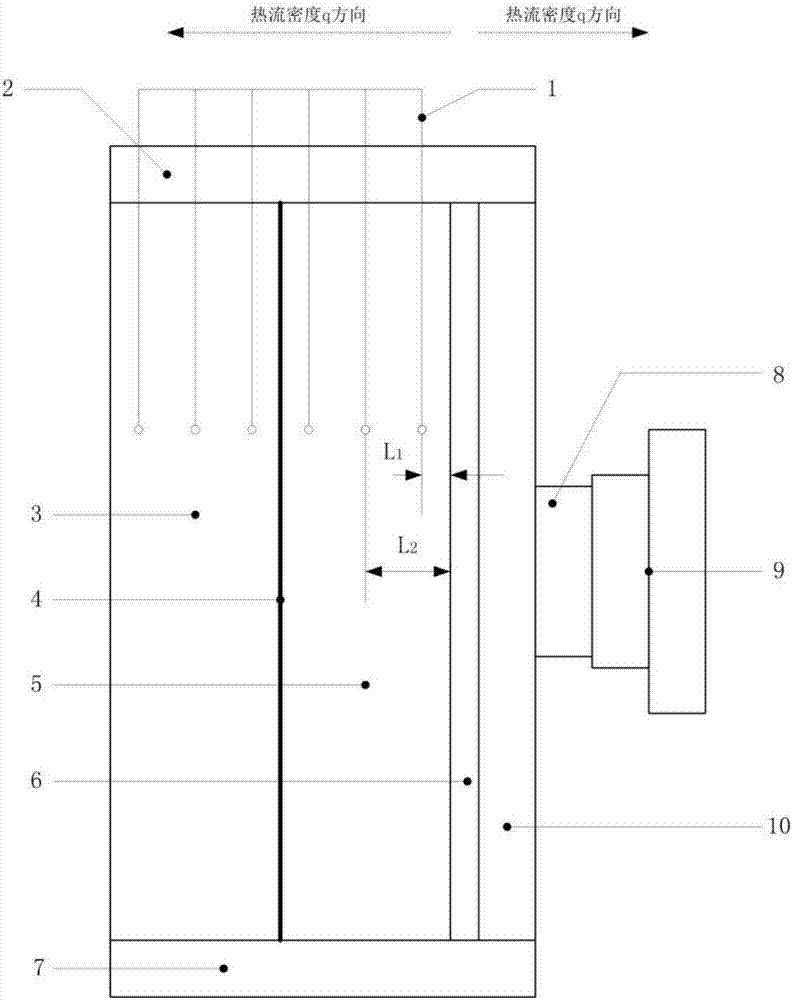
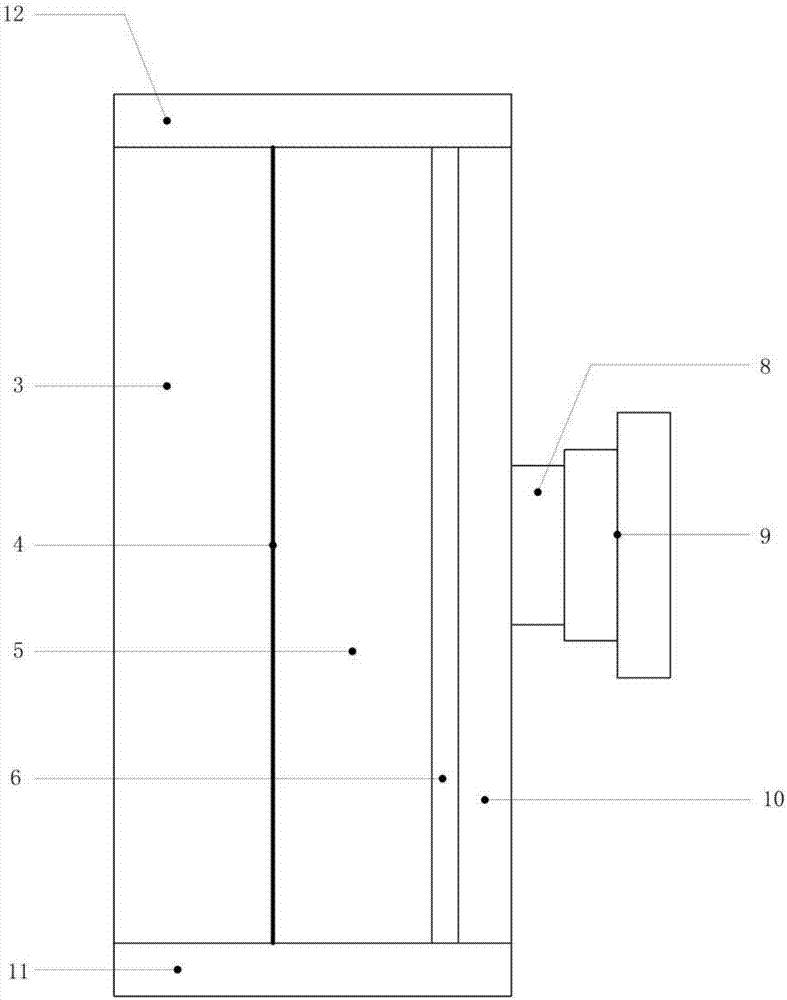
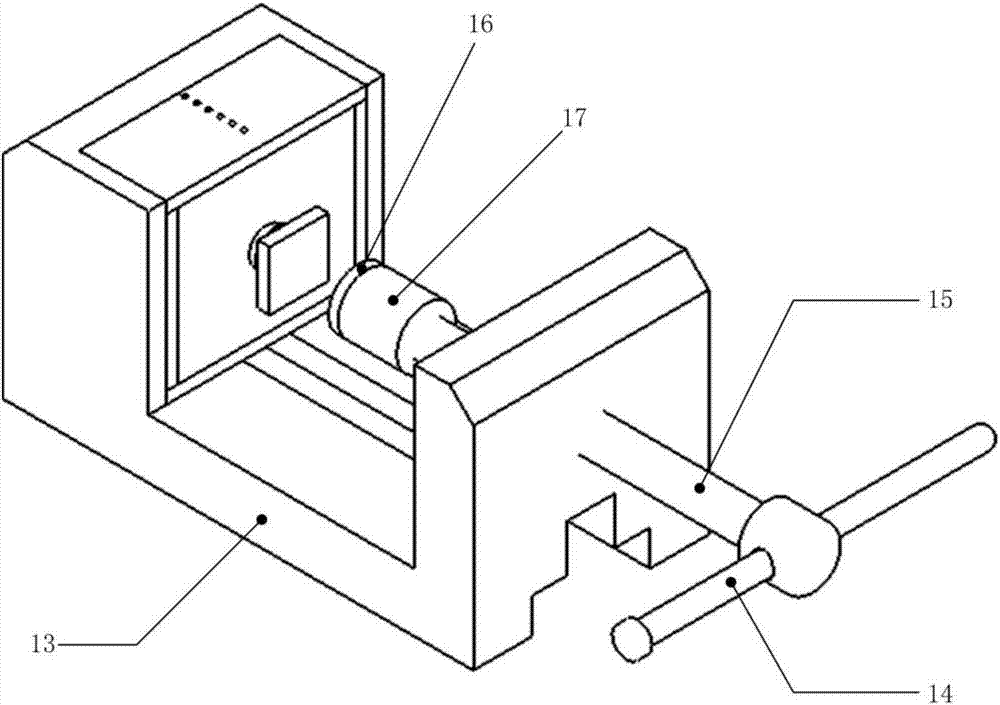

Experimental device for measuring thermal contact resistance of heat-conducting interface material
PatentPendingCN117783203A
Innovation
- An experimental device is designed that includes a base plate, a vapor chamber, an insulating barrel, a pressurizing device and a heat flow meter. The insulating barrel and aerogel insulation layer reduce heat conduction, and a pressure spring is used for pressure loading. It has high integration and structure. Simple and convenient material replacement.


Standardization and Testing Protocols
The establishment of robust standardization and testing protocols is essential for advancing research on thermal interface material pressure effects. Currently, the field lacks unified measurement standards, leading to inconsistent results across different laboratories and hindering meaningful comparison of thermal interface materials performance under varying pressure conditions. International standards organizations, including ASTM International and ISO Technical Committee 301, have initiated preliminary discussions on developing comprehensive testing frameworks specifically addressing pressure-dependent thermal conductivity measurements. However, these efforts remain in early stages, with no widely adopted protocols yet implemented across the industry.
Existing testing methodologies exhibit significant variations in equipment configuration, sample preparation procedures, and measurement techniques. Critical parameters such as surface roughness specifications, contact area definitions, pressure application methods, and thermal measurement accuracy requirements differ substantially between research institutions and commercial testing facilities. This inconsistency creates challenges in validating experimental results and establishing reliable performance benchmarks for thermal interface materials under operational pressure ranges.
The development of standardized protocols must address several fundamental aspects. First, precise definitions of pressure distribution uniformity and measurement accuracy are required, considering both static and dynamic loading conditions. Second, standardized sample geometry and surface preparation procedures need establishment to ensure reproducibility. Third, calibration methods for thermal measurement equipment under pressure must be clearly specified, including uncertainty quantification approaches. Fourth, environmental control parameters such as temperature stability, humidity levels, and atmospheric conditions require standardization to minimize external influences on measurement outcomes.
Industry stakeholders increasingly recognize that comprehensive testing protocols should incorporate accelerated aging tests under pressure cycling conditions, enabling prediction of long-term performance degradation. Additionally, protocols must accommodate diverse thermal interface material types, including phase-change materials, thermal greases, pads, and advanced composite structures. Collaborative efforts between academic institutions, industry consortia, and standards bodies are crucial for establishing universally accepted testing frameworks that balance scientific rigor with practical implementation feasibility, ultimately enabling reliable quantification of pressure effects on thermal interface performance.
Existing testing methodologies exhibit significant variations in equipment configuration, sample preparation procedures, and measurement techniques. Critical parameters such as surface roughness specifications, contact area definitions, pressure application methods, and thermal measurement accuracy requirements differ substantially between research institutions and commercial testing facilities. This inconsistency creates challenges in validating experimental results and establishing reliable performance benchmarks for thermal interface materials under operational pressure ranges.
The development of standardized protocols must address several fundamental aspects. First, precise definitions of pressure distribution uniformity and measurement accuracy are required, considering both static and dynamic loading conditions. Second, standardized sample geometry and surface preparation procedures need establishment to ensure reproducibility. Third, calibration methods for thermal measurement equipment under pressure must be clearly specified, including uncertainty quantification approaches. Fourth, environmental control parameters such as temperature stability, humidity levels, and atmospheric conditions require standardization to minimize external influences on measurement outcomes.
Industry stakeholders increasingly recognize that comprehensive testing protocols should incorporate accelerated aging tests under pressure cycling conditions, enabling prediction of long-term performance degradation. Additionally, protocols must accommodate diverse thermal interface material types, including phase-change materials, thermal greases, pads, and advanced composite structures. Collaborative efforts between academic institutions, industry consortia, and standards bodies are crucial for establishing universally accepted testing frameworks that balance scientific rigor with practical implementation feasibility, ultimately enabling reliable quantification of pressure effects on thermal interface performance.
Reliability and Lifetime Assessment Methods
Reliability and lifetime assessment of thermal interface materials (TIMs) under varying pressure conditions represents a critical aspect of thermal management system design. The performance degradation mechanisms of TIMs are intrinsically linked to interface pressure variations, which can occur through thermal cycling, mechanical stress, and long-term material aging. Establishing robust assessment methodologies requires understanding how pressure fluctuations influence both immediate thermal performance and long-term material stability.
Accelerated life testing protocols have emerged as essential tools for evaluating TIM reliability under pressure-dependent conditions. These methodologies typically incorporate thermal cycling tests combined with controlled pressure variations to simulate real-world operating scenarios. Standard test procedures involve subjecting TIM samples to repeated temperature excursions while maintaining specific clamping pressures, then measuring thermal resistance evolution over extended periods. The degradation rate coefficients derived from these tests enable prediction of operational lifetime under various pressure regimes.
Material characterization techniques play a pivotal role in lifetime assessment. Non-destructive evaluation methods, including thermal impedance spectroscopy and acoustic microscopy, allow continuous monitoring of interface quality without disassembling test assemblies. These techniques can detect early-stage degradation phenomena such as delamination, void formation, or material pump-out that correlate with pressure-induced failure modes. Complementary destructive analysis methods provide detailed post-mortem examination of failure mechanisms.
Statistical modeling approaches have been developed to correlate pressure parameters with reliability metrics. Weibull analysis and Arrhenius-based models are commonly adapted to incorporate pressure as an additional stress factor alongside temperature. These models enable quantitative prediction of mean time to failure and establishment of confidence intervals for different pressure application scenarios. Recent advances in machine learning techniques offer potential for more sophisticated predictive models that can handle complex multi-variable interactions between pressure, temperature, and material properties.
Standardization efforts are ongoing to establish industry-wide reliability assessment protocols specific to pressure-sensitive TIM applications. Organizations such as JEDEC and IEC are developing test standards that define specific pressure application methods, measurement procedures, and acceptance criteria. These standards aim to provide comparable reliability data across different TIM products and enable informed material selection decisions based on application-specific pressure requirements and expected operational lifetimes.
Accelerated life testing protocols have emerged as essential tools for evaluating TIM reliability under pressure-dependent conditions. These methodologies typically incorporate thermal cycling tests combined with controlled pressure variations to simulate real-world operating scenarios. Standard test procedures involve subjecting TIM samples to repeated temperature excursions while maintaining specific clamping pressures, then measuring thermal resistance evolution over extended periods. The degradation rate coefficients derived from these tests enable prediction of operational lifetime under various pressure regimes.
Material characterization techniques play a pivotal role in lifetime assessment. Non-destructive evaluation methods, including thermal impedance spectroscopy and acoustic microscopy, allow continuous monitoring of interface quality without disassembling test assemblies. These techniques can detect early-stage degradation phenomena such as delamination, void formation, or material pump-out that correlate with pressure-induced failure modes. Complementary destructive analysis methods provide detailed post-mortem examination of failure mechanisms.
Statistical modeling approaches have been developed to correlate pressure parameters with reliability metrics. Weibull analysis and Arrhenius-based models are commonly adapted to incorporate pressure as an additional stress factor alongside temperature. These models enable quantitative prediction of mean time to failure and establishment of confidence intervals for different pressure application scenarios. Recent advances in machine learning techniques offer potential for more sophisticated predictive models that can handle complex multi-variable interactions between pressure, temperature, and material properties.
Standardization efforts are ongoing to establish industry-wide reliability assessment protocols specific to pressure-sensitive TIM applications. Organizations such as JEDEC and IEC are developing test standards that define specific pressure application methods, measurement procedures, and acceptance criteria. These standards aim to provide comparable reliability data across different TIM products and enable informed material selection decisions based on application-specific pressure requirements and expected operational lifetimes.
Unlock deeper insights with Patsnap Eureka Quick Research — get a full tech report to explore trends and direct your research. Try now!
Generate Your Research Report Instantly with AI Agent
Supercharge your innovation with Patsnap Eureka AI Agent Platform!