

Quantum Chemistry in Molecular Engineering: Validation
FEB 3, 20268 MIN READ
Generate Your Research Report Instantly with AI Agent
PatSnap Eureka helps you evaluate technical feasibility & market potential.
Quantum Chemistry in Molecular Engineering Background and Objectives
Quantum chemistry has emerged as a foundational pillar in molecular engineering, bridging the gap between theoretical physics and practical materials design. Since the early development of quantum mechanics in the 1920s, scientists have sought to apply quantum principles to understand and predict molecular behavior. The field has evolved from simple Hartree-Fock calculations to sophisticated density functional theory and post-Hartree-Fock methods, enabling increasingly accurate predictions of molecular properties and reaction mechanisms.
The integration of quantum chemistry into molecular engineering represents a paradigm shift in how materials and molecules are designed. Traditional trial-and-error approaches in chemistry and materials science are being replaced by computational prediction and validation workflows. This transformation is driven by exponential growth in computational power and algorithmic innovations, allowing researchers to simulate complex molecular systems with unprecedented accuracy before synthesizing them in laboratories.
Current technological objectives center on establishing robust validation frameworks that ensure quantum chemical predictions reliably translate to experimental outcomes. The primary goal is to develop standardized protocols for assessing the accuracy and reliability of quantum chemical methods across diverse molecular systems, from small organic molecules to complex biomolecular assemblies and advanced materials. This validation is critical for building confidence in computational predictions and reducing the time and cost associated with experimental trial-and-error.
Another key objective involves bridging the accuracy gap between different levels of quantum chemical theory and experimental measurements. Researchers aim to identify optimal computational strategies that balance accuracy with computational efficiency, enabling practical application in industrial molecular design workflows. This includes developing benchmark datasets, error quantification methodologies, and uncertainty analysis frameworks that can guide method selection for specific engineering applications.
The ultimate vision is to establish quantum chemistry as a predictive tool with quantifiable reliability, enabling accelerated discovery and optimization of molecules for applications in pharmaceuticals, catalysis, energy storage, and advanced materials. Achieving this requires systematic validation against experimental data, continuous refinement of theoretical methods, and development of machine learning approaches that can learn from validation outcomes to improve predictive accuracy.
The integration of quantum chemistry into molecular engineering represents a paradigm shift in how materials and molecules are designed. Traditional trial-and-error approaches in chemistry and materials science are being replaced by computational prediction and validation workflows. This transformation is driven by exponential growth in computational power and algorithmic innovations, allowing researchers to simulate complex molecular systems with unprecedented accuracy before synthesizing them in laboratories.
Current technological objectives center on establishing robust validation frameworks that ensure quantum chemical predictions reliably translate to experimental outcomes. The primary goal is to develop standardized protocols for assessing the accuracy and reliability of quantum chemical methods across diverse molecular systems, from small organic molecules to complex biomolecular assemblies and advanced materials. This validation is critical for building confidence in computational predictions and reducing the time and cost associated with experimental trial-and-error.
Another key objective involves bridging the accuracy gap between different levels of quantum chemical theory and experimental measurements. Researchers aim to identify optimal computational strategies that balance accuracy with computational efficiency, enabling practical application in industrial molecular design workflows. This includes developing benchmark datasets, error quantification methodologies, and uncertainty analysis frameworks that can guide method selection for specific engineering applications.
The ultimate vision is to establish quantum chemistry as a predictive tool with quantifiable reliability, enabling accelerated discovery and optimization of molecules for applications in pharmaceuticals, catalysis, energy storage, and advanced materials. Achieving this requires systematic validation against experimental data, continuous refinement of theoretical methods, and development of machine learning approaches that can learn from validation outcomes to improve predictive accuracy.
Market Demand for Quantum-Validated Molecular Design
The pharmaceutical and materials industries are experiencing a paradigm shift driven by the integration of quantum chemistry validation into molecular design workflows. Traditional computational chemistry methods, while useful, often lack the precision required for predicting complex molecular behaviors, leading to costly experimental iterations. The demand for quantum-validated approaches has surged as organizations seek to accelerate drug discovery, optimize material properties, and reduce development costs through more accurate predictive modeling.
Pharmaceutical companies represent a primary market segment, where quantum chemistry validation addresses critical challenges in lead optimization and compound screening. The ability to accurately predict binding affinities, reaction pathways, and pharmacokinetic properties enables more informed decision-making during early-stage development. This capability is particularly valuable in personalized medicine and biologics development, where molecular complexity demands higher computational accuracy than classical methods can provide.
The advanced materials sector demonstrates equally compelling demand, particularly in battery technology, catalysis, and polymer science. Companies developing next-generation energy storage solutions require precise understanding of electron transfer mechanisms and interfacial phenomena that quantum methods can elucidate. Similarly, catalyst design for sustainable chemistry applications benefits significantly from quantum-level insights into reaction mechanisms and activation energies.
Agrochemical and specialty chemical manufacturers are emerging as significant adopters, seeking quantum validation to design more effective and environmentally sustainable compounds. Regulatory pressures for safer chemicals and reduced environmental impact have intensified the need for accurate predictive tools that can minimize experimental testing while ensuring product efficacy and safety.
The market demand is further amplified by the convergence of quantum computing advancements and cloud-based computational platforms, which are democratizing access to quantum chemistry tools. Small and medium enterprises, previously constrained by computational resource limitations, now represent a growing customer base. This accessibility is transforming quantum-validated molecular design from a niche capability of large research institutions into a mainstream industrial tool, driving sustained market expansion across multiple sectors.
Pharmaceutical companies represent a primary market segment, where quantum chemistry validation addresses critical challenges in lead optimization and compound screening. The ability to accurately predict binding affinities, reaction pathways, and pharmacokinetic properties enables more informed decision-making during early-stage development. This capability is particularly valuable in personalized medicine and biologics development, where molecular complexity demands higher computational accuracy than classical methods can provide.
The advanced materials sector demonstrates equally compelling demand, particularly in battery technology, catalysis, and polymer science. Companies developing next-generation energy storage solutions require precise understanding of electron transfer mechanisms and interfacial phenomena that quantum methods can elucidate. Similarly, catalyst design for sustainable chemistry applications benefits significantly from quantum-level insights into reaction mechanisms and activation energies.
Agrochemical and specialty chemical manufacturers are emerging as significant adopters, seeking quantum validation to design more effective and environmentally sustainable compounds. Regulatory pressures for safer chemicals and reduced environmental impact have intensified the need for accurate predictive tools that can minimize experimental testing while ensuring product efficacy and safety.
The market demand is further amplified by the convergence of quantum computing advancements and cloud-based computational platforms, which are democratizing access to quantum chemistry tools. Small and medium enterprises, previously constrained by computational resource limitations, now represent a growing customer base. This accessibility is transforming quantum-validated molecular design from a niche capability of large research institutions into a mainstream industrial tool, driving sustained market expansion across multiple sectors.
Current Status and Challenges in Quantum Chemistry Validation
Quantum chemistry validation in molecular engineering currently stands at a critical juncture where computational predictions must align with experimental observations to enable reliable molecular design. The field has achieved remarkable progress in developing sophisticated computational methods, ranging from density functional theory (DFT) to coupled-cluster approaches, yet significant discrepancies between theoretical predictions and experimental results persist across various molecular systems. These validation challenges are particularly pronounced in complex molecular environments involving transition metals, excited states, and non-covalent interactions where electron correlation effects become dominant.
The primary technical obstacles stem from the inherent approximations in quantum chemical methods. DFT, despite its widespread adoption due to computational efficiency, suffers from functional dependency issues where different exchange-correlation functionals yield substantially different results for identical systems. Post-Hartree-Fock methods offer higher accuracy but face prohibitive computational costs for systems exceeding several dozen atoms, creating a persistent accuracy-efficiency trade-off that limits their application in practical molecular engineering scenarios.
Benchmark validation remains fundamentally constrained by the scarcity of high-quality experimental reference data. Many molecular properties of engineering interest, such as reaction barriers, binding energies, and spectroscopic parameters, lack sufficiently precise experimental measurements for rigorous validation. This data gap is exacerbated in emerging areas like catalysis design and materials discovery where novel molecular architectures have no experimental precedent. Additionally, environmental effects including solvation, temperature, and pressure introduce complexities that current validation frameworks struggle to adequately address.
Geographically, quantum chemistry validation research concentrates in established computational chemistry centers across North America, Europe, and increasingly in Asia. Leading institutions have developed specialized benchmark databases and validation protocols, yet standardization across the global research community remains incomplete. The challenge of reproducibility persists as different research groups employ varying computational parameters, basis sets, and validation metrics, hindering systematic comparison of methodological advances.
The integration of machine learning approaches introduces new validation dimensions, requiring assessment not only of prediction accuracy but also of model transferability and physical interpretability. As quantum computing technologies emerge, validating quantum algorithms against classical methods presents unprecedented methodological challenges that the field is only beginning to address systematically.
The primary technical obstacles stem from the inherent approximations in quantum chemical methods. DFT, despite its widespread adoption due to computational efficiency, suffers from functional dependency issues where different exchange-correlation functionals yield substantially different results for identical systems. Post-Hartree-Fock methods offer higher accuracy but face prohibitive computational costs for systems exceeding several dozen atoms, creating a persistent accuracy-efficiency trade-off that limits their application in practical molecular engineering scenarios.
Benchmark validation remains fundamentally constrained by the scarcity of high-quality experimental reference data. Many molecular properties of engineering interest, such as reaction barriers, binding energies, and spectroscopic parameters, lack sufficiently precise experimental measurements for rigorous validation. This data gap is exacerbated in emerging areas like catalysis design and materials discovery where novel molecular architectures have no experimental precedent. Additionally, environmental effects including solvation, temperature, and pressure introduce complexities that current validation frameworks struggle to adequately address.
Geographically, quantum chemistry validation research concentrates in established computational chemistry centers across North America, Europe, and increasingly in Asia. Leading institutions have developed specialized benchmark databases and validation protocols, yet standardization across the global research community remains incomplete. The challenge of reproducibility persists as different research groups employ varying computational parameters, basis sets, and validation metrics, hindering systematic comparison of methodological advances.
The integration of machine learning approaches introduces new validation dimensions, requiring assessment not only of prediction accuracy but also of model transferability and physical interpretability. As quantum computing technologies emerge, validating quantum algorithms against classical methods presents unprecedented methodological challenges that the field is only beginning to address systematically.
Mainstream Validation Approaches for Quantum Chemistry
01 Quantum chemistry calculations for molecular property prediction
Methods and systems for validating quantum chemistry calculations used in predicting molecular properties, including electronic structure, energy levels, and chemical reactivity. These validation approaches involve comparing computational results with experimental data or benchmark calculations to ensure accuracy and reliability of quantum mechanical models in drug discovery and materials science applications.- Quantum chemistry calculations for molecular property prediction: Methods and systems for validating quantum chemistry calculations used in predicting molecular properties, including electronic structure, energy levels, and chemical reactivity. These validation approaches involve comparing computational results with experimental data or benchmark calculations to ensure accuracy and reliability of quantum mechanical models in drug discovery and materials science applications.
- Machine learning integration with quantum chemistry validation: Validation frameworks that combine machine learning algorithms with quantum chemistry methods to improve prediction accuracy and computational efficiency. These systems validate quantum chemical calculations by training models on verified datasets and using cross-validation techniques to assess the reliability of quantum mechanical predictions for molecular design and optimization.
- Quantum computing validation for chemical simulations: Techniques for validating quantum computing applications in chemistry, including verification of quantum algorithms for molecular simulations and chemical reaction modeling. These methods ensure that quantum computational results align with established chemical principles and experimental observations, providing confidence in quantum-enhanced chemical calculations.
- Database and benchmark systems for quantum chemistry validation: Development of comprehensive databases and benchmark systems containing validated quantum chemistry data for various molecular systems. These resources provide reference standards for comparing and validating new quantum chemical calculations, including energy calculations, geometry optimizations, and spectroscopic properties across different computational methods.
- Error analysis and uncertainty quantification in quantum chemistry: Methods for systematic error analysis and uncertainty quantification in quantum chemistry calculations, including statistical approaches to assess the reliability of computational predictions. These validation techniques identify sources of computational errors, estimate confidence intervals, and provide metrics for evaluating the quality of quantum chemical results in practical applications.
02 Machine learning integration with quantum chemistry validation
Validation frameworks that combine machine learning algorithms with quantum chemistry methods to improve prediction accuracy and computational efficiency. These approaches use training datasets derived from validated quantum calculations to develop predictive models, with validation protocols ensuring the models maintain chemical accuracy across diverse molecular systems.Expand Specific Solutions03 Quantum computing validation for chemical simulations
Systems and methods for validating quantum computing algorithms applied to chemical simulations and molecular modeling. These validation techniques assess the performance of quantum processors in solving chemistry problems, including error mitigation strategies and benchmarking against classical computational methods to verify quantum advantage in chemical applications.Expand Specific Solutions04 Validation of quantum chemistry software and computational tools
Protocols and methodologies for validating quantum chemistry software packages and computational tools used in research and industrial applications. These validation processes include testing calculation accuracy, numerical stability, and reproducibility across different computational platforms, ensuring reliable results for chemical structure optimization and reaction pathway analysis.Expand Specific Solutions05 Experimental validation of quantum chemical predictions
Techniques for experimental validation of theoretical predictions made using quantum chemistry methods, including spectroscopic measurements, thermodynamic property determination, and kinetic studies. These validation approaches establish the correlation between computational predictions and observable physical phenomena, providing confidence in the application of quantum chemical methods for practical problem-solving.Expand Specific Solutions
Leading Players in Quantum Molecular Engineering
The quantum chemistry validation field in molecular engineering is experiencing rapid evolution as the industry transitions from early-stage research to practical implementation. Major technology corporations including IBM, Google, Fujitsu, Huawei, and Toshiba are driving hardware development and cloud-based quantum platforms, while specialized firms like Origin Quantum, Zapata Computing, Quantinuum, and Kuano focus on domain-specific software solutions for molecular simulation and drug discovery. The market demonstrates significant growth potential, particularly in pharmaceutical applications, evidenced by involvement from companies like Iambic Therapeutics and traditional players such as Wyeth. Technology maturity varies considerably across the competitive landscape, with established tech giants leveraging extensive R&D resources alongside emerging quantum-native companies developing targeted chemistry applications. Academic institutions including Caltech, Cornell, Tsinghua, and Osaka University contribute foundational research, while telecommunications providers like Ericsson and NEC explore quantum networking infrastructure to support distributed computational chemistry workflows.
International Business Machines Corp.
Technical Solution: IBM has developed comprehensive quantum chemistry validation frameworks leveraging their quantum computing platforms, particularly IBM Quantum systems. Their approach integrates variational quantum eigensolver (VQE) algorithms for molecular ground state calculations and quantum phase estimation methods for precise energy computations in molecular systems. IBM's quantum chemistry validation methodology employs error mitigation techniques including zero-noise extrapolation and probabilistic error cancellation to enhance accuracy in noisy intermediate-scale quantum (NISQ) devices. Their Qiskit Nature software package provides extensive tools for molecular Hamiltonian construction, basis set transformations, and validation against classical computational chemistry benchmarks. IBM collaborates with pharmaceutical and materials science companies to validate quantum algorithms for drug discovery applications, demonstrating practical molecular engineering use cases including protein folding simulations and catalyst design optimization.
Strengths: Extensive quantum hardware infrastructure with over 20 accessible quantum processors, mature software ecosystem through Qiskit, strong industry partnerships for real-world validation. Weaknesses: Current quantum systems still limited by coherence times and gate fidelities, requiring significant error mitigation overhead that reduces computational advantage.
Origin Quantum Computing Technology (Hefei) Co., Ltd.
Technical Solution: Origin Quantum has developed quantum chemistry validation capabilities leveraging their superconducting quantum computers and quantum computing cloud platform. Their approach implements variational quantum algorithms optimized for molecular simulation, with particular emphasis on validating calculations for organic molecules and pharmaceutical compounds relevant to drug discovery. Origin Quantum's validation methodology includes systematic comparison with density functional theory calculations and experimental molecular properties such as bond lengths, vibrational frequencies, and electronic transition energies. They have developed quantum-classical hybrid algorithms that decompose molecular Hamiltonians to minimize quantum resource requirements while maintaining chemical accuracy. Origin Quantum collaborates with Chinese pharmaceutical companies and research institutions to validate quantum chemistry methods for practical molecular engineering applications, focusing on accelerating computational drug design workflows and materials discovery processes.
Strengths: Leading quantum computing company in China with accessible quantum hardware, strong connections to Chinese pharmaceutical and materials industries, government support for quantum technology development. Weaknesses: Smaller scale quantum processors compared to IBM and Google, limited international presence and collaboration, quantum chemistry software ecosystem less developed than Western counterparts.
Key Breakthroughs in Quantum Validation Algorithms
Classically-boosted variational quantum eigensolver
PatentWO2022187503A1
Innovation
- The method employs classical-boosting combined with VQE Hamiltonian decomposition techniques, using classically tractable states to reduce measurement requirements and sensitivity to sampling and device noise, allowing for faster estimation of ground and excited state energies.


Quantum chemistry simulations using optimization methods
PatentInactiveUS8301390B2
Innovation
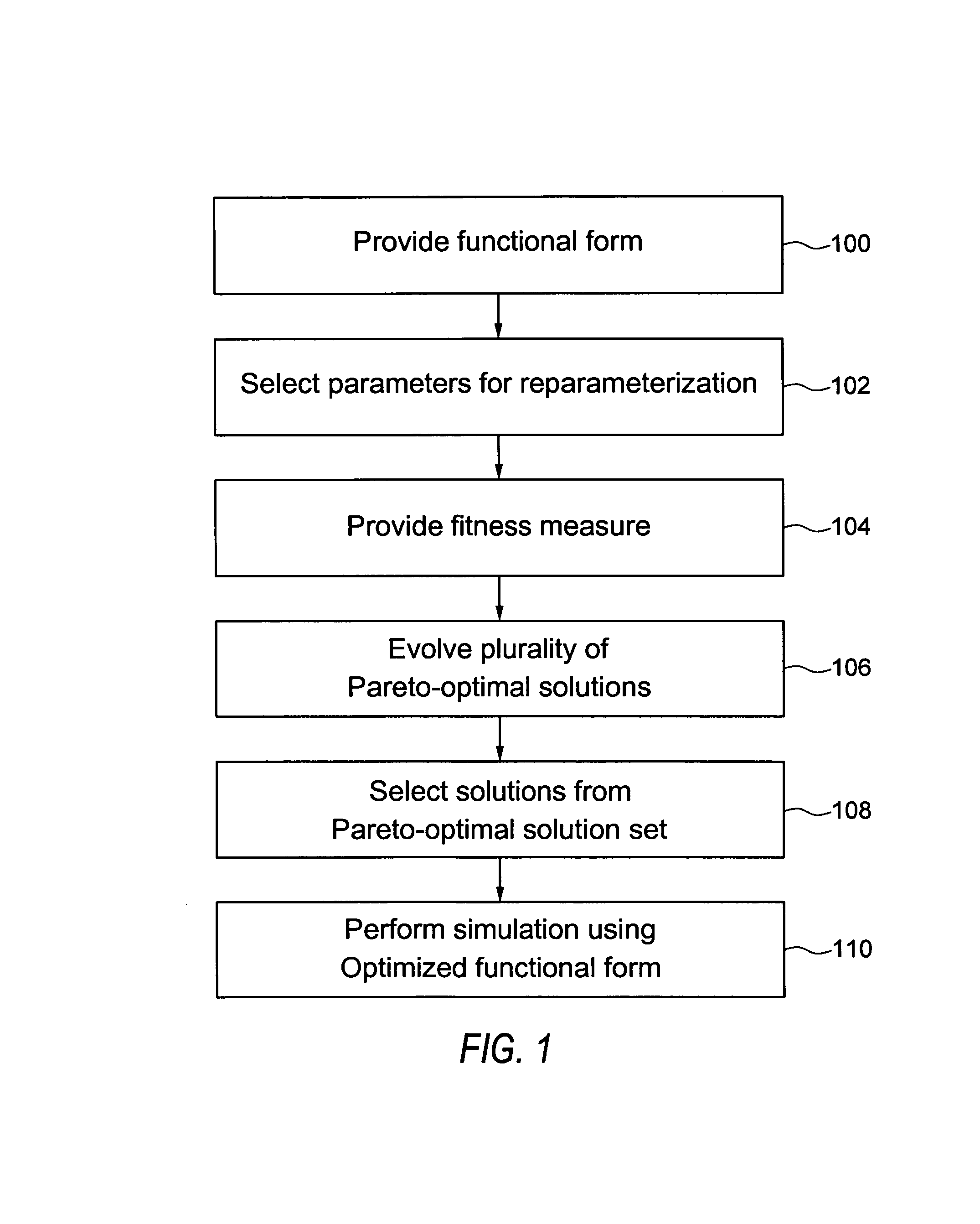
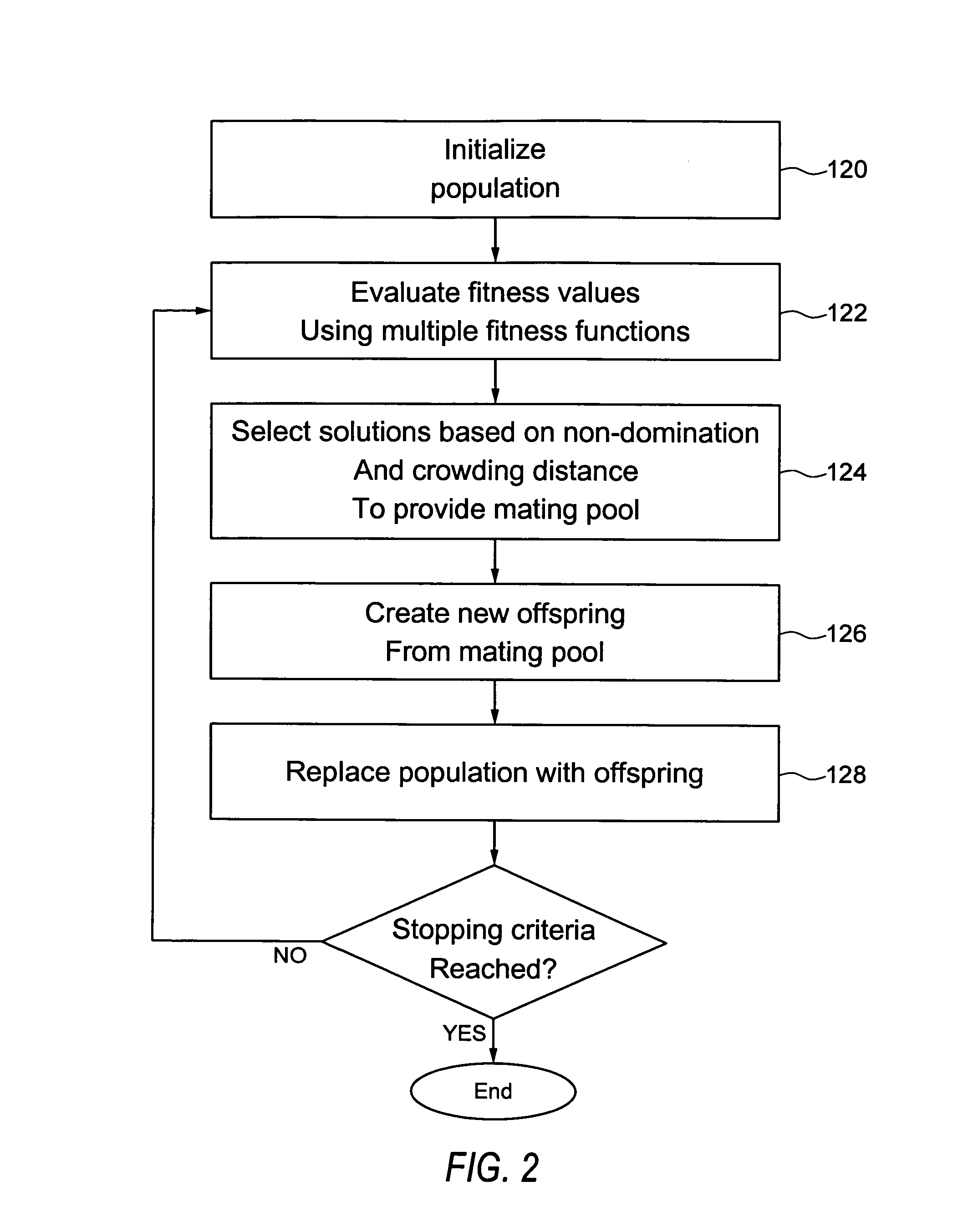
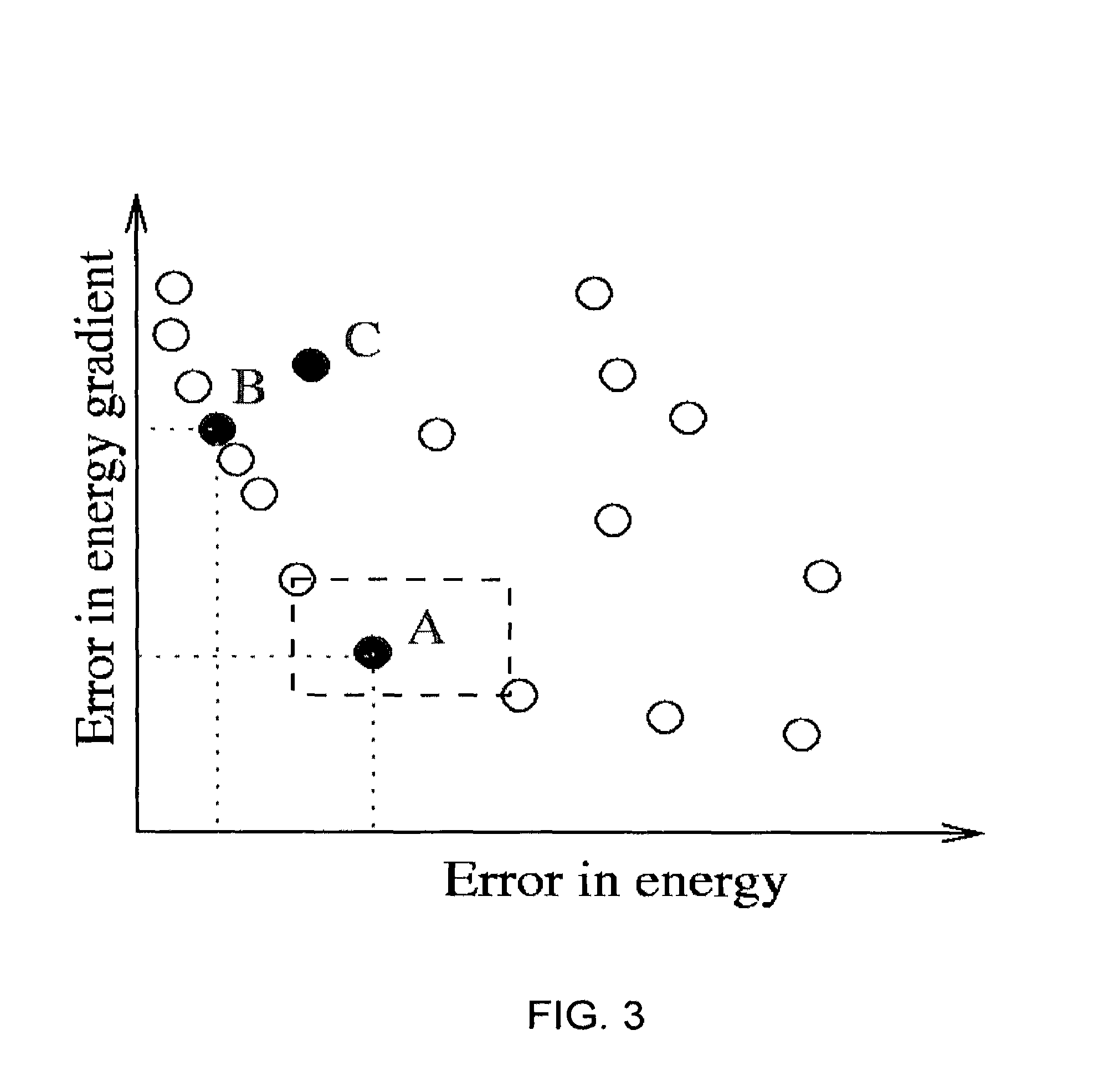
- The use of multiobjective optimization methods, such as multiobjective genetic algorithms (MOGA), to reparameterize semiempirical methods, optimizing energy values and gradients for molecular configurations, thereby providing globally accurate potential energy surfaces and excited-state dynamics with reduced computational cost.

Computational Resource Requirements and Infrastructure
Quantum chemistry validation in molecular engineering demands substantial computational resources that scale exponentially with system complexity. High-performance computing infrastructure forms the backbone of modern quantum chemical calculations, where the computational cost increases dramatically with molecular size and desired accuracy levels. Typical density functional theory calculations for medium-sized molecules require multi-core processors with 16-64 cores, while post-Hartree-Fock methods such as coupled cluster theory may necessitate hundreds to thousands of cores for systems exceeding 50 atoms. Memory requirements are equally critical, with large-scale calculations often demanding 128GB to several terabytes of RAM, particularly for correlated wavefunction methods and extensive basis set applications.
The infrastructure landscape encompasses diverse computing architectures, from traditional CPU-based clusters to emerging GPU-accelerated systems and hybrid platforms. Graphics processing units have demonstrated remarkable efficiency in accelerating specific quantum chemistry algorithms, achieving speedups of 10-50x for certain operations compared to conventional processors. Cloud computing platforms are increasingly adopted for their scalability and flexibility, though data security and transfer bandwidth remain considerations for sensitive molecular engineering projects.
Storage infrastructure presents another critical dimension, as quantum chemistry workflows generate massive datasets requiring both high-speed scratch space and long-term archival solutions. Typical production environments allocate 10-100TB of fast parallel file systems for active calculations, complemented by petabyte-scale storage for result preservation and data mining. Network infrastructure must support high-bandwidth, low-latency communication between compute nodes, with InfiniBand and high-speed Ethernet being standard choices for tightly-coupled parallel calculations.
Specialized quantum chemistry software packages impose specific infrastructure requirements, with licensing models and software optimization levels significantly impacting resource utilization efficiency. Containerization technologies and workflow management systems are becoming essential for reproducibility and resource optimization, enabling efficient job scheduling and resource allocation across heterogeneous computing environments.
The infrastructure landscape encompasses diverse computing architectures, from traditional CPU-based clusters to emerging GPU-accelerated systems and hybrid platforms. Graphics processing units have demonstrated remarkable efficiency in accelerating specific quantum chemistry algorithms, achieving speedups of 10-50x for certain operations compared to conventional processors. Cloud computing platforms are increasingly adopted for their scalability and flexibility, though data security and transfer bandwidth remain considerations for sensitive molecular engineering projects.
Storage infrastructure presents another critical dimension, as quantum chemistry workflows generate massive datasets requiring both high-speed scratch space and long-term archival solutions. Typical production environments allocate 10-100TB of fast parallel file systems for active calculations, complemented by petabyte-scale storage for result preservation and data mining. Network infrastructure must support high-bandwidth, low-latency communication between compute nodes, with InfiniBand and high-speed Ethernet being standard choices for tightly-coupled parallel calculations.
Specialized quantum chemistry software packages impose specific infrastructure requirements, with licensing models and software optimization levels significantly impacting resource utilization efficiency. Containerization technologies and workflow management systems are becoming essential for reproducibility and resource optimization, enabling efficient job scheduling and resource allocation across heterogeneous computing environments.
Benchmark Standards for Quantum Chemistry Accuracy
Establishing robust benchmark standards for quantum chemistry accuracy represents a critical foundation for validating computational methods in molecular engineering applications. These standards serve as quantitative metrics to assess the reliability and precision of various quantum chemical approaches when predicting molecular properties, reaction mechanisms, and material behaviors. The development of universally accepted benchmarks enables researchers to systematically compare different computational methodologies and determine their suitability for specific engineering tasks.
Current benchmark frameworks typically encompass multiple accuracy tiers, ranging from qualitative predictions to chemical accuracy targets of 1 kcal/mol for thermochemical properties. Reference datasets such as the G2/97 test set, GMTKN55 database, and more recent compilations like the BEGDB provide experimentally validated values for molecular energies, geometries, and reaction barriers. These datasets span diverse chemical systems including main-group compounds, transition metal complexes, and non-covalent interactions, ensuring comprehensive coverage of molecular engineering scenarios.
The establishment of accuracy thresholds must consider the specific requirements of different application domains. For drug design and catalysis optimization, energy predictions within 2-3 kcal/mol may suffice for initial screening, while materials property predictions often demand sub-kcal/mol precision. Geometric parameters typically require accuracy within 0.01-0.02 Å for bond lengths and 1-2 degrees for angles to ensure reliable structure-property relationships.
Standardization efforts increasingly incorporate systematic error analysis protocols, including assessments of basis set convergence, electron correlation treatment adequacy, and relativistic effect contributions. Modern benchmarking practices also emphasize computational cost considerations, establishing accuracy-to-efficiency ratios that guide method selection for large-scale molecular engineering projects. The integration of machine learning validation metrics alongside traditional quantum chemistry benchmarks represents an emerging trend, facilitating hybrid computational workflows that balance accuracy with scalability requirements in industrial molecular design applications.
Current benchmark frameworks typically encompass multiple accuracy tiers, ranging from qualitative predictions to chemical accuracy targets of 1 kcal/mol for thermochemical properties. Reference datasets such as the G2/97 test set, GMTKN55 database, and more recent compilations like the BEGDB provide experimentally validated values for molecular energies, geometries, and reaction barriers. These datasets span diverse chemical systems including main-group compounds, transition metal complexes, and non-covalent interactions, ensuring comprehensive coverage of molecular engineering scenarios.
The establishment of accuracy thresholds must consider the specific requirements of different application domains. For drug design and catalysis optimization, energy predictions within 2-3 kcal/mol may suffice for initial screening, while materials property predictions often demand sub-kcal/mol precision. Geometric parameters typically require accuracy within 0.01-0.02 Å for bond lengths and 1-2 degrees for angles to ensure reliable structure-property relationships.
Standardization efforts increasingly incorporate systematic error analysis protocols, including assessments of basis set convergence, electron correlation treatment adequacy, and relativistic effect contributions. Modern benchmarking practices also emphasize computational cost considerations, establishing accuracy-to-efficiency ratios that guide method selection for large-scale molecular engineering projects. The integration of machine learning validation metrics alongside traditional quantum chemistry benchmarks represents an emerging trend, facilitating hybrid computational workflows that balance accuracy with scalability requirements in industrial molecular design applications.
Unlock deeper insights with PatSnap Eureka Quick Research — get a full tech report to explore trends and direct your research. Try now!
Generate Your Research Report Instantly with AI Agent
Supercharge your innovation with PatSnap Eureka AI Agent Platform!