Schumann Resonance: A Tool for Understanding Atmospheric Changes
JUN 24, 20259 MIN READ
Generate Your Research Report Instantly with AI Agent
PatSnap Eureka helps you evaluate technical feasibility & market potential.
Schumann Resonance Background and Objectives
Schumann resonances, discovered by physicist Winfried Otto Schumann in 1952, are electromagnetic waves that exist in the Earth's ionosphere cavity. These resonances occur at extremely low frequencies, primarily around 7.83 Hz, with harmonics at higher frequencies. The phenomenon is a result of global lightning activity, which excites the Earth-ionosphere cavity, creating standing waves that encircle the planet.
The study of Schumann resonances has evolved significantly since their discovery, becoming an increasingly important tool for understanding atmospheric changes and global climate dynamics. Initially, research focused on the basic properties and characteristics of these resonances. However, as technology advanced and our understanding deepened, scientists began to recognize the potential of Schumann resonances as indicators of various atmospheric and ionospheric phenomena.
In recent years, there has been a growing interest in utilizing Schumann resonances to monitor and analyze changes in the Earth's atmosphere. This interest stems from the realization that these resonances are sensitive to various factors, including temperature, humidity, and ionospheric conditions. As such, they offer a unique perspective on global atmospheric processes and can potentially serve as early warning systems for climate-related events.
The primary objective of current Schumann resonance research is to develop more sophisticated methods for extracting meaningful data from these electromagnetic signals. This includes improving detection and analysis techniques, as well as creating more accurate models that can interpret the subtle variations in resonance frequencies and amplitudes. By doing so, researchers aim to enhance our ability to monitor and predict atmospheric changes on a global scale.
Another key goal is to establish a comprehensive, long-term database of Schumann resonance measurements. This would allow scientists to track trends over extended periods, potentially revealing patterns and correlations that could provide insights into climate change and other large-scale atmospheric phenomena. Such a database could also serve as a valuable resource for validating climate models and improving our understanding of the Earth's complex atmospheric systems.
Furthermore, researchers are exploring the potential applications of Schumann resonance monitoring in various fields, including meteorology, space weather forecasting, and even earthquake prediction. As our understanding of these resonances grows, so too does the range of potential applications, making Schumann resonance research an increasingly interdisciplinary field with far-reaching implications for our understanding of the Earth's atmosphere and climate.
The study of Schumann resonances has evolved significantly since their discovery, becoming an increasingly important tool for understanding atmospheric changes and global climate dynamics. Initially, research focused on the basic properties and characteristics of these resonances. However, as technology advanced and our understanding deepened, scientists began to recognize the potential of Schumann resonances as indicators of various atmospheric and ionospheric phenomena.
In recent years, there has been a growing interest in utilizing Schumann resonances to monitor and analyze changes in the Earth's atmosphere. This interest stems from the realization that these resonances are sensitive to various factors, including temperature, humidity, and ionospheric conditions. As such, they offer a unique perspective on global atmospheric processes and can potentially serve as early warning systems for climate-related events.
The primary objective of current Schumann resonance research is to develop more sophisticated methods for extracting meaningful data from these electromagnetic signals. This includes improving detection and analysis techniques, as well as creating more accurate models that can interpret the subtle variations in resonance frequencies and amplitudes. By doing so, researchers aim to enhance our ability to monitor and predict atmospheric changes on a global scale.
Another key goal is to establish a comprehensive, long-term database of Schumann resonance measurements. This would allow scientists to track trends over extended periods, potentially revealing patterns and correlations that could provide insights into climate change and other large-scale atmospheric phenomena. Such a database could also serve as a valuable resource for validating climate models and improving our understanding of the Earth's complex atmospheric systems.
Furthermore, researchers are exploring the potential applications of Schumann resonance monitoring in various fields, including meteorology, space weather forecasting, and even earthquake prediction. As our understanding of these resonances grows, so too does the range of potential applications, making Schumann resonance research an increasingly interdisciplinary field with far-reaching implications for our understanding of the Earth's atmosphere and climate.
Atmospheric Monitoring Market Analysis
The atmospheric monitoring market has experienced significant growth in recent years, driven by increasing concerns over climate change, air quality, and environmental regulations. This market encompasses a wide range of technologies and solutions designed to measure, analyze, and monitor various atmospheric parameters, including temperature, humidity, air pressure, and pollutant concentrations.
The global atmospheric monitoring market is expected to continue its upward trajectory, with a compound annual growth rate (CAGR) projected to remain strong over the next five years. This growth is primarily attributed to the rising awareness of environmental issues, stringent government regulations, and the need for accurate weather forecasting and climate change monitoring.
Key market segments within atmospheric monitoring include air quality monitoring, greenhouse gas monitoring, and weather monitoring systems. Air quality monitoring, in particular, has seen a surge in demand due to growing urbanization and industrialization, leading to increased air pollution in many regions worldwide. The adoption of smart city initiatives and the integration of IoT technologies have further boosted the market for atmospheric monitoring solutions.
The integration of Schumann Resonance monitoring into atmospheric research presents a unique opportunity within this market. As a tool for understanding atmospheric changes, Schumann Resonance measurements can provide valuable insights into global temperature variations, lightning activity, and potentially even seismic events. This emerging application could create a new niche within the atmospheric monitoring market, attracting interest from both scientific institutions and government agencies.
Geographically, North America and Europe currently dominate the atmospheric monitoring market, owing to stringent environmental regulations and advanced technological infrastructure. However, the Asia-Pacific region is expected to witness the highest growth rate in the coming years, driven by rapid industrialization, increasing environmental concerns, and government initiatives to combat air pollution in countries like China and India.
Key players in the atmospheric monitoring market include established environmental monitoring companies, as well as new entrants specializing in advanced sensor technologies and data analytics. The market is characterized by ongoing technological advancements, with a focus on improving sensor accuracy, reducing power consumption, and enhancing data integration capabilities.
Challenges facing the atmospheric monitoring market include the high cost of advanced monitoring equipment, the need for regular calibration and maintenance, and the complexity of data interpretation. However, these challenges also present opportunities for innovation, particularly in the development of more cost-effective and user-friendly monitoring solutions.
The global atmospheric monitoring market is expected to continue its upward trajectory, with a compound annual growth rate (CAGR) projected to remain strong over the next five years. This growth is primarily attributed to the rising awareness of environmental issues, stringent government regulations, and the need for accurate weather forecasting and climate change monitoring.
Key market segments within atmospheric monitoring include air quality monitoring, greenhouse gas monitoring, and weather monitoring systems. Air quality monitoring, in particular, has seen a surge in demand due to growing urbanization and industrialization, leading to increased air pollution in many regions worldwide. The adoption of smart city initiatives and the integration of IoT technologies have further boosted the market for atmospheric monitoring solutions.
The integration of Schumann Resonance monitoring into atmospheric research presents a unique opportunity within this market. As a tool for understanding atmospheric changes, Schumann Resonance measurements can provide valuable insights into global temperature variations, lightning activity, and potentially even seismic events. This emerging application could create a new niche within the atmospheric monitoring market, attracting interest from both scientific institutions and government agencies.
Geographically, North America and Europe currently dominate the atmospheric monitoring market, owing to stringent environmental regulations and advanced technological infrastructure. However, the Asia-Pacific region is expected to witness the highest growth rate in the coming years, driven by rapid industrialization, increasing environmental concerns, and government initiatives to combat air pollution in countries like China and India.
Key players in the atmospheric monitoring market include established environmental monitoring companies, as well as new entrants specializing in advanced sensor technologies and data analytics. The market is characterized by ongoing technological advancements, with a focus on improving sensor accuracy, reducing power consumption, and enhancing data integration capabilities.
Challenges facing the atmospheric monitoring market include the high cost of advanced monitoring equipment, the need for regular calibration and maintenance, and the complexity of data interpretation. However, these challenges also present opportunities for innovation, particularly in the development of more cost-effective and user-friendly monitoring solutions.
Current State and Challenges in SR Measurement
The current state of Schumann Resonance (SR) measurement has seen significant advancements in recent years, yet it still faces several challenges. Modern SR measurement techniques primarily utilize extremely low frequency (ELF) receivers and sophisticated signal processing algorithms to detect and analyze the weak electromagnetic signals generated by global lightning activity.
One of the key developments in SR measurement is the establishment of global networks of ELF stations. These networks, such as the Global Circuit Oscillations Project (GCOP) and the Atmospheric Weather Electromagnetic System for Observation, Modeling, and Education (AWESOME), have greatly improved our ability to monitor SR on a global scale. These networks provide continuous, high-quality data that enable researchers to study long-term trends and variations in SR.
Advanced signal processing techniques have also played a crucial role in improving SR measurement accuracy. Methods such as adaptive noise cancellation, wavelet analysis, and machine learning algorithms have enhanced our ability to extract SR signals from background noise and identify subtle changes in SR parameters.
Despite these advancements, several challenges persist in SR measurement. One of the primary difficulties is the low signal-to-noise ratio of SR signals. Natural and anthropogenic electromagnetic noise sources often interfere with SR detection, requiring sophisticated filtering and noise reduction techniques. This challenge is particularly pronounced in urban areas or regions with high industrial activity.
Another significant challenge is the need for precise calibration and standardization of SR measurement equipment across different stations. Variations in sensor design, local environmental conditions, and data processing methods can lead to discrepancies in SR measurements between different locations, making it difficult to compare and integrate data from multiple sources.
The influence of local weather conditions on SR measurements also presents a challenge. Factors such as temperature, humidity, and atmospheric conductivity can affect the propagation of ELF waves, potentially introducing biases in SR measurements. Developing methods to account for and correct these local effects is an ongoing area of research.
Furthermore, the interpretation of SR data in the context of global atmospheric changes remains complex. While SR measurements provide valuable insights into global lightning activity and ionospheric conditions, translating these observations into meaningful indicators of climate change or other large-scale atmospheric phenomena requires further research and modeling efforts.
As SR measurement techniques continue to evolve, addressing these challenges will be crucial for enhancing our understanding of global atmospheric dynamics and leveraging SR as a tool for monitoring and predicting atmospheric changes.
One of the key developments in SR measurement is the establishment of global networks of ELF stations. These networks, such as the Global Circuit Oscillations Project (GCOP) and the Atmospheric Weather Electromagnetic System for Observation, Modeling, and Education (AWESOME), have greatly improved our ability to monitor SR on a global scale. These networks provide continuous, high-quality data that enable researchers to study long-term trends and variations in SR.
Advanced signal processing techniques have also played a crucial role in improving SR measurement accuracy. Methods such as adaptive noise cancellation, wavelet analysis, and machine learning algorithms have enhanced our ability to extract SR signals from background noise and identify subtle changes in SR parameters.
Despite these advancements, several challenges persist in SR measurement. One of the primary difficulties is the low signal-to-noise ratio of SR signals. Natural and anthropogenic electromagnetic noise sources often interfere with SR detection, requiring sophisticated filtering and noise reduction techniques. This challenge is particularly pronounced in urban areas or regions with high industrial activity.
Another significant challenge is the need for precise calibration and standardization of SR measurement equipment across different stations. Variations in sensor design, local environmental conditions, and data processing methods can lead to discrepancies in SR measurements between different locations, making it difficult to compare and integrate data from multiple sources.
The influence of local weather conditions on SR measurements also presents a challenge. Factors such as temperature, humidity, and atmospheric conductivity can affect the propagation of ELF waves, potentially introducing biases in SR measurements. Developing methods to account for and correct these local effects is an ongoing area of research.
Furthermore, the interpretation of SR data in the context of global atmospheric changes remains complex. While SR measurements provide valuable insights into global lightning activity and ionospheric conditions, translating these observations into meaningful indicators of climate change or other large-scale atmospheric phenomena requires further research and modeling efforts.
As SR measurement techniques continue to evolve, addressing these challenges will be crucial for enhancing our understanding of global atmospheric dynamics and leveraging SR as a tool for monitoring and predicting atmospheric changes.
Existing SR Monitoring Solutions
01 Atmospheric monitoring and measurement devices
Various devices and systems have been developed to monitor and measure atmospheric changes related to Schumann Resonance. These include sensors, detectors, and instruments designed to capture and analyze electromagnetic signals in the Earth's atmosphere, providing data on atmospheric conditions and potential changes in the Schumann Resonance.- Atmospheric monitoring and measurement devices: Various devices and systems have been developed to monitor and measure atmospheric changes related to Schumann Resonance. These include sensors, detectors, and instruments designed to capture and analyze electromagnetic signals in the Earth's atmosphere, providing data on atmospheric conditions and potential changes in the Schumann Resonance.
- Electromagnetic field generators and simulators: Devices and systems have been created to generate or simulate electromagnetic fields similar to the Schumann Resonance. These can be used for research purposes, therapeutic applications, or to study the effects of atmospheric changes on the resonance. Some designs incorporate adjustable frequencies to mimic various atmospheric conditions.
- Wearable devices for Schumann Resonance exposure: Wearable technologies have been developed to expose users to Schumann Resonance frequencies. These devices aim to provide potential health benefits associated with the resonance, and may include features to adapt to atmospheric changes that affect the natural Schumann Resonance.
- Data analysis and prediction systems: Advanced systems have been designed to analyze data related to Schumann Resonance and atmospheric changes. These may use artificial intelligence or machine learning algorithms to process large datasets, identify patterns, and predict potential atmospheric changes based on variations in the Schumann Resonance.
- Environmental impact assessment tools: Tools and methods have been developed to assess the environmental impact of human activities on atmospheric conditions and the Schumann Resonance. These may include sensors, data collection systems, and analytical software to monitor and evaluate changes in electromagnetic fields and atmospheric composition over time.
02 Electromagnetic field generators and simulators
Devices and systems have been created to generate or simulate electromagnetic fields similar to the Schumann Resonance. These can be used for research purposes, therapeutic applications, or to study the effects of atmospheric changes on the Schumann Resonance in controlled environments.Expand Specific Solutions03 Wearable devices for Schumann Resonance exposure
Wearable technologies have been developed to expose users to frequencies associated with the Schumann Resonance. These devices aim to provide potential health benefits or counteract the effects of atmospheric changes on the body's natural electromagnetic field.Expand Specific Solutions04 Data analysis and prediction systems
Advanced systems and methods have been created to analyze data related to Schumann Resonance and atmospheric changes. These systems use various algorithms and models to process information from multiple sources, enabling researchers to predict and understand trends in atmospheric electromagnetic activity.Expand Specific Solutions05 Atmospheric ionization and modification techniques
Technologies have been developed to modify or influence atmospheric conditions related to the Schumann Resonance. These may include ionization techniques, electromagnetic wave generators, or other methods aimed at altering the atmospheric electromagnetic environment for various purposes, such as weather modification or environmental research.Expand Specific Solutions
Key Players in SR Research and Instrumentation
The Schumann Resonance research field is in a growth phase, with increasing interest from both academic institutions and private companies. The market for related technologies and applications is expanding, driven by the growing need for atmospheric monitoring and climate change research. The technology's maturity varies across different applications, ranging from established monitoring systems to emerging predictive models. Key players like The Boeing Co., LI-COR, Inc., and Ramot at Tel Aviv University Ltd. are advancing the field through innovative research and development. Academic institutions such as the University of Bern and Chinese Academy of Sciences Institute of Acoustics are contributing significant scientific insights, while companies like DAIKIN INDUSTRIES Ltd. and Seiko Epson Corp. are exploring practical applications in environmental sensing and consumer electronics.
The Boeing Co.
Technical Solution: Boeing has developed advanced sensor systems and data analytics platforms to monitor and analyze Schumann Resonances. Their approach integrates satellite-based measurements with ground-based sensors to create a comprehensive global monitoring network. This system uses machine learning algorithms to process vast amounts of data, enabling real-time detection of atmospheric changes and potential correlations with climate patterns. Boeing's technology also incorporates ionospheric modeling to enhance the accuracy of Schumann Resonance measurements and their interpretation in the context of atmospheric dynamics.
Strengths: Global coverage, integration of multiple data sources, advanced analytics capabilities. Weaknesses: High implementation costs, potential for data overload, reliance on complex algorithms that may require frequent updates.
LI-COR, Inc.
Technical Solution: LI-COR has developed high-precision instruments for measuring Schumann Resonances and related atmospheric parameters. Their approach focuses on creating portable, field-deployable devices that can capture extremely low-frequency electromagnetic signals with high accuracy. These instruments incorporate advanced signal processing techniques to isolate Schumann Resonance signals from background noise. LI-COR's technology also includes data logging and analysis software that allows researchers to correlate Schumann Resonance measurements with other atmospheric and meteorological data, providing a comprehensive tool for studying atmospheric changes over time.
Strengths: High precision measurements, portability for field research, integrated data analysis capabilities. Weaknesses: Limited global coverage compared to satellite-based systems, potential for local interference in measurements.
Core Innovations in SR Data Analysis
A magnetic field exposure system and uses thereof
PatentPendingUS20230372726A1
Innovation
- A magnetic field exposure system generating an amplitude-modulated low frequency magnetic field with a carrier frequency of 360 to 450 Hz and a modulation frequency of 0.5 to 100 Hz, providing a field strength of 0.5 to 250 μT, specifically designed to enhance cell survival, proliferation, reduce stress, and promote tissue regeneration.
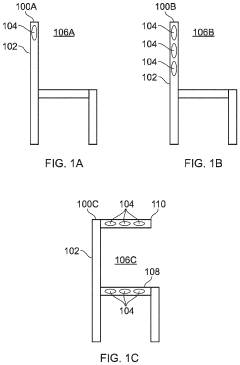
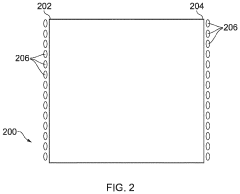
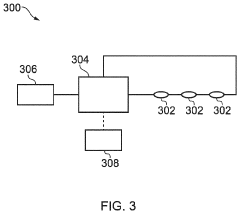
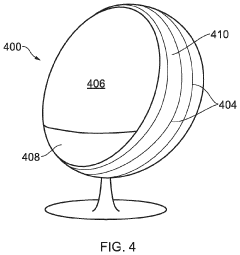
Carbon allotrope composite field effect artificial aurora generating device
PatentActiveUS20200406223A1
Innovation
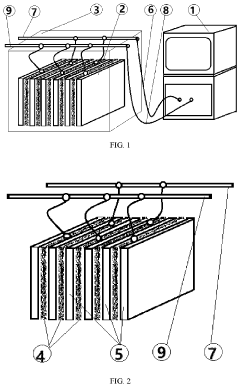
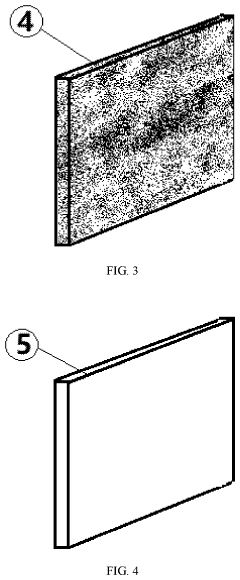
- A carbon allotrope composite field effect artificial aurora generating device using foamed nickel or carbon fiber substrates with a carbon allotrope composite, producing high-energy charged particles through Schumann resonance and low-frequency electric fields, which are used to excite auroras and generate active oxygen for pollution reduction.
Global SR Monitoring Network Development
The development of a Global Schumann Resonance (SR) Monitoring Network represents a significant advancement in our ability to study and understand atmospheric changes on a global scale. This network consists of strategically placed SR monitoring stations around the world, working in concert to provide comprehensive data on the Earth's electromagnetic environment.
The initial phase of network development focused on establishing key monitoring sites in diverse geographical locations. These sites were chosen based on factors such as electromagnetic noise levels, accessibility, and the need for global coverage. Early stations were set up in remote areas to minimize interference from human-made electromagnetic sources, ensuring the highest quality of SR measurements.
As the network expanded, researchers faced challenges in standardizing equipment and measurement protocols across different sites. This led to the development of specialized SR monitoring instruments designed for long-term, continuous operation in various environmental conditions. These instruments typically include sensitive magnetic field sensors, data acquisition systems, and robust communication infrastructure for real-time data transmission.
The integration of data from multiple stations has been a crucial aspect of network development. Advanced data processing algorithms and software have been created to combine and analyze SR measurements from different locations, allowing for a more comprehensive understanding of global atmospheric phenomena. This integration has significantly improved the accuracy and reliability of SR-based atmospheric studies.
Recent advancements in network development have focused on increasing the density of monitoring stations, particularly in underrepresented regions. This expansion aims to provide more detailed spatial resolution of SR measurements, enabling researchers to detect and study localized atmospheric events with greater precision.
The incorporation of machine learning and artificial intelligence techniques has further enhanced the capabilities of the Global SR Monitoring Network. These technologies are being used to identify patterns, predict atmospheric changes, and extract meaningful insights from the vast amounts of data collected by the network.
Efforts are ongoing to improve the network's resilience and adaptability. This includes developing more robust monitoring equipment capable of withstanding extreme weather conditions and implementing redundant systems to ensure continuous data collection. Additionally, there is a growing emphasis on making SR data more accessible to the scientific community, fostering collaboration and accelerating research in atmospheric sciences.
The initial phase of network development focused on establishing key monitoring sites in diverse geographical locations. These sites were chosen based on factors such as electromagnetic noise levels, accessibility, and the need for global coverage. Early stations were set up in remote areas to minimize interference from human-made electromagnetic sources, ensuring the highest quality of SR measurements.
As the network expanded, researchers faced challenges in standardizing equipment and measurement protocols across different sites. This led to the development of specialized SR monitoring instruments designed for long-term, continuous operation in various environmental conditions. These instruments typically include sensitive magnetic field sensors, data acquisition systems, and robust communication infrastructure for real-time data transmission.
The integration of data from multiple stations has been a crucial aspect of network development. Advanced data processing algorithms and software have been created to combine and analyze SR measurements from different locations, allowing for a more comprehensive understanding of global atmospheric phenomena. This integration has significantly improved the accuracy and reliability of SR-based atmospheric studies.
Recent advancements in network development have focused on increasing the density of monitoring stations, particularly in underrepresented regions. This expansion aims to provide more detailed spatial resolution of SR measurements, enabling researchers to detect and study localized atmospheric events with greater precision.
The incorporation of machine learning and artificial intelligence techniques has further enhanced the capabilities of the Global SR Monitoring Network. These technologies are being used to identify patterns, predict atmospheric changes, and extract meaningful insights from the vast amounts of data collected by the network.
Efforts are ongoing to improve the network's resilience and adaptability. This includes developing more robust monitoring equipment capable of withstanding extreme weather conditions and implementing redundant systems to ensure continuous data collection. Additionally, there is a growing emphasis on making SR data more accessible to the scientific community, fostering collaboration and accelerating research in atmospheric sciences.
SR Applications in Space Weather Forecasting
Schumann Resonances (SR) have emerged as a valuable tool in space weather forecasting, offering unique insights into the complex interactions between the Earth's surface and the ionosphere. These natural electromagnetic resonances, occurring in the cavity formed by the Earth's surface and the lower ionosphere, provide a continuous, global measure of ionospheric conditions.
The application of SR in space weather forecasting primarily focuses on monitoring and predicting changes in the ionosphere's lower boundary. By analyzing variations in SR frequencies, amplitudes, and quality factors, researchers can detect perturbations in the ionosphere caused by solar activity, geomagnetic storms, and other space weather phenomena.
One of the key advantages of using SR for space weather forecasting is its global nature. Unlike localized measurements, SR provides an integrated view of the entire Earth-ionosphere cavity, allowing for the detection of large-scale ionospheric disturbances. This global perspective is particularly valuable for identifying and tracking the propagation of space weather events across different regions.
SR measurements have shown a strong correlation with solar activity indices, such as the F10.7 flux and sunspot numbers. This relationship enables researchers to use SR data as a proxy for solar activity, complementing traditional space weather monitoring techniques. By combining SR observations with other space weather indicators, forecasters can improve the accuracy and reliability of their predictions.
The sensitivity of SR to ionospheric height variations makes it an effective tool for detecting sudden ionospheric disturbances (SIDs) caused by solar flares. These disturbances can be observed as rapid changes in SR parameters, providing early warnings of potential communication disruptions and other space weather impacts.
Furthermore, long-term SR monitoring has revealed connections between SR characteristics and climate phenomena, such as El Niño-Southern Oscillation (ENSO) events. This suggests that SR could potentially serve as an indicator of complex atmospheric-ionospheric coupling processes, bridging the gap between terrestrial weather and space weather forecasting.
Recent advancements in SR measurement techniques and data analysis methods have enhanced the utility of SR in space weather applications. Machine learning algorithms and artificial intelligence are being employed to extract more detailed information from SR signals, improving the accuracy and lead time of space weather forecasts.
As the field of space weather forecasting continues to evolve, the integration of SR data with other observational and modeling techniques promises to enhance our understanding of the Earth's near-space environment and improve our ability to predict and mitigate the impacts of space weather events on technological systems and human activities.
The application of SR in space weather forecasting primarily focuses on monitoring and predicting changes in the ionosphere's lower boundary. By analyzing variations in SR frequencies, amplitudes, and quality factors, researchers can detect perturbations in the ionosphere caused by solar activity, geomagnetic storms, and other space weather phenomena.
One of the key advantages of using SR for space weather forecasting is its global nature. Unlike localized measurements, SR provides an integrated view of the entire Earth-ionosphere cavity, allowing for the detection of large-scale ionospheric disturbances. This global perspective is particularly valuable for identifying and tracking the propagation of space weather events across different regions.
SR measurements have shown a strong correlation with solar activity indices, such as the F10.7 flux and sunspot numbers. This relationship enables researchers to use SR data as a proxy for solar activity, complementing traditional space weather monitoring techniques. By combining SR observations with other space weather indicators, forecasters can improve the accuracy and reliability of their predictions.
The sensitivity of SR to ionospheric height variations makes it an effective tool for detecting sudden ionospheric disturbances (SIDs) caused by solar flares. These disturbances can be observed as rapid changes in SR parameters, providing early warnings of potential communication disruptions and other space weather impacts.
Furthermore, long-term SR monitoring has revealed connections between SR characteristics and climate phenomena, such as El Niño-Southern Oscillation (ENSO) events. This suggests that SR could potentially serve as an indicator of complex atmospheric-ionospheric coupling processes, bridging the gap between terrestrial weather and space weather forecasting.
Recent advancements in SR measurement techniques and data analysis methods have enhanced the utility of SR in space weather applications. Machine learning algorithms and artificial intelligence are being employed to extract more detailed information from SR signals, improving the accuracy and lead time of space weather forecasts.
As the field of space weather forecasting continues to evolve, the integration of SR data with other observational and modeling techniques promises to enhance our understanding of the Earth's near-space environment and improve our ability to predict and mitigate the impacts of space weather events on technological systems and human activities.
Unlock deeper insights with PatSnap Eureka Quick Research — get a full tech report to explore trends and direct your research. Try now!
Generate Your Research Report Instantly with AI Agent
Supercharge your innovation with PatSnap Eureka AI Agent Platform!