

Silicon-Carbon Anodes Vs Graphite: Energy Density Comparison
MAY 19, 20268 MIN READ
Generate Your Research Report Instantly with AI Agent
PatSnap Eureka helps you evaluate technical feasibility & market potential.
Silicon-Carbon Anode Development Background and Energy Goals
The development of silicon-carbon anodes represents a pivotal advancement in lithium-ion battery technology, driven by the urgent need to overcome the energy density limitations of conventional graphite anodes. Traditional graphite anodes, while reliable and stable, offer a theoretical specific capacity of only 372 mAh/g, which has become a significant bottleneck in meeting the escalating energy demands of modern applications.
Silicon emerged as a promising alternative due to its exceptional theoretical specific capacity of 4,200 mAh/g, approximately eleven times higher than graphite. This remarkable capacity stems from silicon's ability to form lithium silicide alloys during lithiation, allowing each silicon atom to accommodate up to 4.4 lithium atoms. However, pure silicon anodes face severe challenges, including massive volume expansion of up to 400% during cycling, leading to particle pulverization and rapid capacity degradation.
The silicon-carbon composite approach evolved as a strategic solution to harness silicon's high capacity while mitigating its inherent drawbacks. Carbon materials serve multiple critical functions in these composites: providing structural support to accommodate silicon's volume changes, maintaining electrical conductivity throughout cycling, and offering a stable matrix for silicon particle distribution. This hybrid strategy aims to achieve a balanced performance profile combining enhanced energy density with acceptable cycle life.
The historical development trajectory began in the early 2000s when researchers first recognized silicon's potential for lithium-ion applications. Initial attempts with pure silicon quickly revealed the volume expansion challenges, prompting investigations into various mitigation strategies. The silicon-carbon composite concept gained momentum around 2010, with researchers exploring different carbon architectures including carbon nanotubes, graphene, and porous carbon frameworks.
Current energy density goals for silicon-carbon anodes target achieving 600-800 mAh/g at the material level, representing a 60-115% improvement over graphite while maintaining at least 80% capacity retention after 500 cycles. At the cell level, the objective is to reach energy densities exceeding 300 Wh/kg, compared to approximately 250 Wh/kg for current graphite-based systems.
The technological evolution has progressed through several key phases: initial silicon nanoparticle incorporation, development of core-shell structures, creation of silicon nanowires embedded in carbon matrices, and recent advances in hierarchical porous carbon-silicon architectures. Each phase has contributed incremental improvements in addressing the fundamental challenges while advancing toward commercially viable energy density targets.
Silicon emerged as a promising alternative due to its exceptional theoretical specific capacity of 4,200 mAh/g, approximately eleven times higher than graphite. This remarkable capacity stems from silicon's ability to form lithium silicide alloys during lithiation, allowing each silicon atom to accommodate up to 4.4 lithium atoms. However, pure silicon anodes face severe challenges, including massive volume expansion of up to 400% during cycling, leading to particle pulverization and rapid capacity degradation.
The silicon-carbon composite approach evolved as a strategic solution to harness silicon's high capacity while mitigating its inherent drawbacks. Carbon materials serve multiple critical functions in these composites: providing structural support to accommodate silicon's volume changes, maintaining electrical conductivity throughout cycling, and offering a stable matrix for silicon particle distribution. This hybrid strategy aims to achieve a balanced performance profile combining enhanced energy density with acceptable cycle life.
The historical development trajectory began in the early 2000s when researchers first recognized silicon's potential for lithium-ion applications. Initial attempts with pure silicon quickly revealed the volume expansion challenges, prompting investigations into various mitigation strategies. The silicon-carbon composite concept gained momentum around 2010, with researchers exploring different carbon architectures including carbon nanotubes, graphene, and porous carbon frameworks.
Current energy density goals for silicon-carbon anodes target achieving 600-800 mAh/g at the material level, representing a 60-115% improvement over graphite while maintaining at least 80% capacity retention after 500 cycles. At the cell level, the objective is to reach energy densities exceeding 300 Wh/kg, compared to approximately 250 Wh/kg for current graphite-based systems.
The technological evolution has progressed through several key phases: initial silicon nanoparticle incorporation, development of core-shell structures, creation of silicon nanowires embedded in carbon matrices, and recent advances in hierarchical porous carbon-silicon architectures. Each phase has contributed incremental improvements in addressing the fundamental challenges while advancing toward commercially viable energy density targets.
Market Demand for High Energy Density Battery Solutions
The global battery market is experiencing unprecedented demand for high energy density solutions, driven primarily by the rapid expansion of electric vehicles and portable electronics sectors. Electric vehicle manufacturers are under intense pressure to deliver longer driving ranges while maintaining competitive pricing, creating a critical need for battery technologies that can store more energy per unit weight and volume. This demand has intensified the focus on advanced anode materials, particularly silicon-carbon composites, as alternatives to traditional graphite anodes.
Consumer electronics manufacturers face similar challenges as devices become increasingly sophisticated while users expect longer battery life in thinner, lighter form factors. Smartphones, laptops, and wearable devices require batteries that can deliver sustained performance without compromising device aesthetics or portability. The theoretical energy density advantage of silicon-carbon anodes over graphite presents a compelling solution to these market pressures.
Grid-scale energy storage applications represent another significant demand driver for high energy density battery solutions. As renewable energy deployment accelerates globally, utilities and energy companies require cost-effective storage systems that maximize energy capacity within limited physical footprints. Higher energy density batteries reduce land requirements and infrastructure costs, making renewable energy projects more economically viable.
The aerospace and defense sectors also contribute substantial demand for advanced battery technologies. Unmanned aerial vehicles, satellites, and military equipment require lightweight, high-capacity power sources that can operate reliably under extreme conditions. These applications often justify premium pricing for superior energy density performance, creating lucrative market opportunities for silicon-carbon anode technologies.
Market research indicates that energy density improvements directly correlate with consumer willingness to adopt electric vehicles and premium electronic devices. Range anxiety remains a primary barrier to electric vehicle adoption, while battery life concerns influence smartphone and laptop purchasing decisions. Silicon-carbon anodes, with their potential to deliver significantly higher energy densities compared to graphite, address these fundamental market needs and represent a key enabler for continued growth in battery-dependent industries.
Consumer electronics manufacturers face similar challenges as devices become increasingly sophisticated while users expect longer battery life in thinner, lighter form factors. Smartphones, laptops, and wearable devices require batteries that can deliver sustained performance without compromising device aesthetics or portability. The theoretical energy density advantage of silicon-carbon anodes over graphite presents a compelling solution to these market pressures.
Grid-scale energy storage applications represent another significant demand driver for high energy density battery solutions. As renewable energy deployment accelerates globally, utilities and energy companies require cost-effective storage systems that maximize energy capacity within limited physical footprints. Higher energy density batteries reduce land requirements and infrastructure costs, making renewable energy projects more economically viable.
The aerospace and defense sectors also contribute substantial demand for advanced battery technologies. Unmanned aerial vehicles, satellites, and military equipment require lightweight, high-capacity power sources that can operate reliably under extreme conditions. These applications often justify premium pricing for superior energy density performance, creating lucrative market opportunities for silicon-carbon anode technologies.
Market research indicates that energy density improvements directly correlate with consumer willingness to adopt electric vehicles and premium electronic devices. Range anxiety remains a primary barrier to electric vehicle adoption, while battery life concerns influence smartphone and laptop purchasing decisions. Silicon-carbon anodes, with their potential to deliver significantly higher energy densities compared to graphite, address these fundamental market needs and represent a key enabler for continued growth in battery-dependent industries.
Current State and Challenges of Silicon-Carbon vs Graphite Anodes
Silicon-carbon composite anodes represent a significant advancement in lithium-ion battery technology, offering theoretical specific capacities of 2000-4000 mAh/g compared to graphite's 372 mAh/g. However, the current development status reveals substantial implementation challenges that limit widespread commercial adoption. Leading manufacturers including Tesla, Panasonic, and CATL have achieved silicon content levels of 5-15% in commercial cells, while pure silicon anodes remain largely in research phases due to fundamental material limitations.
The primary technical challenge facing silicon-carbon anodes is the dramatic volume expansion of silicon during lithiation, reaching up to 300% compared to graphite's minimal 10% expansion. This volumetric change causes severe mechanical stress, leading to particle pulverization, solid electrolyte interphase (SEI) layer instability, and rapid capacity degradation. Current silicon-carbon composites typically demonstrate 70-80% capacity retention after 500 cycles, significantly lower than graphite's 90-95% retention under similar conditions.
Manufacturing scalability presents another critical barrier, as silicon-carbon anode production requires sophisticated nanostructuring techniques and specialized binder systems. The cost premium ranges from 3-5 times higher than conventional graphite anodes, primarily due to complex synthesis processes and lower production volumes. Quality control challenges arise from the heterogeneous nature of silicon-carbon composites, where particle size distribution and silicon loading uniformity directly impact electrochemical performance.
Geographically, silicon-carbon anode development concentrates in three primary regions. Asian markets, led by China, Japan, and South Korea, focus on industrial-scale production optimization and cost reduction strategies. North American research emphasizes advanced nanostructuring approaches and novel binder chemistries. European initiatives prioritize sustainable manufacturing processes and recycling technologies for silicon-based materials.
Current technological solutions employ various strategies to mitigate silicon's inherent challenges. Nanostructured silicon approaches, including nanowires and nanoparticles, aim to accommodate volume expansion through engineered void spaces. Carbon coating techniques provide mechanical support and enhance electrical conductivity. Advanced polymer binders, such as polyacrylic acid and carboxymethyl cellulose, offer improved adhesion and flexibility compared to traditional polyvinylidene fluoride binders.
Despite these innovations, silicon-carbon anodes face ongoing limitations in cycle life, first-cycle efficiency, and temperature stability. The technology currently suits applications prioritizing energy density over longevity, such as consumer electronics and electric vehicle range extension, while remaining unsuitable for grid storage applications requiring extended cycle life.
The primary technical challenge facing silicon-carbon anodes is the dramatic volume expansion of silicon during lithiation, reaching up to 300% compared to graphite's minimal 10% expansion. This volumetric change causes severe mechanical stress, leading to particle pulverization, solid electrolyte interphase (SEI) layer instability, and rapid capacity degradation. Current silicon-carbon composites typically demonstrate 70-80% capacity retention after 500 cycles, significantly lower than graphite's 90-95% retention under similar conditions.
Manufacturing scalability presents another critical barrier, as silicon-carbon anode production requires sophisticated nanostructuring techniques and specialized binder systems. The cost premium ranges from 3-5 times higher than conventional graphite anodes, primarily due to complex synthesis processes and lower production volumes. Quality control challenges arise from the heterogeneous nature of silicon-carbon composites, where particle size distribution and silicon loading uniformity directly impact electrochemical performance.
Geographically, silicon-carbon anode development concentrates in three primary regions. Asian markets, led by China, Japan, and South Korea, focus on industrial-scale production optimization and cost reduction strategies. North American research emphasizes advanced nanostructuring approaches and novel binder chemistries. European initiatives prioritize sustainable manufacturing processes and recycling technologies for silicon-based materials.
Current technological solutions employ various strategies to mitigate silicon's inherent challenges. Nanostructured silicon approaches, including nanowires and nanoparticles, aim to accommodate volume expansion through engineered void spaces. Carbon coating techniques provide mechanical support and enhance electrical conductivity. Advanced polymer binders, such as polyacrylic acid and carboxymethyl cellulose, offer improved adhesion and flexibility compared to traditional polyvinylidene fluoride binders.
Despite these innovations, silicon-carbon anodes face ongoing limitations in cycle life, first-cycle efficiency, and temperature stability. The technology currently suits applications prioritizing energy density over longevity, such as consumer electronics and electric vehicle range extension, while remaining unsuitable for grid storage applications requiring extended cycle life.
Existing Silicon-Carbon Anode Implementation Solutions
01 Silicon-carbon composite anode materials with enhanced structural stability
Silicon-carbon composite materials are designed to improve the structural integrity of anodes by combining silicon's high capacity with carbon's stability. These composites help mitigate volume expansion issues during lithium insertion and extraction cycles, leading to better cycling performance and maintained energy density over extended use.- Silicon-carbon composite anode materials with enhanced structural stability: Silicon-carbon composite materials are designed to improve the structural integrity of anodes by combining silicon's high capacity with carbon's stability. These composites help mitigate the volume expansion issues associated with pure silicon anodes while maintaining high energy density. The carbon matrix provides a conductive framework that supports the silicon particles during charge-discharge cycles, preventing electrode degradation and improving cycle life.
- Graphite-silicon hybrid anode architectures for optimized energy density: Hybrid anode designs incorporate both graphite and silicon components to balance energy density and cycling stability. These architectures leverage graphite's excellent cycling performance while benefiting from silicon's superior theoretical capacity. The combination allows for gradual capacity increases over traditional graphite anodes while maintaining acceptable cycle life and rate performance for commercial applications.
- Nanostructured silicon-carbon materials for improved electrochemical performance: Nanostructuring techniques are employed to create silicon-carbon materials with controlled morphologies that enhance electrochemical performance. These nanostructures provide better accommodation of volume changes during lithiation and delithiation processes. The nanoscale design improves ion and electron transport pathways, leading to higher energy density and better rate capabilities compared to conventional bulk materials.
- Surface modification and coating strategies for silicon-carbon anodes: Surface modification techniques and protective coatings are applied to silicon-carbon anodes to enhance their electrochemical stability and energy density retention. These approaches include the application of conductive coatings, polymer binders, and surface treatments that improve the electrode-electrolyte interface. The modifications help maintain electrical contact and prevent capacity fade while preserving the high energy density characteristics of silicon-based materials.
- Manufacturing processes and scalable production methods for silicon-carbon anodes: Advanced manufacturing techniques are developed to enable scalable production of silicon-carbon anode materials with consistent quality and performance. These processes focus on cost-effective synthesis methods, uniform material distribution, and industrial-scale fabrication approaches. The manufacturing strategies aim to maintain the high energy density benefits while ensuring reproducibility and commercial viability of silicon-carbon anode technologies.
02 Graphite-silicon hybrid structures for optimized energy density
Hybrid structures incorporating both graphite and silicon components are developed to balance high energy density with cycling stability. These materials leverage graphite's excellent conductivity and structural stability while incorporating silicon to achieve higher theoretical capacity, resulting in improved overall battery performance.Expand Specific Solutions03 Surface modification and coating techniques for silicon-carbon anodes
Various surface treatment methods and protective coatings are applied to silicon-carbon anode materials to enhance their electrochemical performance. These modifications help reduce side reactions, improve electrolyte compatibility, and maintain particle integrity during charge-discharge cycles, ultimately preserving energy density.Expand Specific Solutions04 Nanostructured silicon-carbon composites with controlled morphology
Nanostructured approaches focus on controlling the size, shape, and distribution of silicon particles within carbon matrices. These engineered morphologies provide better accommodation of volume changes, improved electrical conductivity, and enhanced lithium-ion transport, leading to superior energy density retention.Expand Specific Solutions05 Advanced synthesis methods for high-performance silicon-carbon anodes
Innovative preparation techniques are employed to create silicon-carbon anode materials with optimized properties. These methods include various thermal treatments, chemical vapor deposition, and novel precursor approaches that result in materials with improved energy density, better capacity retention, and enhanced rate capability.Expand Specific Solutions
Key Players in Silicon-Carbon Anode and Battery Industry
The silicon-carbon anode technology market is experiencing rapid growth as the industry transitions from early development to commercialization stages, driven by increasing demand for higher energy density batteries in electric vehicles and energy storage applications. The market demonstrates significant expansion potential with established battery manufacturers like Contemporary Amperex Technology and SK On leading commercial deployment, while material specialists such as BTR New Material Group and Guangdong Kaijin New Energy Technology focus on advanced anode development. Technology maturity varies considerably across players, with companies like Advano and Farad Power pioneering innovative silicon-carbon composite solutions, chemical giants Wacker Chemie and Evonik Operations providing essential materials, and research institutions including KAIST and Norwegian University of Science & Technology advancing fundamental science, creating a competitive landscape where silicon-carbon anodes are progressively challenging traditional graphite dominance through superior energy density capabilities.
BTR New Material Group Co., Ltd.
Technical Solution: BTR specializes in silicon-carbon composite anode materials using proprietary coating technologies that achieve energy density improvements of 20-30% over conventional graphite anodes. Their silicon-carbon materials utilize nano-silicon particles embedded in carbon matrices, delivering specific capacities ranging from 450-600 mAh/g. The company's manufacturing process involves controlled silicon particle sizing and carbon coating techniques to minimize volume expansion issues while maximizing energy storage potential compared to graphite's limited theoretical capacity.
Strengths: Specialized focus on anode materials, established supply chain relationships, cost-effective manufacturing processes. Weaknesses: Limited market presence compared to major battery manufacturers, dependency on downstream battery makers.
Wacker Chemie AG
Technical Solution: Wacker Chemie produces high-purity silicon materials for battery applications, including silicon-carbon composite anodes that offer superior energy density compared to graphite systems. Their silicon-based anode materials can achieve theoretical capacities up to 4200 mAh/g for pure silicon, though practical applications typically utilize silicon-carbon composites delivering 800-1200 mAh/g. The company's materials enable battery energy densities 30-50% higher than conventional graphite anodes while addressing volume expansion challenges through engineered particle morphologies and carbon integration strategies.
Strengths: Established silicon production expertise, high-quality materials, strong chemical industry presence. Weaknesses: Limited battery industry integration, higher raw material costs, complex processing requirements compared to graphite alternatives.
Core Patents in Silicon-Carbon Composite Anode Technologies
Silicon-carbon Composite Anode Material for Lithium Ion Batteries and A Preparation Method Thereof
PatentActiveUS20140147751A1
Innovation
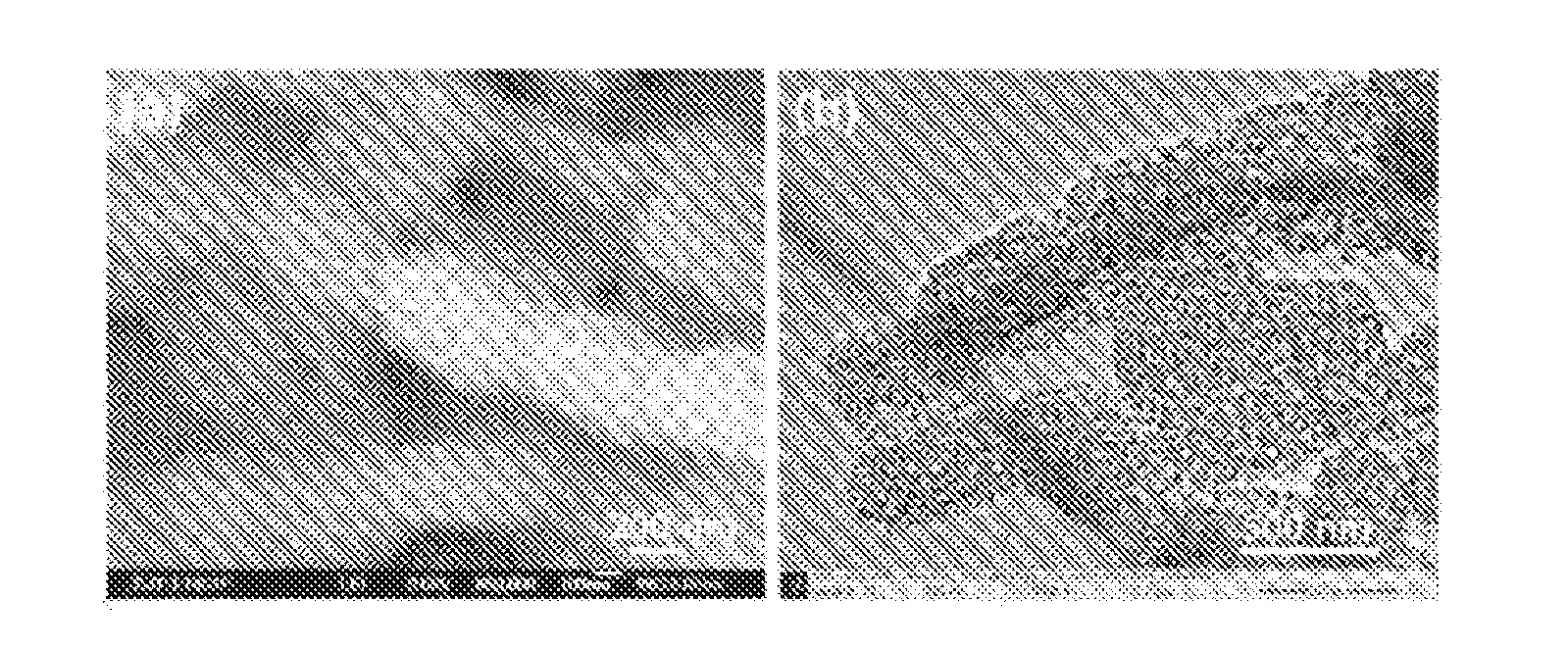
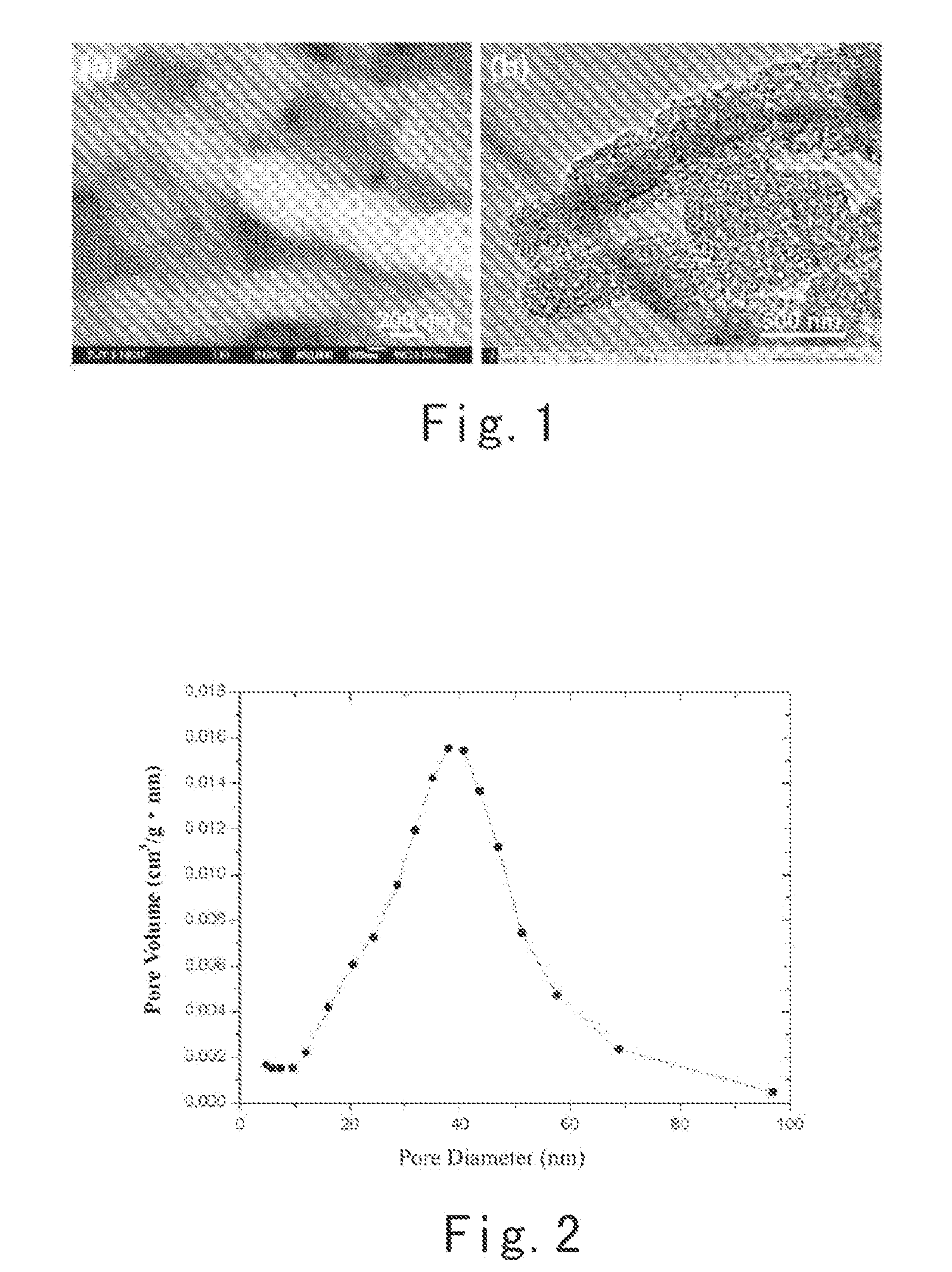
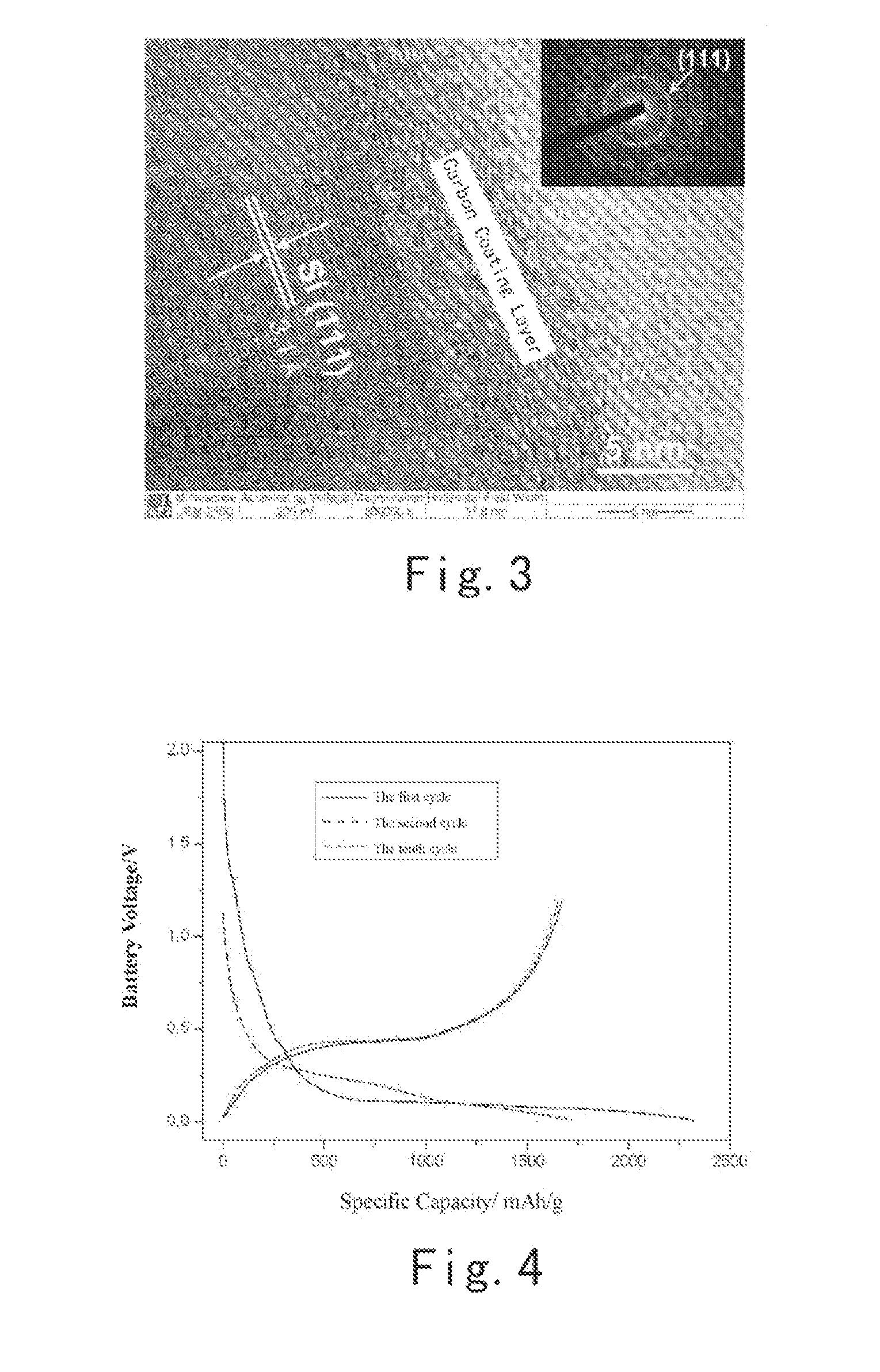
- A silicon-carbon composite anode material with a porous silicon substrate and a carbon coating layer, where the carbon content ranges from 2 wt% to 70 wt%, alleviates volume effects and enhances conductivity, stability, and capacity, using a simple and cost-effective preparation method suitable for industrial production.

Electrolyte compositions for lithium-ion battery cells with anodes comprising a blend of silicon-carbon composite particles and graphite particles
PatentPendingUS20230299362A1
Innovation
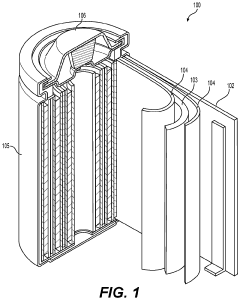
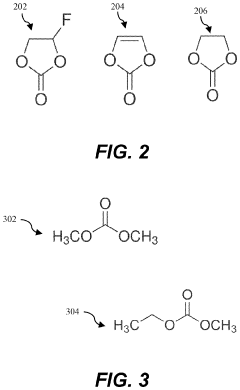
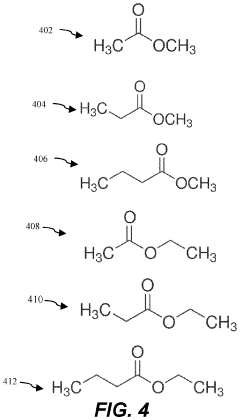
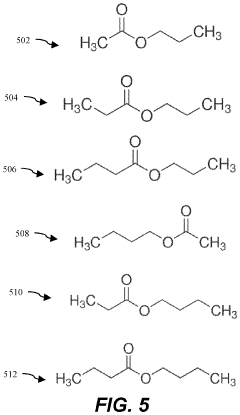
- The development of an electrolyte composition comprising a primary lithium salt and a solvent mixture of fluoroethylene carbonate (FEC), linear esters, and branched esters, with specific mole fractions and ratios, which reduces SEI instability, outgassing, and enhances ionic conductivity, thereby improving the stability and performance of lithium-ion batteries at high temperatures and high charge voltages.
Battery Safety Standards and Regulatory Framework
The regulatory landscape for battery technologies, particularly those involving silicon-carbon anodes versus traditional graphite systems, is governed by a complex framework of international, national, and industry-specific standards. These regulations primarily focus on ensuring safe manufacturing, transportation, storage, and end-use applications while maintaining performance benchmarks for energy density improvements.
International standards such as IEC 62133 and UN 38.3 establish fundamental safety requirements for lithium-ion batteries, regardless of anode material composition. However, silicon-carbon anodes present unique regulatory challenges due to their higher energy density potential and different thermal behavior compared to graphite anodes. The increased energy density capabilities require enhanced safety protocols, particularly regarding thermal runaway prevention and cell-level safety mechanisms.
The United States follows UL 2054 and UL 1973 standards for battery safety certification, while the European Union implements EN 62133 alongside specific automotive standards like ECE R100 for electric vehicle applications. These frameworks mandate rigorous testing protocols including overcharge protection, short circuit resistance, and thermal abuse tolerance, which become more critical as energy density increases with silicon-carbon anode adoption.
Regulatory bodies are increasingly focusing on lifecycle safety assessments that encompass manufacturing processes, operational safety margins, and end-of-life disposal considerations. Silicon-carbon anodes, with their superior energy density characteristics, must demonstrate compliance with stricter safety thresholds due to the higher energy content per unit volume, requiring enhanced monitoring systems and protective circuitry.
Emerging regulatory trends indicate a shift toward performance-based standards rather than prescriptive material specifications. This evolution allows innovative anode technologies like silicon-carbon composites to compete with established graphite systems while maintaining equivalent or superior safety profiles. Future regulatory frameworks are expected to incorporate energy density benchmarks alongside traditional safety metrics, creating a more comprehensive evaluation matrix for next-generation battery technologies.
International standards such as IEC 62133 and UN 38.3 establish fundamental safety requirements for lithium-ion batteries, regardless of anode material composition. However, silicon-carbon anodes present unique regulatory challenges due to their higher energy density potential and different thermal behavior compared to graphite anodes. The increased energy density capabilities require enhanced safety protocols, particularly regarding thermal runaway prevention and cell-level safety mechanisms.
The United States follows UL 2054 and UL 1973 standards for battery safety certification, while the European Union implements EN 62133 alongside specific automotive standards like ECE R100 for electric vehicle applications. These frameworks mandate rigorous testing protocols including overcharge protection, short circuit resistance, and thermal abuse tolerance, which become more critical as energy density increases with silicon-carbon anode adoption.
Regulatory bodies are increasingly focusing on lifecycle safety assessments that encompass manufacturing processes, operational safety margins, and end-of-life disposal considerations. Silicon-carbon anodes, with their superior energy density characteristics, must demonstrate compliance with stricter safety thresholds due to the higher energy content per unit volume, requiring enhanced monitoring systems and protective circuitry.
Emerging regulatory trends indicate a shift toward performance-based standards rather than prescriptive material specifications. This evolution allows innovative anode technologies like silicon-carbon composites to compete with established graphite systems while maintaining equivalent or superior safety profiles. Future regulatory frameworks are expected to incorporate energy density benchmarks alongside traditional safety metrics, creating a more comprehensive evaluation matrix for next-generation battery technologies.
Manufacturing Scalability and Cost Analysis
The manufacturing scalability of silicon-carbon anodes presents significantly greater complexity compared to traditional graphite anodes. While graphite production benefits from decades of established industrial processes and mature supply chains, silicon-carbon composite manufacturing requires sophisticated synthesis techniques including chemical vapor deposition, ball milling, and precise carbon coating processes. These advanced manufacturing methods demand specialized equipment and controlled environments, creating substantial barriers to large-scale production.
Current silicon-carbon anode production costs range from $15-25 per kilogram, representing a 3-5x premium over graphite anodes priced at $5-8 per kilogram. The cost differential stems primarily from expensive silicon precursors, energy-intensive processing requirements, and lower manufacturing yields due to quality control challenges. Silicon purification and nanostructuring processes contribute approximately 40-50% of total production costs, while carbon coating and composite formation account for an additional 25-30%.
Scale-up challenges for silicon-carbon anodes include maintaining uniform particle size distribution, ensuring consistent carbon coating thickness, and controlling silicon content homogeneity across large production batches. Manufacturing yields typically range from 70-85% for silicon-carbon composites compared to 90-95% for graphite processing. Quality control requirements are more stringent, necessitating advanced characterization techniques and longer production cycles.
Economic projections indicate that silicon-carbon anode costs could decrease to $8-12 per kilogram by 2030 through economies of scale, process optimization, and raw material cost reductions. However, achieving cost parity with graphite remains challenging due to inherent material and processing complexities. Investment requirements for silicon-carbon anode manufacturing facilities are estimated at 2-3x higher than equivalent graphite production capacity.
The manufacturing infrastructure transition requires substantial capital investment in new equipment, workforce training, and supply chain development. Current global silicon-carbon anode production capacity remains limited to approximately 10,000 tons annually, compared to over 1 million tons for graphite anodes, highlighting the significant scalability gap that must be addressed for widespread commercial adoption.
Current silicon-carbon anode production costs range from $15-25 per kilogram, representing a 3-5x premium over graphite anodes priced at $5-8 per kilogram. The cost differential stems primarily from expensive silicon precursors, energy-intensive processing requirements, and lower manufacturing yields due to quality control challenges. Silicon purification and nanostructuring processes contribute approximately 40-50% of total production costs, while carbon coating and composite formation account for an additional 25-30%.
Scale-up challenges for silicon-carbon anodes include maintaining uniform particle size distribution, ensuring consistent carbon coating thickness, and controlling silicon content homogeneity across large production batches. Manufacturing yields typically range from 70-85% for silicon-carbon composites compared to 90-95% for graphite processing. Quality control requirements are more stringent, necessitating advanced characterization techniques and longer production cycles.
Economic projections indicate that silicon-carbon anode costs could decrease to $8-12 per kilogram by 2030 through economies of scale, process optimization, and raw material cost reductions. However, achieving cost parity with graphite remains challenging due to inherent material and processing complexities. Investment requirements for silicon-carbon anode manufacturing facilities are estimated at 2-3x higher than equivalent graphite production capacity.
The manufacturing infrastructure transition requires substantial capital investment in new equipment, workforce training, and supply chain development. Current global silicon-carbon anode production capacity remains limited to approximately 10,000 tons annually, compared to over 1 million tons for graphite anodes, highlighting the significant scalability gap that must be addressed for widespread commercial adoption.
Unlock deeper insights with PatSnap Eureka Quick Research — get a full tech report to explore trends and direct your research. Try now!
Generate Your Research Report Instantly with AI Agent
Supercharge your innovation with PatSnap Eureka AI Agent Platform!