

Smart Irrigation System Modularity: Design Benefits
FEB 25, 202610 MIN READ
Generate Your Research Report Instantly with AI Agent
PatSnap Eureka helps you evaluate technical feasibility & market potential.
Smart Irrigation Modularity Background and Objectives
Smart irrigation systems have emerged as a critical solution to address the growing challenges of water scarcity, agricultural efficiency, and sustainable farming practices. Traditional irrigation methods often result in water wastage, uneven distribution, and inadequate crop monitoring, leading to reduced yields and environmental concerns. The evolution from conventional sprinkler systems to sophisticated sensor-based irrigation networks represents a significant technological advancement in precision agriculture.
The concept of modularity in smart irrigation systems has gained prominence as agricultural operations seek scalable, adaptable, and cost-effective solutions. Modular design principles enable farmers to customize irrigation systems according to specific field requirements, crop types, and budget constraints. This approach contrasts with monolithic systems that offer limited flexibility and often require complete replacement when modifications are needed.
Historical development of irrigation technology shows a clear progression from manual control systems to automated solutions incorporating Internet of Things sensors, weather data integration, and machine learning algorithms. The integration of modularity concepts began gaining traction in the early 2010s as wireless communication technologies matured and component costs decreased, making distributed sensor networks economically viable for various farm sizes.
Current market drivers for modular smart irrigation include increasing water costs, regulatory pressure for water conservation, labor shortages in agriculture, and the need for precise resource management. Climate change has intensified these pressures, creating demand for systems that can adapt quickly to changing environmental conditions and optimize water usage across diverse geographical regions.
The primary objective of implementing modular smart irrigation systems centers on achieving optimal water efficiency while maintaining or improving crop yields. This involves developing interoperable components that can function independently or as part of larger networks, enabling farmers to start with basic configurations and expand capabilities over time. The modular approach aims to reduce initial investment barriers while providing pathways for technological upgrades.
Secondary objectives include enhancing system reliability through redundancy, simplifying maintenance procedures, and enabling rapid deployment across different agricultural environments. The design philosophy emphasizes plug-and-play functionality, standardized communication protocols, and user-friendly interfaces that accommodate varying levels of technical expertise among agricultural operators.
Long-term strategic goals encompass creating ecosystem-compatible solutions that integrate with broader farm management systems, supporting data-driven decision making, and facilitating the transition toward fully autonomous agricultural operations. These objectives align with global sustainability initiatives and the increasing adoption of precision agriculture technologies worldwide.
The concept of modularity in smart irrigation systems has gained prominence as agricultural operations seek scalable, adaptable, and cost-effective solutions. Modular design principles enable farmers to customize irrigation systems according to specific field requirements, crop types, and budget constraints. This approach contrasts with monolithic systems that offer limited flexibility and often require complete replacement when modifications are needed.
Historical development of irrigation technology shows a clear progression from manual control systems to automated solutions incorporating Internet of Things sensors, weather data integration, and machine learning algorithms. The integration of modularity concepts began gaining traction in the early 2010s as wireless communication technologies matured and component costs decreased, making distributed sensor networks economically viable for various farm sizes.
Current market drivers for modular smart irrigation include increasing water costs, regulatory pressure for water conservation, labor shortages in agriculture, and the need for precise resource management. Climate change has intensified these pressures, creating demand for systems that can adapt quickly to changing environmental conditions and optimize water usage across diverse geographical regions.
The primary objective of implementing modular smart irrigation systems centers on achieving optimal water efficiency while maintaining or improving crop yields. This involves developing interoperable components that can function independently or as part of larger networks, enabling farmers to start with basic configurations and expand capabilities over time. The modular approach aims to reduce initial investment barriers while providing pathways for technological upgrades.
Secondary objectives include enhancing system reliability through redundancy, simplifying maintenance procedures, and enabling rapid deployment across different agricultural environments. The design philosophy emphasizes plug-and-play functionality, standardized communication protocols, and user-friendly interfaces that accommodate varying levels of technical expertise among agricultural operators.
Long-term strategic goals encompass creating ecosystem-compatible solutions that integrate with broader farm management systems, supporting data-driven decision making, and facilitating the transition toward fully autonomous agricultural operations. These objectives align with global sustainability initiatives and the increasing adoption of precision agriculture technologies worldwide.
Market Demand for Modular Smart Irrigation Solutions
The global agricultural sector faces mounting pressure to optimize water usage while maintaining crop yields, creating substantial demand for modular smart irrigation solutions. Traditional irrigation systems often suffer from inflexibility and high maintenance costs, driving farmers and agricultural enterprises toward more adaptable technologies. The increasing frequency of droughts and water scarcity issues worldwide has intensified the need for precision irrigation systems that can be easily customized and scaled according to specific field requirements.
Agricultural operations of varying sizes demonstrate distinct preferences for modular irrigation components. Large-scale commercial farms seek comprehensive modular systems that can integrate seamlessly with existing infrastructure while allowing for gradual expansion across different crop zones. These operations particularly value interchangeable sensor modules, variable flow control units, and scalable communication networks that can adapt to diverse terrain and crop types without requiring complete system overhauls.
Small to medium-sized farms represent a rapidly growing market segment for entry-level modular solutions. These operations typically prioritize cost-effective starter modules that can be incrementally expanded as their operations grow or as budget allows. The demand centers on plug-and-play components that require minimal technical expertise for installation and maintenance, including basic soil moisture sensors, weather monitoring modules, and simple scheduling controllers.
Greenhouse and controlled environment agriculture sectors exhibit strong demand for highly specialized modular components. These applications require precise environmental control modules that can integrate with existing climate management systems. The market seeks modules capable of managing multiple irrigation zones simultaneously while providing detailed analytics and automated adjustments based on plant growth stages and environmental conditions.
Regional market variations significantly influence demand patterns for modular smart irrigation solutions. Water-stressed regions such as parts of California, Australia, and the Mediterranean demonstrate higher adoption rates and willingness to invest in advanced modular technologies. Emerging agricultural markets in Southeast Asia and Africa show increasing interest in affordable, basic modular systems that can improve water efficiency without substantial upfront investments.
The integration capabilities with existing farm management software and IoT platforms drive significant market demand. Agricultural operators increasingly seek modular irrigation components that can seamlessly connect with their current digital infrastructure, enabling comprehensive data collection and analysis across all farming operations. This connectivity requirement has become a primary factor in purchasing decisions for modern agricultural enterprises.
Agricultural operations of varying sizes demonstrate distinct preferences for modular irrigation components. Large-scale commercial farms seek comprehensive modular systems that can integrate seamlessly with existing infrastructure while allowing for gradual expansion across different crop zones. These operations particularly value interchangeable sensor modules, variable flow control units, and scalable communication networks that can adapt to diverse terrain and crop types without requiring complete system overhauls.
Small to medium-sized farms represent a rapidly growing market segment for entry-level modular solutions. These operations typically prioritize cost-effective starter modules that can be incrementally expanded as their operations grow or as budget allows. The demand centers on plug-and-play components that require minimal technical expertise for installation and maintenance, including basic soil moisture sensors, weather monitoring modules, and simple scheduling controllers.
Greenhouse and controlled environment agriculture sectors exhibit strong demand for highly specialized modular components. These applications require precise environmental control modules that can integrate with existing climate management systems. The market seeks modules capable of managing multiple irrigation zones simultaneously while providing detailed analytics and automated adjustments based on plant growth stages and environmental conditions.
Regional market variations significantly influence demand patterns for modular smart irrigation solutions. Water-stressed regions such as parts of California, Australia, and the Mediterranean demonstrate higher adoption rates and willingness to invest in advanced modular technologies. Emerging agricultural markets in Southeast Asia and Africa show increasing interest in affordable, basic modular systems that can improve water efficiency without substantial upfront investments.
The integration capabilities with existing farm management software and IoT platforms drive significant market demand. Agricultural operators increasingly seek modular irrigation components that can seamlessly connect with their current digital infrastructure, enabling comprehensive data collection and analysis across all farming operations. This connectivity requirement has become a primary factor in purchasing decisions for modern agricultural enterprises.
Current State and Challenges of Irrigation System Design
The current landscape of smart irrigation system design reveals a complex ecosystem characterized by fragmented technological approaches and varying levels of integration sophistication. Traditional irrigation systems have evolved from simple timer-based controllers to sophisticated networks incorporating soil moisture sensors, weather data integration, and remote monitoring capabilities. However, the industry faces significant architectural challenges that limit scalability and adaptability.
Most existing smart irrigation solutions operate as monolithic systems where sensors, controllers, communication modules, and user interfaces are tightly coupled. This architectural approach creates substantial barriers to customization and expansion. When farmers need to modify their irrigation setup or integrate new technologies, they often must replace entire systems rather than upgrading individual components. The lack of standardized interfaces between different manufacturers further compounds this problem, creating vendor lock-in scenarios that stifle innovation and increase long-term costs.
Interoperability remains one of the most pressing technical challenges facing the industry. Different manufacturers employ proprietary communication protocols, data formats, and control algorithms that prevent seamless integration between components from various suppliers. This fragmentation forces end-users to commit to single-vendor ecosystems, limiting their ability to select best-in-class components for specific applications. The absence of universal standards for data exchange and device communication protocols creates additional complexity for system integrators and maintenance personnel.
Scalability constraints represent another critical limitation in current irrigation system architectures. Many systems are designed for specific field sizes or crop types, making it difficult to expand coverage areas or adapt to changing agricultural practices. When farms need to scale their operations, they often encounter compatibility issues between legacy components and newer technologies, resulting in costly system overhauls rather than incremental upgrades.
The maintenance and troubleshooting challenges associated with integrated systems create operational inefficiencies that impact adoption rates. When a single component fails in a tightly coupled system, diagnosing the root cause can be time-consuming and may require specialized technical expertise. This complexity increases maintenance costs and system downtime, particularly problematic during critical growing seasons when irrigation reliability is paramount.
Geographic distribution of advanced irrigation technologies reveals significant disparities, with developed agricultural markets showing higher adoption rates of smart systems compared to emerging economies. This technology gap is partly attributed to the high initial investment costs and complexity of current integrated solutions, which may not align with the economic realities and technical capabilities of smaller farming operations.
Most existing smart irrigation solutions operate as monolithic systems where sensors, controllers, communication modules, and user interfaces are tightly coupled. This architectural approach creates substantial barriers to customization and expansion. When farmers need to modify their irrigation setup or integrate new technologies, they often must replace entire systems rather than upgrading individual components. The lack of standardized interfaces between different manufacturers further compounds this problem, creating vendor lock-in scenarios that stifle innovation and increase long-term costs.
Interoperability remains one of the most pressing technical challenges facing the industry. Different manufacturers employ proprietary communication protocols, data formats, and control algorithms that prevent seamless integration between components from various suppliers. This fragmentation forces end-users to commit to single-vendor ecosystems, limiting their ability to select best-in-class components for specific applications. The absence of universal standards for data exchange and device communication protocols creates additional complexity for system integrators and maintenance personnel.
Scalability constraints represent another critical limitation in current irrigation system architectures. Many systems are designed for specific field sizes or crop types, making it difficult to expand coverage areas or adapt to changing agricultural practices. When farms need to scale their operations, they often encounter compatibility issues between legacy components and newer technologies, resulting in costly system overhauls rather than incremental upgrades.
The maintenance and troubleshooting challenges associated with integrated systems create operational inefficiencies that impact adoption rates. When a single component fails in a tightly coupled system, diagnosing the root cause can be time-consuming and may require specialized technical expertise. This complexity increases maintenance costs and system downtime, particularly problematic during critical growing seasons when irrigation reliability is paramount.
Geographic distribution of advanced irrigation technologies reveals significant disparities, with developed agricultural markets showing higher adoption rates of smart systems compared to emerging economies. This technology gap is partly attributed to the high initial investment costs and complexity of current integrated solutions, which may not align with the economic realities and technical capabilities of smaller farming operations.
Existing Modular Smart Irrigation Technical Solutions
01 Modular sensor integration for soil and environmental monitoring
Smart irrigation systems incorporate modular sensor units that can be independently added or removed to monitor various parameters such as soil moisture, temperature, humidity, and weather conditions. These modular sensors enable flexible deployment across different agricultural zones and allow for system scalability based on specific crop requirements. The modular design facilitates easy maintenance and replacement of individual sensor components without disrupting the entire irrigation network.- Modular sensor integration for soil and environmental monitoring: Smart irrigation systems incorporate modular sensor units that can be independently added or removed to monitor various parameters such as soil moisture, temperature, humidity, and weather conditions. These modular sensors enable flexible system configuration based on specific agricultural needs and allow for easy expansion or replacement of individual monitoring components without affecting the entire system operation.
- Interchangeable control module architecture: The irrigation system features a modular control architecture where processing units, communication modules, and decision-making components can be independently upgraded or replaced. This design allows users to swap out control modules to incorporate newer technologies, different communication protocols, or enhanced processing capabilities while maintaining compatibility with existing irrigation infrastructure and sensor networks.
- Scalable valve and actuator modules: The system employs modular valve assemblies and actuator units that can be configured in various combinations to control water distribution across different zones. These modules support plug-and-play installation, allowing farmers to expand irrigation coverage by adding additional valve modules or adjust water delivery patterns by reconfiguring actuator arrangements without redesigning the entire hydraulic system.
- Wireless communication module standardization: Modular wireless communication units enable the irrigation system to support multiple connectivity options including WiFi, cellular, LoRa, and other protocols through interchangeable communication modules. This modularity allows system operators to select the most appropriate communication technology for their specific location and requirements, and to upgrade connectivity capabilities as network infrastructure evolves without replacing core system components.
- Modular power supply and energy management: The irrigation system incorporates modular power management units that support various energy sources including solar panels, battery banks, grid power, and hybrid configurations. These interchangeable power modules allow users to adapt the system to available energy resources, add backup power capacity, or transition between energy sources based on cost and availability considerations while maintaining continuous irrigation operation.
02 Interchangeable control modules with wireless communication capabilities
The irrigation system features interchangeable control modules that can communicate wirelessly with various system components. These modules support different communication protocols and can be swapped or upgraded independently to enhance system functionality. The modular control architecture allows for remote monitoring and adjustment of irrigation parameters, enabling farmers to manage multiple irrigation zones from a centralized interface while maintaining flexibility in system configuration.Expand Specific Solutions03 Plug-and-play valve and actuator modules
The system employs standardized valve and actuator modules that can be easily connected and disconnected without specialized tools or technical expertise. These modules feature universal interfaces that ensure compatibility across different irrigation zones and crop types. The plug-and-play design reduces installation time and allows for rapid reconfiguration of the irrigation network to accommodate changing agricultural needs or seasonal variations.Expand Specific Solutions04 Scalable power supply and energy management modules
Modular power supply units enable flexible energy management for irrigation systems, supporting various power sources including solar panels, batteries, and grid connections. These modules can be independently scaled to meet the energy demands of different system configurations and can incorporate energy harvesting technologies. The modular energy architecture allows for efficient power distribution across multiple irrigation zones while enabling easy integration of renewable energy sources.Expand Specific Solutions05 Expandable data processing and analytics modules
The irrigation system includes modular data processing units that can be expanded to handle increasing amounts of sensor data and perform advanced analytics. These modules support machine learning algorithms for predictive irrigation scheduling and can be upgraded independently to incorporate new analytical capabilities. The modular data architecture enables integration with cloud-based platforms and allows for customized data visualization and reporting features tailored to specific agricultural operations.Expand Specific Solutions
Key Players in Smart Irrigation and IoT Agriculture
The smart irrigation system modularity market is experiencing rapid growth driven by increasing water scarcity concerns and precision agriculture adoption. The industry is in an expansion phase with significant market potential, as evidenced by diverse stakeholder participation ranging from established technology giants like Sony Group Corp., Ericsson, and Nokia Solutions & Networks to specialized agricultural research institutions including China Agricultural University, Institute of Farmland Irrigation, and Tsinghua University. Technology maturity varies considerably across the ecosystem, with telecommunications companies like Thales SA and infrastructure specialists such as Oldcastle Infrastructure bringing advanced connectivity solutions, while emerging players like Ayena Innovation and Fluence Bioengineering focus on modular agricultural applications. Research institutions including Fraunhofer-Gesellschaft, Brown University, and École normale supérieure Paris-Saclay are advancing core technologies, indicating strong foundational development. The competitive landscape suggests a maturing market with established players leveraging existing technologies and startups driving innovation in modular design approaches.
Institute of Farmland Irrigation, Chinese Academy of Agricultural Sciences
Technical Solution: Develops modular smart irrigation systems with standardized sensor interfaces and interchangeable control units. Their approach focuses on creating plug-and-play components that can be easily configured for different crop types and field conditions. The modular design includes separate units for soil moisture sensing, weather monitoring, and water delivery control, allowing farmers to customize their irrigation setup based on specific needs. This modularity enables cost-effective scaling and maintenance, as individual components can be upgraded or replaced without affecting the entire system.
Strengths: Deep agricultural expertise and field-tested solutions for diverse farming conditions. Weaknesses: Limited global market presence and potential technology transfer barriers.
Telefonaktiebolaget LM Ericsson
Technical Solution: Leverages 5G and IoT connectivity solutions to enable modular smart irrigation systems with cloud-based management platforms. Their approach focuses on creating standardized communication protocols that allow different irrigation components to seamlessly connect and share data. The modular design includes edge computing capabilities, real-time data analytics, and remote monitoring interfaces. This connectivity-first approach enables farmers to integrate various third-party sensors and control devices into a unified irrigation management system, promoting vendor independence and system flexibility.
Strengths: Advanced telecommunications infrastructure and global deployment capabilities. Weaknesses: Limited direct agricultural domain expertise and higher implementation costs.
Core Modular Design Patents and Innovations
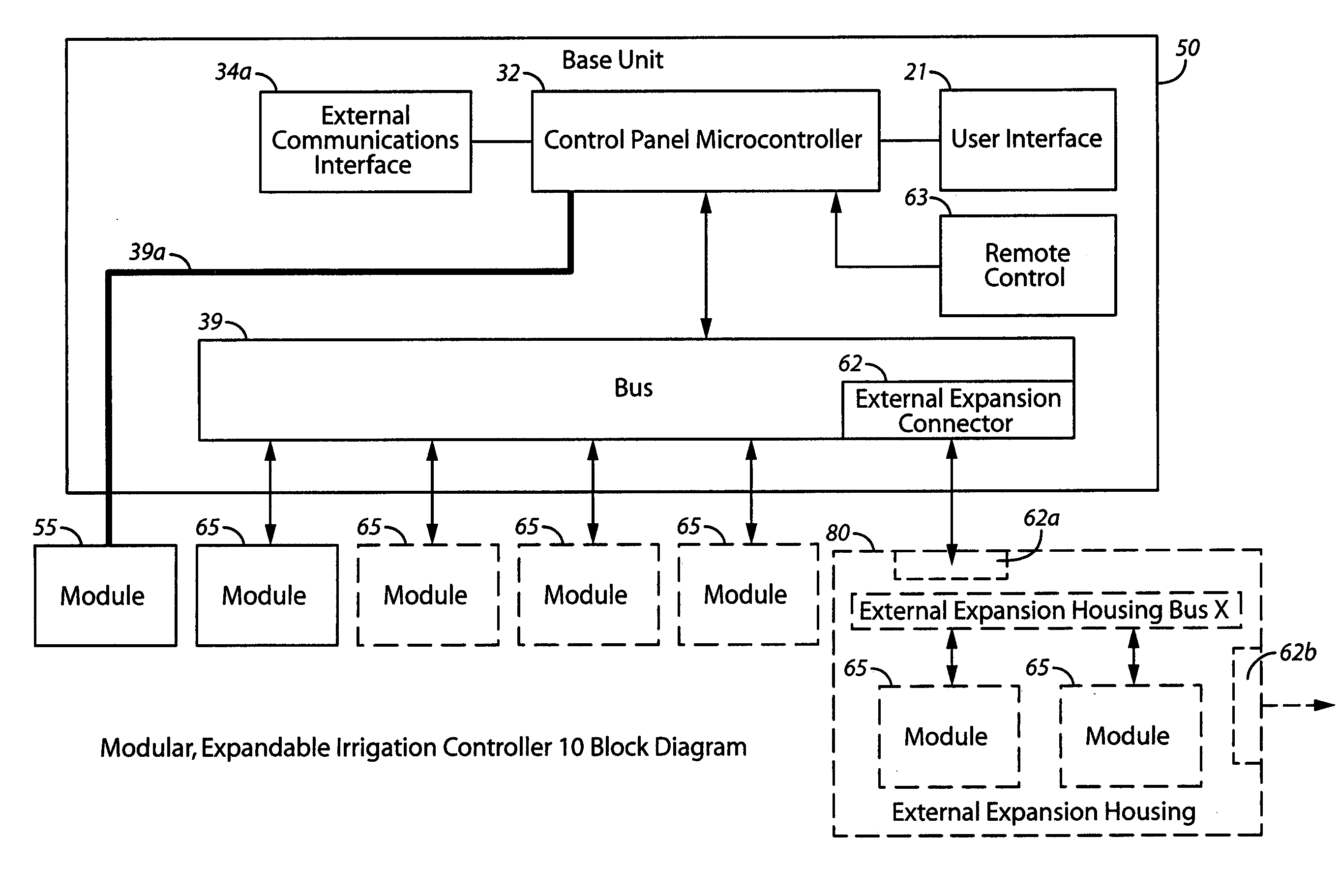
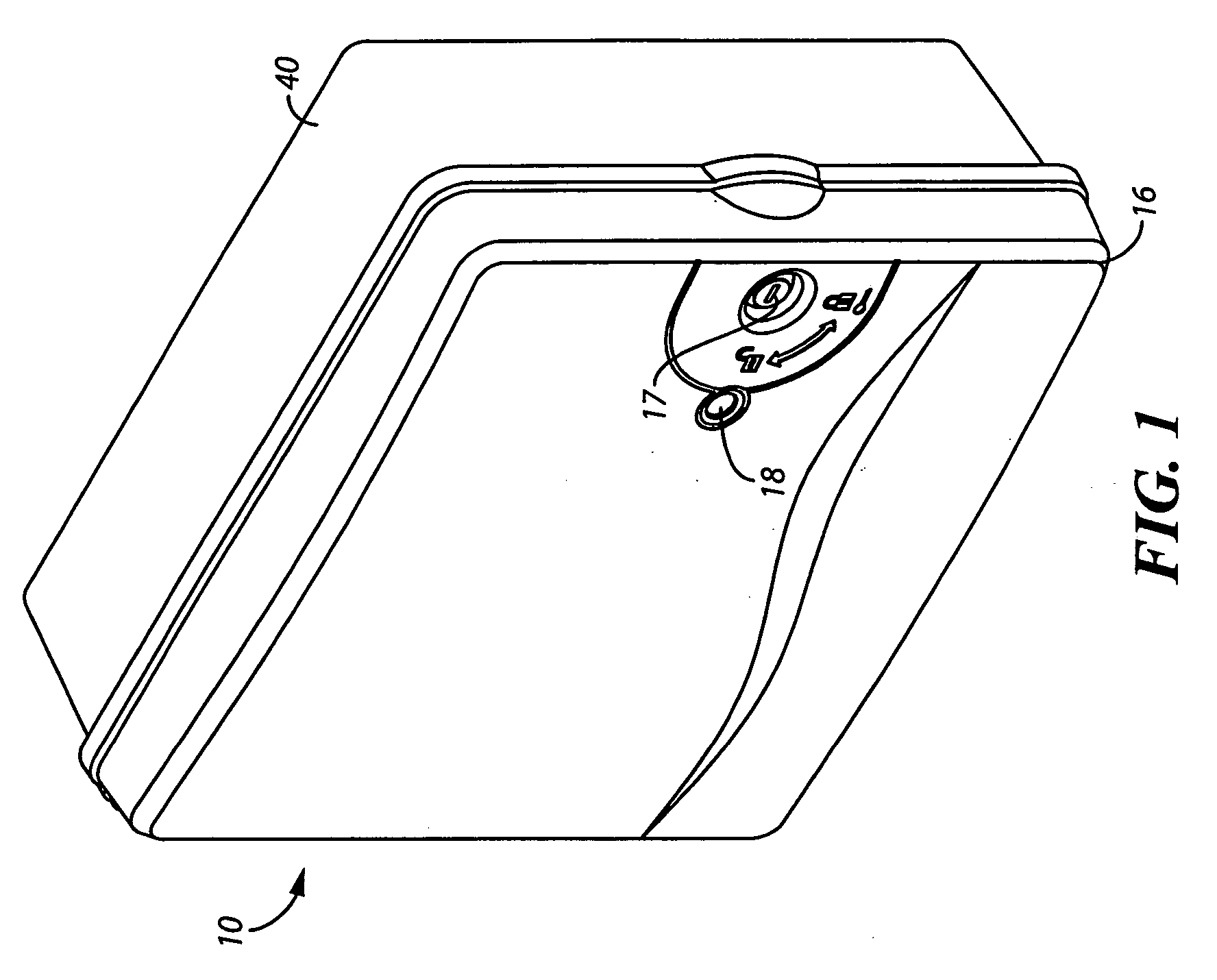
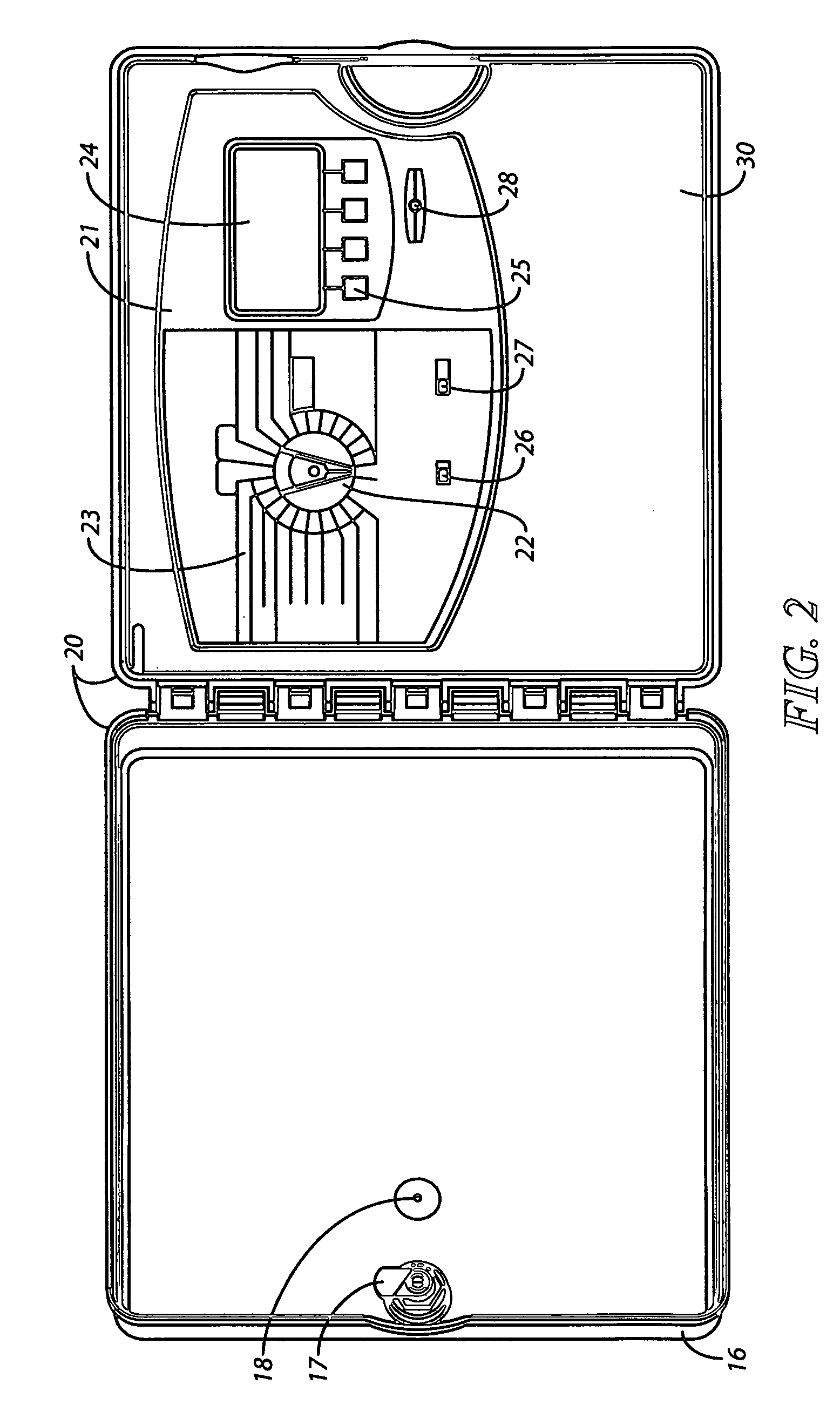
Modular and expandable irrigation controller
PatentWO2005062961A2
Innovation
- A modular irrigation controller design with a removable and programmable control panel and a bus system for communicating with various expansion modules, enabling the addition of new functions and features without replacing the entire controller, including microcontrollers for module detection, authentication, and user interface enhancements.


Modular and expandable irrigation controller
PatentActiveUS20050267641A1
Innovation
- A modular irrigation controller with a removable and programmable control panel and a bus system for communicating with various expansion modules, allowing for the addition of new features and capabilities without replacing the entire controller, including microcontrollers for module detection and authentication, and user interface enhancements.

Water Conservation Policy and Agricultural Regulations
Water conservation policies and agricultural regulations play a pivotal role in shaping the adoption and implementation of smart irrigation systems with modular designs. These regulatory frameworks establish the foundation for sustainable water management practices while creating both opportunities and constraints for technological innovation in agricultural irrigation.
Current water conservation policies across major agricultural regions emphasize efficiency targets and water usage reduction mandates. The European Union's Common Agricultural Policy requires member states to achieve specific water efficiency benchmarks, while California's Sustainable Groundwater Management Act imposes strict extraction limits. These policies create strong incentives for farmers to adopt advanced irrigation technologies, particularly modular systems that can demonstrate measurable water savings and provide detailed usage analytics for regulatory compliance reporting.
Agricultural regulations increasingly focus on precision water application and environmental impact mitigation. The U.S. Environmental Protection Agency's agricultural water quality standards and similar frameworks in Australia and Canada require farmers to minimize runoff and optimize water distribution. Modular smart irrigation systems align well with these requirements by enabling zone-specific control and real-time monitoring capabilities that help farmers maintain compliance while maximizing crop yields.
Subsidy programs and financial incentives significantly influence technology adoption patterns. Government initiatives such as the USDA's Environmental Quality Incentives Program and similar schemes in Europe provide substantial funding for water-efficient irrigation infrastructure. These programs often favor modular systems due to their scalability and ability to integrate with existing farm operations without requiring complete infrastructure overhaul.
Regulatory compliance requirements are driving demand for data-driven irrigation solutions. Modern agricultural regulations increasingly mandate detailed water usage reporting and environmental impact documentation. Modular smart irrigation systems excel in this context by providing comprehensive data collection capabilities, automated compliance reporting features, and audit trail functionality that simplifies regulatory oversight and reduces administrative burden for farmers.
Emerging regulatory trends indicate stricter water allocation frameworks and enhanced environmental monitoring requirements. Climate change adaptation policies are pushing agricultural sectors toward more resilient and efficient water management systems. Modular irrigation technologies position farmers to adapt quickly to evolving regulatory landscapes while maintaining operational flexibility and compliance readiness across diverse regulatory jurisdictions.
Current water conservation policies across major agricultural regions emphasize efficiency targets and water usage reduction mandates. The European Union's Common Agricultural Policy requires member states to achieve specific water efficiency benchmarks, while California's Sustainable Groundwater Management Act imposes strict extraction limits. These policies create strong incentives for farmers to adopt advanced irrigation technologies, particularly modular systems that can demonstrate measurable water savings and provide detailed usage analytics for regulatory compliance reporting.
Agricultural regulations increasingly focus on precision water application and environmental impact mitigation. The U.S. Environmental Protection Agency's agricultural water quality standards and similar frameworks in Australia and Canada require farmers to minimize runoff and optimize water distribution. Modular smart irrigation systems align well with these requirements by enabling zone-specific control and real-time monitoring capabilities that help farmers maintain compliance while maximizing crop yields.
Subsidy programs and financial incentives significantly influence technology adoption patterns. Government initiatives such as the USDA's Environmental Quality Incentives Program and similar schemes in Europe provide substantial funding for water-efficient irrigation infrastructure. These programs often favor modular systems due to their scalability and ability to integrate with existing farm operations without requiring complete infrastructure overhaul.
Regulatory compliance requirements are driving demand for data-driven irrigation solutions. Modern agricultural regulations increasingly mandate detailed water usage reporting and environmental impact documentation. Modular smart irrigation systems excel in this context by providing comprehensive data collection capabilities, automated compliance reporting features, and audit trail functionality that simplifies regulatory oversight and reduces administrative burden for farmers.
Emerging regulatory trends indicate stricter water allocation frameworks and enhanced environmental monitoring requirements. Climate change adaptation policies are pushing agricultural sectors toward more resilient and efficient water management systems. Modular irrigation technologies position farmers to adapt quickly to evolving regulatory landscapes while maintaining operational flexibility and compliance readiness across diverse regulatory jurisdictions.
Sustainability Impact of Modular Irrigation Systems
Modular smart irrigation systems represent a paradigm shift toward sustainable agricultural practices, offering significant environmental and resource conservation benefits compared to traditional irrigation methods. The modular design approach inherently promotes sustainability through enhanced resource efficiency, reduced waste generation, and improved adaptability to changing environmental conditions.
Water conservation stands as the primary sustainability advantage of modular irrigation systems. These systems utilize precision sensors and intelligent control algorithms to deliver water exactly where and when needed, reducing water consumption by 20-40% compared to conventional irrigation methods. The modular architecture enables zone-specific water management, allowing farmers to optimize irrigation schedules based on soil moisture levels, crop requirements, and weather forecasts for different field sections simultaneously.
Energy efficiency represents another critical sustainability dimension. Modular systems can operate individual zones independently, eliminating the need to power entire irrigation networks when only specific areas require watering. Smart scheduling algorithms further optimize energy consumption by operating during off-peak hours when electricity rates are lower and grid demand is reduced. Solar integration capabilities in many modular designs enable renewable energy adoption, significantly reducing the carbon footprint of irrigation operations.
The circular economy principles are embedded within modular irrigation design through component reusability and upgradability. Individual modules can be repaired, replaced, or upgraded without discarding entire systems, extending overall system lifespan and reducing electronic waste. This approach contrasts sharply with monolithic irrigation systems that often require complete replacement when components fail or become obsolete.
Soil health preservation emerges as an indirect but significant sustainability benefit. Precise water application prevents over-irrigation, which can lead to nutrient leaching, soil erosion, and waterlogging. The ability to implement variable irrigation rates across different soil types within the same field helps maintain optimal soil conditions, supporting long-term agricultural productivity and ecosystem health.
Carbon footprint reduction occurs through multiple pathways in modular systems. Reduced water pumping requirements, optimized fertilizer application through fertigation modules, and decreased equipment transportation needs for maintenance all contribute to lower greenhouse gas emissions. Studies indicate that smart modular irrigation can reduce agricultural carbon emissions by 15-25% compared to traditional methods.
The scalability inherent in modular design supports sustainable intensification of agriculture, enabling increased productivity on existing farmland without expanding into natural habitats. This characteristic becomes increasingly important as global food demand rises while arable land availability remains constrained.
Water conservation stands as the primary sustainability advantage of modular irrigation systems. These systems utilize precision sensors and intelligent control algorithms to deliver water exactly where and when needed, reducing water consumption by 20-40% compared to conventional irrigation methods. The modular architecture enables zone-specific water management, allowing farmers to optimize irrigation schedules based on soil moisture levels, crop requirements, and weather forecasts for different field sections simultaneously.
Energy efficiency represents another critical sustainability dimension. Modular systems can operate individual zones independently, eliminating the need to power entire irrigation networks when only specific areas require watering. Smart scheduling algorithms further optimize energy consumption by operating during off-peak hours when electricity rates are lower and grid demand is reduced. Solar integration capabilities in many modular designs enable renewable energy adoption, significantly reducing the carbon footprint of irrigation operations.
The circular economy principles are embedded within modular irrigation design through component reusability and upgradability. Individual modules can be repaired, replaced, or upgraded without discarding entire systems, extending overall system lifespan and reducing electronic waste. This approach contrasts sharply with monolithic irrigation systems that often require complete replacement when components fail or become obsolete.
Soil health preservation emerges as an indirect but significant sustainability benefit. Precise water application prevents over-irrigation, which can lead to nutrient leaching, soil erosion, and waterlogging. The ability to implement variable irrigation rates across different soil types within the same field helps maintain optimal soil conditions, supporting long-term agricultural productivity and ecosystem health.
Carbon footprint reduction occurs through multiple pathways in modular systems. Reduced water pumping requirements, optimized fertilizer application through fertigation modules, and decreased equipment transportation needs for maintenance all contribute to lower greenhouse gas emissions. Studies indicate that smart modular irrigation can reduce agricultural carbon emissions by 15-25% compared to traditional methods.
The scalability inherent in modular design supports sustainable intensification of agriculture, enabling increased productivity on existing farmland without expanding into natural habitats. This characteristic becomes increasingly important as global food demand rises while arable land availability remains constrained.
Unlock deeper insights with PatSnap Eureka Quick Research — get a full tech report to explore trends and direct your research. Try now!
Generate Your Research Report Instantly with AI Agent
Supercharge your innovation with PatSnap Eureka AI Agent Platform!