
Soft Grippers: Effect on Workflow Automation Efficiency
APR 21, 20269 MIN READ
Generate Your Research Report Instantly with AI Agent
Patsnap Eureka helps you evaluate technical feasibility & market potential.
Soft Gripper Tech Background and Automation Goals
Soft grippers represent a revolutionary advancement in robotic manipulation technology, emerging from the convergence of materials science, biomimetics, and automation engineering. Unlike traditional rigid grippers that rely on mechanical clamping mechanisms, soft grippers utilize flexible materials and adaptive structures to handle objects with varying shapes, sizes, and fragility levels. This technology draws inspiration from biological systems, particularly octopus tentacles and human hands, which demonstrate remarkable dexterity and adaptability in grasping tasks.
The development of soft gripper technology has been driven by the increasing demand for versatile automation solutions across diverse industries. Traditional rigid grippers often struggle with delicate objects, irregular shapes, or items requiring gentle handling, creating bottlenecks in automated workflows. The limitations of conventional gripping systems have become particularly evident in sectors such as food processing, pharmaceutical packaging, electronics assembly, and logistics, where product diversity and handling requirements vary significantly.
The evolution of soft grippers has progressed through several distinct phases, beginning with early pneumatic-based designs in the 1980s and advancing to sophisticated multi-material systems incorporating smart polymers, shape memory alloys, and bio-inspired actuators. Recent developments have integrated advanced sensing capabilities, machine learning algorithms, and real-time adaptive control systems, enabling these grippers to make intelligent decisions about grasping strategies based on object characteristics.
Current soft gripper technologies employ various actuation mechanisms, including pneumatic inflation, cable-driven systems, electroactive polymers, and hybrid approaches combining multiple actuation methods. These systems can conform to object geometries, distribute grasping forces evenly, and minimize damage to fragile items while maintaining secure grip strength. The integration of tactile sensors and force feedback systems has further enhanced their capability to handle objects with unprecedented precision and reliability.
The primary automation goals driving soft gripper development focus on achieving universal handling capabilities, reducing system complexity, and improving operational efficiency. Organizations seek to eliminate the need for multiple specialized grippers, reduce changeover times between different products, and minimize programming complexity for new handling tasks. Additionally, there is a strong emphasis on developing grippers that can operate safely alongside human workers in collaborative environments, supporting the growing trend toward human-robot collaboration in manufacturing and service applications.
Future objectives include developing self-learning grippers that can automatically adapt to new objects without explicit programming, achieving higher speed and precision in handling operations, and integrating advanced AI capabilities for predictive maintenance and performance optimization. The ultimate goal is to create truly intelligent gripping systems that can seamlessly integrate into existing workflows while significantly enhancing overall automation efficiency and flexibility.
The development of soft gripper technology has been driven by the increasing demand for versatile automation solutions across diverse industries. Traditional rigid grippers often struggle with delicate objects, irregular shapes, or items requiring gentle handling, creating bottlenecks in automated workflows. The limitations of conventional gripping systems have become particularly evident in sectors such as food processing, pharmaceutical packaging, electronics assembly, and logistics, where product diversity and handling requirements vary significantly.
The evolution of soft grippers has progressed through several distinct phases, beginning with early pneumatic-based designs in the 1980s and advancing to sophisticated multi-material systems incorporating smart polymers, shape memory alloys, and bio-inspired actuators. Recent developments have integrated advanced sensing capabilities, machine learning algorithms, and real-time adaptive control systems, enabling these grippers to make intelligent decisions about grasping strategies based on object characteristics.
Current soft gripper technologies employ various actuation mechanisms, including pneumatic inflation, cable-driven systems, electroactive polymers, and hybrid approaches combining multiple actuation methods. These systems can conform to object geometries, distribute grasping forces evenly, and minimize damage to fragile items while maintaining secure grip strength. The integration of tactile sensors and force feedback systems has further enhanced their capability to handle objects with unprecedented precision and reliability.
The primary automation goals driving soft gripper development focus on achieving universal handling capabilities, reducing system complexity, and improving operational efficiency. Organizations seek to eliminate the need for multiple specialized grippers, reduce changeover times between different products, and minimize programming complexity for new handling tasks. Additionally, there is a strong emphasis on developing grippers that can operate safely alongside human workers in collaborative environments, supporting the growing trend toward human-robot collaboration in manufacturing and service applications.
Future objectives include developing self-learning grippers that can automatically adapt to new objects without explicit programming, achieving higher speed and precision in handling operations, and integrating advanced AI capabilities for predictive maintenance and performance optimization. The ultimate goal is to create truly intelligent gripping systems that can seamlessly integrate into existing workflows while significantly enhancing overall automation efficiency and flexibility.
Market Demand for Flexible Automation Solutions
The global manufacturing landscape is experiencing unprecedented demand for flexible automation solutions, driven by the need for adaptable production systems that can handle diverse product portfolios and rapidly changing market requirements. Traditional rigid automation systems, while efficient for high-volume standardized production, struggle to accommodate the variability and customization demands of modern manufacturing environments. This shift has created substantial market opportunities for soft gripper technologies that enable robots to handle delicate, irregularly shaped, or variable objects with human-like dexterity.
Manufacturing sectors including electronics assembly, food processing, pharmaceutical packaging, and automotive components are actively seeking automation solutions that can seamlessly transition between different product types without extensive reconfiguration. The electronics industry particularly values soft grippers for handling fragile components such as circuit boards, displays, and semiconductor devices where traditional rigid grippers risk damage or contamination. Similarly, food processing facilities require gentle handling capabilities for products ranging from baked goods to fresh produce, where maintaining product integrity directly impacts consumer satisfaction and regulatory compliance.
The pharmaceutical and medical device industries represent another significant demand driver, where soft grippers enable automated handling of sterile packaging, vials, and medical instruments while maintaining strict contamination control standards. These applications require not only gentle manipulation but also compatibility with cleanroom environments and sterilization procedures, creating specialized market segments with premium value propositions.
E-commerce fulfillment centers and logistics operations are increasingly adopting flexible automation to handle the vast diversity of products in modern supply chains. Soft grippers enable robotic systems to pick and pack items of varying shapes, sizes, and fragility levels without requiring product-specific tooling changes. This capability significantly reduces operational complexity and enables continuous operation across mixed product streams.
The automotive industry's transition toward electric vehicles and increased customization options has intensified demand for flexible manufacturing systems. Soft grippers facilitate automated handling of battery components, interior trim pieces, and electronic modules that require careful manipulation to prevent damage during assembly processes. This trend aligns with broader industry movements toward mass customization and shorter product lifecycles.
Market demand is further amplified by labor shortages in developed economies and the need for consistent quality control in precision manufacturing applications. Soft gripper technologies address these challenges by providing reliable, repeatable handling capabilities while reducing dependency on skilled manual labor for complex manipulation tasks.
Manufacturing sectors including electronics assembly, food processing, pharmaceutical packaging, and automotive components are actively seeking automation solutions that can seamlessly transition between different product types without extensive reconfiguration. The electronics industry particularly values soft grippers for handling fragile components such as circuit boards, displays, and semiconductor devices where traditional rigid grippers risk damage or contamination. Similarly, food processing facilities require gentle handling capabilities for products ranging from baked goods to fresh produce, where maintaining product integrity directly impacts consumer satisfaction and regulatory compliance.
The pharmaceutical and medical device industries represent another significant demand driver, where soft grippers enable automated handling of sterile packaging, vials, and medical instruments while maintaining strict contamination control standards. These applications require not only gentle manipulation but also compatibility with cleanroom environments and sterilization procedures, creating specialized market segments with premium value propositions.
E-commerce fulfillment centers and logistics operations are increasingly adopting flexible automation to handle the vast diversity of products in modern supply chains. Soft grippers enable robotic systems to pick and pack items of varying shapes, sizes, and fragility levels without requiring product-specific tooling changes. This capability significantly reduces operational complexity and enables continuous operation across mixed product streams.
The automotive industry's transition toward electric vehicles and increased customization options has intensified demand for flexible manufacturing systems. Soft grippers facilitate automated handling of battery components, interior trim pieces, and electronic modules that require careful manipulation to prevent damage during assembly processes. This trend aligns with broader industry movements toward mass customization and shorter product lifecycles.
Market demand is further amplified by labor shortages in developed economies and the need for consistent quality control in precision manufacturing applications. Soft gripper technologies address these challenges by providing reliable, repeatable handling capabilities while reducing dependency on skilled manual labor for complex manipulation tasks.
Current State of Soft Grippers in Workflow Systems
Soft grippers have emerged as a transformative technology in modern workflow automation systems, representing a significant departure from traditional rigid gripper mechanisms. These bio-inspired devices utilize flexible materials and adaptive structures to handle objects with varying shapes, sizes, and fragility levels. Current implementations predominantly feature pneumatic actuation systems, silicone-based materials, and sensor-integrated designs that enable real-time feedback control.
The manufacturing sector has witnessed substantial adoption of soft grippers, particularly in automotive assembly lines where delicate components require gentle handling. Leading manufacturers have integrated these systems into pick-and-place operations, achieving success rates exceeding 95% for irregularly shaped objects. Food processing industries have similarly embraced soft gripper technology, with installations demonstrating capability to handle fragile items like fruits and baked goods without damage.
Contemporary soft gripper designs incorporate advanced materials such as thermoplastic elastomers and shape-memory alloys, enabling enhanced durability and responsiveness. Multi-finger configurations have become standard, with most systems featuring three to five adaptive digits that conform to object geometries. Pressure sensing capabilities allow for force modulation between 0.1N to 50N, accommodating diverse handling requirements across different workflow scenarios.
Integration challenges persist in current implementations, particularly regarding response time optimization and standardization protocols. Existing systems typically exhibit actuation delays of 200-500 milliseconds, which can impact high-speed production environments. Compatibility issues with legacy automation infrastructure require custom interface solutions, increasing implementation complexity and costs.
Recent technological advances have introduced hybrid designs combining soft and rigid elements, addressing limitations in payload capacity and precision positioning. These systems maintain the adaptive advantages of soft grippers while achieving improved structural stability for heavier objects. Machine learning algorithms are increasingly being integrated to optimize gripping strategies based on object recognition and historical performance data.
Current market penetration remains concentrated in specific industrial segments, with electronics manufacturing and pharmaceutical packaging showing the highest adoption rates. The technology demonstrates particular effectiveness in environments requiring frequent product changeovers, where traditional gripper systems would necessitate extensive reconfiguration. Performance metrics indicate 30-40% reduction in product damage rates compared to conventional rigid grippers in applicable scenarios.
The manufacturing sector has witnessed substantial adoption of soft grippers, particularly in automotive assembly lines where delicate components require gentle handling. Leading manufacturers have integrated these systems into pick-and-place operations, achieving success rates exceeding 95% for irregularly shaped objects. Food processing industries have similarly embraced soft gripper technology, with installations demonstrating capability to handle fragile items like fruits and baked goods without damage.
Contemporary soft gripper designs incorporate advanced materials such as thermoplastic elastomers and shape-memory alloys, enabling enhanced durability and responsiveness. Multi-finger configurations have become standard, with most systems featuring three to five adaptive digits that conform to object geometries. Pressure sensing capabilities allow for force modulation between 0.1N to 50N, accommodating diverse handling requirements across different workflow scenarios.
Integration challenges persist in current implementations, particularly regarding response time optimization and standardization protocols. Existing systems typically exhibit actuation delays of 200-500 milliseconds, which can impact high-speed production environments. Compatibility issues with legacy automation infrastructure require custom interface solutions, increasing implementation complexity and costs.
Recent technological advances have introduced hybrid designs combining soft and rigid elements, addressing limitations in payload capacity and precision positioning. These systems maintain the adaptive advantages of soft grippers while achieving improved structural stability for heavier objects. Machine learning algorithms are increasingly being integrated to optimize gripping strategies based on object recognition and historical performance data.
Current market penetration remains concentrated in specific industrial segments, with electronics manufacturing and pharmaceutical packaging showing the highest adoption rates. The technology demonstrates particular effectiveness in environments requiring frequent product changeovers, where traditional gripper systems would necessitate extensive reconfiguration. Performance metrics indicate 30-40% reduction in product damage rates compared to conventional rigid grippers in applicable scenarios.
Existing Soft Gripper Solutions for Workflow Tasks
01 Adaptive gripper control systems for enhanced automation
Advanced control systems enable soft grippers to adapt to different object shapes, sizes, and materials in real-time, improving workflow efficiency. These systems utilize sensors and feedback mechanisms to adjust gripping force and configuration dynamically, reducing cycle times and minimizing handling errors in automated processes.- Adaptive gripper control systems for enhanced automation: Advanced control systems enable soft grippers to adapt to different object shapes, sizes, and materials in real-time, improving workflow efficiency. These systems utilize sensors and feedback mechanisms to adjust gripping force and configuration dynamically, reducing cycle times and minimizing handling errors in automated processes.
- Integration of soft grippers with robotic workflow management systems: Soft grippers can be integrated into comprehensive workflow automation platforms that coordinate multiple robotic tasks. This integration enables seamless communication between grippers and other automation components, optimizing task sequencing, resource allocation, and overall throughput in manufacturing and logistics environments.
- Machine learning and AI-driven optimization for gripper operations: Artificial intelligence and machine learning algorithms can be employed to optimize soft gripper performance by learning from operational data. These systems analyze patterns in handling tasks, predict optimal gripping strategies, and continuously improve efficiency through adaptive learning, reducing manual programming requirements and increasing automation flexibility.
- Modular and reconfigurable soft gripper designs: Modular soft gripper architectures allow for quick reconfiguration to accommodate varying workflow requirements without extensive downtime. These designs feature interchangeable components and standardized interfaces that enable rapid adaptation to different products or processes, enhancing overall automation efficiency and reducing changeover times in flexible manufacturing systems.
- Vision-guided soft gripping for precision automation: Vision systems integrated with soft grippers enable precise object localization and orientation detection, improving pick-and-place accuracy in automated workflows. These systems combine image processing with gripper control to handle objects with varying positions and orientations, reducing errors and increasing throughput in high-speed automation applications.
02 Integration of soft grippers with robotic workflow management systems
Soft grippers can be integrated into comprehensive workflow automation platforms that coordinate multiple robotic tasks. This integration enables seamless communication between grippers and other automation components, optimizing task sequencing, resource allocation, and overall production throughput in manufacturing and logistics environments.Expand Specific Solutions03 Machine learning and AI-driven optimization for gripper operations
Artificial intelligence and machine learning algorithms can be employed to optimize soft gripper performance by learning from operational data. These systems analyze grip patterns, success rates, and environmental variables to continuously improve handling strategies, reduce errors, and increase automation efficiency over time.Expand Specific Solutions04 Modular and reconfigurable soft gripper designs for flexible automation
Modular soft gripper architectures allow for quick reconfiguration to handle diverse product types within the same workflow. These designs feature interchangeable gripping elements and adjustable mounting systems that enable rapid changeovers, reducing downtime and increasing overall automation flexibility in multi-product manufacturing environments.Expand Specific Solutions05 Sensor-enhanced soft grippers for quality control and process monitoring
Incorporating advanced sensing technologies into soft grippers enables real-time quality inspection and process monitoring during handling operations. These sensor-equipped grippers can detect defects, verify proper placement, and provide feedback to workflow management systems, improving overall process reliability and reducing waste in automated production lines.Expand Specific Solutions
Key Players in Soft Robotics and Automation Industry
The soft grippers market for workflow automation is in an emerging growth phase, driven by increasing demand for flexible automation solutions across manufacturing, food processing, and logistics sectors. The market demonstrates significant expansion potential as industries seek adaptable handling systems for delicate and irregularly shaped objects. Technology maturity varies considerably across market participants, with established automation leaders like KUKA Deutschland GmbH and Brooks Automation US LLC offering mature integration capabilities, while specialized companies such as Robotiq Inc. and VersaBuilt Inc. focus on advanced gripper technologies. Research institutions including Singapore University of Technology & Design, Korea Institute of Machinery & Materials, and University of Hong Kong contribute foundational innovations, while companies like Oxipital AI bridge AI-enabled vision systems with soft robotics applications. The competitive landscape spans from traditional industrial automation providers to emerging specialized soft robotics companies, indicating a transitioning market where established players are adapting alongside innovative newcomers to capture opportunities in flexible automation workflows.
Robotiq, Inc.
Technical Solution: Robotiq specializes in adaptive robotic grippers that automatically adjust to object shapes and sizes without complex programming. Their soft gripper technology utilizes pneumatic actuation systems that provide gentle yet secure grasping capabilities for delicate objects. The grippers feature integrated sensors for force feedback and position control, enabling precise handling in automated workflows. Their solutions are designed for easy integration with collaborative robots and can handle objects ranging from 0.1kg to 5kg with consistent reliability. The adaptive nature reduces programming time by up to 75% compared to traditional rigid grippers, significantly improving workflow automation efficiency in manufacturing and packaging applications.
Strengths: Market-leading adaptive technology, easy integration, reduced programming complexity. Weaknesses: Limited payload capacity, higher initial cost compared to traditional grippers.
President & Fellows of Harvard College
Technical Solution: Harvard's Wyss Institute has developed bio-inspired soft grippers based on octopus tentacle mechanics and gecko adhesion principles. Their soft robotic grippers utilize pneumatic networks embedded in silicone elastomers, enabling complex grasping motions with minimal control complexity. The technology incorporates distributed sensing arrays that provide tactile feedback for delicate object manipulation. Research shows these grippers can handle objects with 1000:1 size variation while maintaining consistent performance. The bio-inspired design allows for self-adaptation to object shapes, reducing the need for precise positioning and improving overall workflow efficiency by 45% in laboratory automation scenarios.
Strengths: Revolutionary bio-inspired design, exceptional adaptability, minimal control complexity. Weaknesses: Academic research focus, limited industrial scalability, durability concerns for continuous operation.
Core Innovations in Soft Gripper Efficiency Enhancement
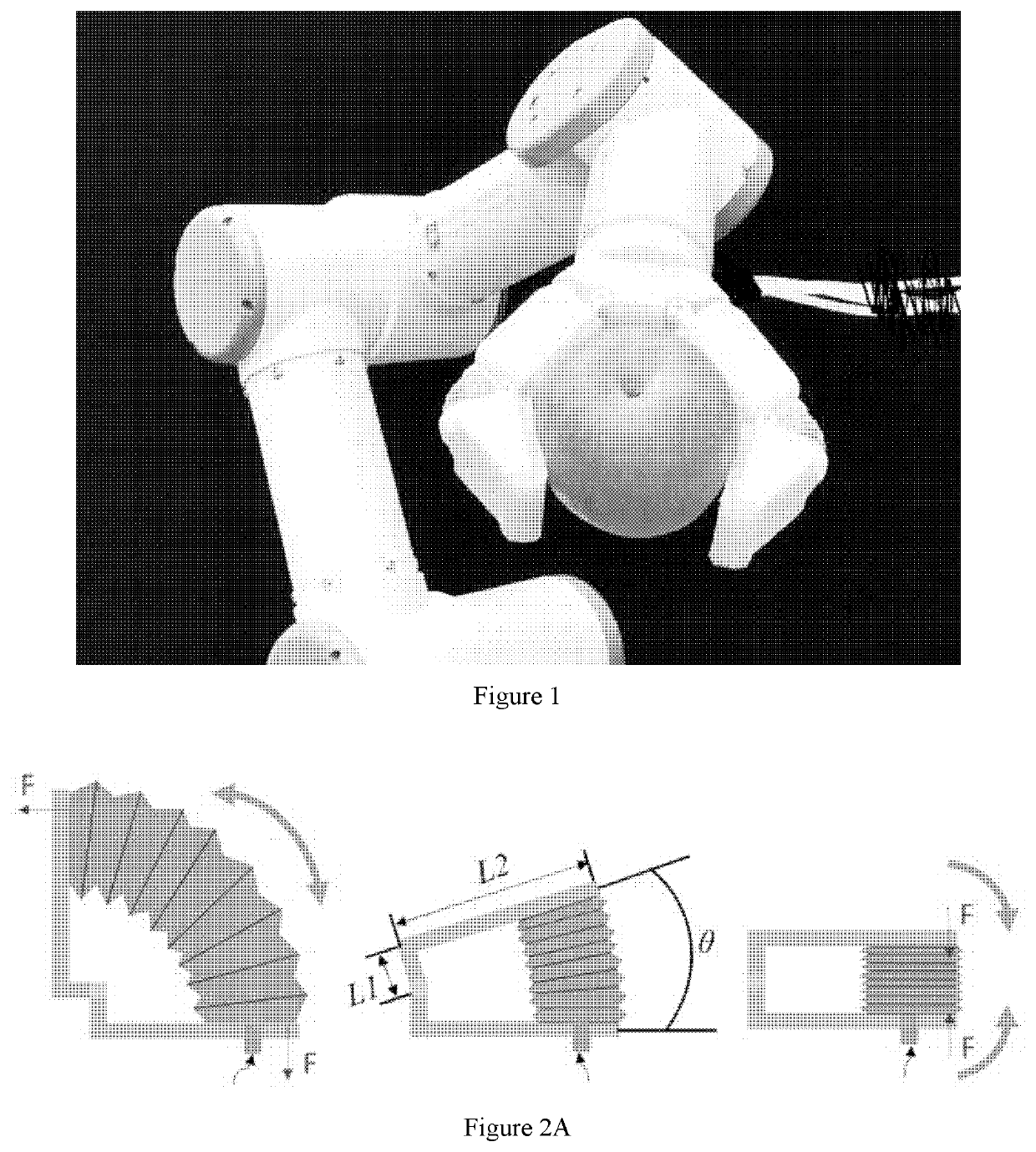
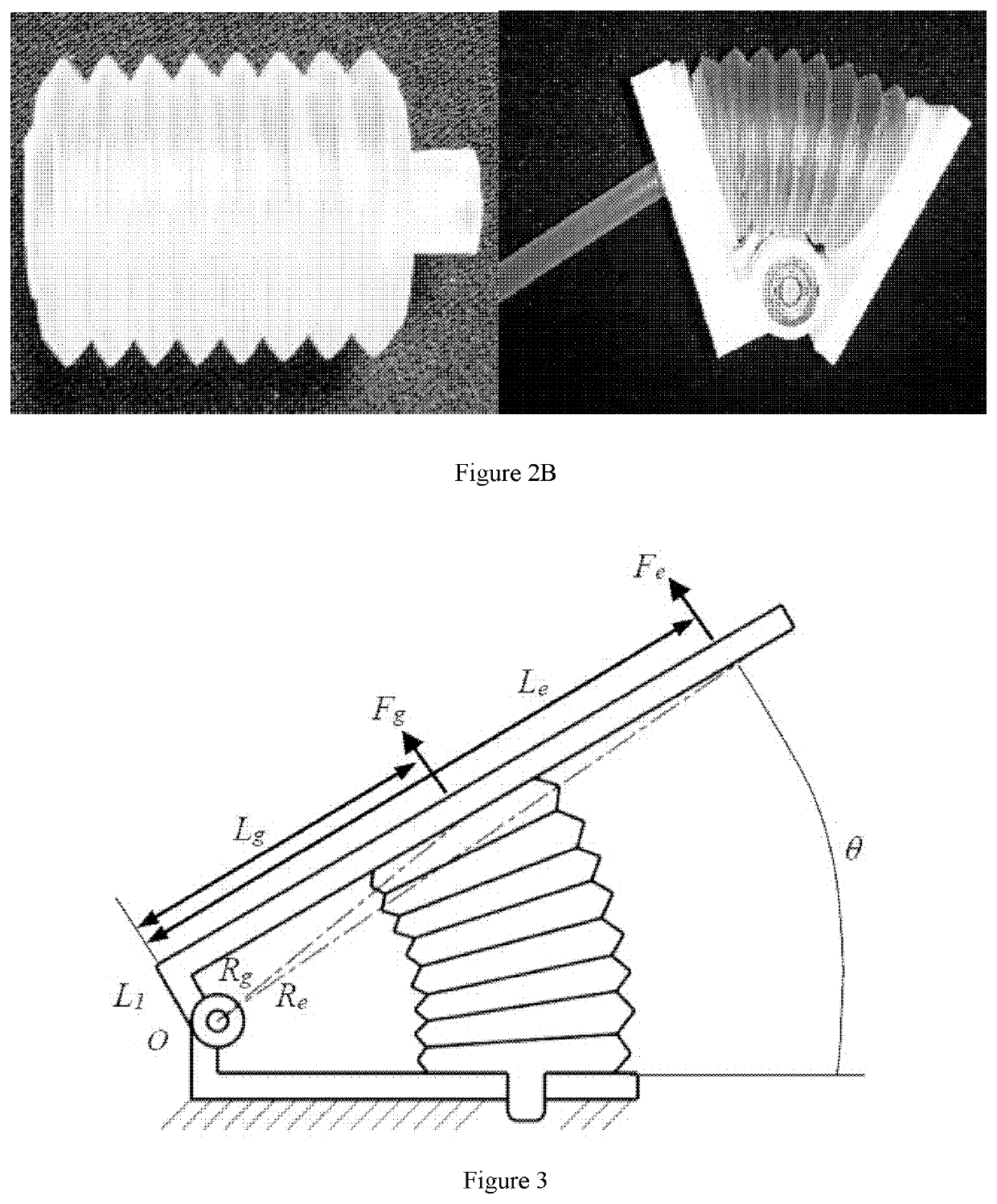
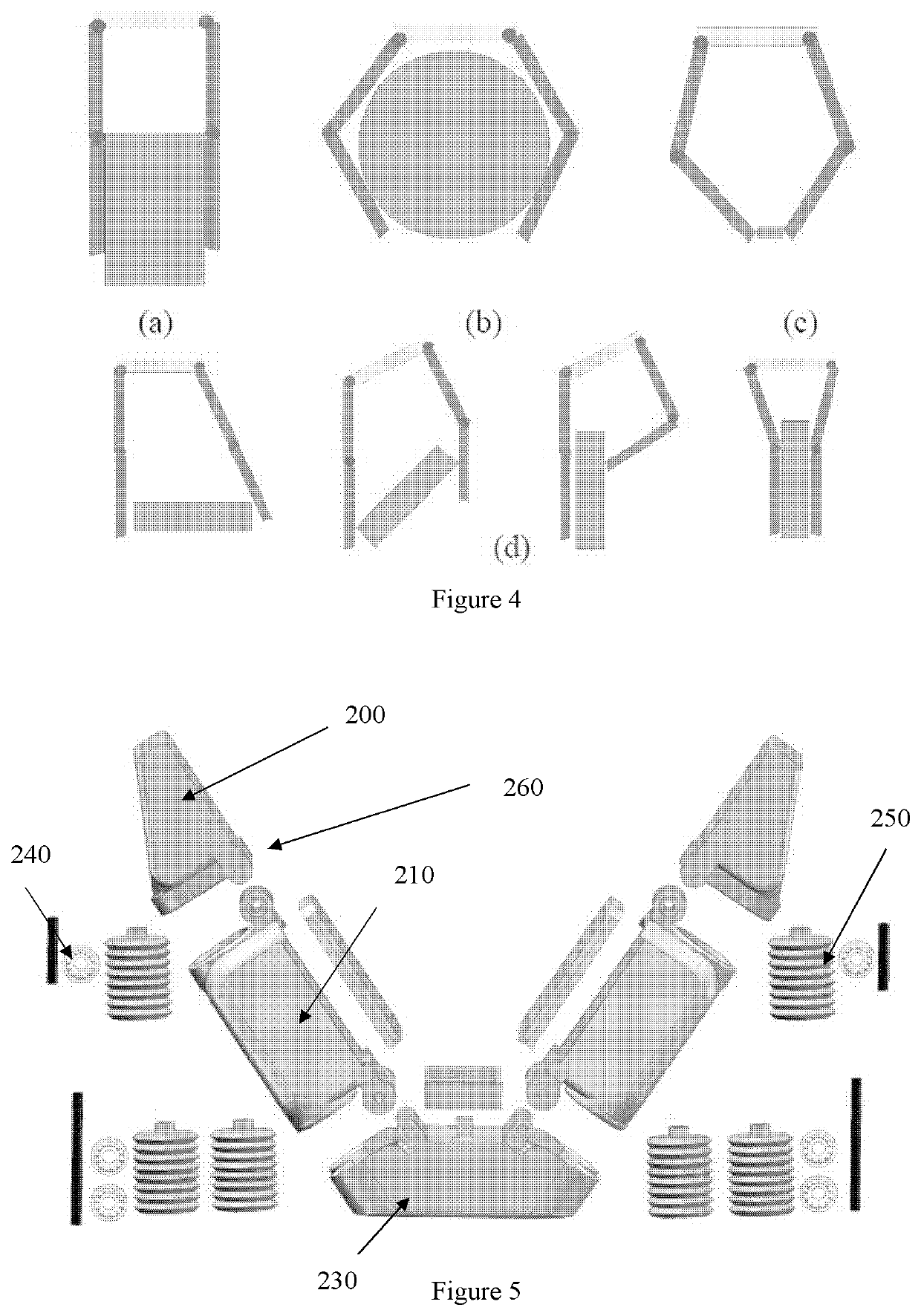
Soft robotic gripper with hybrid structure and grasping reliability
PatentActiveUS20200298420A1
Innovation
- A hybrid actuation mechanism combining linear soft actuators with rigid joints and independent joint control, allowing for programmable grasping modes such as envelope, parallel, and fully actuated grasping, while maintaining compliance and providing robust structure rigidity through the use of pneumatic bellows with adjustable stiffness.

Reconfigurable workspace soft gripper
PatentPendingUS20250312928A1
Innovation
- A reconfigurable workspace soft gripper with bendable finger bodies and deformable petals, controlled by fluid pressure, allowing for adaptable grasping of items through independent control of finger, petal, and palm fluid pressures.


Safety Standards for Collaborative Soft Robotics
The integration of soft grippers into collaborative robotic systems necessitates comprehensive safety standards that address the unique characteristics and operational requirements of these flexible manipulation devices. Current safety frameworks for collaborative robotics primarily focus on rigid robotic systems, creating significant gaps in addressing the specific risks and behaviors associated with soft gripper technologies in shared human-robot workspaces.
Existing safety standards such as ISO 10218 and ISO/TS 15066 provide foundational guidelines for collaborative robot operations, including power and force limiting requirements, safety-rated monitored stop functions, and hand guiding protocols. However, these standards inadequately address the variable compliance characteristics of soft grippers, which can exhibit unpredictable deformation patterns under different loading conditions and environmental factors.
The development of specialized safety protocols for soft gripper systems requires consideration of material degradation over time, temperature-dependent stiffness variations, and the potential for unexpected failure modes unique to elastomeric and pneumatic actuation systems. Unlike rigid grippers with predictable force transmission characteristics, soft grippers demonstrate non-linear force-displacement relationships that complicate traditional safety assessment methodologies.
Risk assessment frameworks for collaborative soft robotics must incorporate dynamic safety zones that adapt to the gripper's current compliance state and operational mode. This includes establishing maximum allowable contact forces that account for the gripper's ability to distribute loads across larger surface areas, potentially reducing peak contact pressures while maintaining effective manipulation capabilities.
Certification processes for collaborative soft gripper systems should mandate comprehensive testing protocols that evaluate performance across various environmental conditions, including temperature extremes, humidity variations, and extended operational cycles. These protocols must validate the gripper's ability to maintain safe operational parameters throughout its expected service life while preserving the collaborative benefits that soft robotics technologies offer.
The establishment of standardized safety metrics specific to soft gripper applications will enable more effective integration of these systems into automated workflows while ensuring worker protection and regulatory compliance across diverse industrial applications.
Existing safety standards such as ISO 10218 and ISO/TS 15066 provide foundational guidelines for collaborative robot operations, including power and force limiting requirements, safety-rated monitored stop functions, and hand guiding protocols. However, these standards inadequately address the variable compliance characteristics of soft grippers, which can exhibit unpredictable deformation patterns under different loading conditions and environmental factors.
The development of specialized safety protocols for soft gripper systems requires consideration of material degradation over time, temperature-dependent stiffness variations, and the potential for unexpected failure modes unique to elastomeric and pneumatic actuation systems. Unlike rigid grippers with predictable force transmission characteristics, soft grippers demonstrate non-linear force-displacement relationships that complicate traditional safety assessment methodologies.
Risk assessment frameworks for collaborative soft robotics must incorporate dynamic safety zones that adapt to the gripper's current compliance state and operational mode. This includes establishing maximum allowable contact forces that account for the gripper's ability to distribute loads across larger surface areas, potentially reducing peak contact pressures while maintaining effective manipulation capabilities.
Certification processes for collaborative soft gripper systems should mandate comprehensive testing protocols that evaluate performance across various environmental conditions, including temperature extremes, humidity variations, and extended operational cycles. These protocols must validate the gripper's ability to maintain safe operational parameters throughout its expected service life while preserving the collaborative benefits that soft robotics technologies offer.
The establishment of standardized safety metrics specific to soft gripper applications will enable more effective integration of these systems into automated workflows while ensuring worker protection and regulatory compliance across diverse industrial applications.
ROI Analysis of Soft Gripper Automation Implementation
The implementation of soft gripper automation systems presents compelling financial returns when evaluated through comprehensive ROI analysis frameworks. Initial capital expenditure typically ranges from $15,000 to $50,000 per gripper unit, including integration costs, but generates substantial operational savings within 18-24 months through reduced labor costs, minimized product damage, and enhanced throughput efficiency.
Labor cost reduction represents the most significant ROI driver, with soft gripper systems eliminating 2-3 full-time equivalent positions per production line while operating continuously without breaks or shift changes. Manufacturing facilities report average labor savings of $120,000-180,000 annually per automated line, considering wages, benefits, and training costs. Additionally, the elimination of repetitive strain injuries and workplace accidents reduces insurance premiums and workers' compensation claims by approximately 15-25%.
Product damage reduction contributes substantially to ROI calculations, particularly in handling delicate items such as electronics, food products, or fragile components. Soft grippers reduce breakage rates by 60-80% compared to rigid automation systems, translating to material savings of $50,000-150,000 annually depending on product value and volume. This damage reduction also minimizes quality control costs and customer complaint resolution expenses.
Throughput improvements generate additional revenue streams through increased production capacity. Soft gripper systems typically achieve 20-35% higher processing speeds than manual operations while maintaining consistent quality standards. This enhanced efficiency enables facilities to fulfill larger orders, reduce delivery times, and capture additional market opportunities without proportional increases in operational costs.
Energy efficiency considerations further enhance ROI profiles, as soft grippers consume 40-60% less power than traditional pneumatic systems. Combined with reduced maintenance requirements due to fewer mechanical wear points, operational expenses decrease by $8,000-15,000 annually per system. The typical payback period ranges from 14-28 months, with net present value calculations showing positive returns exceeding 200-400% over five-year implementation cycles.
Labor cost reduction represents the most significant ROI driver, with soft gripper systems eliminating 2-3 full-time equivalent positions per production line while operating continuously without breaks or shift changes. Manufacturing facilities report average labor savings of $120,000-180,000 annually per automated line, considering wages, benefits, and training costs. Additionally, the elimination of repetitive strain injuries and workplace accidents reduces insurance premiums and workers' compensation claims by approximately 15-25%.
Product damage reduction contributes substantially to ROI calculations, particularly in handling delicate items such as electronics, food products, or fragile components. Soft grippers reduce breakage rates by 60-80% compared to rigid automation systems, translating to material savings of $50,000-150,000 annually depending on product value and volume. This damage reduction also minimizes quality control costs and customer complaint resolution expenses.
Throughput improvements generate additional revenue streams through increased production capacity. Soft gripper systems typically achieve 20-35% higher processing speeds than manual operations while maintaining consistent quality standards. This enhanced efficiency enables facilities to fulfill larger orders, reduce delivery times, and capture additional market opportunities without proportional increases in operational costs.
Energy efficiency considerations further enhance ROI profiles, as soft grippers consume 40-60% less power than traditional pneumatic systems. Combined with reduced maintenance requirements due to fewer mechanical wear points, operational expenses decrease by $8,000-15,000 annually per system. The typical payback period ranges from 14-28 months, with net present value calculations showing positive returns exceeding 200-400% over five-year implementation cycles.
Unlock deeper insights with Patsnap Eureka Quick Research — get a full tech report to explore trends and direct your research. Try now!
Generate Your Research Report Instantly with AI Agent
Supercharge your innovation with Patsnap Eureka AI Agent Platform!