

Stabilizer Weight and Surface Code Performance: Analytical Study
JUN 3, 20269 MIN READ
Generate Your Research Report Instantly with AI Agent
PatSnap Eureka helps you evaluate technical feasibility & market potential.
Quantum Error Correction Background and Surface Code Goals
Quantum error correction represents a fundamental paradigm shift in quantum computing, addressing the inherent fragility of quantum information due to decoherence and operational errors. Unlike classical error correction that deals with bit-flip errors, quantum systems must simultaneously protect against both bit-flip and phase-flip errors while preserving quantum superposition and entanglement properties. The stabilizer formalism provides the mathematical foundation for this protection, defining error syndromes through commuting Pauli operators that can detect errors without directly measuring the quantum state.
The evolution of quantum error correction has progressed through several critical phases since the mid-1990s. Initial theoretical breakthroughs established the quantum error correction threshold theorem, proving that arbitrarily long quantum computations become feasible when physical error rates fall below specific thresholds. Early codes like the seven-qubit Steane code and nine-qubit Shor code demonstrated proof-of-concept protection but required substantial overhead for practical implementation.
Surface codes emerged as the leading candidate for fault-tolerant quantum computing due to their exceptional properties and practical advantages. These topological codes arrange qubits on a two-dimensional lattice with nearest-neighbor connectivity requirements, making them highly compatible with current quantum hardware architectures. The surface code's planar geometry eliminates the need for long-range qubit interactions, significantly reducing implementation complexity compared to other quantum error correction schemes.
The primary objectives driving surface code development center on achieving scalable fault-tolerance with minimal resource overhead. Key goals include maximizing the error correction threshold, which determines the maximum tolerable physical error rate for effective logical error suppression. Current analytical and numerical studies indicate surface code thresholds approaching 1% for depolarizing noise models, representing a realistic target for near-term quantum hardware platforms.
Stabilizer weight optimization has emerged as a critical factor influencing surface code performance characteristics. The weight of stabilizer generators directly impacts error detection capabilities, syndrome extraction fidelity, and overall code distance properties. Understanding the relationship between stabilizer weight distributions and logical error rates enables more efficient code implementations and improved threshold estimates.
Contemporary research focuses on developing comprehensive analytical frameworks that connect stabilizer weight parameters to measurable performance metrics. These studies aim to establish design principles for optimizing surface code implementations across different hardware platforms while maintaining the essential topological protection properties that make surface codes uniquely suitable for fault-tolerant quantum computing applications.
The evolution of quantum error correction has progressed through several critical phases since the mid-1990s. Initial theoretical breakthroughs established the quantum error correction threshold theorem, proving that arbitrarily long quantum computations become feasible when physical error rates fall below specific thresholds. Early codes like the seven-qubit Steane code and nine-qubit Shor code demonstrated proof-of-concept protection but required substantial overhead for practical implementation.
Surface codes emerged as the leading candidate for fault-tolerant quantum computing due to their exceptional properties and practical advantages. These topological codes arrange qubits on a two-dimensional lattice with nearest-neighbor connectivity requirements, making them highly compatible with current quantum hardware architectures. The surface code's planar geometry eliminates the need for long-range qubit interactions, significantly reducing implementation complexity compared to other quantum error correction schemes.
The primary objectives driving surface code development center on achieving scalable fault-tolerance with minimal resource overhead. Key goals include maximizing the error correction threshold, which determines the maximum tolerable physical error rate for effective logical error suppression. Current analytical and numerical studies indicate surface code thresholds approaching 1% for depolarizing noise models, representing a realistic target for near-term quantum hardware platforms.
Stabilizer weight optimization has emerged as a critical factor influencing surface code performance characteristics. The weight of stabilizer generators directly impacts error detection capabilities, syndrome extraction fidelity, and overall code distance properties. Understanding the relationship between stabilizer weight distributions and logical error rates enables more efficient code implementations and improved threshold estimates.
Contemporary research focuses on developing comprehensive analytical frameworks that connect stabilizer weight parameters to measurable performance metrics. These studies aim to establish design principles for optimizing surface code implementations across different hardware platforms while maintaining the essential topological protection properties that make surface codes uniquely suitable for fault-tolerant quantum computing applications.
Market Demand for Fault-Tolerant Quantum Computing
The quantum computing industry is experiencing unprecedented growth driven by the critical need for fault-tolerant quantum systems capable of executing complex algorithms reliably. Surface codes represent the most promising approach to quantum error correction, making research into stabilizer weight optimization and surface code performance analysis essential for commercial viability. Organizations across finance, pharmaceuticals, logistics, and cybersecurity are actively seeking quantum solutions that can deliver practical advantages over classical computing systems.
Financial institutions demonstrate particularly strong demand for fault-tolerant quantum computing to revolutionize portfolio optimization, risk analysis, and cryptographic security. Major banks and investment firms are investing heavily in quantum research partnerships, recognizing that fault-tolerant systems will be necessary to achieve meaningful computational advantages in real-world financial modeling scenarios. The complexity of modern financial markets requires quantum systems that can maintain coherence and accuracy over extended computation periods.
Pharmaceutical and biotechnology companies represent another significant market segment driving demand for fault-tolerant quantum computing. Drug discovery and molecular simulation applications require quantum systems capable of handling large-scale quantum chemistry calculations with minimal error rates. The potential to accelerate drug development timelines and reduce research costs creates substantial market pull for reliable quantum error correction implementations, particularly those utilizing optimized surface codes.
Government agencies and defense organizations worldwide are prioritizing fault-tolerant quantum computing development for national security applications. Quantum-resistant cryptography, secure communications, and advanced simulation capabilities drive substantial public sector investment in quantum error correction research. These organizations require quantum systems with proven reliability and performance guarantees, making stabilizer weight optimization and surface code analysis critical research priorities.
The logistics and supply chain optimization sector presents emerging market opportunities for fault-tolerant quantum computing applications. Complex routing problems, inventory management, and resource allocation challenges require quantum algorithms that can execute reliably over extended periods. Companies in this sector are beginning to explore quantum solutions, creating demand for fault-tolerant systems with well-characterized performance parameters.
Technology companies developing quantum cloud services face increasing pressure to deliver fault-tolerant quantum computing capabilities to enterprise customers. The transition from noisy intermediate-scale quantum devices to fault-tolerant systems represents a critical market inflection point, driving significant investment in surface code research and stabilizer weight optimization studies.
Financial institutions demonstrate particularly strong demand for fault-tolerant quantum computing to revolutionize portfolio optimization, risk analysis, and cryptographic security. Major banks and investment firms are investing heavily in quantum research partnerships, recognizing that fault-tolerant systems will be necessary to achieve meaningful computational advantages in real-world financial modeling scenarios. The complexity of modern financial markets requires quantum systems that can maintain coherence and accuracy over extended computation periods.
Pharmaceutical and biotechnology companies represent another significant market segment driving demand for fault-tolerant quantum computing. Drug discovery and molecular simulation applications require quantum systems capable of handling large-scale quantum chemistry calculations with minimal error rates. The potential to accelerate drug development timelines and reduce research costs creates substantial market pull for reliable quantum error correction implementations, particularly those utilizing optimized surface codes.
Government agencies and defense organizations worldwide are prioritizing fault-tolerant quantum computing development for national security applications. Quantum-resistant cryptography, secure communications, and advanced simulation capabilities drive substantial public sector investment in quantum error correction research. These organizations require quantum systems with proven reliability and performance guarantees, making stabilizer weight optimization and surface code analysis critical research priorities.
The logistics and supply chain optimization sector presents emerging market opportunities for fault-tolerant quantum computing applications. Complex routing problems, inventory management, and resource allocation challenges require quantum algorithms that can execute reliably over extended periods. Companies in this sector are beginning to explore quantum solutions, creating demand for fault-tolerant systems with well-characterized performance parameters.
Technology companies developing quantum cloud services face increasing pressure to deliver fault-tolerant quantum computing capabilities to enterprise customers. The transition from noisy intermediate-scale quantum devices to fault-tolerant systems represents a critical market inflection point, driving significant investment in surface code research and stabilizer weight optimization studies.
Current State of Surface Code Implementation Challenges
Surface code implementation faces significant technical challenges that limit its practical deployment in quantum computing systems. The primary obstacle lies in the substantial overhead requirements, where achieving fault-tolerant quantum computation demands thousands to millions of physical qubits to encode a single logical qubit. Current experimental implementations struggle with this scalability barrier, as even state-of-the-art quantum processors contain only hundreds of qubits with limited connectivity.
Qubit quality represents another critical bottleneck in surface code realization. The error correction threshold for surface codes requires physical qubit error rates below approximately 1%, while maintaining coherence times sufficient for multiple syndrome extraction cycles. Contemporary quantum hardware platforms, including superconducting circuits and trapped ions, exhibit error rates that hover near this threshold, leaving minimal margin for practical implementation.
Syndrome extraction complexity poses substantial engineering challenges in current surface code implementations. The process requires high-fidelity two-qubit gates between data and ancilla qubits, executed within strict timing constraints to prevent decoherence. Real-time classical processing systems must decode syndrome information and apply corrections faster than errors accumulate, demanding sophisticated control electronics and algorithms.
Connectivity constraints in existing quantum architectures create additional implementation hurdles. Surface codes require nearest-neighbor interactions in a two-dimensional lattice structure, but many current platforms feature limited connectivity that necessitates costly SWAP operations or architectural modifications. This mismatch between theoretical requirements and hardware capabilities significantly impacts code performance.
Calibration and control precision emerge as persistent challenges in maintaining surface code fidelity. Each physical qubit requires individual calibration of gate parameters, frequencies, and pulse sequences. Temporal drift in these parameters can degrade error correction performance, necessitating continuous recalibration protocols that compete with computational resources.
The classical processing bottleneck represents an often-underestimated challenge in surface code implementation. Syndrome decoding algorithms must operate within microsecond timescales while handling complex error patterns and correlations. Current classical computing infrastructure struggles to meet these real-time processing demands, particularly as surface code patches scale to larger sizes required for practical quantum algorithms.
Qubit quality represents another critical bottleneck in surface code realization. The error correction threshold for surface codes requires physical qubit error rates below approximately 1%, while maintaining coherence times sufficient for multiple syndrome extraction cycles. Contemporary quantum hardware platforms, including superconducting circuits and trapped ions, exhibit error rates that hover near this threshold, leaving minimal margin for practical implementation.
Syndrome extraction complexity poses substantial engineering challenges in current surface code implementations. The process requires high-fidelity two-qubit gates between data and ancilla qubits, executed within strict timing constraints to prevent decoherence. Real-time classical processing systems must decode syndrome information and apply corrections faster than errors accumulate, demanding sophisticated control electronics and algorithms.
Connectivity constraints in existing quantum architectures create additional implementation hurdles. Surface codes require nearest-neighbor interactions in a two-dimensional lattice structure, but many current platforms feature limited connectivity that necessitates costly SWAP operations or architectural modifications. This mismatch between theoretical requirements and hardware capabilities significantly impacts code performance.
Calibration and control precision emerge as persistent challenges in maintaining surface code fidelity. Each physical qubit requires individual calibration of gate parameters, frequencies, and pulse sequences. Temporal drift in these parameters can degrade error correction performance, necessitating continuous recalibration protocols that compete with computational resources.
The classical processing bottleneck represents an often-underestimated challenge in surface code implementation. Syndrome decoding algorithms must operate within microsecond timescales while handling complex error patterns and correlations. Current classical computing infrastructure struggles to meet these real-time processing demands, particularly as surface code patches scale to larger sizes required for practical quantum algorithms.
Existing Surface Code Optimization Solutions
01 Error correction and decoding algorithms for surface codes
Advanced error correction techniques and decoding algorithms are implemented to improve the performance of surface codes in quantum computing systems. These methods focus on identifying and correcting quantum errors through sophisticated mathematical algorithms that analyze error patterns and implement corrective measures to maintain quantum state integrity.- Error correction and decoding algorithms for surface codes: Advanced error correction techniques and decoding algorithms are implemented to improve the performance of surface codes in quantum computing systems. These methods focus on identifying and correcting quantum errors through sophisticated mathematical algorithms that analyze error patterns and implement corrective measures to maintain quantum state integrity.
- Quantum error threshold optimization: Techniques for optimizing the error threshold in surface code implementations to achieve better fault tolerance. These approaches involve adjusting parameters and configurations to minimize the impact of physical errors on logical qubits, thereby improving overall system reliability and computational accuracy in quantum processors.
- Hardware implementation and physical qubit arrangements: Methods for physically implementing surface codes on quantum hardware platforms, including optimal qubit placement, connectivity patterns, and control mechanisms. These implementations focus on translating theoretical surface code concepts into practical quantum computing architectures that can be manufactured and operated effectively.
- Performance measurement and benchmarking systems: Systems and methodologies for measuring, evaluating, and benchmarking the performance of surface code implementations. These approaches provide metrics and analysis tools to assess the effectiveness of different surface code configurations and compare their performance under various operating conditions and error scenarios.
- Scalability and resource optimization techniques: Approaches for scaling surface code implementations to larger quantum systems while optimizing resource utilization. These techniques address challenges related to increasing the number of logical qubits, managing computational overhead, and maintaining performance efficiency as system size grows in practical quantum computing applications.
02 Quantum error threshold optimization
Techniques for optimizing the error threshold in surface code implementations to enhance overall system performance. These approaches involve adjusting parameters and configurations to achieve better error tolerance levels while maintaining computational efficiency in quantum processing systems.Expand Specific Solutions03 Hardware implementation and physical qubit arrangements
Methods for implementing surface codes in physical quantum hardware systems, including optimal qubit placement, connectivity patterns, and hardware-specific optimizations. These implementations focus on translating theoretical surface code concepts into practical quantum computing architectures.Expand Specific Solutions04 Performance measurement and benchmarking systems
Systems and methods for measuring, evaluating, and benchmarking the performance of surface code implementations. These approaches provide metrics and analysis tools to assess the effectiveness of different surface code configurations and identify areas for improvement in quantum error correction.Expand Specific Solutions05 Scalability and resource optimization techniques
Approaches for scaling surface code implementations to larger quantum systems while optimizing resource utilization. These techniques address challenges related to increasing system size, managing computational overhead, and maintaining performance efficiency as quantum systems grow in complexity.Expand Specific Solutions
Key Players in Quantum Computing and Error Correction
The stabilizer weight and surface code performance research represents a rapidly evolving quantum error correction field currently in its early-to-mid development stage. The market remains nascent but shows significant growth potential as quantum computing advances toward practical applications. Technology maturity varies considerably across key players, with established tech giants like Google LLC and Microsoft Technology Licensing LLC leading in quantum computing infrastructure and error correction implementations. Academic institutions including Xidian University, Huazhong University of Science & Technology, and University of California contribute fundamental research breakthroughs. Chinese quantum specialists like Origin Quantum Computing Technology demonstrate emerging regional capabilities, while traditional technology companies such as Lam Research Corp. provide essential hardware components. The competitive landscape reflects a hybrid ecosystem where theoretical advances from universities combine with industrial implementation efforts, creating a dynamic environment where surface code optimization and stabilizer weight analysis are becoming critical differentiators for quantum system scalability and reliability.
Origin Quantum Computing Technology (Hefei) Co., Ltd.
Technical Solution: Origin Quantum has developed surface code implementations optimized for their superconducting quantum processors, focusing on stabilizer weight reduction techniques to improve quantum error correction efficiency. Their approach utilizes adaptive stabilizer measurement schemes that prioritize high-weight stabilizers based on error pattern analysis. The company has demonstrated surface code performance improvements through weighted stabilizer protocols that reduce measurement time by up to 25% while maintaining error correction thresholds, particularly optimized for their domestic quantum hardware architectures.
Strengths: Specialized focus on practical quantum error correction implementation and strong domestic market presence. Weaknesses: Limited international research collaboration and smaller scale quantum systems compared to global leaders.
Honeywell International Technologies Ltd.
Technical Solution: Honeywell Quantum Solutions has implemented surface code protocols on their trapped-ion quantum computers, emphasizing stabilizer weight optimization for high-fidelity quantum operations. Their approach leverages the natural connectivity advantages of trapped-ion systems to implement efficient surface codes with reduced stabilizer complexity. The system incorporates real-time stabilizer weight adjustment based on ion chain dynamics and environmental noise patterns, achieving improved logical error rates through adaptive measurement protocols that optimize the trade-off between stabilizer weight and error correction performance.
Strengths: High-fidelity trapped-ion hardware platform with excellent qubit connectivity for surface code implementation. Weaknesses: Limited scalability compared to superconducting approaches and higher operational complexity.
Core Innovations in Stabilizer Weight Analysis
Stabilizer
PatentInactiveEP0878334A1
Innovation
- Optimizing stabilizer sections by shifting mechanical deformation work from highly stressed areas to less stressed regions, combined with carburizing the surface layer and shot peening to enhance fatigue strength and stress absorption, while maintaining consistent cross-sections for manufacturing simplicity.


Stabilizer for a motor vehicle
PatentInactiveUS20120211959A1
Innovation
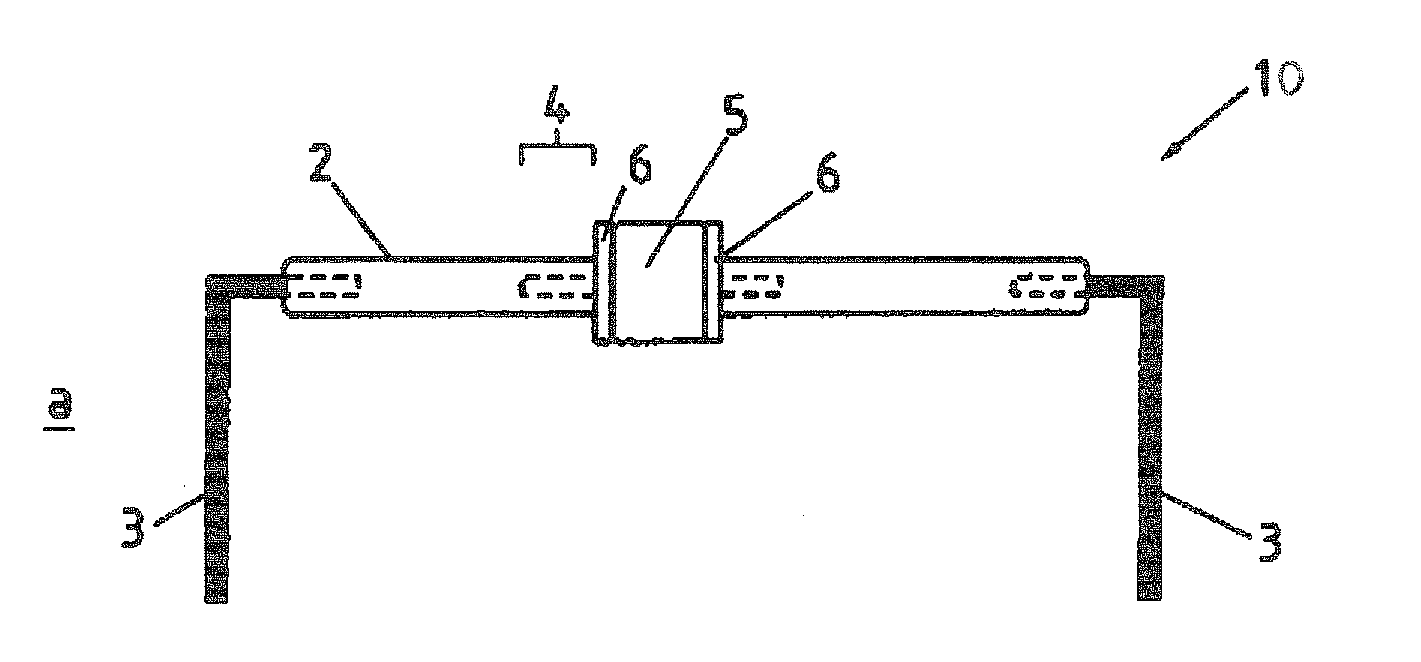
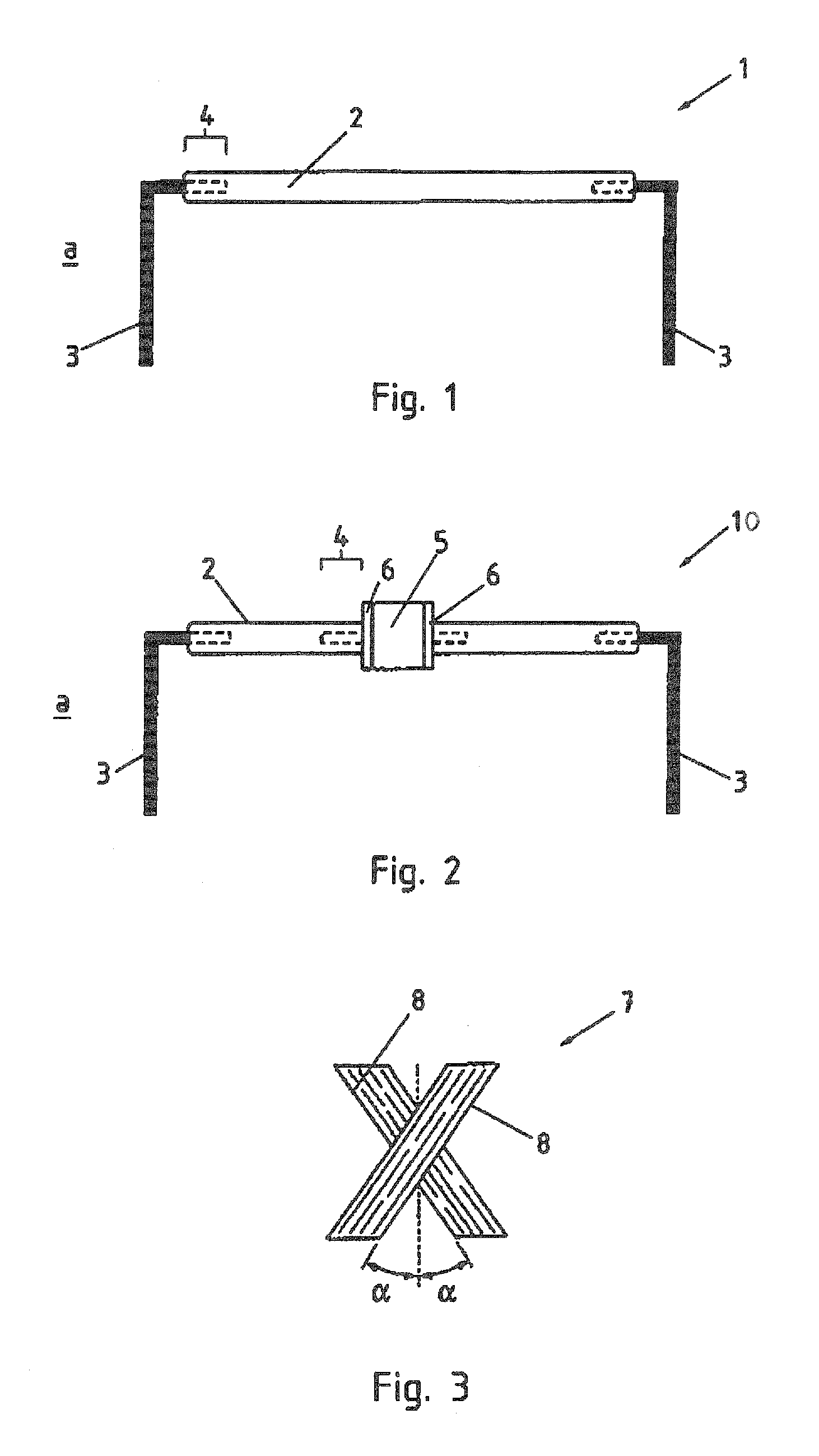
- A stabilizer made of composite materials, such as fiber composites, with tailored torsion behavior and stiffness, combined with strategically selected metallic legs, to achieve high stiffness with reduced weight, allowing for complex geometries and improved driving dynamics.
Quantum Computing Standards and Regulations
The quantum computing industry currently operates in a largely unregulated environment, with standards and regulatory frameworks still in their nascent stages. As quantum technologies, particularly surface codes and stabilizer-based error correction systems, advance toward practical implementation, the need for comprehensive regulatory oversight becomes increasingly critical. The complexity of quantum error correction mechanisms, including stabilizer weight optimization and surface code performance metrics, presents unique challenges for regulatory bodies attempting to establish meaningful standards.
International standardization efforts are primarily coordinated through organizations such as the International Organization for Standardization (ISO) and the Institute of Electrical and Electronics Engineers (IEEE). These bodies are developing quantum computing standards that address fundamental aspects including quantum error correction protocols, performance benchmarking methodologies, and security requirements. The ISO/IEC JTC 1/SC 27 working group has initiated preliminary frameworks for quantum cryptography standards, while IEEE P2995 focuses on quantum algorithm characterization and performance metrics.
Current regulatory discussions emphasize the critical importance of establishing standardized metrics for quantum error correction performance, particularly relevant to surface code implementations. Proposed standards include specifications for logical error rate measurements, stabilizer syndrome detection accuracy, and threshold requirements for fault-tolerant quantum computation. These standards directly impact how stabilizer weight optimization and surface code performance studies are conducted and validated across different quantum computing platforms.
The regulatory landscape faces significant challenges due to the rapid evolution of quantum technologies and the highly technical nature of quantum error correction. Regulatory bodies must balance innovation encouragement with risk mitigation, particularly concerning quantum computing's potential impact on cryptographic security. The absence of mature commercial quantum systems complicates the development of practical regulatory frameworks, as standards must anticipate future technological capabilities while remaining relevant to current research directions.
Emerging compliance requirements are beginning to address quantum computing applications in critical sectors such as finance, healthcare, and national security. These regulations will likely mandate specific performance standards for quantum error correction systems, including minimum threshold requirements for surface code implementations and standardized testing protocols for stabilizer-based error correction schemes. The development of these standards will significantly influence research priorities and commercial quantum computing development strategies.
International standardization efforts are primarily coordinated through organizations such as the International Organization for Standardization (ISO) and the Institute of Electrical and Electronics Engineers (IEEE). These bodies are developing quantum computing standards that address fundamental aspects including quantum error correction protocols, performance benchmarking methodologies, and security requirements. The ISO/IEC JTC 1/SC 27 working group has initiated preliminary frameworks for quantum cryptography standards, while IEEE P2995 focuses on quantum algorithm characterization and performance metrics.
Current regulatory discussions emphasize the critical importance of establishing standardized metrics for quantum error correction performance, particularly relevant to surface code implementations. Proposed standards include specifications for logical error rate measurements, stabilizer syndrome detection accuracy, and threshold requirements for fault-tolerant quantum computation. These standards directly impact how stabilizer weight optimization and surface code performance studies are conducted and validated across different quantum computing platforms.
The regulatory landscape faces significant challenges due to the rapid evolution of quantum technologies and the highly technical nature of quantum error correction. Regulatory bodies must balance innovation encouragement with risk mitigation, particularly concerning quantum computing's potential impact on cryptographic security. The absence of mature commercial quantum systems complicates the development of practical regulatory frameworks, as standards must anticipate future technological capabilities while remaining relevant to current research directions.
Emerging compliance requirements are beginning to address quantum computing applications in critical sectors such as finance, healthcare, and national security. These regulations will likely mandate specific performance standards for quantum error correction systems, including minimum threshold requirements for surface code implementations and standardized testing protocols for stabilizer-based error correction schemes. The development of these standards will significantly influence research priorities and commercial quantum computing development strategies.
Scalability Considerations for Large-Scale Quantum Systems
The scalability of quantum error correction systems based on surface codes presents fundamental challenges that directly impact the practical implementation of large-scale quantum computers. As quantum systems scale beyond hundreds of logical qubits, the relationship between stabilizer weight and surface code performance becomes increasingly critical for maintaining computational fidelity while managing resource overhead.
Current surface code implementations demonstrate promising scalability characteristics up to moderate system sizes, with theoretical frameworks supporting systems containing thousands of physical qubits. However, the transition to truly large-scale quantum systems introduces several architectural constraints that must be carefully addressed. The overhead associated with syndrome extraction and error correction processing scales polynomially with system size, creating bottlenecks in classical control systems responsible for real-time error correction.
The distributed nature of large-scale quantum systems necessitates hierarchical error correction architectures where local surface code patches operate semi-independently while maintaining global coherence. This approach requires sophisticated coordination mechanisms to handle boundary effects and inter-patch communication, particularly when dealing with varying stabilizer weights across different regions of the quantum processor.
Thermal and electromagnetic isolation becomes increasingly challenging as system dimensions grow, potentially affecting the uniformity of error rates across the quantum processor. Non-uniform error distributions can significantly impact surface code performance, as the assumption of spatially correlated errors may break down in very large systems. This necessitates adaptive threshold adjustment mechanisms and potentially heterogeneous surface code configurations.
Manufacturing tolerances and device variability present additional scalability concerns, as maintaining consistent qubit performance across thousands of physical qubits requires unprecedented precision in fabrication processes. The statistical distribution of device parameters directly influences the effective threshold of surface codes, potentially requiring individualized calibration procedures for different regions of large-scale processors.
Network latency and bandwidth limitations in classical control systems become critical factors when coordinating error correction across distributed quantum processing units. The temporal requirements for syndrome processing must be balanced against the available classical computational resources, potentially requiring specialized hardware architectures optimized for quantum error correction workloads.
Current surface code implementations demonstrate promising scalability characteristics up to moderate system sizes, with theoretical frameworks supporting systems containing thousands of physical qubits. However, the transition to truly large-scale quantum systems introduces several architectural constraints that must be carefully addressed. The overhead associated with syndrome extraction and error correction processing scales polynomially with system size, creating bottlenecks in classical control systems responsible for real-time error correction.
The distributed nature of large-scale quantum systems necessitates hierarchical error correction architectures where local surface code patches operate semi-independently while maintaining global coherence. This approach requires sophisticated coordination mechanisms to handle boundary effects and inter-patch communication, particularly when dealing with varying stabilizer weights across different regions of the quantum processor.
Thermal and electromagnetic isolation becomes increasingly challenging as system dimensions grow, potentially affecting the uniformity of error rates across the quantum processor. Non-uniform error distributions can significantly impact surface code performance, as the assumption of spatially correlated errors may break down in very large systems. This necessitates adaptive threshold adjustment mechanisms and potentially heterogeneous surface code configurations.
Manufacturing tolerances and device variability present additional scalability concerns, as maintaining consistent qubit performance across thousands of physical qubits requires unprecedented precision in fabrication processes. The statistical distribution of device parameters directly influences the effective threshold of surface codes, potentially requiring individualized calibration procedures for different regions of large-scale processors.
Network latency and bandwidth limitations in classical control systems become critical factors when coordinating error correction across distributed quantum processing units. The temporal requirements for syndrome processing must be balanced against the available classical computational resources, potentially requiring specialized hardware architectures optimized for quantum error correction workloads.
Unlock deeper insights with PatSnap Eureka Quick Research — get a full tech report to explore trends and direct your research. Try now!
Generate Your Research Report Instantly with AI Agent
Supercharge your innovation with PatSnap Eureka AI Agent Platform!