

Standards Development for Directed Energy Deposition Processes
OCT 10, 20259 MIN READ
Generate Your Research Report Instantly with AI Agent
PatSnap Eureka helps you evaluate technical feasibility & market potential.
DED Technology Background and Standardization Goals
Directed Energy Deposition (DED) emerged in the late 1990s as an advanced additive manufacturing technology capable of producing near-net-shape metal components. The process involves focusing thermal energy to fuse materials as they are deposited, creating structures layer by layer. Initially developed for repair applications in aerospace and defense sectors, DED has evolved significantly over the past two decades to encompass a broader range of applications including functional grading, hybrid manufacturing, and large-scale component fabrication.
The technology landscape has seen rapid diversification with several process variants including Laser Engineered Net Shaping (LENS), Direct Metal Deposition (DMD), Wire Arc Additive Manufacturing (WAAM), and Electron Beam Additive Manufacturing (EBAM). Each variant offers distinct advantages in terms of material compatibility, deposition rate, precision, and energy efficiency, contributing to the complex standardization challenge.
Despite its technological maturity, DED processes suffer from significant variability in part quality, dimensional accuracy, and mechanical properties. This inconsistency stems from the absence of comprehensive industry standards that define process parameters, material specifications, testing methodologies, and quality assurance protocols. The lack of standardization has hindered widespread industrial adoption, limiting DED to specialized applications where extensive process validation can be economically justified.
The primary goal of standardization efforts is to establish a unified framework that ensures reproducibility and reliability across different DED systems and applications. This includes developing standardized terminology, process classification schemes, and parameter definitions to facilitate clear communication among stakeholders. Additionally, standardization aims to define material feedstock requirements, process monitoring protocols, and non-destructive testing methods specific to DED-manufactured components.
Another critical objective is to establish performance benchmarks and certification pathways that enable qualification of DED processes for safety-critical applications in aerospace, medical, and energy sectors. This requires developing standard test methods for evaluating mechanical properties, microstructural characteristics, and defect detection in DED-fabricated parts.
The standardization initiative also seeks to address environmental and worker safety considerations by establishing guidelines for powder handling, emissions control, and laser safety specific to DED operations. Furthermore, it aims to develop interoperability standards that enable seamless integration of DED systems with existing manufacturing infrastructure, including CAD/CAM software, post-processing equipment, and quality management systems.
The technology landscape has seen rapid diversification with several process variants including Laser Engineered Net Shaping (LENS), Direct Metal Deposition (DMD), Wire Arc Additive Manufacturing (WAAM), and Electron Beam Additive Manufacturing (EBAM). Each variant offers distinct advantages in terms of material compatibility, deposition rate, precision, and energy efficiency, contributing to the complex standardization challenge.
Despite its technological maturity, DED processes suffer from significant variability in part quality, dimensional accuracy, and mechanical properties. This inconsistency stems from the absence of comprehensive industry standards that define process parameters, material specifications, testing methodologies, and quality assurance protocols. The lack of standardization has hindered widespread industrial adoption, limiting DED to specialized applications where extensive process validation can be economically justified.
The primary goal of standardization efforts is to establish a unified framework that ensures reproducibility and reliability across different DED systems and applications. This includes developing standardized terminology, process classification schemes, and parameter definitions to facilitate clear communication among stakeholders. Additionally, standardization aims to define material feedstock requirements, process monitoring protocols, and non-destructive testing methods specific to DED-manufactured components.
Another critical objective is to establish performance benchmarks and certification pathways that enable qualification of DED processes for safety-critical applications in aerospace, medical, and energy sectors. This requires developing standard test methods for evaluating mechanical properties, microstructural characteristics, and defect detection in DED-fabricated parts.
The standardization initiative also seeks to address environmental and worker safety considerations by establishing guidelines for powder handling, emissions control, and laser safety specific to DED operations. Furthermore, it aims to develop interoperability standards that enable seamless integration of DED systems with existing manufacturing infrastructure, including CAD/CAM software, post-processing equipment, and quality management systems.
Market Demand Analysis for DED Standards
The global market for Directed Energy Deposition (DED) standards is experiencing significant growth, driven by the increasing adoption of additive manufacturing technologies across various industrial sectors. Current market analysis indicates that the aerospace and defense industries are the primary drivers of demand for DED standardization, as these sectors require high-precision components with consistent quality and performance characteristics.
The medical device manufacturing sector represents another substantial market segment seeking robust DED standards. With the growing application of patient-specific implants and prosthetics, manufacturers require standardized processes to ensure biocompatibility, mechanical integrity, and reproducibility of medical components produced through DED technologies.
Automotive and energy sectors are emerging as significant stakeholders in the DED standards landscape. As these industries increasingly explore lightweight components and complex geometries for performance optimization, the need for reliable standards to ensure part quality and process repeatability has become paramount.
Market research reveals a critical gap between current standardization efforts and industry requirements. End-users consistently report challenges related to material qualification, process parameter optimization, and quality assurance protocols specific to DED processes. This gap represents a substantial market opportunity for comprehensive standards development.
Regional analysis shows varying levels of demand for DED standards. North America and Europe currently lead in terms of market maturity, with established industrial bases actively seeking standardization. The Asia-Pacific region, particularly China, Japan, and South Korea, demonstrates the fastest growth rate in demand for DED standards, corresponding with their rapid expansion in advanced manufacturing capabilities.
Industry surveys indicate that manufacturers are willing to invest significantly in implementing standardized DED processes, recognizing the long-term cost benefits associated with reduced material waste, improved part consistency, and decreased post-processing requirements. The potential for certification programs based on these standards represents an additional market opportunity.
The market demand for DED standards is further amplified by supply chain considerations. As manufacturing becomes increasingly distributed, OEMs require standardized processes to ensure consistent quality across different production facilities. This trend is particularly evident in aerospace and automotive supply chains, where component integrity is critical to overall system performance and safety.
The medical device manufacturing sector represents another substantial market segment seeking robust DED standards. With the growing application of patient-specific implants and prosthetics, manufacturers require standardized processes to ensure biocompatibility, mechanical integrity, and reproducibility of medical components produced through DED technologies.
Automotive and energy sectors are emerging as significant stakeholders in the DED standards landscape. As these industries increasingly explore lightweight components and complex geometries for performance optimization, the need for reliable standards to ensure part quality and process repeatability has become paramount.
Market research reveals a critical gap between current standardization efforts and industry requirements. End-users consistently report challenges related to material qualification, process parameter optimization, and quality assurance protocols specific to DED processes. This gap represents a substantial market opportunity for comprehensive standards development.
Regional analysis shows varying levels of demand for DED standards. North America and Europe currently lead in terms of market maturity, with established industrial bases actively seeking standardization. The Asia-Pacific region, particularly China, Japan, and South Korea, demonstrates the fastest growth rate in demand for DED standards, corresponding with their rapid expansion in advanced manufacturing capabilities.
Industry surveys indicate that manufacturers are willing to invest significantly in implementing standardized DED processes, recognizing the long-term cost benefits associated with reduced material waste, improved part consistency, and decreased post-processing requirements. The potential for certification programs based on these standards represents an additional market opportunity.
The market demand for DED standards is further amplified by supply chain considerations. As manufacturing becomes increasingly distributed, OEMs require standardized processes to ensure consistent quality across different production facilities. This trend is particularly evident in aerospace and automotive supply chains, where component integrity is critical to overall system performance and safety.
Current Standardization Status and Challenges
Despite significant advancements in Directed Energy Deposition (DED) technologies, the standardization landscape remains fragmented and underdeveloped compared to other additive manufacturing processes. Currently, several organizations including ASTM International, ISO, AWS (American Welding Society), and ASME (American Society of Mechanical Engineers) are working on developing standards specific to DED processes, but comprehensive coverage is still lacking.
The ASTM F42 Committee on Additive Manufacturing Technologies has established some foundational standards that partially address DED, including ASTM F3187 for directed energy deposition of metals. Similarly, ISO/TC 261 has published several standards that touch on DED processes within their broader additive manufacturing framework. However, these standards often lack the specificity required for industrial implementation of DED technologies.
A significant challenge in standardization efforts is the diverse nature of DED processes themselves, which encompass laser-based methods (L-DED), electron beam techniques (EB-DED), and plasma arc approaches. Each variant presents unique processing parameters, material interactions, and quality considerations that complicate the development of unified standards.
Material qualification represents another critical standardization gap. While powder bed fusion processes have relatively mature material qualification protocols, DED processes—which can utilize both powder and wire feedstock—lack standardized approaches for material validation, particularly for high-performance applications in aerospace and medical industries.
Process monitoring and quality control standards are similarly underdeveloped. The in-situ monitoring capabilities essential for DED process certification and part validation lack standardized methodologies for implementation and data interpretation, creating barriers to widespread industrial adoption.
Post-processing requirements for DED-manufactured components present additional standardization challenges. The characteristic surface roughness and potential internal defects of DED parts necessitate specialized post-processing approaches, yet standardized protocols for heat treatment, machining, and inspection specific to DED-produced components remain limited.
Interoperability standards between DED systems and supporting software ecosystems are also insufficient. The lack of standardized data formats and communication protocols hampers seamless workflow integration and limits the potential for hybrid manufacturing approaches combining DED with traditional manufacturing methods.
Regulatory frameworks across different industries further complicate standardization efforts. Sectors such as aerospace, medical, and automotive have varying certification requirements that must be addressed through comprehensive standards development to enable broader DED adoption in critical applications.
The ASTM F42 Committee on Additive Manufacturing Technologies has established some foundational standards that partially address DED, including ASTM F3187 for directed energy deposition of metals. Similarly, ISO/TC 261 has published several standards that touch on DED processes within their broader additive manufacturing framework. However, these standards often lack the specificity required for industrial implementation of DED technologies.
A significant challenge in standardization efforts is the diverse nature of DED processes themselves, which encompass laser-based methods (L-DED), electron beam techniques (EB-DED), and plasma arc approaches. Each variant presents unique processing parameters, material interactions, and quality considerations that complicate the development of unified standards.
Material qualification represents another critical standardization gap. While powder bed fusion processes have relatively mature material qualification protocols, DED processes—which can utilize both powder and wire feedstock—lack standardized approaches for material validation, particularly for high-performance applications in aerospace and medical industries.
Process monitoring and quality control standards are similarly underdeveloped. The in-situ monitoring capabilities essential for DED process certification and part validation lack standardized methodologies for implementation and data interpretation, creating barriers to widespread industrial adoption.
Post-processing requirements for DED-manufactured components present additional standardization challenges. The characteristic surface roughness and potential internal defects of DED parts necessitate specialized post-processing approaches, yet standardized protocols for heat treatment, machining, and inspection specific to DED-produced components remain limited.
Interoperability standards between DED systems and supporting software ecosystems are also insufficient. The lack of standardized data formats and communication protocols hampers seamless workflow integration and limits the potential for hybrid manufacturing approaches combining DED with traditional manufacturing methods.
Regulatory frameworks across different industries further complicate standardization efforts. Sectors such as aerospace, medical, and automotive have varying certification requirements that must be addressed through comprehensive standards development to enable broader DED adoption in critical applications.
Current Standardization Approaches for DED
01 DED process standardization and quality control
Standards for Directed Energy Deposition processes focus on establishing consistent quality control parameters and certification procedures. These standards define acceptable process variations, monitoring methods, and quality assurance protocols to ensure reproducible manufacturing outcomes. They include specifications for material feedstock quality, process parameter ranges, and final product validation techniques to maintain consistent build quality across different DED systems.- DED process standardization and quality control: Standards for Directed Energy Deposition processes focus on establishing consistent quality control parameters. These standards define process monitoring requirements, material certification procedures, and testing methodologies to ensure reproducible build quality. They include specifications for powder characteristics, energy source calibration, and post-process inspection techniques to validate mechanical properties and structural integrity of DED-manufactured components.
- Material specifications for DED applications: Standards related to materials used in Directed Energy Deposition processes define requirements for powder or wire feedstock properties. These specifications cover particle size distribution, chemical composition, flowability, and moisture content. The standards ensure material consistency across different manufacturing batches, which is critical for achieving repeatable mechanical properties and microstructural characteristics in the final components.
- Equipment calibration and certification standards: These standards establish protocols for calibrating and certifying DED equipment, including laser or electron beam power sources, powder or wire feeding systems, and motion control mechanisms. They define procedures for verifying beam characteristics, energy distribution, deposition rate accuracy, and positioning precision. Regular calibration requirements ensure consistent performance and traceability of manufacturing parameters across different production runs.
- Process parameter validation and optimization: Standards for process parameter validation in DED establish methodologies for determining optimal processing windows. These include specifications for laser power, travel speed, powder feed rate, layer thickness, and thermal management. The standards define experimental procedures for parameter development, including test specimen preparation, mechanical testing protocols, and statistical analysis methods to ensure process robustness and repeatability.
- Safety and environmental standards for DED operations: Safety and environmental standards for DED processes address hazards associated with high-power energy sources, metal powders, and process emissions. These standards specify requirements for operator protection, facility design, ventilation systems, and powder handling procedures. They also establish protocols for waste management, recycling of unused materials, and monitoring of airborne particulates to ensure workplace safety and environmental compliance.
02 Material characterization and certification for DED
Standards related to material characterization for DED processes establish testing protocols for powder and wire feedstock materials. These standards define requirements for particle size distribution, chemical composition, flowability, and other material properties critical to successful deposition. They also specify methods for material handling, storage, and recycling to maintain material integrity throughout the manufacturing process.Expand Specific Solutions03 Process parameter optimization and monitoring standards
These standards establish frameworks for optimizing and monitoring critical DED process parameters such as laser power, deposition rate, travel speed, and shielding gas flow. They define methodologies for in-process monitoring using sensors and cameras to detect anomalies and ensure consistent layer formation. The standards also specify calibration procedures for equipment to maintain process stability and repeatability across production runs.Expand Specific Solutions04 Post-processing and inspection standards for DED parts
Post-processing standards for DED manufactured components define procedures for heat treatment, surface finishing, and dimensional verification. These standards establish acceptance criteria for residual stress levels, microstructural characteristics, and mechanical properties. They also specify non-destructive testing methods appropriate for DED parts, including CT scanning, ultrasonic testing, and other inspection techniques to verify internal integrity and detect potential defects.Expand Specific Solutions05 Safety and environmental standards for DED operations
Safety and environmental standards for DED processes address operator protection, facility requirements, and environmental considerations. These standards establish protocols for handling metal powders, managing laser radiation hazards, and controlling emissions. They define ventilation requirements, personal protective equipment specifications, and waste management procedures to ensure safe and environmentally responsible DED operations in industrial settings.Expand Specific Solutions
Key Organizations in DED Standardization
The directed energy deposition (DED) standards development landscape is currently in a growth phase, characterized by increasing market adoption but still requiring significant standardization efforts. The global market for DED technologies is expanding rapidly, driven by aerospace, automotive, and medical applications, with projected growth reaching several billion dollars by 2030. From a technical maturity perspective, the field shows varying levels of development across key players. Academic institutions like Huazhong University of Science & Technology and Tsinghua University are advancing fundamental research, while industrial leaders such as GE Avio, Safran Aircraft Engines, and Lawrence Livermore National Security are implementing practical applications. National research organizations including the National Research Council of Canada and China's Council of Scientific & Industrial Research are bridging the gap between research and commercialization, working to establish consistent quality control parameters and process validation methodologies.
Huazhong University of Science & Technology
Technical Solution: Huazhong University of Science & Technology has developed a comprehensive standardization framework for Directed Energy Deposition (DED) processes with particular focus on wire-feed DED systems. Their approach emphasizes process parameter optimization through systematic correlation studies between deposition parameters and resulting material properties across various metal alloy systems. The university's standards incorporate detailed specifications for wire feedstock quality, including chemical composition tolerances, surface condition requirements, and dimensional consistency standards that directly impact deposition quality[6]. Their framework includes standardized methodologies for characterizing microstructural evolution during DED processing, with particular attention to grain structure, phase formation, and defect analysis protocols that enable consistent quality assessment. The university has pioneered the development of in-process monitoring standards utilizing multiple sensor modalities including thermal imaging, optical emissions spectroscopy, and acoustic monitoring to create a comprehensive quality assurance framework[8]. Their standards also address post-processing requirements, establishing protocols for heat treatment, surface finishing, and mechanical testing specifically calibrated for the unique microstructural characteristics of wire-fed DED components. Additionally, they've developed specialized standards for multi-material deposition, establishing protocols for interface characterization and functional gradient material qualification.
Strengths: Comprehensive approach that addresses both wire-fed and powder-based DED systems with strong scientific foundation. Extensive validation across multiple material systems including steels, titanium alloys, and aluminum alloys. Weaknesses: Standards developed in academic environment may require additional industrial validation before widespread adoption. Some aspects of the standards require sophisticated characterization equipment that may not be readily available in production environments.
GE Avio Srl
Technical Solution: GE Avio Srl has developed a proprietary standardization framework for Directed Energy Deposition (DED) processes specifically tailored for aerospace components manufacturing. Their approach centers on a comprehensive parameter mapping methodology that correlates process variables (laser power, feed rate, travel speed) with resultant material properties for titanium and nickel-based superalloys[2]. GE Avio's standards incorporate in-situ monitoring systems that utilize infrared thermography and high-speed imaging to validate build quality in real-time, allowing for closed-loop control adjustments during fabrication. Their framework includes standardized test coupons designed to validate mechanical properties, microstructural characteristics, and dimensional accuracy across different machine platforms and material batches[4]. Particularly innovative is their "digital twin" approach, where each physical build is accompanied by a computational model that predicts thermal history and resultant microstructure, enabling standardized quality assurance protocols. GE Avio has also established rigorous post-processing standards including heat treatment cycles, surface finishing requirements, and non-destructive testing procedures specifically calibrated for DED-manufactured components in critical aerospace applications.
Strengths: Highly specialized standards optimized for aerospace-grade materials with exceptional repeatability and traceability. Integration with digital twin technology enables predictive quality assurance rather than just reactive testing. Weaknesses: Standards are heavily focused on specific aerospace alloys and may not translate well to other material systems. Implementation requires significant computational resources and specialized expertise in materials science and process engineering.
Critical Technical Parameters for DED Standards
Direct energy deposition (DED) process neural network online monitoring system and method based on time sequence data set
PatentPendingCN119442861A
Innovation
- A direct energy deposition DED process neural network online monitoring system based on a time series data set is adopted, which includes obtaining time series data, predicting temperature trends, determining defect prediction results, and optimizing process parameters.


Directed energy deposition system and methods for component repairs
PatentPendingEP4609971A1
Innovation
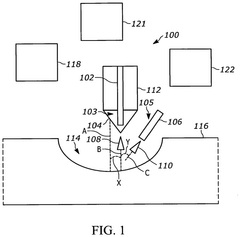
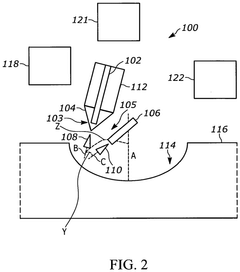
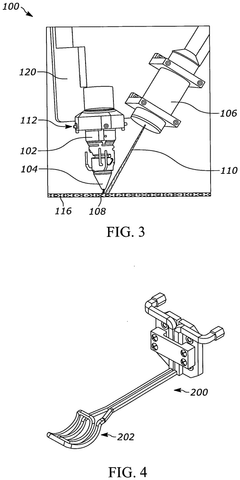
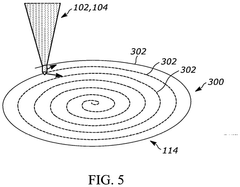
- A DED system employing multiple energy sources and a bi-directional spiral deposition pattern, combined with induction heating, to melt and uniformly fill concave cavities with angled walls, using titanium aluminide powder, ensuring thermal distribution and adhesion.
International Harmonization of DED Standards
The global nature of additive manufacturing necessitates coordinated international efforts to standardize Directed Energy Deposition (DED) processes. Currently, several major standards organizations including ISO, ASTM International, AWS, and regional bodies like CEN in Europe and SAC in China are working on DED-related standards, but with limited coordination. This fragmentation creates significant challenges for global manufacturers who must navigate multiple, sometimes conflicting requirements across different markets.
Efforts toward international harmonization have gained momentum in recent years, particularly through the ISO/ASTM 52900 series which represents a landmark collaboration between two major standards bodies. The joint development approach has created a foundation for common terminology and process classifications that span geographical boundaries. However, harmonization efforts for DED-specific standards remain in early stages compared to other AM technologies.
Key barriers to harmonization include differing national regulatory frameworks, varying industrial priorities across regions, and the rapid pace of technological innovation that outstrips standards development cycles. Technical differences in measurement methodologies and testing protocols between regions further complicate alignment efforts. For example, material qualification procedures for DED processes differ significantly between European and American standards frameworks.
Several promising initiatives are addressing these challenges. The America Makes & ANSI Additive Manufacturing Standardization Collaborative (AMSC) has created a standardization roadmap that includes international coordination components. Similarly, the ISO/TC 261 and ASTM F42 committees have established formal liaison relationships with counterparts in major manufacturing nations to synchronize development timelines and technical approaches.
Industry consortia are also playing crucial roles in bridging international divides. The Directed Energy Deposition Standardization Consortium (DEDSC), comprising members from 14 countries, focuses specifically on harmonizing DED standards across borders. Their working groups address process parameter standardization, material qualification protocols, and quality assurance frameworks with multinational representation.
The economic benefits of harmonization are substantial. Analysis from manufacturing associations estimates that fully harmonized DED standards could reduce compliance costs by 15-20% for multinational manufacturers and accelerate market entry timelines by 30-40% for new DED technologies. These efficiencies would particularly benefit small and medium enterprises seeking to enter global supply chains.
Efforts toward international harmonization have gained momentum in recent years, particularly through the ISO/ASTM 52900 series which represents a landmark collaboration between two major standards bodies. The joint development approach has created a foundation for common terminology and process classifications that span geographical boundaries. However, harmonization efforts for DED-specific standards remain in early stages compared to other AM technologies.
Key barriers to harmonization include differing national regulatory frameworks, varying industrial priorities across regions, and the rapid pace of technological innovation that outstrips standards development cycles. Technical differences in measurement methodologies and testing protocols between regions further complicate alignment efforts. For example, material qualification procedures for DED processes differ significantly between European and American standards frameworks.
Several promising initiatives are addressing these challenges. The America Makes & ANSI Additive Manufacturing Standardization Collaborative (AMSC) has created a standardization roadmap that includes international coordination components. Similarly, the ISO/TC 261 and ASTM F42 committees have established formal liaison relationships with counterparts in major manufacturing nations to synchronize development timelines and technical approaches.
Industry consortia are also playing crucial roles in bridging international divides. The Directed Energy Deposition Standardization Consortium (DEDSC), comprising members from 14 countries, focuses specifically on harmonizing DED standards across borders. Their working groups address process parameter standardization, material qualification protocols, and quality assurance frameworks with multinational representation.
The economic benefits of harmonization are substantial. Analysis from manufacturing associations estimates that fully harmonized DED standards could reduce compliance costs by 15-20% for multinational manufacturers and accelerate market entry timelines by 30-40% for new DED technologies. These efficiencies would particularly benefit small and medium enterprises seeking to enter global supply chains.
Quality Assurance Framework for DED Processes
A comprehensive Quality Assurance Framework for Directed Energy Deposition (DED) processes must address the unique challenges presented by this additive manufacturing technology. The framework should establish systematic approaches to ensure consistent part quality through standardized monitoring, testing, and validation procedures.
The foundation of any QA framework for DED begins with material qualification protocols. These protocols must verify powder or wire feedstock properties including particle size distribution, chemical composition, flowability, and moisture content. Establishing acceptance criteria for these parameters ensures that only materials meeting specified requirements enter the production workflow.
Process parameter validation forms the next critical component, encompassing laser power, deposition rate, travel speed, and shielding gas flow. Statistical process control methodologies should be implemented to monitor these parameters in real-time, with defined tolerance bands that trigger alerts when deviations occur. This continuous monitoring capability is essential for maintaining process stability.
In-situ monitoring technologies represent a significant advancement in DED quality assurance. Thermal imaging cameras, high-speed photography, and spectroscopic analysis can detect anomalies during deposition, including porosity formation, lack of fusion, or thermal gradient issues. These technologies enable immediate corrective actions rather than relying solely on post-process inspection.
Post-build inspection protocols constitute another vital element of the framework. Non-destructive testing methods such as ultrasonic testing, X-ray computed tomography, and dye penetrant inspection should be standardized for DED components. Destructive testing of witness specimens produced alongside actual parts provides additional verification of mechanical properties.
Documentation and traceability requirements must be clearly defined within the framework. Digital thread approaches that capture the complete history of each component—from powder batch information to process parameters and inspection results—enable comprehensive quality records and support root cause analysis when defects occur.
Qualification procedures for DED equipment and operators ensure that both hardware and human factors meet established standards. Equipment calibration schedules, maintenance protocols, and operator certification requirements should be formalized to minimize variability introduced by these factors.
Finally, the framework should include continuous improvement mechanisms through statistical analysis of quality data. By establishing feedback loops between inspection results and process parameters, organizations can systematically refine their DED processes over time, leading to enhanced reliability and reduced defect rates.
The foundation of any QA framework for DED begins with material qualification protocols. These protocols must verify powder or wire feedstock properties including particle size distribution, chemical composition, flowability, and moisture content. Establishing acceptance criteria for these parameters ensures that only materials meeting specified requirements enter the production workflow.
Process parameter validation forms the next critical component, encompassing laser power, deposition rate, travel speed, and shielding gas flow. Statistical process control methodologies should be implemented to monitor these parameters in real-time, with defined tolerance bands that trigger alerts when deviations occur. This continuous monitoring capability is essential for maintaining process stability.
In-situ monitoring technologies represent a significant advancement in DED quality assurance. Thermal imaging cameras, high-speed photography, and spectroscopic analysis can detect anomalies during deposition, including porosity formation, lack of fusion, or thermal gradient issues. These technologies enable immediate corrective actions rather than relying solely on post-process inspection.
Post-build inspection protocols constitute another vital element of the framework. Non-destructive testing methods such as ultrasonic testing, X-ray computed tomography, and dye penetrant inspection should be standardized for DED components. Destructive testing of witness specimens produced alongside actual parts provides additional verification of mechanical properties.
Documentation and traceability requirements must be clearly defined within the framework. Digital thread approaches that capture the complete history of each component—from powder batch information to process parameters and inspection results—enable comprehensive quality records and support root cause analysis when defects occur.
Qualification procedures for DED equipment and operators ensure that both hardware and human factors meet established standards. Equipment calibration schedules, maintenance protocols, and operator certification requirements should be formalized to minimize variability introduced by these factors.
Finally, the framework should include continuous improvement mechanisms through statistical analysis of quality data. By establishing feedback loops between inspection results and process parameters, organizations can systematically refine their DED processes over time, leading to enhanced reliability and reduced defect rates.
Unlock deeper insights with PatSnap Eureka Quick Research — get a full tech report to explore trends and direct your research. Try now!
Generate Your Research Report Instantly with AI Agent
Supercharge your innovation with PatSnap Eureka AI Agent Platform!