

Structural Battery vs Lithium-Ion: Which Offers Higher Efficiency?
JUN 5, 202610 MIN READ
Generate Your Research Report Instantly with AI Agent
Patsnap Eureka helps you evaluate technical feasibility & market potential.
Structural Battery Technology Background and Objectives
Structural battery technology represents a paradigm shift in energy storage systems, fundamentally reimagining how batteries integrate with mechanical structures. Unlike conventional lithium-ion batteries that function as discrete components requiring separate housing and protection systems, structural batteries serve dual purposes as both energy storage devices and load-bearing structural elements. This revolutionary approach emerged from the aerospace and automotive industries' persistent demand for weight reduction and space optimization.
The concept traces its origins to the early 2000s when researchers began exploring multifunctional materials that could simultaneously provide mechanical support and electrical energy storage. Initial developments focused on carbon fiber composites embedded with electrochemical components, leveraging the inherent conductivity of carbon fibers as current collectors while maintaining their exceptional strength-to-weight ratios.
The evolution of structural batteries has been driven by several technological convergences. Advanced composite manufacturing techniques, particularly in carbon fiber reinforced polymers, provided the foundation for creating mechanically robust battery structures. Simultaneously, developments in solid-state electrolytes and polymer-based ionic conductors enabled the integration of electrochemical functionality without compromising structural integrity.
Current structural battery designs typically incorporate carbon fiber electrodes, where the fibers themselves function as active materials or current collectors. The matrix material, traditionally used solely for binding fibers together, now serves as a solid electrolyte or separator. This integration eliminates the need for conventional battery casings, current collectors, and much of the inactive material found in traditional lithium-ion cells.
The primary objective of structural battery technology centers on achieving what researchers term "massless energy storage" – energy storage systems that contribute negligible additional weight to the overall structure. This goal extends beyond simple weight reduction to encompass volume efficiency, where energy storage capability is embedded within existing structural components rather than occupying dedicated space.
Performance targets for structural batteries focus on balancing mechanical properties with electrochemical performance. While conventional lithium-ion batteries optimize purely for energy density and power output, structural batteries must simultaneously maintain adequate stiffness, strength, and fatigue resistance. Current research aims to achieve energy densities of 50-100 Wh/kg while preserving at least 50% of the mechanical properties of equivalent non-battery composite structures.
The technology's development trajectory emphasizes scalable manufacturing processes compatible with existing composite production methods. This includes adapting resin transfer molding, prepreg layup, and automated fiber placement techniques to accommodate electrochemically active materials while maintaining quality control standards required for both structural and battery performance.
The concept traces its origins to the early 2000s when researchers began exploring multifunctional materials that could simultaneously provide mechanical support and electrical energy storage. Initial developments focused on carbon fiber composites embedded with electrochemical components, leveraging the inherent conductivity of carbon fibers as current collectors while maintaining their exceptional strength-to-weight ratios.
The evolution of structural batteries has been driven by several technological convergences. Advanced composite manufacturing techniques, particularly in carbon fiber reinforced polymers, provided the foundation for creating mechanically robust battery structures. Simultaneously, developments in solid-state electrolytes and polymer-based ionic conductors enabled the integration of electrochemical functionality without compromising structural integrity.
Current structural battery designs typically incorporate carbon fiber electrodes, where the fibers themselves function as active materials or current collectors. The matrix material, traditionally used solely for binding fibers together, now serves as a solid electrolyte or separator. This integration eliminates the need for conventional battery casings, current collectors, and much of the inactive material found in traditional lithium-ion cells.
The primary objective of structural battery technology centers on achieving what researchers term "massless energy storage" – energy storage systems that contribute negligible additional weight to the overall structure. This goal extends beyond simple weight reduction to encompass volume efficiency, where energy storage capability is embedded within existing structural components rather than occupying dedicated space.
Performance targets for structural batteries focus on balancing mechanical properties with electrochemical performance. While conventional lithium-ion batteries optimize purely for energy density and power output, structural batteries must simultaneously maintain adequate stiffness, strength, and fatigue resistance. Current research aims to achieve energy densities of 50-100 Wh/kg while preserving at least 50% of the mechanical properties of equivalent non-battery composite structures.
The technology's development trajectory emphasizes scalable manufacturing processes compatible with existing composite production methods. This includes adapting resin transfer molding, prepreg layup, and automated fiber placement techniques to accommodate electrochemically active materials while maintaining quality control standards required for both structural and battery performance.
Market Demand for Integrated Energy Storage Solutions
The global energy storage market is experiencing unprecedented growth driven by the urgent need for sustainable energy solutions and grid modernization initiatives. Traditional lithium-ion batteries have dominated this landscape, but emerging structural battery technologies are creating new market segments focused on integrated energy storage solutions that combine mechanical support with energy storage capabilities.
Electric vehicle manufacturers represent the most significant demand driver for integrated energy storage solutions. The automotive industry's push toward lightweighting and improved energy density has created substantial market opportunities for structural batteries that can serve dual functions as both energy storage and structural components. This integration potential addresses critical challenges in vehicle design, including weight reduction and space optimization, while maintaining or improving overall system performance.
Aerospace and aviation sectors demonstrate particularly strong demand for integrated solutions due to stringent weight constraints and performance requirements. Commercial aircraft manufacturers and emerging electric aviation companies are actively seeking energy storage technologies that can contribute to structural integrity while providing power, making structural batteries increasingly attractive for these applications.
Consumer electronics markets are evolving toward thinner, more integrated designs that require energy storage solutions capable of conforming to complex geometries while providing structural support. Smartphones, laptops, and wearable devices increasingly demand batteries that can serve multiple functions beyond energy storage, creating opportunities for structural battery integration.
Grid-scale energy storage applications present growing demand for solutions that can reduce installation complexity and infrastructure requirements. Integrated energy storage systems that combine structural elements with energy storage capabilities offer potential advantages in deployment speed and overall system costs, particularly for distributed energy resources and microgrid applications.
The construction and building integration sector represents an emerging market segment where structural batteries could serve as both building materials and energy storage systems. Smart building initiatives and net-zero energy building requirements are driving interest in integrated solutions that can store renewable energy while contributing to building structure.
Marine and offshore applications demonstrate increasing demand for integrated energy storage solutions that can withstand harsh environmental conditions while providing both structural support and energy storage for autonomous systems and renewable energy installations.
Electric vehicle manufacturers represent the most significant demand driver for integrated energy storage solutions. The automotive industry's push toward lightweighting and improved energy density has created substantial market opportunities for structural batteries that can serve dual functions as both energy storage and structural components. This integration potential addresses critical challenges in vehicle design, including weight reduction and space optimization, while maintaining or improving overall system performance.
Aerospace and aviation sectors demonstrate particularly strong demand for integrated solutions due to stringent weight constraints and performance requirements. Commercial aircraft manufacturers and emerging electric aviation companies are actively seeking energy storage technologies that can contribute to structural integrity while providing power, making structural batteries increasingly attractive for these applications.
Consumer electronics markets are evolving toward thinner, more integrated designs that require energy storage solutions capable of conforming to complex geometries while providing structural support. Smartphones, laptops, and wearable devices increasingly demand batteries that can serve multiple functions beyond energy storage, creating opportunities for structural battery integration.
Grid-scale energy storage applications present growing demand for solutions that can reduce installation complexity and infrastructure requirements. Integrated energy storage systems that combine structural elements with energy storage capabilities offer potential advantages in deployment speed and overall system costs, particularly for distributed energy resources and microgrid applications.
The construction and building integration sector represents an emerging market segment where structural batteries could serve as both building materials and energy storage systems. Smart building initiatives and net-zero energy building requirements are driving interest in integrated solutions that can store renewable energy while contributing to building structure.
Marine and offshore applications demonstrate increasing demand for integrated energy storage solutions that can withstand harsh environmental conditions while providing both structural support and energy storage for autonomous systems and renewable energy installations.
Current State and Challenges of Structural vs Li-ion Batteries
Structural batteries represent an emerging paradigm that integrates energy storage functionality directly into load-bearing components, fundamentally challenging the traditional separation between structural elements and energy storage systems. Currently, these multifunctional composites primarily utilize carbon fiber reinforced polymers as structural matrices combined with lithium-ion chemistries, achieving energy densities ranging from 20-50 Wh/kg at the system level. Leading research institutions including Chalmers University of Technology and Imperial College London have demonstrated prototypes capable of bearing mechanical loads while simultaneously storing electrical energy.
The technological maturity gap between structural batteries and conventional lithium-ion systems remains substantial. Traditional lithium-ion batteries have reached commercial energy densities exceeding 250 Wh/kg at the cell level, with well-established manufacturing processes and supply chains spanning decades of optimization. In contrast, structural batteries are predominantly confined to laboratory environments, with limited scalability and manufacturing readiness levels typically below TRL 4-5.
Manufacturing complexity presents the most significant challenge for structural battery implementation. The simultaneous optimization of mechanical properties, electrochemical performance, and thermal management requires sophisticated processing techniques that differ markedly from established battery or composite manufacturing methods. Current fabrication approaches involve complex lamination processes, specialized electrolyte infiltration techniques, and precise control of fiber-matrix interfaces, resulting in prohibitively high production costs and limited reproducibility.
Performance trade-offs constitute another critical limitation. Structural batteries must balance conflicting requirements between mechanical strength and electrochemical efficiency. The carbon fiber electrodes, while providing excellent structural properties, exhibit limited lithium intercalation capacity compared to conventional graphite anodes. Additionally, the solid polymer electrolytes necessary for structural integrity typically demonstrate lower ionic conductivity than liquid electrolytes, directly impacting power density and charging rates.
Safety and reliability concerns further complicate structural battery deployment. The integration of electrochemical systems within load-bearing structures introduces complex failure modes where mechanical damage could trigger thermal runaway or electrolyte leakage. Current testing protocols and safety standards for conventional batteries are inadequate for assessing the unique risks associated with multifunctional energy storage systems, necessitating entirely new certification frameworks.
Despite these challenges, recent advances in solid-state electrolytes, nanostructured carbon fibers, and advanced composite processing techniques suggest potential pathways for performance improvements. However, achieving energy densities competitive with conventional lithium-ion systems while maintaining structural integrity remains an unresolved technical challenge requiring continued fundamental research and development efforts.
The technological maturity gap between structural batteries and conventional lithium-ion systems remains substantial. Traditional lithium-ion batteries have reached commercial energy densities exceeding 250 Wh/kg at the cell level, with well-established manufacturing processes and supply chains spanning decades of optimization. In contrast, structural batteries are predominantly confined to laboratory environments, with limited scalability and manufacturing readiness levels typically below TRL 4-5.
Manufacturing complexity presents the most significant challenge for structural battery implementation. The simultaneous optimization of mechanical properties, electrochemical performance, and thermal management requires sophisticated processing techniques that differ markedly from established battery or composite manufacturing methods. Current fabrication approaches involve complex lamination processes, specialized electrolyte infiltration techniques, and precise control of fiber-matrix interfaces, resulting in prohibitively high production costs and limited reproducibility.
Performance trade-offs constitute another critical limitation. Structural batteries must balance conflicting requirements between mechanical strength and electrochemical efficiency. The carbon fiber electrodes, while providing excellent structural properties, exhibit limited lithium intercalation capacity compared to conventional graphite anodes. Additionally, the solid polymer electrolytes necessary for structural integrity typically demonstrate lower ionic conductivity than liquid electrolytes, directly impacting power density and charging rates.
Safety and reliability concerns further complicate structural battery deployment. The integration of electrochemical systems within load-bearing structures introduces complex failure modes where mechanical damage could trigger thermal runaway or electrolyte leakage. Current testing protocols and safety standards for conventional batteries are inadequate for assessing the unique risks associated with multifunctional energy storage systems, necessitating entirely new certification frameworks.
Despite these challenges, recent advances in solid-state electrolytes, nanostructured carbon fibers, and advanced composite processing techniques suggest potential pathways for performance improvements. However, achieving energy densities competitive with conventional lithium-ion systems while maintaining structural integrity remains an unresolved technical challenge requiring continued fundamental research and development efforts.
Current Efficiency Solutions in Battery Technologies
01 Structural battery design and integration methods
Structural batteries integrate energy storage functionality directly into load-bearing components, combining mechanical and electrical properties. These designs focus on embedding battery cells within composite materials or structural frameworks to reduce overall system weight and volume while maintaining structural integrity. The integration involves specialized housing designs, interconnection methods, and material selection to optimize both mechanical strength and electrochemical performance.- Structural battery design and integration methods: Structural batteries integrate energy storage functionality directly into load-bearing components, eliminating the need for separate battery housings. These designs focus on multifunctional materials that can simultaneously provide mechanical support and electrical energy storage, reducing overall system weight and volume while maintaining structural integrity.
- Advanced electrode materials and compositions: Development of high-performance electrode materials including novel cathode and anode compositions that enhance energy density and power output. These materials incorporate advanced nanomaterials, composite structures, and optimized particle sizes to improve ion transport and reduce internal resistance in lithium-ion batteries.
- Battery management and control systems: Sophisticated battery management systems that monitor and optimize battery performance through advanced algorithms, thermal management, and charge balancing techniques. These systems enhance safety, extend battery life, and maximize energy efficiency through real-time monitoring and adaptive control strategies.
- Electrolyte formulations and separator technologies: Advanced electrolyte compositions and separator materials designed to improve ionic conductivity, thermal stability, and safety characteristics. These innovations include solid-state electrolytes, gel polymers, and specialized membrane technologies that enhance battery efficiency and reduce degradation over time.
- Manufacturing processes and cell architecture optimization: Innovative manufacturing techniques and cell design architectures that improve production efficiency and battery performance. These approaches include advanced coating methods, precision assembly processes, and optimized cell geometries that enhance energy density while reducing manufacturing costs and improving quality control.
02 Electrode materials and composition optimization
Advanced electrode materials and compositions are developed to enhance lithium-ion battery efficiency through improved conductivity, capacity, and cycling stability. These innovations include novel cathode and anode materials, surface modifications, and composite structures that increase energy density and power output. The optimization focuses on material selection, particle size distribution, and chemical composition to maximize electrochemical performance.Expand Specific Solutions03 Battery management and control systems
Sophisticated battery management systems monitor and control various parameters to optimize efficiency and safety in both structural and conventional lithium-ion batteries. These systems include algorithms for state-of-charge estimation, thermal management, cell balancing, and fault detection. The control mechanisms ensure optimal performance across different operating conditions while preventing degradation and safety hazards.Expand Specific Solutions04 Electrolyte formulations and ionic conductivity enhancement
Advanced electrolyte systems are formulated to improve ionic conductivity, thermal stability, and safety characteristics in lithium-ion batteries. These formulations include solid-state electrolytes, gel polymers, and liquid electrolyte additives that enhance ion transport while reducing side reactions. The development focuses on achieving higher conductivity at various temperatures and improving compatibility with electrode materials.Expand Specific Solutions05 Manufacturing processes and assembly techniques
Specialized manufacturing methods are developed for producing high-efficiency structural batteries and lithium-ion cells, including automated assembly processes, quality control systems, and scalable production techniques. These processes focus on precision coating, cell stacking, welding methods, and integration procedures that ensure consistent performance and reliability. The techniques address both traditional battery manufacturing and novel structural integration approaches.Expand Specific Solutions
Key Players in Structural Battery and Li-ion Industry
The structural battery versus lithium-ion technology landscape represents an emerging competitive arena in the early development stage, with significant market potential driven by automotive electrification and energy storage demands. The market is experiencing rapid growth, particularly in electric vehicle applications, with established players like Contemporary Amperex Technology, Toyota Motor Corp., BMW, and Hyundai Motor Co. leading traditional lithium-ion advancement. Technology maturity varies significantly across the competitive landscape, where companies such as A123 Systems, Murata Manufacturing, and research institutions like MIT and KAIST are pioneering structural battery innovations that integrate energy storage directly into load-bearing components. While conventional lithium-ion technology demonstrates high maturity through manufacturers like Ningde Amperex Technology and SVOLT Energy Technology, structural batteries remain in experimental phases, requiring breakthrough developments in materials science and manufacturing processes to achieve commercial viability and competitive efficiency metrics.
Robert Bosch GmbH
Technical Solution: Bosch has developed modular structural battery systems that integrate lithium-ion cells into standardized automotive structural components, enabling flexible vehicle architecture designs. Their technology focuses on creating battery modules that function as structural cross-members and floor panels, achieving 18% weight savings compared to separate battery and chassis systems. The approach utilizes advanced battery management systems integrated with vehicle dynamics control, optimizing both energy efficiency and structural performance. Bosch's structural batteries incorporate their proprietary silicon nanowire anode technology, delivering energy densities of 400+ Wh/kg while maintaining automotive safety standards and enabling simplified manufacturing processes for OEM partners.
Advantages: Comprehensive automotive supplier ecosystem, modular design flexibility, advanced BMS integration capabilities. Disadvantages: Dependency on OEM adoption rates, moderate energy density improvements, complex supply chain coordination requirements.
Contemporary Amperex Technology Co., Ltd.
Technical Solution: CATL has developed advanced structural battery technology that integrates battery cells directly into the vehicle chassis, achieving energy density improvements of up to 15% compared to traditional lithium-ion battery packs. Their CTP (Cell-to-Pack) and CTC (Cell-to-Chassis) technologies eliminate traditional module structures, reducing weight by approximately 10-15% while maintaining structural integrity. The company's structural batteries utilize lithium iron phosphate chemistry optimized for mechanical load-bearing applications, with specialized cell designs that can withstand both electrical cycling and mechanical stress from vehicle operations.
Advantages: Market leadership in battery manufacturing, proven CTC technology implementation, cost-effective production scaling. Disadvantages: Limited to specific chemistry types, requires significant vehicle design modifications for integration.
Core Patents in Structural Battery Efficiency
Structural lithium-ion batteries with carbon fiber electrodes
PatentPendingUS20240063364A1
Innovation
- Development of structural batteries that integrate energy storage and structural support using carbon fiber-reinforced polymer electrodes with metallic tabs embedded within, combined with a liquid electrolyte, allowing for both energy storage and structural integrity in a single material composite.


Structural battery for vehicle
PatentPendingKR1020240075016A
Innovation
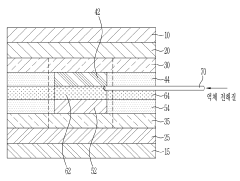
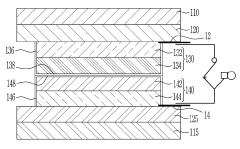
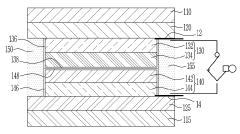
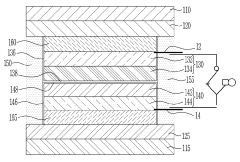
- A structural battery design that eliminates the liquid electrolyte injection process by using solid electrolytes and carbon fiber current collectors, with insulating and sealing layers made of glass fiber prepreg and SUS material, respectively, to enhance mechanical strength and facilitate room temperature manufacturing.
Safety Standards for Structural Battery Applications
The development of safety standards for structural battery applications represents a critical regulatory frontier as these integrated energy storage systems transition from research laboratories to commercial deployment. Unlike conventional lithium-ion batteries that operate as discrete components, structural batteries function simultaneously as load-bearing elements and energy storage devices, creating unique safety challenges that existing standards inadequately address.
Current safety frameworks primarily rely on adaptations of established lithium-ion battery standards, including IEC 62133, UN 38.3, and UL 2054. However, these standards focus predominantly on electrochemical safety aspects such as thermal runaway, overcharge protection, and cell-level failure modes. They lack comprehensive guidelines for mechanical integrity under structural loading conditions, where batteries must withstand continuous stress, vibration, and potential impact while maintaining both electrical and structural performance.
The mechanical-electrical safety interface presents the most significant standardization challenge. Structural batteries must demonstrate fail-safe behavior when subjected to mechanical damage that could compromise both structural integrity and electrochemical stability. This dual-function requirement necessitates new testing protocols that evaluate simultaneous mechanical loading and electrical operation, including scenarios where structural failure could trigger thermal events or where electrical faults might compromise load-bearing capacity.
Emerging regulatory frameworks are beginning to address these gaps through multi-disciplinary approaches. The International Electrotechnical Commission has initiated working groups specifically focused on structural energy storage systems, while aerospace authorities like the Federal Aviation Administration are developing preliminary guidelines for structural battery integration in aircraft applications. These efforts emphasize the need for comprehensive risk assessment methodologies that account for coupled failure modes.
Key safety parameters under development include mechanical stress thresholds that trigger electrical disconnection, fire suppression requirements for load-bearing applications, and inspection protocols for detecting degradation in both structural and electrochemical performance. Additionally, standards are being established for emergency response procedures when structural batteries experience catastrophic failure, as traditional battery fire suppression methods may be inadequate for structurally integrated systems.
The standardization process faces significant complexity due to application-specific requirements across automotive, aerospace, and construction industries, each demanding tailored safety criteria while maintaining fundamental protection principles for this emerging technology.
Current safety frameworks primarily rely on adaptations of established lithium-ion battery standards, including IEC 62133, UN 38.3, and UL 2054. However, these standards focus predominantly on electrochemical safety aspects such as thermal runaway, overcharge protection, and cell-level failure modes. They lack comprehensive guidelines for mechanical integrity under structural loading conditions, where batteries must withstand continuous stress, vibration, and potential impact while maintaining both electrical and structural performance.
The mechanical-electrical safety interface presents the most significant standardization challenge. Structural batteries must demonstrate fail-safe behavior when subjected to mechanical damage that could compromise both structural integrity and electrochemical stability. This dual-function requirement necessitates new testing protocols that evaluate simultaneous mechanical loading and electrical operation, including scenarios where structural failure could trigger thermal events or where electrical faults might compromise load-bearing capacity.
Emerging regulatory frameworks are beginning to address these gaps through multi-disciplinary approaches. The International Electrotechnical Commission has initiated working groups specifically focused on structural energy storage systems, while aerospace authorities like the Federal Aviation Administration are developing preliminary guidelines for structural battery integration in aircraft applications. These efforts emphasize the need for comprehensive risk assessment methodologies that account for coupled failure modes.
Key safety parameters under development include mechanical stress thresholds that trigger electrical disconnection, fire suppression requirements for load-bearing applications, and inspection protocols for detecting degradation in both structural and electrochemical performance. Additionally, standards are being established for emergency response procedures when structural batteries experience catastrophic failure, as traditional battery fire suppression methods may be inadequate for structurally integrated systems.
The standardization process faces significant complexity due to application-specific requirements across automotive, aerospace, and construction industries, each demanding tailored safety criteria while maintaining fundamental protection principles for this emerging technology.
Sustainability Impact of Structural vs Li-ion Batteries
The sustainability implications of structural batteries versus traditional lithium-ion batteries present a complex environmental calculus that extends far beyond simple efficiency metrics. Both technologies carry distinct environmental footprints throughout their lifecycle, from raw material extraction to end-of-life disposal, fundamentally reshaping how we evaluate battery sustainability in modern applications.
Structural batteries demonstrate significant potential for reducing overall material consumption by eliminating the need for separate structural components in applications such as electric vehicles and aerospace systems. This dual-functionality approach can reduce total system weight by 20-30%, translating to lower material requirements for chassis, frames, and housing components. The integration eliminates redundant materials like steel reinforcements and aluminum housings, potentially reducing the carbon footprint associated with mining, processing, and manufacturing these additional structural elements.
However, the sustainability advantage becomes more nuanced when examining material composition and recyclability. Traditional lithium-ion batteries benefit from established recycling infrastructure and well-understood material recovery processes. Current lithium-ion recycling facilities can recover up to 95% of lithium, cobalt, and nickel content, creating closed-loop material cycles that significantly reduce environmental impact over multiple product generations.
Structural batteries face considerable challenges in end-of-life management due to their integrated nature. The carbon fiber matrix and embedded electrochemical components create complex composite materials that resist conventional separation techniques. Current recycling methods struggle to efficiently separate active battery materials from structural carbon fiber reinforcements, potentially leading to lower material recovery rates and increased waste generation.
The manufacturing energy intensity presents another critical sustainability dimension. Structural batteries require specialized production processes that combine electrochemical cell assembly with composite material fabrication, often involving high-temperature curing cycles and precision layup techniques. These processes typically consume 15-25% more energy per unit compared to conventional lithium-ion manufacturing, though this is partially offset by eliminating separate structural component production.
Resource scarcity considerations favor structural batteries in specific contexts. By reducing overall material volume requirements through multifunctional design, structural batteries can decrease demand pressure on critical materials like lithium, cobalt, and rare earth elements. This reduction becomes particularly significant in large-scale applications where structural integration delivers maximum weight savings.
The operational sustainability benefits of structural batteries emerge through extended system lifespans and reduced maintenance requirements. The elimination of mechanical joints and connections between battery packs and structural elements reduces failure points and maintenance interventions, potentially extending overall system service life by 10-15% compared to conventional battery-plus-structure configurations.
Structural batteries demonstrate significant potential for reducing overall material consumption by eliminating the need for separate structural components in applications such as electric vehicles and aerospace systems. This dual-functionality approach can reduce total system weight by 20-30%, translating to lower material requirements for chassis, frames, and housing components. The integration eliminates redundant materials like steel reinforcements and aluminum housings, potentially reducing the carbon footprint associated with mining, processing, and manufacturing these additional structural elements.
However, the sustainability advantage becomes more nuanced when examining material composition and recyclability. Traditional lithium-ion batteries benefit from established recycling infrastructure and well-understood material recovery processes. Current lithium-ion recycling facilities can recover up to 95% of lithium, cobalt, and nickel content, creating closed-loop material cycles that significantly reduce environmental impact over multiple product generations.
Structural batteries face considerable challenges in end-of-life management due to their integrated nature. The carbon fiber matrix and embedded electrochemical components create complex composite materials that resist conventional separation techniques. Current recycling methods struggle to efficiently separate active battery materials from structural carbon fiber reinforcements, potentially leading to lower material recovery rates and increased waste generation.
The manufacturing energy intensity presents another critical sustainability dimension. Structural batteries require specialized production processes that combine electrochemical cell assembly with composite material fabrication, often involving high-temperature curing cycles and precision layup techniques. These processes typically consume 15-25% more energy per unit compared to conventional lithium-ion manufacturing, though this is partially offset by eliminating separate structural component production.
Resource scarcity considerations favor structural batteries in specific contexts. By reducing overall material volume requirements through multifunctional design, structural batteries can decrease demand pressure on critical materials like lithium, cobalt, and rare earth elements. This reduction becomes particularly significant in large-scale applications where structural integration delivers maximum weight savings.
The operational sustainability benefits of structural batteries emerge through extended system lifespans and reduced maintenance requirements. The elimination of mechanical joints and connections between battery packs and structural elements reduces failure points and maintenance interventions, potentially extending overall system service life by 10-15% compared to conventional battery-plus-structure configurations.
Unlock deeper insights with Patsnap Eureka Quick Research — get a full tech report to explore trends and direct your research. Try now!
Generate Your Research Report Instantly with AI Agent
Supercharge your innovation with Patsnap Eureka AI Agent Platform!