
Structural Materials' Impact on Treatment Plant Efficiency
MAR 2, 20269 MIN READ
Generate Your Research Report Instantly with AI Agent
Patsnap Eureka helps you evaluate technical feasibility & market potential.
Structural Materials Background and Treatment Plant Goals
Structural materials have served as the foundational backbone of water and wastewater treatment infrastructure since the early development of municipal sanitation systems in the 19th century. The evolution from basic brick and mortar constructions to sophisticated engineered materials reflects the growing complexity and performance demands of modern treatment facilities. Traditional materials such as concrete, steel, and cast iron dominated early treatment plant construction due to their availability and structural integrity, though their limitations in corrosive environments became apparent over time.
The progression toward advanced structural materials gained momentum in the mid-20th century as treatment processes became more chemically intensive and environmental regulations more stringent. Corrosion-resistant alloys, fiber-reinforced polymers, and specialized concrete formulations emerged as critical solutions to address the harsh operating conditions typical in treatment environments. These materials needed to withstand exposure to aggressive chemicals, varying pH levels, and mechanical stresses while maintaining structural integrity over extended service lives.
Contemporary treatment plant design increasingly emphasizes the integration of structural materials with process optimization objectives. The selection of appropriate materials directly influences plant longevity, maintenance requirements, and operational reliability. Advanced composite materials, high-performance concrete with specialized additives, and corrosion-resistant metallic alloys now enable treatment facilities to operate more efficiently while reducing lifecycle costs.
The primary technical objectives driving structural material innovation in treatment plants center on maximizing operational efficiency through enhanced durability and reduced maintenance interventions. Modern facilities target service lives exceeding 50 years while maintaining consistent performance standards. This requires materials capable of withstanding continuous exposure to corrosive agents, temperature fluctuations, and mechanical loading without significant degradation.
Process efficiency optimization represents another critical goal, where structural material properties directly impact treatment effectiveness. Materials with superior chemical resistance enable more aggressive treatment processes, while those with enhanced thermal properties support energy-efficient operations. The integration of smart materials and sensor technologies into structural components is emerging as a pathway toward predictive maintenance and real-time performance monitoring.
Environmental sustainability objectives increasingly influence material selection criteria, with emphasis on recyclability, reduced carbon footprint, and minimal environmental impact during manufacturing and disposal phases. These considerations align with broader industry trends toward sustainable infrastructure development and circular economy principles in water treatment sector applications.
The progression toward advanced structural materials gained momentum in the mid-20th century as treatment processes became more chemically intensive and environmental regulations more stringent. Corrosion-resistant alloys, fiber-reinforced polymers, and specialized concrete formulations emerged as critical solutions to address the harsh operating conditions typical in treatment environments. These materials needed to withstand exposure to aggressive chemicals, varying pH levels, and mechanical stresses while maintaining structural integrity over extended service lives.
Contemporary treatment plant design increasingly emphasizes the integration of structural materials with process optimization objectives. The selection of appropriate materials directly influences plant longevity, maintenance requirements, and operational reliability. Advanced composite materials, high-performance concrete with specialized additives, and corrosion-resistant metallic alloys now enable treatment facilities to operate more efficiently while reducing lifecycle costs.
The primary technical objectives driving structural material innovation in treatment plants center on maximizing operational efficiency through enhanced durability and reduced maintenance interventions. Modern facilities target service lives exceeding 50 years while maintaining consistent performance standards. This requires materials capable of withstanding continuous exposure to corrosive agents, temperature fluctuations, and mechanical loading without significant degradation.
Process efficiency optimization represents another critical goal, where structural material properties directly impact treatment effectiveness. Materials with superior chemical resistance enable more aggressive treatment processes, while those with enhanced thermal properties support energy-efficient operations. The integration of smart materials and sensor technologies into structural components is emerging as a pathway toward predictive maintenance and real-time performance monitoring.
Environmental sustainability objectives increasingly influence material selection criteria, with emphasis on recyclability, reduced carbon footprint, and minimal environmental impact during manufacturing and disposal phases. These considerations align with broader industry trends toward sustainable infrastructure development and circular economy principles in water treatment sector applications.
Market Demand for Advanced Treatment Plant Materials
The global water treatment industry is experiencing unprecedented demand for advanced structural materials driven by stringent environmental regulations and growing water scarcity concerns. Municipal water treatment facilities worldwide are under increasing pressure to enhance operational efficiency while reducing energy consumption and maintenance costs. This regulatory landscape has created substantial market opportunities for innovative materials that can withstand harsh chemical environments while maintaining structural integrity over extended operational periods.
Industrial sectors including petrochemicals, pharmaceuticals, and food processing are driving significant demand for specialized treatment plant materials. These industries require materials capable of handling aggressive chemicals, extreme temperatures, and high-pressure conditions while ensuring compliance with strict discharge standards. The semiconductor manufacturing sector particularly demands ultra-pure water systems, necessitating materials with exceptional corrosion resistance and minimal leaching properties.
Emerging economies are witnessing rapid infrastructure development, creating substantial market demand for cost-effective yet durable treatment plant materials. Countries across Asia-Pacific and Latin America are investing heavily in water infrastructure modernization, prioritizing materials that offer optimal performance-to-cost ratios. This trend is particularly pronounced in regions facing acute water stress, where treatment plant efficiency directly impacts water security.
The desalination market represents a high-growth segment demanding specialized materials capable of withstanding saline environments and high-pressure reverse osmosis operations. Coastal regions and water-scarce nations are increasingly investing in desalination infrastructure, driving demand for advanced polymer membranes, corrosion-resistant alloys, and specialized coatings that can maintain performance under challenging operational conditions.
Aging infrastructure in developed markets is creating replacement demand for next-generation materials that offer superior longevity and performance characteristics. Many treatment facilities built decades ago are reaching end-of-life, presenting opportunities for advanced materials that can extend operational lifespans while improving energy efficiency. This replacement cycle is particularly significant in North America and Europe, where substantial infrastructure investments are planned.
The growing emphasis on circular economy principles is driving demand for materials that enable resource recovery and waste minimization in treatment processes. Advanced materials that facilitate nutrient recovery, energy generation from waste streams, and water reuse applications are experiencing increased market interest as operators seek to transform treatment plants from cost centers into resource recovery facilities.
Industrial sectors including petrochemicals, pharmaceuticals, and food processing are driving significant demand for specialized treatment plant materials. These industries require materials capable of handling aggressive chemicals, extreme temperatures, and high-pressure conditions while ensuring compliance with strict discharge standards. The semiconductor manufacturing sector particularly demands ultra-pure water systems, necessitating materials with exceptional corrosion resistance and minimal leaching properties.
Emerging economies are witnessing rapid infrastructure development, creating substantial market demand for cost-effective yet durable treatment plant materials. Countries across Asia-Pacific and Latin America are investing heavily in water infrastructure modernization, prioritizing materials that offer optimal performance-to-cost ratios. This trend is particularly pronounced in regions facing acute water stress, where treatment plant efficiency directly impacts water security.
The desalination market represents a high-growth segment demanding specialized materials capable of withstanding saline environments and high-pressure reverse osmosis operations. Coastal regions and water-scarce nations are increasingly investing in desalination infrastructure, driving demand for advanced polymer membranes, corrosion-resistant alloys, and specialized coatings that can maintain performance under challenging operational conditions.
Aging infrastructure in developed markets is creating replacement demand for next-generation materials that offer superior longevity and performance characteristics. Many treatment facilities built decades ago are reaching end-of-life, presenting opportunities for advanced materials that can extend operational lifespans while improving energy efficiency. This replacement cycle is particularly significant in North America and Europe, where substantial infrastructure investments are planned.
The growing emphasis on circular economy principles is driving demand for materials that enable resource recovery and waste minimization in treatment processes. Advanced materials that facilitate nutrient recovery, energy generation from waste streams, and water reuse applications are experiencing increased market interest as operators seek to transform treatment plants from cost centers into resource recovery facilities.
Current Materials Performance and Efficiency Challenges
Water treatment plants worldwide face significant performance limitations due to structural material degradation and inefficiencies. Current infrastructure relies heavily on traditional materials such as concrete, steel, and polymer-based components, which demonstrate varying degrees of susceptibility to chemical corrosion, biological fouling, and mechanical wear. These materials often fail to maintain optimal performance under the harsh operating conditions typical of treatment facilities, including exposure to chlorine compounds, fluctuating pH levels, and continuous hydraulic stress.
Concrete structures, while cost-effective and widely implemented, exhibit notable porosity issues that facilitate bacterial growth and chemical penetration. This porosity leads to accelerated deterioration, requiring frequent maintenance cycles that disrupt operational efficiency. Steel components face similar challenges, with corrosion rates significantly impacting structural integrity and necessitating protective coatings that add complexity and cost to maintenance protocols.
Polymer-based materials, including various plastic piping systems and membrane components, demonstrate improved chemical resistance but suffer from thermal expansion issues and reduced mechanical strength over extended operational periods. These materials often experience stress cracking and dimensional instability, particularly in high-temperature applications or under continuous pressure variations.
The efficiency challenges extend beyond individual material performance to encompass system-wide impacts. Material degradation directly correlates with increased energy consumption, as roughened surfaces from corrosion and fouling create higher friction losses in piping systems. This phenomenon forces pumping systems to operate at elevated power levels, substantially increasing operational costs and reducing overall plant efficiency.
Membrane fouling represents another critical challenge, where material surface properties significantly influence contaminant adhesion and biofilm formation. Current membrane materials require frequent cleaning cycles and eventual replacement, creating operational downtime and increased chemical consumption for cleaning processes.
Temperature fluctuations and chemical exposure create thermal stress patterns that compromise material longevity. Many existing materials lack the thermal stability required for optimal performance across seasonal variations, leading to premature failure and reduced treatment capacity during peak demand periods.
The cumulative effect of these material performance issues results in treatment plants operating at suboptimal efficiency levels, with many facilities achieving only 70-80% of their designed capacity due to material-related constraints and maintenance requirements.
Concrete structures, while cost-effective and widely implemented, exhibit notable porosity issues that facilitate bacterial growth and chemical penetration. This porosity leads to accelerated deterioration, requiring frequent maintenance cycles that disrupt operational efficiency. Steel components face similar challenges, with corrosion rates significantly impacting structural integrity and necessitating protective coatings that add complexity and cost to maintenance protocols.
Polymer-based materials, including various plastic piping systems and membrane components, demonstrate improved chemical resistance but suffer from thermal expansion issues and reduced mechanical strength over extended operational periods. These materials often experience stress cracking and dimensional instability, particularly in high-temperature applications or under continuous pressure variations.
The efficiency challenges extend beyond individual material performance to encompass system-wide impacts. Material degradation directly correlates with increased energy consumption, as roughened surfaces from corrosion and fouling create higher friction losses in piping systems. This phenomenon forces pumping systems to operate at elevated power levels, substantially increasing operational costs and reducing overall plant efficiency.
Membrane fouling represents another critical challenge, where material surface properties significantly influence contaminant adhesion and biofilm formation. Current membrane materials require frequent cleaning cycles and eventual replacement, creating operational downtime and increased chemical consumption for cleaning processes.
Temperature fluctuations and chemical exposure create thermal stress patterns that compromise material longevity. Many existing materials lack the thermal stability required for optimal performance across seasonal variations, leading to premature failure and reduced treatment capacity during peak demand periods.
The cumulative effect of these material performance issues results in treatment plants operating at suboptimal efficiency levels, with many facilities achieving only 70-80% of their designed capacity due to material-related constraints and maintenance requirements.
Existing Materials Solutions for Plant Efficiency
01 Advanced composite materials and fiber reinforcement
Structural efficiency can be enhanced through the use of advanced composite materials incorporating high-strength fibers and optimized matrix systems. These materials provide superior strength-to-weight ratios compared to traditional materials. The integration of fiber reinforcement in specific orientations and configurations allows for tailored mechanical properties that maximize load-bearing capacity while minimizing material usage. Advanced manufacturing techniques enable precise control over fiber placement and resin distribution to achieve optimal structural performance.- Advanced composite materials and fiber reinforcement: Structural efficiency can be enhanced through the use of advanced composite materials incorporating fiber reinforcement technologies. These materials combine high strength-to-weight ratios with improved mechanical properties, enabling lighter structures without compromising load-bearing capacity. The integration of carbon fibers, glass fibers, or hybrid reinforcement systems provides superior tensile strength and stiffness compared to traditional materials.
- Optimized structural geometry and topology design: Efficiency improvements are achieved through advanced geometric configurations and topology optimization techniques. These approaches involve strategic material placement, hollow sections, lattice structures, and engineered void spaces that maximize strength while minimizing material usage. Computational design methods enable the creation of structures that distribute loads more effectively across the entire framework.
- High-performance alloys and metallic systems: The development of specialized metallic alloys with enhanced properties contributes significantly to structural efficiency. These materials feature improved yield strength, fatigue resistance, and corrosion protection while maintaining workability. Advanced metallurgical processes and alloying techniques create materials that perform better under extreme conditions and extended service life requirements.
- Modular and prefabricated construction systems: Structural efficiency is enhanced through modular design approaches and prefabricated component systems that streamline assembly and reduce material waste. These systems utilize standardized elements that can be efficiently manufactured, transported, and assembled on-site. The approach reduces construction time, improves quality control, and allows for better material utilization throughout the building process.
- Smart materials and adaptive structural systems: Emerging technologies incorporate smart materials and adaptive systems that respond to environmental conditions and loading scenarios. These innovations include materials with self-healing properties, shape memory characteristics, or variable stiffness capabilities. Such systems optimize structural performance in real-time, adjusting to changing demands and extending service life while maintaining efficiency.
02 Lightweight structural design and topology optimization
Efficiency improvements are achieved through innovative structural designs that reduce weight while maintaining or enhancing performance. Topology optimization techniques identify optimal material distribution patterns, removing material from low-stress regions and reinforcing high-stress areas. This approach results in structures with complex geometries that maximize stiffness and strength per unit mass. Computer-aided design and simulation tools enable engineers to explore numerous design iterations and select configurations that offer the best balance of structural efficiency and manufacturability.Expand Specific Solutions03 High-performance alloys and metallic materials
The development of advanced metallic alloys with enhanced mechanical properties contributes significantly to structural efficiency. These materials exhibit improved strength, durability, and resistance to environmental degradation while maintaining reasonable weight characteristics. Specialized heat treatment processes and alloying techniques create microstructures that optimize performance for specific applications. The use of these high-performance materials allows for thinner cross-sections and reduced component sizes without compromising structural integrity.Expand Specific Solutions04 Structural joining and connection systems
Efficient structural systems require optimized joining methods that maintain material properties and load transfer capabilities at connection points. Advanced bonding techniques, mechanical fastening systems, and hybrid joining approaches minimize stress concentrations and weight penalties associated with traditional connection methods. These systems are designed to distribute loads effectively across joined components while facilitating assembly and maintenance operations. The selection of appropriate joining technologies based on material compatibility and loading conditions is critical for overall structural efficiency.Expand Specific Solutions05 Multi-functional and adaptive structural systems
Structural efficiency is enhanced through the integration of multiple functions within single structural elements, reducing overall system complexity and weight. Adaptive structures incorporate sensing and actuation capabilities that allow real-time response to changing load conditions and environmental factors. These systems optimize performance across varying operational scenarios rather than being designed for worst-case conditions alone. The incorporation of smart materials and embedded monitoring systems enables predictive maintenance and extended service life, further improving long-term efficiency.Expand Specific Solutions
Key Players in Treatment Plant Materials Industry
The structural materials sector for treatment plant efficiency represents a mature yet evolving market experiencing steady growth driven by aging infrastructure and environmental regulations. The industry spans multiple technological domains, from semiconductor manufacturing equipment (Applied Materials, SCREEN Holdings, SEMES) to specialized wastewater treatment solutions (Hydrograv, Technologies Ecofixe). Technology maturity varies significantly across segments - established players like Siemens Energy, Hitachi, and Bosch demonstrate advanced capabilities in industrial systems, while companies like NuMat Technologies and Inventwood pioneer next-generation materials. The market shows consolidation around proven technologies alongside emerging innovations in programmable chemistries and bio-based materials, indicating a transitional phase where traditional engineering solutions coexist with breakthrough material sciences to optimize treatment efficiency.
Siemens Energy Global GmbH & Co. KG
Technical Solution: Siemens Energy develops advanced structural materials for water treatment applications, focusing on corrosion-resistant alloys and composite materials for critical components like pumps, valves, and piping systems. Their materials engineering approach emphasizes durability in harsh chemical environments, with specialized coatings that extend equipment lifespan by up to 40% compared to standard materials. The company integrates smart material technologies with IoT sensors for real-time monitoring of structural integrity, enabling predictive maintenance strategies that reduce downtime by 25-30%. Their portfolio includes high-performance polymers and metal matrix composites specifically designed for membrane bioreactor systems and advanced oxidation processes, where material degradation significantly impacts treatment efficiency.
Strengths: Extensive experience in harsh industrial environments, integrated digital monitoring capabilities, proven track record in large-scale infrastructure projects. Weaknesses: Higher initial costs, complex installation requirements, limited customization for smaller treatment facilities.
Sulzer Chemtech AG
Technical Solution: Sulzer Chemtech specializes in engineered materials for separation and purification processes in water treatment plants. Their approach focuses on structured packing materials made from advanced polymers and metal alloys that optimize mass transfer efficiency while resisting chemical degradation. The company has developed proprietary surface treatments that enhance wettability and reduce fouling, leading to 15-20% improvements in separation efficiency. Their materials portfolio includes high-surface-area structured packings, corrosion-resistant heat exchanger materials, and specialized membranes with enhanced selectivity. Sulzer's materials are designed to withstand aggressive cleaning chemicals and maintain performance over extended operational periods, with some installations showing stable performance after 10+ years of continuous operation.
Strengths: Deep expertise in separation technologies, proven long-term durability, strong R&D capabilities in material science. Weaknesses: Limited presence in emerging treatment technologies, higher maintenance complexity, specialized installation requirements.
Core Innovations in High-Performance Structural Materials
Contact material and method for its production
PatentInactiveEP0695721A2
Innovation
- The addition of surface-enlarging elements, such as spirally arranged strip-shaped films, to the lateral surface of tubular base bodies increases the specific growth area while maintaining low flow resistance and preventing mass transfer through the impermeable film, ensuring the biological lawn can flow unhindered.


Composite structural material compositions resistant to biodegradation
PatentInactiveUS20210061712A1
Innovation
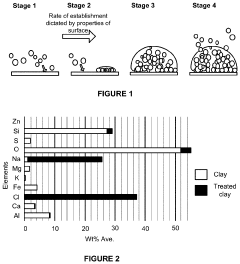
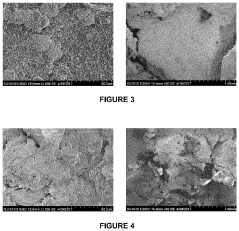
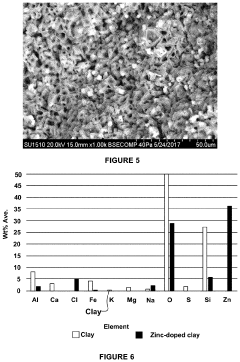
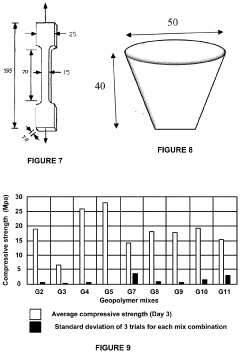
- Development of a geopolymer-based structural material composition that encapsulates antibacterial agents like zinc oxide within a geopolymer matrix, using carriers such as bentonite clay, to create a long-lasting, environmentally friendly coating that reduces bio-corrosion without leaching harmful substances.
Environmental Regulations for Treatment Plant Materials
Environmental regulations governing treatment plant materials have evolved significantly over the past two decades, driven by increasing awareness of environmental sustainability and public health concerns. These regulatory frameworks establish comprehensive standards for material selection, usage, and disposal in water and wastewater treatment facilities. The regulatory landscape encompasses multiple jurisdictions, from federal agencies like the EPA to state and local authorities, each contributing specific requirements that treatment plant operators must navigate.
The Safe Drinking Water Act (SDWA) serves as the primary federal legislation governing materials used in potable water treatment systems. Under this act, materials must meet stringent standards for chemical leaching, microbial resistance, and long-term durability. The National Sanitation Foundation (NSF) International standards, particularly NSF/ANSI 61, establish specific protocols for evaluating materials that come into contact with drinking water. These standards require extensive testing for heavy metal leaching, organic compound migration, and potential endocrine-disrupting effects.
Wastewater treatment facilities operate under different regulatory frameworks, primarily governed by the Clean Water Act and its associated National Pollutant Discharge Elimination System (NPDES) permits. These regulations focus on ensuring that structural materials do not contribute to effluent contamination or interfere with biological treatment processes. Materials must demonstrate resistance to chemical degradation from various industrial pollutants and maintain structural integrity under varying pH conditions and temperature fluctuations.
Recent regulatory developments have introduced more stringent requirements for emerging contaminants, including per- and polyfluoroalkyl substances (PFAS) and pharmaceutical compounds. These regulations mandate that treatment plant materials must not serve as sources of these contaminants and should demonstrate compatibility with advanced treatment technologies designed to remove them. Additionally, new guidelines address the environmental impact of material manufacturing processes, requiring life-cycle assessments and carbon footprint evaluations.
Compliance monitoring requirements have become increasingly sophisticated, with regulations mandating regular material performance assessments, corrosion monitoring, and environmental impact evaluations. Treatment facilities must maintain detailed documentation of material specifications, installation procedures, and ongoing maintenance protocols to demonstrate regulatory compliance during inspections and permit renewals.
The Safe Drinking Water Act (SDWA) serves as the primary federal legislation governing materials used in potable water treatment systems. Under this act, materials must meet stringent standards for chemical leaching, microbial resistance, and long-term durability. The National Sanitation Foundation (NSF) International standards, particularly NSF/ANSI 61, establish specific protocols for evaluating materials that come into contact with drinking water. These standards require extensive testing for heavy metal leaching, organic compound migration, and potential endocrine-disrupting effects.
Wastewater treatment facilities operate under different regulatory frameworks, primarily governed by the Clean Water Act and its associated National Pollutant Discharge Elimination System (NPDES) permits. These regulations focus on ensuring that structural materials do not contribute to effluent contamination or interfere with biological treatment processes. Materials must demonstrate resistance to chemical degradation from various industrial pollutants and maintain structural integrity under varying pH conditions and temperature fluctuations.
Recent regulatory developments have introduced more stringent requirements for emerging contaminants, including per- and polyfluoroalkyl substances (PFAS) and pharmaceutical compounds. These regulations mandate that treatment plant materials must not serve as sources of these contaminants and should demonstrate compatibility with advanced treatment technologies designed to remove them. Additionally, new guidelines address the environmental impact of material manufacturing processes, requiring life-cycle assessments and carbon footprint evaluations.
Compliance monitoring requirements have become increasingly sophisticated, with regulations mandating regular material performance assessments, corrosion monitoring, and environmental impact evaluations. Treatment facilities must maintain detailed documentation of material specifications, installation procedures, and ongoing maintenance protocols to demonstrate regulatory compliance during inspections and permit renewals.
Lifecycle Assessment of Sustainable Treatment Materials
Lifecycle assessment (LCA) of sustainable treatment materials represents a comprehensive methodology for evaluating the environmental impacts of structural materials throughout their entire operational lifespan in water and wastewater treatment facilities. This systematic approach encompasses material extraction, manufacturing, transportation, installation, operation, maintenance, and end-of-life disposal phases, providing critical insights into the long-term sustainability implications of material selection decisions.
The assessment framework begins with cradle-to-grave analysis of conventional materials such as concrete, steel, and polymer-based components commonly used in treatment plant construction. Traditional concrete structures, while offering durability and cost-effectiveness, present significant carbon footprint challenges due to cement production processes. Steel components demonstrate excellent structural integrity but require substantial energy inputs during manufacturing and periodic maintenance to prevent corrosion-related degradation.
Emerging sustainable alternatives are reshaping the material landscape through innovative compositions and manufacturing processes. Bio-based polymers derived from renewable feedstocks show promising performance characteristics while reducing dependency on fossil fuel resources. Recycled composite materials incorporating waste streams from other industries demonstrate comparable mechanical properties to virgin materials while addressing circular economy principles.
The operational phase assessment reveals critical performance differentials between material categories. Sustainable materials often exhibit superior resistance to chemical degradation, reducing maintenance frequency and extending service life. Advanced ceramic membranes and bio-engineered filtration media demonstrate enhanced contaminant removal efficiency while maintaining structural stability under varying operational conditions.
End-of-life considerations increasingly influence material selection strategies as regulatory frameworks emphasize waste reduction and resource recovery. Biodegradable treatment media and recyclable structural components offer significant advantages in lifecycle impact reduction compared to traditional materials requiring landfill disposal.
Economic analysis within the LCA framework demonstrates that while sustainable materials may present higher initial capital costs, their extended operational lifespan and reduced maintenance requirements often result in favorable total cost of ownership calculations. Energy efficiency improvements associated with lightweight sustainable materials further contribute to operational cost reductions and environmental impact mitigation throughout the facility lifecycle.
The assessment framework begins with cradle-to-grave analysis of conventional materials such as concrete, steel, and polymer-based components commonly used in treatment plant construction. Traditional concrete structures, while offering durability and cost-effectiveness, present significant carbon footprint challenges due to cement production processes. Steel components demonstrate excellent structural integrity but require substantial energy inputs during manufacturing and periodic maintenance to prevent corrosion-related degradation.
Emerging sustainable alternatives are reshaping the material landscape through innovative compositions and manufacturing processes. Bio-based polymers derived from renewable feedstocks show promising performance characteristics while reducing dependency on fossil fuel resources. Recycled composite materials incorporating waste streams from other industries demonstrate comparable mechanical properties to virgin materials while addressing circular economy principles.
The operational phase assessment reveals critical performance differentials between material categories. Sustainable materials often exhibit superior resistance to chemical degradation, reducing maintenance frequency and extending service life. Advanced ceramic membranes and bio-engineered filtration media demonstrate enhanced contaminant removal efficiency while maintaining structural stability under varying operational conditions.
End-of-life considerations increasingly influence material selection strategies as regulatory frameworks emphasize waste reduction and resource recovery. Biodegradable treatment media and recyclable structural components offer significant advantages in lifecycle impact reduction compared to traditional materials requiring landfill disposal.
Economic analysis within the LCA framework demonstrates that while sustainable materials may present higher initial capital costs, their extended operational lifespan and reduced maintenance requirements often result in favorable total cost of ownership calculations. Energy efficiency improvements associated with lightweight sustainable materials further contribute to operational cost reductions and environmental impact mitigation throughout the facility lifecycle.
Unlock deeper insights with Patsnap Eureka Quick Research — get a full tech report to explore trends and direct your research. Try now!
Generate Your Research Report Instantly with AI Agent
Supercharge your innovation with Patsnap Eureka AI Agent Platform!