

Superplastic Forming vs Electromagnetic Forming: Cycle Count Effectiveness
APR 8, 20269 MIN READ
Generate Your Research Report Instantly with AI Agent
PatSnap Eureka helps you evaluate technical feasibility & market potential.
Superplastic and Electromagnetic Forming Technology Background
Superplastic forming and electromagnetic forming represent two distinct advanced manufacturing technologies that have evolved to address the growing demand for complex-shaped components in aerospace, automotive, and other high-performance industries. Both technologies emerged from the need to overcome limitations of conventional forming processes when dealing with difficult-to-form materials and intricate geometries.
Superplastic forming originated in the 1960s as researchers discovered that certain metallic alloys exhibit exceptional ductility under specific temperature and strain rate conditions. This phenomenon, known as superplasticity, allows materials to achieve elongations of several hundred percent without necking or failure. The technology gained significant traction in aerospace applications where lightweight, complex components are essential for performance optimization.
The fundamental principle of superplastic forming relies on elevated temperatures, typically ranging from 400°C to 950°C depending on the material, combined with extremely low strain rates. Under these conditions, grain boundary sliding becomes the dominant deformation mechanism, enabling unprecedented formability. Titanium alloys, aluminum alloys, and certain steel grades have demonstrated excellent superplastic behavior, making them ideal candidates for this forming process.
Electromagnetic forming, conversely, represents a high-energy rate forming technology that emerged in the 1960s as an alternative to conventional stamping and hydroforming processes. This technology utilizes electromagnetic forces generated by high-intensity magnetic fields to deform electrically conductive materials at extremely high velocities. The process operates at room temperature and can achieve forming speeds exceeding 300 meters per second.
The electromagnetic forming process involves discharging stored electrical energy through a coil system, creating intense magnetic fields that induce eddy currents in the workpiece. The interaction between these currents and the magnetic field generates Lorentz forces sufficient to plastically deform the material. This technology has found particular success in forming aluminum, copper, and other non-ferrous metals.
Both technologies target applications where conventional forming methods prove inadequate, particularly in producing components with high strength-to-weight ratios, complex geometries, or superior surface quality. The aerospace industry has been a primary driver for both technologies, seeking lightweight solutions that maintain structural integrity under extreme operating conditions.
The evolution of these technologies has been shaped by advances in material science, process control systems, and manufacturing equipment. Modern implementations incorporate sophisticated temperature control, real-time monitoring, and computer-aided process optimization to enhance repeatability and quality outcomes.
Superplastic forming originated in the 1960s as researchers discovered that certain metallic alloys exhibit exceptional ductility under specific temperature and strain rate conditions. This phenomenon, known as superplasticity, allows materials to achieve elongations of several hundred percent without necking or failure. The technology gained significant traction in aerospace applications where lightweight, complex components are essential for performance optimization.
The fundamental principle of superplastic forming relies on elevated temperatures, typically ranging from 400°C to 950°C depending on the material, combined with extremely low strain rates. Under these conditions, grain boundary sliding becomes the dominant deformation mechanism, enabling unprecedented formability. Titanium alloys, aluminum alloys, and certain steel grades have demonstrated excellent superplastic behavior, making them ideal candidates for this forming process.
Electromagnetic forming, conversely, represents a high-energy rate forming technology that emerged in the 1960s as an alternative to conventional stamping and hydroforming processes. This technology utilizes electromagnetic forces generated by high-intensity magnetic fields to deform electrically conductive materials at extremely high velocities. The process operates at room temperature and can achieve forming speeds exceeding 300 meters per second.
The electromagnetic forming process involves discharging stored electrical energy through a coil system, creating intense magnetic fields that induce eddy currents in the workpiece. The interaction between these currents and the magnetic field generates Lorentz forces sufficient to plastically deform the material. This technology has found particular success in forming aluminum, copper, and other non-ferrous metals.
Both technologies target applications where conventional forming methods prove inadequate, particularly in producing components with high strength-to-weight ratios, complex geometries, or superior surface quality. The aerospace industry has been a primary driver for both technologies, seeking lightweight solutions that maintain structural integrity under extreme operating conditions.
The evolution of these technologies has been shaped by advances in material science, process control systems, and manufacturing equipment. Modern implementations incorporate sophisticated temperature control, real-time monitoring, and computer-aided process optimization to enhance repeatability and quality outcomes.
Market Demand for Advanced Metal Forming Solutions
The global metal forming industry is experiencing unprecedented demand driven by the aerospace, automotive, and electronics sectors' pursuit of lightweight, high-strength components. Advanced forming technologies have become critical enablers for manufacturers seeking to achieve complex geometries while maintaining material integrity and reducing production costs. The shift toward electric vehicles, next-generation aircraft designs, and miniaturized electronic devices has intensified requirements for precision forming capabilities that traditional methods cannot adequately address.
Aerospace manufacturers represent the most significant demand driver for advanced metal forming solutions, particularly for titanium and aluminum alloy components requiring exceptional dimensional accuracy and surface finish. The industry's emphasis on fuel efficiency and weight reduction has created substantial market pull for forming technologies capable of producing thin-walled, complex structures without compromising mechanical properties. Commercial aircraft production backlogs and emerging space exploration initiatives further amplify this demand trajectory.
The automotive sector's electrification transition has generated substantial requirements for specialized forming applications, including battery enclosures, lightweight structural components, and heat management systems. Electric vehicle manufacturers demand forming processes that can achieve high production volumes while maintaining consistent quality across complex geometries. The integration of advanced materials such as high-strength steels and aluminum alloys necessitates forming technologies capable of handling diverse material properties within single production lines.
Electronics and telecommunications industries contribute growing demand for micro-forming capabilities, driven by device miniaturization trends and 5G infrastructure deployment. These applications require forming technologies that can achieve extremely tight tolerances while maintaining high throughput rates. The proliferation of consumer electronics and IoT devices has created sustained demand for cost-effective forming solutions capable of processing thin materials without defects.
Market dynamics increasingly favor forming technologies that demonstrate superior cycle count effectiveness, as manufacturers prioritize total cost of ownership over initial capital investment. The ability to maintain consistent forming quality across extended production runs has become a key differentiator, particularly in high-volume applications where tooling longevity directly impacts profitability. This trend has intensified focus on forming methods that minimize tool wear and extend operational lifecycles.
Sustainability considerations are reshaping market preferences toward forming technologies that reduce material waste, energy consumption, and environmental impact. Manufacturers increasingly evaluate forming solutions based on their ability to achieve near-net-shape production while minimizing secondary processing requirements. This environmental focus has created additional market opportunities for advanced forming technologies that demonstrate superior resource efficiency compared to conventional methods.
Aerospace manufacturers represent the most significant demand driver for advanced metal forming solutions, particularly for titanium and aluminum alloy components requiring exceptional dimensional accuracy and surface finish. The industry's emphasis on fuel efficiency and weight reduction has created substantial market pull for forming technologies capable of producing thin-walled, complex structures without compromising mechanical properties. Commercial aircraft production backlogs and emerging space exploration initiatives further amplify this demand trajectory.
The automotive sector's electrification transition has generated substantial requirements for specialized forming applications, including battery enclosures, lightweight structural components, and heat management systems. Electric vehicle manufacturers demand forming processes that can achieve high production volumes while maintaining consistent quality across complex geometries. The integration of advanced materials such as high-strength steels and aluminum alloys necessitates forming technologies capable of handling diverse material properties within single production lines.
Electronics and telecommunications industries contribute growing demand for micro-forming capabilities, driven by device miniaturization trends and 5G infrastructure deployment. These applications require forming technologies that can achieve extremely tight tolerances while maintaining high throughput rates. The proliferation of consumer electronics and IoT devices has created sustained demand for cost-effective forming solutions capable of processing thin materials without defects.
Market dynamics increasingly favor forming technologies that demonstrate superior cycle count effectiveness, as manufacturers prioritize total cost of ownership over initial capital investment. The ability to maintain consistent forming quality across extended production runs has become a key differentiator, particularly in high-volume applications where tooling longevity directly impacts profitability. This trend has intensified focus on forming methods that minimize tool wear and extend operational lifecycles.
Sustainability considerations are reshaping market preferences toward forming technologies that reduce material waste, energy consumption, and environmental impact. Manufacturers increasingly evaluate forming solutions based on their ability to achieve near-net-shape production while minimizing secondary processing requirements. This environmental focus has created additional market opportunities for advanced forming technologies that demonstrate superior resource efficiency compared to conventional methods.
Current State of Cycle Count Performance in Metal Forming
The current landscape of cycle count performance in metal forming reveals significant disparities between traditional and advanced forming technologies. Conventional stamping and deep drawing processes typically achieve cycle counts ranging from 100,000 to 500,000 cycles before tooling replacement becomes necessary. However, these figures represent baseline performance levels that are increasingly insufficient for modern manufacturing demands.
Superplastic forming currently demonstrates moderate cycle count capabilities, with tooling systems achieving approximately 50,000 to 150,000 forming cycles under optimal conditions. The technology's cycle performance is primarily constrained by the elevated temperatures required for superplastic deformation, which accelerate tool wear and material degradation. Recent developments in advanced tool coatings and temperature-resistant materials have shown potential for extending cycle life by 20-30%.
Electromagnetic forming presents a contrasting performance profile, with pulse coil systems typically rated for 10,000 to 50,000 discharge cycles. The technology faces unique challenges related to electromagnetic stress concentration and thermal cycling effects on coil integrity. However, the absence of physical tool contact in many EMF applications can potentially extend overall system longevity when considering the complete forming apparatus.
Industry benchmarking data indicates that aerospace applications demand cycle counts exceeding 200,000 operations for economical production runs, while automotive sector requirements often surpass 1,000,000 cycles for high-volume components. Current superplastic and electromagnetic forming technologies fall short of these automotive benchmarks, creating a significant performance gap that limits widespread adoption.
Recent technological advances have begun addressing these limitations through innovative approaches. Hybrid forming systems combining electromagnetic pre-forming with conventional finishing operations have demonstrated improved cycle efficiency. Additionally, predictive maintenance algorithms and real-time monitoring systems are enabling more precise cycle count optimization.
The integration of advanced materials science has yielded promising results in extending operational cycles. Nanostructured tool coatings and high-entropy alloys show potential for dramatically improving cycle count performance across both forming technologies, though commercial implementation remains in early stages.
Superplastic forming currently demonstrates moderate cycle count capabilities, with tooling systems achieving approximately 50,000 to 150,000 forming cycles under optimal conditions. The technology's cycle performance is primarily constrained by the elevated temperatures required for superplastic deformation, which accelerate tool wear and material degradation. Recent developments in advanced tool coatings and temperature-resistant materials have shown potential for extending cycle life by 20-30%.
Electromagnetic forming presents a contrasting performance profile, with pulse coil systems typically rated for 10,000 to 50,000 discharge cycles. The technology faces unique challenges related to electromagnetic stress concentration and thermal cycling effects on coil integrity. However, the absence of physical tool contact in many EMF applications can potentially extend overall system longevity when considering the complete forming apparatus.
Industry benchmarking data indicates that aerospace applications demand cycle counts exceeding 200,000 operations for economical production runs, while automotive sector requirements often surpass 1,000,000 cycles for high-volume components. Current superplastic and electromagnetic forming technologies fall short of these automotive benchmarks, creating a significant performance gap that limits widespread adoption.
Recent technological advances have begun addressing these limitations through innovative approaches. Hybrid forming systems combining electromagnetic pre-forming with conventional finishing operations have demonstrated improved cycle efficiency. Additionally, predictive maintenance algorithms and real-time monitoring systems are enabling more precise cycle count optimization.
The integration of advanced materials science has yielded promising results in extending operational cycles. Nanostructured tool coatings and high-entropy alloys show potential for dramatically improving cycle count performance across both forming technologies, though commercial implementation remains in early stages.
Existing Cycle Count Optimization Solutions
01 Superplastic forming process optimization and cycle control
Methods for optimizing superplastic forming processes focus on controlling forming cycles through precise temperature and pressure management. The effectiveness of cycle count is improved by monitoring material flow characteristics and adjusting process parameters in real-time. Advanced control systems enable reduction of forming cycles while maintaining part quality through optimized heating rates and strain rate control.- Superplastic forming process optimization and cycle control: Methods for optimizing superplastic forming processes focus on controlling forming cycles through precise temperature management, strain rate control, and pressure application timing. These techniques enable efficient material deformation while maintaining structural integrity. Process parameters are adjusted to achieve optimal forming cycles that balance production speed with part quality, reducing overall cycle time while ensuring consistent results.
- Electromagnetic forming cycle efficiency and pulse control: Electromagnetic forming techniques utilize controlled electromagnetic pulses to achieve rapid metal forming with reduced cycle counts. The effectiveness is enhanced through optimized coil design, capacitor discharge timing, and energy distribution management. These methods allow for high-speed forming operations with minimal cycles, improving productivity and reducing energy consumption per formed part.
- Combined superplastic and electromagnetic forming methods: Hybrid approaches integrate superplastic forming with electromagnetic forming techniques to leverage advantages of both processes. These combined methods optimize cycle effectiveness by using electromagnetic assistance during critical forming stages while maintaining superplastic conditions. The integration reduces total cycle time and improves forming precision for complex geometries.
- Cycle count monitoring and process control systems: Advanced monitoring systems track forming cycle parameters in real-time to ensure process effectiveness and consistency. These systems employ sensors and feedback mechanisms to measure deformation progress, temperature variations, and pressure distributions throughout forming cycles. Data analysis enables optimization of cycle counts and identification of optimal process windows for different materials and geometries.
- Material preparation and tooling for enhanced cycle effectiveness: Specialized material treatments and tooling designs improve forming cycle effectiveness by optimizing material flow characteristics and reducing resistance during deformation. Pre-processing techniques and die configurations are developed to minimize required cycle counts while achieving desired part specifications. These approaches focus on material microstructure optimization and thermal management to enhance formability.
02 Electromagnetic forming cycle efficiency enhancement
Electromagnetic forming techniques utilize pulsed electromagnetic fields to achieve rapid metal forming with reduced cycle counts. The effectiveness is enhanced through optimized coil designs and discharge energy control systems. Multiple discharge sequences can be programmed to achieve complex geometries while minimizing the total number of forming cycles required for final part production.Expand Specific Solutions03 Combined superplastic and electromagnetic forming methods
Hybrid forming approaches integrate superplastic forming with electromagnetic forming to leverage advantages of both processes. This combination allows for reduced overall cycle counts by using electromagnetic pulses for initial forming stages followed by superplastic forming for final shaping. The synergistic effect improves production efficiency and reduces energy consumption per formed part.Expand Specific Solutions04 Cycle count monitoring and quality control systems
Advanced monitoring systems track forming cycle effectiveness through sensor networks that measure strain, temperature, and dimensional accuracy. Real-time data analysis enables predictive maintenance and process adjustments to optimize cycle counts. Quality control algorithms determine the minimum number of cycles needed to achieve specified tolerances while preventing material degradation from excessive forming operations.Expand Specific Solutions05 Material selection and preparation for improved forming efficiency
Specific material compositions and pre-treatment methods enhance formability and reduce required cycle counts in both superplastic and electromagnetic forming. Grain structure optimization and alloy design improve material response to forming forces. Heat treatment protocols prepare materials for single-cycle or reduced-cycle forming operations while maintaining mechanical properties in finished components.Expand Specific Solutions
Key Players in Advanced Metal Forming Industry
The competitive landscape for superplastic forming versus electromagnetic forming cycle count effectiveness reveals an industry in the mature development stage, with significant market potential driven by aerospace and automotive applications. The market demonstrates substantial scale, evidenced by major players including Boeing, Airbus Operations, Toyota Motor Corp., Ford Global Technologies, and GM Global Technology Operations leading industrial implementation. Technology maturity varies significantly across regions, with established aerospace manufacturers like Airbus Defence & Space and automotive giants achieving advanced production capabilities. Research institutions such as Huazhong University of Science & Technology, Shanghai Jiao Tong University, and Central South University continue advancing fundamental technologies. Specialized companies like Beijing New Technology ON Superplasticity and Nanotek Instruments Group represent emerging commercial applications, while component manufacturers including American Trim, Kobe Steel, and Samsung Electro-Mechanics integrate these forming technologies into broader manufacturing ecosystems, indicating widespread industrial adoption and technological convergence.
Ford Global Technologies LLC
Technical Solution: Ford has developed advanced superplastic forming technologies for automotive lightweight components, particularly focusing on aluminum alloy forming processes. Their approach integrates temperature-controlled forming with optimized cycle parameters to achieve superior surface quality and dimensional accuracy. The company has implemented multi-stage forming processes that can achieve cycle counts exceeding 10,000 cycles while maintaining consistent part quality. Ford's superplastic forming systems incorporate real-time monitoring and adaptive control mechanisms to optimize forming parameters during production cycles.
Strengths: Extensive automotive application experience, proven high-volume production capabilities. Weaknesses: Limited to specific aluminum alloys, higher energy consumption due to heating requirements.
The Boeing Co.
Technical Solution: Boeing has pioneered superplastic forming and diffusion bonding (SPF/DB) technologies for aerospace applications, achieving remarkable cycle effectiveness in titanium alloy processing. Their integrated approach combines superplastic forming with diffusion bonding in single-cycle operations, reducing overall manufacturing time by 40-60% compared to conventional methods. Boeing's SPF processes can achieve cycle counts of 5,000-8,000 for complex aerospace structures while maintaining strict aerospace quality standards. The company has developed proprietary heating systems and pressure control mechanisms that ensure uniform deformation and minimize material waste.
Strengths: Advanced aerospace-grade quality control, complex geometry capabilities, integrated SPF/DB processes. Weaknesses: High initial equipment investment, limited to high-temperature resistant materials.
Core Technologies for Forming Process Durability
System and process for superplastic forming
PatentInactiveUS20060112753A1
Innovation
- An automated superplastic forming cell with multiple modules and transfer devices that includes preheating of workpieces and forming dies, allowing for continuous operation by reducing the time required for die changes and cooling cycles, and integrating lubrication, forming, cooling, cleaning, and trimming processes within a streamlined workflow.


Apparatus for electromagnetic forming with durability and efficiency enhancements
PatentInactiveUS7540180B2
Innovation
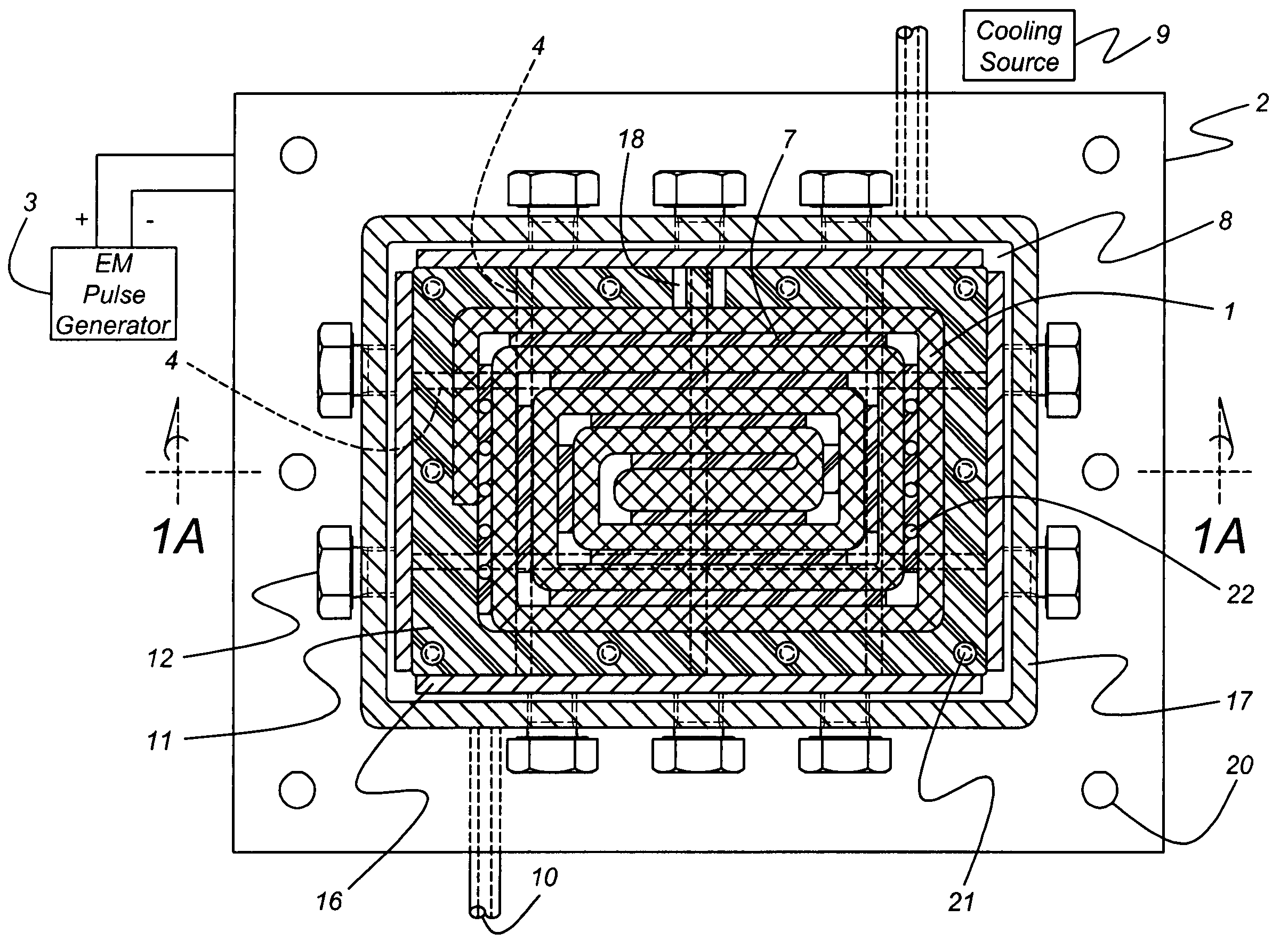
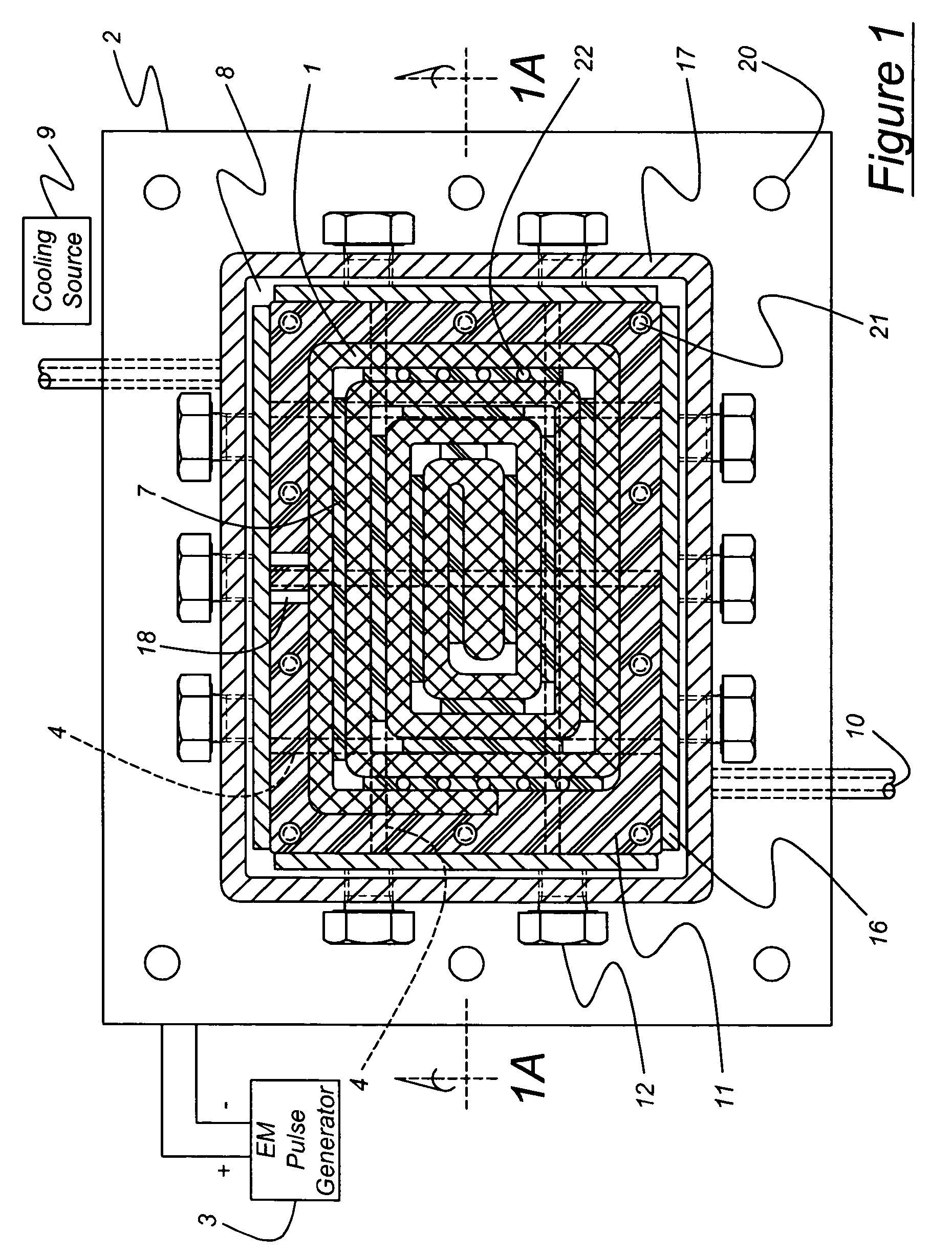
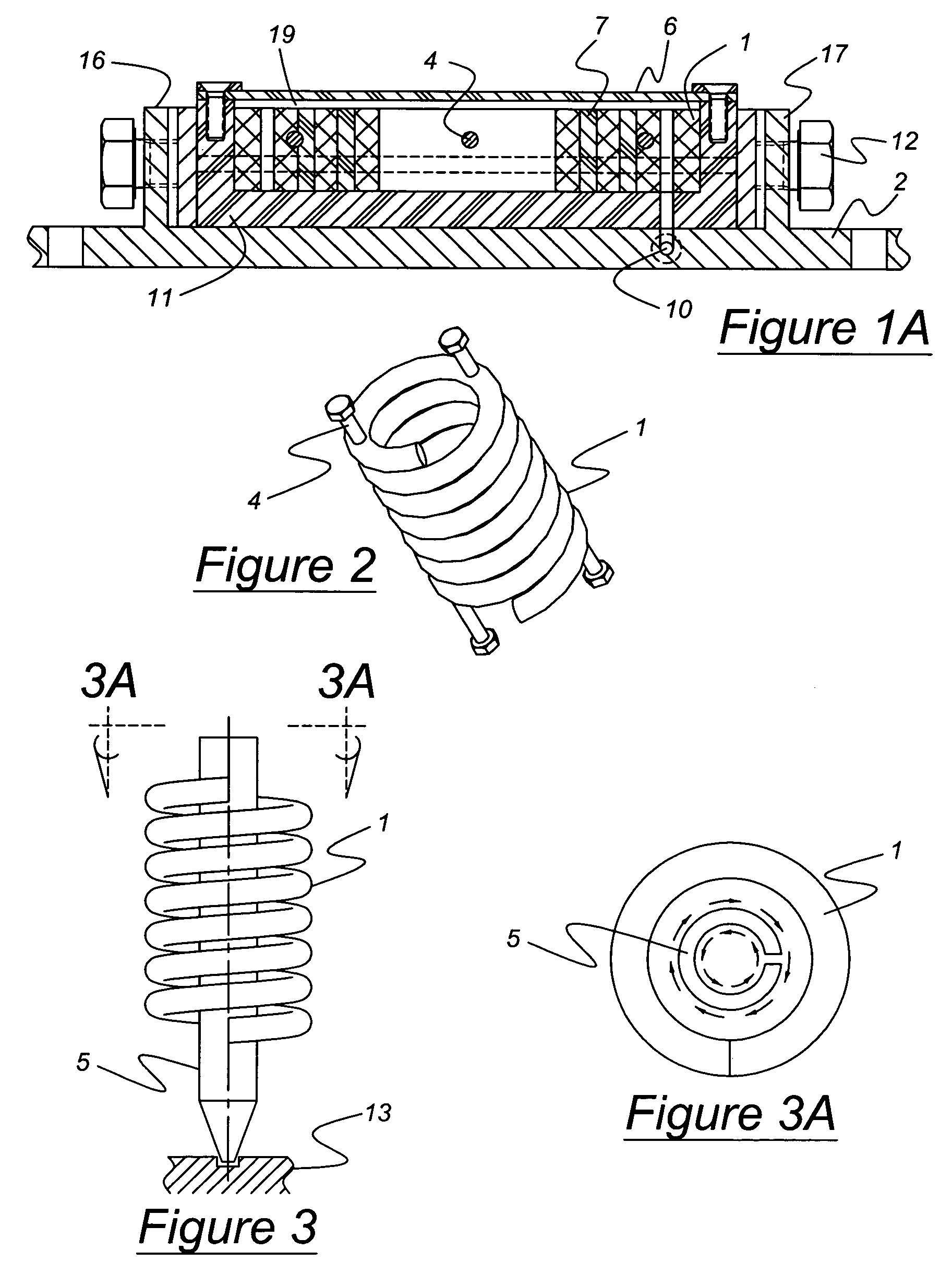
- A multi-turn solenoid coil with reinforcement members, an electrically insulative shell, and a cooling system that uses a vacuum arrangement to minimize overheating, combined with a force concentrator and heat treatment to reduce residual stresses and enhance formability.

Manufacturing Standards for Metal Forming Processes
Manufacturing standards for metal forming processes play a crucial role in determining the effectiveness and reliability of both superplastic forming and electromagnetic forming technologies. These standards establish the framework for quality control, process validation, and performance benchmarking that directly impacts cycle count effectiveness in industrial applications.
The International Organization for Standardization (ISO) has developed comprehensive guidelines for metal forming processes, including ISO 16630 for superplastic forming and emerging standards for electromagnetic forming. These standards define critical parameters such as temperature control tolerances, strain rate specifications, and material property requirements that significantly influence the achievable cycle counts in production environments.
For superplastic forming, manufacturing standards emphasize precise temperature maintenance within ±5°C of target values, typically ranging from 450°C to 950°C depending on the alloy system. The standards also specify gas pressure control requirements and forming rate limitations that ensure consistent material flow and minimize defect formation. Compliance with these standards directly correlates with extended die life and improved cycle count performance.
Electromagnetic forming standards focus on pulse shaping parameters, coil design specifications, and energy delivery consistency. The standards mandate specific current rise times, peak current tolerances, and electromagnetic field uniformity requirements that are essential for achieving repeatable forming results and maximizing equipment operational cycles.
Quality assurance protocols embedded within these manufacturing standards include mandatory process monitoring, statistical process control implementation, and regular calibration schedules for forming equipment. These requirements ensure that both forming technologies maintain their cycle count effectiveness throughout extended production runs.
The standards also address safety considerations, environmental controls, and operator training requirements that indirectly impact cycle count effectiveness by reducing process interruptions and maintaining consistent operating conditions. Adherence to these comprehensive manufacturing standards provides the foundation for reliable comparison of cycle count effectiveness between superplastic forming and electromagnetic forming technologies in industrial applications.
The International Organization for Standardization (ISO) has developed comprehensive guidelines for metal forming processes, including ISO 16630 for superplastic forming and emerging standards for electromagnetic forming. These standards define critical parameters such as temperature control tolerances, strain rate specifications, and material property requirements that significantly influence the achievable cycle counts in production environments.
For superplastic forming, manufacturing standards emphasize precise temperature maintenance within ±5°C of target values, typically ranging from 450°C to 950°C depending on the alloy system. The standards also specify gas pressure control requirements and forming rate limitations that ensure consistent material flow and minimize defect formation. Compliance with these standards directly correlates with extended die life and improved cycle count performance.
Electromagnetic forming standards focus on pulse shaping parameters, coil design specifications, and energy delivery consistency. The standards mandate specific current rise times, peak current tolerances, and electromagnetic field uniformity requirements that are essential for achieving repeatable forming results and maximizing equipment operational cycles.
Quality assurance protocols embedded within these manufacturing standards include mandatory process monitoring, statistical process control implementation, and regular calibration schedules for forming equipment. These requirements ensure that both forming technologies maintain their cycle count effectiveness throughout extended production runs.
The standards also address safety considerations, environmental controls, and operator training requirements that indirectly impact cycle count effectiveness by reducing process interruptions and maintaining consistent operating conditions. Adherence to these comprehensive manufacturing standards provides the foundation for reliable comparison of cycle count effectiveness between superplastic forming and electromagnetic forming technologies in industrial applications.
Cost-Benefit Analysis of Forming Technology Selection
The economic evaluation of superplastic forming versus electromagnetic forming requires a comprehensive assessment of both direct and indirect costs associated with each technology. Initial capital investment represents a significant differentiator, with superplastic forming typically requiring specialized furnaces, controlled atmosphere systems, and precision tooling capable of withstanding elevated temperatures. Electromagnetic forming demands high-energy pulse generators, sophisticated coil systems, and robust safety infrastructure to manage electromagnetic fields.
Operational cost structures vary substantially between these technologies. Superplastic forming incurs continuous energy expenses for maintaining elevated temperatures, often ranging from 450°C to 950°C depending on material specifications. Extended cycle times, sometimes spanning several hours per component, contribute to higher labor and facility utilization costs. Conversely, electromagnetic forming operates at ambient temperatures with millisecond-duration energy pulses, resulting in significantly lower per-cycle energy consumption despite high instantaneous power requirements.
Tooling economics present contrasting investment profiles. Superplastic forming tools must withstand thermal cycling and prolonged exposure to elevated temperatures, necessitating premium materials and specialized coatings that increase initial costs but offer extended service life. Electromagnetic forming coils experience high mechanical stresses and electromagnetic forces, requiring frequent replacement or refurbishment, creating ongoing operational expenses that must be factored into long-term cost projections.
Production volume considerations significantly influence the economic viability of each approach. Superplastic forming demonstrates favorable economics for low to medium volume production due to lower tooling complexity and reduced setup requirements. The technology's ability to form complex geometries in single operations can eliminate secondary processing costs. Electromagnetic forming becomes increasingly cost-effective at higher production volumes where rapid cycle times and automated processing capabilities offset higher equipment investments.
Quality-related costs impact the overall economic equation through scrap rates, rework requirements, and inspection procedures. Superplastic forming typically achieves superior surface finish and dimensional accuracy, reducing downstream processing costs. However, the extended thermal exposure can introduce microstructural changes requiring additional quality control measures. Electromagnetic forming may generate higher scrap rates during process optimization but offers excellent repeatability once parameters are established.
Labor cost implications differ markedly between technologies. Superplastic forming requires skilled operators familiar with thermal processing and extended cycle management. Electromagnetic forming enables higher automation levels, potentially reducing direct labor costs while requiring specialized technical support for equipment maintenance and process optimization.
Operational cost structures vary substantially between these technologies. Superplastic forming incurs continuous energy expenses for maintaining elevated temperatures, often ranging from 450°C to 950°C depending on material specifications. Extended cycle times, sometimes spanning several hours per component, contribute to higher labor and facility utilization costs. Conversely, electromagnetic forming operates at ambient temperatures with millisecond-duration energy pulses, resulting in significantly lower per-cycle energy consumption despite high instantaneous power requirements.
Tooling economics present contrasting investment profiles. Superplastic forming tools must withstand thermal cycling and prolonged exposure to elevated temperatures, necessitating premium materials and specialized coatings that increase initial costs but offer extended service life. Electromagnetic forming coils experience high mechanical stresses and electromagnetic forces, requiring frequent replacement or refurbishment, creating ongoing operational expenses that must be factored into long-term cost projections.
Production volume considerations significantly influence the economic viability of each approach. Superplastic forming demonstrates favorable economics for low to medium volume production due to lower tooling complexity and reduced setup requirements. The technology's ability to form complex geometries in single operations can eliminate secondary processing costs. Electromagnetic forming becomes increasingly cost-effective at higher production volumes where rapid cycle times and automated processing capabilities offset higher equipment investments.
Quality-related costs impact the overall economic equation through scrap rates, rework requirements, and inspection procedures. Superplastic forming typically achieves superior surface finish and dimensional accuracy, reducing downstream processing costs. However, the extended thermal exposure can introduce microstructural changes requiring additional quality control measures. Electromagnetic forming may generate higher scrap rates during process optimization but offers excellent repeatability once parameters are established.
Labor cost implications differ markedly between technologies. Superplastic forming requires skilled operators familiar with thermal processing and extended cycle management. Electromagnetic forming enables higher automation levels, potentially reducing direct labor costs while requiring specialized technical support for equipment maintenance and process optimization.
Unlock deeper insights with PatSnap Eureka Quick Research — get a full tech report to explore trends and direct your research. Try now!
Generate Your Research Report Instantly with AI Agent
Supercharge your innovation with PatSnap Eureka AI Agent Platform!