Systemic Integration Metrics for Multi-Energy Virtual Power Plants
MAY 12, 20269 MIN READ
Generate Your Research Report Instantly with AI Agent
PatSnap Eureka helps you evaluate technical feasibility & market potential.
Multi-Energy VPP Integration Background and Objectives
The evolution of energy systems has undergone a fundamental transformation from centralized fossil fuel-based generation to distributed renewable energy networks. This paradigm shift has been accelerated by climate change imperatives, technological advances in renewable energy, and the increasing digitalization of energy infrastructure. Multi-energy virtual power plants represent a convergence of these trends, integrating electricity, heating, cooling, and transportation energy vectors into cohesive, intelligent systems.
Traditional energy systems operated in silos, with separate infrastructure for electricity, gas, and thermal energy. However, the integration of renewable energy sources, energy storage technologies, and smart grid capabilities has created opportunities for cross-sector optimization. Multi-energy VPPs leverage advanced control algorithms, real-time data analytics, and machine learning to coordinate diverse energy assets across multiple energy carriers simultaneously.
The concept of virtual power plants initially emerged in the electricity sector as a method to aggregate distributed energy resources. Early implementations focused primarily on demand response and renewable energy integration within electrical networks. The evolution toward multi-energy systems represents a natural progression, recognizing that energy efficiency and system optimization can be significantly enhanced through sector coupling and integrated resource management.
Current technological developments in power-to-X technologies, thermal energy storage, electric vehicle integration, and smart building systems have created the foundation for comprehensive multi-energy optimization. These technologies enable the conversion and storage of energy across different vectors, allowing for temporal and spatial arbitrage opportunities that single-sector systems cannot exploit.
The primary objective of multi-energy VPP integration is to maximize overall system efficiency while maintaining reliability and economic viability. This involves optimizing energy flows across electricity, heating, cooling, and potentially transportation sectors to minimize total system costs, reduce carbon emissions, and enhance grid stability. The integration seeks to exploit synergies between different energy vectors, such as using excess renewable electricity for heating or cooling applications during periods of high generation.
Secondary objectives include improving renewable energy utilization rates, reducing peak demand on individual energy networks, and creating new revenue streams through multi-energy service provision. The integration also aims to enhance system resilience by providing multiple pathways for energy delivery and creating redundancy across energy vectors.
Achieving these objectives requires sophisticated coordination mechanisms, advanced forecasting capabilities, and robust optimization algorithms that can handle the complexity of multi-dimensional energy systems while responding to real-time market conditions and operational constraints.
Traditional energy systems operated in silos, with separate infrastructure for electricity, gas, and thermal energy. However, the integration of renewable energy sources, energy storage technologies, and smart grid capabilities has created opportunities for cross-sector optimization. Multi-energy VPPs leverage advanced control algorithms, real-time data analytics, and machine learning to coordinate diverse energy assets across multiple energy carriers simultaneously.
The concept of virtual power plants initially emerged in the electricity sector as a method to aggregate distributed energy resources. Early implementations focused primarily on demand response and renewable energy integration within electrical networks. The evolution toward multi-energy systems represents a natural progression, recognizing that energy efficiency and system optimization can be significantly enhanced through sector coupling and integrated resource management.
Current technological developments in power-to-X technologies, thermal energy storage, electric vehicle integration, and smart building systems have created the foundation for comprehensive multi-energy optimization. These technologies enable the conversion and storage of energy across different vectors, allowing for temporal and spatial arbitrage opportunities that single-sector systems cannot exploit.
The primary objective of multi-energy VPP integration is to maximize overall system efficiency while maintaining reliability and economic viability. This involves optimizing energy flows across electricity, heating, cooling, and potentially transportation sectors to minimize total system costs, reduce carbon emissions, and enhance grid stability. The integration seeks to exploit synergies between different energy vectors, such as using excess renewable electricity for heating or cooling applications during periods of high generation.
Secondary objectives include improving renewable energy utilization rates, reducing peak demand on individual energy networks, and creating new revenue streams through multi-energy service provision. The integration also aims to enhance system resilience by providing multiple pathways for energy delivery and creating redundancy across energy vectors.
Achieving these objectives requires sophisticated coordination mechanisms, advanced forecasting capabilities, and robust optimization algorithms that can handle the complexity of multi-dimensional energy systems while responding to real-time market conditions and operational constraints.
Market Demand for Integrated Virtual Power Plant Solutions
The global energy landscape is experiencing unprecedented transformation driven by decarbonization mandates, renewable energy proliferation, and grid modernization initiatives. Multi-energy virtual power plants represent a critical solution for managing distributed energy resources across electricity, heating, cooling, and transportation sectors. This convergence creates substantial market opportunities for integrated VPP solutions that can orchestrate diverse energy assets through sophisticated systemic integration metrics.
Utility companies worldwide face mounting pressure to integrate variable renewable energy sources while maintaining grid stability and reliability. Traditional centralized power generation models are increasingly inadequate for managing distributed solar installations, wind farms, battery storage systems, electric vehicle charging networks, and demand response programs. The complexity of coordinating these heterogeneous resources necessitates advanced integration platforms capable of real-time optimization across multiple energy vectors.
Industrial and commercial energy consumers are driving significant demand for comprehensive energy management solutions. Large manufacturing facilities, data centers, hospitals, and commercial complexes require sophisticated systems that can optimize energy procurement, storage, and consumption across electricity, thermal, and transportation needs. These entities seek integrated platforms that provide visibility into energy flows, predictive analytics, and automated optimization capabilities to reduce costs and carbon footprints.
The emergence of energy-as-a-service business models is creating new market segments for VPP solutions. Energy service companies, independent power producers, and technology providers are developing integrated offerings that combine hardware, software, and services. These solutions require robust systemic integration metrics to demonstrate value proposition, track performance across multiple energy domains, and enable transparent billing and settlement mechanisms.
Regulatory frameworks supporting distributed energy resources and grid flexibility services are expanding market opportunities. Feed-in tariffs, capacity markets, ancillary services, and carbon pricing mechanisms create revenue streams for VPP operators. However, participation in these markets requires sophisticated measurement and verification capabilities that can accurately quantify contributions across different energy services and time horizons.
The growing emphasis on energy resilience and security is driving adoption among critical infrastructure operators. Hospitals, military installations, telecommunications facilities, and emergency services require integrated energy solutions that can maintain operations during grid disruptions. These applications demand comprehensive monitoring and control systems that can seamlessly transition between grid-connected and islanded operations while optimizing multiple energy resources.
Smart city initiatives and district energy projects represent emerging market segments with substantial growth potential. Municipal governments and urban developers are implementing integrated energy systems that combine renewable generation, storage, district heating and cooling, and electric mobility infrastructure. These projects require sophisticated integration platforms that can optimize energy flows across neighborhoods and communities while providing transparency to multiple stakeholders.
Utility companies worldwide face mounting pressure to integrate variable renewable energy sources while maintaining grid stability and reliability. Traditional centralized power generation models are increasingly inadequate for managing distributed solar installations, wind farms, battery storage systems, electric vehicle charging networks, and demand response programs. The complexity of coordinating these heterogeneous resources necessitates advanced integration platforms capable of real-time optimization across multiple energy vectors.
Industrial and commercial energy consumers are driving significant demand for comprehensive energy management solutions. Large manufacturing facilities, data centers, hospitals, and commercial complexes require sophisticated systems that can optimize energy procurement, storage, and consumption across electricity, thermal, and transportation needs. These entities seek integrated platforms that provide visibility into energy flows, predictive analytics, and automated optimization capabilities to reduce costs and carbon footprints.
The emergence of energy-as-a-service business models is creating new market segments for VPP solutions. Energy service companies, independent power producers, and technology providers are developing integrated offerings that combine hardware, software, and services. These solutions require robust systemic integration metrics to demonstrate value proposition, track performance across multiple energy domains, and enable transparent billing and settlement mechanisms.
Regulatory frameworks supporting distributed energy resources and grid flexibility services are expanding market opportunities. Feed-in tariffs, capacity markets, ancillary services, and carbon pricing mechanisms create revenue streams for VPP operators. However, participation in these markets requires sophisticated measurement and verification capabilities that can accurately quantify contributions across different energy services and time horizons.
The growing emphasis on energy resilience and security is driving adoption among critical infrastructure operators. Hospitals, military installations, telecommunications facilities, and emergency services require integrated energy solutions that can maintain operations during grid disruptions. These applications demand comprehensive monitoring and control systems that can seamlessly transition between grid-connected and islanded operations while optimizing multiple energy resources.
Smart city initiatives and district energy projects represent emerging market segments with substantial growth potential. Municipal governments and urban developers are implementing integrated energy systems that combine renewable generation, storage, district heating and cooling, and electric mobility infrastructure. These projects require sophisticated integration platforms that can optimize energy flows across neighborhoods and communities while providing transparency to multiple stakeholders.
Current Challenges in Multi-Energy VPP System Integration
Multi-energy Virtual Power Plants face significant integration challenges that stem from the inherent complexity of coordinating diverse energy resources across multiple domains. The heterogeneous nature of distributed energy resources, including solar photovoltaics, wind turbines, energy storage systems, electric vehicles, and flexible loads, creates substantial technical barriers for seamless system integration. Each resource type operates with distinct characteristics, response times, and control protocols, making unified management exceptionally complex.
Interoperability remains a critical bottleneck in multi-energy VPP deployment. Legacy energy infrastructure often lacks standardized communication protocols, resulting in fragmented systems that cannot effectively exchange data or coordinate operations. The absence of universal data formats and communication standards prevents optimal resource aggregation and real-time coordination between different energy domains, including electricity, heating, cooling, and transportation sectors.
Real-time data synchronization presents another fundamental challenge. Multi-energy VPPs require millisecond-level coordination across geographically distributed assets, yet current communication networks often suffer from latency issues and reliability concerns. The integration of Internet of Things devices, smart meters, and control systems generates massive data streams that must be processed simultaneously, creating computational bottlenecks that can compromise system stability.
Scalability constraints significantly limit the expansion potential of multi-energy VPP systems. As the number of integrated resources increases, the complexity of coordination algorithms grows exponentially, leading to computational limitations and reduced system responsiveness. Current integration architectures struggle to maintain performance when scaling from hundreds to thousands of distributed energy resources.
Cybersecurity vulnerabilities pose substantial risks to multi-energy VPP integration. The interconnected nature of these systems creates multiple attack vectors, while the integration of operational technology with information technology systems expands the potential security breach surface. Ensuring robust cybersecurity while maintaining system flexibility and performance remains an ongoing technical challenge.
Regulatory and market framework misalignments further complicate integration efforts. Existing energy market structures were designed for centralized generation models and often lack mechanisms to properly value and compensate multi-energy services. The absence of clear technical standards and certification processes for multi-energy VPP integration creates uncertainty for system operators and technology providers.
Interoperability remains a critical bottleneck in multi-energy VPP deployment. Legacy energy infrastructure often lacks standardized communication protocols, resulting in fragmented systems that cannot effectively exchange data or coordinate operations. The absence of universal data formats and communication standards prevents optimal resource aggregation and real-time coordination between different energy domains, including electricity, heating, cooling, and transportation sectors.
Real-time data synchronization presents another fundamental challenge. Multi-energy VPPs require millisecond-level coordination across geographically distributed assets, yet current communication networks often suffer from latency issues and reliability concerns. The integration of Internet of Things devices, smart meters, and control systems generates massive data streams that must be processed simultaneously, creating computational bottlenecks that can compromise system stability.
Scalability constraints significantly limit the expansion potential of multi-energy VPP systems. As the number of integrated resources increases, the complexity of coordination algorithms grows exponentially, leading to computational limitations and reduced system responsiveness. Current integration architectures struggle to maintain performance when scaling from hundreds to thousands of distributed energy resources.
Cybersecurity vulnerabilities pose substantial risks to multi-energy VPP integration. The interconnected nature of these systems creates multiple attack vectors, while the integration of operational technology with information technology systems expands the potential security breach surface. Ensuring robust cybersecurity while maintaining system flexibility and performance remains an ongoing technical challenge.
Regulatory and market framework misalignments further complicate integration efforts. Existing energy market structures were designed for centralized generation models and often lack mechanisms to properly value and compensate multi-energy services. The absence of clear technical standards and certification processes for multi-energy VPP integration creates uncertainty for system operators and technology providers.
Existing Multi-Energy VPP Integration Methodologies
01 Energy Management and Optimization Systems
Advanced energy management systems that optimize the operation of multiple energy sources within virtual power plants. These systems utilize sophisticated algorithms to balance supply and demand, maximize efficiency, and ensure optimal resource allocation across different energy generation and storage technologies.- Energy Management and Optimization Systems: Advanced energy management systems that optimize the operation of multiple energy sources within virtual power plants. These systems utilize sophisticated algorithms and control mechanisms to balance energy supply and demand, maximize efficiency, and ensure stable grid integration. The technology focuses on real-time monitoring and automated decision-making processes to coordinate various distributed energy resources effectively.
- Multi-Source Energy Integration Protocols: Standardized protocols and methodologies for integrating diverse energy sources including renewable energy, storage systems, and conventional power generation into unified virtual power plant networks. These integration frameworks establish communication standards, data exchange formats, and operational procedures that enable seamless coordination between different energy technologies and grid infrastructure.
- Performance Measurement and Analytics: Comprehensive metrics and analytical tools for evaluating the performance, efficiency, and reliability of virtual power plant operations. These measurement systems track key performance indicators, analyze operational data, and provide insights for optimization. The analytics capabilities include predictive modeling, trend analysis, and real-time performance assessment across multiple energy sources.
- Grid Stability and Load Balancing: Technologies focused on maintaining grid stability and managing load distribution across virtual power plant networks. These systems implement advanced control strategies to handle fluctuations in energy supply and demand, ensure power quality, and prevent grid instabilities. The solutions include dynamic load balancing, frequency regulation, and voltage control mechanisms.
- Economic Optimization and Market Integration: Economic models and market participation strategies for virtual power plants to maximize revenue and optimize operational costs. These systems analyze market conditions, energy prices, and operational constraints to make optimal bidding and scheduling decisions. The technology enables virtual power plants to participate effectively in energy markets while maintaining technical and economic efficiency.
02 Grid Integration and Control Mechanisms
Technologies focused on seamless integration of virtual power plants with existing electrical grids. These mechanisms provide real-time control capabilities, grid stability maintenance, and coordination between distributed energy resources to ensure reliable power delivery and grid synchronization.Expand Specific Solutions03 Performance Monitoring and Analytics
Comprehensive monitoring systems that track and analyze the performance of multi-energy virtual power plants. These solutions provide real-time data collection, performance metrics evaluation, and predictive analytics to optimize operational efficiency and identify potential issues before they impact system performance.Expand Specific Solutions04 Load Forecasting and Demand Response
Intelligent forecasting systems that predict energy demand patterns and implement dynamic response strategies. These technologies enable virtual power plants to anticipate energy requirements, adjust generation accordingly, and participate effectively in demand response programs to maintain grid stability.Expand Specific Solutions05 Economic Optimization and Market Participation
Economic modeling and optimization frameworks that enable virtual power plants to participate in energy markets effectively. These systems analyze market conditions, optimize bidding strategies, and maximize revenue while ensuring reliable energy delivery and cost-effective operations.Expand Specific Solutions
Key Players in Multi-Energy VPP Integration Market
The competitive landscape for systemic integration metrics in multi-energy virtual power plants reflects an emerging market dominated by established power grid operators and research institutions. The industry is in its early development stage, with significant market potential driven by renewable energy integration demands. Major Chinese state-owned enterprises like State Grid Corp. of China and its regional subsidiaries (Guangdong Power Grid, State Grid Shanghai, Beijing Electric Power) lead infrastructure development, while research institutions including Tsinghua University, Southeast University, and China Electric Power Research Institute advance technical standards. International players like The Chugoku Electric Power Co. and Daihen Corp. contribute specialized technologies. Technology maturity varies significantly, with basic grid integration capabilities well-established but advanced multi-energy optimization metrics still under development, indicating substantial growth opportunities for innovative solutions.
State Grid Corp. of China
Technical Solution: State Grid has developed comprehensive systemic integration metrics for multi-energy virtual power plants that encompass electrical, thermal, and gas networks coordination. Their approach includes real-time monitoring systems that track energy flow efficiency across different energy vectors, with integration performance indicators measuring demand response effectiveness, load balancing capabilities, and cross-sector energy optimization. The company implements advanced data analytics platforms that calculate system reliability metrics, economic efficiency ratios, and environmental impact assessments for integrated energy systems. Their metrics framework includes power quality indicators, voltage stability measurements, and frequency regulation performance across interconnected multi-energy resources.
Strengths: Extensive grid infrastructure and operational experience, comprehensive data collection capabilities, strong regulatory support. Weaknesses: Legacy system integration challenges, slower adaptation to emerging technologies, complex bureaucratic decision-making processes.
Tsinghua University
Technical Solution: Tsinghua University has pioneered research-based systemic integration metrics focusing on mathematical modeling and optimization algorithms for multi-energy virtual power plants. Their methodology incorporates machine learning-based performance indicators that evaluate energy conversion efficiency, storage utilization rates, and predictive maintenance metrics across integrated systems. The university's approach emphasizes theoretical frameworks for measuring system resilience, adaptive control performance, and multi-objective optimization results in virtual power plant operations. Their research includes development of standardized benchmarking protocols and performance evaluation criteria for comparing different multi-energy integration strategies and technologies.
Strengths: Advanced research capabilities, cutting-edge theoretical frameworks, strong academic partnerships and innovation focus. Weaknesses: Limited practical implementation experience, potential gaps between research and commercial viability, resource constraints for large-scale deployment.
Core Metrics and KPIs for VPP System Integration
Multi-energy virtual power plant operating parameter aggregation method based on robust correction
PatentActiveCN111313400A
Innovation
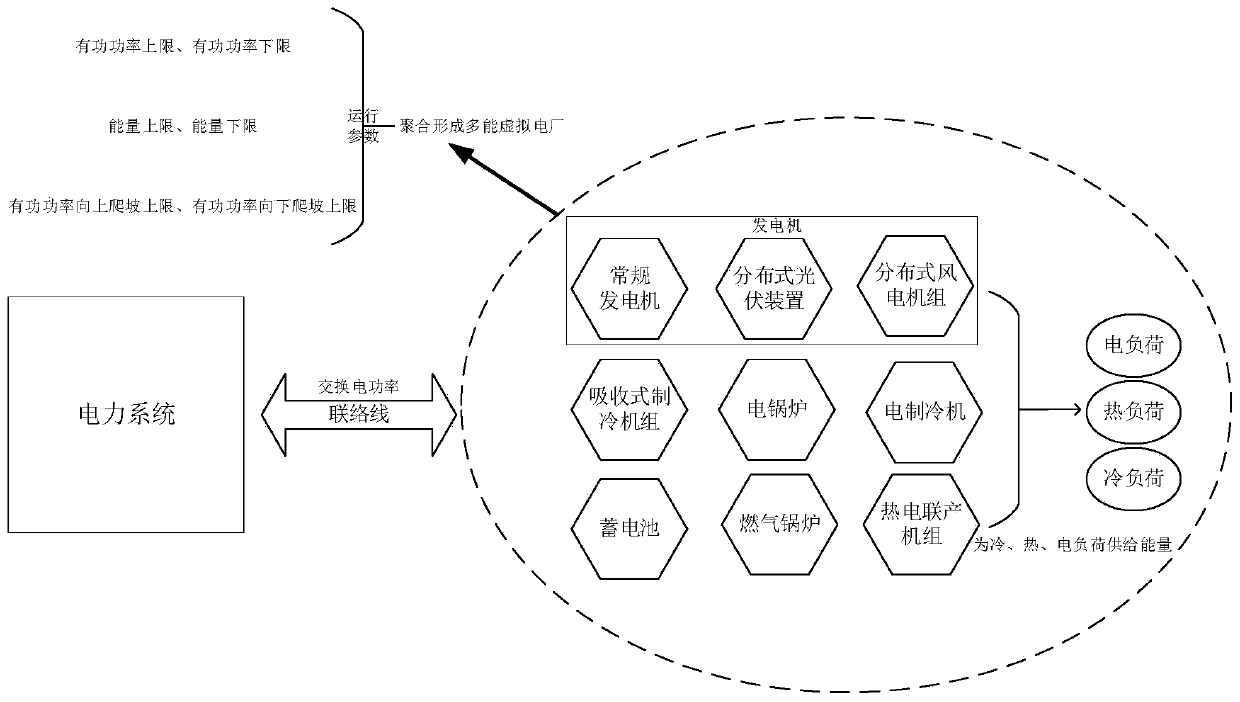
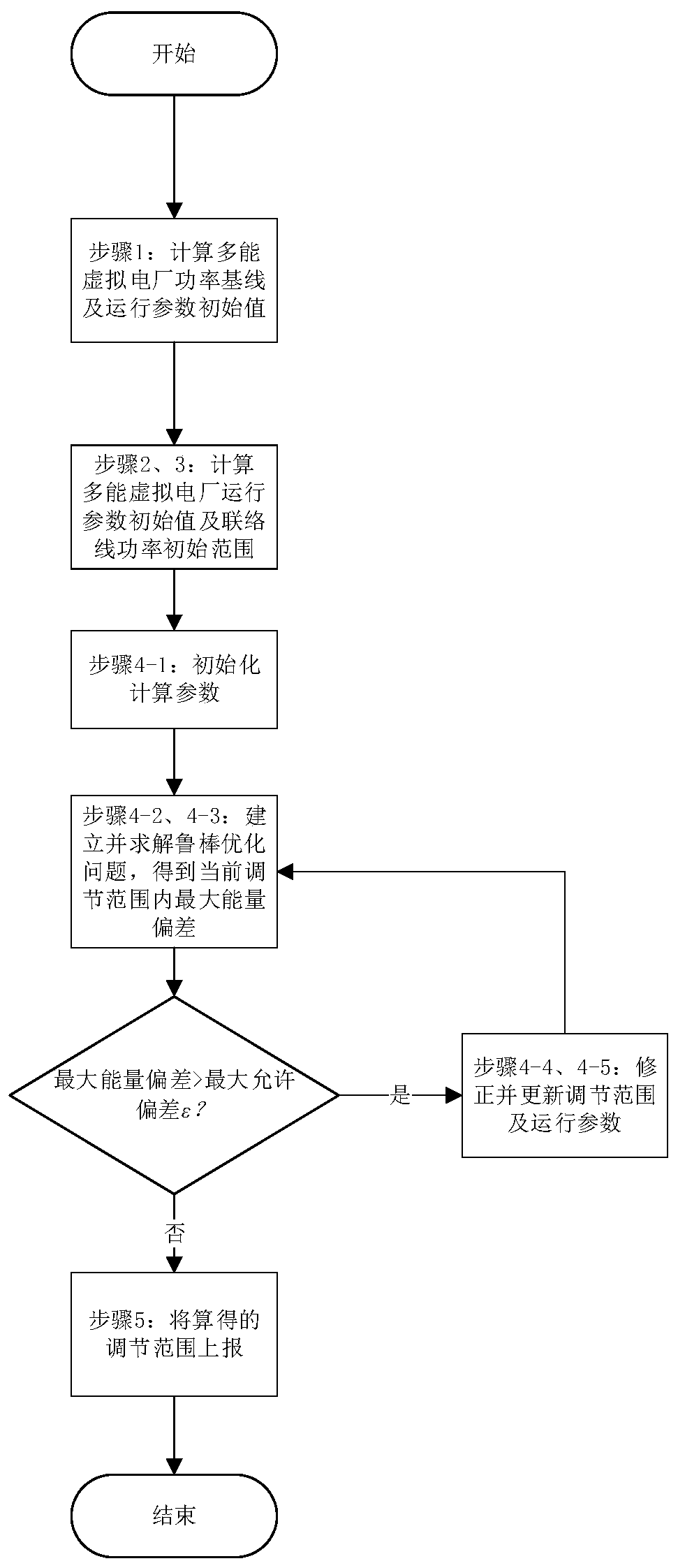
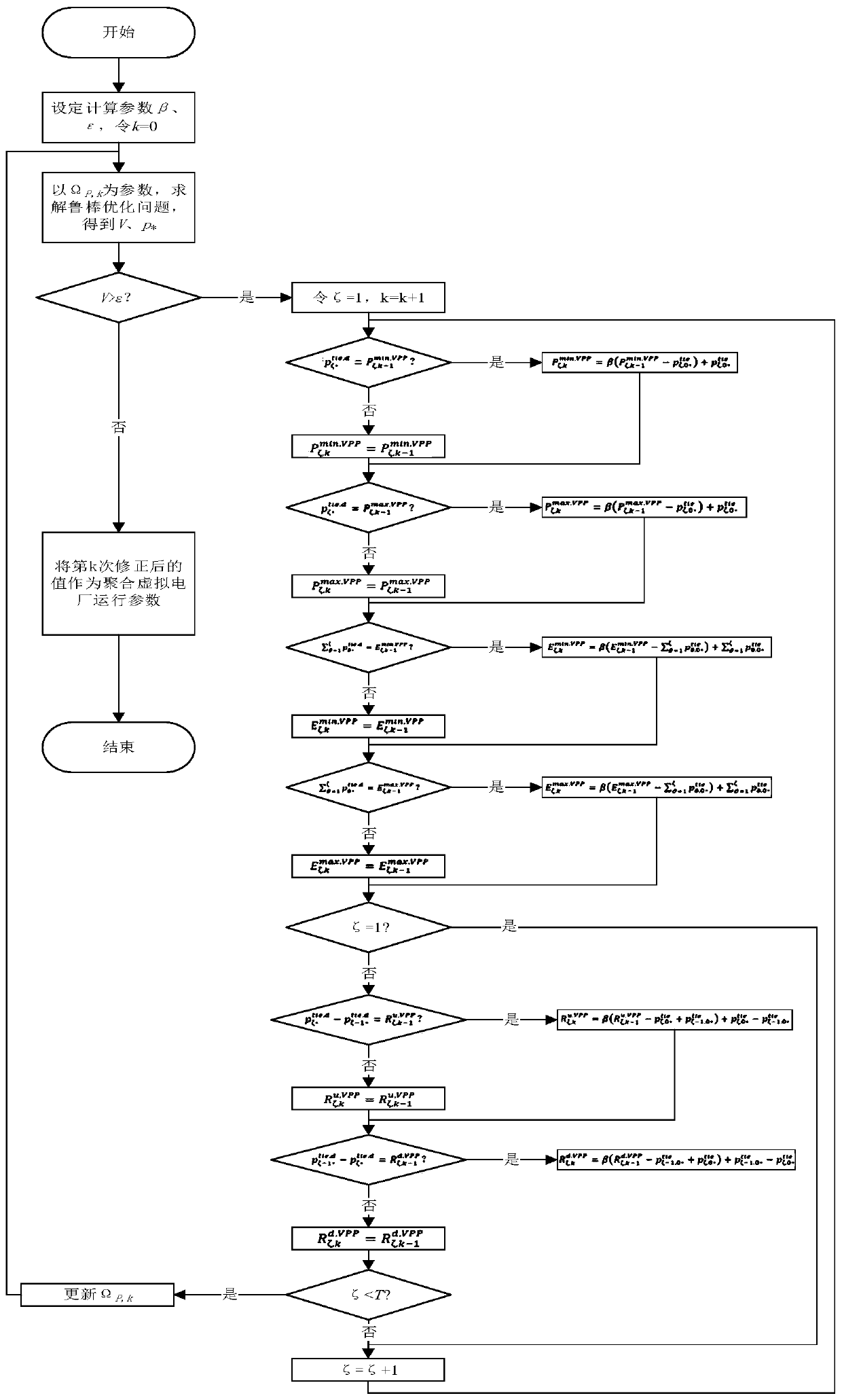
- This paper proposes a multi-energy virtual power plant operating parameter aggregation method based on robust modification. By establishing an optimization model and considering the coupling characteristics and different energy flow characteristics of multiple energy sources, a flexibility model of the virtual power plant is formed, and is modified by a robust optimization method. The initial operating parameters ensure that the virtual power plant can follow the dispatch plan of the power system dispatch center.

Virtual power plant multivariate main body aggregation adjustment capability quantitative evaluation method and system
PatentPendingCN120373879A
Innovation
- Establish a quantitative evaluation method for the adjustment capacity of multiple subjects of virtual power plants, build a three-level adjustment capacity data model of equipment-aggregation unit-virtual power plants by extracting common parameters, collect adjustable load resource data, calculate adjustment capacity indicators, and generate an evaluation report.


Energy Policy Framework for Multi-Energy VPP Systems
The regulatory landscape for multi-energy Virtual Power Plants (VPPs) requires a comprehensive policy framework that addresses the unique challenges of integrating diverse energy resources while maintaining grid stability and market efficiency. Current energy policies were primarily designed for traditional centralized power systems and often lack the flexibility needed to accommodate the dynamic nature of VPPs that combine renewable generation, energy storage, and demand response capabilities.
Regulatory harmonization across different energy sectors presents a fundamental challenge, as multi-energy VPPs operate at the intersection of electricity, heating, cooling, and transportation systems. Existing policies typically govern these sectors independently, creating regulatory silos that hinder the seamless integration of multi-energy resources. A unified policy framework must establish clear guidelines for cross-sector energy trading, resource aggregation, and system coordination while ensuring compliance with safety and reliability standards.
Market participation rules require significant adaptation to enable multi-energy VPPs to compete effectively in various energy markets. Traditional market structures often restrict participation based on technology type or capacity thresholds, potentially excluding smaller distributed resources that form the backbone of VPP operations. Policy frameworks must define new market categories and participation mechanisms that recognize the unique value propositions of aggregated multi-energy resources.
Grid code modifications are essential to accommodate the bidirectional energy flows and rapid response capabilities of multi-energy VPPs. Existing grid codes typically assume unidirectional power flow from large centralized generators to consumers, but VPPs introduce complex interaction patterns that require updated technical standards for grid connection, power quality, and system services provision.
Data governance and privacy regulations must address the extensive data collection and sharing requirements inherent in multi-energy VPP operations. These systems rely on real-time monitoring and control of distributed assets, raising concerns about consumer privacy, data security, and competitive information protection. Policy frameworks must establish clear protocols for data access, sharing, and protection while enabling the operational flexibility required for effective VPP management.
Incentive structures and support mechanisms need realignment to promote multi-energy VPP deployment while ensuring fair cost allocation among market participants. Traditional subsidy schemes often favor specific technologies rather than system-level benefits, potentially creating market distortions that undermine the economic viability of integrated multi-energy solutions.
Regulatory harmonization across different energy sectors presents a fundamental challenge, as multi-energy VPPs operate at the intersection of electricity, heating, cooling, and transportation systems. Existing policies typically govern these sectors independently, creating regulatory silos that hinder the seamless integration of multi-energy resources. A unified policy framework must establish clear guidelines for cross-sector energy trading, resource aggregation, and system coordination while ensuring compliance with safety and reliability standards.
Market participation rules require significant adaptation to enable multi-energy VPPs to compete effectively in various energy markets. Traditional market structures often restrict participation based on technology type or capacity thresholds, potentially excluding smaller distributed resources that form the backbone of VPP operations. Policy frameworks must define new market categories and participation mechanisms that recognize the unique value propositions of aggregated multi-energy resources.
Grid code modifications are essential to accommodate the bidirectional energy flows and rapid response capabilities of multi-energy VPPs. Existing grid codes typically assume unidirectional power flow from large centralized generators to consumers, but VPPs introduce complex interaction patterns that require updated technical standards for grid connection, power quality, and system services provision.
Data governance and privacy regulations must address the extensive data collection and sharing requirements inherent in multi-energy VPP operations. These systems rely on real-time monitoring and control of distributed assets, raising concerns about consumer privacy, data security, and competitive information protection. Policy frameworks must establish clear protocols for data access, sharing, and protection while enabling the operational flexibility required for effective VPP management.
Incentive structures and support mechanisms need realignment to promote multi-energy VPP deployment while ensuring fair cost allocation among market participants. Traditional subsidy schemes often favor specific technologies rather than system-level benefits, potentially creating market distortions that undermine the economic viability of integrated multi-energy solutions.
Grid Stability Impact Assessment for Integrated VPPs
Grid stability assessment for integrated Virtual Power Plants (VPPs) represents a critical evaluation framework that examines how multi-energy VPP systems influence electrical grid performance and reliability. This assessment encompasses the dynamic interactions between distributed energy resources, storage systems, and controllable loads within the VPP ecosystem, focusing on their collective impact on grid frequency, voltage stability, and power quality parameters.
The primary concern in grid stability assessment involves analyzing the bidirectional power flows generated by integrated VPPs, particularly during peak demand periods and renewable energy intermittency events. Multi-energy VPPs introduce complex load patterns that can either enhance or compromise grid stability depending on their operational strategies and real-time coordination mechanisms. The assessment must evaluate how rapidly VPPs can respond to grid disturbances and their capability to provide ancillary services such as frequency regulation and voltage support.
Voltage stability analysis forms a cornerstone of VPP grid impact assessment, examining how distributed generation and storage assets affect local and system-wide voltage profiles. The integration of multiple energy vectors including electricity, heat, and gas creates interdependencies that can propagate stability issues across different infrastructure networks. Assessment methodologies must account for the stochastic nature of renewable energy sources within VPPs and their potential to cause voltage fluctuations or harmonic distortions.
Frequency stability evaluation focuses on the VPP's contribution to system inertia and its ability to maintain grid frequency within acceptable operational limits. Modern VPPs equipped with advanced control systems can provide synthetic inertia through battery storage and smart inverter technologies, potentially improving overall grid resilience. However, the assessment must also consider scenarios where large VPP disconnections could trigger frequency excursions or cascading failures.
The temporal dynamics of grid stability impact require sophisticated modeling approaches that capture both short-term transient responses and long-term operational patterns. Assessment frameworks must incorporate probabilistic analysis methods to evaluate VPP performance under various grid contingency scenarios, including transmission line outages, generator failures, and extreme weather events that could simultaneously affect multiple distributed resources within the VPP portfolio.
The primary concern in grid stability assessment involves analyzing the bidirectional power flows generated by integrated VPPs, particularly during peak demand periods and renewable energy intermittency events. Multi-energy VPPs introduce complex load patterns that can either enhance or compromise grid stability depending on their operational strategies and real-time coordination mechanisms. The assessment must evaluate how rapidly VPPs can respond to grid disturbances and their capability to provide ancillary services such as frequency regulation and voltage support.
Voltage stability analysis forms a cornerstone of VPP grid impact assessment, examining how distributed generation and storage assets affect local and system-wide voltage profiles. The integration of multiple energy vectors including electricity, heat, and gas creates interdependencies that can propagate stability issues across different infrastructure networks. Assessment methodologies must account for the stochastic nature of renewable energy sources within VPPs and their potential to cause voltage fluctuations or harmonic distortions.
Frequency stability evaluation focuses on the VPP's contribution to system inertia and its ability to maintain grid frequency within acceptable operational limits. Modern VPPs equipped with advanced control systems can provide synthetic inertia through battery storage and smart inverter technologies, potentially improving overall grid resilience. However, the assessment must also consider scenarios where large VPP disconnections could trigger frequency excursions or cascading failures.
The temporal dynamics of grid stability impact require sophisticated modeling approaches that capture both short-term transient responses and long-term operational patterns. Assessment frameworks must incorporate probabilistic analysis methods to evaluate VPP performance under various grid contingency scenarios, including transmission line outages, generator failures, and extreme weather events that could simultaneously affect multiple distributed resources within the VPP portfolio.
Unlock deeper insights with PatSnap Eureka Quick Research — get a full tech report to explore trends and direct your research. Try now!
Generate Your Research Report Instantly with AI Agent
Supercharge your innovation with PatSnap Eureka AI Agent Platform!