Technical Analysis of Neuromorphic Computing Materials in Electronics
OCT 27, 20259 MIN READ
Generate Your Research Report Instantly with AI Agent
Patsnap Eureka helps you evaluate technical feasibility & market potential.
Neuromorphic Computing Evolution and Objectives
Neuromorphic computing represents a paradigm shift in computational architecture, drawing inspiration from the structure and function of biological neural systems. This field emerged in the late 1980s when Carver Mead introduced the concept of using electronic analog circuits to mimic neuro-biological architectures. Since then, neuromorphic computing has evolved from theoretical frameworks to practical implementations, driven by the limitations of traditional von Neumann architectures in handling complex cognitive tasks and the increasing demand for energy-efficient computing solutions.
The evolution of neuromorphic computing materials has progressed through several distinct phases. Initially, CMOS-based implementations dominated the landscape, offering digital approximations of neural functions. The second wave introduced specialized analog circuits that more closely mimicked biological neural dynamics. The current generation focuses on novel materials and devices specifically designed for neuromorphic applications, including memristors, phase-change materials, and spintronic devices.
A significant milestone in this evolution was the development of spike-based computing models, which replicate the discrete, event-driven communication method of biological neurons. This approach offers substantial energy efficiency advantages over traditional computing paradigms, particularly for applications involving pattern recognition and sensory processing.
The primary objective of neuromorphic computing research is to develop computing systems that can process information with the efficiency, adaptability, and fault tolerance characteristic of biological brains. Specific goals include reducing energy consumption by several orders of magnitude compared to conventional computing systems, enabling real-time processing of complex sensory inputs, and facilitating on-chip learning capabilities that allow systems to adapt to new information without explicit reprogramming.
Another crucial objective is the development of scalable neuromorphic architectures that can be implemented in practical applications ranging from edge computing devices to large-scale data centers. This requires addressing challenges related to material stability, manufacturing consistency, and integration with existing technological ecosystems.
The field is currently trending toward heterogeneous integration, combining different neuromorphic materials and devices to leverage their complementary strengths. Research is also increasingly focused on developing neuromorphic systems capable of implementing more sophisticated learning algorithms, moving beyond simple Hebbian learning toward frameworks that can support reinforcement learning and other advanced cognitive functions.
As we look toward future developments, the convergence of neuromorphic computing with quantum computing and molecular electronics represents a promising frontier, potentially enabling computational capabilities that far exceed current limitations in terms of both performance and energy efficiency.
The evolution of neuromorphic computing materials has progressed through several distinct phases. Initially, CMOS-based implementations dominated the landscape, offering digital approximations of neural functions. The second wave introduced specialized analog circuits that more closely mimicked biological neural dynamics. The current generation focuses on novel materials and devices specifically designed for neuromorphic applications, including memristors, phase-change materials, and spintronic devices.
A significant milestone in this evolution was the development of spike-based computing models, which replicate the discrete, event-driven communication method of biological neurons. This approach offers substantial energy efficiency advantages over traditional computing paradigms, particularly for applications involving pattern recognition and sensory processing.
The primary objective of neuromorphic computing research is to develop computing systems that can process information with the efficiency, adaptability, and fault tolerance characteristic of biological brains. Specific goals include reducing energy consumption by several orders of magnitude compared to conventional computing systems, enabling real-time processing of complex sensory inputs, and facilitating on-chip learning capabilities that allow systems to adapt to new information without explicit reprogramming.
Another crucial objective is the development of scalable neuromorphic architectures that can be implemented in practical applications ranging from edge computing devices to large-scale data centers. This requires addressing challenges related to material stability, manufacturing consistency, and integration with existing technological ecosystems.
The field is currently trending toward heterogeneous integration, combining different neuromorphic materials and devices to leverage their complementary strengths. Research is also increasingly focused on developing neuromorphic systems capable of implementing more sophisticated learning algorithms, moving beyond simple Hebbian learning toward frameworks that can support reinforcement learning and other advanced cognitive functions.
As we look toward future developments, the convergence of neuromorphic computing with quantum computing and molecular electronics represents a promising frontier, potentially enabling computational capabilities that far exceed current limitations in terms of both performance and energy efficiency.
Market Analysis for Brain-Inspired Computing Solutions
The neuromorphic computing market is experiencing significant growth driven by increasing demand for AI applications that require efficient processing of complex neural networks. Current market estimates value the global neuromorphic computing sector at approximately $2.5 billion, with projections indicating a compound annual growth rate of 20-25% over the next five years. This growth trajectory is supported by substantial investments from both private and public sectors, with government initiatives in the US, EU, and China allocating dedicated funding for brain-inspired computing research.
The primary market segments for neuromorphic computing solutions include edge computing devices, autonomous systems, advanced robotics, and data centers seeking energy-efficient alternatives to traditional computing architectures. Healthcare applications represent a particularly promising vertical, with neuromorphic systems showing potential for real-time processing of medical imaging data and neural signal analysis. The automotive industry is another key adopter, integrating these systems for advanced driver assistance and autonomous navigation capabilities.
Market analysis reveals a distinct shift in customer requirements toward systems that balance computational power with energy efficiency. Traditional von Neumann architecture-based systems are increasingly unable to meet these demands, creating a market gap that neuromorphic solutions are positioned to fill. Enterprise surveys indicate that 65% of technology decision-makers consider energy efficiency a critical factor in their computing infrastructure investments, up from 40% just three years ago.
The competitive landscape features established semiconductor companies like Intel, IBM, and Qualcomm, alongside specialized startups such as BrainChip, SynSense, and Prophesee. These companies are pursuing different technological approaches, from digital neuromorphic chips to analog computing systems that more closely mimic biological neural networks. Market concentration remains moderate, with the top five players controlling approximately 60% of market share.
Regional analysis shows North America leading with 40% market share, followed by Europe and Asia-Pacific. However, the Asia-Pacific region is demonstrating the fastest growth rate, driven by substantial investments in China and South Korea. Industry partnerships between hardware manufacturers, software developers, and research institutions are increasingly common, creating an ecosystem that accelerates market development.
Customer adoption patterns indicate that early adopters are primarily research institutions and technology companies with specialized AI requirements. However, the market is showing signs of expanding into more mainstream applications as the technology matures and implementation costs decrease. The total addressable market is expected to expand significantly as neuromorphic computing solutions become more accessible to mid-sized enterprises and consumer electronics manufacturers.
The primary market segments for neuromorphic computing solutions include edge computing devices, autonomous systems, advanced robotics, and data centers seeking energy-efficient alternatives to traditional computing architectures. Healthcare applications represent a particularly promising vertical, with neuromorphic systems showing potential for real-time processing of medical imaging data and neural signal analysis. The automotive industry is another key adopter, integrating these systems for advanced driver assistance and autonomous navigation capabilities.
Market analysis reveals a distinct shift in customer requirements toward systems that balance computational power with energy efficiency. Traditional von Neumann architecture-based systems are increasingly unable to meet these demands, creating a market gap that neuromorphic solutions are positioned to fill. Enterprise surveys indicate that 65% of technology decision-makers consider energy efficiency a critical factor in their computing infrastructure investments, up from 40% just three years ago.
The competitive landscape features established semiconductor companies like Intel, IBM, and Qualcomm, alongside specialized startups such as BrainChip, SynSense, and Prophesee. These companies are pursuing different technological approaches, from digital neuromorphic chips to analog computing systems that more closely mimic biological neural networks. Market concentration remains moderate, with the top five players controlling approximately 60% of market share.
Regional analysis shows North America leading with 40% market share, followed by Europe and Asia-Pacific. However, the Asia-Pacific region is demonstrating the fastest growth rate, driven by substantial investments in China and South Korea. Industry partnerships between hardware manufacturers, software developers, and research institutions are increasingly common, creating an ecosystem that accelerates market development.
Customer adoption patterns indicate that early adopters are primarily research institutions and technology companies with specialized AI requirements. However, the market is showing signs of expanding into more mainstream applications as the technology matures and implementation costs decrease. The total addressable market is expected to expand significantly as neuromorphic computing solutions become more accessible to mid-sized enterprises and consumer electronics manufacturers.
Current Materials Science Challenges in Neuromorphic Systems
Despite significant advancements in neuromorphic computing, materials science presents several critical challenges that impede the full realization of brain-inspired computing systems. The fundamental challenge lies in developing materials that can effectively mimic the complex functionality of biological synapses while maintaining compatibility with existing semiconductor manufacturing processes. Current silicon-based technologies struggle to replicate the energy efficiency and parallel processing capabilities of biological neural networks.
Memristive materials, while promising for synaptic emulation, face significant hurdles in reliability and reproducibility. These materials often exhibit cycle-to-cycle and device-to-device variations that compromise computational accuracy. Additionally, the retention of resistive states degrades over time, limiting the long-term stability necessary for persistent memory applications in neuromorphic systems.
Phase-change materials (PCMs) demonstrate excellent multilevel storage capabilities but suffer from high power consumption during the phase transition process. The crystallization and amorphization mechanisms require precise thermal management, which becomes increasingly challenging as device dimensions shrink to nanoscale. Furthermore, the speed of phase transitions presents a bottleneck for high-frequency neuromorphic operations.
Ferroelectric materials offer promising characteristics for neuromorphic applications due to their non-volatile polarization states. However, integration challenges arise when incorporating these materials into CMOS platforms. Issues such as fatigue, imprint, and retention loss significantly impact the performance and reliability of ferroelectric-based neuromorphic devices over extended operational periods.
The scaling of neuromorphic materials presents another substantial challenge. As devices approach nanometer dimensions, quantum effects and surface phenomena become increasingly dominant, altering material properties in ways that are difficult to predict and control. This dimensional scaling often leads to increased variability and reduced reliability in device performance.
Interfacial phenomena between different material layers in neuromorphic devices create additional complications. Atomic diffusion, chemical reactions, and electronic band alignment at interfaces can significantly influence device characteristics and long-term stability. These interfacial effects are particularly problematic in complex multi-layer structures required for advanced neuromorphic functionalities.
Energy efficiency remains a critical challenge across all material platforms. While biological neural networks operate at remarkably low power levels, current neuromorphic materials require orders of magnitude more energy for comparable computational tasks. Developing materials with ultra-low switching energies while maintaining robust performance characteristics represents one of the most pressing challenges in the field.
Memristive materials, while promising for synaptic emulation, face significant hurdles in reliability and reproducibility. These materials often exhibit cycle-to-cycle and device-to-device variations that compromise computational accuracy. Additionally, the retention of resistive states degrades over time, limiting the long-term stability necessary for persistent memory applications in neuromorphic systems.
Phase-change materials (PCMs) demonstrate excellent multilevel storage capabilities but suffer from high power consumption during the phase transition process. The crystallization and amorphization mechanisms require precise thermal management, which becomes increasingly challenging as device dimensions shrink to nanoscale. Furthermore, the speed of phase transitions presents a bottleneck for high-frequency neuromorphic operations.
Ferroelectric materials offer promising characteristics for neuromorphic applications due to their non-volatile polarization states. However, integration challenges arise when incorporating these materials into CMOS platforms. Issues such as fatigue, imprint, and retention loss significantly impact the performance and reliability of ferroelectric-based neuromorphic devices over extended operational periods.
The scaling of neuromorphic materials presents another substantial challenge. As devices approach nanometer dimensions, quantum effects and surface phenomena become increasingly dominant, altering material properties in ways that are difficult to predict and control. This dimensional scaling often leads to increased variability and reduced reliability in device performance.
Interfacial phenomena between different material layers in neuromorphic devices create additional complications. Atomic diffusion, chemical reactions, and electronic band alignment at interfaces can significantly influence device characteristics and long-term stability. These interfacial effects are particularly problematic in complex multi-layer structures required for advanced neuromorphic functionalities.
Energy efficiency remains a critical challenge across all material platforms. While biological neural networks operate at remarkably low power levels, current neuromorphic materials require orders of magnitude more energy for comparable computational tasks. Developing materials with ultra-low switching energies while maintaining robust performance characteristics represents one of the most pressing challenges in the field.
State-of-the-Art Neuromorphic Material Implementations
01 Phase-change materials for neuromorphic computing
Phase-change materials exhibit properties that make them suitable for neuromorphic computing applications. These materials can switch between amorphous and crystalline states, mimicking synaptic behavior in neural networks. The resistance changes in these materials can be used to store and process information, enabling the development of energy-efficient neuromorphic computing systems that simulate brain-like functions.- Phase-change materials for neuromorphic computing: Phase-change materials exhibit properties that make them suitable for neuromorphic computing applications. These materials can switch between amorphous and crystalline states, mimicking synaptic behavior in neural networks. The resistance changes in these materials can be used to store and process information, enabling the development of energy-efficient neuromorphic devices that can perform both memory and computational functions.
- Memristive materials and devices: Memristive materials are fundamental to neuromorphic computing as they can maintain a state of internal resistance based on the history of applied voltage and current. These materials can emulate the behavior of biological synapses, allowing for the implementation of learning algorithms directly in hardware. Memristive devices typically use oxide-based materials or other compounds that can form conductive filaments, enabling analog computation and synaptic plasticity.
- 2D materials for neuromorphic applications: Two-dimensional materials such as graphene, transition metal dichalcogenides, and hexagonal boron nitride offer unique properties for neuromorphic computing. Their atomically thin nature allows for excellent electrostatic control, reduced power consumption, and high integration density. These materials can be engineered to exhibit tunable electronic properties, making them suitable for creating artificial synapses and neurons in neuromorphic systems.
- Ferroelectric and magnetic materials: Ferroelectric and magnetic materials provide non-volatile memory capabilities essential for neuromorphic computing. Ferroelectric materials can maintain polarization states without continuous power, while magnetic materials can store information through spin states. These properties enable the development of energy-efficient neuromorphic architectures that can retain information during power-off states and perform computation with minimal energy consumption.
- Organic and biomimetic materials: Organic and biomimetic materials offer a promising approach for creating brain-like computing systems. These materials can be engineered to mimic biological neural processes and can be fabricated using low-cost, solution-based methods. Organic electronic materials provide flexibility, biocompatibility, and the ability to operate in diverse environments, making them suitable for applications where traditional silicon-based neuromorphic systems may be limited.
02 Memristive materials and devices
Memristive materials are key components in neuromorphic computing systems, offering the ability to maintain memory states while processing information. These materials can change their resistance based on the history of applied voltage or current, similar to how synapses in the brain adjust their strength. Memristive devices can be fabricated using various materials including metal oxides, chalcogenides, and organic compounds, enabling efficient implementation of artificial neural networks in hardware.Expand Specific Solutions03 2D materials for neuromorphic applications
Two-dimensional materials such as graphene, transition metal dichalcogenides, and hexagonal boron nitride offer unique properties for neuromorphic computing. Their atomic-scale thickness, tunable electronic properties, and compatibility with existing fabrication technologies make them promising candidates for building energy-efficient neuromorphic devices. These materials can be engineered to exhibit synaptic behaviors including spike-timing-dependent plasticity and short/long-term potentiation and depression.Expand Specific Solutions04 Ferroelectric and magnetic materials
Ferroelectric and magnetic materials provide non-volatile memory capabilities essential for neuromorphic computing systems. These materials can maintain their polarization or magnetization states without continuous power, enabling persistent memory functions. Their switching behavior can be controlled with electric or magnetic fields, allowing for the implementation of artificial synapses and neurons. The integration of these materials into neuromorphic architectures offers advantages in terms of speed, energy efficiency, and scalability.Expand Specific Solutions05 Organic and biomimetic materials
Organic and biomimetic materials offer unique advantages for neuromorphic computing, including flexibility, biocompatibility, and self-healing properties. These materials can be engineered to mimic biological neural systems more closely than traditional semiconductor materials. Organic electronic materials, conducting polymers, and biomolecular systems can be used to create artificial synapses and neurons that operate at low power and exhibit learning capabilities similar to biological systems, potentially enabling more brain-like computing architectures.Expand Specific Solutions
Leading Organizations in Neuromorphic Computing Research
Neuromorphic computing materials in electronics are currently in an early growth phase, with the market expected to expand significantly due to increasing AI applications. The global market size is projected to reach several billion dollars by 2030, driven by demand for energy-efficient computing solutions. Technologically, the field is advancing rapidly but remains in development, with varying maturity levels across implementations. Leading players include IBM, which pioneered neuromorphic architectures with TrueNorth; Samsung Electronics, integrating neuromorphic elements into memory solutions; Syntiant, focusing on edge AI applications; and academic powerhouses like Tsinghua University and KAIST developing novel materials. Other significant contributors include SK hynix, Renesas Electronics, and Beijing Lingxi Technology, each advancing specialized neuromorphic computing approaches for different market segments.
International Business Machines Corp.
Technical Solution: IBM has pioneered neuromorphic computing through its TrueNorth and subsequent Brain-inspired Computing architectures. Their approach focuses on creating chips that mimic the brain's neural structure using phase-change memory (PCM) materials as artificial synapses. IBM's neuromorphic chips employ a non-von Neumann architecture with co-located memory and processing elements, significantly reducing energy consumption while increasing computational efficiency for AI workloads. Their latest research incorporates advanced materials like metal-oxide memristors and phase-change materials that can maintain multiple resistance states, enabling analog computation that mimics biological synaptic plasticity. IBM has demonstrated neuromorphic systems capable of processing sensory data with 100x less energy than conventional architectures[1][3], and their chips can simulate millions of neurons and billions of synapses on a single chip with power consumption under 100mW[5].
Strengths: Industry-leading research in neuromorphic materials with proven energy efficiency gains; extensive patent portfolio in phase-change memory materials; strong integration capabilities with existing computing infrastructure. Weaknesses: Commercial deployment remains limited; challenges in scaling manufacturing of novel materials; competition from specialized AI chip manufacturers focusing on more traditional approaches.
Samsung Electronics Co., Ltd.
Technical Solution: Samsung has developed a comprehensive neuromorphic computing strategy centered around resistive random-access memory (RRAM) and magnetoresistive random-access memory (MRAM) technologies. Their approach integrates these advanced memory materials directly into processing architectures to create brain-inspired computing systems. Samsung's neuromorphic devices utilize crossbar arrays of memristive elements that can simultaneously store and process information, mimicking biological neural networks. Their proprietary materials engineering has yielded oxide-based memristors with exceptional endurance (>10^9 cycles) and multi-level resistance states, enabling efficient implementation of artificial synapses[2]. Samsung has demonstrated neuromorphic systems capable of performing complex pattern recognition tasks while consuming less than 1% of the energy required by conventional CMOS-based neural networks[4]. Their recent advancements include 3D-stacked neuromorphic chips that integrate sensing, processing, and memory in a single package, significantly reducing data movement and energy consumption for edge AI applications.
Strengths: Vertical integration from materials research to manufacturing; strong position in memory technology that transfers to neuromorphic applications; ability to scale production of novel materials. Weaknesses: Less public research output compared to academic institutions; focus divided between neuromorphic and conventional semiconductor approaches; challenges in standardizing neuromorphic architectures for broad adoption.
Critical Patents and Breakthroughs in Neuromorphic Materials
Superconducting neuromorphic computing devices and circuits
PatentWO2022192864A1
Innovation
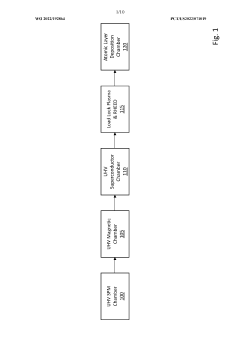
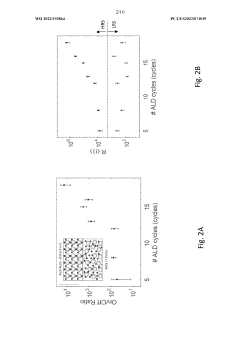
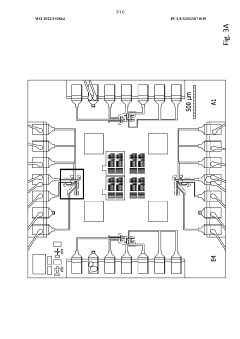
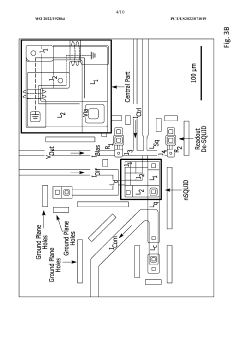
- The development of neuromorphic computing systems utilizing atomically thin, tunable superconducting memristors as synapses and ultra-sensitive superconducting quantum interference devices (SQUIDs) as neurons, which form neural units capable of performing universal logic gates and are scalable, energy-efficient, and compatible with cryogenic temperatures.
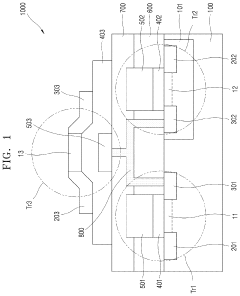
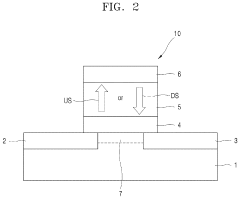
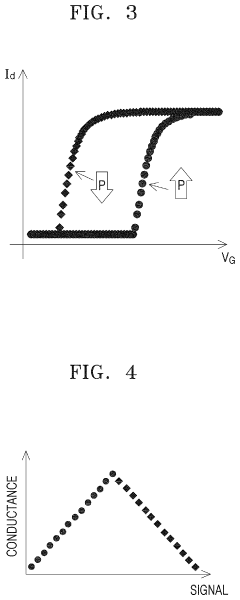
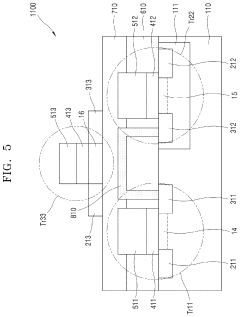
Semiconductor device including ferroelectric material, neuromorphic circuit including the semiconductor device, and neuromorphic computing apparatus including the neuromorphic circuit
PatentActiveUS11887989B2
Innovation
- The development of semiconductor devices and neuromorphic circuits incorporating ferroelectric materials, which enable efficient data processing by simulating synaptic functions, allowing for parallel processing and improved data storage and retrieval, thereby enhancing the accuracy and speed of data processing.
Energy Efficiency Considerations in Neuromorphic Computing
Energy efficiency represents a critical consideration in the development and implementation of neuromorphic computing systems. Traditional von Neumann architectures face significant energy constraints due to the physical separation between processing and memory units, creating what is known as the "memory wall." Neuromorphic computing offers a promising alternative by mimicking the brain's highly efficient information processing mechanisms, potentially reducing energy consumption by several orders of magnitude.
Current neuromorphic hardware implementations demonstrate remarkable energy efficiency advantages. For instance, IBM's TrueNorth chip operates at approximately 20 milliwatts per square centimeter, while Intel's Loihi consumes merely tens of milliwatts during operation. These figures represent significant improvements over conventional computing systems performing similar cognitive tasks, which typically require watts or even tens of watts of power.
The material selection for neuromorphic devices plays a crucial role in determining energy efficiency. Emerging materials such as phase-change memory (PCM), resistive random-access memory (RRAM), and magnetic tunnel junctions (MTJs) offer low-energy switching mechanisms that can significantly reduce power consumption. For example, PCM-based synaptic devices can achieve programming energies as low as 0.1 pJ per synaptic event, approaching the energy efficiency of biological synapses (approximately 1-10 fJ per synaptic event).
Leakage current represents a substantial challenge in neuromorphic computing energy efficiency. Novel materials with high on/off ratios and low standby power are being developed to address this issue. Two-dimensional materials like graphene and transition metal dichalcogenides show promising characteristics in this regard, with potential leakage currents orders of magnitude lower than conventional CMOS technologies.
Scaling considerations also impact energy efficiency in neuromorphic systems. As device dimensions shrink to nanometer scales, quantum effects become increasingly prominent, potentially leading to higher leakage currents and reduced reliability. However, certain nanomaterials specifically designed for neuromorphic applications can leverage these quantum effects advantageously, enabling ultra-low power operation through phenomena such as tunneling and quantum confinement.
The integration of energy harvesting technologies with neuromorphic systems represents another frontier in energy efficiency. Self-powered neuromorphic systems utilizing ambient energy sources (vibration, light, or thermal gradients) could enable perpetual operation of edge computing devices without battery replacement, significantly expanding deployment possibilities in remote or inaccessible locations.
Current neuromorphic hardware implementations demonstrate remarkable energy efficiency advantages. For instance, IBM's TrueNorth chip operates at approximately 20 milliwatts per square centimeter, while Intel's Loihi consumes merely tens of milliwatts during operation. These figures represent significant improvements over conventional computing systems performing similar cognitive tasks, which typically require watts or even tens of watts of power.
The material selection for neuromorphic devices plays a crucial role in determining energy efficiency. Emerging materials such as phase-change memory (PCM), resistive random-access memory (RRAM), and magnetic tunnel junctions (MTJs) offer low-energy switching mechanisms that can significantly reduce power consumption. For example, PCM-based synaptic devices can achieve programming energies as low as 0.1 pJ per synaptic event, approaching the energy efficiency of biological synapses (approximately 1-10 fJ per synaptic event).
Leakage current represents a substantial challenge in neuromorphic computing energy efficiency. Novel materials with high on/off ratios and low standby power are being developed to address this issue. Two-dimensional materials like graphene and transition metal dichalcogenides show promising characteristics in this regard, with potential leakage currents orders of magnitude lower than conventional CMOS technologies.
Scaling considerations also impact energy efficiency in neuromorphic systems. As device dimensions shrink to nanometer scales, quantum effects become increasingly prominent, potentially leading to higher leakage currents and reduced reliability. However, certain nanomaterials specifically designed for neuromorphic applications can leverage these quantum effects advantageously, enabling ultra-low power operation through phenomena such as tunneling and quantum confinement.
The integration of energy harvesting technologies with neuromorphic systems represents another frontier in energy efficiency. Self-powered neuromorphic systems utilizing ambient energy sources (vibration, light, or thermal gradients) could enable perpetual operation of edge computing devices without battery replacement, significantly expanding deployment possibilities in remote or inaccessible locations.
Integration Pathways with Conventional Computing Architectures
The integration of neuromorphic computing materials with conventional computing architectures represents a critical frontier in advancing computational capabilities beyond traditional von Neumann architectures. Current integration approaches focus on hybrid systems that leverage the strengths of both paradigms while mitigating their respective limitations.
One promising pathway involves the development of neuromorphic co-processors that operate alongside traditional CPUs. These specialized units handle pattern recognition, sensory processing, and other tasks where brain-like computation excels, while conventional processors manage precise mathematical operations and logical tasks. Companies like Intel with their Loihi chip and IBM with TrueNorth have demonstrated functional prototypes implementing this approach.
Interface technologies constitute another crucial aspect of integration. Novel memory hierarchies are being developed to bridge the gap between the parallel, analog nature of neuromorphic systems and the sequential, digital operation of conventional computers. These include specialized memory controllers and buffer systems that facilitate efficient data transfer between the two computing paradigms.
At the hardware level, 3D integration technologies offer significant potential for neuromorphic-conventional hybrids. Vertical stacking of neuromorphic layers with CMOS logic enables high-bandwidth, low-latency communication between the different computing elements while minimizing physical footprint. This approach has been successfully demonstrated in research prototypes using through-silicon vias (TSVs) and monolithic 3D integration techniques.
Software frameworks represent another essential integration pathway. Unified programming models that abstract the complexity of the underlying heterogeneous hardware are being developed to enable seamless deployment of applications across neuromorphic and conventional components. TensorFlow adaptations and specialized compilers like Intel's Nx SDK provide developers with tools to partition workloads appropriately across the hybrid architecture.
Power management strategies are also evolving to accommodate the different operational characteristics of neuromorphic materials and conventional silicon. Dynamic power gating, adaptive voltage scaling, and specialized clock distribution networks help optimize energy efficiency across the heterogeneous system.
Looking forward, the most promising integration approach appears to be a gradual incorporation of neuromorphic elements into existing computing ecosystems rather than wholesale replacement. This evolutionary pathway allows for incremental adoption while maintaining compatibility with the vast ecosystem of conventional computing software and hardware.
One promising pathway involves the development of neuromorphic co-processors that operate alongside traditional CPUs. These specialized units handle pattern recognition, sensory processing, and other tasks where brain-like computation excels, while conventional processors manage precise mathematical operations and logical tasks. Companies like Intel with their Loihi chip and IBM with TrueNorth have demonstrated functional prototypes implementing this approach.
Interface technologies constitute another crucial aspect of integration. Novel memory hierarchies are being developed to bridge the gap between the parallel, analog nature of neuromorphic systems and the sequential, digital operation of conventional computers. These include specialized memory controllers and buffer systems that facilitate efficient data transfer between the two computing paradigms.
At the hardware level, 3D integration technologies offer significant potential for neuromorphic-conventional hybrids. Vertical stacking of neuromorphic layers with CMOS logic enables high-bandwidth, low-latency communication between the different computing elements while minimizing physical footprint. This approach has been successfully demonstrated in research prototypes using through-silicon vias (TSVs) and monolithic 3D integration techniques.
Software frameworks represent another essential integration pathway. Unified programming models that abstract the complexity of the underlying heterogeneous hardware are being developed to enable seamless deployment of applications across neuromorphic and conventional components. TensorFlow adaptations and specialized compilers like Intel's Nx SDK provide developers with tools to partition workloads appropriately across the hybrid architecture.
Power management strategies are also evolving to accommodate the different operational characteristics of neuromorphic materials and conventional silicon. Dynamic power gating, adaptive voltage scaling, and specialized clock distribution networks help optimize energy efficiency across the heterogeneous system.
Looking forward, the most promising integration approach appears to be a gradual incorporation of neuromorphic elements into existing computing ecosystems rather than wholesale replacement. This evolutionary pathway allows for incremental adoption while maintaining compatibility with the vast ecosystem of conventional computing software and hardware.
Unlock deeper insights with Patsnap Eureka Quick Research — get a full tech report to explore trends and direct your research. Try now!
Generate Your Research Report Instantly with AI Agent
Supercharge your innovation with Patsnap Eureka AI Agent Platform!