Telemetry vs SCADA: Best for IoT Applications
APR 3, 20269 MIN READ
Generate Your Research Report Instantly with AI Agent
Patsnap Eureka helps you evaluate technical feasibility & market potential.
IoT Telemetry and SCADA Technology Background and Objectives
The Internet of Things (IoT) ecosystem has fundamentally transformed industrial automation and monitoring paradigms, creating unprecedented demands for robust data acquisition and control systems. As billions of connected devices generate massive volumes of real-time data, organizations face critical decisions regarding the optimal technological frameworks for managing their IoT infrastructure. This technological landscape presents two primary approaches: traditional SCADA systems and modern telemetry solutions, each offering distinct advantages for different IoT deployment scenarios.
SCADA technology emerged in the 1960s as a centralized system designed for monitoring and controlling industrial processes across distributed locations. Originally developed for utilities and manufacturing sectors, SCADA systems have evolved to incorporate modern networking capabilities and enhanced human-machine interfaces. These systems excel in environments requiring real-time control, alarm management, and comprehensive operator oversight of critical infrastructure components.
Telemetry technology, conversely, represents a more distributed approach to data collection and transmission, focusing primarily on remote monitoring capabilities. Modern IoT telemetry systems leverage cloud computing, edge processing, and advanced analytics to handle diverse data streams from numerous sensors and devices. This approach emphasizes scalability, flexibility, and cost-effectiveness, making it particularly suitable for large-scale IoT deployments across various industries.
The convergence of these technologies with IoT applications has created new hybrid architectures that combine elements of both approaches. Organizations now seek solutions that can seamlessly integrate legacy SCADA infrastructure with modern telemetry capabilities, enabling comprehensive monitoring while maintaining operational continuity. This technological evolution reflects the growing complexity of industrial IoT environments and the need for adaptive, scalable monitoring solutions.
The primary objective of evaluating these technologies lies in determining optimal deployment strategies for specific IoT use cases. Key considerations include system scalability, real-time performance requirements, security protocols, integration capabilities, and total cost of ownership. Understanding these factors enables organizations to make informed decisions about their IoT infrastructure investments and long-term strategic positioning in an increasingly connected industrial landscape.
SCADA technology emerged in the 1960s as a centralized system designed for monitoring and controlling industrial processes across distributed locations. Originally developed for utilities and manufacturing sectors, SCADA systems have evolved to incorporate modern networking capabilities and enhanced human-machine interfaces. These systems excel in environments requiring real-time control, alarm management, and comprehensive operator oversight of critical infrastructure components.
Telemetry technology, conversely, represents a more distributed approach to data collection and transmission, focusing primarily on remote monitoring capabilities. Modern IoT telemetry systems leverage cloud computing, edge processing, and advanced analytics to handle diverse data streams from numerous sensors and devices. This approach emphasizes scalability, flexibility, and cost-effectiveness, making it particularly suitable for large-scale IoT deployments across various industries.
The convergence of these technologies with IoT applications has created new hybrid architectures that combine elements of both approaches. Organizations now seek solutions that can seamlessly integrate legacy SCADA infrastructure with modern telemetry capabilities, enabling comprehensive monitoring while maintaining operational continuity. This technological evolution reflects the growing complexity of industrial IoT environments and the need for adaptive, scalable monitoring solutions.
The primary objective of evaluating these technologies lies in determining optimal deployment strategies for specific IoT use cases. Key considerations include system scalability, real-time performance requirements, security protocols, integration capabilities, and total cost of ownership. Understanding these factors enables organizations to make informed decisions about their IoT infrastructure investments and long-term strategic positioning in an increasingly connected industrial landscape.
Market Demand Analysis for IoT Monitoring Solutions
The global IoT monitoring solutions market is experiencing unprecedented growth driven by digital transformation initiatives across industries. Manufacturing sectors are increasingly adopting smart factory concepts, requiring sophisticated monitoring systems to track equipment performance, energy consumption, and production metrics in real-time. This industrial evolution has created substantial demand for both traditional SCADA systems and modern telemetry solutions.
Healthcare and medical device industries represent another significant growth driver, where remote patient monitoring and medical equipment tracking have become critical. The COVID-19 pandemic accelerated adoption of IoT monitoring technologies, establishing new baseline requirements for continuous health parameter surveillance and medical asset management.
Smart city initiatives worldwide are generating massive demand for IoT monitoring infrastructure. Urban planners require comprehensive solutions to monitor traffic patterns, environmental conditions, utility consumption, and public safety systems. These applications often demand hybrid approaches combining SCADA's reliability with telemetry's flexibility and scalability.
The energy sector, including renewable energy installations, oil and gas operations, and utility companies, continues to be a primary market for IoT monitoring solutions. Wind farms, solar installations, and smart grid implementations require robust monitoring capabilities that can operate in harsh environments while providing real-time operational insights.
Agricultural technology adoption is creating new market segments for IoT monitoring, particularly in precision farming applications. Farmers increasingly rely on sensor networks to monitor soil conditions, weather patterns, and crop health, driving demand for cost-effective telemetry solutions that can cover vast geographical areas.
Transportation and logistics industries are embracing IoT monitoring for fleet management, cargo tracking, and supply chain optimization. These applications require solutions capable of handling mobile assets across diverse geographical regions, often favoring telemetry-based approaches over traditional SCADA implementations.
Market research indicates strong preference shifts toward cloud-based monitoring solutions, with organizations seeking reduced infrastructure costs and improved scalability. This trend particularly benefits telemetry systems that can leverage cloud computing resources more effectively than traditional SCADA architectures.
Regulatory compliance requirements across industries are also driving market demand, as organizations need comprehensive monitoring and reporting capabilities to meet environmental, safety, and quality standards.
Healthcare and medical device industries represent another significant growth driver, where remote patient monitoring and medical equipment tracking have become critical. The COVID-19 pandemic accelerated adoption of IoT monitoring technologies, establishing new baseline requirements for continuous health parameter surveillance and medical asset management.
Smart city initiatives worldwide are generating massive demand for IoT monitoring infrastructure. Urban planners require comprehensive solutions to monitor traffic patterns, environmental conditions, utility consumption, and public safety systems. These applications often demand hybrid approaches combining SCADA's reliability with telemetry's flexibility and scalability.
The energy sector, including renewable energy installations, oil and gas operations, and utility companies, continues to be a primary market for IoT monitoring solutions. Wind farms, solar installations, and smart grid implementations require robust monitoring capabilities that can operate in harsh environments while providing real-time operational insights.
Agricultural technology adoption is creating new market segments for IoT monitoring, particularly in precision farming applications. Farmers increasingly rely on sensor networks to monitor soil conditions, weather patterns, and crop health, driving demand for cost-effective telemetry solutions that can cover vast geographical areas.
Transportation and logistics industries are embracing IoT monitoring for fleet management, cargo tracking, and supply chain optimization. These applications require solutions capable of handling mobile assets across diverse geographical regions, often favoring telemetry-based approaches over traditional SCADA implementations.
Market research indicates strong preference shifts toward cloud-based monitoring solutions, with organizations seeking reduced infrastructure costs and improved scalability. This trend particularly benefits telemetry systems that can leverage cloud computing resources more effectively than traditional SCADA architectures.
Regulatory compliance requirements across industries are also driving market demand, as organizations need comprehensive monitoring and reporting capabilities to meet environmental, safety, and quality standards.
Current State and Challenges of Telemetry vs SCADA in IoT
The current landscape of telemetry and SCADA systems in IoT applications presents a complex technological ecosystem with distinct capabilities and limitations. Traditional SCADA systems, originally designed for industrial automation and control, have evolved to incorporate IoT connectivity but remain fundamentally architecture-heavy solutions. These systems excel in real-time monitoring and control of critical infrastructure, offering robust data acquisition capabilities and proven reliability in mission-critical environments.
Modern telemetry solutions have emerged as lightweight alternatives, specifically engineered for IoT deployments. These systems prioritize efficient data transmission, reduced bandwidth consumption, and seamless integration with cloud-based analytics platforms. Telemetry protocols such as MQTT, CoAP, and LoRaWAN have gained significant traction due to their ability to handle massive device populations with minimal overhead.
The integration challenges between these technologies and IoT ecosystems are multifaceted. SCADA systems face significant hurdles in scalability, as their centralized architecture struggles to accommodate the exponential growth of IoT devices. Legacy SCADA implementations often require substantial infrastructure investments and specialized expertise, creating barriers for organizations seeking rapid IoT deployment.
Telemetry systems encounter different obstacles, primarily related to data reliability and real-time control capabilities. While excelling in data collection and transmission efficiency, many telemetry solutions lack the deterministic response times and fail-safe mechanisms that SCADA systems provide. This limitation becomes critical in applications requiring immediate response to system anomalies or safety-critical conditions.
Interoperability remains a persistent challenge across both domains. The fragmented landscape of communication protocols, data formats, and security standards creates integration complexities when organizations attempt to bridge traditional SCADA infrastructure with modern IoT telemetry networks. Security vulnerabilities represent another significant concern, as both systems must address evolving cybersecurity threats while maintaining operational continuity.
Geographic distribution of technological expertise further compounds these challenges. Regions with established industrial automation infrastructure tend to favor SCADA-centric approaches, while emerging markets often adopt telemetry-first strategies due to lower implementation costs and reduced complexity requirements.
Modern telemetry solutions have emerged as lightweight alternatives, specifically engineered for IoT deployments. These systems prioritize efficient data transmission, reduced bandwidth consumption, and seamless integration with cloud-based analytics platforms. Telemetry protocols such as MQTT, CoAP, and LoRaWAN have gained significant traction due to their ability to handle massive device populations with minimal overhead.
The integration challenges between these technologies and IoT ecosystems are multifaceted. SCADA systems face significant hurdles in scalability, as their centralized architecture struggles to accommodate the exponential growth of IoT devices. Legacy SCADA implementations often require substantial infrastructure investments and specialized expertise, creating barriers for organizations seeking rapid IoT deployment.
Telemetry systems encounter different obstacles, primarily related to data reliability and real-time control capabilities. While excelling in data collection and transmission efficiency, many telemetry solutions lack the deterministic response times and fail-safe mechanisms that SCADA systems provide. This limitation becomes critical in applications requiring immediate response to system anomalies or safety-critical conditions.
Interoperability remains a persistent challenge across both domains. The fragmented landscape of communication protocols, data formats, and security standards creates integration complexities when organizations attempt to bridge traditional SCADA infrastructure with modern IoT telemetry networks. Security vulnerabilities represent another significant concern, as both systems must address evolving cybersecurity threats while maintaining operational continuity.
Geographic distribution of technological expertise further compounds these challenges. Regions with established industrial automation infrastructure tend to favor SCADA-centric approaches, while emerging markets often adopt telemetry-first strategies due to lower implementation costs and reduced complexity requirements.
Current Technical Solutions for IoT Data Collection
01 Integration of telemetry systems with SCADA for remote monitoring
Telemetry systems can be integrated with SCADA (Supervisory Control and Data Acquisition) platforms to enable remote monitoring and data collection from distributed field devices. This integration allows real-time transmission of operational data from remote locations to central control stations, facilitating improved situational awareness and decision-making. The telemetry data can include measurements such as pressure, temperature, flow rates, and equipment status, which are transmitted wirelessly or through communication networks to the SCADA system for processing and visualization.- Integration of telemetry systems with SCADA for real-time monitoring: Telemetry systems can be integrated with SCADA (Supervisory Control and Data Acquisition) platforms to enable real-time monitoring of remote assets and infrastructure. This integration allows for continuous data collection from distributed sensors and devices, transmitting critical operational parameters to central control systems. The combination enhances situational awareness and enables operators to make informed decisions based on current system status and performance metrics.
- Wireless communication protocols for telemetry data transmission: Various wireless communication protocols can be employed to transmit telemetry data to SCADA systems, including cellular networks, satellite communications, and radio frequency technologies. These protocols enable reliable data transmission from remote or difficult-to-access locations where wired connections are impractical. The selection of appropriate communication methods depends on factors such as distance, data volume, latency requirements, and environmental conditions.
- Security mechanisms for SCADA and telemetry systems: Security measures are essential for protecting SCADA and telemetry systems from unauthorized access and cyber threats. These mechanisms include encryption of transmitted data, authentication protocols, access control systems, and intrusion detection capabilities. Implementing robust security frameworks helps prevent malicious attacks that could compromise critical infrastructure operations and ensures data integrity throughout the monitoring and control process.
- Data processing and analytics for telemetry information: Advanced data processing and analytics capabilities enable SCADA systems to extract meaningful insights from telemetry data streams. These capabilities include data filtering, aggregation, trend analysis, and anomaly detection algorithms. By processing large volumes of telemetry data, systems can identify patterns, predict potential failures, and optimize operational efficiency. The analytics layer transforms raw telemetry data into actionable intelligence for system operators and maintenance personnel.
- Remote control and automation through SCADA interfaces: SCADA systems provide remote control capabilities that allow operators to manage and adjust equipment settings based on telemetry feedback. This functionality enables automated responses to changing conditions, remote troubleshooting, and centralized management of distributed assets. The integration of control functions with telemetry data creates closed-loop systems that can automatically optimize performance, respond to alarms, and execute predefined operational sequences without direct human intervention.
02 Wireless communication protocols for telemetry and SCADA systems
Various wireless communication protocols can be employed to transmit telemetry data to SCADA systems, including cellular networks, satellite communications, radio frequency systems, and IoT protocols. These wireless solutions eliminate the need for physical cabling in remote or difficult-to-access locations, reducing infrastructure costs and enabling flexible deployment. The communication protocols must ensure reliable data transmission, security, and compatibility with existing SCADA infrastructure while maintaining low latency for critical control operations.Expand Specific Solutions03 Data security and encryption in telemetry-SCADA communications
Security measures are essential for protecting telemetry and SCADA communications from cyber threats and unauthorized access. Encryption techniques, authentication protocols, and secure communication channels can be implemented to safeguard sensitive operational data transmitted between field devices and control centers. These security features help prevent data tampering, ensure data integrity, and protect critical infrastructure from cyberattacks while maintaining compliance with industry standards and regulations.Expand Specific Solutions04 Real-time data processing and analytics in SCADA systems
Advanced data processing and analytics capabilities can be incorporated into SCADA systems to analyze telemetry data in real-time. These capabilities include alarm management, trend analysis, predictive maintenance algorithms, and automated control responses based on received telemetry information. The processing systems can identify anomalies, optimize operations, and generate actionable insights from the continuous stream of telemetry data, enabling proactive maintenance and improved system efficiency.Expand Specific Solutions05 Scalable architecture for distributed telemetry and SCADA networks
Scalable system architectures can be designed to accommodate growing numbers of telemetry endpoints and expanding SCADA networks. These architectures support hierarchical control structures, distributed data processing, and modular expansion capabilities that allow systems to grow without requiring complete redesign. The scalable approach enables organizations to start with smaller deployments and gradually expand their telemetry and SCADA infrastructure as operational needs increase, while maintaining system performance and reliability.Expand Specific Solutions
Major Players in Telemetry and SCADA IoT Markets
The telemetry versus SCADA debate for IoT applications represents a mature technology landscape experiencing rapid evolution driven by IoT integration demands. The market demonstrates substantial scale with established infrastructure players like State Grid Corp. of China and Schneider Electric Systems USA dominating traditional SCADA implementations, while technology giants including Cisco, Intel, Microsoft, and Google drive telemetry innovation through cloud-native solutions. Technology maturity varies significantly across segments - SCADA systems exhibit high maturity in industrial control environments through companies like Toshiba Mitsubishi-Electric Industrial Systems and EI Electronics, whereas modern telemetry solutions show emerging maturity in IoT contexts via specialized providers like Circonus and telecommunications leaders including Huawei, ZTE, and Telefónica. The competitive landscape reflects a transitional phase where traditional automation vendors compete with cloud-first technology companies for next-generation IoT monitoring and control applications.
Cisco Technology, Inc.
Technical Solution: Cisco provides comprehensive IoT solutions that integrate both telemetry and SCADA capabilities through their Industrial IoT platform. Their approach combines real-time telemetry data collection with SCADA-based control systems, utilizing edge computing devices and secure networking infrastructure. The platform supports multiple communication protocols including MQTT, CoAP, and industrial protocols like Modbus and DNP3. Cisco's solution emphasizes network security with encrypted data transmission and identity management, making it suitable for critical infrastructure applications where both monitoring and control are essential.
Strengths: Strong network security, comprehensive protocol support, proven enterprise reliability. Weaknesses: Higher cost, complex implementation, may be over-engineered for simple IoT applications.
Intel Corp.
Technical Solution: Intel's IoT strategy focuses on edge computing solutions that optimize both telemetry and SCADA applications through their hardware and software platforms. Their approach leverages edge processors and AI acceleration to enable real-time data processing and decision-making at the device level. Intel provides development tools and frameworks that support telemetry data aggregation and SCADA control functions, with emphasis on reducing latency and bandwidth requirements. Their solutions integrate machine learning capabilities for predictive analytics and automated control responses in industrial IoT environments.
Strengths: High-performance edge computing, AI integration capabilities, extensive developer ecosystem. Weaknesses: Hardware dependency, higher power consumption, requires technical expertise for implementation.
Core Technology Analysis of Telemetry and SCADA Systems
Internet of things-based wireless communication terminal and application method thereof
PatentInactiveCN101808427A
Innovation
- A wireless communication terminal based on the Internet of Things is designed, including a main control module, an application software module and a software adaptation interface module, which is used to process and transmit business data. It is suitable for the Internet of Things environment and enhances the portability and mobility of the terminal. , and reduce costs.
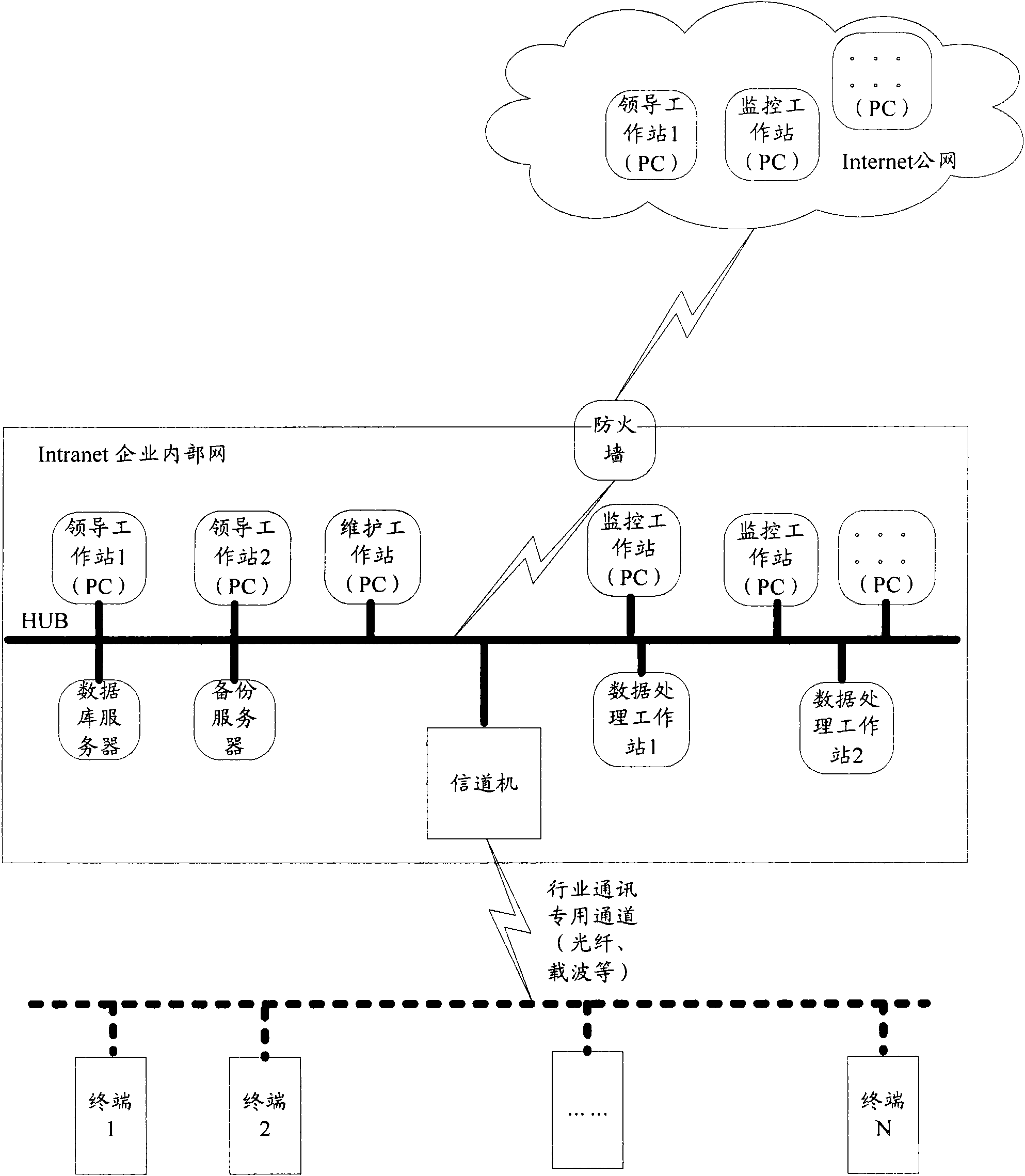


Supervisory Control And Data Acquisition System Based Internet Of Thing Platform
PatentActiveKR1020180053124A
Innovation
- An IoT platform-based integrated monitoring and control system that preprocesses data from various sensors, utilizing a management server, main processor, and OPC server with modules for data processing, HMI interface, and security, enabling efficient management and real-time control of field facilities.


IoT Security and Data Privacy Considerations
Security vulnerabilities in IoT applications utilizing telemetry and SCADA systems present significant challenges that require comprehensive evaluation. Both technologies face distinct security risks due to their operational characteristics and deployment environments. Telemetry systems, often deployed across distributed networks with wireless communication protocols, are susceptible to interception, man-in-the-middle attacks, and unauthorized access through compromised endpoints. The lightweight nature of many telemetry devices frequently results in limited computational resources for implementing robust security measures.
SCADA systems traditionally operated in isolated environments but increasingly connect to corporate networks and cloud platforms, expanding their attack surface considerably. Legacy SCADA infrastructure often lacks modern security features, making them vulnerable to cyber threats including ransomware, industrial espionage, and critical infrastructure disruption. The integration of SCADA with IoT devices introduces additional complexity as operational technology converges with information technology networks.
Data privacy considerations vary significantly between telemetry and SCADA implementations in IoT contexts. Telemetry systems collecting sensor data from multiple sources must address concerns regarding data ownership, consent mechanisms, and cross-border data transfers. The granular nature of telemetry data can reveal sensitive operational patterns, equipment performance characteristics, and business intelligence that requires protection through encryption, anonymization, and access controls.
SCADA systems handling critical infrastructure data face stringent regulatory compliance requirements including NERC CIP, IEC 62443, and sector-specific guidelines. Data retention policies, audit trails, and incident response procedures become crucial elements for maintaining operational integrity while ensuring privacy protection. The real-time nature of SCADA operations demands security measures that do not compromise system performance or reliability.
Authentication and authorization frameworks must accommodate the scale and diversity of IoT deployments while maintaining usability for operational personnel. Multi-factor authentication, certificate-based device identity, and role-based access controls represent essential components for both telemetry and SCADA security architectures. Regular security assessments, penetration testing, and vulnerability management programs are necessary to address evolving threat landscapes and ensure continuous protection of IoT applications across both technological approaches.
SCADA systems traditionally operated in isolated environments but increasingly connect to corporate networks and cloud platforms, expanding their attack surface considerably. Legacy SCADA infrastructure often lacks modern security features, making them vulnerable to cyber threats including ransomware, industrial espionage, and critical infrastructure disruption. The integration of SCADA with IoT devices introduces additional complexity as operational technology converges with information technology networks.
Data privacy considerations vary significantly between telemetry and SCADA implementations in IoT contexts. Telemetry systems collecting sensor data from multiple sources must address concerns regarding data ownership, consent mechanisms, and cross-border data transfers. The granular nature of telemetry data can reveal sensitive operational patterns, equipment performance characteristics, and business intelligence that requires protection through encryption, anonymization, and access controls.
SCADA systems handling critical infrastructure data face stringent regulatory compliance requirements including NERC CIP, IEC 62443, and sector-specific guidelines. Data retention policies, audit trails, and incident response procedures become crucial elements for maintaining operational integrity while ensuring privacy protection. The real-time nature of SCADA operations demands security measures that do not compromise system performance or reliability.
Authentication and authorization frameworks must accommodate the scale and diversity of IoT deployments while maintaining usability for operational personnel. Multi-factor authentication, certificate-based device identity, and role-based access controls represent essential components for both telemetry and SCADA security architectures. Regular security assessments, penetration testing, and vulnerability management programs are necessary to address evolving threat landscapes and ensure continuous protection of IoT applications across both technological approaches.
Edge Computing Integration with IoT Monitoring Systems
Edge computing represents a paradigmatic shift in how IoT monitoring systems process and analyze data, fundamentally transforming the traditional centralized architecture of both telemetry and SCADA systems. By positioning computational resources closer to data sources, edge computing addresses critical latency, bandwidth, and reliability challenges that have historically constrained IoT deployments in industrial environments.
The integration of edge computing with telemetry systems enables real-time data preprocessing and filtering at the sensor level, significantly reducing the volume of data transmitted to central servers. This approach proves particularly valuable in scenarios involving high-frequency sensor readings, where transmitting raw data would overwhelm network infrastructure. Edge nodes can perform statistical analysis, anomaly detection, and data compression before forwarding only relevant information to cloud-based analytics platforms.
For SCADA systems, edge computing integration introduces distributed intelligence that enhances operational resilience and response times. Local edge controllers can maintain critical control functions even when communication with central SCADA servers is interrupted, ensuring continuous operation of essential industrial processes. This distributed approach also enables more sophisticated local decision-making capabilities, reducing dependency on centralized processing for routine operational tasks.
The architectural implications of edge integration vary significantly between telemetry and SCADA implementations. Telemetry systems benefit from edge computing through improved data quality and reduced transmission costs, while SCADA systems gain enhanced fault tolerance and reduced control loop latency. Edge-enabled SCADA deployments can implement local control algorithms that respond to process changes within milliseconds, compared to the seconds or minutes required for centralized processing.
Security considerations become more complex with edge integration, as the attack surface expands to include numerous distributed computing nodes. However, this distributed architecture also provides security benefits through data localization and reduced exposure of sensitive operational data during transmission. Edge nodes can implement local encryption, authentication, and access control mechanisms tailored to specific operational requirements.
The convergence of edge computing with IoT monitoring systems is driving the development of hybrid architectures that combine the strengths of both telemetry and SCADA approaches, creating more adaptive and resilient industrial monitoring solutions.
The integration of edge computing with telemetry systems enables real-time data preprocessing and filtering at the sensor level, significantly reducing the volume of data transmitted to central servers. This approach proves particularly valuable in scenarios involving high-frequency sensor readings, where transmitting raw data would overwhelm network infrastructure. Edge nodes can perform statistical analysis, anomaly detection, and data compression before forwarding only relevant information to cloud-based analytics platforms.
For SCADA systems, edge computing integration introduces distributed intelligence that enhances operational resilience and response times. Local edge controllers can maintain critical control functions even when communication with central SCADA servers is interrupted, ensuring continuous operation of essential industrial processes. This distributed approach also enables more sophisticated local decision-making capabilities, reducing dependency on centralized processing for routine operational tasks.
The architectural implications of edge integration vary significantly between telemetry and SCADA implementations. Telemetry systems benefit from edge computing through improved data quality and reduced transmission costs, while SCADA systems gain enhanced fault tolerance and reduced control loop latency. Edge-enabled SCADA deployments can implement local control algorithms that respond to process changes within milliseconds, compared to the seconds or minutes required for centralized processing.
Security considerations become more complex with edge integration, as the attack surface expands to include numerous distributed computing nodes. However, this distributed architecture also provides security benefits through data localization and reduced exposure of sensitive operational data during transmission. Edge nodes can implement local encryption, authentication, and access control mechanisms tailored to specific operational requirements.
The convergence of edge computing with IoT monitoring systems is driving the development of hybrid architectures that combine the strengths of both telemetry and SCADA approaches, creating more adaptive and resilient industrial monitoring solutions.
Unlock deeper insights with Patsnap Eureka Quick Research — get a full tech report to explore trends and direct your research. Try now!
Generate Your Research Report Instantly with AI Agent
Supercharge your innovation with Patsnap Eureka AI Agent Platform!