The Mechanics of Fluoroantimonic Acid in Protonation
JUN 23, 20259 MIN READ
Generate Your Research Report Instantly with AI Agent
Patsnap Eureka helps you evaluate technical feasibility & market potential.
Fluoroantimonic Acid Background and Objectives
Fluoroantimonic acid, a superacid formed by combining hydrogen fluoride (HF) and antimony pentafluoride (SbF5), has been a subject of intense scientific interest since its discovery in the mid-20th century. This compound's extraordinary acidity, far surpassing that of conventional strong acids, has revolutionized our understanding of protonation mechanisms and opened new avenues in chemical synthesis and catalysis.
The development of fluoroantimonic acid can be traced back to the pioneering work of Ronald Gillespie in the 1960s, who explored the concept of superacidity and its potential applications. Gillespie's research laid the foundation for understanding the unique properties of this compound, particularly its ability to protonate even extremely weak bases.
As research progressed, the scientific community began to unravel the intricate mechanics behind fluoroantimonic acid's exceptional protonating power. The key to its potency lies in the formation of the hexafluoroantimonate anion (SbF6-), which stabilizes the proton and enhances its reactivity. This mechanism allows fluoroantimonic acid to achieve a Hammett acidity function (H0) of -31.3, making it one of the strongest known acids.
The evolution of fluoroantimonic acid research has been marked by significant milestones in analytical techniques and theoretical understanding. Advanced spectroscopic methods, such as NMR and Raman spectroscopy, have provided crucial insights into the acid's structure and behavior in solution. Computational chemistry has also played a vital role in elucidating the electronic properties and reaction pathways of this superacid.
The objectives of current and future research on fluoroantimonic acid are multifaceted. One primary goal is to further elucidate the precise mechanisms of protonation at the molecular level, including the dynamics of proton transfer and the role of solvation effects. This understanding is crucial for optimizing the acid's performance in various applications and potentially designing even more powerful superacids.
Another key objective is to explore the broader implications of fluoroantimonic acid's protonation capabilities in organic synthesis and materials science. Researchers aim to harness its unique properties to enable novel chemical transformations, particularly in the activation of traditionally unreactive substrates. This could lead to more efficient and selective synthetic routes for complex molecules, including pharmaceuticals and advanced materials.
Furthermore, there is growing interest in investigating the potential of fluoroantimonic acid in catalysis. Its extreme acidity offers promising avenues for developing highly active catalysts for a range of industrial processes, from petrochemical refining to fine chemical synthesis. Understanding the interplay between the acid's protonation mechanics and catalytic activity is crucial for realizing these applications.
The development of fluoroantimonic acid can be traced back to the pioneering work of Ronald Gillespie in the 1960s, who explored the concept of superacidity and its potential applications. Gillespie's research laid the foundation for understanding the unique properties of this compound, particularly its ability to protonate even extremely weak bases.
As research progressed, the scientific community began to unravel the intricate mechanics behind fluoroantimonic acid's exceptional protonating power. The key to its potency lies in the formation of the hexafluoroantimonate anion (SbF6-), which stabilizes the proton and enhances its reactivity. This mechanism allows fluoroantimonic acid to achieve a Hammett acidity function (H0) of -31.3, making it one of the strongest known acids.
The evolution of fluoroantimonic acid research has been marked by significant milestones in analytical techniques and theoretical understanding. Advanced spectroscopic methods, such as NMR and Raman spectroscopy, have provided crucial insights into the acid's structure and behavior in solution. Computational chemistry has also played a vital role in elucidating the electronic properties and reaction pathways of this superacid.
The objectives of current and future research on fluoroantimonic acid are multifaceted. One primary goal is to further elucidate the precise mechanisms of protonation at the molecular level, including the dynamics of proton transfer and the role of solvation effects. This understanding is crucial for optimizing the acid's performance in various applications and potentially designing even more powerful superacids.
Another key objective is to explore the broader implications of fluoroantimonic acid's protonation capabilities in organic synthesis and materials science. Researchers aim to harness its unique properties to enable novel chemical transformations, particularly in the activation of traditionally unreactive substrates. This could lead to more efficient and selective synthetic routes for complex molecules, including pharmaceuticals and advanced materials.
Furthermore, there is growing interest in investigating the potential of fluoroantimonic acid in catalysis. Its extreme acidity offers promising avenues for developing highly active catalysts for a range of industrial processes, from petrochemical refining to fine chemical synthesis. Understanding the interplay between the acid's protonation mechanics and catalytic activity is crucial for realizing these applications.
Industrial Applications and Demand Analysis
Fluoroantimonic acid, known as the strongest superacid, has garnered significant attention in various industrial sectors due to its exceptional protonation capabilities. The demand for this powerful acid has been steadily increasing, driven by its unique properties and diverse applications across multiple industries.
In the petrochemical industry, fluoroantimonic acid plays a crucial role in catalytic cracking processes, particularly in the production of high-octane gasoline. Its ability to protonate even weak bases makes it an invaluable tool for isomerization reactions, enhancing the efficiency of fuel production. The growing global demand for cleaner and more efficient fuels has led to an increased interest in fluoroantimonic acid-based catalysts, driving market growth in this sector.
The electronics industry has also recognized the potential of fluoroantimonic acid in semiconductor manufacturing. Its strong protonating power enables the etching of silicon wafers with unprecedented precision, contributing to the development of smaller and more powerful electronic components. As the demand for miniaturized devices continues to rise, the market for fluoroantimonic acid in this sector is expected to expand significantly.
In the field of materials science, fluoroantimonic acid has found applications in the synthesis of novel polymers and advanced materials. Its ability to initiate polymerization reactions under mild conditions has opened up new possibilities for creating materials with unique properties. This has led to increased demand from research institutions and industrial R&D departments seeking to develop innovative materials for various applications.
The pharmaceutical industry has shown growing interest in fluoroantimonic acid for its potential in drug synthesis. Its strong protonating ability can facilitate certain chemical reactions that are challenging to achieve with conventional acids, potentially leading to more efficient production processes for complex pharmaceutical compounds. This emerging application is expected to contribute to the overall market growth of fluoroantimonic acid in the coming years.
Despite its numerous applications, the market for fluoroantimonic acid faces certain challenges. The extreme corrosiveness and reactivity of the acid necessitate specialized handling and storage equipment, which can increase production costs. Additionally, safety concerns and environmental regulations regarding the use and disposal of such strong acids may limit its widespread adoption in some industries.
Nevertheless, the unique properties of fluoroantimonic acid continue to drive innovation and create new market opportunities. As industries seek more efficient and effective solutions for their processes, the demand for this superacid is expected to grow. Ongoing research into new applications and improved handling methods is likely to further expand its market potential across various sectors.
In the petrochemical industry, fluoroantimonic acid plays a crucial role in catalytic cracking processes, particularly in the production of high-octane gasoline. Its ability to protonate even weak bases makes it an invaluable tool for isomerization reactions, enhancing the efficiency of fuel production. The growing global demand for cleaner and more efficient fuels has led to an increased interest in fluoroantimonic acid-based catalysts, driving market growth in this sector.
The electronics industry has also recognized the potential of fluoroantimonic acid in semiconductor manufacturing. Its strong protonating power enables the etching of silicon wafers with unprecedented precision, contributing to the development of smaller and more powerful electronic components. As the demand for miniaturized devices continues to rise, the market for fluoroantimonic acid in this sector is expected to expand significantly.
In the field of materials science, fluoroantimonic acid has found applications in the synthesis of novel polymers and advanced materials. Its ability to initiate polymerization reactions under mild conditions has opened up new possibilities for creating materials with unique properties. This has led to increased demand from research institutions and industrial R&D departments seeking to develop innovative materials for various applications.
The pharmaceutical industry has shown growing interest in fluoroantimonic acid for its potential in drug synthesis. Its strong protonating ability can facilitate certain chemical reactions that are challenging to achieve with conventional acids, potentially leading to more efficient production processes for complex pharmaceutical compounds. This emerging application is expected to contribute to the overall market growth of fluoroantimonic acid in the coming years.
Despite its numerous applications, the market for fluoroantimonic acid faces certain challenges. The extreme corrosiveness and reactivity of the acid necessitate specialized handling and storage equipment, which can increase production costs. Additionally, safety concerns and environmental regulations regarding the use and disposal of such strong acids may limit its widespread adoption in some industries.
Nevertheless, the unique properties of fluoroantimonic acid continue to drive innovation and create new market opportunities. As industries seek more efficient and effective solutions for their processes, the demand for this superacid is expected to grow. Ongoing research into new applications and improved handling methods is likely to further expand its market potential across various sectors.
Current State and Challenges in Protonation
Protonation, a fundamental process in acid-base chemistry, has seen significant advancements in recent years, particularly with the development of superacids like fluoroantimonic acid. The current state of protonation research is characterized by a deep understanding of traditional acid-base interactions, but challenges remain in fully comprehending the mechanics of extreme protonation scenarios.
Fluoroantimonic acid, recognized as one of the strongest superacids, has become a focal point in protonation studies. Its ability to protonate even extremely weak bases has pushed the boundaries of our understanding of acid-base chemistry. However, the exact mechanisms of its protonation process, especially at the molecular level, are not yet fully elucidated.
One of the primary challenges in this field is the difficulty in directly observing and measuring the protonation process in real-time, particularly for superacids. The extreme reactivity and corrosive nature of fluoroantimonic acid make conventional analytical techniques challenging to apply. This has led to a reliance on indirect measurements and theoretical models, which, while valuable, may not capture the full complexity of the protonation mechanics.
Another significant challenge lies in understanding the solvation effects and ion-pairing phenomena in superacidic media. The behavior of protons and their counterions in such extreme environments differs markedly from that in conventional aqueous solutions. This complexity makes it difficult to develop accurate predictive models for protonation in superacidic systems.
The stability and handling of fluoroantimonic acid present additional hurdles. Its extreme reactivity necessitates specialized equipment and safety protocols, limiting widespread research and application. This constraint has slowed progress in exploring its full potential in various chemical processes and industrial applications.
From a theoretical perspective, quantum mechanical calculations have provided insights into the protonation process, but bridging the gap between computational predictions and experimental observations remains challenging. The multi-scale nature of the protonation process, involving quantum effects at the atomic level and macroscopic phenomena, requires sophisticated modeling approaches that are still being developed.
In the industrial context, while the potential applications of fluoroantimonic acid in catalysis and materials processing are recognized, scaling up its use faces significant technical and safety challenges. The development of safer handling methods and more stable formulations is an ongoing area of research.
Despite these challenges, recent advancements in spectroscopic techniques, particularly in-situ NMR and ultrafast spectroscopy, are beginning to shed light on the transient species involved in superacid protonation. These developments hold promise for a more comprehensive understanding of the protonation mechanics of fluoroantimonic acid in the near future.
Fluoroantimonic acid, recognized as one of the strongest superacids, has become a focal point in protonation studies. Its ability to protonate even extremely weak bases has pushed the boundaries of our understanding of acid-base chemistry. However, the exact mechanisms of its protonation process, especially at the molecular level, are not yet fully elucidated.
One of the primary challenges in this field is the difficulty in directly observing and measuring the protonation process in real-time, particularly for superacids. The extreme reactivity and corrosive nature of fluoroantimonic acid make conventional analytical techniques challenging to apply. This has led to a reliance on indirect measurements and theoretical models, which, while valuable, may not capture the full complexity of the protonation mechanics.
Another significant challenge lies in understanding the solvation effects and ion-pairing phenomena in superacidic media. The behavior of protons and their counterions in such extreme environments differs markedly from that in conventional aqueous solutions. This complexity makes it difficult to develop accurate predictive models for protonation in superacidic systems.
The stability and handling of fluoroantimonic acid present additional hurdles. Its extreme reactivity necessitates specialized equipment and safety protocols, limiting widespread research and application. This constraint has slowed progress in exploring its full potential in various chemical processes and industrial applications.
From a theoretical perspective, quantum mechanical calculations have provided insights into the protonation process, but bridging the gap between computational predictions and experimental observations remains challenging. The multi-scale nature of the protonation process, involving quantum effects at the atomic level and macroscopic phenomena, requires sophisticated modeling approaches that are still being developed.
In the industrial context, while the potential applications of fluoroantimonic acid in catalysis and materials processing are recognized, scaling up its use faces significant technical and safety challenges. The development of safer handling methods and more stable formulations is an ongoing area of research.
Despite these challenges, recent advancements in spectroscopic techniques, particularly in-situ NMR and ultrafast spectroscopy, are beginning to shed light on the transient species involved in superacid protonation. These developments hold promise for a more comprehensive understanding of the protonation mechanics of fluoroantimonic acid in the near future.
Existing Protonation Mechanisms with Fluoroantimonic Acid
01 Synthesis and applications of fluoroantimonic acid
Fluoroantimonic acid, a superacid formed by combining hydrogen fluoride and antimony pentafluoride, is used in various chemical processes. Its extreme acidity makes it valuable for protonation reactions, catalysis, and organic synthesis. The synthesis and handling of this compound require specialized equipment due to its highly corrosive nature.- Synthesis and properties of fluoroantimonic acid: Fluoroantimonic acid is a superacid formed by the combination of hydrogen fluoride (HF) and antimony pentafluoride (SbF5). It is known for its extremely high acidity and protonating ability. The synthesis and characterization of fluoroantimonic acid involve careful handling due to its corrosive nature and reactivity.
- Applications in organic synthesis: Fluoroantimonic acid's strong protonating ability makes it useful in various organic synthesis reactions. It can catalyze reactions such as alkylations, acylations, and isomerizations. The superacid can protonate even weak bases and activate inert substrates, enabling transformations that are difficult with conventional acids.
- Use in materials science and nanotechnology: The protonation capabilities of fluoroantimonic acid are exploited in materials science and nanotechnology. It can be used to modify surfaces, create nanostructures, and synthesize novel materials with unique properties. The superacid's ability to protonate various substrates allows for the development of advanced functional materials.
- Safety and handling considerations: Due to its extreme acidity and reactivity, fluoroantimonic acid requires special safety precautions and handling procedures. This includes the use of specialized containment materials, personal protective equipment, and controlled environments. Proper neutralization and disposal methods are essential to prevent environmental and safety hazards.
- Analytical applications and characterization techniques: Fluoroantimonic acid's protonation ability is utilized in various analytical applications and characterization techniques. It can be used to study reaction mechanisms, determine acidity scales, and probe molecular structures. Specialized spectroscopic and electrochemical methods are employed to investigate the behavior and properties of this superacid system.
02 Protonation mechanisms in superacidic media
The protonation mechanism in superacidic media, such as fluoroantimonic acid, involves the transfer of protons to substrate molecules. This process can lead to the formation of carbocations and other reactive intermediates, which are crucial in various organic reactions. Understanding these mechanisms is essential for developing new synthetic methodologies and improving existing processes.Expand Specific Solutions03 Applications in materials science and nanotechnology
Fluoroantimonic acid protonation has found applications in materials science and nanotechnology. It can be used to modify surface properties of materials, create novel nanostructures, and enhance the performance of certain electronic components. The unique protonation capabilities of this superacid enable the development of advanced materials with tailored properties.Expand Specific Solutions04 Safety considerations and handling procedures
Due to the extreme reactivity and corrosiveness of fluoroantimonic acid, strict safety measures and specialized handling procedures are necessary. This includes the use of appropriate personal protective equipment, specialized containment systems, and proper disposal methods. Researchers and industry professionals must adhere to rigorous safety protocols when working with this superacid to prevent accidents and environmental contamination.Expand Specific Solutions05 Analytical techniques for studying protonation reactions
Various analytical techniques are employed to study protonation reactions involving fluoroantimonic acid. These may include spectroscopic methods such as NMR, IR, and UV-Vis spectroscopy, as well as advanced chromatographic techniques. These tools help researchers understand the reaction mechanisms, identify intermediates, and optimize reaction conditions for specific applications in organic synthesis and materials science.Expand Specific Solutions
Key Players in Superacid Research and Production
The field of fluoroantimonic acid protonation mechanics is in a nascent stage of development, with limited market size but growing research interest. The technology's maturity is still evolving, as evidenced by the diverse range of institutions involved. Academic institutions like Hunan University, McGill University, and the University of Milan are at the forefront of basic research. Industrial players such as 3M Innovative Properties Co., Mitsui Chemicals, Inc., and Merck Patent GmbH are exploring potential applications. The competitive landscape is characterized by collaboration between academia and industry, with a focus on fundamental understanding and early-stage application development. As the technology progresses, we can expect increased commercial interest and market expansion in specialized chemical and materials sectors.
Mitsui Chemicals, Inc.
Technical Solution: Mitsui Chemicals, Inc. has developed an innovative approach to studying the mechanics of fluoroantimonic acid in protonation, focusing on its potential industrial applications. Their method combines advanced materials engineering with process intensification techniques. They have created a series of specialized reactor designs that allow for the safe handling and precise control of fluoroantimonic acid reactions at industrial scales. These reactors incorporate novel materials resistant to extreme acidity and advanced monitoring systems that can track protonation events in real-time. Additionally, they have developed a unique computational fluid dynamics model that simulates the behavior of fluoroantimonic acid under various industrial conditions, enabling the optimization of reaction parameters and reactor designs. Their research also extends to the development of novel catalytic systems that leverage the unique protonation properties of fluoroantimonic acid for more efficient chemical transformations.
Strengths: Industrial-scale approach provides insights relevant to practical applications. Advanced reactor designs enable safe handling of fluoroantimonic acid at large scales. Computational modeling allows for process optimization. Weaknesses: Focus on industrial applications may limit insights into fundamental mechanisms. High costs associated with large-scale equipment and safety measures.
Merck Sharp & Dohme Corp.
Technical Solution: Merck Sharp & Dohme Corp. has developed a novel approach to studying the mechanics of fluoroantimonic acid in protonation. Their method involves using advanced spectroscopic techniques, including high-resolution NMR and in-situ FTIR, to observe the protonation process in real-time. They have also engineered specialized reaction vessels capable of withstanding the extreme corrosiveness of fluoroantimonic acid, allowing for more accurate and controlled experiments. Additionally, they have implemented computational modeling to predict and analyze the protonation mechanisms at the molecular level, providing insights into the acid's behavior under various conditions.
Strengths: Advanced spectroscopic techniques and specialized equipment allow for precise observations. Computational modeling enhances predictive capabilities. Weaknesses: High cost of specialized equipment and safety concerns due to the extreme corrosiveness of fluoroantimonic acid.
Core Innovations in Fluoroantimonic Acid Synthesis
Acid functional fluoropolymer membranes and method of manufacture
PatentInactiveUS6833412B2
Innovation
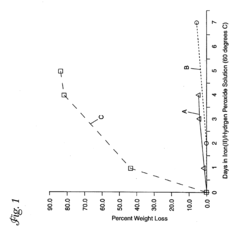
- A method involving dehydrofluorination of a starting fluoropolymer, followed by addition of an acidifiable nucleophilic functionalizing agent and subsequent acidification to create acid-functional fluoropolymers suitable for ion conducting membranes, achieving high proton conductivity and mechanical strength with low equivalent weight.
Binder for fuel cell, composition for electrode formation, electrode, and fuel cell using the electrode
PatentInactiveEP1788649B1
Innovation
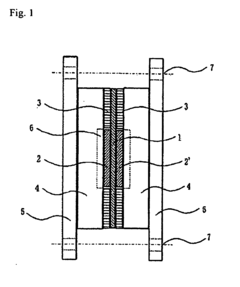
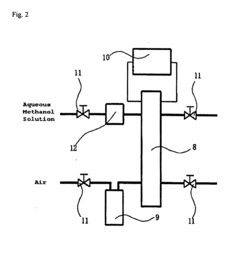
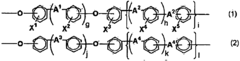
- A binder for fuel cells comprising a block copolymer with a glass transition temperature of 180 °C or less, containing a divalent aromatic group with a protonic acid group and another without, providing high adhesion, low methanol solubility, and high proton conductivity, suitable for direct methanol type fuel cells.

Safety and Handling Protocols for Fluoroantimonic Acid
Fluoroantimonic acid is one of the strongest known superacids, with a Hammett acidity function estimated to be as low as -23. Due to its extreme corrosiveness and reactivity, handling this substance requires stringent safety protocols and specialized equipment. All operations involving fluoroantimonic acid must be conducted in a controlled environment, preferably within a dedicated fume hood equipped with acid-resistant materials.
Personal protective equipment (PPE) is crucial when working with fluoroantimonic acid. Operators must wear a fully encapsulating chemical suit made of fluoropolymer materials, such as Teflon or Viton. Standard laboratory gloves are insufficient; instead, multiple layers of fluoropolymer gloves should be used. A full-face respirator with acid gas cartridges or a self-contained breathing apparatus (SCBA) is essential to protect against toxic fumes.
Storage of fluoroantimonic acid requires special considerations. It must be kept in containers made of materials resistant to both hydrofluoric acid and antimony pentafluoride, such as PTFE (polytetrafluoroethylene) or PFA (perfluoroalkoxy alkanes). These containers should be sealed tightly and stored in a cool, dry area away from any potential reactants or moisture sources. Regular inspections of storage containers are necessary to detect any signs of degradation or leakage.
Transportation of fluoroantimonic acid is heavily regulated due to its hazardous nature. It must be transported in approved, leak-proof containers with appropriate hazard labels. The transportation vehicle should be equipped with spill containment measures and neutralizing agents. Drivers and handlers must be trained in emergency response procedures specific to fluoroantimonic acid incidents.
In case of accidental exposure or spills, immediate action is critical. Affected areas should be flushed with copious amounts of water for at least 15 minutes, followed by application of calcium gluconate gel to counteract fluoride ion toxicity. For larger spills, a specialized acid spill kit containing neutralizing agents like sodium bicarbonate or calcium oxide should be used. Environmental contamination must be prevented by containing the spill and properly disposing of all contaminated materials.
Decontamination procedures after working with fluoroantimonic acid are rigorous. All equipment and surfaces that may have come into contact with the acid must be thoroughly cleaned using appropriate neutralizing agents. Disposal of waste materials, including contaminated PPE, must follow strict hazardous waste protocols. Regular training and drills should be conducted to ensure all personnel are familiar with emergency procedures and the proper use of safety equipment.
Personal protective equipment (PPE) is crucial when working with fluoroantimonic acid. Operators must wear a fully encapsulating chemical suit made of fluoropolymer materials, such as Teflon or Viton. Standard laboratory gloves are insufficient; instead, multiple layers of fluoropolymer gloves should be used. A full-face respirator with acid gas cartridges or a self-contained breathing apparatus (SCBA) is essential to protect against toxic fumes.
Storage of fluoroantimonic acid requires special considerations. It must be kept in containers made of materials resistant to both hydrofluoric acid and antimony pentafluoride, such as PTFE (polytetrafluoroethylene) or PFA (perfluoroalkoxy alkanes). These containers should be sealed tightly and stored in a cool, dry area away from any potential reactants or moisture sources. Regular inspections of storage containers are necessary to detect any signs of degradation or leakage.
Transportation of fluoroantimonic acid is heavily regulated due to its hazardous nature. It must be transported in approved, leak-proof containers with appropriate hazard labels. The transportation vehicle should be equipped with spill containment measures and neutralizing agents. Drivers and handlers must be trained in emergency response procedures specific to fluoroantimonic acid incidents.
In case of accidental exposure or spills, immediate action is critical. Affected areas should be flushed with copious amounts of water for at least 15 minutes, followed by application of calcium gluconate gel to counteract fluoride ion toxicity. For larger spills, a specialized acid spill kit containing neutralizing agents like sodium bicarbonate or calcium oxide should be used. Environmental contamination must be prevented by containing the spill and properly disposing of all contaminated materials.
Decontamination procedures after working with fluoroantimonic acid are rigorous. All equipment and surfaces that may have come into contact with the acid must be thoroughly cleaned using appropriate neutralizing agents. Disposal of waste materials, including contaminated PPE, must follow strict hazardous waste protocols. Regular training and drills should be conducted to ensure all personnel are familiar with emergency procedures and the proper use of safety equipment.
Environmental Impact and Waste Management
Fluoroantimonic acid, known as the world's strongest superacid, poses significant environmental challenges due to its extreme reactivity and corrosive nature. The use and handling of this compound necessitate stringent safety measures and waste management protocols to mitigate its potential impact on ecosystems and human health.
The primary environmental concern associated with fluoroantimonic acid is its ability to react violently with water, producing highly toxic and corrosive hydrogen fluoride gas. This reaction can lead to severe air pollution and pose immediate threats to surrounding flora and fauna. Additionally, the acid's extreme acidity can cause rapid degradation of soil and water quality if released into the environment, potentially disrupting local ecosystems and food chains.
Waste management for fluoroantimonic acid requires specialized containment and neutralization procedures. Traditional waste treatment methods are often inadequate due to the acid's extreme reactivity. Specialized facilities equipped with fluoropolymer-lined containers and advanced neutralization systems are essential for safe handling and disposal. The neutralization process typically involves careful dilution with ice-cold solutions of alkali metal hydroxides or carbonates, followed by further treatment to ensure complete neutralization.
The production and use of fluoroantimonic acid also contribute to the depletion of antimony and fluorine resources, raising concerns about the long-term sustainability of its applications. As these elements are finite resources, their extraction and processing for acid production can lead to habitat destruction and ecological imbalances in mining areas.
To address these environmental challenges, research efforts are focused on developing alternative superacids with reduced environmental impact. These include the exploration of ionic liquid-based superacids and the development of solid superacid catalysts that offer similar protonation capabilities with improved handling and reduced waste generation.
Regulatory frameworks governing the use and disposal of fluoroantimonic acid vary globally, but generally emphasize strict controls on its production, transportation, and disposal. Many countries require detailed environmental impact assessments and waste management plans before permitting its use in industrial processes. International agreements, such as the Basel Convention on the Control of Transboundary Movements of Hazardous Wastes and Their Disposal, provide guidelines for the safe international transport and disposal of such hazardous materials.
In conclusion, while fluoroantimonic acid offers unique capabilities in protonation reactions, its environmental impact and waste management challenges are significant. Ongoing research and regulatory efforts aim to balance its scientific and industrial utility with the imperative of environmental protection, driving innovation in safer superacid alternatives and more effective waste management technologies.
The primary environmental concern associated with fluoroantimonic acid is its ability to react violently with water, producing highly toxic and corrosive hydrogen fluoride gas. This reaction can lead to severe air pollution and pose immediate threats to surrounding flora and fauna. Additionally, the acid's extreme acidity can cause rapid degradation of soil and water quality if released into the environment, potentially disrupting local ecosystems and food chains.
Waste management for fluoroantimonic acid requires specialized containment and neutralization procedures. Traditional waste treatment methods are often inadequate due to the acid's extreme reactivity. Specialized facilities equipped with fluoropolymer-lined containers and advanced neutralization systems are essential for safe handling and disposal. The neutralization process typically involves careful dilution with ice-cold solutions of alkali metal hydroxides or carbonates, followed by further treatment to ensure complete neutralization.
The production and use of fluoroantimonic acid also contribute to the depletion of antimony and fluorine resources, raising concerns about the long-term sustainability of its applications. As these elements are finite resources, their extraction and processing for acid production can lead to habitat destruction and ecological imbalances in mining areas.
To address these environmental challenges, research efforts are focused on developing alternative superacids with reduced environmental impact. These include the exploration of ionic liquid-based superacids and the development of solid superacid catalysts that offer similar protonation capabilities with improved handling and reduced waste generation.
Regulatory frameworks governing the use and disposal of fluoroantimonic acid vary globally, but generally emphasize strict controls on its production, transportation, and disposal. Many countries require detailed environmental impact assessments and waste management plans before permitting its use in industrial processes. International agreements, such as the Basel Convention on the Control of Transboundary Movements of Hazardous Wastes and Their Disposal, provide guidelines for the safe international transport and disposal of such hazardous materials.
In conclusion, while fluoroantimonic acid offers unique capabilities in protonation reactions, its environmental impact and waste management challenges are significant. Ongoing research and regulatory efforts aim to balance its scientific and industrial utility with the imperative of environmental protection, driving innovation in safer superacid alternatives and more effective waste management technologies.
Unlock deeper insights with Patsnap Eureka Quick Research — get a full tech report to explore trends and direct your research. Try now!
Generate Your Research Report Instantly with AI Agent
Supercharge your innovation with Patsnap Eureka AI Agent Platform!