
Thyristor Voltage Regulation Techniques for Precision Control
MAR 12, 20269 MIN READ
Generate Your Research Report Instantly with AI Agent
Patsnap Eureka helps you evaluate technical feasibility & market potential.
Thyristor Voltage Regulation Background and Control Objectives
Thyristor voltage regulation technology emerged in the 1950s following the invention of the silicon-controlled rectifier (SCR) by Bell Laboratories. This breakthrough marked a pivotal transition from mechanical and magnetic voltage regulation methods to solid-state electronic control systems. The development trajectory accelerated through the 1960s and 1970s as power electronics matured, enabling more sophisticated control algorithms and improved semiconductor manufacturing processes.
The evolution of thyristor-based voltage regulation has been driven by the increasing demand for precise power control across industrial applications. Early implementations focused on basic phase-angle control for motor drives and heating systems. However, technological advancement has expanded applications to include power factor correction, reactive power compensation, and grid-connected renewable energy systems. Modern thyristor voltage regulators incorporate advanced firing control circuits, digital signal processing, and intelligent feedback mechanisms.
Contemporary thyristor voltage regulation systems demonstrate remarkable precision capabilities, achieving voltage regulation accuracy within ±0.5% under varying load conditions. The integration of microprocessor-based control units has enabled real-time monitoring, adaptive control strategies, and enhanced system reliability. These developments have positioned thyristor technology as a cornerstone solution for applications requiring both high power handling capacity and precise voltage control.
The primary technical objective centers on achieving stable voltage output despite fluctuations in input supply voltage, load variations, and environmental conditions. This encompasses maintaining consistent voltage levels across wide operating ranges while minimizing harmonic distortion and electromagnetic interference. Advanced control objectives include dynamic response optimization, where systems must respond to load changes within milliseconds while maintaining voltage stability.
Power quality enhancement represents another critical objective, involving the reduction of voltage harmonics, flicker mitigation, and power factor improvement. Modern thyristor voltage regulators target total harmonic distortion levels below 5% while maintaining high efficiency ratings exceeding 98%. Additionally, system integration objectives focus on seamless compatibility with digital control networks, remote monitoring capabilities, and predictive maintenance functionalities to support Industry 4.0 requirements.
The evolution of thyristor-based voltage regulation has been driven by the increasing demand for precise power control across industrial applications. Early implementations focused on basic phase-angle control for motor drives and heating systems. However, technological advancement has expanded applications to include power factor correction, reactive power compensation, and grid-connected renewable energy systems. Modern thyristor voltage regulators incorporate advanced firing control circuits, digital signal processing, and intelligent feedback mechanisms.
Contemporary thyristor voltage regulation systems demonstrate remarkable precision capabilities, achieving voltage regulation accuracy within ±0.5% under varying load conditions. The integration of microprocessor-based control units has enabled real-time monitoring, adaptive control strategies, and enhanced system reliability. These developments have positioned thyristor technology as a cornerstone solution for applications requiring both high power handling capacity and precise voltage control.
The primary technical objective centers on achieving stable voltage output despite fluctuations in input supply voltage, load variations, and environmental conditions. This encompasses maintaining consistent voltage levels across wide operating ranges while minimizing harmonic distortion and electromagnetic interference. Advanced control objectives include dynamic response optimization, where systems must respond to load changes within milliseconds while maintaining voltage stability.
Power quality enhancement represents another critical objective, involving the reduction of voltage harmonics, flicker mitigation, and power factor improvement. Modern thyristor voltage regulators target total harmonic distortion levels below 5% while maintaining high efficiency ratings exceeding 98%. Additionally, system integration objectives focus on seamless compatibility with digital control networks, remote monitoring capabilities, and predictive maintenance functionalities to support Industry 4.0 requirements.
Market Demand for Precision Thyristor Voltage Control Systems
The global market for precision thyristor voltage control systems is experiencing robust growth driven by increasing demands for energy efficiency and power quality across multiple industrial sectors. Manufacturing industries, particularly those involving sensitive electronic equipment and precision machinery, require stable voltage regulation to maintain operational integrity and prevent costly equipment damage. The automotive sector's transition toward electric vehicles has created substantial demand for sophisticated power electronics, with thyristor-based voltage regulation playing a critical role in battery management systems and charging infrastructure.
Industrial automation and smart grid implementations represent significant growth drivers for precision thyristor voltage control technologies. Modern manufacturing facilities require precise voltage regulation to support advanced robotics, computer numerical control systems, and automated production lines. The proliferation of renewable energy sources has intensified the need for reliable voltage regulation solutions, as solar and wind power systems inherently produce variable output requiring sophisticated control mechanisms to maintain grid stability.
Data centers and telecommunications infrastructure constitute rapidly expanding market segments for precision voltage control systems. These facilities demand uninterrupted power supply with minimal voltage fluctuations to ensure continuous operation of critical computing and communication equipment. The exponential growth in cloud computing services and digital transformation initiatives across industries has amplified the importance of reliable power management solutions.
The healthcare sector presents emerging opportunities for precision thyristor voltage regulation, particularly in medical imaging equipment, surgical instruments, and life support systems where voltage stability directly impacts patient safety and diagnostic accuracy. Research laboratories and semiconductor manufacturing facilities require extremely precise voltage control for sensitive analytical instruments and fabrication processes.
Regional market dynamics reveal strong demand concentration in industrialized economies with significant manufacturing bases. Developing markets are experiencing accelerated adoption driven by infrastructure modernization and industrial expansion initiatives. The increasing emphasis on energy conservation and environmental sustainability regulations is creating additional market momentum for efficient voltage regulation technologies.
Market growth is further supported by the integration of digital control systems and Internet of Things capabilities, enabling remote monitoring and predictive maintenance of voltage regulation equipment. This technological convergence is expanding the addressable market beyond traditional industrial applications into smart building management and distributed energy systems.
Industrial automation and smart grid implementations represent significant growth drivers for precision thyristor voltage control technologies. Modern manufacturing facilities require precise voltage regulation to support advanced robotics, computer numerical control systems, and automated production lines. The proliferation of renewable energy sources has intensified the need for reliable voltage regulation solutions, as solar and wind power systems inherently produce variable output requiring sophisticated control mechanisms to maintain grid stability.
Data centers and telecommunications infrastructure constitute rapidly expanding market segments for precision voltage control systems. These facilities demand uninterrupted power supply with minimal voltage fluctuations to ensure continuous operation of critical computing and communication equipment. The exponential growth in cloud computing services and digital transformation initiatives across industries has amplified the importance of reliable power management solutions.
The healthcare sector presents emerging opportunities for precision thyristor voltage regulation, particularly in medical imaging equipment, surgical instruments, and life support systems where voltage stability directly impacts patient safety and diagnostic accuracy. Research laboratories and semiconductor manufacturing facilities require extremely precise voltage control for sensitive analytical instruments and fabrication processes.
Regional market dynamics reveal strong demand concentration in industrialized economies with significant manufacturing bases. Developing markets are experiencing accelerated adoption driven by infrastructure modernization and industrial expansion initiatives. The increasing emphasis on energy conservation and environmental sustainability regulations is creating additional market momentum for efficient voltage regulation technologies.
Market growth is further supported by the integration of digital control systems and Internet of Things capabilities, enabling remote monitoring and predictive maintenance of voltage regulation equipment. This technological convergence is expanding the addressable market beyond traditional industrial applications into smart building management and distributed energy systems.
Current State and Challenges in Thyristor Voltage Regulation
Thyristor voltage regulation technology has achieved significant maturity in industrial applications, with widespread deployment across power systems, motor drives, and reactive power compensation systems. Current implementations primarily utilize phase-controlled thyristor circuits, where firing angle adjustment serves as the fundamental control mechanism. These systems demonstrate robust performance in high-power applications, typically handling voltage ranges from hundreds of volts to several kilovolts with power ratings extending into megawatt territories.
The precision control landscape is dominated by several established approaches. Digital signal processors and microcontrollers now provide sophisticated firing pulse generation, enabling precise timing control with microsecond accuracy. Advanced control algorithms, including proportional-integral-derivative controllers and adaptive control schemes, have enhanced system responsiveness and stability. Modern thyristor voltage regulators achieve regulation accuracy within ±1% under steady-state conditions.
However, significant technical challenges persist in achieving ultra-precision control requirements. Harmonic distortion remains a critical limitation, with conventional phase-controlled systems generating substantial low-order harmonics that compromise power quality. The inherent switching characteristics of thyristors introduce commutation delays and voltage notching effects, particularly problematic in sensitive applications requiring clean power delivery.
Temperature-dependent thyristor characteristics present another substantial challenge. Junction temperature variations affect forward voltage drop and switching timing, introducing drift in regulation accuracy over extended operating periods. This thermal sensitivity becomes particularly pronounced in high-power applications where substantial heat generation occurs.
Dynamic response limitations constrain precision control capabilities, especially during rapid load changes or transient conditions. The discrete nature of thyristor switching creates inherent delays in control response, limiting bandwidth and introducing steady-state ripple. Gate drive circuit variations and component aging further contribute to long-term precision degradation.
Electromagnetic interference generation poses increasing challenges as precision requirements tighten. High-frequency switching transients and conducted emissions can interfere with sensitive control circuits and measurement systems. Additionally, the interaction between multiple thyristor-controlled systems in complex installations creates cross-coupling effects that complicate precision control implementation.
Geographically, advanced thyristor voltage regulation development concentrates in established industrial regions. European manufacturers lead in high-precision applications for renewable energy integration, while North American companies focus on grid stability solutions. Asian markets, particularly China and Japan, emphasize cost-effective implementations for industrial automation and power quality improvement applications.
The precision control landscape is dominated by several established approaches. Digital signal processors and microcontrollers now provide sophisticated firing pulse generation, enabling precise timing control with microsecond accuracy. Advanced control algorithms, including proportional-integral-derivative controllers and adaptive control schemes, have enhanced system responsiveness and stability. Modern thyristor voltage regulators achieve regulation accuracy within ±1% under steady-state conditions.
However, significant technical challenges persist in achieving ultra-precision control requirements. Harmonic distortion remains a critical limitation, with conventional phase-controlled systems generating substantial low-order harmonics that compromise power quality. The inherent switching characteristics of thyristors introduce commutation delays and voltage notching effects, particularly problematic in sensitive applications requiring clean power delivery.
Temperature-dependent thyristor characteristics present another substantial challenge. Junction temperature variations affect forward voltage drop and switching timing, introducing drift in regulation accuracy over extended operating periods. This thermal sensitivity becomes particularly pronounced in high-power applications where substantial heat generation occurs.
Dynamic response limitations constrain precision control capabilities, especially during rapid load changes or transient conditions. The discrete nature of thyristor switching creates inherent delays in control response, limiting bandwidth and introducing steady-state ripple. Gate drive circuit variations and component aging further contribute to long-term precision degradation.
Electromagnetic interference generation poses increasing challenges as precision requirements tighten. High-frequency switching transients and conducted emissions can interfere with sensitive control circuits and measurement systems. Additionally, the interaction between multiple thyristor-controlled systems in complex installations creates cross-coupling effects that complicate precision control implementation.
Geographically, advanced thyristor voltage regulation development concentrates in established industrial regions. European manufacturers lead in high-precision applications for renewable energy integration, while North American companies focus on grid stability solutions. Asian markets, particularly China and Japan, emphasize cost-effective implementations for industrial automation and power quality improvement applications.
Existing Thyristor Voltage Regulation Solution Approaches
01 Phase-controlled thyristor voltage regulation methods
Phase-controlled thyristor voltage regulation utilizes the firing angle control of thyristors to adjust the output voltage. By controlling the conduction angle of the thyristor within each AC cycle, precise voltage regulation can be achieved. This method is widely used in AC voltage regulation applications and can provide good regulation precision through optimized trigger timing and control algorithms. Advanced phase control techniques can minimize harmonics and improve voltage stability.- Phase-controlled triggering methods for thyristors: Precision voltage regulation can be achieved through advanced phase-controlled triggering techniques for thyristors. These methods involve precise control of the firing angle to regulate the output voltage with high accuracy. Digital control systems and microprocessor-based triggering circuits enable fine-tuned adjustment of the conduction angle, resulting in improved voltage regulation precision. Feedback mechanisms continuously monitor output voltage and adjust triggering timing to maintain stable regulation.
- Zero-crossing detection and synchronization: Implementing zero-crossing detection circuits enhances thyristor voltage regulation precision by ensuring accurate synchronization with the AC waveform. These circuits detect the precise moment when the AC voltage crosses zero, allowing for optimal timing of thyristor triggering. This synchronization minimizes harmonic distortion and improves the linearity of voltage regulation. Advanced detection algorithms can compensate for noise and voltage fluctuations to maintain consistent triggering accuracy.
- Feedback control and voltage sensing circuits: High-precision voltage regulation is achieved through sophisticated feedback control systems that continuously monitor output voltage. These systems employ high-resolution analog-to-digital converters and precision voltage sensing circuits to detect minute variations in output voltage. The feedback signal is processed by control algorithms that dynamically adjust thyristor firing angles to compensate for load changes and input voltage variations. Proportional-integral-derivative controllers or adaptive control schemes can be implemented to optimize regulation performance.
- Digital signal processing and control algorithms: Modern thyristor voltage regulation systems utilize digital signal processing techniques and advanced control algorithms to achieve superior precision. These systems implement complex mathematical models and predictive control strategies to anticipate load changes and minimize voltage deviations. Digital controllers offer programmable regulation characteristics and can implement adaptive algorithms that optimize performance under varying operating conditions. Real-time processing capabilities enable rapid response to disturbances while maintaining stable voltage output.
- Snubber circuits and noise reduction techniques: Voltage regulation precision is enhanced through the implementation of snubber circuits and noise reduction techniques that minimize electrical interference and switching transients. These circuits protect thyristors from voltage spikes and reduce electromagnetic interference that can affect control signal accuracy. Proper filtering and shielding techniques ensure that sensing and control circuits operate with minimal noise, resulting in more precise voltage regulation. Optimized circuit layouts and component selection contribute to improved overall system precision.
02 Zero-crossing detection and synchronization control
Zero-crossing detection technology is crucial for improving thyristor voltage regulation precision. By accurately detecting the zero-crossing points of the AC voltage waveform and synchronizing the thyristor triggering signals, voltage regulation accuracy can be significantly enhanced. This approach reduces switching transients and electromagnetic interference while ensuring stable output voltage. Precise synchronization mechanisms help maintain consistent voltage levels across varying load conditions.Expand Specific Solutions03 Feedback control and closed-loop regulation systems
Implementing feedback control mechanisms with closed-loop regulation systems significantly improves thyristor voltage regulation precision. These systems continuously monitor the output voltage and compare it with a reference value, adjusting the thyristor firing angle accordingly to minimize errors. Advanced control algorithms including PID control, fuzzy logic control, or adaptive control can be employed to achieve high-precision voltage regulation under dynamic load conditions and compensate for voltage fluctuations.Expand Specific Solutions04 Digital control and microprocessor-based regulation
Digital control techniques using microprocessors or digital signal processors enable highly precise thyristor voltage regulation. These systems can implement sophisticated control algorithms, perform real-time calculations, and provide accurate timing control for thyristor triggering. Digital control allows for programmable regulation characteristics, adaptive parameter adjustment, and integration with communication interfaces for remote monitoring and control. The use of high-resolution analog-to-digital converters and precise timing circuits further enhances regulation accuracy.Expand Specific Solutions05 Voltage sensing and measurement accuracy enhancement
Accurate voltage sensing and measurement are fundamental to achieving high thyristor voltage regulation precision. Advanced voltage sensing circuits with high-precision voltage dividers, isolation amplifiers, and filtering techniques ensure accurate detection of the actual output voltage. Calibration methods and temperature compensation techniques can be employed to maintain measurement accuracy over time and varying environmental conditions. Enhanced sensing accuracy directly translates to improved regulation precision by providing reliable feedback signals to the control system.Expand Specific Solutions
Key Players in Thyristor and Power Electronics Industry
The thyristor voltage regulation technology market is experiencing significant growth driven by increasing demand for precision power control across industrial applications. The industry is in a mature development stage with established market leaders like Siemens AG, Mitsubishi Electric Corp., and Infineon Technologies AG dominating through advanced semiconductor solutions. Technology maturity varies significantly among players - while global giants like Texas Instruments and Robert Bosch GmbH leverage decades of power electronics expertise, specialized firms such as Sichuan Injet Electric Co. and Siyuan Qingneng Electric focus on niche applications. The competitive landscape includes major utility companies like State Grid Corp. of China and Korea Electric Power Corp. driving demand, alongside research institutions like MIT and Shanghai Jiao Tong University advancing fundamental technologies. Market consolidation continues as companies seek comprehensive power management portfolios.
State Grid Corp. of China
Technical Solution: State Grid Corporation implements thyristor voltage regulation through large-scale Static Var Compensator (SVC) and Thyristor Controlled Reactor (TCR) systems for grid voltage stability and power quality management. Their precision control systems utilize advanced thyristor valve technology with fiber-optic control interfaces, enabling rapid voltage regulation response within power transmission networks. The technology incorporates harmonic filtering and reactive power compensation capabilities, supporting grid stability across China's extensive power infrastructure with regulation accuracy meeting international standards for transmission system operations.
Strengths: Extensive grid-scale implementation experience, proven reliability in large power systems, comprehensive infrastructure support. Weaknesses: Focus primarily on utility-scale applications, limited applicability to industrial precision control requirements.
Mitsubishi Electric Corp.
Technical Solution: Mitsubishi Electric offers thyristor voltage regulation solutions based on their proprietary HVIGBT (High Voltage Insulated Gate Bipolar Transistor) and thyristor hybrid technologies. Their systems employ advanced firing control circuits with optical isolation and precise timing control, enabling voltage regulation with response times under 1ms. The technology incorporates predictive control algorithms and real-time monitoring capabilities, supporting applications in steel manufacturing, chemical processing, and renewable energy systems where precise voltage control is critical for process optimization.
Strengths: Strong power electronics heritage, excellent switching speed and precision, comprehensive system integration capabilities. Weaknesses: Higher initial investment costs, complexity in system configuration and tuning.
Core Patents in Precision Thyristor Control Techniques
VOLTAGE REGULATION DEVICE AND METHOD OF ITS REGULATION
PatentInactiveRU2015135104A
Innovation
- Implementation of per-phase voltage control with thyristor switches connected to both branch and extreme output terminals of adjusting sections, enabling complete control range coverage through alternating switching operations.
- Integration of current transformers between branch portions and thyristor switches in each phase, combined with series reactors and parallel trip units, providing enhanced current monitoring and protection capabilities.
- Novel switching methodology that enables thyristor transition between switching nodes through pre-closing followed by opening sequence, maintaining continuous current flow through reactors without interruption during switching operations.
Control circuit and method
PatentInactiveUS20160219661A1
Innovation
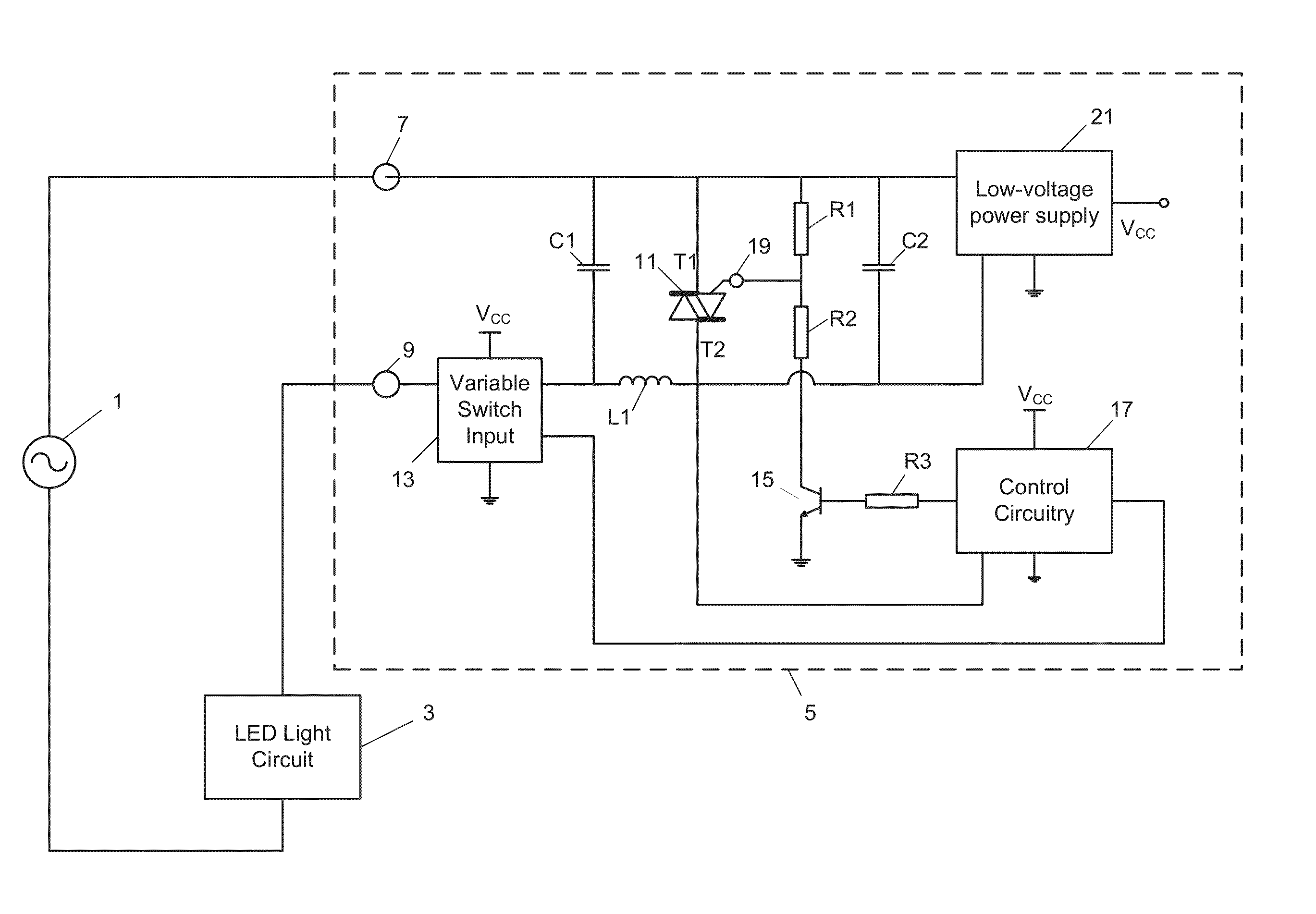
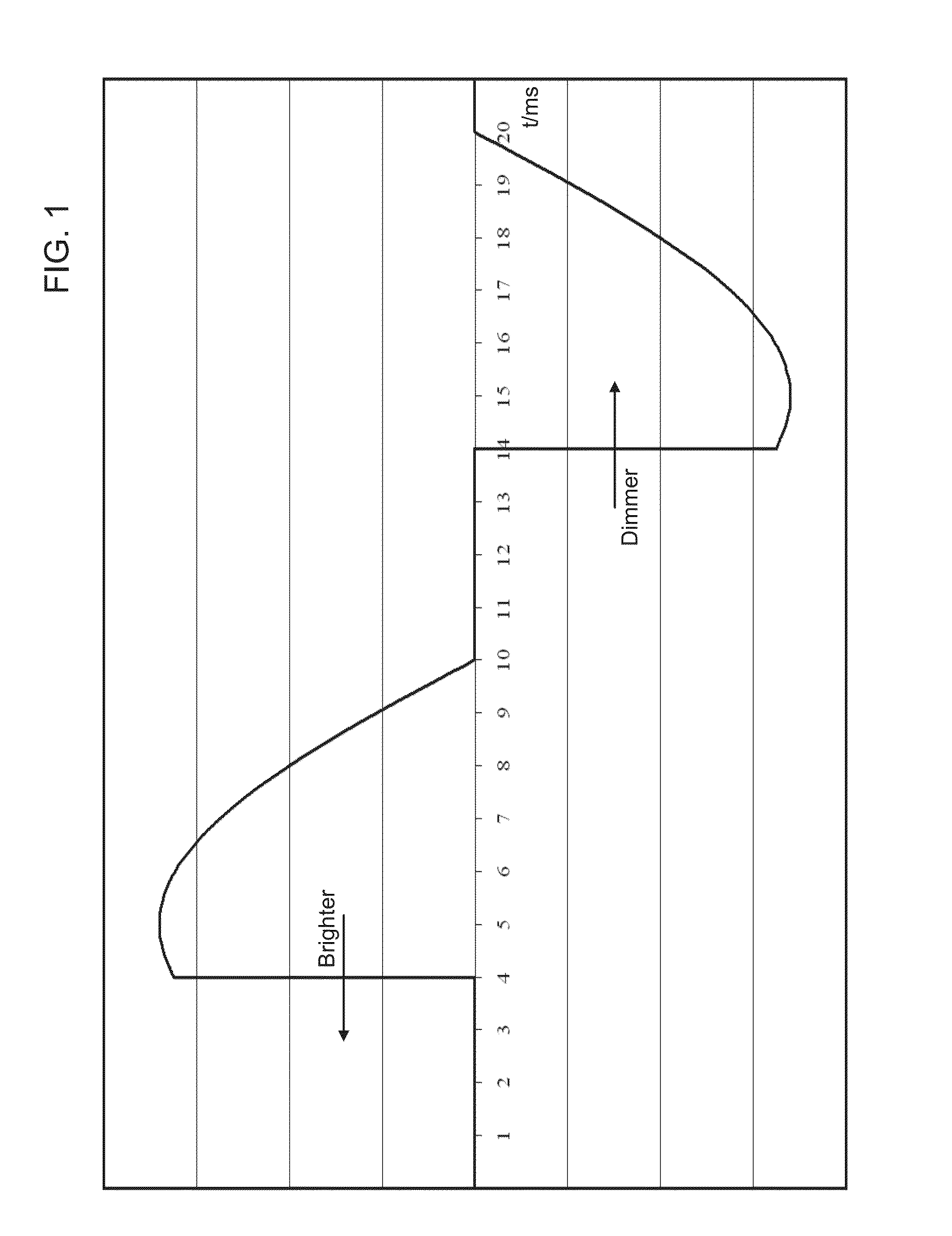
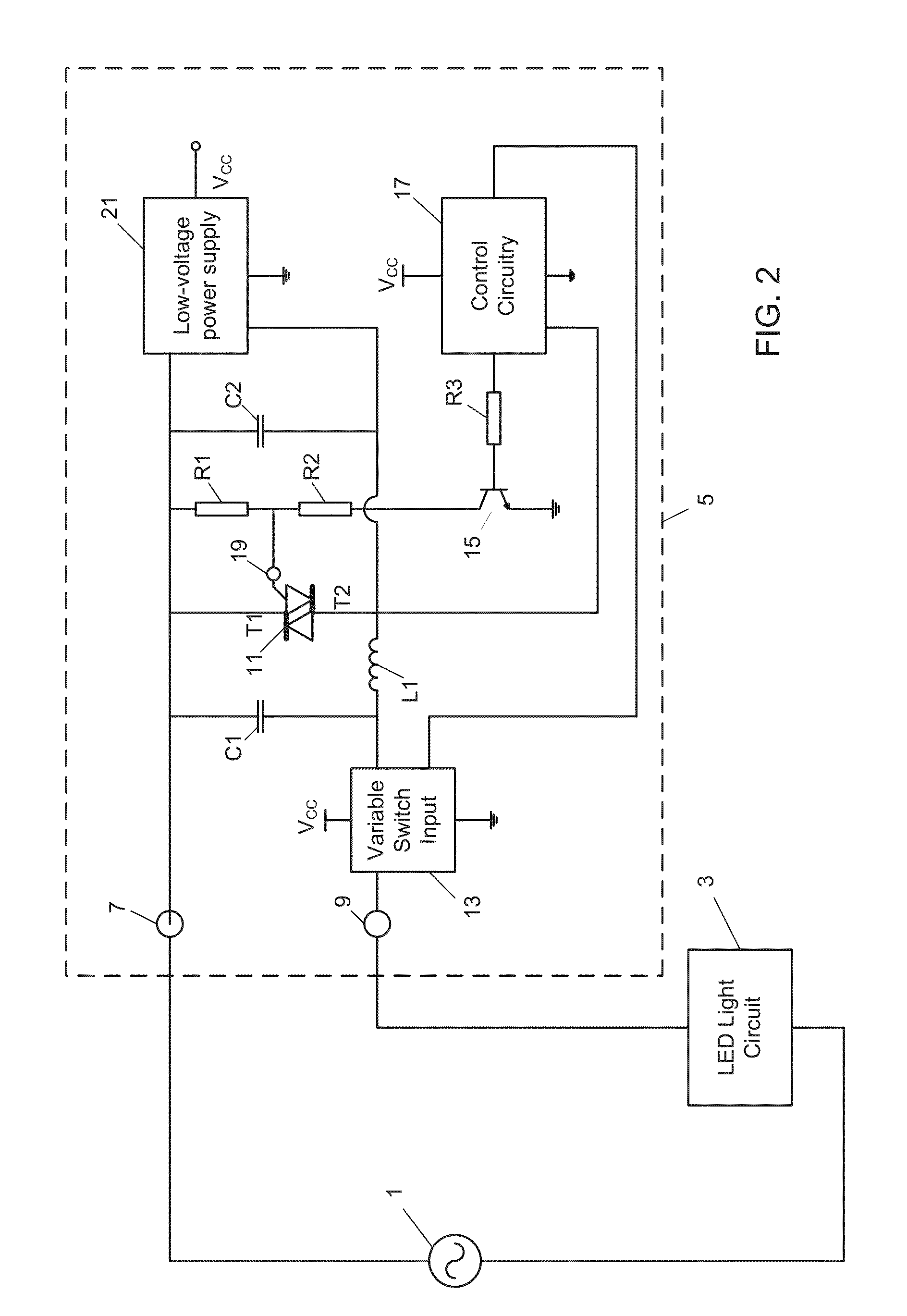
- A control circuit with voltage regulation means connected in parallel to a thyristor-type device, supplying distinct voltage waveforms to maintain the thyristor in a conducting state, reducing energy consumption and minimizing flicker by using a microcontroller to manage gate current, allowing the thyristor to remain conductive throughout the AC mains half-cycle.

Power Quality Standards and Grid Code Compliance
Thyristor-based voltage regulation systems must comply with stringent power quality standards to ensure reliable grid operation and minimize adverse effects on connected equipment. The IEEE 519 standard establishes harmonic distortion limits, requiring total harmonic distortion (THD) levels below 5% for voltage and 8% for current in most applications. Thyristor switching inherently generates harmonics due to non-linear switching characteristics, necessitating careful design consideration to meet these requirements.
Grid code compliance varies significantly across different regions and utility operators. European grid codes, such as those defined by ENTSO-E, mandate specific voltage regulation response times and accuracy levels for grid-connected thyristor systems. These requirements typically specify voltage regulation within ±1% of nominal values and response times under 100 milliseconds for dynamic voltage support applications. North American standards, governed by NERC reliability standards, emphasize similar precision requirements while adding specific fault ride-through capabilities.
Power factor requirements represent another critical compliance aspect for thyristor voltage regulation systems. Most grid codes require power factor maintenance above 0.95 lagging to leading, which can be challenging for thyristor-based systems due to their reactive power consumption characteristics. Advanced control algorithms must incorporate power factor correction mechanisms to ensure compliance while maintaining voltage regulation precision.
Voltage flicker standards, defined in IEC 61000-4-15, impose strict limits on voltage fluctuations that could affect sensitive loads. Thyristor switching operations must be carefully coordinated to minimize voltage disturbances, particularly during rapid load changes or fault conditions. This requires sophisticated control systems capable of predicting and compensating for potential voltage variations before they exceed acceptable thresholds.
Electromagnetic compatibility (EMC) requirements add another layer of complexity to thyristor voltage regulation design. Systems must demonstrate compliance with conducted and radiated emission limits while maintaining immunity to external electromagnetic disturbances. This necessitates comprehensive filtering solutions and shielding techniques that do not compromise the precision control capabilities of the thyristor-based regulation system.
Grid code compliance varies significantly across different regions and utility operators. European grid codes, such as those defined by ENTSO-E, mandate specific voltage regulation response times and accuracy levels for grid-connected thyristor systems. These requirements typically specify voltage regulation within ±1% of nominal values and response times under 100 milliseconds for dynamic voltage support applications. North American standards, governed by NERC reliability standards, emphasize similar precision requirements while adding specific fault ride-through capabilities.
Power factor requirements represent another critical compliance aspect for thyristor voltage regulation systems. Most grid codes require power factor maintenance above 0.95 lagging to leading, which can be challenging for thyristor-based systems due to their reactive power consumption characteristics. Advanced control algorithms must incorporate power factor correction mechanisms to ensure compliance while maintaining voltage regulation precision.
Voltage flicker standards, defined in IEC 61000-4-15, impose strict limits on voltage fluctuations that could affect sensitive loads. Thyristor switching operations must be carefully coordinated to minimize voltage disturbances, particularly during rapid load changes or fault conditions. This requires sophisticated control systems capable of predicting and compensating for potential voltage variations before they exceed acceptable thresholds.
Electromagnetic compatibility (EMC) requirements add another layer of complexity to thyristor voltage regulation design. Systems must demonstrate compliance with conducted and radiated emission limits while maintaining immunity to external electromagnetic disturbances. This necessitates comprehensive filtering solutions and shielding techniques that do not compromise the precision control capabilities of the thyristor-based regulation system.
Thermal Management in High-Power Thyristor Applications
Thermal management represents one of the most critical challenges in high-power thyristor applications, particularly when implementing precision voltage regulation techniques. The inherent power losses in thyristor devices generate substantial heat that must be effectively dissipated to maintain operational reliability and prevent thermal runaway conditions. These thermal considerations become increasingly complex as thyristor systems scale to higher power ratings and demand greater precision control.
The primary heat generation mechanisms in thyristor voltage regulation systems stem from conduction losses during the on-state and switching losses during commutation events. Forward voltage drop across the thyristor junction creates continuous power dissipation proportional to the load current, while rapid switching transitions generate transient thermal spikes. Advanced voltage regulation techniques that employ high-frequency switching or phase-angle control can exacerbate these thermal challenges by increasing switching frequency and creating non-uniform heat distribution patterns.
Modern thermal management solutions for high-power thyristor applications incorporate multi-layered approaches combining passive and active cooling strategies. Heat sink design optimization utilizes computational fluid dynamics modeling to maximize surface area and airflow efficiency. Liquid cooling systems with forced circulation provide superior heat removal capacity for ultra-high-power installations, often incorporating closed-loop temperature monitoring and adaptive flow control.
Junction temperature monitoring has evolved beyond traditional thermistor-based sensing to include real-time thermal impedance measurement and predictive thermal modeling. These advanced monitoring systems enable proactive thermal protection by anticipating temperature excursions before they occur, allowing for dynamic adjustment of switching patterns or load distribution to prevent overheating.
Thermal interface materials play a crucial role in minimizing thermal resistance between thyristor packages and cooling systems. Recent developments in phase-change materials and thermally conductive polymers have significantly improved heat transfer efficiency while maintaining electrical isolation. Proper mounting techniques and thermal compound application remain critical factors affecting long-term thermal performance and device reliability in precision control applications.
The primary heat generation mechanisms in thyristor voltage regulation systems stem from conduction losses during the on-state and switching losses during commutation events. Forward voltage drop across the thyristor junction creates continuous power dissipation proportional to the load current, while rapid switching transitions generate transient thermal spikes. Advanced voltage regulation techniques that employ high-frequency switching or phase-angle control can exacerbate these thermal challenges by increasing switching frequency and creating non-uniform heat distribution patterns.
Modern thermal management solutions for high-power thyristor applications incorporate multi-layered approaches combining passive and active cooling strategies. Heat sink design optimization utilizes computational fluid dynamics modeling to maximize surface area and airflow efficiency. Liquid cooling systems with forced circulation provide superior heat removal capacity for ultra-high-power installations, often incorporating closed-loop temperature monitoring and adaptive flow control.
Junction temperature monitoring has evolved beyond traditional thermistor-based sensing to include real-time thermal impedance measurement and predictive thermal modeling. These advanced monitoring systems enable proactive thermal protection by anticipating temperature excursions before they occur, allowing for dynamic adjustment of switching patterns or load distribution to prevent overheating.
Thermal interface materials play a crucial role in minimizing thermal resistance between thyristor packages and cooling systems. Recent developments in phase-change materials and thermally conductive polymers have significantly improved heat transfer efficiency while maintaining electrical isolation. Proper mounting techniques and thermal compound application remain critical factors affecting long-term thermal performance and device reliability in precision control applications.
Unlock deeper insights with Patsnap Eureka Quick Research — get a full tech report to explore trends and direct your research. Try now!
Generate Your Research Report Instantly with AI Agent
Supercharge your innovation with Patsnap Eureka AI Agent Platform!