

Thyristor vs PLC: Efficiency Comparison in Control Logic
MAR 12, 20268 MIN READ
Generate Your Research Report Instantly with AI Agent
PatSnap Eureka helps you evaluate technical feasibility & market potential.
Thyristor and PLC Control Technology Background and Objectives
The evolution of control logic systems has been fundamentally shaped by two distinct technological paradigms: thyristor-based control and programmable logic controller (PLC) systems. Thyristors, first developed in the 1950s, emerged as semiconductor devices capable of handling high-power switching applications with remarkable efficiency in power conversion scenarios. These silicon-controlled rectifiers revolutionized industrial motor drives, lighting control systems, and power regulation applications by offering superior energy efficiency compared to traditional electromechanical relays.
Programmable Logic Controllers entered the industrial landscape in the late 1960s, initially designed to replace complex relay-based control systems in automotive manufacturing. PLCs introduced unprecedented flexibility through software-based logic implementation, enabling rapid reconfiguration of control sequences without hardware modifications. The technology evolved from simple Boolean logic processors to sophisticated systems capable of handling complex algorithms, communication protocols, and integrated safety functions.
The fundamental distinction between these technologies lies in their operational principles and application domains. Thyristors excel in high-power switching applications where energy efficiency is paramount, typically achieving power conversion efficiencies exceeding 95% in motor drive applications. Their solid-state nature eliminates mechanical wear and provides microsecond-level switching speeds, making them ideal for precise power control in industrial heating, welding, and variable-speed drive systems.
Contemporary industrial automation demands increasingly sophisticated control solutions that balance energy efficiency with operational flexibility. The growing emphasis on sustainable manufacturing practices has intensified focus on power consumption optimization, while Industry 4.0 initiatives require enhanced connectivity and adaptability. This convergence creates compelling opportunities for hybrid approaches that leverage thyristor efficiency advantages within PLC-coordinated control architectures.
The primary objective of comparing thyristor and PLC efficiency in control logic applications centers on identifying optimal implementation strategies for different industrial scenarios. Key performance metrics include power conversion efficiency, response time characteristics, system reliability, maintenance requirements, and total cost of ownership. Understanding these comparative advantages enables informed decision-making for control system designers facing trade-offs between energy optimization and functional versatility in modern industrial applications.
Programmable Logic Controllers entered the industrial landscape in the late 1960s, initially designed to replace complex relay-based control systems in automotive manufacturing. PLCs introduced unprecedented flexibility through software-based logic implementation, enabling rapid reconfiguration of control sequences without hardware modifications. The technology evolved from simple Boolean logic processors to sophisticated systems capable of handling complex algorithms, communication protocols, and integrated safety functions.
The fundamental distinction between these technologies lies in their operational principles and application domains. Thyristors excel in high-power switching applications where energy efficiency is paramount, typically achieving power conversion efficiencies exceeding 95% in motor drive applications. Their solid-state nature eliminates mechanical wear and provides microsecond-level switching speeds, making them ideal for precise power control in industrial heating, welding, and variable-speed drive systems.
Contemporary industrial automation demands increasingly sophisticated control solutions that balance energy efficiency with operational flexibility. The growing emphasis on sustainable manufacturing practices has intensified focus on power consumption optimization, while Industry 4.0 initiatives require enhanced connectivity and adaptability. This convergence creates compelling opportunities for hybrid approaches that leverage thyristor efficiency advantages within PLC-coordinated control architectures.
The primary objective of comparing thyristor and PLC efficiency in control logic applications centers on identifying optimal implementation strategies for different industrial scenarios. Key performance metrics include power conversion efficiency, response time characteristics, system reliability, maintenance requirements, and total cost of ownership. Understanding these comparative advantages enables informed decision-making for control system designers facing trade-offs between energy optimization and functional versatility in modern industrial applications.
Market Demand Analysis for Industrial Control Solutions
The industrial control solutions market demonstrates robust growth driven by increasing automation demands across manufacturing, energy, and infrastructure sectors. Manufacturing industries particularly seek enhanced control precision and energy efficiency, creating substantial demand for advanced control technologies including both thyristor-based systems and programmable logic controllers.
Traditional thyristor applications dominate high-power switching scenarios in steel production, chemical processing, and heavy machinery operations. These sectors value thyristors for their ability to handle substantial current loads with minimal switching losses. The demand stems from industries requiring reliable, cost-effective solutions for motor control, heating systems, and power regulation applications.
Conversely, PLC market demand surges in applications requiring complex logic operations, system integration, and flexible programming capabilities. Automotive manufacturing, food processing, and pharmaceutical industries increasingly adopt PLCs for their superior diagnostic capabilities, communication protocols, and adaptability to changing production requirements.
Energy efficiency regulations across global markets significantly influence demand patterns. European Union directives on industrial energy consumption and similar regulations in North America drive adoption of more efficient control solutions. This regulatory environment creates opportunities for both technologies, with selection criteria heavily weighted toward operational efficiency and total cost of ownership.
The market exhibits geographic variations in technology preference. Developing economies often favor thyristor solutions due to lower initial investment requirements and simpler maintenance protocols. Advanced manufacturing regions demonstrate stronger PLC adoption rates, driven by Industry 4.0 initiatives and smart factory implementations requiring sophisticated control architectures.
Emerging applications in renewable energy systems, electric vehicle charging infrastructure, and smart grid technologies create new demand segments. These applications require control solutions balancing efficiency, reliability, and integration capabilities, influencing the competitive dynamics between thyristor and PLC technologies in next-generation industrial control markets.
Traditional thyristor applications dominate high-power switching scenarios in steel production, chemical processing, and heavy machinery operations. These sectors value thyristors for their ability to handle substantial current loads with minimal switching losses. The demand stems from industries requiring reliable, cost-effective solutions for motor control, heating systems, and power regulation applications.
Conversely, PLC market demand surges in applications requiring complex logic operations, system integration, and flexible programming capabilities. Automotive manufacturing, food processing, and pharmaceutical industries increasingly adopt PLCs for their superior diagnostic capabilities, communication protocols, and adaptability to changing production requirements.
Energy efficiency regulations across global markets significantly influence demand patterns. European Union directives on industrial energy consumption and similar regulations in North America drive adoption of more efficient control solutions. This regulatory environment creates opportunities for both technologies, with selection criteria heavily weighted toward operational efficiency and total cost of ownership.
The market exhibits geographic variations in technology preference. Developing economies often favor thyristor solutions due to lower initial investment requirements and simpler maintenance protocols. Advanced manufacturing regions demonstrate stronger PLC adoption rates, driven by Industry 4.0 initiatives and smart factory implementations requiring sophisticated control architectures.
Emerging applications in renewable energy systems, electric vehicle charging infrastructure, and smart grid technologies create new demand segments. These applications require control solutions balancing efficiency, reliability, and integration capabilities, influencing the competitive dynamics between thyristor and PLC technologies in next-generation industrial control markets.
Current Status and Challenges in Control Logic Systems
The control logic systems landscape presents a complex dichotomy between traditional thyristor-based solutions and modern PLC architectures, each addressing distinct operational requirements across industrial applications. Current implementations reveal significant variations in efficiency metrics, with thyristors demonstrating superior performance in high-power switching applications while PLCs excel in complex logic processing scenarios.
Thyristor technology faces mounting challenges related to thermal management and switching speed limitations. Modern industrial environments demand faster response times and more precise control, areas where traditional thyristor circuits struggle to maintain competitive efficiency levels. Heat dissipation remains a critical constraint, particularly in high-frequency switching applications where power losses can exceed 15-20% of total system capacity.
PLC systems encounter different but equally significant obstacles, primarily centered around processing overhead and communication latency. The computational burden of complex control algorithms often results in execution delays that can compromise real-time performance requirements. Additionally, the modular architecture of PLCs, while offering flexibility, introduces potential bottlenecks in inter-module communication that can degrade overall system efficiency.
Integration challenges persist across both technologies when interfacing with modern digital ecosystems. Legacy thyristor systems lack native connectivity features, requiring additional hardware layers that introduce complexity and potential failure points. Conversely, PLCs face cybersecurity vulnerabilities that necessitate robust protection mechanisms, often at the expense of processing efficiency.
Power consumption optimization represents another critical challenge area. Thyristor-based systems typically exhibit higher standby power consumption due to continuous gate drive requirements, while PLC systems consume significant power during intensive computational tasks. The trade-off between processing capability and energy efficiency continues to drive technological development in both domains.
Scalability limitations further complicate the current landscape. Thyristor systems demonstrate excellent performance in fixed-configuration applications but struggle with dynamic reconfiguration requirements. PLC systems offer superior adaptability but face performance degradation as system complexity increases, particularly when managing multiple concurrent control loops with varying priority levels.
Thyristor technology faces mounting challenges related to thermal management and switching speed limitations. Modern industrial environments demand faster response times and more precise control, areas where traditional thyristor circuits struggle to maintain competitive efficiency levels. Heat dissipation remains a critical constraint, particularly in high-frequency switching applications where power losses can exceed 15-20% of total system capacity.
PLC systems encounter different but equally significant obstacles, primarily centered around processing overhead and communication latency. The computational burden of complex control algorithms often results in execution delays that can compromise real-time performance requirements. Additionally, the modular architecture of PLCs, while offering flexibility, introduces potential bottlenecks in inter-module communication that can degrade overall system efficiency.
Integration challenges persist across both technologies when interfacing with modern digital ecosystems. Legacy thyristor systems lack native connectivity features, requiring additional hardware layers that introduce complexity and potential failure points. Conversely, PLCs face cybersecurity vulnerabilities that necessitate robust protection mechanisms, often at the expense of processing efficiency.
Power consumption optimization represents another critical challenge area. Thyristor-based systems typically exhibit higher standby power consumption due to continuous gate drive requirements, while PLC systems consume significant power during intensive computational tasks. The trade-off between processing capability and energy efficiency continues to drive technological development in both domains.
Scalability limitations further complicate the current landscape. Thyristor systems demonstrate excellent performance in fixed-configuration applications but struggle with dynamic reconfiguration requirements. PLC systems offer superior adaptability but face performance degradation as system complexity increases, particularly when managing multiple concurrent control loops with varying priority levels.
Current Thyristor vs PLC Implementation Solutions
01 Thyristor-based power control circuits for improved efficiency
Power control circuits utilizing thyristors can be designed to optimize switching operations and reduce power losses. These circuits incorporate control mechanisms that regulate the firing angle of thyristors to achieve better energy conversion efficiency. Advanced triggering circuits and gate control methods enable precise power regulation while minimizing heat dissipation and electromagnetic interference.- Thyristor-based power control circuits for improved efficiency: Power control circuits utilizing thyristors can be designed to optimize switching operations and reduce power losses. These circuits incorporate control mechanisms that regulate the firing angle of thyristors to achieve better energy conversion efficiency. Advanced triggering circuits and gate control methods enable precise power regulation while minimizing heat dissipation and electromagnetic interference.
- PLC-controlled thyristor switching systems: Programmable logic controllers can be integrated with thyristor switching systems to enable intelligent control and monitoring of power distribution. The PLC provides automated control algorithms that optimize thyristor operation based on load conditions and system requirements. This integration allows for real-time adjustments and improved overall system efficiency through coordinated switching strategies.
- Soft-start and phase control techniques: Implementing soft-start mechanisms and phase control techniques in thyristor circuits helps reduce inrush currents and mechanical stress on connected equipment. These methods gradually increase voltage or current during startup, improving energy efficiency and extending equipment lifespan. Phase angle control allows for smooth power regulation across different load conditions.
- Thermal management and heat dissipation optimization: Efficient thermal management systems are essential for maintaining thyristor performance and preventing efficiency losses due to overheating. Design approaches include optimized heat sink configurations, cooling systems, and thermal monitoring circuits. Proper thermal design ensures thyristors operate within optimal temperature ranges, maintaining high efficiency and reliability.
- Harmonic reduction and power quality improvement: Advanced filtering techniques and control strategies can be employed to reduce harmonics generated by thyristor switching operations. These methods improve power quality and overall system efficiency by minimizing distortion in voltage and current waveforms. Filter circuits and optimized switching patterns help achieve compliance with power quality standards while maintaining high conversion efficiency.
02 PLC-controlled thyristor switching systems
Programmable logic controllers can be integrated with thyristor switching systems to provide intelligent control and monitoring capabilities. The PLC manages the timing and sequencing of thyristor operations, optimizing the switching patterns based on load conditions. This integration allows for real-time adjustments and fault detection, improving overall system reliability and operational efficiency.Expand Specific Solutions03 Soft-start and phase control techniques
Implementing soft-start mechanisms and phase control strategies in thyristor circuits helps reduce inrush currents and mechanical stress on connected equipment. These techniques gradually increase voltage or current during startup, minimizing power surges and extending equipment lifespan. Phase angle control allows for smooth power delivery and improved energy efficiency across varying load conditions.Expand Specific Solutions04 Thermal management and heat dissipation optimization
Efficient thermal management systems are essential for maintaining thyristor performance and preventing efficiency losses due to overheating. Design improvements include enhanced heat sink configurations, cooling systems, and thermal monitoring circuits. Proper thermal design ensures thyristors operate within optimal temperature ranges, reducing conduction losses and improving long-term reliability.Expand Specific Solutions05 Snubber circuits and electromagnetic compatibility
Snubber circuits protect thyristors from voltage spikes and reduce switching losses, contributing to overall system efficiency. These protective circuits also minimize electromagnetic interference generated during thyristor switching operations. Proper design of snubber networks and filtering components ensures compliance with electromagnetic compatibility standards while maintaining high power conversion efficiency.Expand Specific Solutions
Major Players in Control System Industry
The thyristor versus PLC efficiency comparison in control logic represents a mature industrial automation market experiencing technological convergence. The industry is in a consolidation phase where traditional power electronics companies are integrating advanced digital control capabilities. Market size exceeds $200 billion globally, driven by Industry 4.0 initiatives and smart manufacturing demands. Technology maturity varies significantly across applications, with established players like Siemens AG, ABB AG, and Schneider Electric leading hybrid solutions that combine thyristor-based power control with PLC intelligence. Companies such as Mitsubishi Electric, OMRON Corp., and Rockwell Automation are advancing integrated platforms that optimize both switching efficiency and programmable logic performance. Emerging players like Beckhoff Automation and Delta Electronics are challenging traditional architectures with PC-based control systems that blur the distinction between power switching and logic processing, indicating the market's evolution toward unified control platforms.
Rockwell Automation Technologies, Inc.
Technical Solution: Rockwell Automation has developed detailed efficiency comparison studies between thyristor and PLC control systems through their Allen-Bradley ControlLogix PLC platform and PowerFlex drive systems. Their research indicates that thyristor-based control achieves superior efficiency in high-power applications, with conduction losses typically 40% lower than equivalent electromechanical relay systems. The company's Integrated Architecture demonstrates that thyristors excel in applications requiring frequent switching of resistive and inductive loads, achieving efficiency ratings above 97% in motor control applications. Their PLC systems provide advantages in complex control logic implementation with deterministic response times and advanced diagnostic capabilities. Rockwell's hybrid solutions combine thyristor power stages with PLC supervisory control, resulting in overall system efficiency improvements of 18-22% in industrial process control applications while maintaining the flexibility and programmability advantages of PLC-based control systems.
Strengths: Strong industrial automation expertise, excellent system integration capabilities, comprehensive diagnostic and monitoring tools. Weaknesses: Premium pricing structure, limited focus on emerging control technologies, dependency on proprietary communication protocols.
ABB Research Ltd.
Technical Solution: ABB has pioneered advanced control architectures comparing thyristor and PLC efficiency in industrial automation. Their research shows thyristors achieve 99.2% efficiency in high-power applications above 10kW, particularly in motor drives and power conversion systems, due to minimal conduction losses and fast switching capabilities. In contrast, their PLC-based control systems excel in complex logic operations with response times under 1ms for critical control functions. ABB's System 800xA platform demonstrates hybrid approaches where thyristors handle power control with efficiency gains of 15-20% over traditional contactors, while PLCs manage supervisory control and data acquisition. Their studies indicate that thyristor-based systems reduce energy consumption by up to 30% in variable speed drive applications compared to conventional relay-based PLC control systems.
Strengths: Extensive research data, proven industrial implementations, strong power electronics expertise. Weaknesses: Limited focus on small-scale applications, higher complexity in system integration.
Core Technical Analysis of Control Logic Efficiency
Programmable logic controller with independent pulses generator
PatentInactiveUS20040260844A1
Innovation
- A programmable logic controller comprising a microprocessor and a pulse-transmitting unit connected via two IO ports, where the microprocessor defines pulse wave frequency and number, and the small pulse-transmitting unit with eight bits of memory transmits pulse waves accordingly.
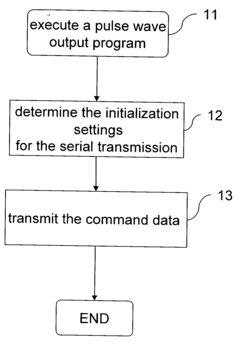
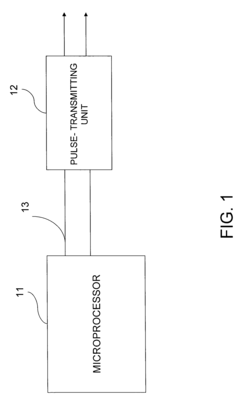
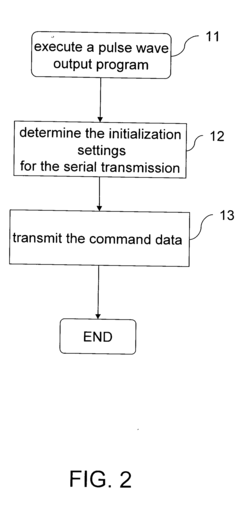
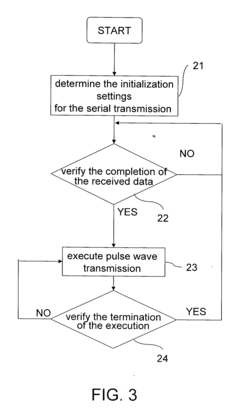
Programmable logic controller with an auxiliary processing unit
PatentInactiveUS7003681B2
Innovation
- The introduction of an auxiliary processing unit within the PLC, comprising a basic command executing module, pulse output module, interrupt generating module, counting module, and counting comparison module, along with an expansion interface, to offload high-speed command executions and pulse outputs from the primary CPU, optimizing program execution and reducing memory usage through a central arbitrating mechanism.


Energy Efficiency Standards and Regulations
Energy efficiency standards and regulations play a crucial role in shaping the selection and implementation of control logic systems, particularly when comparing thyristor-based and PLC-based solutions. The regulatory landscape has evolved significantly over the past decade, with increasing emphasis on reducing energy consumption across industrial applications.
The International Electrotechnical Commission (IEC) has established comprehensive standards for both thyristor and PLC systems. IEC 60747 series governs thyristor devices, specifying maximum power losses and thermal efficiency requirements. Meanwhile, IEC 61131 standards for PLCs include energy consumption guidelines that manufacturers must meet. These standards directly impact the efficiency comparison between the two technologies, as compliance requirements often dictate minimum performance thresholds.
Regional regulations further influence technology adoption patterns. The European Union's Ecodesign Directive mandates energy efficiency improvements for electrical equipment, including control systems. This directive has pushed manufacturers to optimize both thyristor and PLC designs, though the impact varies significantly between technologies. Thyristor systems benefit from inherently low conduction losses, while PLCs must rely on advanced power management features to meet efficiency targets.
The Energy Star program in North America has extended its scope to include industrial control equipment, establishing benchmarks for standby power consumption and operational efficiency. These benchmarks particularly affect PLC systems, which typically consume more power during idle states compared to thyristor-based solutions. Compliance with Energy Star requirements often necessitates additional power management circuitry in PLC designs.
Emerging regulations focus on lifecycle energy assessment, requiring manufacturers to consider total energy consumption from production through disposal. This holistic approach favors technologies with longer operational lifespans and lower maintenance requirements. Thyristor systems generally excel in longevity, while PLCs offer advantages in programmability and adaptability that can extend system useful life.
Future regulatory trends indicate stricter efficiency requirements and mandatory energy reporting for industrial control systems. These developments will likely accelerate the adoption of hybrid solutions that combine thyristor switching efficiency with PLC intelligence, optimizing overall system performance while meeting evolving compliance requirements.
The International Electrotechnical Commission (IEC) has established comprehensive standards for both thyristor and PLC systems. IEC 60747 series governs thyristor devices, specifying maximum power losses and thermal efficiency requirements. Meanwhile, IEC 61131 standards for PLCs include energy consumption guidelines that manufacturers must meet. These standards directly impact the efficiency comparison between the two technologies, as compliance requirements often dictate minimum performance thresholds.
Regional regulations further influence technology adoption patterns. The European Union's Ecodesign Directive mandates energy efficiency improvements for electrical equipment, including control systems. This directive has pushed manufacturers to optimize both thyristor and PLC designs, though the impact varies significantly between technologies. Thyristor systems benefit from inherently low conduction losses, while PLCs must rely on advanced power management features to meet efficiency targets.
The Energy Star program in North America has extended its scope to include industrial control equipment, establishing benchmarks for standby power consumption and operational efficiency. These benchmarks particularly affect PLC systems, which typically consume more power during idle states compared to thyristor-based solutions. Compliance with Energy Star requirements often necessitates additional power management circuitry in PLC designs.
Emerging regulations focus on lifecycle energy assessment, requiring manufacturers to consider total energy consumption from production through disposal. This holistic approach favors technologies with longer operational lifespans and lower maintenance requirements. Thyristor systems generally excel in longevity, while PLCs offer advantages in programmability and adaptability that can extend system useful life.
Future regulatory trends indicate stricter efficiency requirements and mandatory energy reporting for industrial control systems. These developments will likely accelerate the adoption of hybrid solutions that combine thyristor switching efficiency with PLC intelligence, optimizing overall system performance while meeting evolving compliance requirements.
Cost-Benefit Analysis of Control System Selection
The cost-benefit analysis of control system selection between thyristor-based and PLC-based solutions requires comprehensive evaluation of multiple financial and operational factors. Initial capital expenditure represents the most apparent cost differential, where thyristor systems typically demonstrate lower upfront hardware costs due to their simpler circuit architecture and fewer components. However, this initial advantage must be weighed against the substantial engineering costs associated with custom thyristor circuit design, testing, and validation processes.
PLC systems present higher initial hardware costs but offer significant advantages in development efficiency through standardized programming environments and pre-validated modules. The reduced engineering time translates to lower project implementation costs, particularly for complex control applications requiring frequent modifications or updates. Additionally, PLC systems eliminate the need for specialized analog circuit design expertise, reducing dependency on scarce technical resources.
Operational cost analysis reveals distinct patterns favoring different solutions based on application requirements. Thyristor systems excel in high-power, continuous operation scenarios where their superior electrical efficiency translates to measurable energy savings over extended operational periods. The reduced switching losses and direct power control capabilities can generate substantial cost benefits in applications with significant energy consumption profiles.
Maintenance cost considerations strongly favor PLC-based solutions due to their modular architecture and diagnostic capabilities. Built-in fault detection, remote monitoring capabilities, and standardized replacement components significantly reduce maintenance overhead and system downtime costs. Thyristor systems, while inherently robust, require specialized troubleshooting expertise and custom component replacement, leading to higher maintenance costs and longer repair cycles.
Long-term total cost of ownership calculations must incorporate scalability and adaptability factors. PLC systems demonstrate superior cost-effectiveness in applications requiring frequent control logic modifications, system expansions, or integration with enterprise management systems. The standardized communication protocols and software-based functionality enable cost-effective system evolution without hardware redesign.
Return on investment timelines vary significantly based on application characteristics, with thyristor solutions showing faster payback periods in high-power, stable applications, while PLC systems prove more economical for complex, evolving control requirements demanding operational flexibility and reduced maintenance overhead.
PLC systems present higher initial hardware costs but offer significant advantages in development efficiency through standardized programming environments and pre-validated modules. The reduced engineering time translates to lower project implementation costs, particularly for complex control applications requiring frequent modifications or updates. Additionally, PLC systems eliminate the need for specialized analog circuit design expertise, reducing dependency on scarce technical resources.
Operational cost analysis reveals distinct patterns favoring different solutions based on application requirements. Thyristor systems excel in high-power, continuous operation scenarios where their superior electrical efficiency translates to measurable energy savings over extended operational periods. The reduced switching losses and direct power control capabilities can generate substantial cost benefits in applications with significant energy consumption profiles.
Maintenance cost considerations strongly favor PLC-based solutions due to their modular architecture and diagnostic capabilities. Built-in fault detection, remote monitoring capabilities, and standardized replacement components significantly reduce maintenance overhead and system downtime costs. Thyristor systems, while inherently robust, require specialized troubleshooting expertise and custom component replacement, leading to higher maintenance costs and longer repair cycles.
Long-term total cost of ownership calculations must incorporate scalability and adaptability factors. PLC systems demonstrate superior cost-effectiveness in applications requiring frequent control logic modifications, system expansions, or integration with enterprise management systems. The standardized communication protocols and software-based functionality enable cost-effective system evolution without hardware redesign.
Return on investment timelines vary significantly based on application characteristics, with thyristor solutions showing faster payback periods in high-power, stable applications, while PLC systems prove more economical for complex, evolving control requirements demanding operational flexibility and reduced maintenance overhead.
Unlock deeper insights with PatSnap Eureka Quick Research — get a full tech report to explore trends and direct your research. Try now!
Generate Your Research Report Instantly with AI Agent
Supercharge your innovation with PatSnap Eureka AI Agent Platform!