

Triethanolamine's Impact on Plasticizer Migration in Polymers
APR 3, 20269 MIN READ
Generate Your Research Report Instantly with AI Agent
PatSnap Eureka helps you evaluate technical feasibility & market potential.
TEA-Plasticizer Migration Background and Research Objectives
Plasticizer migration in polymer systems represents a critical challenge in materials science, affecting product durability, safety, and performance across numerous industrial applications. This phenomenon occurs when plasticizing agents gradually migrate from the polymer matrix to the surface or into adjacent materials, leading to material degradation, loss of flexibility, and potential health concerns. The migration process is influenced by multiple factors including temperature, time, chemical compatibility, and the presence of various additives.
Triethanolamine (TEA), a tertiary amine compound with three hydroxyl groups, has emerged as a significant factor in plasticizer migration studies due to its widespread use as a stabilizer, emulsifier, and pH adjuster in polymer formulations. The molecular structure of TEA, featuring both hydrophilic and lipophilic characteristics, enables complex interactions with plasticizers and polymer chains that can substantially alter migration kinetics.
Historical research in plasticizer migration began in the mid-20th century when phthalate-based plasticizers became prevalent in polyvinyl chloride (PVC) applications. Early studies focused primarily on temperature and concentration effects, but the role of auxiliary additives like TEA gained attention as formulations became more complex. The evolution of analytical techniques, from gravimetric methods to sophisticated chromatographic analyses, has enabled more precise quantification of migration phenomena.
The primary research objective centers on elucidating the mechanistic pathways through which TEA influences plasticizer migration rates and patterns in various polymer systems. This includes investigating whether TEA acts as a migration accelerator, inhibitor, or exhibits concentration-dependent dual behavior. Understanding the molecular-level interactions between TEA, plasticizers, and polymer matrices is crucial for developing predictive models.
Secondary objectives encompass evaluating the impact of TEA concentration, molecular weight distribution, and processing conditions on migration kinetics. The research aims to establish quantitative relationships between TEA content and migration coefficients across different plasticizer types, including phthalates, adipates, and bio-based alternatives.
Long-term goals include developing optimized formulation strategies that leverage TEA's properties to control plasticizer migration while maintaining desired mechanical and processing characteristics. This research contributes to advancing sustainable polymer technologies and addressing regulatory requirements for reduced plasticizer migration in food contact materials and medical devices.
Triethanolamine (TEA), a tertiary amine compound with three hydroxyl groups, has emerged as a significant factor in plasticizer migration studies due to its widespread use as a stabilizer, emulsifier, and pH adjuster in polymer formulations. The molecular structure of TEA, featuring both hydrophilic and lipophilic characteristics, enables complex interactions with plasticizers and polymer chains that can substantially alter migration kinetics.
Historical research in plasticizer migration began in the mid-20th century when phthalate-based plasticizers became prevalent in polyvinyl chloride (PVC) applications. Early studies focused primarily on temperature and concentration effects, but the role of auxiliary additives like TEA gained attention as formulations became more complex. The evolution of analytical techniques, from gravimetric methods to sophisticated chromatographic analyses, has enabled more precise quantification of migration phenomena.
The primary research objective centers on elucidating the mechanistic pathways through which TEA influences plasticizer migration rates and patterns in various polymer systems. This includes investigating whether TEA acts as a migration accelerator, inhibitor, or exhibits concentration-dependent dual behavior. Understanding the molecular-level interactions between TEA, plasticizers, and polymer matrices is crucial for developing predictive models.
Secondary objectives encompass evaluating the impact of TEA concentration, molecular weight distribution, and processing conditions on migration kinetics. The research aims to establish quantitative relationships between TEA content and migration coefficients across different plasticizer types, including phthalates, adipates, and bio-based alternatives.
Long-term goals include developing optimized formulation strategies that leverage TEA's properties to control plasticizer migration while maintaining desired mechanical and processing characteristics. This research contributes to advancing sustainable polymer technologies and addressing regulatory requirements for reduced plasticizer migration in food contact materials and medical devices.
Market Demand for Migration-Resistant Polymer Applications
The global polymer industry faces mounting pressure to develop migration-resistant applications as regulatory frameworks tighten and consumer awareness increases regarding chemical safety. Food packaging represents the largest market segment driving demand for enhanced migration control, where polymer materials must comply with stringent regulations from agencies such as the FDA, EFSA, and various national authorities. These regulations establish specific migration limits for additives, including plasticizers, creating substantial market opportunities for improved polymer formulations.
Medical device manufacturing constitutes another critical market segment requiring superior migration resistance. Biocompatible polymers used in medical applications must demonstrate minimal leaching of additives to ensure patient safety and regulatory compliance. The pharmaceutical packaging sector similarly demands materials that prevent migration of plasticizers and other additives that could compromise drug stability or introduce contaminants.
Consumer electronics and automotive industries represent emerging markets for migration-resistant polymers. Electronic components require materials that maintain dimensional stability and prevent plasticizer migration that could affect performance or create safety hazards. Automotive applications increasingly demand polymers with enhanced durability and reduced outgassing characteristics, particularly for interior components where migration could impact air quality.
The construction industry shows growing interest in migration-resistant polymer applications, particularly for potable water systems and indoor air quality considerations. Building materials incorporating polymers must demonstrate long-term stability and minimal additive migration to meet green building standards and health-conscious construction practices.
Market drivers include evolving regulatory landscapes that continuously lower acceptable migration limits, increasing consumer demand for safer products, and growing awareness of endocrine-disrupting chemicals. The circular economy trend further amplifies demand as recycled polymers require enhanced additive retention to maintain performance through multiple use cycles.
Technological advancement opportunities exist in developing novel polymer matrices that inherently resist plasticizer migration while maintaining desired mechanical properties. The integration of triethanolamine-based systems presents particular promise for creating hydrogen bonding networks that could significantly reduce migration rates across multiple application sectors, potentially capturing substantial market share in these high-value, safety-critical applications.
Medical device manufacturing constitutes another critical market segment requiring superior migration resistance. Biocompatible polymers used in medical applications must demonstrate minimal leaching of additives to ensure patient safety and regulatory compliance. The pharmaceutical packaging sector similarly demands materials that prevent migration of plasticizers and other additives that could compromise drug stability or introduce contaminants.
Consumer electronics and automotive industries represent emerging markets for migration-resistant polymers. Electronic components require materials that maintain dimensional stability and prevent plasticizer migration that could affect performance or create safety hazards. Automotive applications increasingly demand polymers with enhanced durability and reduced outgassing characteristics, particularly for interior components where migration could impact air quality.
The construction industry shows growing interest in migration-resistant polymer applications, particularly for potable water systems and indoor air quality considerations. Building materials incorporating polymers must demonstrate long-term stability and minimal additive migration to meet green building standards and health-conscious construction practices.
Market drivers include evolving regulatory landscapes that continuously lower acceptable migration limits, increasing consumer demand for safer products, and growing awareness of endocrine-disrupting chemicals. The circular economy trend further amplifies demand as recycled polymers require enhanced additive retention to maintain performance through multiple use cycles.
Technological advancement opportunities exist in developing novel polymer matrices that inherently resist plasticizer migration while maintaining desired mechanical properties. The integration of triethanolamine-based systems presents particular promise for creating hydrogen bonding networks that could significantly reduce migration rates across multiple application sectors, potentially capturing substantial market share in these high-value, safety-critical applications.
Current TEA Migration Issues and Technical Challenges
Triethanolamine migration in polymer systems presents several critical technical challenges that significantly impact material performance and regulatory compliance. The primary issue stems from TEA's inherent molecular characteristics, including its relatively low molecular weight and polar nature, which facilitate diffusion through polymer matrices. This migration tendency is particularly pronounced in flexible PVC formulations where TEA serves as both a stabilizer and processing aid.
Temperature-dependent migration represents one of the most significant challenges in TEA-containing polymer systems. Elevated processing temperatures during manufacturing and subsequent thermal exposure during service life accelerate TEA mobility within the polymer network. The activation energy for TEA diffusion varies considerably across different polymer types, with thermoplastic elastomers showing particularly high migration rates at temperatures exceeding 60°C.
Compatibility issues between TEA and various plasticizer systems create complex migration patterns that are difficult to predict and control. When TEA interacts with phthalate-based plasticizers, it can form coordination complexes that alter the migration kinetics of both components. This phenomenon is especially problematic in medical-grade polymers where precise control over leachable substances is critical for regulatory approval.
Surface blooming represents another major technical challenge, where TEA migrates to the polymer surface and crystallizes, creating visible defects and compromising material aesthetics. This issue is exacerbated in humid environments where TEA's hygroscopic nature leads to moisture absorption and subsequent surface degradation. The blooming phenomenon is particularly severe in thin-film applications and flexible packaging materials.
Analytical detection and quantification of TEA migration pose significant technical hurdles due to the compound's volatility and reactivity. Traditional extraction methods often underestimate actual migration levels because TEA can undergo chemical transformations during testing procedures. Advanced analytical techniques such as headspace GC-MS and LC-MS/MS are required for accurate quantification, but these methods require specialized expertise and equipment.
The interaction between TEA and polymer additives creates synergistic effects that complicate migration prediction models. Antioxidants, UV stabilizers, and other functional additives can either enhance or inhibit TEA migration through various mechanisms including competitive diffusion and chemical interaction. These complex multi-component systems require sophisticated modeling approaches that current industry standards have not fully addressed.
Regulatory compliance challenges arise from varying international standards for TEA migration limits across different applications. Food contact materials, medical devices, and consumer products each have distinct requirements, making it difficult for manufacturers to develop universal formulations that meet all regulatory frameworks while maintaining desired performance characteristics.
Temperature-dependent migration represents one of the most significant challenges in TEA-containing polymer systems. Elevated processing temperatures during manufacturing and subsequent thermal exposure during service life accelerate TEA mobility within the polymer network. The activation energy for TEA diffusion varies considerably across different polymer types, with thermoplastic elastomers showing particularly high migration rates at temperatures exceeding 60°C.
Compatibility issues between TEA and various plasticizer systems create complex migration patterns that are difficult to predict and control. When TEA interacts with phthalate-based plasticizers, it can form coordination complexes that alter the migration kinetics of both components. This phenomenon is especially problematic in medical-grade polymers where precise control over leachable substances is critical for regulatory approval.
Surface blooming represents another major technical challenge, where TEA migrates to the polymer surface and crystallizes, creating visible defects and compromising material aesthetics. This issue is exacerbated in humid environments where TEA's hygroscopic nature leads to moisture absorption and subsequent surface degradation. The blooming phenomenon is particularly severe in thin-film applications and flexible packaging materials.
Analytical detection and quantification of TEA migration pose significant technical hurdles due to the compound's volatility and reactivity. Traditional extraction methods often underestimate actual migration levels because TEA can undergo chemical transformations during testing procedures. Advanced analytical techniques such as headspace GC-MS and LC-MS/MS are required for accurate quantification, but these methods require specialized expertise and equipment.
The interaction between TEA and polymer additives creates synergistic effects that complicate migration prediction models. Antioxidants, UV stabilizers, and other functional additives can either enhance or inhibit TEA migration through various mechanisms including competitive diffusion and chemical interaction. These complex multi-component systems require sophisticated modeling approaches that current industry standards have not fully addressed.
Regulatory compliance challenges arise from varying international standards for TEA migration limits across different applications. Food contact materials, medical devices, and consumer products each have distinct requirements, making it difficult for manufacturers to develop universal formulations that meet all regulatory frameworks while maintaining desired performance characteristics.
Existing TEA Migration Prevention Solutions
01 Use of migration-resistant plasticizers in polymer compositions
Certain plasticizers with reduced migration properties can be incorporated into polymer formulations to minimize the migration of triethanolamine and other additives. These plasticizers are designed with higher molecular weights or specific chemical structures that reduce their tendency to migrate from the polymer matrix. The use of such plasticizers helps maintain the integrity and performance of the final product over time by preventing the loss of essential components.- Use of migration-resistant plasticizers in polymer compositions: Certain plasticizers with reduced migration properties can be incorporated into polymer formulations to minimize the migration of triethanolamine and other additives. These plasticizers are designed with higher molecular weights or specific chemical structures that reduce their tendency to migrate from the polymer matrix. By selecting appropriate migration-resistant plasticizers, the stability and durability of the final product can be improved while maintaining desired flexibility and processing characteristics.
- Barrier coating technologies to prevent plasticizer migration: Application of barrier coatings or layers on polymer surfaces can effectively prevent or reduce the migration of plasticizers and triethanolamine. These barrier layers act as physical obstacles that restrict the movement of small molecules from the polymer matrix to the surface or to adjacent materials. Various coating materials and application methods can be employed to create effective migration barriers while maintaining the functional properties of the underlying polymer.
- Chemical modification of triethanolamine to reduce migration: Chemical modification or derivatization of triethanolamine can reduce its migration tendency by increasing molecular size or altering its chemical properties. Modified triethanolamine compounds with enhanced compatibility with the polymer matrix or reduced volatility can be synthesized and incorporated into formulations. These modifications may include grafting, polymerization, or complexation reactions that anchor the triethanolamine molecules more firmly within the polymer structure.
- Optimization of polymer formulation composition to control migration: Adjusting the overall composition of polymer formulations, including the ratio of plasticizers, stabilizers, and other additives, can help control triethanolamine migration. By optimizing the compatibility between components and selecting appropriate molecular weight distributions, the migration rate can be significantly reduced. This approach may involve using compatibilizers, adjusting processing conditions, or incorporating specific additives that interact with triethanolamine to limit its mobility.
- Testing and evaluation methods for plasticizer migration: Development and application of standardized testing methods to measure and evaluate plasticizer migration, including triethanolamine, from polymer materials. These methods typically involve accelerated aging tests, extraction procedures, and analytical techniques to quantify migration rates under various conditions. Understanding migration behavior through systematic testing enables better formulation design and quality control to meet regulatory requirements and performance specifications.
02 Barrier layer technology to prevent plasticizer migration
The incorporation of barrier layers or coatings in multi-layer structures can effectively prevent the migration of plasticizers and triethanolamine between different layers or to the surface. These barrier layers are typically made from materials with low permeability to small molecules, creating a physical barrier that restricts the movement of additives. This technology is particularly useful in packaging materials and medical devices where migration control is critical.Expand Specific Solutions03 Chemical modification of triethanolamine to reduce migration
Chemical modification techniques can be applied to triethanolamine to increase its molecular weight or create covalent bonds with the polymer matrix, thereby reducing its migration tendency. These modifications may include polymerization, grafting, or cross-linking reactions that anchor the triethanolamine molecules within the polymer structure. Such approaches provide a more permanent solution to migration issues while maintaining the desired functional properties.Expand Specific Solutions04 Optimization of polymer formulation composition
Adjusting the overall composition of polymer formulations, including the ratio of plasticizers, stabilizers, and other additives, can help minimize migration issues. This approach involves selecting compatible components that have strong interactions with each other and the polymer matrix, reducing the driving force for migration. Proper formulation design considers factors such as solubility parameters, molecular interactions, and processing conditions to achieve optimal migration resistance.Expand Specific Solutions05 Testing and evaluation methods for plasticizer migration
Various analytical and testing methods have been developed to assess and quantify plasticizer migration from polymer materials. These methods include extraction tests, migration simulation studies, and analytical techniques such as chromatography and spectroscopy. Standardized testing protocols help manufacturers evaluate the migration behavior of their formulations under different conditions, enabling them to optimize compositions and ensure compliance with regulatory requirements.Expand Specific Solutions
Key Players in Polymer Additives and Migration Control
The triethanolamine's impact on plasticizer migration in polymers represents a mature research area within the broader polymer additives industry, currently valued at approximately $50 billion globally. The field is in a consolidation phase, dominated by established chemical giants including BASF Corp., Arkema France SA, and Dow Global Technologies LLC, who possess extensive R&D capabilities and manufacturing infrastructure. Technology maturity is high among major players like LG Chem Ltd., Kuraray Co. Ltd., and ExxonMobil Technology & Engineering Co., with these companies having developed sophisticated migration control solutions over decades. Academic institutions such as Sichuan University and South China University of Technology contribute fundamental research, while specialty chemical companies like Oxea GmbH and emerging Asian players including Zhejiang Huangma Technology Co. Ltd. focus on niche applications and cost-effective solutions, creating a competitive landscape characterized by incremental innovations rather than breakthrough technologies.
Arkema France SA
Technical Solution: Arkema has developed innovative triethanolamine-modified polymer matrices that significantly reduce plasticizer migration through chemical crosslinking mechanisms. Their KYNAR technology incorporates TEA as a reactive modifier that forms covalent bonds with both polymer chains and plasticizer molecules, creating a three-dimensional network that restricts molecular mobility. This approach has shown migration reduction of up to 60% in fluoropolymer applications, particularly effective for high-performance films requiring long-term stability. The company's research focuses on optimizing reaction conditions to balance migration control with mechanical properties retention.
Strengths: Superior migration control through chemical bonding and excellent performance in high-temperature applications. Weaknesses: Complex processing requirements and potential impact on polymer flexibility at high TEA concentrations.
BASF Corp.
Technical Solution: BASF has developed comprehensive polymer stabilization systems that incorporate triethanolamine as a migration inhibitor in plasticized polymer formulations. Their technology focuses on creating molecular barriers through hydrogen bonding networks between triethanolamine and plasticizer molecules, effectively reducing migration rates by up to 40% in PVC applications. The company's approach involves optimizing the molecular weight distribution and polarity matching between TEA and various phthalate plasticizers to minimize diffusion coefficients. Their research demonstrates that triethanolamine acts as both a compatibilizer and migration retardant, particularly effective in flexible PVC films used in food packaging applications.
Strengths: Extensive research database and proven industrial applications with quantifiable migration reduction. Weaknesses: Limited effectiveness with non-polar plasticizers and potential color stability issues in UV exposure.
Core Patents in TEA-Plasticizer Interaction Control
Method for inhibiting migration of plasticizer in esterified starch film and esterified starch film
PatentActiveCN104530490A
Innovation
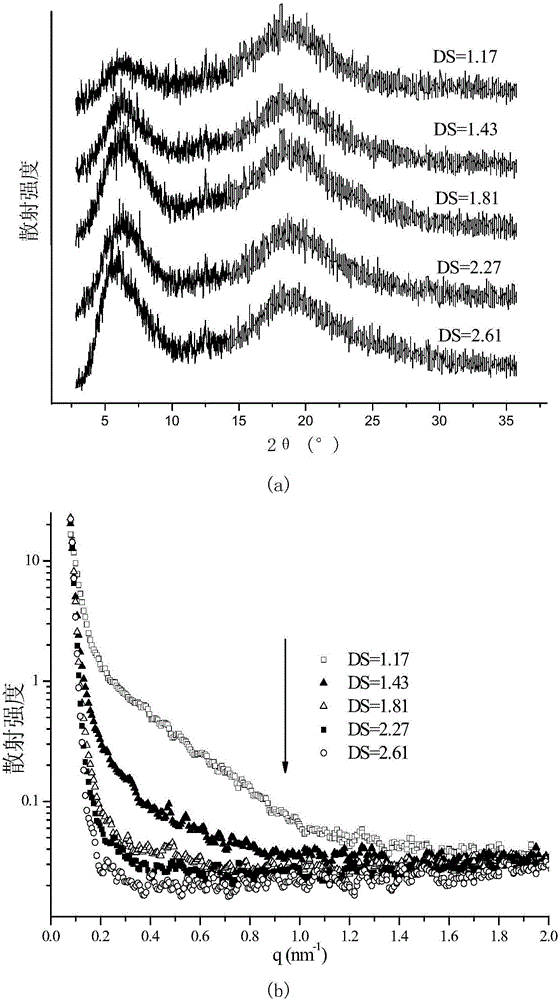
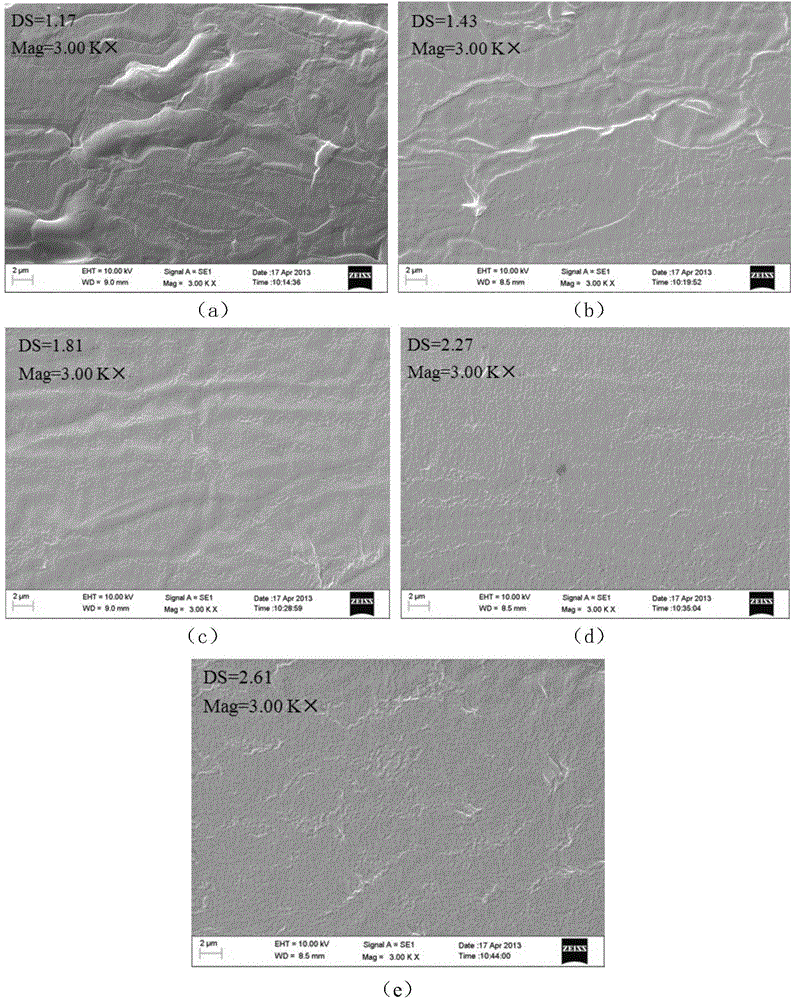
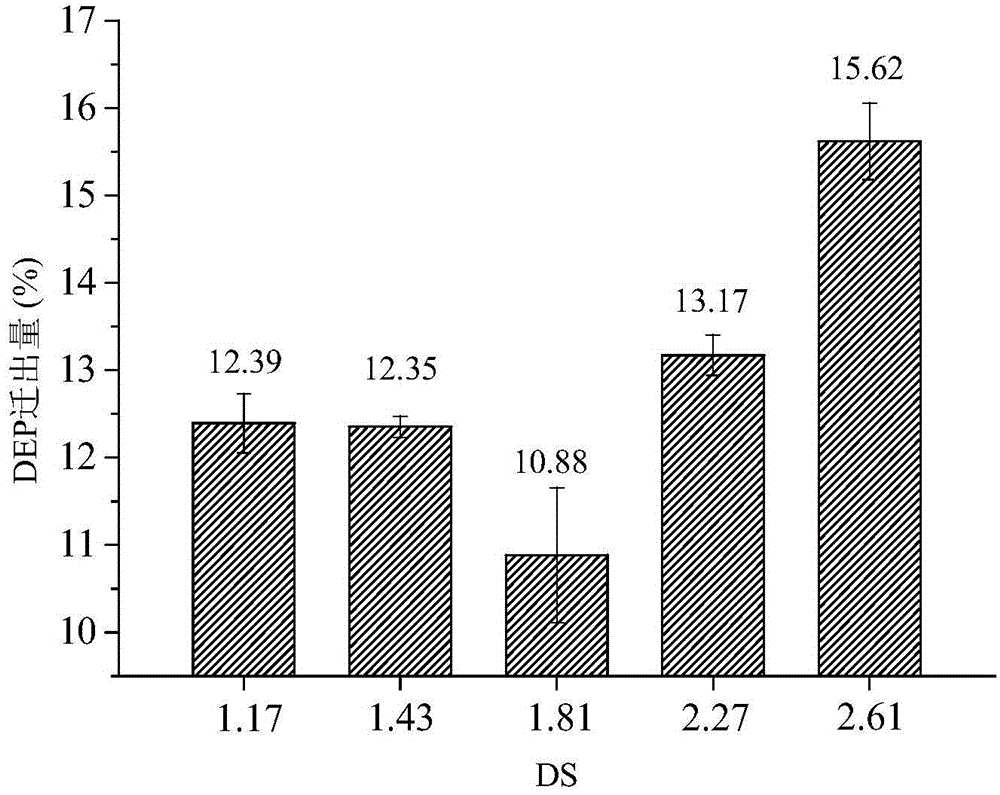
- By screening appropriate blends of esterified starch and plasticizers, fluidized bed spraying technology is used to prepare esterified starch films with ordered micro-scales. The degree of esterification reaction and spraying conditions are controlled to form an aggregated structure to limit plasticization. migration of agents.

Use of molecules carrying associative groups as plasticisers
PatentWO2011135228A1
Innovation
- The use of molecules with an average molecular mass greater than 500 g/mol, carrying at least one associative group comprising a nitrogenous heterocycle, which act as plasticizers by modifying the mechanical properties of polymers, such as lowering the glass transition temperature and decreasing viscosity and mechanical modulus, while minimizing migration and volatility.


Regulatory Framework for Polymer Migration Standards
The regulatory landscape governing polymer migration standards has evolved significantly to address growing concerns about chemical migration from polymer materials into food, pharmaceuticals, and consumer products. International harmonization efforts have led to the development of comprehensive frameworks that establish maximum allowable migration limits for various chemical substances, including plasticizers and their migration-enhancing agents like triethanolamine.
The European Union's Framework Regulation (EC) No 1935/2004 serves as the cornerstone legislation, establishing general safety requirements for materials intended to come into contact with food. This is complemented by Commission Regulation (EU) No 10/2011, which specifically addresses plastic materials and articles, setting overall migration limits of 10 mg/dm² or 60 mg/kg food simulant. These regulations incorporate specific migration limits for individual substances, with particular attention to plasticizers such as phthalates, which are subject to stringent restrictions due to their potential endocrine-disrupting properties.
The United States Food and Drug Administration operates under Title 21 of the Code of Federal Regulations, particularly sections 174-178, which govern indirect food additives including those used in food-contact polymers. The FDA's approach emphasizes pre-market approval through food contact notifications and food additive petitions, requiring comprehensive migration data under intended use conditions. The agency has established threshold of regulation exemptions for substances migrating at levels below 0.5 ppb in the daily diet.
Testing methodologies prescribed by regulatory bodies follow standardized protocols developed by organizations such as ASTM International and the European Committee for Standardization. These standards specify migration testing conditions including temperature, time, and food simulants that represent different food categories. The selection of appropriate simulants is critical, as substances like triethanolamine can significantly alter migration kinetics depending on the simulant's polarity and pH.
Recent regulatory developments have focused on establishing migration limits for non-intentionally added substances and implementing risk assessment frameworks that consider cumulative exposure from multiple sources. Regulatory agencies are increasingly requiring manufacturers to demonstrate that migration levels remain within acceptable limits throughout the product's intended shelf life, accounting for potential synergistic effects of migration enhancers.
The European Union's Framework Regulation (EC) No 1935/2004 serves as the cornerstone legislation, establishing general safety requirements for materials intended to come into contact with food. This is complemented by Commission Regulation (EU) No 10/2011, which specifically addresses plastic materials and articles, setting overall migration limits of 10 mg/dm² or 60 mg/kg food simulant. These regulations incorporate specific migration limits for individual substances, with particular attention to plasticizers such as phthalates, which are subject to stringent restrictions due to their potential endocrine-disrupting properties.
The United States Food and Drug Administration operates under Title 21 of the Code of Federal Regulations, particularly sections 174-178, which govern indirect food additives including those used in food-contact polymers. The FDA's approach emphasizes pre-market approval through food contact notifications and food additive petitions, requiring comprehensive migration data under intended use conditions. The agency has established threshold of regulation exemptions for substances migrating at levels below 0.5 ppb in the daily diet.
Testing methodologies prescribed by regulatory bodies follow standardized protocols developed by organizations such as ASTM International and the European Committee for Standardization. These standards specify migration testing conditions including temperature, time, and food simulants that represent different food categories. The selection of appropriate simulants is critical, as substances like triethanolamine can significantly alter migration kinetics depending on the simulant's polarity and pH.
Recent regulatory developments have focused on establishing migration limits for non-intentionally added substances and implementing risk assessment frameworks that consider cumulative exposure from multiple sources. Regulatory agencies are increasingly requiring manufacturers to demonstrate that migration levels remain within acceptable limits throughout the product's intended shelf life, accounting for potential synergistic effects of migration enhancers.
Environmental Impact of TEA Migration in Polymers
The environmental implications of triethanolamine (TEA) migration from polymer matrices represent a critical concern in contemporary materials science and environmental protection. When TEA migrates from polymer systems, it introduces potential ecological risks that extend beyond the immediate application environment. The compound's water solubility and chemical stability characteristics influence its environmental fate and transport mechanisms.
TEA migration into aquatic ecosystems poses particular environmental challenges. Once released into water bodies, TEA can persist due to its chemical structure and may accumulate in sediments or bioaccumulate in aquatic organisms. Studies have indicated that TEA concentrations in surface waters can reach levels that may affect aquatic life, particularly in areas with high polymer waste disposal or industrial discharge.
Soil contamination represents another significant environmental pathway for migrated TEA. The compound's interaction with soil matrices can alter microbial communities and potentially affect plant growth. TEA's ability to form complexes with metal ions in soil may influence nutrient availability and soil chemistry, creating cascading effects on terrestrial ecosystems.
The biodegradation profile of TEA in environmental conditions varies significantly based on temperature, pH, and microbial activity. While TEA demonstrates moderate biodegradability under optimal conditions, incomplete degradation can lead to the formation of intermediate compounds with unknown environmental effects. These transformation products may exhibit different toxicity profiles compared to the parent compound.
Atmospheric release of TEA through volatilization from polymer surfaces contributes to air quality concerns, particularly in indoor environments. The compound's vapor pressure characteristics enable its transition to the gas phase, potentially leading to inhalation exposure and subsequent environmental distribution through atmospheric transport mechanisms.
Regulatory frameworks increasingly address TEA migration limits to minimize environmental impact. European and North American environmental agencies have established guidelines for TEA concentrations in various environmental compartments, reflecting growing awareness of its potential ecological effects and the need for comprehensive environmental risk assessment protocols.
TEA migration into aquatic ecosystems poses particular environmental challenges. Once released into water bodies, TEA can persist due to its chemical structure and may accumulate in sediments or bioaccumulate in aquatic organisms. Studies have indicated that TEA concentrations in surface waters can reach levels that may affect aquatic life, particularly in areas with high polymer waste disposal or industrial discharge.
Soil contamination represents another significant environmental pathway for migrated TEA. The compound's interaction with soil matrices can alter microbial communities and potentially affect plant growth. TEA's ability to form complexes with metal ions in soil may influence nutrient availability and soil chemistry, creating cascading effects on terrestrial ecosystems.
The biodegradation profile of TEA in environmental conditions varies significantly based on temperature, pH, and microbial activity. While TEA demonstrates moderate biodegradability under optimal conditions, incomplete degradation can lead to the formation of intermediate compounds with unknown environmental effects. These transformation products may exhibit different toxicity profiles compared to the parent compound.
Atmospheric release of TEA through volatilization from polymer surfaces contributes to air quality concerns, particularly in indoor environments. The compound's vapor pressure characteristics enable its transition to the gas phase, potentially leading to inhalation exposure and subsequent environmental distribution through atmospheric transport mechanisms.
Regulatory frameworks increasingly address TEA migration limits to minimize environmental impact. European and North American environmental agencies have established guidelines for TEA concentrations in various environmental compartments, reflecting growing awareness of its potential ecological effects and the need for comprehensive environmental risk assessment protocols.
Unlock deeper insights with PatSnap Eureka Quick Research — get a full tech report to explore trends and direct your research. Try now!
Generate Your Research Report Instantly with AI Agent
Supercharge your innovation with PatSnap Eureka AI Agent Platform!