
Validate ATS Ground-Fault Protection Selectivity
AUG 25, 20269 MIN READ
Generate Your Research Report Instantly with AI Agent
Patsnap Eureka helps you evaluate technical feasibility & market potential.
ATS Ground-Fault Protection Background and Objectives
Automatic Transfer Switches (ATS) serve as critical components in electrical power distribution systems, designed to automatically transfer electrical loads between primary and backup power sources during outages or voltage disturbances. As modern facilities increasingly rely on uninterrupted power supply for mission-critical operations, the integration of ground-fault protection within ATS systems has become essential for ensuring both operational continuity and electrical safety. Ground-fault protection mechanisms detect leakage currents that flow through unintended paths, preventing equipment damage, fire hazards, and potential electrocution risks.
The concept of selectivity in ground-fault protection refers to the coordinated operation of protective devices arranged in series, ensuring that only the protective device closest to the fault operates while upstream devices remain stable. This hierarchical coordination is fundamental to minimizing power disruption scope and maintaining service continuity to unaffected portions of the electrical distribution system. However, achieving proper selectivity between ATS ground-fault protection and other system protective devices presents significant technical challenges due to varying response characteristics, sensitivity settings, and time-current coordination requirements.
The primary objective of validating ATS ground-fault protection selectivity is to establish comprehensive testing methodologies and evaluation criteria that confirm proper coordination between ATS protective functions and upstream or downstream ground-fault devices. This validation process must address multiple technical dimensions, including sensitivity threshold verification, time-delay coordination analysis, and fault current discrimination capabilities under various operating scenarios. The goal extends beyond mere compliance with electrical codes and standards to achieving optimal protection schemes that balance safety requirements with operational reliability.
Furthermore, this technical investigation aims to develop practical guidelines for system designers and facility operators to configure, test, and maintain ground-fault protection selectivity in ATS installations. The research seeks to identify common coordination failures, propose solutions for complex distribution architectures, and establish best practices that can be applied across diverse industrial, commercial, and healthcare facility applications where power reliability and electrical safety are paramount concerns.
The concept of selectivity in ground-fault protection refers to the coordinated operation of protective devices arranged in series, ensuring that only the protective device closest to the fault operates while upstream devices remain stable. This hierarchical coordination is fundamental to minimizing power disruption scope and maintaining service continuity to unaffected portions of the electrical distribution system. However, achieving proper selectivity between ATS ground-fault protection and other system protective devices presents significant technical challenges due to varying response characteristics, sensitivity settings, and time-current coordination requirements.
The primary objective of validating ATS ground-fault protection selectivity is to establish comprehensive testing methodologies and evaluation criteria that confirm proper coordination between ATS protective functions and upstream or downstream ground-fault devices. This validation process must address multiple technical dimensions, including sensitivity threshold verification, time-delay coordination analysis, and fault current discrimination capabilities under various operating scenarios. The goal extends beyond mere compliance with electrical codes and standards to achieving optimal protection schemes that balance safety requirements with operational reliability.
Furthermore, this technical investigation aims to develop practical guidelines for system designers and facility operators to configure, test, and maintain ground-fault protection selectivity in ATS installations. The research seeks to identify common coordination failures, propose solutions for complex distribution architectures, and establish best practices that can be applied across diverse industrial, commercial, and healthcare facility applications where power reliability and electrical safety are paramount concerns.
Market Demand for Reliable ATS Systems
The global demand for reliable Automatic Transfer Switch (ATS) systems has intensified significantly in recent years, driven by the increasing dependence on uninterrupted power supply across critical infrastructure sectors. Healthcare facilities, data centers, telecommunications networks, and industrial manufacturing plants require continuous electrical power to maintain operational integrity and prevent catastrophic failures. Any power disruption in these environments can result in substantial financial losses, compromised safety, and potential loss of life, making the reliability of ATS systems a paramount concern.
The proliferation of digital infrastructure has amplified market expectations for ATS performance. Modern data centers supporting cloud computing, artificial intelligence, and edge computing applications demand power systems with near-zero failure rates. This has created a substantial market segment seeking ATS solutions with validated ground-fault protection selectivity, ensuring that only the faulted circuit is isolated while maintaining power to critical loads. The ability to discriminate between different fault conditions and coordinate protection devices has become a key purchasing criterion.
Regulatory frameworks and safety standards have evolved to mandate more stringent requirements for electrical protection systems. Building codes and electrical safety regulations increasingly require documented validation of protection coordination, particularly for ground-fault scenarios. This regulatory pressure has transformed ground-fault protection selectivity from a desirable feature into a compliance necessity, expanding the addressable market for properly validated ATS systems.
The renewable energy integration trend has introduced additional complexity to power distribution systems, creating new market opportunities for advanced ATS solutions. Solar installations, battery storage systems, and microgrid configurations require sophisticated transfer switching with reliable ground-fault discrimination to manage bidirectional power flows and multiple source configurations. This emerging application domain represents a growing market segment with specific validation requirements.
Economic considerations further drive market demand, as facility operators recognize that proper ground-fault protection selectivity reduces downtime costs and extends equipment lifespan. The total cost of ownership analysis increasingly favors ATS systems with validated protection coordination, as they minimize nuisance tripping, reduce maintenance interventions, and prevent cascading failures that could affect entire facilities.
The proliferation of digital infrastructure has amplified market expectations for ATS performance. Modern data centers supporting cloud computing, artificial intelligence, and edge computing applications demand power systems with near-zero failure rates. This has created a substantial market segment seeking ATS solutions with validated ground-fault protection selectivity, ensuring that only the faulted circuit is isolated while maintaining power to critical loads. The ability to discriminate between different fault conditions and coordinate protection devices has become a key purchasing criterion.
Regulatory frameworks and safety standards have evolved to mandate more stringent requirements for electrical protection systems. Building codes and electrical safety regulations increasingly require documented validation of protection coordination, particularly for ground-fault scenarios. This regulatory pressure has transformed ground-fault protection selectivity from a desirable feature into a compliance necessity, expanding the addressable market for properly validated ATS systems.
The renewable energy integration trend has introduced additional complexity to power distribution systems, creating new market opportunities for advanced ATS solutions. Solar installations, battery storage systems, and microgrid configurations require sophisticated transfer switching with reliable ground-fault discrimination to manage bidirectional power flows and multiple source configurations. This emerging application domain represents a growing market segment with specific validation requirements.
Economic considerations further drive market demand, as facility operators recognize that proper ground-fault protection selectivity reduces downtime costs and extends equipment lifespan. The total cost of ownership analysis increasingly favors ATS systems with validated protection coordination, as they minimize nuisance tripping, reduce maintenance interventions, and prevent cascading failures that could affect entire facilities.
Current Status of Ground-Fault Selectivity Challenges
Ground-fault protection selectivity in Automatic Transfer Switch (ATS) systems remains a critical challenge in modern electrical distribution networks. The primary issue stems from the coordination complexity between upstream and downstream protective devices, particularly when multiple ground-fault protection zones must operate independently without causing unnecessary system-wide shutdowns. Current industry practices reveal significant gaps in achieving reliable selectivity, especially in mission-critical facilities such as data centers, healthcare institutions, and industrial plants where power continuity is paramount.
The fundamental challenge lies in the inherent characteristics of ground-fault currents, which can vary dramatically in magnitude and duration depending on fault location, system grounding configuration, and impedance paths. Traditional time-current coordination methods often prove inadequate when dealing with low-magnitude ground faults that may persist below the pickup threshold of upstream devices while still posing safety risks. This situation is further complicated by the increasing adoption of sensitive electronic equipment that generates leakage currents, making it difficult to distinguish between normal operational conditions and actual fault scenarios.
Modern ATS installations face additional complications due to the integration of multiple power sources, including utility feeds, generator sets, and renewable energy systems. Each source may exhibit different ground-fault characteristics, creating coordination challenges that were not prevalent in simpler single-source configurations. The transition period during source switching introduces transient conditions that can trigger nuisance trips or, conversely, mask genuine fault conditions, compromising both selectivity and system reliability.
Another significant constraint involves the limitations of existing testing methodologies and validation procedures. Current industry standards provide general guidelines but lack comprehensive protocols for verifying ground-fault selectivity across diverse system configurations and operating scenarios. Field testing often requires system de-energization, which is impractical for critical facilities, while simulation-based approaches may not accurately capture real-world variables such as harmonic distortion, voltage unbalance, and dynamic load conditions that influence ground-fault behavior.
The technological landscape shows a growing recognition of these challenges, with manufacturers developing advanced ground-fault protection schemes incorporating microprocessor-based relays, zone-selective interlocking, and communication-enabled coordination. However, implementation barriers persist, including compatibility issues between legacy and modern equipment, complexity in programming and commissioning, and the need for specialized expertise to properly configure and validate these sophisticated protection systems.
The fundamental challenge lies in the inherent characteristics of ground-fault currents, which can vary dramatically in magnitude and duration depending on fault location, system grounding configuration, and impedance paths. Traditional time-current coordination methods often prove inadequate when dealing with low-magnitude ground faults that may persist below the pickup threshold of upstream devices while still posing safety risks. This situation is further complicated by the increasing adoption of sensitive electronic equipment that generates leakage currents, making it difficult to distinguish between normal operational conditions and actual fault scenarios.
Modern ATS installations face additional complications due to the integration of multiple power sources, including utility feeds, generator sets, and renewable energy systems. Each source may exhibit different ground-fault characteristics, creating coordination challenges that were not prevalent in simpler single-source configurations. The transition period during source switching introduces transient conditions that can trigger nuisance trips or, conversely, mask genuine fault conditions, compromising both selectivity and system reliability.
Another significant constraint involves the limitations of existing testing methodologies and validation procedures. Current industry standards provide general guidelines but lack comprehensive protocols for verifying ground-fault selectivity across diverse system configurations and operating scenarios. Field testing often requires system de-energization, which is impractical for critical facilities, while simulation-based approaches may not accurately capture real-world variables such as harmonic distortion, voltage unbalance, and dynamic load conditions that influence ground-fault behavior.
The technological landscape shows a growing recognition of these challenges, with manufacturers developing advanced ground-fault protection schemes incorporating microprocessor-based relays, zone-selective interlocking, and communication-enabled coordination. However, implementation barriers persist, including compatibility issues between legacy and modern equipment, complexity in programming and commissioning, and the need for specialized expertise to properly configure and validate these sophisticated protection systems.
Existing Ground-Fault Selectivity Solutions
01 Ground-fault detection and protection in automatic transfer switch systems
Automatic transfer switch (ATS) systems incorporate ground-fault detection mechanisms to identify fault conditions in electrical distribution systems. These systems monitor ground-fault currents and provide protection by detecting abnormal current flows to ground. The detection circuitry can distinguish between normal leakage currents and actual fault conditions, enabling appropriate protective actions to be taken while maintaining system reliability.- Ground-fault detection and protection in automatic transfer switch systems: Automatic transfer switch (ATS) systems incorporate ground-fault detection mechanisms to identify fault conditions in electrical distribution systems. These systems monitor ground-fault currents and provide protection by detecting abnormal current flows to ground. The detection circuitry can distinguish between normal leakage currents and actual fault conditions, enabling appropriate protective actions to be taken when ground faults occur.
- Selective coordination between multiple protection devices: Selective coordination in ground-fault protection systems ensures that only the protection device closest to the fault operates, while upstream devices remain closed. This selectivity is achieved through coordinated time-current characteristics and communication between protection devices. The system allows for isolation of faulted sections while maintaining power to unaffected areas, improving system reliability and reducing unnecessary outages.
- Adjustable ground-fault sensitivity and time delay settings: Ground-fault protection systems feature adjustable sensitivity levels and time delay parameters to accommodate different system requirements and load characteristics. These adjustable settings allow customization of trip thresholds and response times to achieve proper coordination between multiple levels of protection. The flexibility in settings enables optimization of protection schemes for various applications while maintaining selectivity throughout the distribution system.
- Zone-selective interlocking for ground-fault protection: Zone-selective interlocking technology enables communication between protective devices to achieve fast and selective fault clearing. When a ground fault is detected, devices communicate to determine which zone contains the fault, allowing the nearest downstream device to trip quickly while upstream devices provide backup protection with intentional time delays. This approach minimizes damage and improves system availability by limiting the extent of power interruptions.
- Neutral ground-fault sensing and protection methods: Specialized sensing techniques monitor neutral conductor currents and ground-fault conditions in three-phase and single-phase systems. These methods detect imbalances and abnormal current flows that indicate ground-fault conditions, including high-resistance faults that may not be detected by conventional overcurrent protection. The sensing systems can differentiate between load currents and fault currents to provide accurate and reliable ground-fault protection while avoiding nuisance tripping.
02 Selective coordination between multiple protection devices
Selective coordination in ground-fault protection systems ensures that only the protective device closest to the fault operates, while upstream devices remain closed. This is achieved through time-current coordination, where downstream devices are set to trip faster than upstream devices. The selectivity prevents unnecessary power interruptions to unaffected portions of the electrical system and improves overall system availability and reliability.Expand Specific Solutions03 Adjustable ground-fault trip settings and time delays
Ground-fault protection systems feature adjustable trip thresholds and time delay settings to achieve proper selectivity. These adjustable parameters allow coordination between multiple levels of protection devices in the distribution system. The time delays can be programmed to create a cascading protection scheme where downstream devices respond quickly to faults while upstream devices provide backup protection with longer delays.Expand Specific Solutions04 Zone-selective interlocking for ground-fault protection
Zone-selective interlocking (ZSI) technology enables communication between protective devices to achieve instantaneous selective tripping. When a ground fault is detected, the affected device sends a restraint signal to upstream devices, allowing the downstream device to clear the fault without intentional time delay. This approach minimizes damage and reduces arc-flash hazards while maintaining selectivity throughout the electrical distribution system.Expand Specific Solutions05 Neutral ground-fault sensing and protection methods
Specialized ground-fault sensing techniques monitor neutral conductor currents and ground paths to detect fault conditions in ATS applications. These methods include residual current monitoring, zero-sequence current detection, and ground return path analysis. The sensing systems can differentiate between normal unbalanced loads and actual ground faults, providing accurate protection while avoiding nuisance tripping in complex electrical distribution configurations.Expand Specific Solutions
Major Players in ATS Market
The ATS ground-fault protection selectivity validation field represents a mature technical domain within the broader electrical power distribution and protection systems market, currently in a consolidation phase. The market is dominated by established electrical equipment manufacturers like Eaton Corp. and Siemens AG, who possess decades of expertise in developing sophisticated protection coordination solutions. These companies have achieved high technology maturity levels, offering comprehensive testing and validation tools integrated with their protection devices. Aerospace and defense players including Boeing, Northrop Grumman, and Airbus Defence & Space drive specialized requirements for mission-critical applications. Industrial automation leaders such as Honeywell, Caterpillar, and Hitachi contribute domain-specific implementations. The technology landscape shows strong standardization around IEEE and IEC guidelines, with innovation focusing on digital simulation capabilities, real-time monitoring integration, and predictive analytics rather than fundamental protection principles, indicating a stable, application-driven market with incremental technological advancement.
Eaton Corp.
Technical Solution: Eaton has developed comprehensive ATS (Automatic Transfer Switch) ground-fault protection solutions with advanced selectivity coordination capabilities. Their systems utilize microprocessor-based ground-fault relays that provide adjustable time-current characteristics, enabling precise coordination between upstream and downstream protective devices. The technology incorporates zone-selective interlocking (ZSI) communication protocols that allow instantaneous tripping of faulted zones while maintaining time delays on upstream devices. Eaton's ground-fault protection systems feature programmable pickup settings typically ranging from 100mA to 1200A with adjustable time delays from 0.1 to 1.0 seconds, ensuring proper discrimination between different protection levels. Their solutions include comprehensive testing and validation procedures using ground-fault simulation equipment to verify selectivity under various fault conditions, ensuring that only the nearest protective device to the fault operates while maintaining power continuity to unaffected circuits.
Strengths: Industry-leading expertise in power distribution and protection systems with extensive field-proven solutions; comprehensive product portfolio covering various voltage and current ratings. Weaknesses: Solutions may require significant initial investment and specialized training for proper configuration and maintenance.
Siemens AG
Technical Solution: Siemens provides advanced ground-fault protection validation systems for ATS applications through their SENTRON and SIPROTEC product lines. Their approach integrates digital protection relays with sophisticated selectivity analysis software that models ground-fault current distribution and validates protection coordination schemes. The system employs residual current monitoring with high-sensitivity ground-fault detection capabilities, featuring adjustable I-delta-n settings and definite-time or inverse-time characteristics. Siemens' validation methodology includes comprehensive simulation tools that analyze fault scenarios across the entire electrical distribution network, ensuring proper selectivity margins between protection devices. Their solutions support IEC 61439 and IEEE standards for ground-fault protection coordination, incorporating communication-based selectivity enhancement through PROFIBUS or Ethernet protocols. The technology enables real-time monitoring and diagnostic capabilities, providing detailed fault records and event logs for post-fault analysis and continuous system optimization.
Strengths: Robust integration with building and industrial automation systems; excellent software tools for protection coordination studies and validation. Weaknesses: Complex system architecture may require extensive engineering support and longer implementation timelines.
Core Technologies in Selectivity Validation
Transfer switch apparatus and methods using transition time monitoring and adaptation
PatentActiveUS10110057B2
Innovation
- The implementation of a controller that detects transitions, determines transition durations, and asserts commands to synchronize power source voltages, allowing for precise timing of transitions to minimize interruptions and prevent fault currents by filtering and adjusting transition durations based on detected patterns.


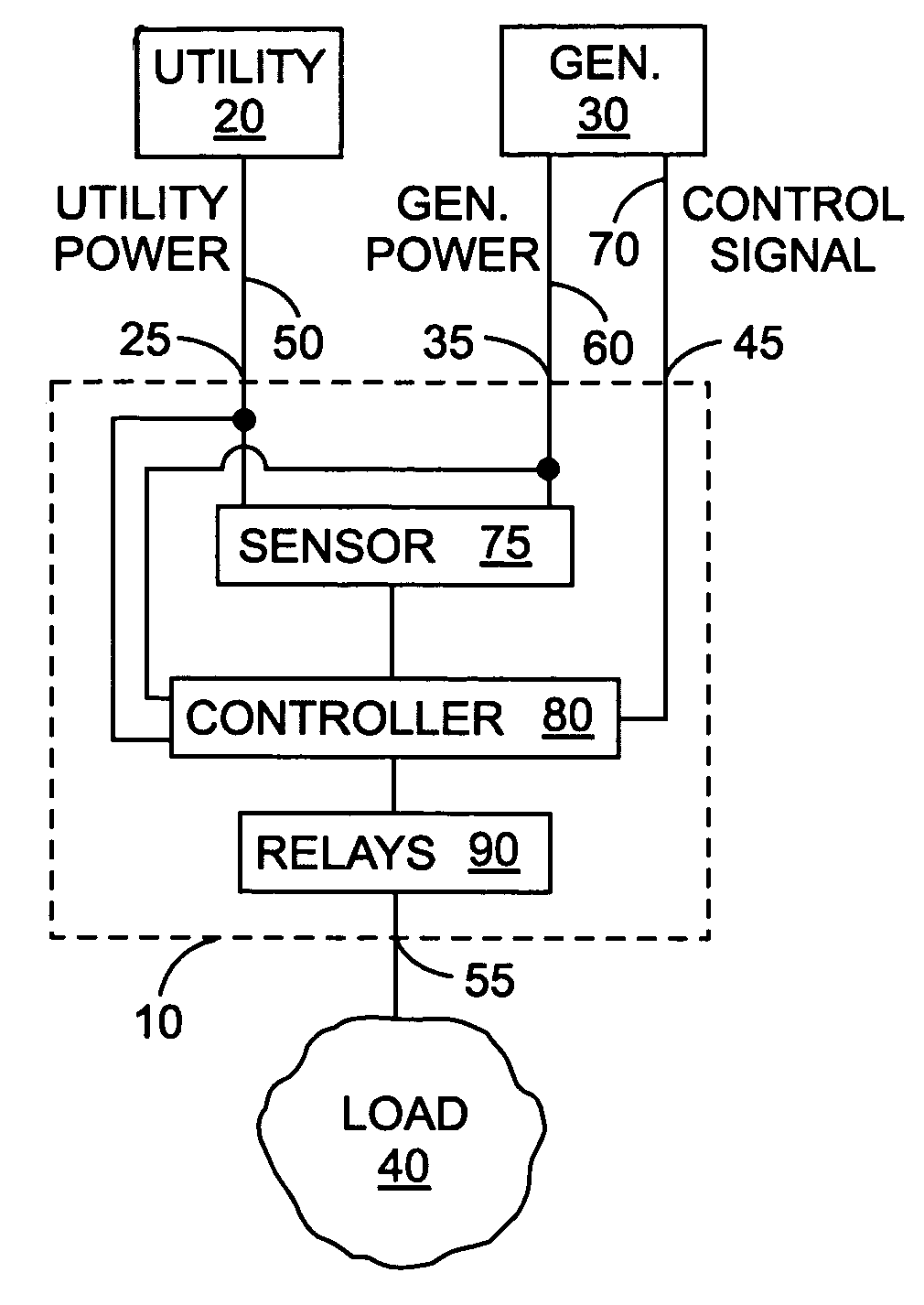
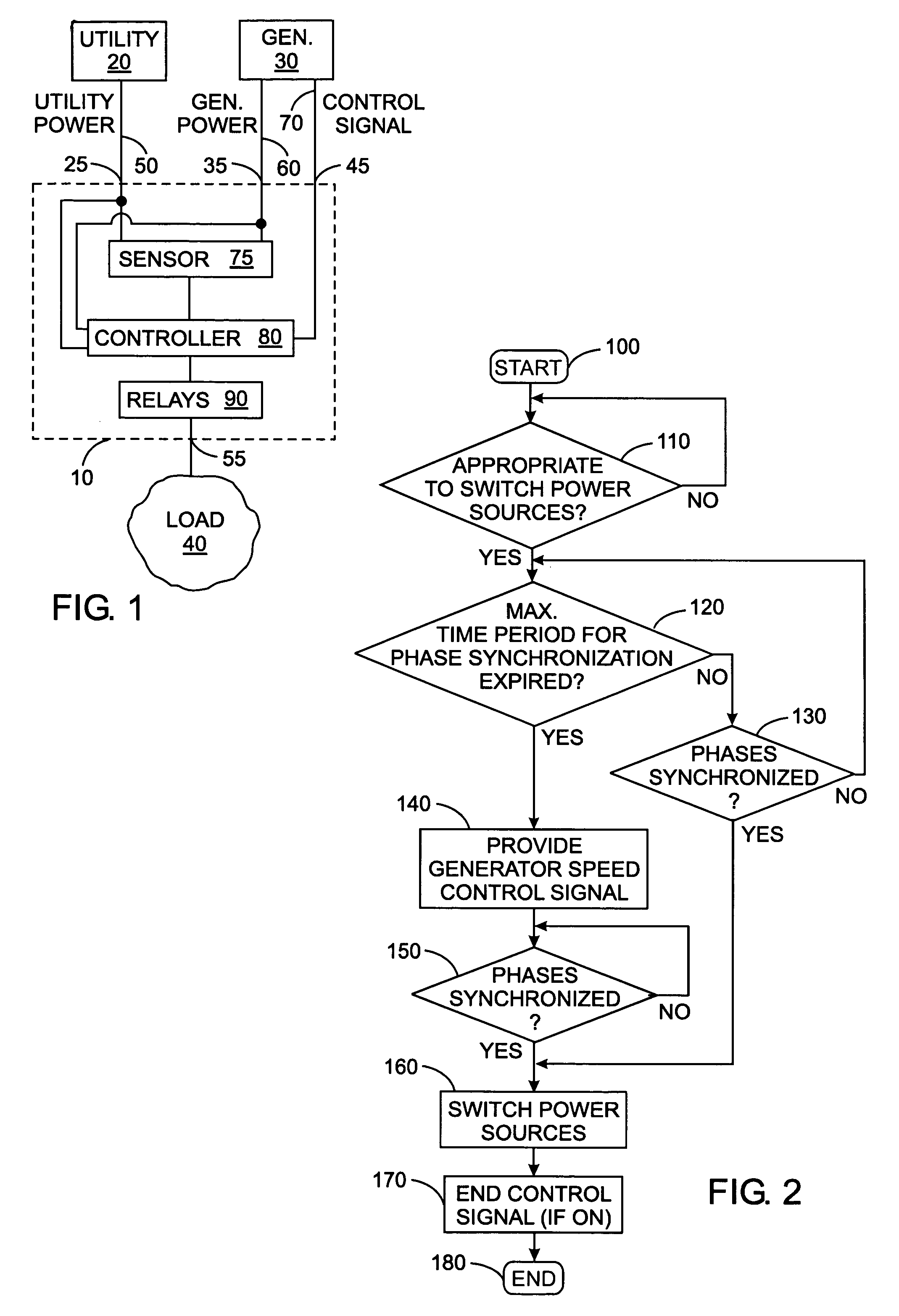
Automatic transfer switch system with synchronization control
PatentInactiveUS6980911B2
Innovation
- An ATS system that includes a sensing device to monitor phase synchronization between power sources, a control device to generate a speed control signal for the generator if synchronization is delayed, allowing the generator to adjust its frequency and synchronize with the utility power source more rapidly.
Electrical Safety Standards and Compliance
Validating ATS ground-fault protection selectivity requires strict adherence to established electrical safety standards and regulatory frameworks that govern power distribution systems. The primary standards applicable to Automatic Transfer Switch installations include IEEE 3001.3 for industrial and commercial power systems, NFPA 70 (National Electrical Code), and IEC 60947-6-1 for transfer switching equipment. These standards define the fundamental requirements for ground-fault protection coordination, specifying maximum clearing times, sensitivity levels, and testing protocols to ensure personnel safety and equipment protection.
Compliance with UL 1008 standard is mandatory for ATS equipment in North American markets, establishing performance criteria for ground-fault protection devices integrated within transfer switches. This standard mandates that ground-fault protection systems demonstrate selective coordination with upstream and downstream protective devices under all fault conditions. The validation process must verify that the ATS ground-fault relay settings align with the overall facility protection scheme, preventing nuisance tripping while maintaining adequate fault clearing capability.
International standards such as IEC 61000 series address electromagnetic compatibility requirements that directly impact ground-fault detection accuracy in ATS systems. These standards ensure that ground-fault protection devices maintain reliable operation in environments with electrical noise and harmonic distortion. Compliance testing must demonstrate immunity to false tripping caused by transient voltages, capacitive coupling, or harmonic currents that commonly exist in modern electrical installations with non-linear loads.
Regulatory compliance extends beyond equipment certification to encompass installation practices and periodic testing requirements. NFPA 70B recommends maintenance procedures and testing intervals for ground-fault protection systems, while OSHA regulations mandate workplace electrical safety measures. Documentation of selectivity validation must include time-current coordination studies, fault current calculations, and witnessed testing results that demonstrate compliance with applicable standards. This comprehensive approach ensures that ATS ground-fault protection systems meet both prescriptive code requirements and performance-based safety objectives throughout their operational lifecycle.
Compliance with UL 1008 standard is mandatory for ATS equipment in North American markets, establishing performance criteria for ground-fault protection devices integrated within transfer switches. This standard mandates that ground-fault protection systems demonstrate selective coordination with upstream and downstream protective devices under all fault conditions. The validation process must verify that the ATS ground-fault relay settings align with the overall facility protection scheme, preventing nuisance tripping while maintaining adequate fault clearing capability.
International standards such as IEC 61000 series address electromagnetic compatibility requirements that directly impact ground-fault detection accuracy in ATS systems. These standards ensure that ground-fault protection devices maintain reliable operation in environments with electrical noise and harmonic distortion. Compliance testing must demonstrate immunity to false tripping caused by transient voltages, capacitive coupling, or harmonic currents that commonly exist in modern electrical installations with non-linear loads.
Regulatory compliance extends beyond equipment certification to encompass installation practices and periodic testing requirements. NFPA 70B recommends maintenance procedures and testing intervals for ground-fault protection systems, while OSHA regulations mandate workplace electrical safety measures. Documentation of selectivity validation must include time-current coordination studies, fault current calculations, and witnessed testing results that demonstrate compliance with applicable standards. This comprehensive approach ensures that ATS ground-fault protection systems meet both prescriptive code requirements and performance-based safety objectives throughout their operational lifecycle.
Testing and Validation Methodologies
Validating ATS ground-fault protection selectivity requires systematic testing methodologies that ensure coordination between upstream and downstream protective devices under various fault scenarios. The primary objective is to confirm that ground-fault events are isolated at the appropriate protection level without unnecessary tripping of upstream devices, thereby maintaining power continuity to unaffected circuits. Testing protocols must encompass both laboratory simulations and field verification procedures to comprehensively assess selectivity performance across different operating conditions.
Laboratory testing typically begins with controlled fault injection at predetermined locations within the ATS circuit topology. Test engineers utilize specialized ground-fault simulators capable of generating precise fault currents ranging from low-level leakage to high-magnitude bolted faults. These simulations must replicate realistic fault impedances and transient characteristics encountered in actual installations. Data acquisition systems record trip times, fault current magnitudes, and device responses with microsecond resolution to verify coordination margins between protection zones.
Field validation procedures complement laboratory testing by examining selectivity under actual load conditions and system impedances. This involves staged fault testing at commissioned installations, where temporary ground-fault conditions are deliberately introduced at strategic points downstream of the ATS. Safety protocols mandate comprehensive risk assessments and coordination with facility operations to minimize disruption. Portable fault recorders capture waveform data during these tests, enabling post-event analysis of protection device behavior and timing sequences.
Advanced validation methodologies increasingly incorporate digital twin simulations that model the complete electrical distribution system, including ATS configurations, cable impedances, and protection device characteristics. These virtual environments allow extensive scenario testing without physical infrastructure risks, facilitating optimization of protection settings before field implementation. Simulation results require validation against measured data from physical tests to ensure model accuracy and reliability.
Standardized test protocols should reference applicable industry standards such as IEEE 242 and UL 1008, which define performance criteria and testing procedures for ground-fault protection systems. Documentation of all testing activities, including test plans, measured data, device settings, and pass/fail criteria, forms an essential component of the validation process, providing traceability and supporting regulatory compliance requirements.
Laboratory testing typically begins with controlled fault injection at predetermined locations within the ATS circuit topology. Test engineers utilize specialized ground-fault simulators capable of generating precise fault currents ranging from low-level leakage to high-magnitude bolted faults. These simulations must replicate realistic fault impedances and transient characteristics encountered in actual installations. Data acquisition systems record trip times, fault current magnitudes, and device responses with microsecond resolution to verify coordination margins between protection zones.
Field validation procedures complement laboratory testing by examining selectivity under actual load conditions and system impedances. This involves staged fault testing at commissioned installations, where temporary ground-fault conditions are deliberately introduced at strategic points downstream of the ATS. Safety protocols mandate comprehensive risk assessments and coordination with facility operations to minimize disruption. Portable fault recorders capture waveform data during these tests, enabling post-event analysis of protection device behavior and timing sequences.
Advanced validation methodologies increasingly incorporate digital twin simulations that model the complete electrical distribution system, including ATS configurations, cable impedances, and protection device characteristics. These virtual environments allow extensive scenario testing without physical infrastructure risks, facilitating optimization of protection settings before field implementation. Simulation results require validation against measured data from physical tests to ensure model accuracy and reliability.
Standardized test protocols should reference applicable industry standards such as IEEE 242 and UL 1008, which define performance criteria and testing procedures for ground-fault protection systems. Documentation of all testing activities, including test plans, measured data, device settings, and pass/fail criteria, forms an essential component of the validation process, providing traceability and supporting regulatory compliance requirements.
Unlock deeper insights with Patsnap Eureka Quick Research — get a full tech report to explore trends and direct your research. Try now!
Generate Your Research Report Instantly with AI Agent
Supercharge your innovation with Patsnap Eureka AI Agent Platform!