

Validate Hydroxylamine Reaction Models for Reactor Scale-Up
NOV 18, 20269 MIN READ
Generate Your Research Report Instantly with AI Agent
Patsnap Eureka helps you evaluate technical feasibility & market potential.
Hydroxylamine Reaction Modeling Background and Objectives
Hydroxylamine has emerged as a critical intermediate in numerous industrial processes, particularly in pharmaceutical synthesis, agrochemical production, and specialty chemical manufacturing. Its unique reactivity profile, characterized by both nucleophilic and electrophilic properties, makes it an invaluable reagent for various chemical transformations. However, the inherent instability and exothermic nature of hydroxylamine reactions present significant challenges when transitioning from laboratory-scale experiments to industrial-scale production. Historical incidents involving uncontrolled decomposition and thermal runaway have underscored the critical importance of developing robust and validated reaction models.
The complexity of hydroxylamine chemistry stems from multiple competing reaction pathways, including desired synthetic transformations alongside potential decomposition routes. Temperature sensitivity, concentration dependencies, and the influence of impurities or catalytic species further complicate the reaction kinetics. Traditional empirical approaches to scale-up have proven insufficient, often resulting in suboptimal yields, safety concerns, or equipment limitations. This gap between laboratory understanding and industrial implementation has driven the need for comprehensive reaction modeling frameworks.
The primary objective of this technical investigation is to establish validated mathematical models that accurately predict hydroxylamine reaction behavior across different scales and operating conditions. These models must capture essential kinetic parameters, thermodynamic properties, heat transfer characteristics, and mass transfer phenomena relevant to reactor design. Validation efforts aim to ensure model reliability through systematic comparison with experimental data obtained from pilot-scale reactors and industrial operations.
A secondary objective involves developing predictive tools that enable process engineers to optimize reactor configurations, cooling strategies, and operating parameters while maintaining safety margins. The models should facilitate sensitivity analysis to identify critical process variables and establish safe operating envelopes. Furthermore, these validated models will serve as foundational elements for advanced process control strategies and real-time monitoring systems.
Ultimately, successful model validation will bridge the knowledge gap between fundamental chemistry and industrial practice, enabling confident scale-up decisions that minimize technical risks, reduce development timelines, and ensure economically viable production processes while maintaining the highest safety standards.
Market Demand for Hydroxylamine Production Scale-Up
The global hydroxylamine market is experiencing sustained growth driven by expanding applications across multiple industrial sectors. Hydroxylamine and its derivatives serve as critical intermediates in pharmaceutical synthesis, agrochemical production, and specialty chemical manufacturing. The pharmaceutical industry represents a particularly significant demand driver, where hydroxylamine functions as a key building block for active pharmaceutical ingredients, including antibiotics, anti-cancer agents, and cardiovascular medications. As global pharmaceutical production continues to expand, particularly in emerging markets, the need for reliable, large-scale hydroxylamine production capabilities intensifies correspondingly.
Agricultural chemical manufacturers constitute another major demand segment, utilizing hydroxylamine in the synthesis of oxime-based pesticides and herbicides. The ongoing global emphasis on food security and agricultural productivity enhancement sustains robust demand for these crop protection chemicals. Additionally, the polymer and plastics industry employs hydroxylamine derivatives as polymerization inhibitors and stabilizers, with demand correlating directly with broader industrial chemical production volumes.
Current market dynamics reveal a critical gap between existing production capacities and projected future requirements. Many hydroxylamine production facilities operate using legacy reactor designs that lack the flexibility and efficiency demanded by modern manufacturing economics. The inherent safety challenges associated with hydroxylamine production, including thermal instability and decomposition risks, have historically constrained reactor scale-up initiatives. Consequently, numerous producers face capacity limitations that prevent them from capitalizing on growing market opportunities.
The competitive landscape increasingly favors manufacturers capable of demonstrating validated, scalable production processes with superior safety profiles and operational efficiency. Regulatory pressures regarding process safety management and environmental compliance further amplify the importance of scientifically validated reactor models. Companies that successfully validate and implement advanced reaction models for hydroxylamine production gain significant competitive advantages through improved yield optimization, reduced operational risks, and enhanced production flexibility.
Emerging markets in Asia-Pacific regions show particularly strong growth trajectories, driven by expanding pharmaceutical and agrochemical industries. This geographic demand shift creates additional pressure for production scale-up capabilities that can support distributed manufacturing strategies while maintaining consistent product quality and safety standards across multiple facilities.
Current Status and Challenges in Reaction Model Validation
Hydroxylamine reaction model validation for reactor scale-up currently faces significant technical and methodological challenges that impede reliable industrial implementation. The primary obstacle lies in the inherent complexity of hydroxylamine chemistry, which exhibits highly exothermic decomposition pathways, multiple competing reaction mechanisms, and sensitivity to trace impurities. These characteristics make it difficult to develop predictive models that accurately capture reaction behavior across different scales and operating conditions.
Laboratory-scale kinetic studies have provided foundational understanding of hydroxylamine reactions, yet translating these findings to industrial reactors remains problematic. Existing models often rely on simplified assumptions regarding heat and mass transfer, which may hold true in well-controlled bench-scale experiments but fail to represent the heterogeneous conditions present in large-scale reactors. The gap between idealized model conditions and actual reactor environments creates substantial uncertainty in scale-up predictions.
Current validation methodologies predominantly depend on pilot-scale testing, which is both capital-intensive and time-consuming. Many organizations lack access to intermediate-scale facilities that would enable systematic validation across multiple reactor sizes. Furthermore, the hazardous nature of hydroxylamine reactions limits the scope of experimental validation, as safety considerations restrict the range of conditions that can be safely explored. This constraint particularly affects the validation of off-normal or upset conditions that are critical for comprehensive model verification.
Data availability and quality present additional challenges. Industrial reaction data is often proprietary and fragmented, making it difficult to establish comprehensive validation datasets. Measurement limitations at production scale, including difficulties in obtaining real-time concentration profiles and temperature distributions within large reactors, further complicate validation efforts. The lack of standardized validation protocols across the industry results in inconsistent approaches to model verification, making it challenging to compare results or establish best practices.
Computational limitations also constrain validation capabilities. High-fidelity computational fluid dynamics simulations coupled with detailed kinetic mechanisms require substantial computational resources, limiting their practical application for routine validation tasks. The trade-off between model complexity and computational feasibility often forces engineers to use simplified models whose predictive accuracy remains uncertain for scale-up applications.
Existing Reaction Model Validation Approaches
01 Catalytic and electro-catalytic synthesis of hydroxylamine
Methods for producing hydroxylamine or its solutions through catalytic processes, such as the catalytic reduction of nitrogen monoxide or high-efficiency electro-catalytic nitrate reduction using specific catalysts.- Preparation and Synthesis Processes for Hydroxylamine: Methods and reaction models for synthesizing and preparing hydroxylamine and its solutions, including catalytic reduction of nitrogen monoxide, electro-catalytic nitrate reduction, and hydrolysis techniques.
- Synthesis and Purification of Hydroxylamine Derivatives and Salts: Processes for preparing, converting, and purifying various hydroxylamine derivatives and salts, such as hydroxylamine hydrochloride, nitrate, and sulfate, utilizing methods like electrodialysis, hydrolysis, and crystallization.
- Stabilization and Purification Methods for Hydroxylamine Solutions: Techniques for purifying, stabilizing, and reducing excess acid content in aqueous hydroxylamine solutions, improving solution stability and safety for applications such as semiconductor cleaning.
- Synthesis and Applications of Novel Organic Hydroxylamine Derivatives: Methods for synthesizing novel organic hydroxylamine compounds, including solid-phase synthesis, combinatorial library development, and compounds containing aryl allyl structures for pharmaceutical or chemical uses.
- Equipment and Catalytic Systems for Hydroxylamine Production: Specialized reaction apparatus, nano-enzyme compounds, and filtration or extraction technologies designed to improve production efficiency, separation, and quality in hydroxylamine processing.
02 Purification, stabilization, and filtration of hydroxylamine formulations
Techniques aimed at improving the purity, shelf-life, and stability of hydroxylamine compositions. These include ion exclusion purification, stabilization using additive compounds, filtration of aqueous reaction mixtures, and applications in semiconductor cleaning.Expand Specific Solutions03 Preparation and crystallization of hydroxylamine salts and derivatives
Processes for synthesizing, converting, and crystallizing various hydroxylamine salts, including sulfates, nitrates, and hydrochlorides. Methods involve hydrolysis, electrodialysis, and reaction extraction devices.Expand Specific Solutions04 Synthesis of novel hydroxylamine derivatives and solid-phase combinatorial libraries
Chemical methods focused on synthesizing organic hydroxylamine derivatives, such as those with aryl allyl structures, as well as solid-phase synthesis methods for building combinatorial libraries of hydroxylamine compounds for pharmaceutical or chemical applications.Expand Specific Solutions05 Biological and enzymatic applications of hydroxylamine compounds
Utilization of hydroxylamine formulations in pharmaceutical compositions, biological redox nano-enzymes, and bacterial enzyme compounds, particularly for biological applications such as nitrite synthesis.Expand Specific Solutions
Key Players in Hydroxylamine Manufacturing Industry
The hydroxylamine reaction model validation for reactor scale-up represents a mature yet evolving technical domain within the petrochemical and specialty chemicals industry. The competitive landscape is dominated by major integrated petrochemical corporations including China Petroleum & Chemical Corp., PetroChina, and China Petrochemical Development Corp., alongside global chemical leaders such as BASF SE and Evonik Operations GmbH. The market demonstrates significant scale with established production capabilities, particularly concentrated in Asia-Pacific regions. Technology maturity varies across players, with research institutions like SINOPEC Beijing Research Institute of Chemical Industry, East China University of Science & Technology, and Nanjing Tech University advancing fundamental reaction kinetics and safety protocols, while industrial players like Resonac Holdings and CJ CheilJedang focus on commercial-scale implementation and process optimization, indicating a transition from laboratory validation toward robust industrial application with ongoing innovation in reactor design and safety engineering.
China Petroleum & Chemical Corp.
Technical Solution: Sinopec has developed hydroxylamine reaction modeling capabilities primarily focused on petrochemical intermediate production and caprolactam manufacturing processes. Their validation approach combines traditional chemical engineering principles with modern computational methods. The company conducts systematic pilot plant studies at their research facilities to generate validation data across multiple scales. Their modeling framework addresses the specific challenges of hydroxylamine chemistry including decomposition kinetics, pH effects, and impurity impacts on reaction selectivity. Sinopec's methodology includes extensive safety testing protocols given the energetic nature of hydroxylamine reactions. They utilize reaction calorimetry data to validate heat generation models and establish cooling requirements for commercial-scale reactors. The validation process includes long-duration stability studies to ensure model accuracy under continuous operation conditions typical of large-scale petrochemical facilities.
Strengths: Large-scale petrochemical production experience; extensive pilot plant infrastructure for validation studies. Weaknesses: Models may be optimized primarily for specific petrochemical applications; less emphasis on flexible batch processing scenarios.
East China University of Science & Technology
Technical Solution: East China University of Science & Technology has established research programs focused on reaction kinetics modeling and scale-up methodologies for energetic materials including hydroxylamine systems. Their academic research emphasizes fundamental understanding of reaction mechanisms through detailed kinetic studies combined with computational chemistry approaches. The university's validation methodology includes microreactor studies to isolate kinetic parameters from transport effects, followed by systematic scale-up through bench and pilot scales. Their research incorporates advanced measurement techniques including rapid scanning calorimetry and high-speed spectroscopy to capture fast reaction dynamics. The modeling framework developed addresses both thermal and chemical stability considerations critical for hydroxylamine chemistry. Collaboration with industrial partners provides opportunities to validate models against commercial-scale data, though primary focus remains on fundamental research and model development rather than direct industrial implementation.
Strengths: Strong fundamental research capabilities; advanced analytical instrumentation for detailed kinetic studies; academic rigor in model validation. Weaknesses: Limited direct industrial scale-up experience; models may require additional adaptation for commercial implementation; longer timeline from research to industrial application.
Core Technologies in Scale-Up Modeling Methods
Method for manufacturing hydroxylamine
PatentInactiveUS8545789B2
Innovation
- A method utilizing an aqueous reaction medium with low or no metal impurities, specifically acidic buffer agents like sulfuric acid or phosphoric acid, and nitrate ions, in the presence of a catalyst, using hydrogen gas as a reducing agent to increase the selection rate of hydroxylamine production by minimizing metal impurities, particularly below 100 ppm for Fe and 0.9 ppm for Cu.
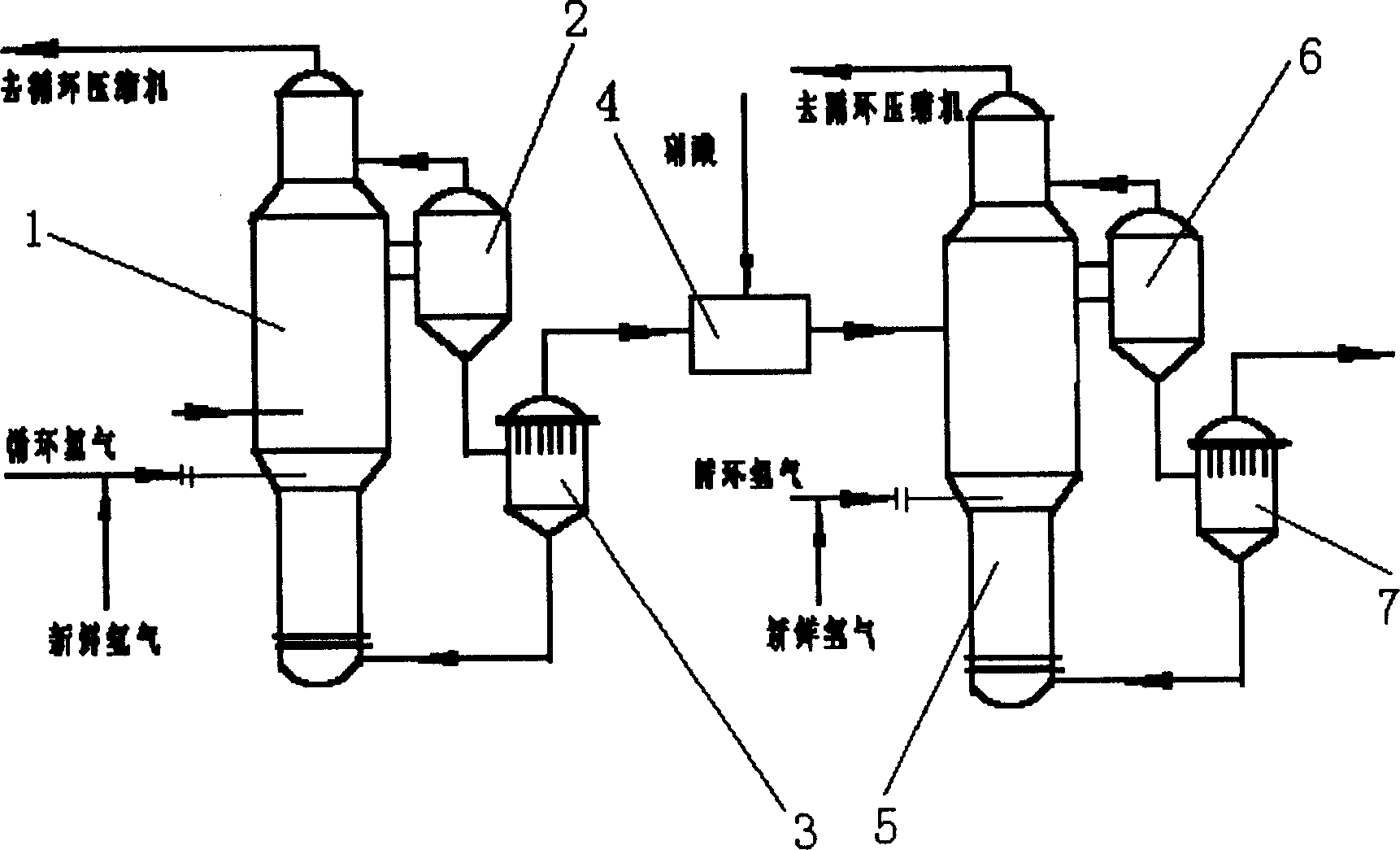
Method for prepn. of high concentration hydroxymaline in the prodn. process of hexanolactam
PatentInactiveCN1418809A
Innovation
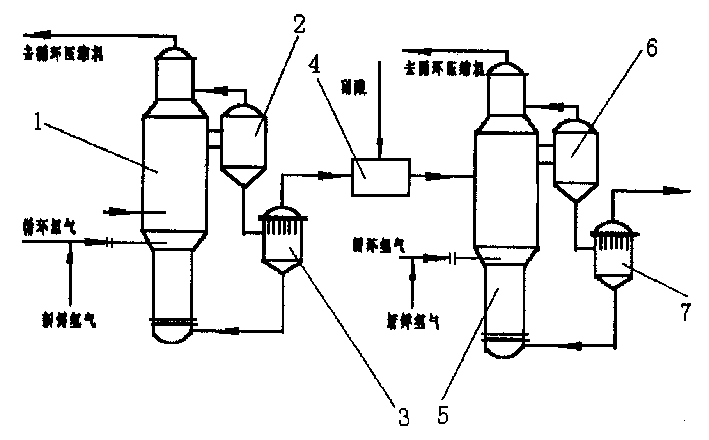
- Adopting a production method of two reactors in series, using bimetallic Pd+Pt/C or monometallic Pd/C catalyst, low-concentration hydroxylamine is generated in the first reactor and then quickly mixed with supplementary nitric acid, and then enters the second reaction The reaction is carried out in the reactor to increase the concentration of hydroxylamine, and the unreacted hydrogen is compressed through circulation to improve efficiency.
Safety Regulations for Hydroxylamine Process Scale-Up
The scale-up of hydroxylamine processes demands strict adherence to comprehensive safety regulations due to the compound's inherent thermal instability and potential for violent decomposition. Regulatory frameworks governing hydroxylamine handling have evolved significantly following several industrial incidents, establishing stringent requirements for process design, operational procedures, and emergency response protocols. These regulations typically encompass multiple jurisdictions, including OSHA standards in the United States, REACH compliance in Europe, and specific chemical safety guidelines established by organizations such as the Chemical Safety Board and the Center for Chemical Process Safety.
Process safety management regulations require detailed hazard and operability studies (HAZOP) before any scale-up activities commence. These studies must specifically address hydroxylamine's decomposition kinetics, thermal runaway scenarios, and compatibility with construction materials. Regulatory authorities mandate the implementation of multiple independent protection layers, including advanced process control systems, emergency relief systems, and containment measures designed to prevent catastrophic failures. Documentation requirements are extensive, necessitating comprehensive process safety information, operating procedures, and incident investigation protocols.
Concentration limits represent a critical regulatory consideration, with most jurisdictions restricting hydroxylamine solutions to maximum concentrations of 50% by weight for industrial operations. Higher concentrations require exceptional justification and enhanced safety measures. Temperature control regulations specify maximum allowable process temperatures, typically below 60°C for aqueous solutions, with mandatory continuous monitoring and automated shutdown systems. Pressure relief systems must be designed according to recognized standards such as API 520 and API 521, with sizing calculations accounting for worst-case decomposition scenarios.
Personnel training requirements under safety regulations mandate specialized certification for operators handling hydroxylamine processes. This includes comprehensive understanding of decomposition mechanisms, emergency response procedures, and proper use of personal protective equipment. Regular safety audits, typically conducted annually or bi-annually, ensure ongoing compliance with evolving regulatory standards. Emergency planning regulations require detailed contingency plans, including evacuation procedures, spill response protocols, and coordination with local emergency services. These regulatory requirements fundamentally shape the validation approach for reaction models, as predictive accuracy directly impacts safety system design and operational parameter selection during scale-up activities.
Digital Twin Applications in Chemical Reactor Validation
Digital twin technology has emerged as a transformative approach for validating hydroxylamine reaction models during reactor scale-up processes. By creating virtual replicas of physical chemical reactors, digital twins enable real-time monitoring, simulation, and optimization of complex reaction systems without the risks and costs associated with physical experimentation. This technology integrates computational fluid dynamics, thermodynamic modeling, and machine learning algorithms to replicate the behavior of hydroxylamine reactions under various operating conditions.
The application of digital twins in hydroxylamine reactor validation addresses critical safety concerns inherent to this highly energetic compound. Through continuous data exchange between physical sensors and virtual models, digital twins can predict thermal runaway scenarios, concentration gradients, and reaction kinetics with unprecedented accuracy. This bidirectional information flow allows engineers to test scale-up parameters virtually, identifying potential hazards before implementing changes in actual production environments.
Advanced digital twin platforms incorporate multi-physics simulations that account for heat transfer, mass transport, and reaction mechanisms specific to hydroxylamine chemistry. These systems utilize historical operational data, laboratory-scale experimental results, and real-time sensor inputs to refine predictive models continuously. The integration of artificial intelligence enhances pattern recognition capabilities, enabling the identification of subtle deviations from expected behavior that might indicate model inadequacies or emerging safety risks.
Implementation of digital twins for hydroxylamine reactor validation requires robust sensor networks capable of measuring critical parameters such as temperature distribution, pressure fluctuations, pH levels, and concentration profiles. Cloud-based computing infrastructure supports the intensive computational demands of real-time simulations, while edge computing solutions enable rapid response to critical events. The validation process involves systematic comparison between predicted and observed reactor behavior, with iterative model refinement based on discrepancies.
The economic and safety benefits of digital twin applications in this context are substantial. Organizations can reduce the number of physical pilot-scale trials, accelerate scale-up timelines, and minimize the risk of catastrophic failures during production ramp-up. Furthermore, digital twins serve as valuable training tools, allowing operators to experience various scenarios in a risk-free virtual environment before encountering them in actual operations.
Unlock deeper insights with Patsnap Eureka Quick Research — get a full tech report to explore trends and direct your research. Try now!
Generate Your Research Report Instantly with AI Agent
Supercharge your innovation with Patsnap Eureka AI Agent Platform!