

VRLA Battery vs Supercapacitor: Quick Power Delivery Comparison
MAR 20, 20269 MIN READ
Generate Your Research Report Instantly with AI Agent
Patsnap Eureka helps you evaluate technical feasibility & market potential.
VRLA Battery and Supercapacitor Technology Background and Goals
VRLA batteries and supercapacitors represent two distinct energy storage paradigms that have evolved to address different aspects of power delivery requirements in modern applications. VRLA technology emerged from the need for maintenance-free lead-acid battery solutions, incorporating valve-regulated designs that eliminate the need for water addition while providing reliable energy storage. This technology has matured over decades, establishing itself as a cornerstone in backup power systems, telecommunications infrastructure, and uninterruptible power supplies.
Supercapacitor technology, conversely, developed from the fundamental understanding of electrochemical double-layer capacitance principles. Unlike traditional batteries that rely on chemical reactions for energy storage, supercapacitors store energy through electrostatic charge separation at the electrode-electrolyte interface. This mechanism enables rapid charge and discharge cycles, positioning supercapacitors as ideal solutions for applications requiring instantaneous power delivery and high cycling durability.
The evolution of both technologies has been driven by increasing demands for efficient power management in diverse sectors. VRLA batteries have progressed through improvements in electrolyte immobilization techniques, advanced grid alloys, and enhanced separator materials. These developments have resulted in extended service life, improved deep-cycle performance, and better temperature tolerance, making them suitable for long-duration energy storage applications.
Supercapacitor advancement has focused on maximizing surface area through activated carbon electrodes, developing hybrid configurations that combine battery and capacitor characteristics, and exploring novel electrolyte formulations. Recent innovations include graphene-based electrodes and pseudocapacitive materials that significantly enhance energy density while maintaining the characteristic rapid power delivery capabilities.
The primary technical objective in comparing these technologies centers on optimizing power delivery characteristics for specific application requirements. VRLA batteries excel in providing sustained power output over extended periods, typically delivering consistent voltage levels throughout their discharge cycle. Their energy density advantages make them particularly valuable for applications requiring substantial energy storage capacity within reasonable space constraints.
Supercapacitors target applications demanding instantaneous power availability, exceptional cycling endurance, and rapid recharge capabilities. Their ability to deliver high current pulses without degradation makes them indispensable for peak power shaving, regenerative braking systems, and grid stabilization applications. The technology aims to bridge the gap between traditional capacitors and batteries, offering unique advantages in power density and operational longevity.
Current research objectives focus on hybrid systems that leverage the complementary strengths of both technologies, creating integrated solutions that optimize both energy and power density characteristics for next-generation energy storage applications.
Market Demand Analysis for Quick Power Delivery Solutions
The global energy storage market is experiencing unprecedented growth driven by the increasing demand for reliable, high-performance quick power delivery solutions across multiple sectors. Traditional power systems are facing mounting pressure to provide instantaneous energy bursts while maintaining long-term reliability, creating a complex landscape where both VRLA batteries and supercapacitors serve distinct but sometimes overlapping market needs.
Industrial automation and manufacturing sectors represent the largest demand segment for quick power delivery solutions. These applications require backup power systems capable of maintaining critical operations during brief power interruptions while providing surge power for high-demand equipment startups. The automotive industry has emerged as another significant driver, particularly with the rise of hybrid and electric vehicles requiring both sustained energy storage and rapid power delivery for acceleration and regenerative braking systems.
Telecommunications infrastructure continues to expand its reliance on quick power delivery technologies, especially with the rollout of advanced networks requiring uninterrupted power supplies with millisecond response times. Data centers and cloud computing facilities have become increasingly critical consumers, demanding power solutions that can instantly compensate for grid fluctuations while supporting massive computational loads during peak demand periods.
The renewable energy sector presents substantial growth opportunities, as wind and solar installations require sophisticated energy storage systems capable of rapid charge and discharge cycles to smooth power output variations. Grid stabilization applications are driving demand for solutions that can respond within seconds to frequency regulation requirements and voltage support needs.
Market dynamics reveal a growing preference for hybrid approaches combining both technologies to optimize performance characteristics. Cost considerations remain paramount, with end users seeking solutions that balance initial investment against operational efficiency and maintenance requirements. The increasing focus on sustainability and environmental regulations is pushing demand toward more efficient, longer-lasting power delivery solutions.
Emerging applications in electric aviation, marine propulsion, and industrial robotics are creating new market segments with unique power delivery requirements. These sectors demand solutions capable of delivering high power density while maintaining compact form factors and lightweight characteristics, driving innovation in both VRLA battery and supercapacitor technologies.
Current Status and Challenges in Energy Storage Technologies
The energy storage landscape is currently dominated by two distinct technological paradigms, each addressing different aspects of power delivery requirements. VRLA batteries represent the mature electrochemical storage approach, leveraging lead-acid chemistry with absorbed glass mat or gel electrolyte immobilization. These systems have achieved widespread commercial deployment across telecommunications, uninterruptible power supplies, and automotive applications due to their cost-effectiveness and established manufacturing infrastructure.
Supercapacitors, conversely, utilize electrostatic charge storage mechanisms through electric double-layer formation at electrode-electrolyte interfaces. This fundamental difference enables rapid charge-discharge cycles with minimal degradation, positioning them as complementary rather than directly competitive technologies. Current supercapacitor energy densities range from 5-10 Wh/kg, significantly lower than VRLA batteries' 30-50 Wh/kg, creating distinct application niches.
The primary challenge facing VRLA technology centers on power delivery limitations during high-rate discharge scenarios. Peukert's effect demonstrates capacity reduction at elevated discharge rates, with available capacity dropping to 60-70% when transitioning from 20-hour to 1-hour discharge rates. Additionally, sulfation phenomena during partial state-of-charge cycling reduces operational lifespan, particularly problematic in renewable energy integration applications requiring frequent cycling.
Supercapacitor technology confronts energy density constraints that limit standalone deployment in applications requiring sustained power delivery. Current carbon-based electrode materials approach theoretical surface area limits, necessitating breakthrough developments in pseudocapacitive materials or hybrid architectures. Voltage limitations of individual cells, typically 2.7V for organic electrolytes, require complex series configurations for higher voltage applications.
Thermal management presents challenges for both technologies, though manifesting differently. VRLA batteries experience accelerated aging at elevated temperatures, with life expectancy halving for every 10°C increase above 25°C. Supercapacitors demonstrate superior temperature tolerance but face electrolyte stability issues at temperature extremes, affecting long-term reliability in harsh environments.
Cost optimization remains a critical barrier for widespread supercapacitor adoption. Current manufacturing costs exceed $10,000/kWh compared to VRLA batteries at $100-200/kWh, primarily driven by expensive activated carbon electrode materials and specialized electrolytes. Manufacturing scalability improvements and material innovations are essential for achieving cost parity in overlapping application segments.
Integration challenges emerge when combining both technologies in hybrid systems. Power management complexity increases significantly, requiring sophisticated control algorithms to optimize charge distribution and prevent system imbalances. Standardization efforts lag behind technological development, creating compatibility issues across different manufacturers and system architectures.
Current Technical Solutions for Rapid Power Delivery
01 Hybrid energy storage systems combining VRLA batteries and supercapacitors
Hybrid energy storage systems integrate VRLA batteries with supercapacitors to leverage the complementary characteristics of both technologies. The supercapacitor provides high power density for quick power delivery during peak demand, while the VRLA battery offers high energy density for sustained power supply. This combination optimizes the overall system performance by allowing the supercapacitor to handle transient power requirements and protect the battery from high current stress, thereby extending battery life and improving system efficiency.- Hybrid energy storage systems combining VRLA batteries and supercapacitors: Hybrid energy storage systems integrate VRLA batteries with supercapacitors to leverage the complementary characteristics of both technologies. The supercapacitor provides rapid power delivery for high-current demands and transient loads, while the VRLA battery supplies sustained energy for longer duration requirements. This combination optimizes power density and energy density, extending battery life by reducing stress during peak power events. The system typically includes intelligent control circuits to manage power distribution between the two storage devices based on load characteristics.
- Power management and control strategies for hybrid systems: Advanced power management systems employ sophisticated control algorithms to optimize the operation of combined battery-supercapacitor configurations. These strategies include dynamic power allocation, state-of-charge monitoring, and adaptive switching mechanisms that determine when to draw power from the supercapacitor versus the battery. The control systems monitor load demands in real-time and route high-frequency, high-power pulses to the supercapacitor while directing steady-state loads to the battery. This intelligent management maximizes system efficiency and extends the operational lifetime of both energy storage components.
- Circuit topology and connection configurations: Various circuit topologies have been developed to electrically connect VRLA batteries and supercapacitors for optimal quick power delivery. These include parallel connection schemes with isolation diodes, DC-DC converter-based architectures, and direct coupling with passive filtering components. The connection configuration affects voltage matching, current distribution, and the ability to independently charge and discharge each storage element. Some designs incorporate bidirectional converters to enable flexible energy transfer between the battery, supercapacitor, and load, while others use simpler passive networks to reduce complexity and cost.
- Supercapacitor sizing and selection for peak power applications: Proper sizing and selection of supercapacitors is critical for meeting quick power delivery requirements in hybrid systems. The supercapacitor capacity must be sufficient to handle the expected peak power pulses without excessive voltage droop, while considering factors such as equivalent series resistance, voltage rating, and cycle life. Design methodologies involve analyzing the power profile of the application, calculating required energy storage capacity, and selecting supercapacitor modules with appropriate voltage and capacitance ratings. The sizing also considers the recharge time available between power pulses and the acceptable depth of discharge for the supercapacitor.
- Thermal management and safety protection mechanisms: Effective thermal management and safety protection are essential for reliable operation of hybrid VRLA battery-supercapacitor systems during rapid power delivery events. High current pulses generate heat in both the battery and supercapacitor, requiring adequate cooling solutions such as heat sinks, forced air circulation, or liquid cooling systems. Safety mechanisms include overcurrent protection, overvoltage protection, thermal cutoffs, and cell balancing circuits to prevent damage during fault conditions. Monitoring systems track temperature, voltage, and current parameters to ensure operation within safe limits and trigger protective actions when thresholds are exceeded.
02 Power management and control strategies for hybrid systems
Advanced power management systems are employed to intelligently distribute power between VRLA batteries and supercapacitors based on load requirements. These control strategies monitor the state of charge, voltage levels, and power demands in real-time to determine the optimal contribution from each energy storage component. The management system ensures that rapid power demands are met by the supercapacitor while the battery handles baseline loads, maximizing efficiency and minimizing degradation of both components through sophisticated switching and regulation circuits.Expand Specific Solutions03 Parallel connection configurations for enhanced power delivery
Parallel connection architectures enable VRLA batteries and supercapacitors to work simultaneously for quick power delivery applications. This configuration allows both energy storage devices to share the load according to their respective capabilities, with the supercapacitor responding instantaneously to sudden power demands while the battery provides steady-state power. The parallel arrangement includes appropriate coupling circuits and isolation mechanisms to prevent adverse interactions between the two storage technologies and ensure stable operation under varying load conditions.Expand Specific Solutions04 Charging and discharging optimization for rapid response
Specialized charging and discharging circuits are designed to optimize the rapid response characteristics of hybrid VRLA battery and supercapacitor systems. These circuits manage the charging profiles to ensure the supercapacitor remains at optimal charge levels for immediate power delivery while preventing overcharging of the battery. The discharge control mechanisms prioritize supercapacitor output during high-power transients and seamlessly transition to battery power for sustained loads, incorporating protection features to maintain safe operating parameters for both storage elements.Expand Specific Solutions05 Application-specific integration for automotive and industrial systems
Integration of VRLA battery and supercapacitor hybrid systems in automotive and industrial applications addresses specific quick power delivery requirements such as engine starting, regenerative braking, and load leveling. These application-specific designs incorporate compact packaging, thermal management, and robust electrical interfaces suitable for harsh operating environments. The systems are optimized for the duty cycles and power profiles characteristic of their intended applications, with features such as cold-cranking capability, voltage stabilization during transient loads, and energy recovery mechanisms that enhance overall system performance and reliability.Expand Specific Solutions
Major Players in Energy Storage and Quick Power Systems
The VRLA battery versus supercapacitor power delivery comparison represents a mature technology landscape in the energy storage sector, currently experiencing significant growth driven by electric vehicle adoption and renewable energy integration. The market demonstrates substantial scale with established players like ABB Ltd., Eaton Intelligent Power Ltd., and Huawei Technologies Co., Ltd. leading industrial applications, while specialized firms such as Saft Groupe SA and Daramic LLC focus on battery technologies. Technology maturity varies significantly between segments - VRLA batteries represent well-established technology with incremental improvements, whereas supercapacitors show emerging potential for rapid power delivery applications. Research institutions including Harbin Institute of Technology, Central South University, and Delft University of Technology continue advancing both technologies, indicating ongoing innovation potential despite the mature market foundation.
Institute of Electrical Engineering, Chinese Academy of Sci
Technical Solution: The Institute has conducted extensive research comparing VRLA batteries and supercapacitors for quick power delivery applications. Their research focuses on developing hybrid energy storage systems that leverage the complementary characteristics of both technologies. They have developed advanced electrode materials and electrolyte formulations for VRLA batteries that improve power density and reduce charging time. Their studies include comprehensive performance analysis of power delivery characteristics, cycle life, and efficiency comparisons between VRLA batteries and supercapacitors under various load conditions. The institute's work includes development of intelligent energy management algorithms for optimizing power delivery from hybrid storage systems.
Strengths: Strong research capabilities, comprehensive technical analysis approach. Weaknesses: Limited commercial implementation, focus primarily on research rather than product development.
ABB Ltd.
Technical Solution: ABB has developed advanced power electronics and energy storage systems that optimize the performance characteristics of both VRLA batteries and supercapacitors for quick power delivery applications. Their solutions include sophisticated power conversion systems that can rapidly extract energy from VRLA batteries while managing voltage fluctuations. ABB's technology incorporates advanced inverter designs and control algorithms that enable efficient power delivery from battery systems. The company's solutions feature modular architectures that allow for hybrid configurations combining batteries and supercapacitors to achieve optimal power delivery performance for industrial applications.
Strengths: Strong power electronics expertise, extensive industrial automation experience. Weaknesses: Focus more on power conversion than energy storage technology, higher system complexity.
Key Technical Insights in VRLA vs Supercapacitor Performance
Method and system for extending battery power at cell sites
PatentActiveUS9419445B2
Innovation
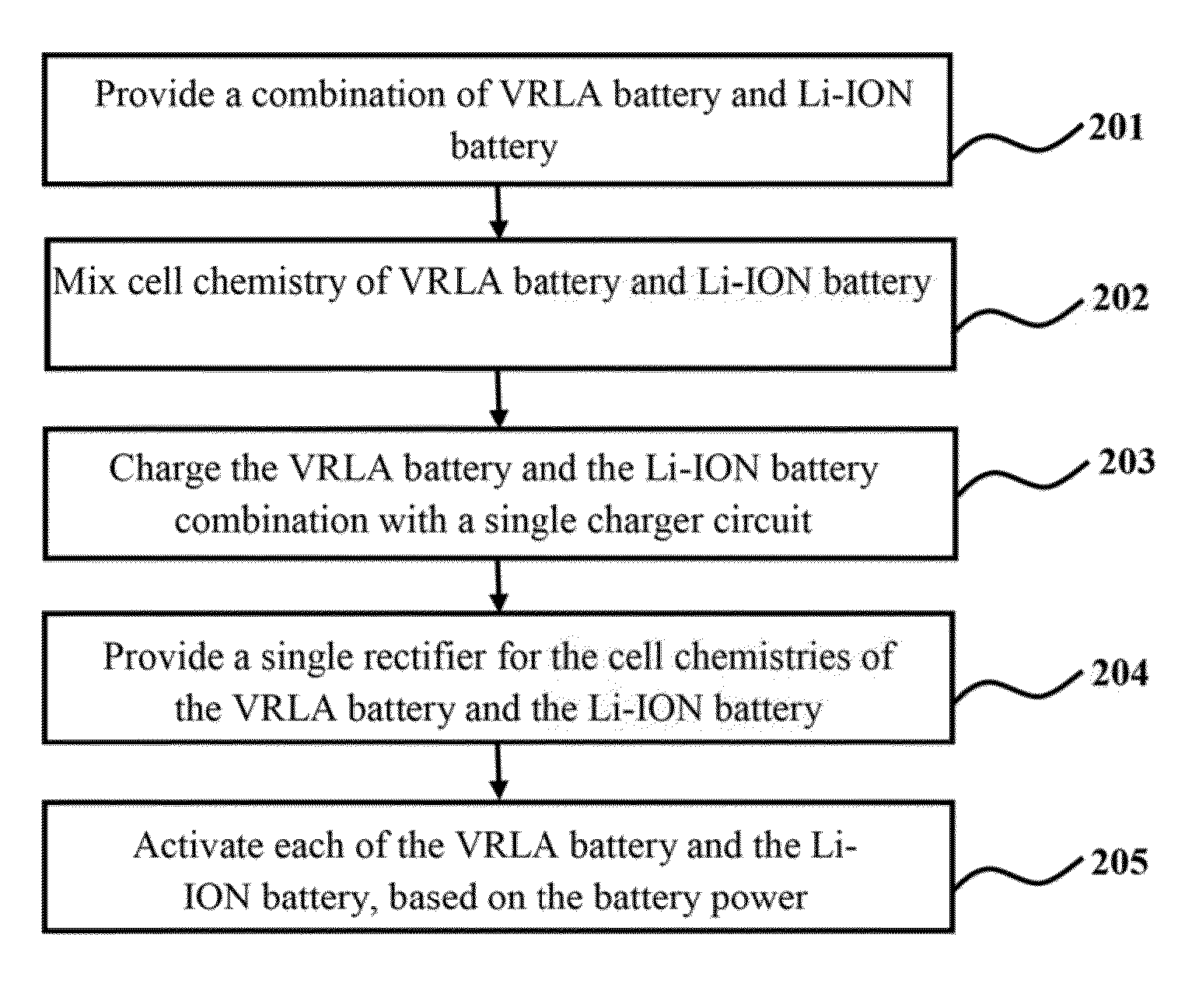
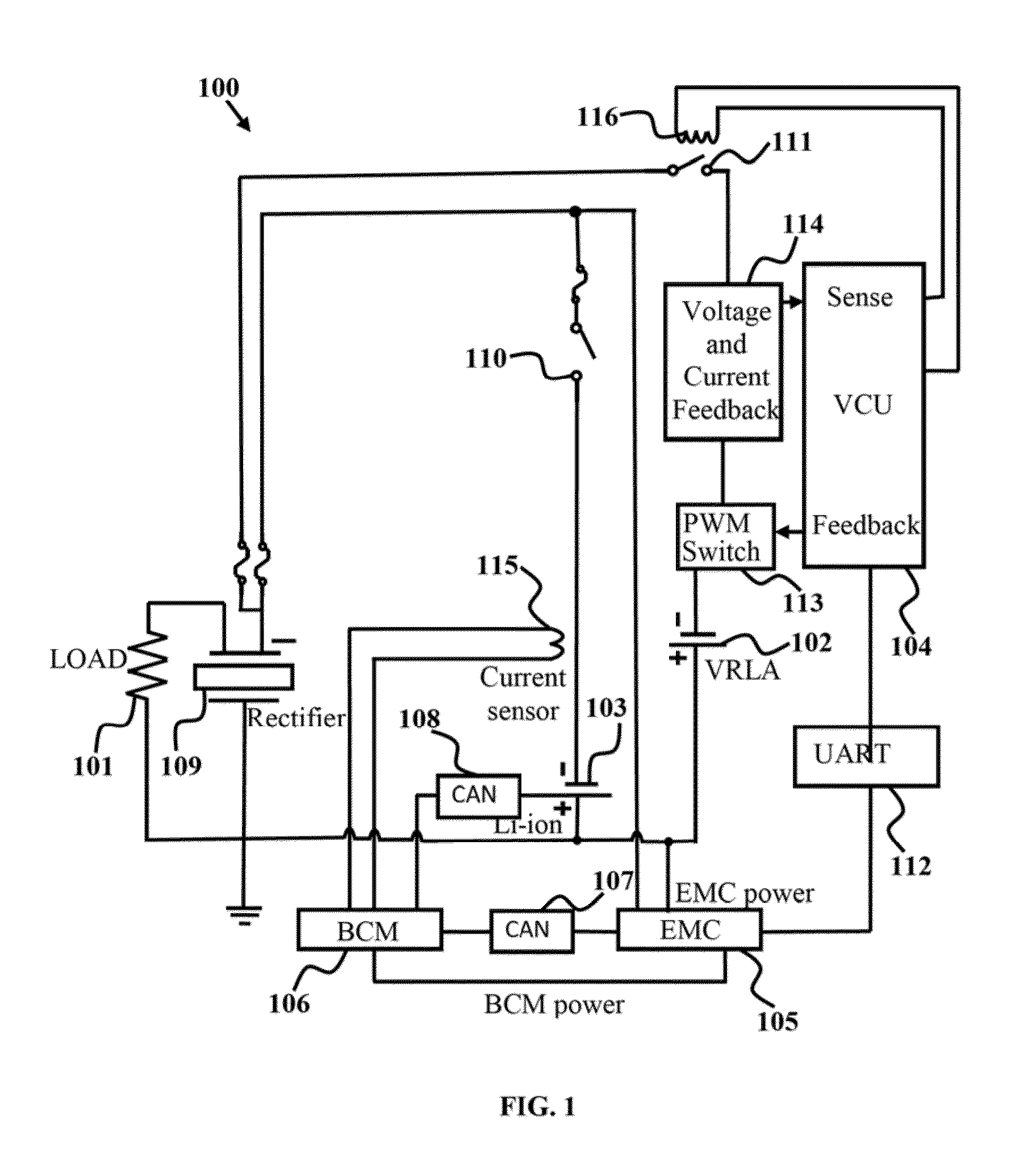
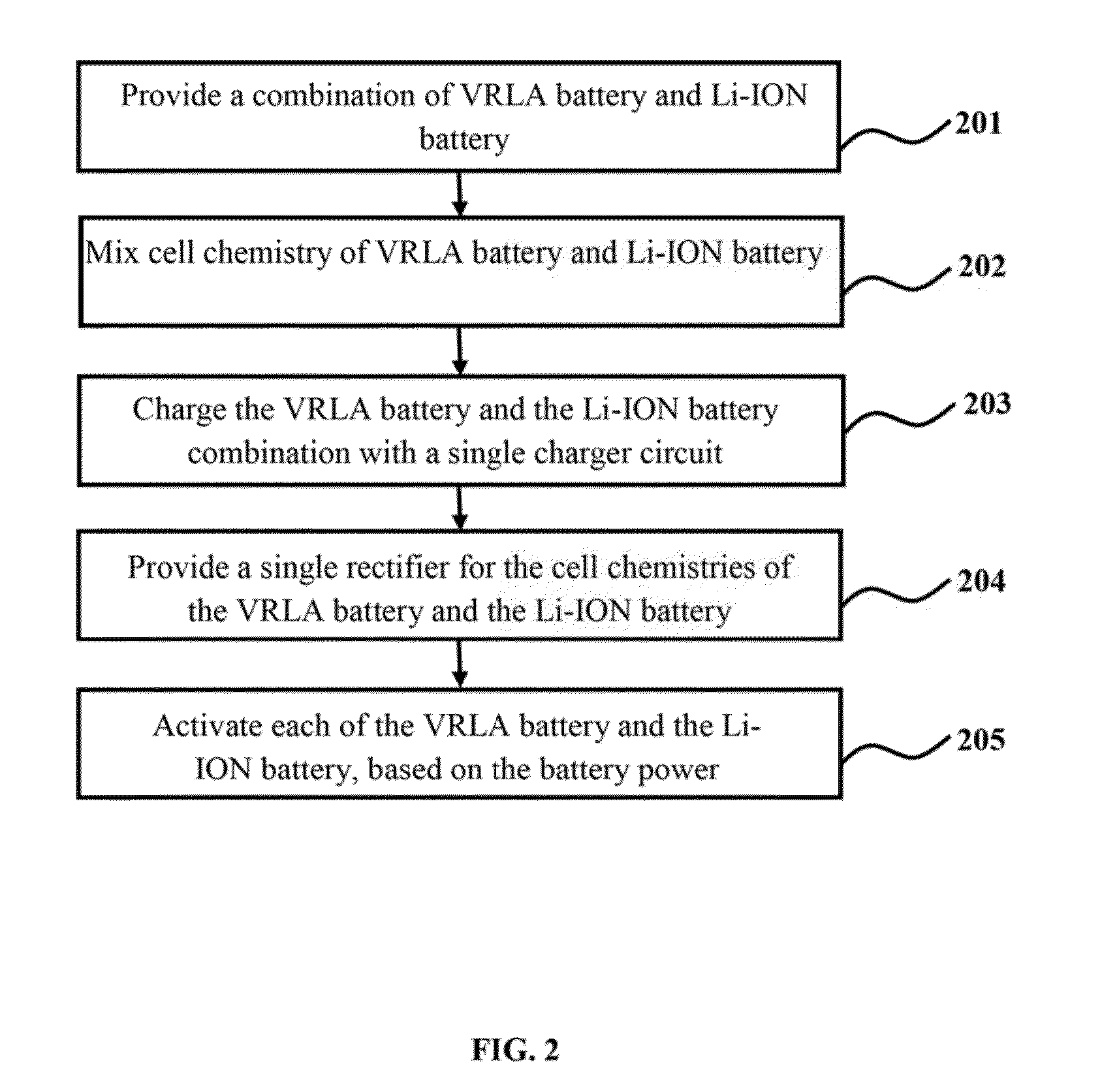
- A method and system that combines VRLA and Li-ION batteries, using a single charger circuit with a Battery Control Module, Energy Management Controller, and VRLA Controller Unit to manage charging currents and states, eliminating loop currents and energy wastage by pulse charging and varying pulse widths.

Smart sealed valve-regulated lead-acid storage battery device
PatentWO2013071508A1
Innovation
- An intelligent sealed valve-regulated lead-acid battery device is designed, equipped with multi-parameter sensors and automatic repair functions. It detects the internal resistance of the battery through a sine wave constant current signal of a predetermined frequency, and automatically repairs the battery based on the detection results to ensure that the internal resistance is within a safe range. Inside.


Safety Standards and Regulations for Energy Storage Systems
The regulatory landscape for energy storage systems encompasses both VRLA batteries and supercapacitors, with distinct safety frameworks governing their deployment in various applications. International standards such as IEC 62619 specifically address lithium-ion battery safety, while IEC 62391 covers fixed capacitors for power electronics, establishing fundamental safety protocols for supercapacitor installations. These standards emphasize thermal management, electrical isolation, and fault protection mechanisms critical for high-power delivery applications.
VRLA battery systems must comply with stringent ventilation requirements outlined in IEEE 1188 and NFPA 855, particularly addressing hydrogen gas emission risks during rapid charging and discharging cycles. The standards mandate specific spacing requirements, temperature monitoring systems, and emergency shutdown procedures. UL 1973 certification has become increasingly important for stationary battery installations, requiring comprehensive testing for thermal runaway prevention and electrical safety under high-power conditions.
Supercapacitor systems face unique regulatory challenges due to their rapid energy discharge capabilities and high voltage operations. IEC 62576 establishes safety requirements for electric double-layer capacitors, focusing on overvoltage protection, current limiting mechanisms, and insulation coordination. The standard addresses specific concerns related to sudden energy release and electromagnetic compatibility during fast power delivery scenarios.
Regional regulatory variations significantly impact deployment strategies, with European EN standards emphasizing environmental protection and recycling requirements, while North American regulations prioritize fire safety and grid integration protocols. The emerging IEEE 2030.2.1 standard specifically addresses energy storage interconnection requirements, establishing common safety protocols for both battery and supercapacitor systems in grid-tied applications.
Certification processes require extensive testing protocols including accelerated aging tests, fault simulation, and electromagnetic interference assessments. These regulatory frameworks continue evolving to address emerging applications in electric vehicle charging infrastructure, renewable energy integration, and industrial power backup systems, where rapid power delivery capabilities of both technologies are increasingly critical for operational safety and system reliability.
Environmental Impact Assessment of Energy Storage Technologies
The environmental implications of VRLA batteries and supercapacitors present distinct profiles across their respective lifecycles, with each technology exhibiting unique advantages and challenges in sustainability metrics. Manufacturing processes for both technologies involve different material extraction requirements and energy consumption patterns that significantly influence their overall environmental footprint.
VRLA battery production relies heavily on lead extraction and processing, which generates substantial environmental concerns including soil contamination, water pollution, and air quality degradation in mining regions. The manufacturing process requires high-temperature smelting operations that consume considerable energy and release sulfur dioxide emissions. However, lead recycling infrastructure is well-established globally, with recycling rates exceeding 95% in developed markets, creating a relatively closed-loop system that mitigates long-term environmental impact.
Supercapacitor manufacturing presents a contrasting environmental profile, utilizing materials such as activated carbon, aluminum, and various electrolytes. The production process generally requires less energy-intensive operations compared to battery manufacturing, resulting in lower carbon emissions during fabrication. However, certain advanced supercapacitor designs incorporating graphene or carbon nanotubes involve more complex synthesis processes with potentially higher environmental costs.
Operational environmental impact differs significantly between these technologies. VRLA batteries experience gradual capacity degradation over 3-5 years of typical use, requiring periodic replacement and generating consistent waste streams. Their energy efficiency ranges from 80-85%, with the remaining energy converted to heat, contributing to thermal pollution in large-scale applications.
Supercapacitors demonstrate superior longevity with operational lifespans exceeding 10-15 years and minimal performance degradation, substantially reducing replacement frequency and associated waste generation. Their higher energy efficiency of 90-95% translates to reduced overall energy consumption and lower indirect environmental impact through decreased power generation requirements.
End-of-life considerations reveal critical differences in environmental management strategies. VRLA batteries require specialized handling due to lead toxicity and acid electrolyte content, necessitating regulated disposal processes and potential environmental remediation if improperly managed. Conversely, supercapacitors contain fewer hazardous materials, simplifying disposal procedures and reducing long-term environmental liability.
Carbon footprint analysis indicates that while VRLA batteries may have higher initial manufacturing emissions, their established recycling infrastructure can offset long-term environmental impact. Supercapacitors, despite lower manufacturing emissions, currently lack comprehensive recycling systems, potentially creating future environmental challenges as deployment scales increase across various applications requiring rapid power delivery capabilities.
Unlock deeper insights with Patsnap Eureka Quick Research — get a full tech report to explore trends and direct your research. Try now!
Generate Your Research Report Instantly with AI Agent
Supercharge your innovation with Patsnap Eureka AI Agent Platform!