Wireless BMS Implementation for Large-Scale Energy Management
APR 11, 20269 MIN READ
Generate Your Research Report Instantly with AI Agent
Patsnap Eureka helps you evaluate technical feasibility & market potential.
Wireless BMS Technology Background and Implementation Goals
Battery Management Systems have undergone significant evolution since their inception in the early 1990s, transitioning from simple voltage monitoring circuits to sophisticated multi-parameter control systems. The integration of wireless communication technologies into BMS architectures represents a paradigm shift that addresses the inherent limitations of traditional wired systems, particularly in large-scale energy storage deployments where cable complexity, installation costs, and maintenance challenges become prohibitive factors.
The emergence of wireless BMS technology stems from the convergence of several technological advances, including low-power wireless communication protocols, enhanced battery chemistry understanding, and the proliferation of Internet of Things frameworks. Early wireless implementations focused primarily on data collection, but contemporary systems encompass comprehensive control functionalities, real-time diagnostics, and predictive maintenance capabilities that extend far beyond conventional monitoring approaches.
Large-scale energy management applications present unique challenges that wireless BMS technology specifically addresses. Traditional wired systems in utility-scale battery installations require extensive cabling infrastructure, creating potential failure points and increasing system complexity exponentially with scale. Wireless architectures eliminate these constraints while enabling flexible system configurations, reduced installation time, and enhanced scalability for grid-level energy storage projects.
The primary implementation goals for wireless BMS in large-scale energy management center on achieving seamless integration with existing grid infrastructure while maintaining the highest safety and reliability standards. These systems must demonstrate real-time communication capabilities with latency requirements below 100 milliseconds for critical safety functions, ensuring immediate response to thermal runaway events, overvoltage conditions, or cell imbalance scenarios that could compromise system integrity.
Operational efficiency optimization represents another fundamental objective, encompassing intelligent load balancing, predictive maintenance scheduling, and adaptive charging algorithms that maximize battery lifespan while minimizing operational costs. The wireless architecture enables sophisticated data analytics and machine learning implementations that continuously optimize performance parameters based on historical usage patterns, environmental conditions, and grid demand fluctuations.
Scalability and interoperability goals focus on creating modular systems capable of seamless expansion from megawatt to gigawatt-scale installations. The wireless BMS must support standardized communication protocols that facilitate integration with diverse energy management systems, renewable energy sources, and grid control infrastructure, ensuring compatibility across different manufacturers and technology platforms while maintaining cybersecurity standards essential for critical infrastructure protection.
The emergence of wireless BMS technology stems from the convergence of several technological advances, including low-power wireless communication protocols, enhanced battery chemistry understanding, and the proliferation of Internet of Things frameworks. Early wireless implementations focused primarily on data collection, but contemporary systems encompass comprehensive control functionalities, real-time diagnostics, and predictive maintenance capabilities that extend far beyond conventional monitoring approaches.
Large-scale energy management applications present unique challenges that wireless BMS technology specifically addresses. Traditional wired systems in utility-scale battery installations require extensive cabling infrastructure, creating potential failure points and increasing system complexity exponentially with scale. Wireless architectures eliminate these constraints while enabling flexible system configurations, reduced installation time, and enhanced scalability for grid-level energy storage projects.
The primary implementation goals for wireless BMS in large-scale energy management center on achieving seamless integration with existing grid infrastructure while maintaining the highest safety and reliability standards. These systems must demonstrate real-time communication capabilities with latency requirements below 100 milliseconds for critical safety functions, ensuring immediate response to thermal runaway events, overvoltage conditions, or cell imbalance scenarios that could compromise system integrity.
Operational efficiency optimization represents another fundamental objective, encompassing intelligent load balancing, predictive maintenance scheduling, and adaptive charging algorithms that maximize battery lifespan while minimizing operational costs. The wireless architecture enables sophisticated data analytics and machine learning implementations that continuously optimize performance parameters based on historical usage patterns, environmental conditions, and grid demand fluctuations.
Scalability and interoperability goals focus on creating modular systems capable of seamless expansion from megawatt to gigawatt-scale installations. The wireless BMS must support standardized communication protocols that facilitate integration with diverse energy management systems, renewable energy sources, and grid control infrastructure, ensuring compatibility across different manufacturers and technology platforms while maintaining cybersecurity standards essential for critical infrastructure protection.
Market Demand for Large-Scale Energy Management Systems
The global energy storage market is experiencing unprecedented growth driven by the accelerating transition toward renewable energy sources and the urgent need for grid modernization. Traditional energy management systems face significant limitations in handling the complexity and scale of modern energy infrastructure, creating substantial demand for advanced wireless Battery Management Systems (BMS) solutions.
Large-scale energy storage installations, including utility-scale battery farms, industrial microgrids, and distributed energy resources, require sophisticated monitoring and control capabilities that exceed the capacity of conventional wired systems. The proliferation of solar and wind power generation has intensified the need for reliable energy storage solutions that can effectively balance supply and demand fluctuations while maintaining grid stability.
The market demand is particularly strong in sectors where traditional wired BMS implementations prove inadequate or economically unfeasible. Remote energy installations, offshore wind farms, and geographically distributed storage networks present unique challenges that wireless BMS technology is uniquely positioned to address. These applications require real-time monitoring of thousands of battery cells across vast distances, making wireless connectivity essential for operational efficiency.
Industrial and commercial sectors are increasingly adopting large-scale energy management systems to reduce operational costs and achieve sustainability goals. Manufacturing facilities, data centers, and commercial complexes require robust energy storage solutions that can provide backup power, peak shaving capabilities, and load balancing functions. The complexity of these installations demands advanced BMS technology capable of managing multiple battery arrays simultaneously while providing comprehensive system visibility.
The integration of electric vehicle charging infrastructure and vehicle-to-grid technologies has created additional market opportunities for wireless BMS solutions. Large-scale charging stations and fleet management operations require sophisticated energy management capabilities that can optimize charging schedules, manage grid interactions, and ensure battery longevity across extensive charging networks.
Regulatory frameworks promoting renewable energy adoption and grid resilience initiatives are further driving market demand. Government incentives for energy storage deployment and mandates for grid modernization create favorable conditions for wireless BMS technology adoption, particularly in applications where traditional solutions cannot meet performance or scalability requirements.
Large-scale energy storage installations, including utility-scale battery farms, industrial microgrids, and distributed energy resources, require sophisticated monitoring and control capabilities that exceed the capacity of conventional wired systems. The proliferation of solar and wind power generation has intensified the need for reliable energy storage solutions that can effectively balance supply and demand fluctuations while maintaining grid stability.
The market demand is particularly strong in sectors where traditional wired BMS implementations prove inadequate or economically unfeasible. Remote energy installations, offshore wind farms, and geographically distributed storage networks present unique challenges that wireless BMS technology is uniquely positioned to address. These applications require real-time monitoring of thousands of battery cells across vast distances, making wireless connectivity essential for operational efficiency.
Industrial and commercial sectors are increasingly adopting large-scale energy management systems to reduce operational costs and achieve sustainability goals. Manufacturing facilities, data centers, and commercial complexes require robust energy storage solutions that can provide backup power, peak shaving capabilities, and load balancing functions. The complexity of these installations demands advanced BMS technology capable of managing multiple battery arrays simultaneously while providing comprehensive system visibility.
The integration of electric vehicle charging infrastructure and vehicle-to-grid technologies has created additional market opportunities for wireless BMS solutions. Large-scale charging stations and fleet management operations require sophisticated energy management capabilities that can optimize charging schedules, manage grid interactions, and ensure battery longevity across extensive charging networks.
Regulatory frameworks promoting renewable energy adoption and grid resilience initiatives are further driving market demand. Government incentives for energy storage deployment and mandates for grid modernization create favorable conditions for wireless BMS technology adoption, particularly in applications where traditional solutions cannot meet performance or scalability requirements.
Current State and Challenges of Wireless BMS Technology
Wireless Battery Management Systems (BMS) technology has experienced significant advancement over the past decade, driven by the increasing demand for large-scale energy storage solutions. Current implementations primarily utilize protocols such as Zigbee, Wi-Fi, Bluetooth, and proprietary RF solutions operating in the 2.4 GHz ISM band. Leading manufacturers including Tesla, CATL, and BYD have deployed wireless BMS solutions in utility-scale installations, achieving communication ranges of up to 100 meters with data transmission rates sufficient for real-time monitoring.
The technology landscape is geographically concentrated, with China dominating manufacturing capabilities and holding approximately 60% of global wireless BMS patents. European companies lead in safety standards development, while North American firms focus on grid integration technologies. South Korea and Japan contribute significantly to semiconductor components and advanced communication protocols.
Despite technological progress, several critical challenges persist in wireless BMS implementation for large-scale energy management. Signal interference represents a primary concern, particularly in industrial environments where electromagnetic noise can disrupt communication between battery modules and central controllers. The 2.4 GHz frequency band suffers from congestion due to widespread use by other wireless devices, leading to packet loss rates exceeding 5% in some installations.
Power consumption constraints pose another significant challenge. Wireless communication modules must operate continuously while minimizing energy draw from the battery systems they monitor. Current solutions achieve power consumption levels of 10-50 milliwatts per node, but this remains problematic for long-term deployment scenarios where battery replacement is costly or impractical.
Scalability issues emerge when managing thousands of battery modules simultaneously. Network topology becomes complex, requiring sophisticated mesh networking protocols to ensure reliable data transmission across extensive installations. Latency requirements for safety-critical applications demand response times under 100 milliseconds, which becomes increasingly difficult to maintain as network size grows.
Security vulnerabilities represent a growing concern as wireless BMS systems become targets for cyberattacks. Current encryption methods add computational overhead and may not adequately protect against sophisticated threats targeting critical energy infrastructure. The wireless nature of communication creates additional attack vectors compared to traditional wired systems.
Environmental factors further complicate deployment, as temperature variations, humidity, and physical obstructions affect signal propagation and hardware reliability. Standardization remains fragmented across different manufacturers and regions, hindering interoperability and increasing integration complexity for large-scale projects.
The technology landscape is geographically concentrated, with China dominating manufacturing capabilities and holding approximately 60% of global wireless BMS patents. European companies lead in safety standards development, while North American firms focus on grid integration technologies. South Korea and Japan contribute significantly to semiconductor components and advanced communication protocols.
Despite technological progress, several critical challenges persist in wireless BMS implementation for large-scale energy management. Signal interference represents a primary concern, particularly in industrial environments where electromagnetic noise can disrupt communication between battery modules and central controllers. The 2.4 GHz frequency band suffers from congestion due to widespread use by other wireless devices, leading to packet loss rates exceeding 5% in some installations.
Power consumption constraints pose another significant challenge. Wireless communication modules must operate continuously while minimizing energy draw from the battery systems they monitor. Current solutions achieve power consumption levels of 10-50 milliwatts per node, but this remains problematic for long-term deployment scenarios where battery replacement is costly or impractical.
Scalability issues emerge when managing thousands of battery modules simultaneously. Network topology becomes complex, requiring sophisticated mesh networking protocols to ensure reliable data transmission across extensive installations. Latency requirements for safety-critical applications demand response times under 100 milliseconds, which becomes increasingly difficult to maintain as network size grows.
Security vulnerabilities represent a growing concern as wireless BMS systems become targets for cyberattacks. Current encryption methods add computational overhead and may not adequately protect against sophisticated threats targeting critical energy infrastructure. The wireless nature of communication creates additional attack vectors compared to traditional wired systems.
Environmental factors further complicate deployment, as temperature variations, humidity, and physical obstructions affect signal propagation and hardware reliability. Standardization remains fragmented across different manufacturers and regions, hindering interoperability and increasing integration complexity for large-scale projects.
Existing Wireless BMS Solutions for Large-Scale Applications
01 Wireless communication protocols and modules for BMS
Battery Management Systems can utilize various wireless communication technologies to enable data transmission between battery cells and control units. These systems employ wireless modules and protocols to eliminate the need for complex wiring harnesses, reducing weight and installation complexity. The wireless communication enables real-time monitoring and control of battery parameters across distributed battery packs.- Wireless communication protocols and modules for BMS: Battery Management Systems can utilize various wireless communication technologies to enable data transmission between battery cells and control units. These systems employ wireless modules and protocols to facilitate real-time monitoring and control without physical wiring connections. The wireless communication can support multiple frequency bands and standards to ensure reliable data exchange in different operating environments.
- Battery cell monitoring and balancing in wireless BMS: Wireless Battery Management Systems incorporate methods for monitoring individual cell voltages, temperatures, and state of charge through wireless sensor networks. The system can perform cell balancing operations to equalize charge distribution across battery packs. Advanced algorithms process the wirelessly transmitted data to optimize battery performance and extend lifespan while maintaining safety parameters.
- Power management and energy efficiency in wireless BMS: Wireless BMS architectures implement power-saving mechanisms to minimize energy consumption of wireless communication components. The systems utilize low-power wireless transmission modes and intelligent wake-up strategies to conserve battery energy. Energy harvesting techniques may be integrated to power wireless monitoring nodes, reducing dependency on the main battery pack.
- Safety and fault detection in wireless BMS: Wireless Battery Management Systems incorporate safety mechanisms to detect abnormal conditions such as overcharging, over-discharging, and thermal runaway. The systems use wireless sensor data to identify potential faults and trigger protective measures. Redundant communication paths and error detection algorithms ensure reliable operation even in the presence of wireless signal interference or component failures.
- Integration and scalability of wireless BMS architecture: Wireless BMS designs support modular and scalable architectures that can accommodate varying numbers of battery cells and modules. The systems enable flexible configuration and easy expansion without complex rewiring. Integration with vehicle systems or energy storage applications is facilitated through standardized wireless interfaces and communication protocols, allowing seamless data exchange with external control systems.
02 Wireless battery monitoring and data acquisition
Wireless BMS implementations focus on remote monitoring of individual battery cell parameters such as voltage, temperature, and current. These systems utilize wireless sensors and data acquisition units to collect battery status information without physical connections. The wireless monitoring approach enables flexible battery pack configurations and simplifies maintenance procedures.Expand Specific Solutions03 Power management and energy harvesting for wireless BMS
Wireless BMS designs incorporate power management solutions to ensure continuous operation of wireless monitoring nodes. Energy harvesting techniques and low-power circuit designs are employed to extend battery life of wireless modules. These systems balance the power consumption of wireless communication with the need for reliable and continuous battery monitoring.Expand Specific Solutions04 Wireless BMS architecture and topology
The system architecture of wireless BMS includes distributed network topologies that connect multiple battery modules through wireless links. These architectures define the arrangement of master controllers, slave nodes, and communication pathways. The topology designs optimize signal reliability, reduce latency, and ensure scalable battery management across large battery arrays.Expand Specific Solutions05 Safety and reliability mechanisms in wireless BMS
Wireless BMS implementations incorporate safety features to ensure reliable operation in critical battery applications. These include redundant communication paths, error detection and correction algorithms, and fail-safe mechanisms. The systems address challenges such as signal interference, data integrity, and secure communication to maintain safe battery operation under various conditions.Expand Specific Solutions
Key Players in Wireless BMS and Energy Management Industry
The wireless BMS implementation for large-scale energy management market is experiencing rapid growth, driven by increasing demand for efficient energy storage solutions and grid modernization. The industry is in an expansion phase with significant market potential, particularly in electric vehicle and renewable energy sectors. Technology maturity varies considerably among key players. Established companies like Samsung SDI, LG Energy Solution, and LG Chem demonstrate advanced BMS capabilities with proven commercial deployments. Chinese manufacturers including Sunwoda Power Technology, EVE Energy, and Shuangdeng Group are rapidly advancing their wireless BMS technologies. Semiconductor leaders Texas Instruments and Intel provide critical enabling components, while industrial giants like Schneider Electric and Johnson Controls integrate BMS solutions into broader energy management systems. The competitive landscape shows a mix of mature battery manufacturers and emerging technology providers, indicating a dynamic market with ongoing technological evolution and increasing standardization of wireless BMS protocols.
Samsung SDI Co., Ltd.
Technical Solution: Samsung SDI has implemented a comprehensive wireless BMS platform that leverages 5G and Wi-Fi 6 technologies for ultra-low latency communication in large-scale energy management systems. Their solution incorporates AI-driven thermal management algorithms that can reduce battery degradation by 15% through optimized temperature control across battery arrays. The system features distributed processing architecture where edge computing nodes handle local battery management decisions while maintaining centralized oversight through cloud connectivity. Their wireless BMS supports dynamic load balancing across multiple battery packs and can manage systems with over 10,000 individual battery cells simultaneously.
Strengths: Advanced AI integration, high-speed 5G connectivity, excellent thermal management capabilities. Weaknesses: Complex system architecture, requires significant infrastructure investment for full deployment.
LG Energy Solution Ltd.
Technical Solution: LG Energy Solution has developed advanced wireless BMS solutions that integrate IoT connectivity with cloud-based monitoring systems for large-scale energy storage applications. Their wireless BMS architecture utilizes low-power wireless communication protocols including Zigbee and LoRaWAN to enable real-time monitoring of battery cells across distributed energy storage systems. The system features predictive analytics capabilities that can forecast battery degradation patterns and optimize charging/discharging cycles to extend battery lifespan by up to 20%. Their solution supports scalable deployment from residential systems to grid-scale installations exceeding 100MWh capacity.
Strengths: Market-leading battery technology expertise, proven scalability for grid applications, strong predictive analytics capabilities. Weaknesses: Higher implementation costs, dependency on proprietary communication protocols.
Core Innovations in Wireless Communication for BMS
Fault tolerant wireless battery area network for a smart battery management system
PatentInactiveUS20150028816A1
Innovation
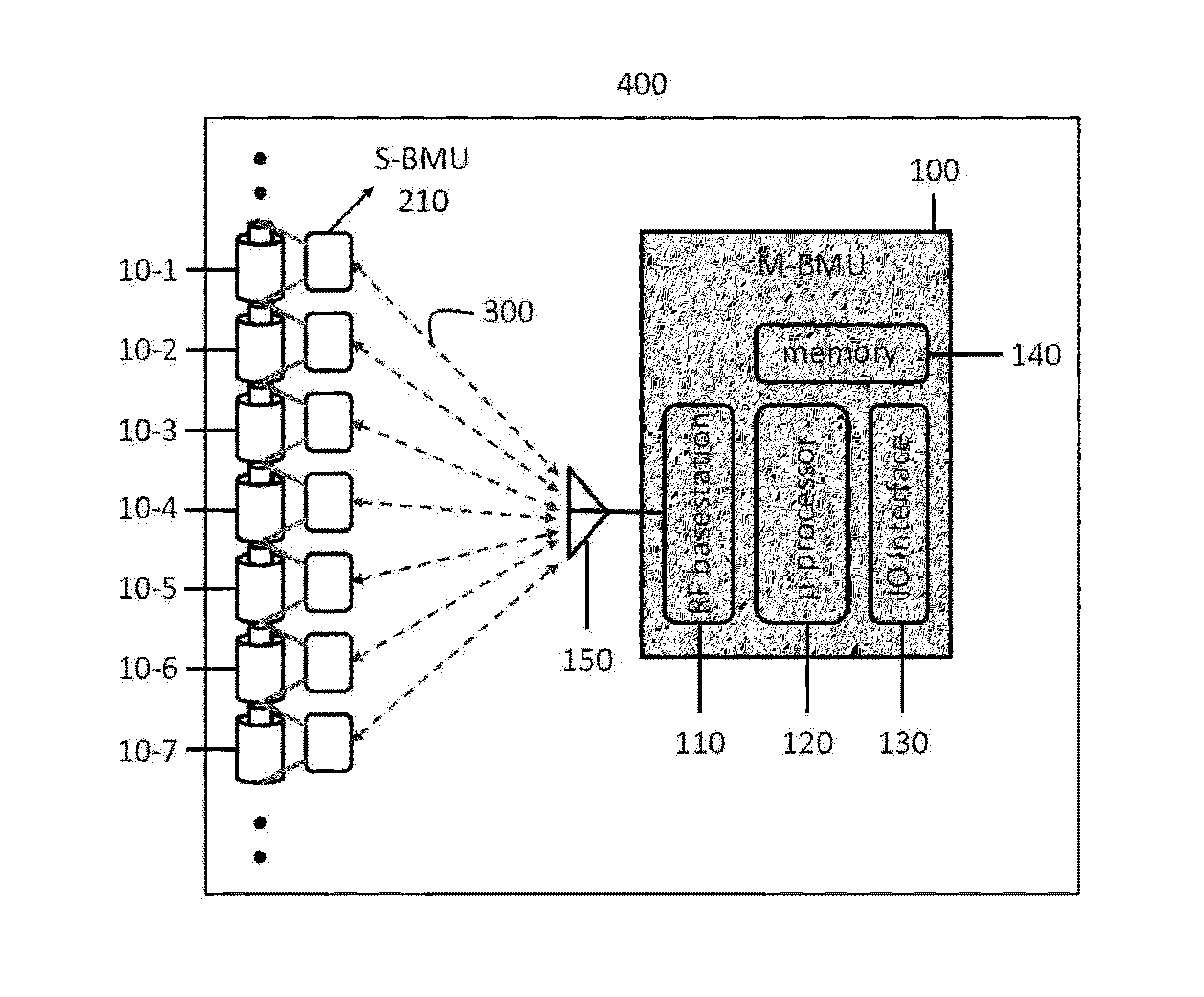
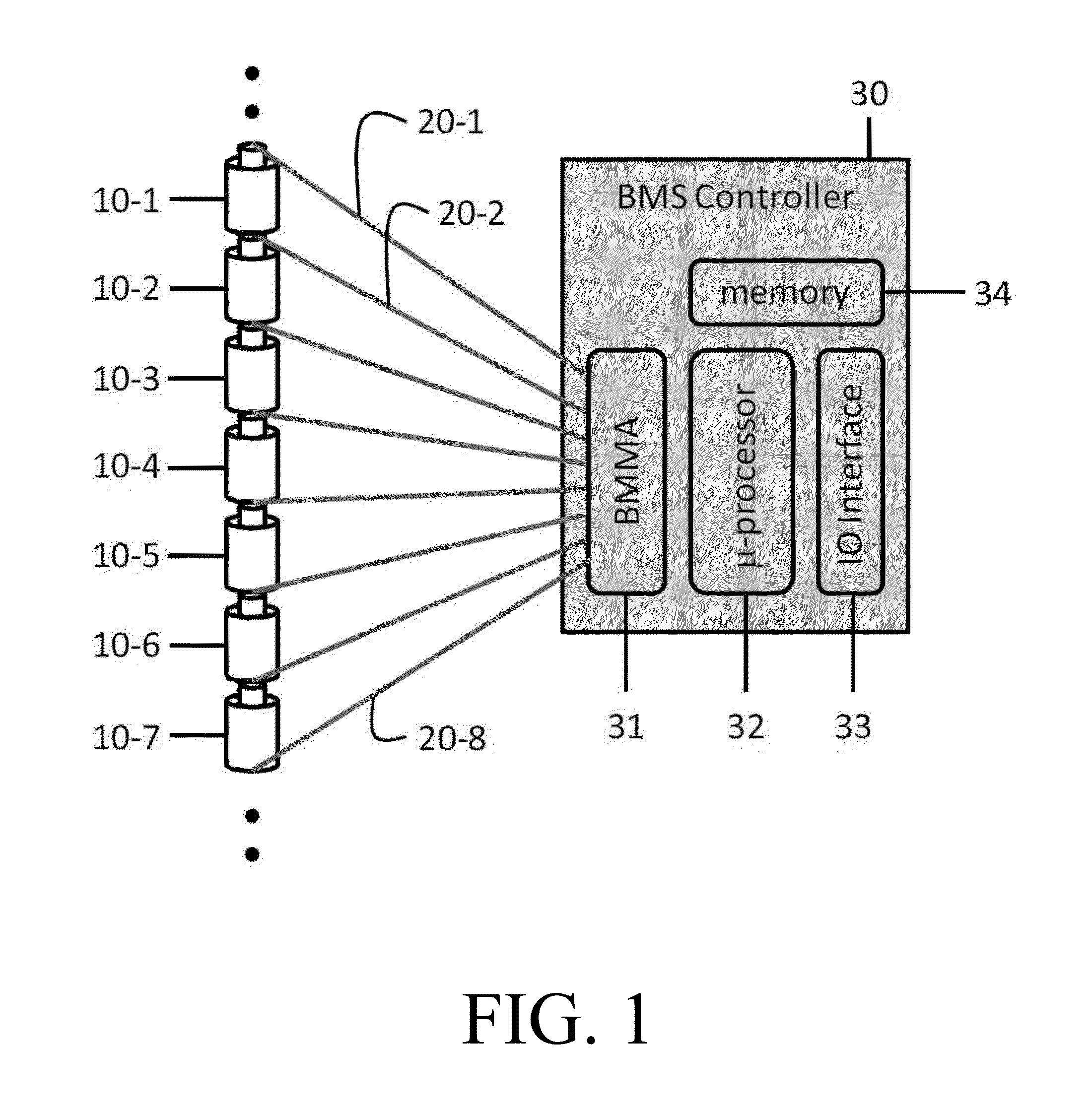
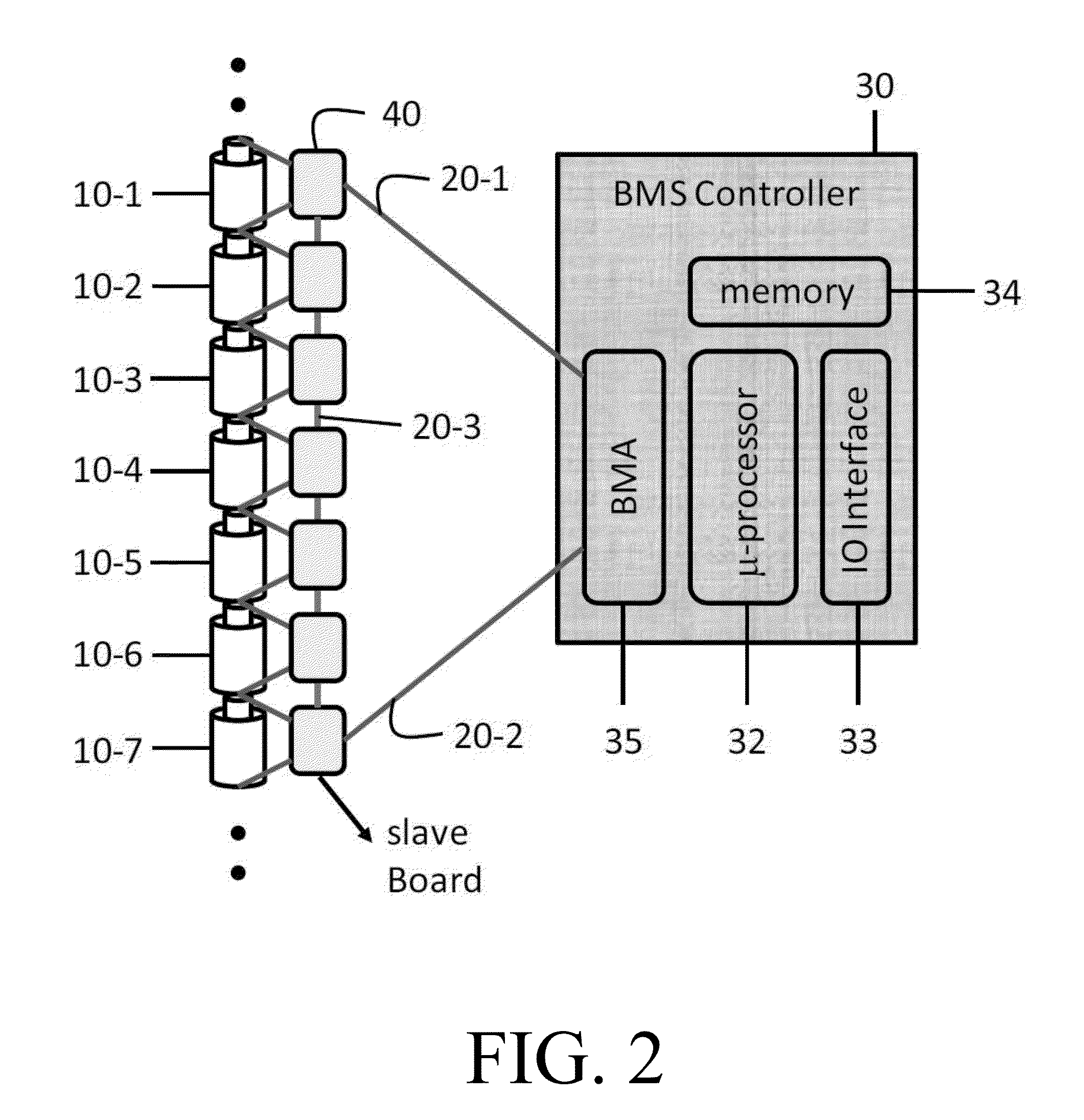
- A self-organizing wireless battery area network (WiBaAN) that uses beamforming technology to establish optimal communication parameters and configure wireless communication conditions, enabling scalable and cost-effective monitoring and control of individual battery cells within a battery pack, regardless of material or shape, and incorporating wireless power up/down features for efficient energy management.

Large-scale energy storage battery management system based on dual-controller three-level architecture
PatentInactiveCN111934374A
Innovation
- It adopts a three-level architecture design based on dual controllers, including the battery cluster management system (BAMS) as the main controller and the auxiliary management system (TMS) as the auxiliary controller. It realizes multi-level communication and communication through Ethernet, CAN bus and RS485 interface. Interface connection combines the advantages of industrial computers and real-time embedded controllers to enhance data processing and logic control capabilities.

Safety Standards and Regulations for Wireless BMS Systems
The implementation of wireless Battery Management Systems (BMS) for large-scale energy management operates within a complex regulatory framework that encompasses multiple safety standards and compliance requirements. These regulations are essential for ensuring system reliability, personnel safety, and environmental protection in critical energy infrastructure applications.
International safety standards form the foundation of wireless BMS regulatory compliance. The IEC 62619 standard specifically addresses safety requirements for secondary lithium cells and batteries for industrial applications, establishing critical parameters for battery management systems. Additionally, IEC 61508 provides functional safety guidelines for electrical and electronic systems, defining Safety Integrity Levels (SIL) that wireless BMS implementations must achieve. The ISO 26262 standard, while originally developed for automotive applications, increasingly influences stationary energy storage safety requirements.
Wireless communication aspects of BMS systems must comply with electromagnetic compatibility (EMC) standards including IEC 61000 series and FCC Part 15 regulations. These standards ensure that wireless transmissions do not interfere with other critical systems while maintaining reliable communication under various electromagnetic environments. The IEEE 802.15.4 and similar wireless protocol standards provide technical specifications for low-power wireless networks used in BMS applications.
Regional regulatory variations significantly impact wireless BMS deployment strategies. European markets require CE marking compliance under the Machinery Directive 2006/42/EC and the Low Voltage Directive 2014/35/EU. North American implementations must satisfy UL 1973 standards for stationary battery systems and NFPA 855 fire safety requirements for energy storage installations. Asian markets, particularly China and Japan, have developed specific national standards such as GB/T 36276 and JIS C 8715 that address local safety concerns and technical requirements.
Cybersecurity regulations represent an emerging critical compliance area for wireless BMS systems. The NERC CIP standards in North America and the EU Cybersecurity Act establish mandatory security frameworks for critical energy infrastructure. These regulations require implementation of secure communication protocols, regular security assessments, and incident response procedures for wireless-enabled energy management systems.
Certification processes typically involve third-party testing laboratories that validate compliance with applicable standards. This includes thermal runaway testing, electromagnetic interference assessment, and cybersecurity vulnerability analysis. The certification timeline can extend 6-12 months, requiring early integration of regulatory requirements into system design phases to ensure market readiness and deployment authorization.
International safety standards form the foundation of wireless BMS regulatory compliance. The IEC 62619 standard specifically addresses safety requirements for secondary lithium cells and batteries for industrial applications, establishing critical parameters for battery management systems. Additionally, IEC 61508 provides functional safety guidelines for electrical and electronic systems, defining Safety Integrity Levels (SIL) that wireless BMS implementations must achieve. The ISO 26262 standard, while originally developed for automotive applications, increasingly influences stationary energy storage safety requirements.
Wireless communication aspects of BMS systems must comply with electromagnetic compatibility (EMC) standards including IEC 61000 series and FCC Part 15 regulations. These standards ensure that wireless transmissions do not interfere with other critical systems while maintaining reliable communication under various electromagnetic environments. The IEEE 802.15.4 and similar wireless protocol standards provide technical specifications for low-power wireless networks used in BMS applications.
Regional regulatory variations significantly impact wireless BMS deployment strategies. European markets require CE marking compliance under the Machinery Directive 2006/42/EC and the Low Voltage Directive 2014/35/EU. North American implementations must satisfy UL 1973 standards for stationary battery systems and NFPA 855 fire safety requirements for energy storage installations. Asian markets, particularly China and Japan, have developed specific national standards such as GB/T 36276 and JIS C 8715 that address local safety concerns and technical requirements.
Cybersecurity regulations represent an emerging critical compliance area for wireless BMS systems. The NERC CIP standards in North America and the EU Cybersecurity Act establish mandatory security frameworks for critical energy infrastructure. These regulations require implementation of secure communication protocols, regular security assessments, and incident response procedures for wireless-enabled energy management systems.
Certification processes typically involve third-party testing laboratories that validate compliance with applicable standards. This includes thermal runaway testing, electromagnetic interference assessment, and cybersecurity vulnerability analysis. The certification timeline can extend 6-12 months, requiring early integration of regulatory requirements into system design phases to ensure market readiness and deployment authorization.
Grid Integration Requirements for Large-Scale Energy Storage
The integration of wireless Battery Management Systems (BMS) into electrical grids for large-scale energy storage applications requires adherence to stringent technical and regulatory standards. Grid operators demand compliance with IEEE 2030 series standards, which define interoperability requirements for smart grid systems, and IEC 61850 communication protocols that ensure seamless data exchange between energy storage systems and grid control centers.
Voltage and frequency regulation capabilities represent fundamental grid integration requirements. Wireless BMS implementations must demonstrate rapid response times, typically within 100 milliseconds, to grid frequency deviations and voltage fluctuations. The system must support both primary frequency response for immediate grid stabilization and secondary frequency control for sustained grid balance maintenance.
Power quality standards impose strict harmonic distortion limits, requiring Total Harmonic Distortion (THD) levels below 5% for voltage and 8% for current under IEEE 519 guidelines. Wireless BMS architectures must incorporate advanced filtering mechanisms and real-time monitoring capabilities to maintain these parameters while managing large battery arrays across distributed locations.
Grid synchronization protocols demand precise phase-locked loop implementations within wireless BMS controllers. The system must maintain synchronization accuracy within ±0.1 degrees phase angle deviation during normal operations and demonstrate fault ride-through capabilities during grid disturbances lasting up to 3 seconds without disconnection.
Cybersecurity requirements have become increasingly critical, mandating implementation of IEC 62351 security standards for power system communications. Wireless BMS networks must incorporate end-to-end encryption, multi-factor authentication, and intrusion detection systems to protect against cyber threats that could compromise grid stability.
Communication redundancy specifications require dual-path connectivity with automatic failover capabilities. Primary wireless channels must maintain 99.9% availability, with backup communication paths activating within 50 milliseconds of primary link failure to ensure continuous grid coordination and prevent system isolation during critical operating periods.
Voltage and frequency regulation capabilities represent fundamental grid integration requirements. Wireless BMS implementations must demonstrate rapid response times, typically within 100 milliseconds, to grid frequency deviations and voltage fluctuations. The system must support both primary frequency response for immediate grid stabilization and secondary frequency control for sustained grid balance maintenance.
Power quality standards impose strict harmonic distortion limits, requiring Total Harmonic Distortion (THD) levels below 5% for voltage and 8% for current under IEEE 519 guidelines. Wireless BMS architectures must incorporate advanced filtering mechanisms and real-time monitoring capabilities to maintain these parameters while managing large battery arrays across distributed locations.
Grid synchronization protocols demand precise phase-locked loop implementations within wireless BMS controllers. The system must maintain synchronization accuracy within ±0.1 degrees phase angle deviation during normal operations and demonstrate fault ride-through capabilities during grid disturbances lasting up to 3 seconds without disconnection.
Cybersecurity requirements have become increasingly critical, mandating implementation of IEC 62351 security standards for power system communications. Wireless BMS networks must incorporate end-to-end encryption, multi-factor authentication, and intrusion detection systems to protect against cyber threats that could compromise grid stability.
Communication redundancy specifications require dual-path connectivity with automatic failover capabilities. Primary wireless channels must maintain 99.9% availability, with backup communication paths activating within 50 milliseconds of primary link failure to ensure continuous grid coordination and prevent system isolation during critical operating periods.
Unlock deeper insights with Patsnap Eureka Quick Research — get a full tech report to explore trends and direct your research. Try now!
Generate Your Research Report Instantly with AI Agent
Supercharge your innovation with Patsnap Eureka AI Agent Platform!