
Single-Joint Elevator With Adjustable Slips For Varied Tubular Diameters
Find Innovative SolutionsGenerate Solutions
Solution Overview
Problem
Single-joint elevators in the oil and gas industry are limited by their ability to accommodate only a small range of tubular segment outside diameters, requiring multiple elevators for varying diameters, which is inefficient and costly.
Innovation Solution
A multi-range single-joint elevator design featuring pivotally-coupled body halves with tapered slots and timing bars, along with tension handles and biasing members, allows slips to translate vertically and radially, enabling secure engagement of tubular segments with varying outside diameters without the need for multiple elevators.
Engineering Contradictions & Design Principles
Engineering Contradiction Analysis
1Adaptability or versatility
If a single-joint elevator is designed with a fixed internal diameter, then it can securely engage tubular segments of a specific outside diameter, but it cannot accommodate tubular segments with varying outside diameters
Solution Approach 1:
The patent applies the dynamics principle by making the elevator's internal diameter adjustable through movable body halves that can pivot relative to each other. The body halves are connected via hinges and biased by springs, allowing the elevator to dynamically change its internal diameter to accommodate different tubular segment sizes while maintaining a fundamentally simple single-joint structure
Solution Approach 2:
The patent implements parameter changes by modifying the internal diameter parameter of the elevator through the pivoting mechanism. The body halves can rotate about hinge axes, changing the distance between them and thus the internal diameter, allowing the same elevator to engage tubular segments with varying outside diameters without requiring multiple fixed-diameter elevators
2Adaptability or versatility
If multiple single-joint elevators are used to accommodate varying outside diameters, then all tubular segment sizes can be engaged, but the number of elevators and operational complexity increases
Solution Approach 1:
The patent achieves universality by designing a single elevator that can perform the function of engaging multiple different tubular segment sizes. The adjustable body halves allow one elevator to replace what would traditionally require multiple fixed-diameter elevators, reducing equipment inventory and the time needed to switch between different tubular sizes during operations
3Adaptability or versatility
If the elevator body halves are made movable to adjust internal diameter, then adaptability to various diameters is achieved, but the mechanism complexity increases
Solution Approach 1:
The patent applies segmentation by dividing the elevator body into two separate movable halves that can pivot independently. Each half is equipped with its own hinge and biasing mechanism, allowing for controlled adjustment of the internal diameter while keeping each individual component relatively simple and manageable
Applied Scientific Principles
This section explains which scientific principles are used to turn an abstract innovation direction into a practical engineering solution.
Function Achieved in This Case
The elevator can securely grasp tubular segments with a range of outside diameters, reducing the need for multiple elevators and saving time and resources by accommodating various diameters without adjustments or replacements.
Implementation Method 1
first and second biasing members each having a first end coupled to the connection point of the first and second tension handles, respectively, and a second end coupled to the first and second timing bars, respectively, wherein the first and second biasing members impart a downward force on the one or more slips via the first and second timing bars when the first and second handles are in the locked position
Data Source
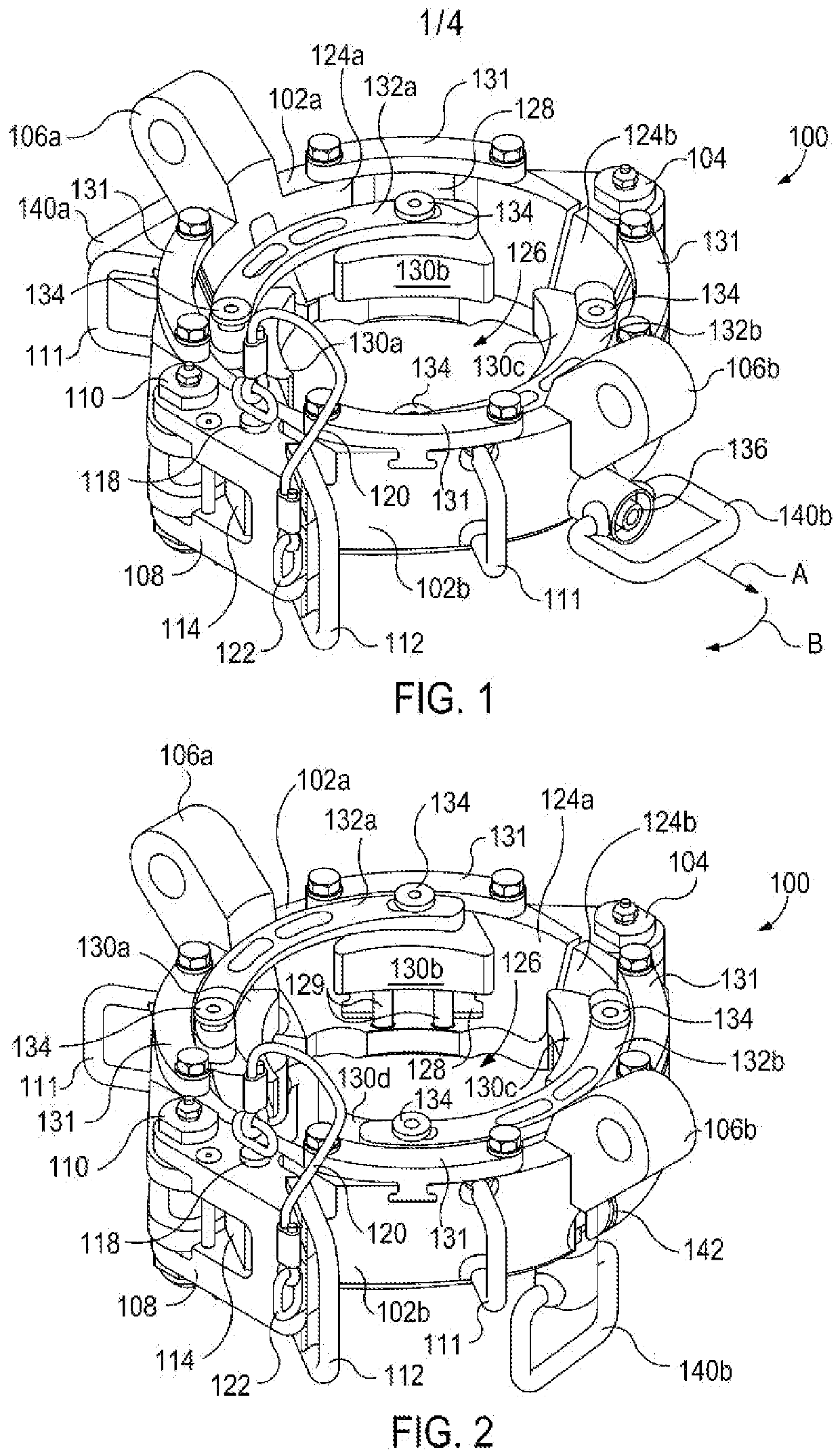 Figure 1~2
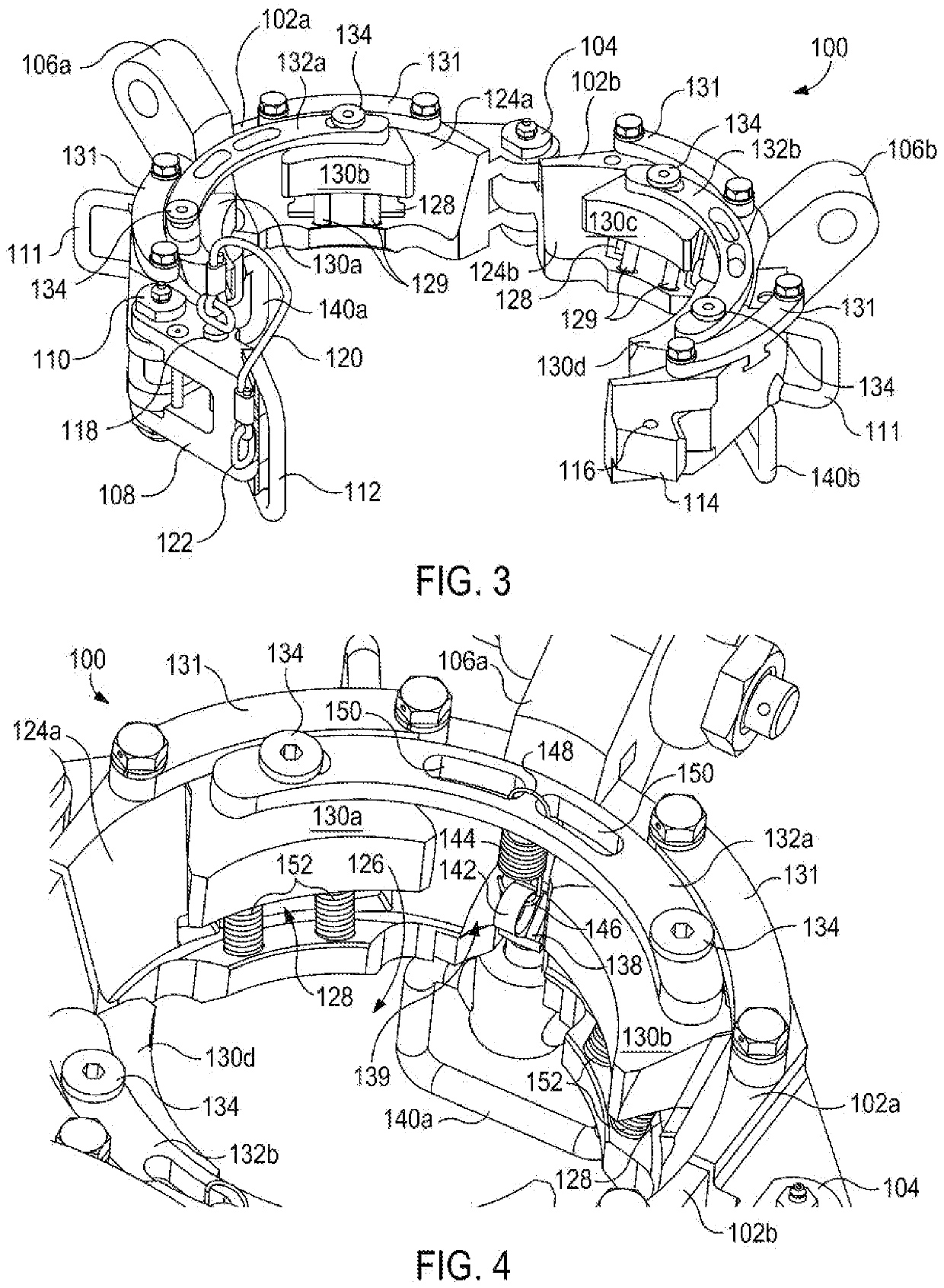 Figure 3~4
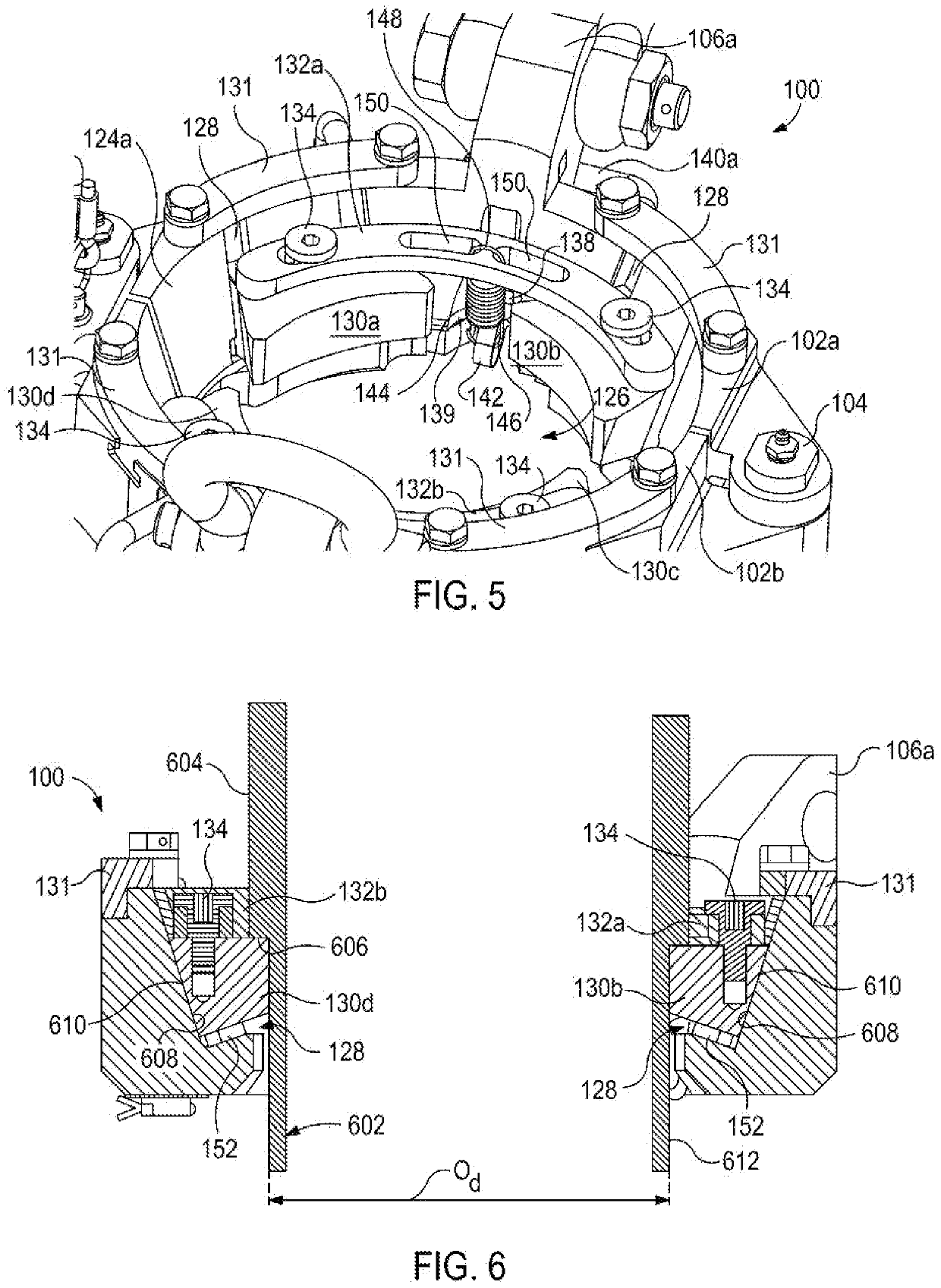 Figure 5~6
AI summary
An oilfield elevator is disclosed and has first and second body halves pivotally-coupled at a hinge and moveable between an open position and a closed position to receive and move a tubular segment. Slips are slidably received within corresponding tapered slots in the elevator and are configured to translate vertically within the tapered slots and, at the same time, radially so as to be able to capture a wider range of tubular having varied outside diameters. Tension handles are pivotally-coupled to the first and second body halves and moveable between locked and unlocked positions. Locking the tension handles engages the slips via biasing members, and forces the slips into radial contact with the tubular segment. Unlocking the tension handles releases the biasing members.