

Air Cycle Machine Bypass Layout for Left-Right ECS Maintenance
Find Innovative SolutionsGenerate Solutions
Solution Overview
Problem
Existing aircraft Environmental Control Systems (ECS) configurations with turbine housings are specifically designed for either left or right-hand packs, making them difficult to access for maintenance and replacement, especially the bypass valves which are often positioned in hard-to-reach areas.
Innovation Solution
A modular air cycle machine housing arrangement with a duct and bypass valve configuration that allows for easy maintenance access, featuring interchangeable plugs and bypass valves, enabling the same housing to be used on both sides of the aircraft, with ports designed for sealing interfaces and easy removal features.
Engineering Contradictions & Design Principles
Engineering Contradiction Analysis
1Reliability
If turbine housings are specifically configured for left or right hand ECS packs, then the housing can be optimized for specific positioning, but maintenance and replacement become difficult due to inaccessibility of bypass valves
Solution Approach 1:
The housing is designed with universal symmetry allowing the same housing configuration to be used on both left and right hand ECS packs. The bypass valve can be positioned on either the first or second inlet depending on which side of the aircraft it is installed on, making the housing multi-functional and universally applicable while maintaining easy access for maintenance.
Solution Approach 2:
The housing incorporates asymmetric inlet configurations where the first inlet and second inlet are positioned differently to accommodate left and right hand installations. This asymmetric design allows the bypass valve to be accessible from the gravitational bottom regardless of which side the housing is installed on.
2Device complexity
If bypass valves are positioned in hard-to-reach areas, then the housing structure can be simplified, but maintenance and replacement become difficult
Solution Approach 1:
The bypass valve is positioned on the gravitational bottom of the housing, creating an equipotential position that is easily accessible for maintenance regardless of the housing's orientation or installation side. This positioning ensures that the bypass valve is always at the lowest point, making it accessible from below without requiring complex housing structures.
3Ease of manufacture
If different housing configurations are used for left and right hand packs, then each can be optimized for its specific location, but the number of parts and maintenance complexity increase
Solution Approach 1:
A single universal housing design is created that can be installed on both left and right hand ECS packs. The housing incorporates symmetric features and interchangeable inlet configurations that allow it to function optimally on either side of the aircraft, reducing the number of different housing types from two to one while maintaining location-specific optimization.
Data Source
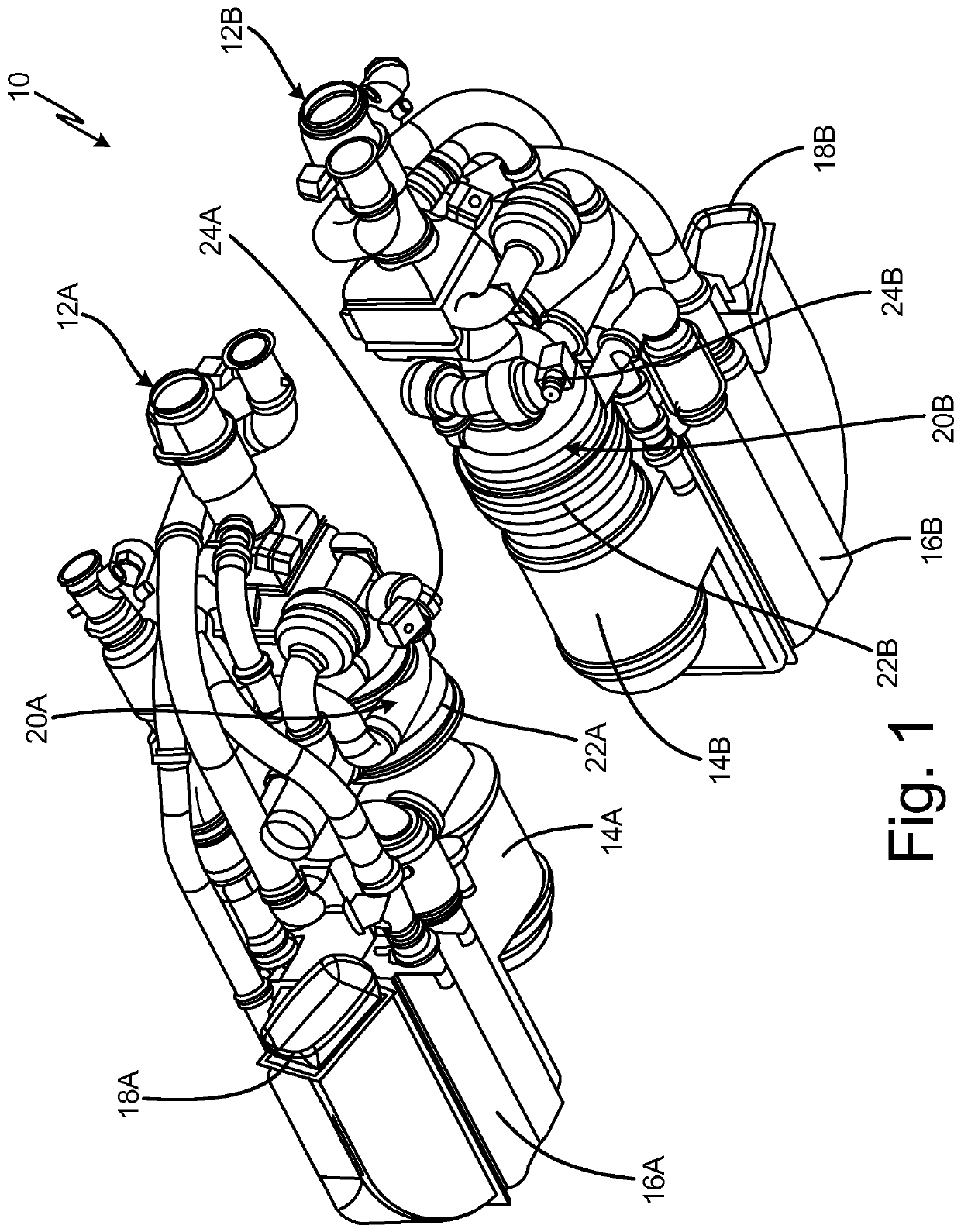 Figure 1
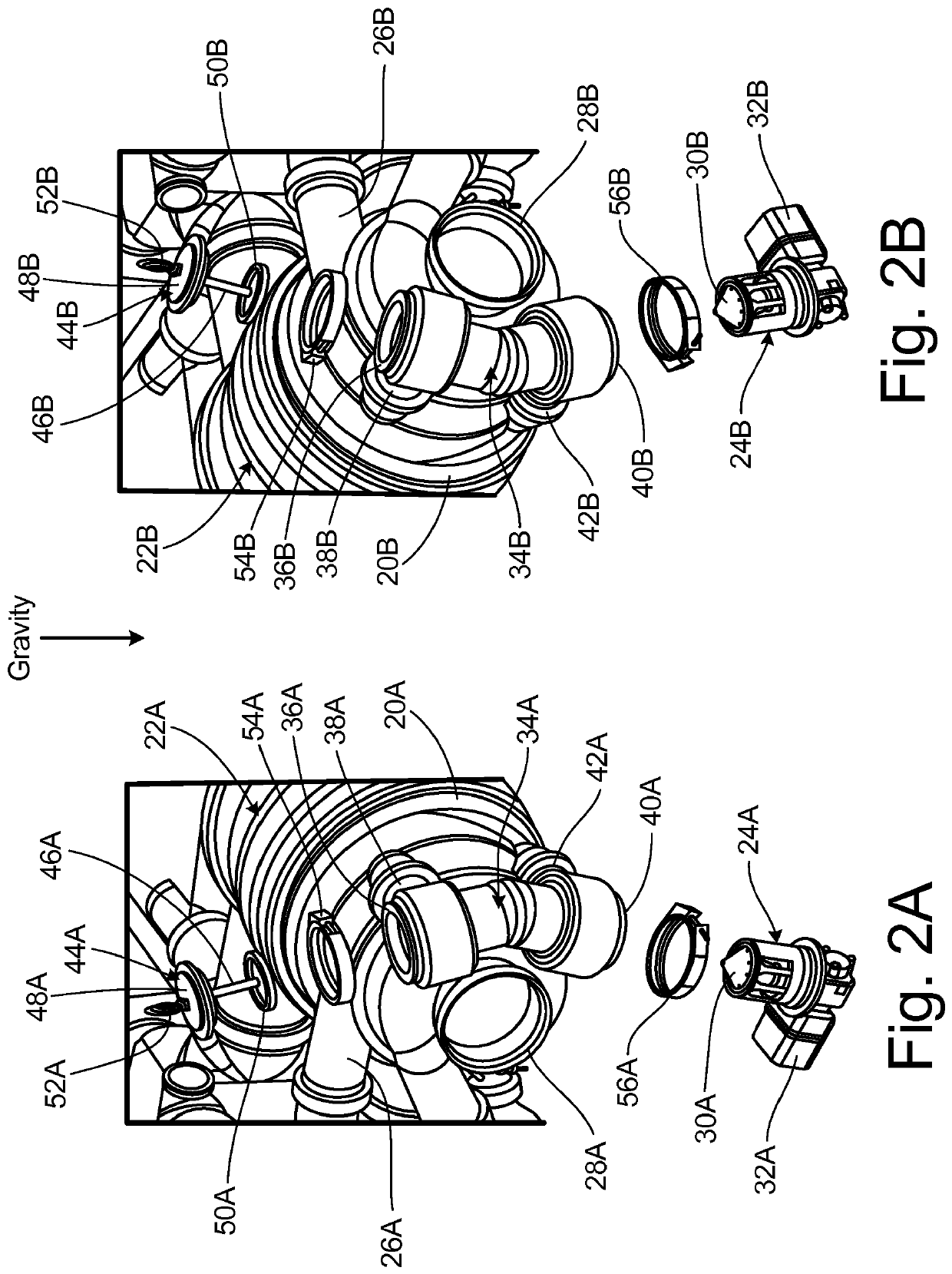 Figure 2A~2B
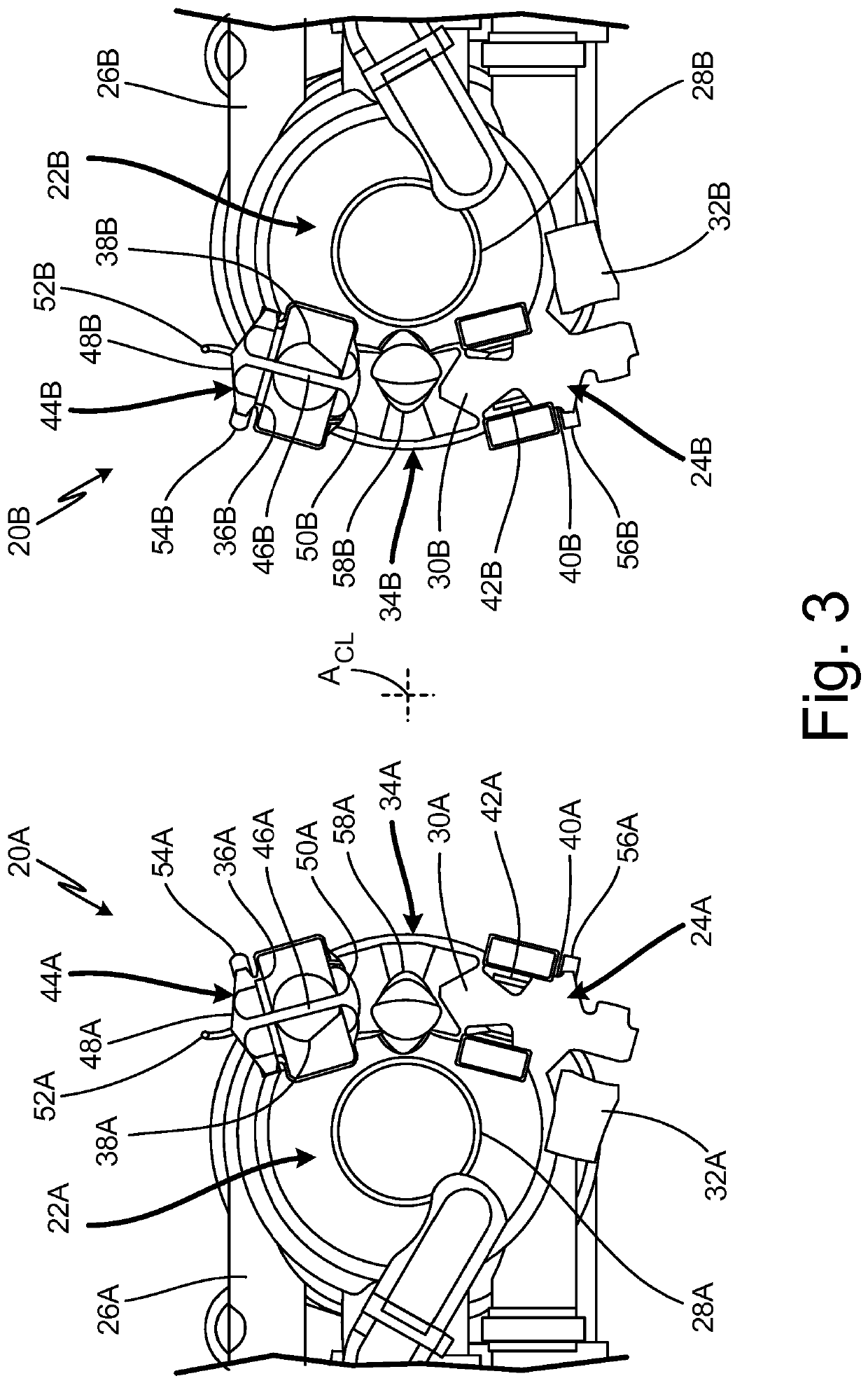 Figure 3
AI summary
An air cycle machine includes a housing (22), a duct (34), a bypass valve (24), and a plug (44). The duct extends from and connects two different portions of the housing and includes a first port (36) and a second port (40). The first port is attached to the first inlet of the housing. The second duct is attached to the second inlet of the housing. The bypass valve is inserted into one of the first port and second port of the duct. The plug is inserted into the other of the first port and second port that the bypass valve is not inserted into. Both the first port and the second port are capable of receiving and forming a sealing interface with both of the bypass valve and the plug.