

AR Event Registration Using Landmark-Based Mobile Pose Tracking
Find Innovative SolutionsGenerate Solutions
Solution Overview
Problem
Existing augmented reality systems struggle to accurately provide personalized content to individual viewers at events due to challenges in determining the precise position and orientation of mobile devices relative to the real world, especially in environments with organic shapes and changing conditions, leading to difficulties in displaying relevant graphics and data.
Innovation Solution
A system that utilizes specific features like ridge lines, edges of man-made structures, and tree trunks, combined with GPS, compass, and inertial measurement units, to establish a correspondence between the mobile device's frame of reference and the real-world coordinate system, enabling accurate registration and tracking of AR content.
Engineering Contradictions & Design Principles
Engineering Contradiction Analysis
1Adaptability or versatility
If traditional broadcast media are used to transmit event information, then the content can be delivered to audiences, but the interaction and engagement between viewers and the event is limited and passive
Solution Approach 1:
The broadcast transmission device is designed to perform multiple functions: it transmits traditional broadcast content while simultaneously capturing event data, generating augmented reality overlays, and distributing enhanced content through various channels including wireless communications. This multi-functionality enables interaction and engagement without requiring separate dedicated systems for each function.
Solution Approach 2:
A cloud-based processing system acts as an intermediary between the broadcast transmission device and viewing devices. This intermediary generates augmented reality content, processes event data, and distributes enhanced broadcasts, enabling complex interaction capabilities while keeping the individual device structures manageable through centralized processing.
2Adaptability or versatility
If augmented reality overlays and real-time event data are integrated into broadcasts, then viewer engagement and interaction are enhanced, but the processing requirements and system complexity increase
Solution Approach 1:
The cloud-based processing system serves as an intermediary that handles computationally intensive tasks such as generating augmented reality overlays, processing event data from multiple sensors, and encoding enhanced content. This distribution of processing workload reduces the energy consumption requirements of individual broadcast transmission devices while maintaining high content enhancement capabilities.
Solution Approach 2:
The system divides processing functions into separate modules: local devices capture and transmit raw event data, while cloud-based systems perform complex processing and generate augmented reality content. This segmentation allows each component to operate within appropriate energy constraints while achieving overall system enhancement.
3Quantity of substance
If multiple data streams and augmented reality content are transmitted simultaneously, then information delivery is comprehensive, but the bandwidth requirements and transmission complexity increase
Solution Approach 1:
The system dynamically adjusts transmission parameters based on network conditions and content requirements. The broadcast transmission device and cloud system can modulate data stream priorities, adjust compression levels, and adapt transmission protocols to deliver comprehensive information while managing transmission complexity through dynamic optimization rather than static fixed configurations.
Data Source
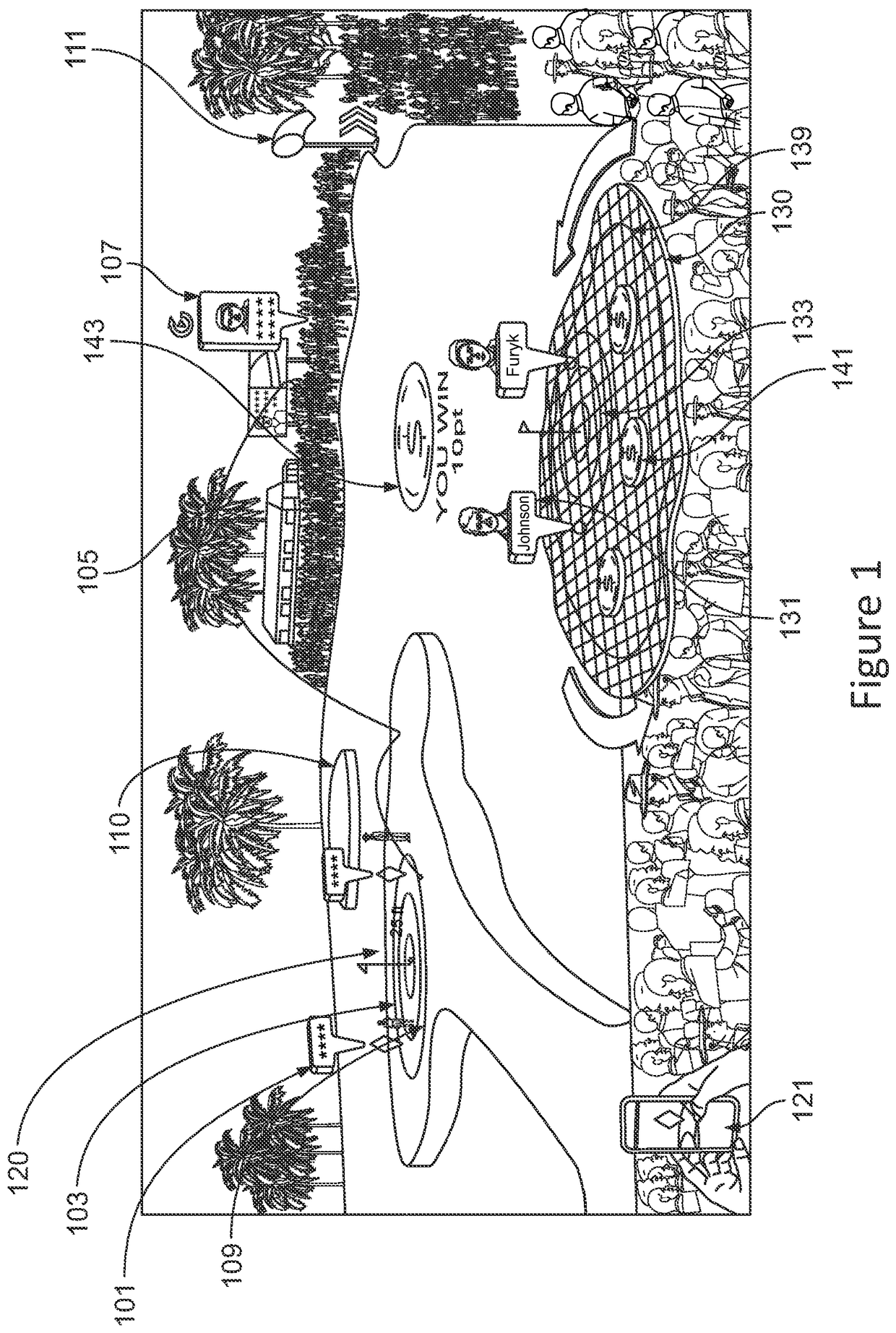 Figure 1
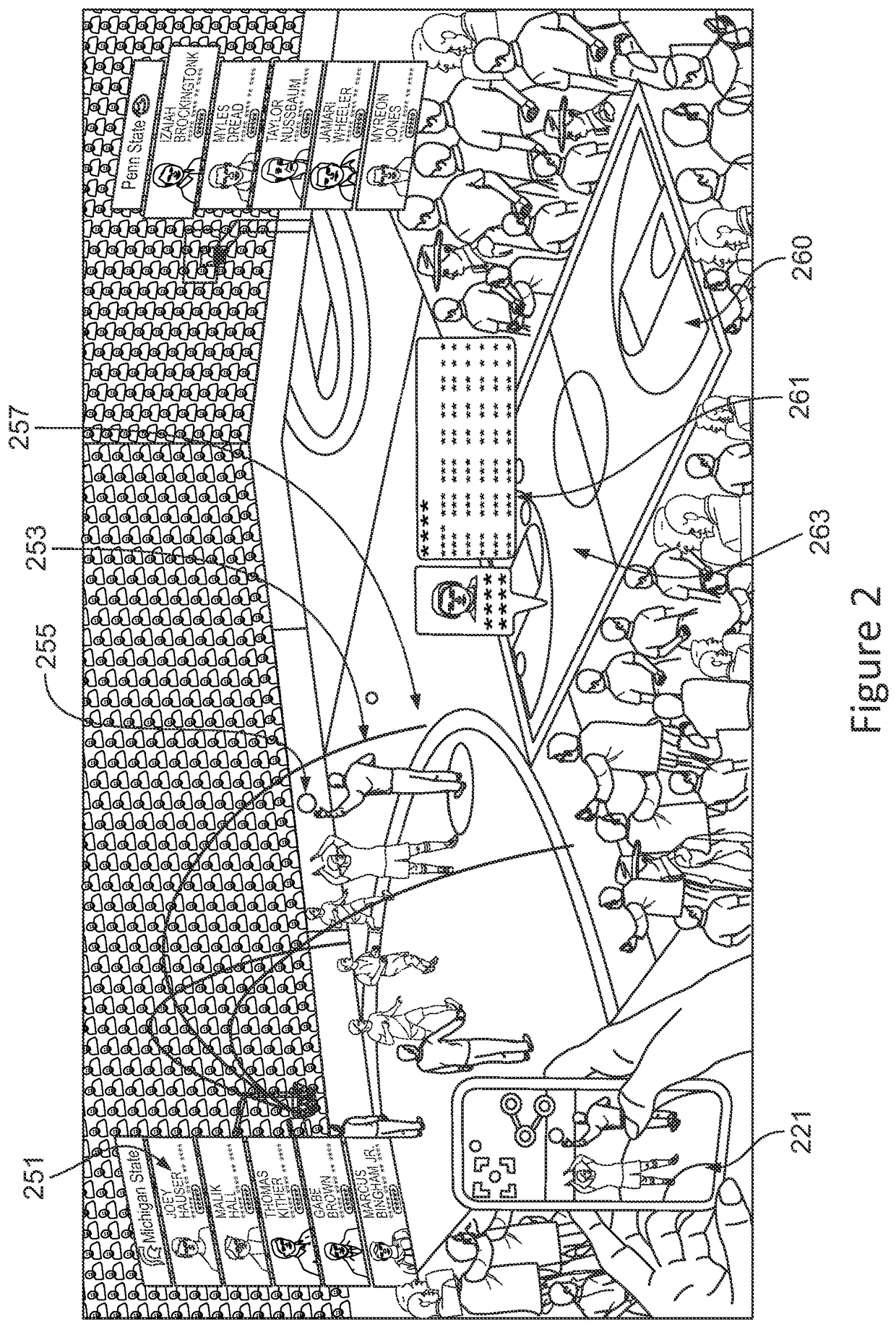 Figure 2
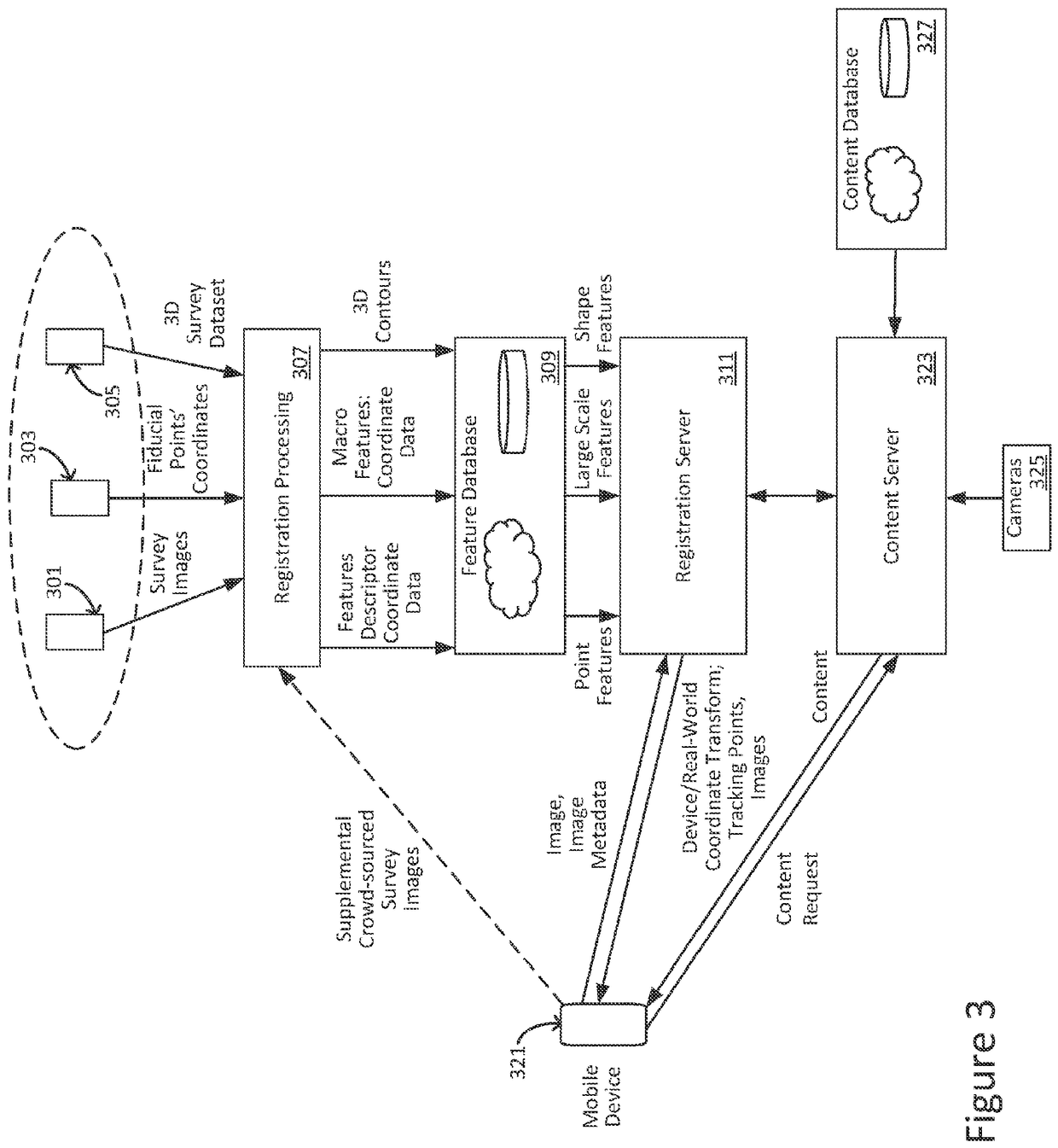 Figure 3
AI summary
Augmented reality systems provide graphics over views from a mobile device for both in-venue and remote viewing of a sporting or other event. A server system can provide a transformation between the coordinate system of a mobile device (smart phone, tablet computer, head mounted display) and a real world coordinate system. Requested graphics for the event are displayed over a view of an event.