

Battery EIS Arc Classification for Electrode-Specific Degradation
Find Innovative SolutionsGenerate Solutions
Solution Overview
Problem
Existing battery management systems struggle to distinguish between negative and positive electrode-originated arcs in electrochemical impedance spectroscopy (EIS) profiles due to their overlapping effects on battery degradation.
Innovation Solution
A battery management apparatus and method that utilizes an EIS unit to generate profiles at multiple time points, determines arcs based on inflection points and curvature changes, calculates resistance change rates, and distinguishes arcs as negative or positive electrode-originated based on preset criteria, using an equivalent circuit model and curve fitting algorithms.
Engineering Contradictions & Design Principles
Engineering Contradiction Analysis
1Measurement precision
If electrochemical impedance spectroscopy is used to estimate battery state, then battery degradation can be detected, but the ability to distinguish between negative and positive electrode-originated arcs is lost
Solution Approach 1:
The patent segments the battery degradation analysis by separating arcs into negative electrode-originated and positive electrode-originated categories. This is achieved by analyzing the characteristics of each arc in the EIS profile and assigning them to specific electrode origins based on predetermined criteria, thereby enabling distinct tracking of degradation in each electrode.
Solution Approach 2:
The patent applies local quality by assigning different analysis criteria to different arcs based on their characteristics. Each arc is evaluated individually using specific criteria (such as resistance change rates, arc area ratios, or frequency characteristics) to determine its origin, allowing tailored analysis for each arc rather than a uniform approach.
2Reliability
If multiple arcs are included in EIS profile due to battery degradation, then degradation detection is enabled, but arc origin distinction becomes difficult
Solution Approach 1:
The patent utilizes parameter changes by monitoring how arc characteristics (such as resistance, frequency, or area) change over time or under different conditions. By analyzing these parameter variations and comparing them against predetermined criteria or thresholds, the system can identify whether an arc originates from the negative or positive electrode despite the presence of multiple arcs.
3Quantity of substance
If both negative and positive electrode effects are present in arcs, then comprehensive battery monitoring is achieved, but specific electrode diagnosis is lost
Solution Approach 1:
The patent segments the comprehensive battery monitoring data into electrode-specific information by classifying each arc as originating from either the negative or positive electrode. This segmentation is performed by evaluating arc characteristics against predetermined criteria, enabling the system to maintain comprehensive monitoring while providing specific diagnostic information for each electrode type.
Applied Scientific Principles
This section explains which scientific principles are used to turn an abstract innovation direction into a practical engineering solution.
Function Achieved in This Case
Accurately diagnoses negative and positive electrode degradation states by specifically distinguishing arcs, enhancing the precision of battery state assessment.
Implementation Method 1
an EIS unit configured to output an AC current to a battery at a plurality of time points and generate an EIS profile representing a resistance of the battery as a corresponding relationship between a real part and an imaginary part
Data Source
 Figure 1~2
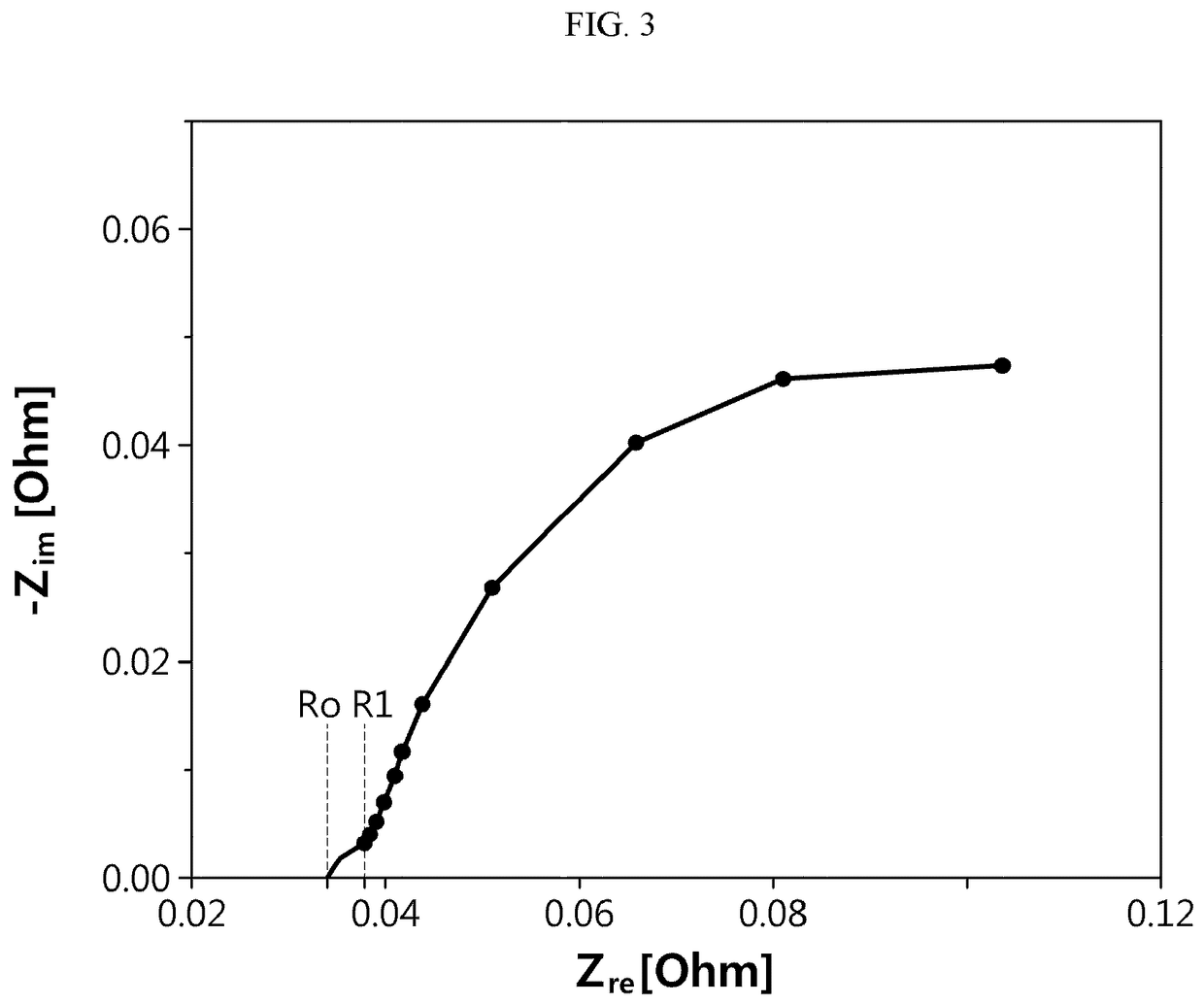 Figure 3
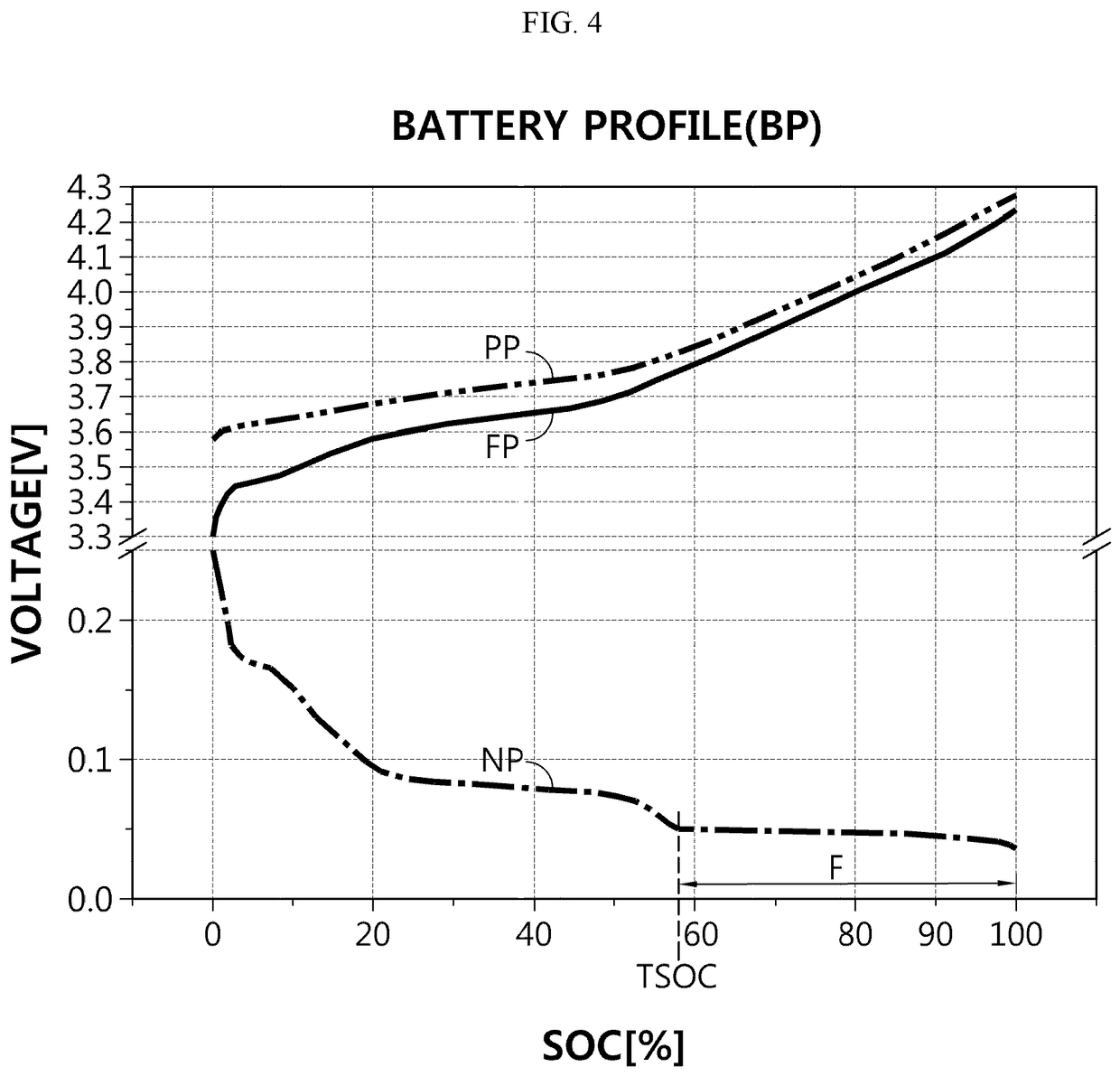 Figure 4
AI summary
A battery management apparatus according to an embodiment of the present disclosure includes: an EIS unit configured to output an AC current to a battery at a plurality of time points and generate an EIS profile representing a resistance of the battery as a corresponding relationship between a real part and an imaginary part at each of the plurality of time points; and a control unit configured to obtain the plurality of EIS profiles for the battery generated by the EIS unit, determine a plurality of arcs in each of the plurality of EIS profiles, calculate an arc resistance value for each of the plurality of determined arcs, calculate a resistance change rate for the arc resistance value between corresponding arcs among the plurality of arcs, and determine each of the plurality of arcs as a negative electrode-originated arc or a positive electrode-originated arc based on the plurality of calculated resistance change rates and a preset criterion change rate.