
Casein-Based Two-Part Seals for Heat-Free Container Recycling
Find Innovative SolutionsGenerate Solutions
Solution Overview
Problem
Existing seals for containers require heating or gluing for sealing, complicating recycling and potentially violating food safety regulations, and they are not biodegradable.
Innovation Solution
A casein-based film is used for sealing containers without heating or gluing, which is biodegradable and recyclable, and can be combined with a reinforcing film for added strength.
Engineering Contradictions & Design Principles
Engineering Contradiction Analysis
1Reliability
If heating or gluing is used for sealing the lid on the container rim, then sealing reliability is improved, but device complexity and food safety compliance worsen due to required conductive materials and additional processes
Solution Approach 1:
The invention removes the conductive material layer from the lid structure, eliminating the need for heating or gluing processes. The seal relies solely on the mechanical compression of the foam support against the container rim, simplifying both the device structure and the sealing process while maintaining reliability through the elastic memory effect of the foam material.
2Ease of manufacture
If conductive material is inserted into the lid for heat sealing, then heat sealing capability is improved, but recyclability worsens due to separation requirements
Solution Approach 1:
The conductive material layer is completely removed from the lid structure. The sealing function is achieved through the mechanical compression of the foam support material against the container rim, eliminating the need for heat sealing and thereby simplifying the recycling process as the entire lid can be processed without material separation.
3Reliability
If glue is applied to seal the lid on the rim, then sealing reliability is improved, but food safety compliance worsens due to potential glue penetration into the container
Solution Approach 1:
The invention eliminates the use of glue or any adhesive substances in the sealing process. The seal is formed purely by the mechanical compression of the foam support against the container rim, which then maintains the seal through its elastic memory effect. This removes any risk of adhesive penetration into the container and potential contamination of the contents.
4Productivity
If a casein-based film is used for sealing, then biodegradability and recyclability are improved, but sealing strength may worsen without additional reinforcing measures
Solution Approach 1:
The lid is constructed as a composite structure combining a casein-based film layer with a foam support layer. The casein film provides the sealing interface against the container rim, while the foam support provides mechanical strength and elastic compression. This composite structure maintains sealing strength while ensuring biodegradability and recyclability of the entire assembly.
Applied Scientific Principles
This section explains which scientific principles are used to turn an abstract innovation direction into a practical engineering solution.
Function Achieved in This Case
The casein-based film allows for recyclable and biodegradable sealing without the need for conductive materials, ensuring food safety compliance and efficient recycling.
Implementation Method 1
The sealing of the lid on the rim is carried out by gluing or induction heat sealing
Implementation Method 2
It is therefore capable of ensuring a certain compression with memory effect to allow these tolerances to be absorbed
Implementation Method 3
this is made possible by the combined action of a conductive material, inserted into the thickness of the seal, which, under the effect of electrical induction, heats up
Implementation Method 4
which, under the effect of electrical induction, heats up, causing the softening of the sealing film
Data Source
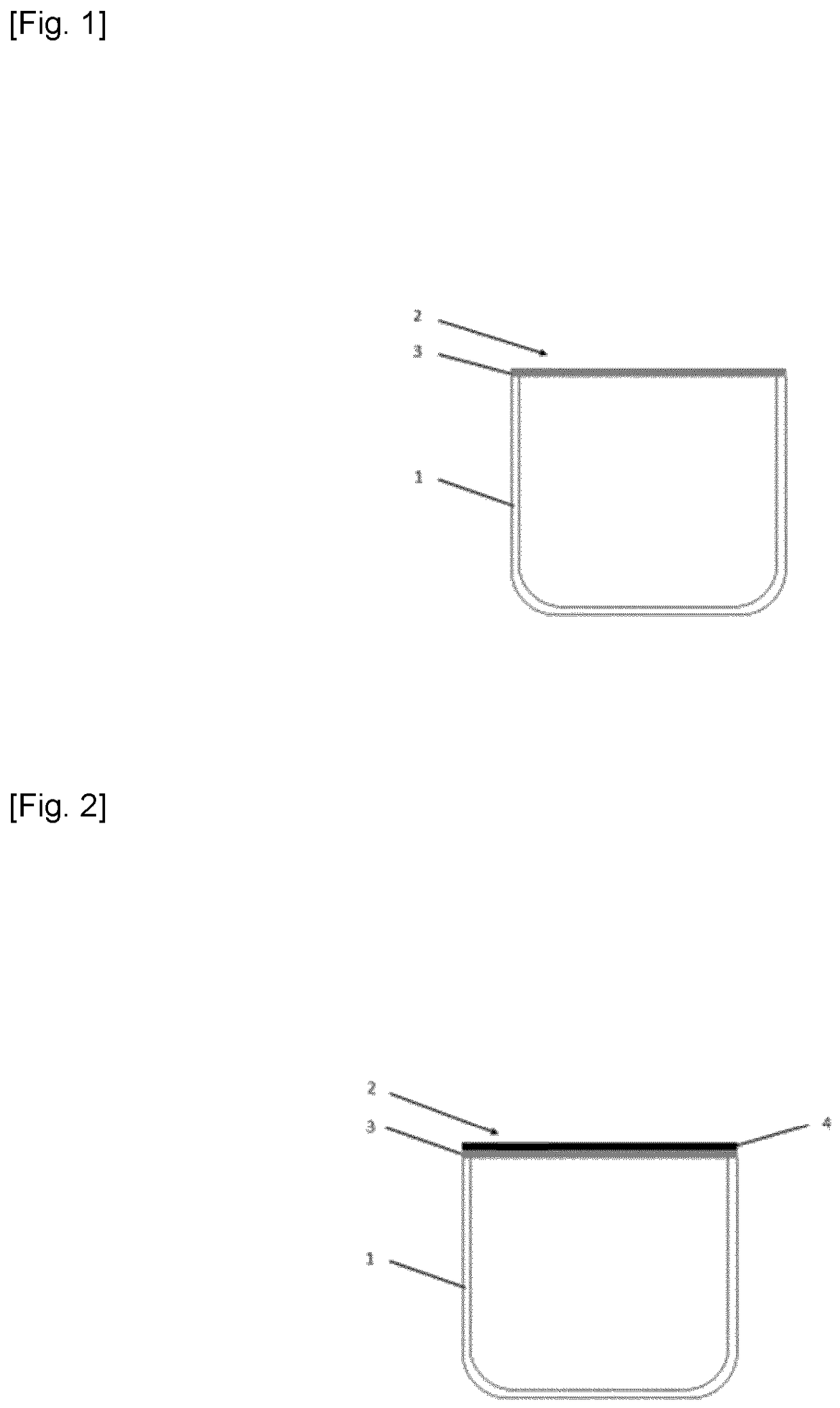 Figure 1~2
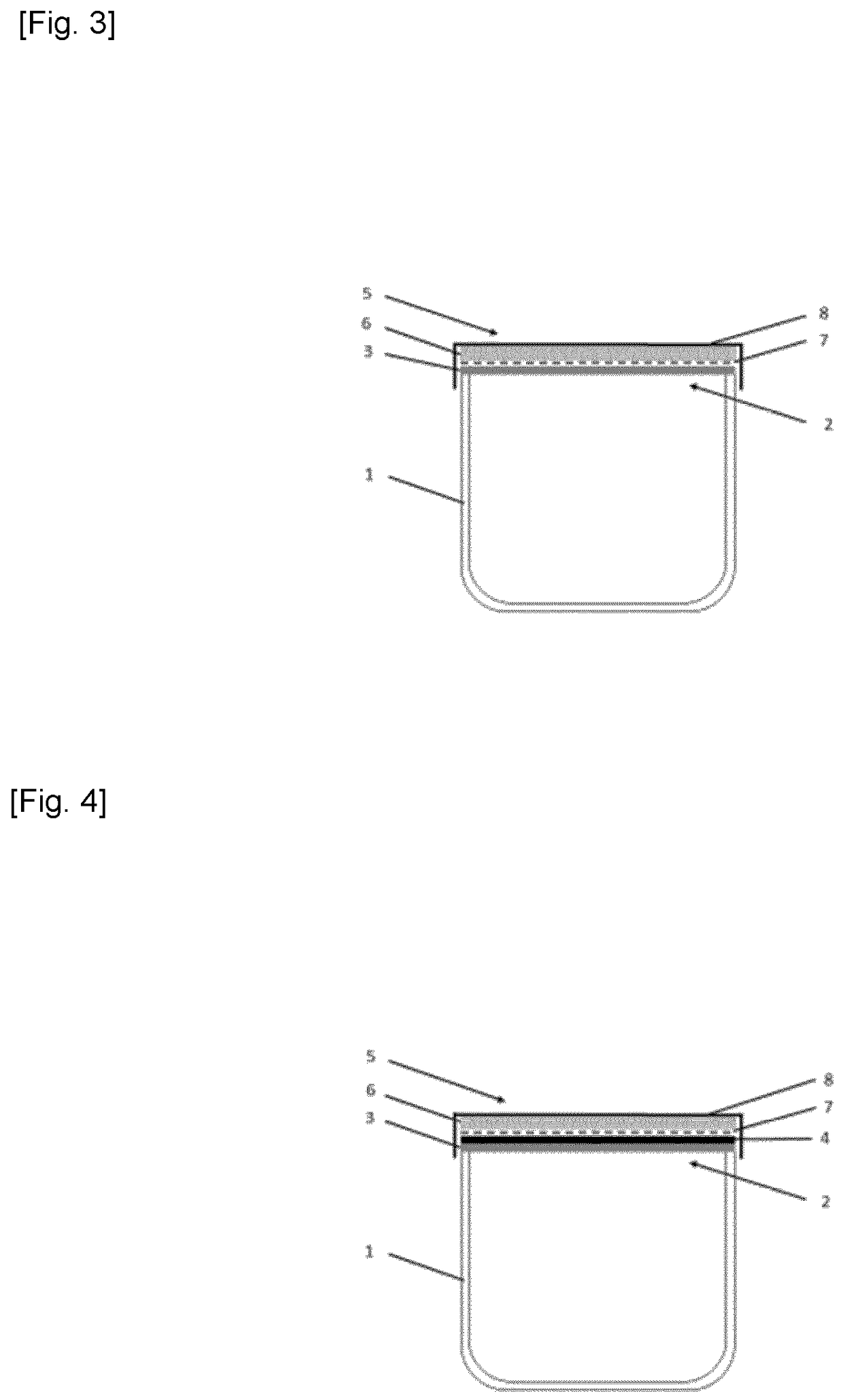 Figure 3~4
AI summary
Double-piece seal comprising a support made integral to a lid by means of a temporary adhesive characterized in that the lid comprises a casein and/or caseinate-based film intended to be in contact with the drinking vessel of said container.