
Implanted Conductive Member for Selective Nerve Stimulation
Find Innovative SolutionsGenerate Solutions
Solution Overview
Problem
Current nerve stimulation technologies face challenges in achieving selective activation of specific nerve branches with minimal activation of non-targeted tissue, leading to reduced therapeutic efficacy and increased side effects due to invasive procedures and limited precision.
Innovation Solution
A transcutaneous nerve stimulation system that includes an external electrical generator and a stimulator on the skin surface, paired with an implanted electrically conductive member positioned close to the target nerve tissue, which modifies the electrical field to enhance neural excitability and reduce stimulation of non-targeted nerves, using optimized configurations of external and implanted components.
Engineering Contradictions & Design Principles
Engineering Contradiction Analysis
1Object-affected harmful factors
If transcutaneous electrical stimulation is used to avoid invasive surgery, then patient safety and comfort are improved, but selective activation of targeted nerve tissue cannot be readily achieved
Solution Approach 1:
The patent introduces an implanted electrically conductive member as an intermediary between the external stimulator and the target nerve tissue. This mediator enables precise electrical field modification at the nerve site while keeping the external stimulator non-invasive, thus resolving the contradiction between avoiding surgery and achieving precise nerve activation.
Solution Approach 2:
The patent adds a spatial dimension by placing the conductive member in close proximity to or in contact with the target nerve tissue, creating a localized electrical field configuration that is not achievable with surface electrodes alone. This dimensional change enables selective nerve activation without invasive surgery.
2Reliability
If the distance between stimulating electrode and nerve target is minimized to achieve selective activation, then therapeutic efficacy is improved, but highly-invasive surgery with significant risk is required
Solution Approach 1:
The patent divides the stimulation system into two separate components: an external stimulator and an implanted conductive member. This segmentation allows the conductive member to be positioned close to the nerve for effective stimulation while the external stimulator avoids surgical risks, thus resolving the contradiction between therapeutic efficacy and surgical risk.
Solution Approach 2:
The implanted conductive member serves as an intermediary that bridges the gap between non-invasive external stimulation and the need for close proximity to the nerve. It enables effective nerve activation without requiring the external stimulator to be invasively positioned.
3Manufacturing precision
If multiple electrode contacts are used to improve stimulation selectivity, then nerve activation precision is improved, but device complexity increases
Solution Approach 1:
The implanted conductive member acts as a simplified intermediary that provides selective nerve activation without requiring complex multi-electrode arrays. This single conductive element achieves the selectivity function that would otherwise require multiple electrodes and complex control systems.
Applied Scientific Principles
This section explains which scientific principles are used to turn an abstract innovation direction into a practical engineering solution.
Function Achieved in This Case
This approach improves the selectivity and efficacy of nerve stimulation, reducing side effects and the need for invasive procedures, while allowing for more precise modulation of neural circuits with lower stimulation amplitudes and shorter pulse widths, thereby enhancing therapeutic outcomes.
Implementation Method 1
an implanted electrically conductive member positioned on or contiguous to a target nerve tissue for stimulation of the target nerve tissue to modify the electrical field signals
Implementation Method 2
an implanted electrically conductive member positioned on or contiguous to a target nerve tissue for stimulation of the target nerve tissue
Data Source
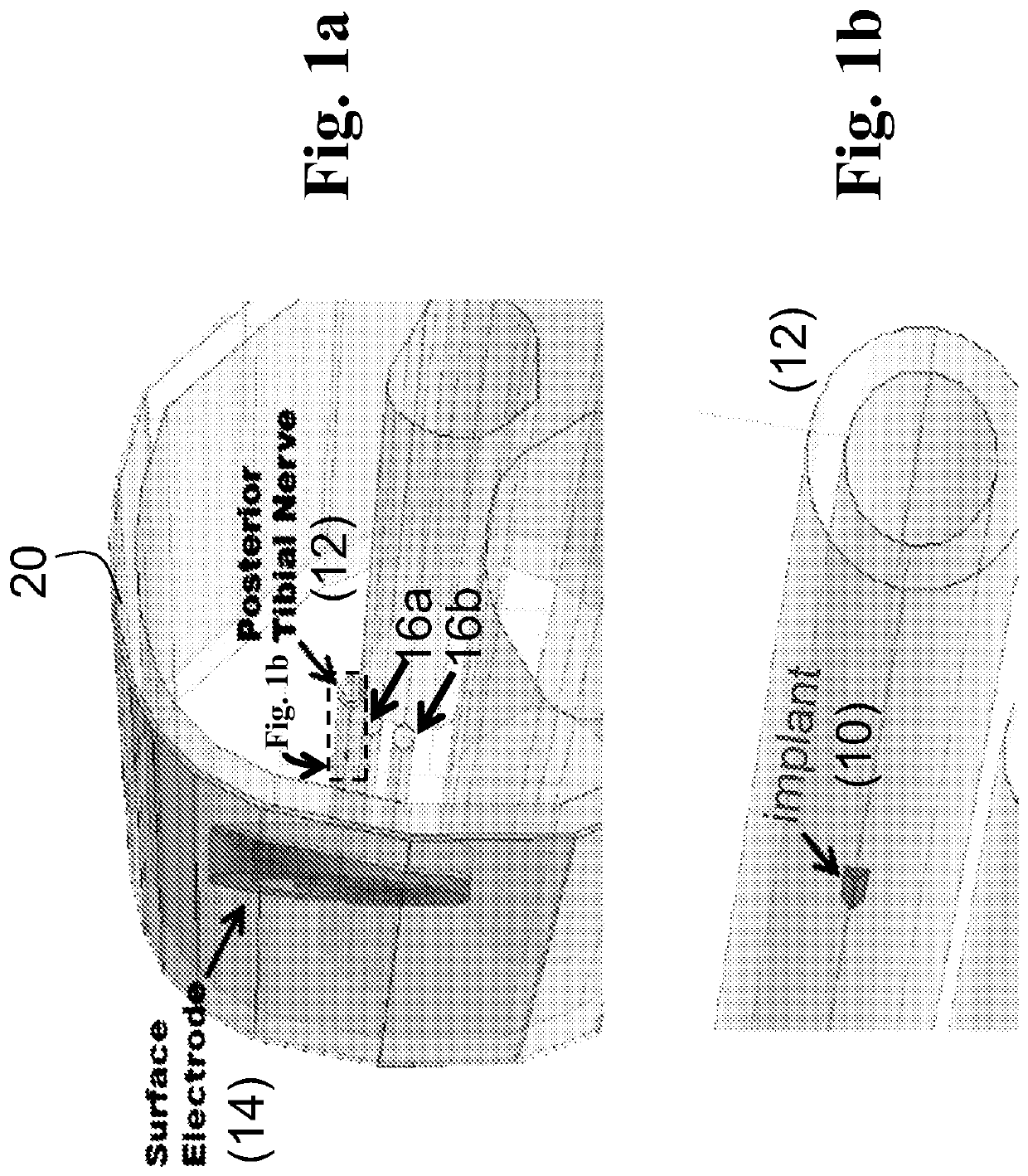 Figure 1a~1b
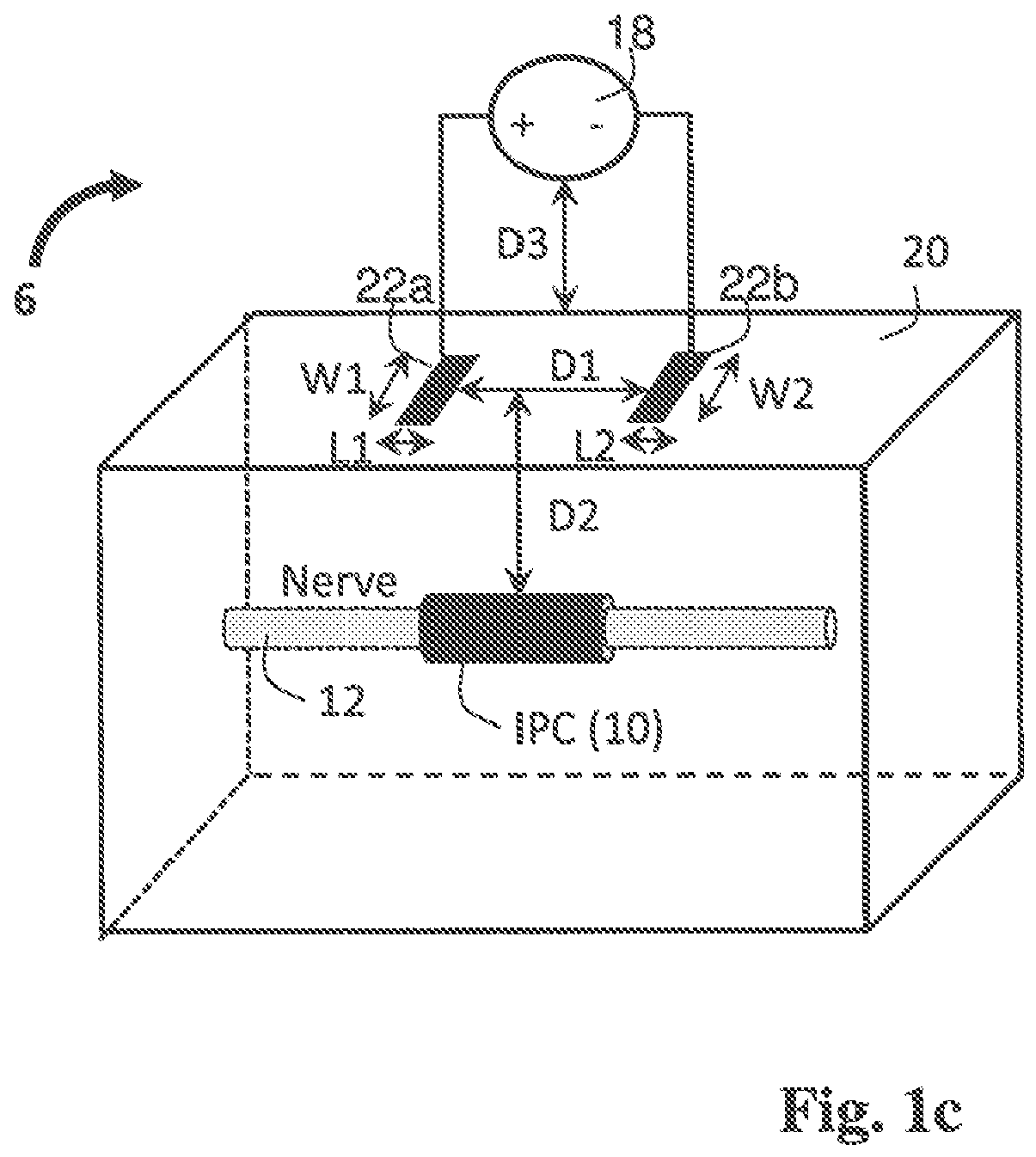 Figure 1c
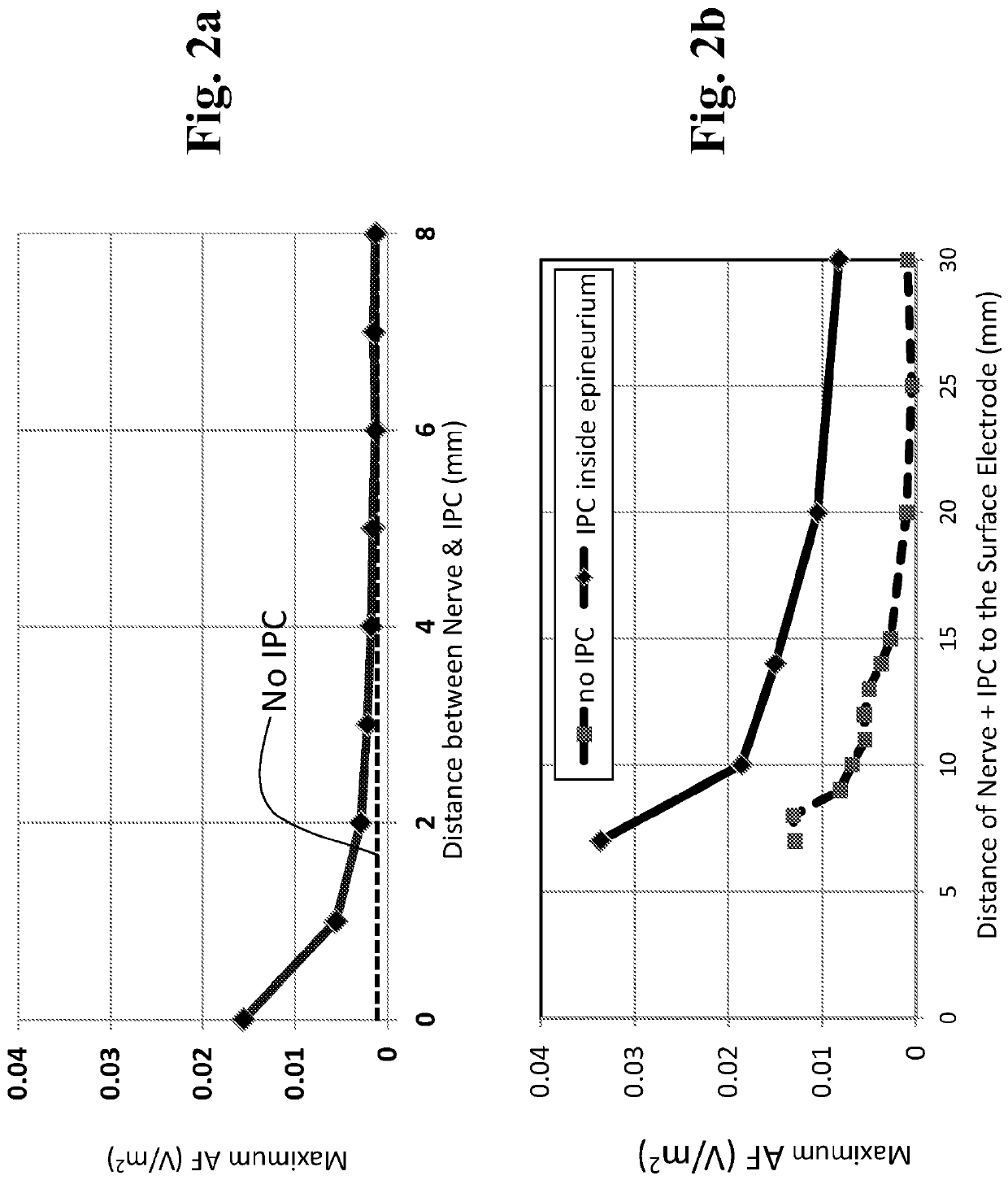 Figure 2a~2b
AI summary
Methods and systems for improving nerve stimulation are disclosed and are termed enhanced transcutaneous electrical stimulation (eTENS). One embodiment can be used for enhancing the excitation properties of neural tissue. In one embodiment, systems and methods are provided to enable the selective modulation of specific (targeted) neural substrate, while minimizing the activation of adjacent (non-targeted) nervous tissue, or differentially providing different modulation signals to tissue targeted by different implants. In one embodiment, the system consists of an implant that is used to modify the extracellular potential (i.e. activating function) generated by an independent electrical stimulus generator. Certain aspects of this technology can be applied to any part of the central and peripheral nervous systems. Particular embodiments of this technology provide for therapy related to urological disorders.