
Voltage Converter Phase Shedding Threshold Optimization
Find Innovative SolutionsGenerate Solutions
Solution Overview
Problem
Current voltage converters with multi-phase output stages require manual adjustment of phase shedding timing, making it difficult to determine optimal timing for efficient power usage, as it depends on circuit costs and printed circuit board layouts.
Innovation Solution
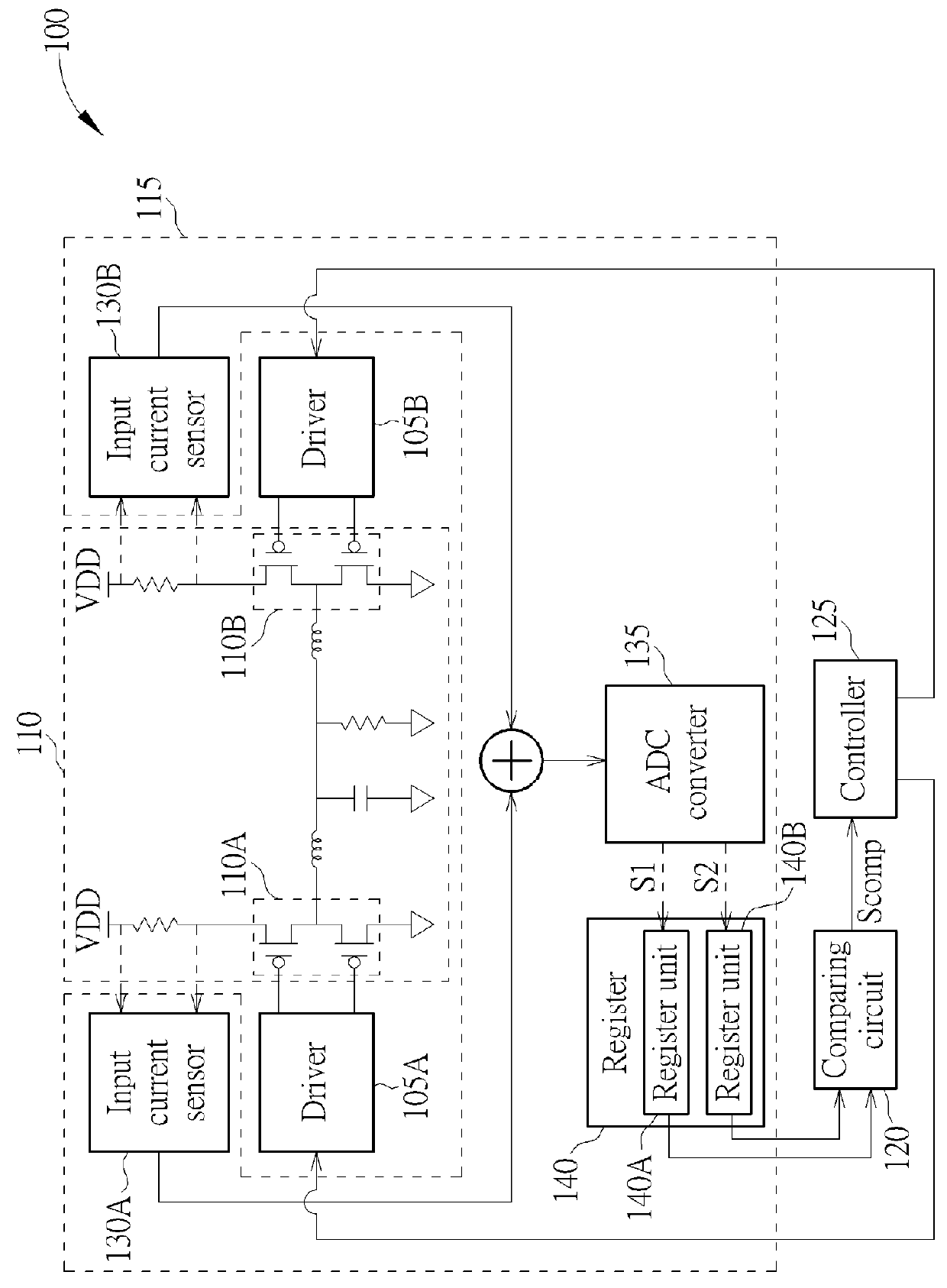
A method and circuit configuration that automatically senses input currents to generate digital signals, compares them to determine an optimal phase shedding threshold, and dynamically adjusts this threshold to optimize power efficiency by enabling or disabling output stages based on operational conditions.
Engineering Contradictions & Design Principles
Engineering Contradiction Analysis
1Device complexity
If manual adjustment of phase shedding timing is used, then device complexity is reduced, but power efficiency deteriorates due to inability to optimize dynamically
Solution Approach 1:
The system performs self-testing and self-determination of optimal phase shedding timing by automatically sensing input current characteristics and comparing performance metrics, eliminating the need for manual adjustment while optimizing power efficiency dynamically
Solution Approach 2:
The system implements feedback mechanisms by sensing input current, comparing performance data from different phase shedding configurations, and using this information to determine optimal timing automatically, thereby improving power efficiency without increasing manual control complexity
2Use of energy by moving object
If automatic sensing and comparison circuits are added, then power efficiency is improved through optimal phase shedding determination, but device complexity increases
Solution Approach 1:
The sensing circuit serves multiple functions: it senses input current for both determining phase shedding timing and monitoring overall system performance, while the controller performs both comparison operations and execution of phase shedding control, reducing the need for separate dedicated circuits
Solution Approach 2:
The controller acts as an intermediary that processes sensed data and coordinates between the sensing circuit and output stage control, integrating multiple functions into a single control unit that manages the complex interactions without requiring separate specialized circuits for each function
3Ease of operation
If phase shedding is performed based on fixed thresholds, then ease of operation is improved, but adaptability deteriorates due to inability to adjust to different operating conditions
Solution Approach 1:
The system transitions from static fixed thresholds to dynamic adaptive thresholds by automatically sensing input current characteristics and adjusting phase shedding timing based on real-time operating conditions, maintaining ease of operation through automation while improving adaptability
Solution Approach 2:
The system changes the parameter of phase shedding threshold from a fixed value to a dynamically adjusted value based on sensed input current and performance comparisons, enabling adaptation to different operating conditions while maintaining simple operation through automatic control
Data Source


AI summary
A method for performing phase shedding for a voltage converter having a multi-phase output stage circuit includes: sensing an input current of the voltage converter to generate a first digital signal when enabling at least one first output stage within the multi-phase output stage circuit; sensing the input current of the voltage converter to generate a second digital signal when further enabling a second output stage within the multi-phase output stage circuit; comparing the first digital signal with the second digital signal to generate a comparison resultant signal; dynamically adjusting the phase shedding threshold according to the comparison resultant signal, to automatically search/determine an optimal phase shedding threshold; and, performing the phase shedding when an operation of the voltage converter exceeds the optimal phase shedding threshold.