
Dynamic Battery Formation Current Control
Find Innovative SolutionsGenerate Solutions
Solution Overview
Problem
Current battery formation methods are time-consuming and costly due to the use of constant, low electrical currents for forming a solid electrolyte interface (SEI), which limits production throughput and results in non-uniform SEI formation.
Innovation Solution
Dynamic adjustment of energy supply based on actual SEI formation over time, using a reference energy profile determined by comparing energy consumption curves from multiple charging cycles to optimize current intensity and accelerate the formation process.
Engineering Contradictions & Design Principles
Engineering Contradiction Analysis
1Manufacturing precision
If constant low current is used for battery formation, then SEI formation is uniform, but the process is time-consuming and productivity is low
Solution Approach 1:
The patent applies dynamic current adjustment during the formation process. Instead of using constant low current, the system continuously monitors battery parameters (voltage, temperature, current) and dynamically adjusts the formation current in multiple stages. The current starts low to ensure uniform SEI formation, then progressively increases as the SEI layer develops, resolving the contradiction between uniformity and speed by making the current profile adaptive rather than static.
Solution Approach 2:
The patent implements a feedback control system that monitors battery parameters during formation and uses this information to adjust the current in real-time. The control unit receives data from sensors measuring voltage, current, and temperature, compares these against target values, and adjusts the formation current accordingly. This feedback mechanism ensures SEI uniformity is maintained while optimizing formation speed through intelligent current modulation.
2Productivity
If higher current is applied above voltage threshold, then formation time is reduced, but SEI homogeneity deteriorates
Solution Approach 1:
The patent segments the formation process into multiple stages with different current levels. Instead of applying a single high current that compromises homogeneity, the formation process is divided into sequential phases: an initial low-current stage for uniform SEI nucleation, followed by intermediate and final stages with progressively higher currents. This segmentation allows each stage to optimize for its specific objective, achieving both speed and homogeneity.
Solution Approach 2:
The patent changes the current parameter dynamically throughout the formation process based on battery state. The current profile transitions from low to high values as the voltage threshold is reached and SEI layer develops. This parameter change strategy allows the system to exploit different current regimes at different formation stages, accelerating the process while maintaining SEI quality through controlled parameter evolution.
3Loss of time
If formation is terminated at voltage threshold, then time is saved, but cycle stability is negatively affected
Solution Approach 1:
The patent ensures continuous and complete SEI formation by extending the formation process beyond the voltage threshold termination point of conventional methods. The dynamic current adjustment maintains useful formation action throughout the entire process, including the post-threshold phase where SEI completion and stabilization occur. This continuous action ensures full SEI development while managing time loss through optimized current levels in different stages.
Applied Scientific Principles
This section explains which scientific principles are used to turn an abstract innovation direction into a practical engineering solution.
Function Achieved in This Case
This approach enables faster and more homogeneous SEI formation, reducing the time and cost of the battery formation process while maintaining high cycle stability.
Implementation Method 1
Formation refers to the initial charging and discharging cycles during which the so-called SEI (Solid Electrolyte Interface) forms. This process is necessary to activate the electrochemical processes and/or properties of the battery cell.
Data Source
 Figure 1
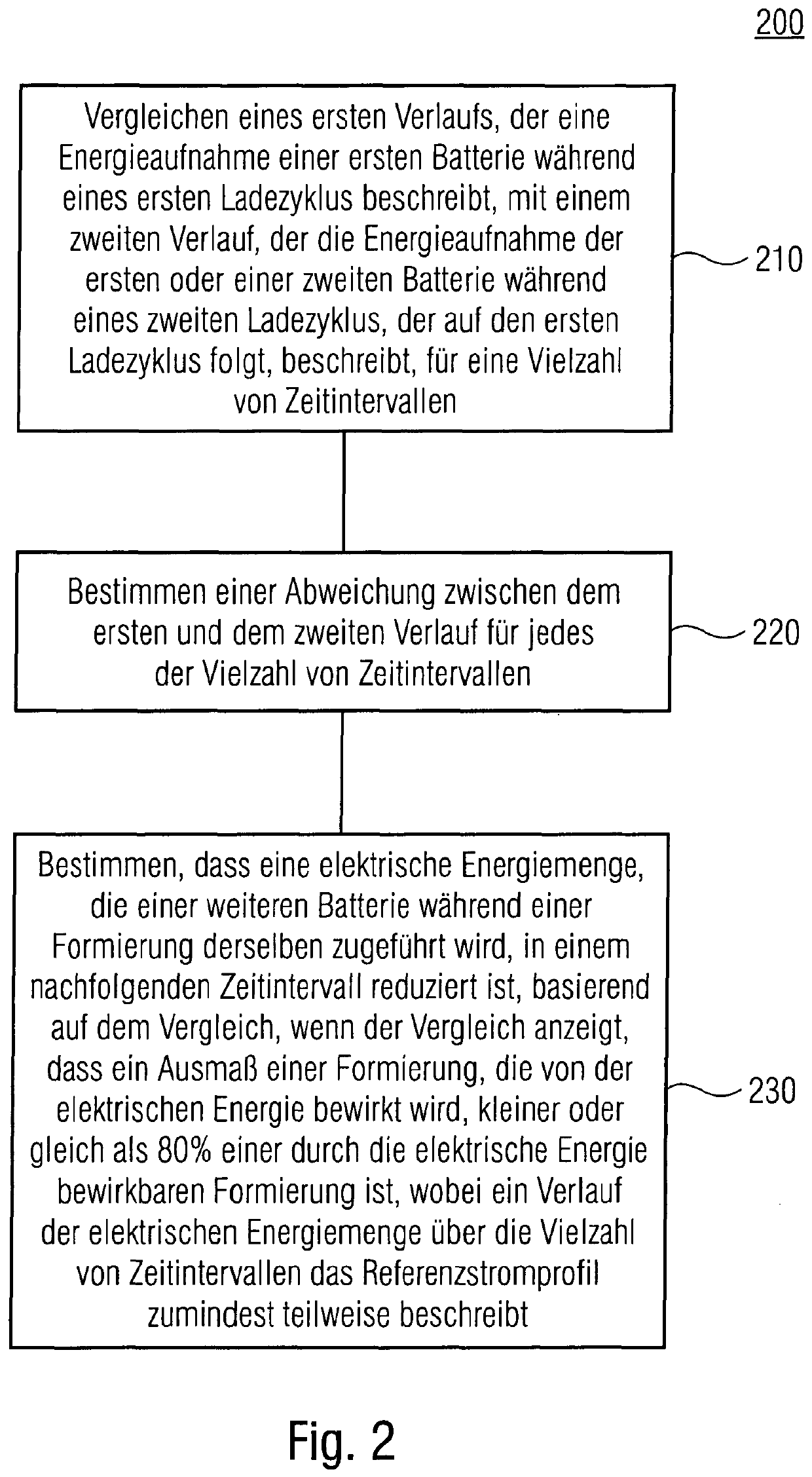 Figure 2
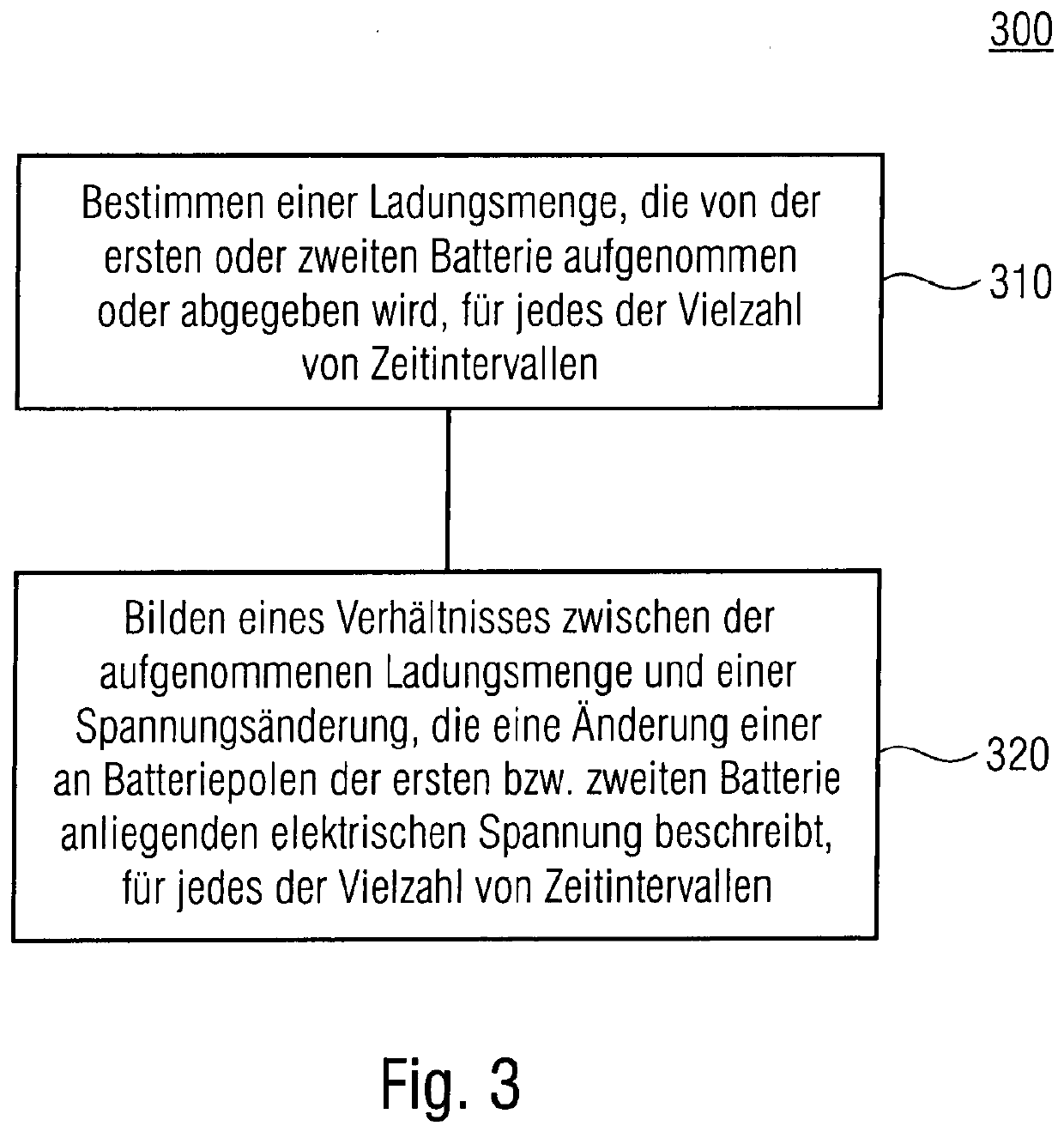 Figure 3
AI summary
Disclosed is a method for determining a reference energy profile, which method comprises the comparison of a first curve and a second curve. The first curve describes an energy consumption of a first battery during a first charging cycle. The second curve describes the energy consumption of the first or a second battery during a second charging cycle which follows the first charging cycle. The comparison is carried out for a plurality of time intervals. The method also comprises the determination of a deviation between the first and the second curve for each of the plurality of time intervals. The method further comprises the determination of an amount of electrical energy on the basis of the deviation for each of the time intervals, wherein the amount of electrical energy describes a requirement of the reference energy profile for an amount of energy to be supplied to a battery to be formed during a forming process of the battery to be formed for each of the time intervals.