
Fuel Cell Membrane Electrode Frame Assembly With Single Adhesive Bonding
Find Innovative SolutionsGenerate Solutions
Solution Overview
Problem
Existing solid polymer electrolyte fuel cell stack manufacturing processes are complex and inefficient, with significant thickness discontinuities leading to potential component failure and stress points in assembly.
Innovation Solution
A single adhesive layer is used to bond all components of the membrane electrode and frame assembly, including the catalyst coated membrane, gas diffusion layers, and frame, with the adhesive layer extending beyond the frame's perimeter to create multiple bonds and reduce thickness discontinuities, utilizing materials like polyethylene and curable cross-linking agents.
Engineering Contradictions & Design Principles
Engineering Contradiction Analysis
1Reliability
If multiple adhesive layers are used to bond components in the membrane electrode frame assembly, then bonding reliability is improved, but manufacturing complexity and assembly steps increase
Solution Approach 1:
The patent combines multiple adhesive layers into a single adhesive layer that performs multiple bonding functions simultaneously. This single adhesive layer bonds the membrane electrode assembly to the frame, bonds the gas diffusion layers to the frame, and provides sealing, thereby reducing manufacturing complexity while maintaining bonding reliability through multi-functional design
2Manufacturing precision
If the adhesive layer is confined within the frame perimeter, then assembly precision is improved, but structural integrity and bonding strength are reduced
Solution Approach 1:
The patent extends the adhesive layer beyond the traditional frame perimeter boundary into the active area, utilizing the dimensional space available between the frame and the membrane electrode assembly edges. This extension provides additional bonding surface area and creates multiple bonding paths, thereby enhancing bonding strength while maintaining assembly precision through controlled placement
3Ease of manufacture
If thickness discontinuities are present in the membrane electrode frame assembly, then manufacturing simplicity is maintained, but stress concentration and component failure risk increase
Solution Approach 1:
The patent uses the extended adhesive layer to compensate for thickness variations and discontinuities in the assembly by providing a compliant bonding interface that distributes stresses uniformly. The adhesive layer acts as a cushioning layer that absorbs dimensional variations and prevents stress concentration points, thereby reducing component failure risk while maintaining manufacturing simplicity
Applied Scientific Principles
This section explains which scientific principles are used to turn an abstract innovation direction into a practical engineering solution.
Function Achieved in This Case
This design simplifies the manufacturing process, reduces thickness discontinuities, and enhances the structural integrity of the fuel cell stack by creating multiple bonds with a single adhesive layer, thereby reducing the risk of component failure and improving power density.
Implementation Method 1
A single adhesive layer is used to bond all components of the membrane electrode and frame assembly, including the catalyst coated membrane, gas diffusion layers, and frame
Data Source
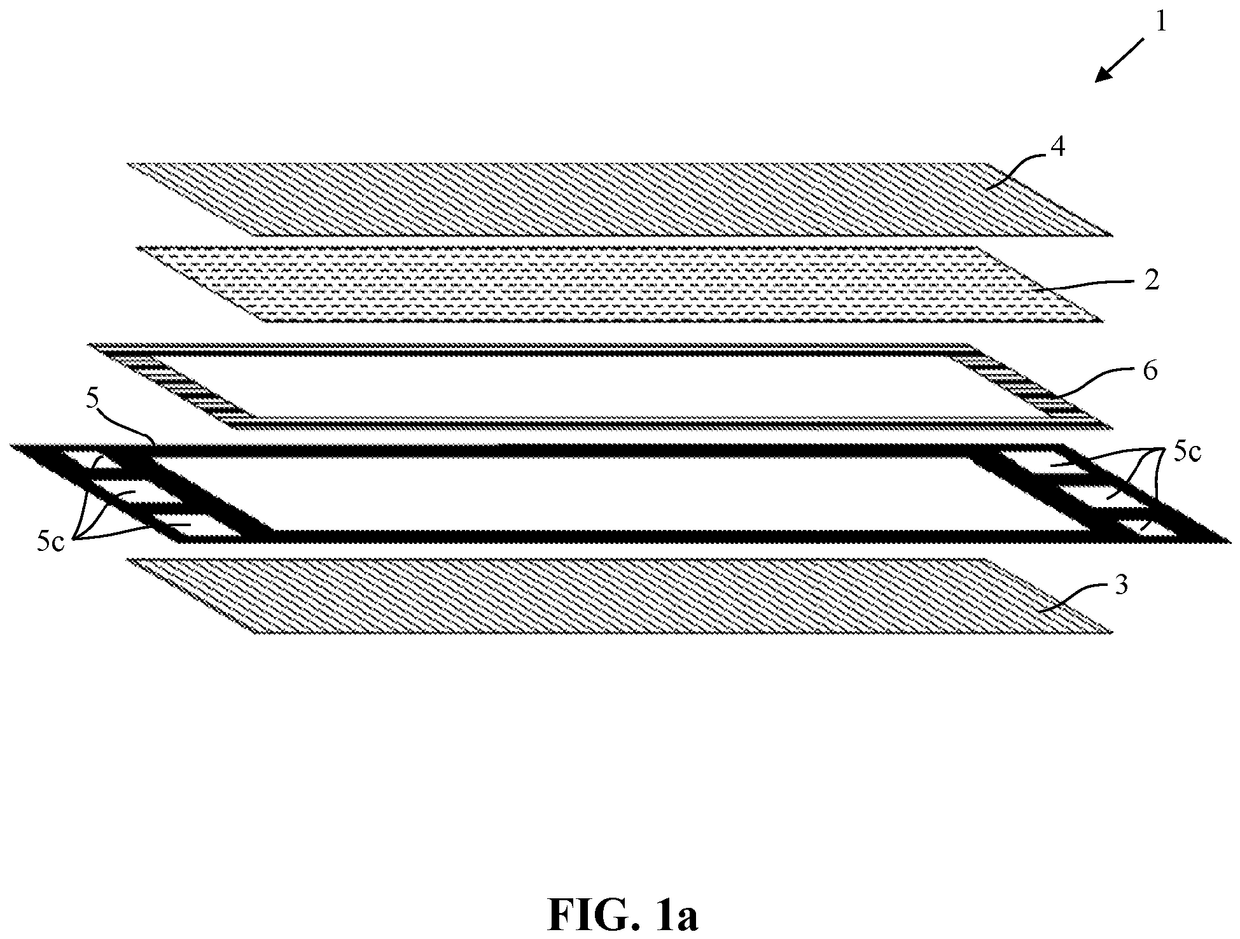 Figure 1a
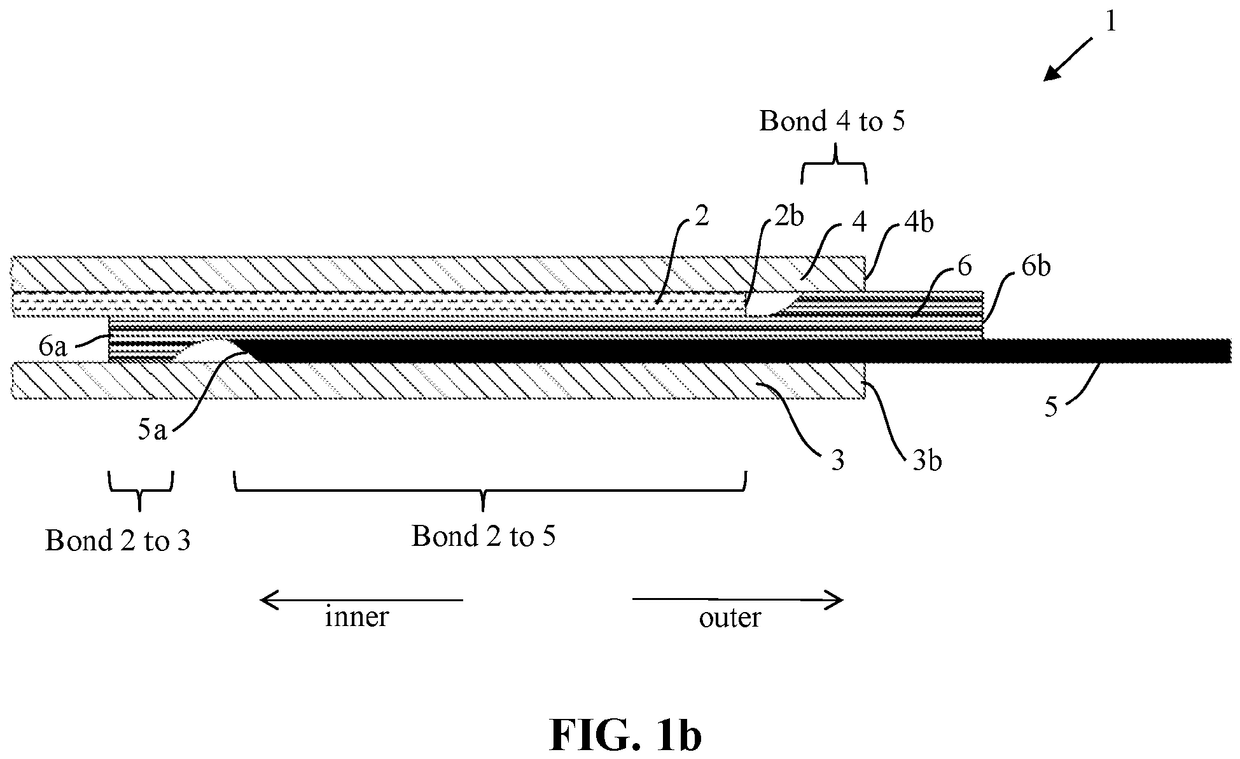 Figure 1b
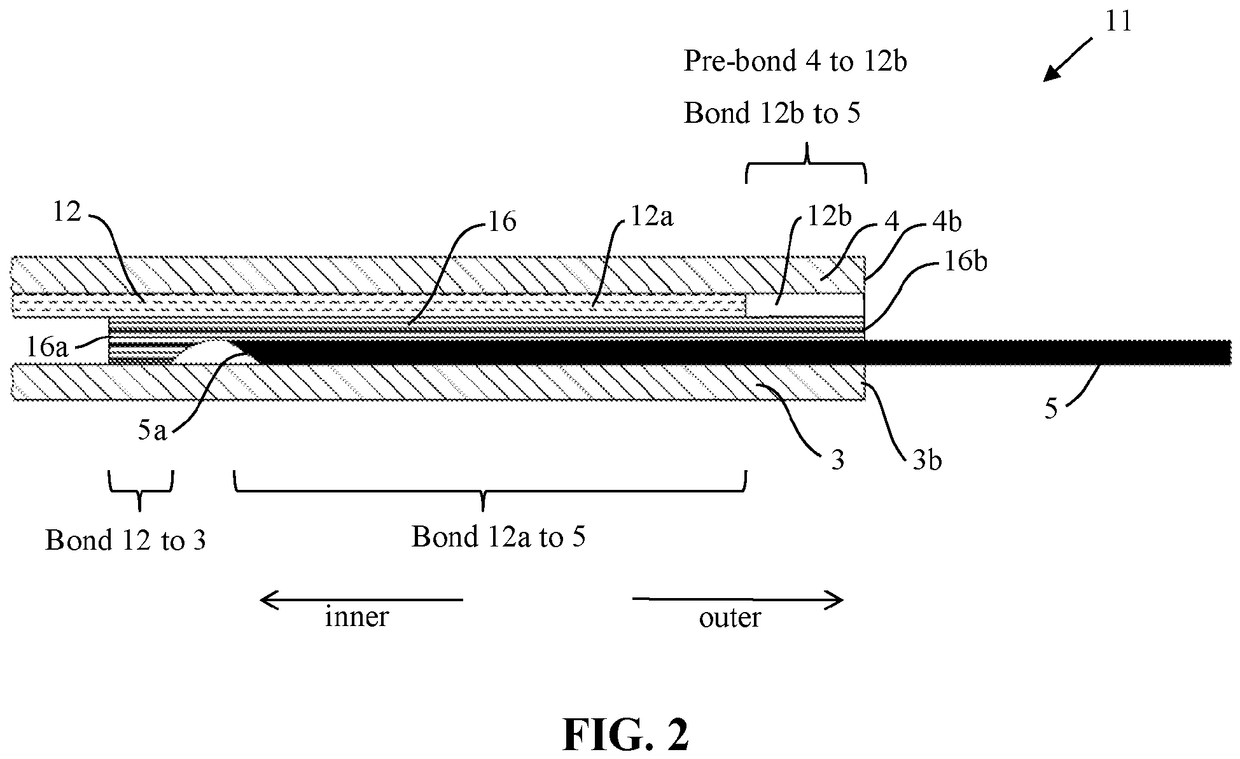 Figure 2
AI summary
Simple membrane electrode and frame assemblies for a solid polymer electrolyte fuel cell stack and improved methods for making them are disclosed which involve the use of a single adhesive layer. Using an appropriate design, the single adhesive layer can provide multiple bonds, including a bond between one of the gas diffusion layers and a catalyst coated membrane assembly, between the catalyst coated portion of the catalyst coated membrane assembly and the frame, and between either the other of the gas diffusion layers and the frame, or between an uncoated portion of the catalyst coated membrane assembly and the frame.