
Vehicle Headrest Drive System Decoupling for Flexible Manufacturing
Find Innovative SolutionsGenerate Solutions
Solution Overview
Problem
Existing active headrests for motor vehicle seats have drive systems where the drive device is connected to the connection means, limiting flexibility in manufacturing and increasing costs, as the path and final position of the moving part are determined by the drive device's design, making each headrest unique and costly to produce.
Innovation Solution
A headrest design where the drive system cooperates with an articulated device, separating the movement and positioning of the moving part from the path and final position, allowing the moving part to be driven to its active position independently of the connection means, using a pyrotechnic drive device and connection mechanisms like guide arms and channels to define the path and position, enabling more flexible manufacturing and reduced costs.
Engineering Contradictions & Design Principles
Engineering Contradiction Analysis
1Reliability
If the drive device is connected to the connection means to determine the path and final position of the moving part, then the headrest provides reliable positioning, but the manufacturing flexibility is reduced and costs increase
Solution Approach 1:
The system is divided into two independent functional parts: the drive system (drive device + articulated device) that provides motion, and the connection means that defines the path and final position. This segmentation allows each part to be optimized independently, improving manufacturing flexibility while maintaining positioning reliability.
Solution Approach 2:
The function of determining the path and final position is extracted from the drive device and assigned to the connection means. This separation allows the drive device to be standardized while the connection means can be customized for different positioning requirements, reducing manufacturing costs.
2Device complexity
If the drive device directly drives the connection means, then the structure is simpler, but each headrest design becomes unique and costly to produce
Solution Approach 1:
The articulated device serves as a universal intermediary component that can work with various drive devices and connection means configurations. This standardization of the articulated device across different headrest models reduces production costs while maintaining structural functionality.
Solution Approach 2:
The articulated device acts as an intermediary between the drive device and the connection means, decoupling their direct connection. This intermediary allows for standardized drive devices to be used with customized connection means, reducing overall production costs.
3Volume of moving object
If the drive system is integrated with the connection means, then the headrest structure is more compact, but the manufacturing range and flexibility are limited
Solution Approach 1:
The system allows for dynamic configuration where the connection means can define different paths and final positions while using the same drive system components. This dynamic adaptability enables a single drive system design to serve multiple headrest configurations, expanding manufacturing range.
Applied Scientific Principles
This section explains which scientific principles are used to turn an abstract innovation direction into a practical engineering solution.
Function Achieved in This Case
This design allows for a more flexible and cost-effective headrest manufacturing process, enabling a wider range of headrest designs with faster deployment of the moving part to its active position during collisions, thereby reducing the risk of whiplash injuries.
Implementation Method 1
The actuation means also comprise levers and a pyrotechnic drive device
Data Source
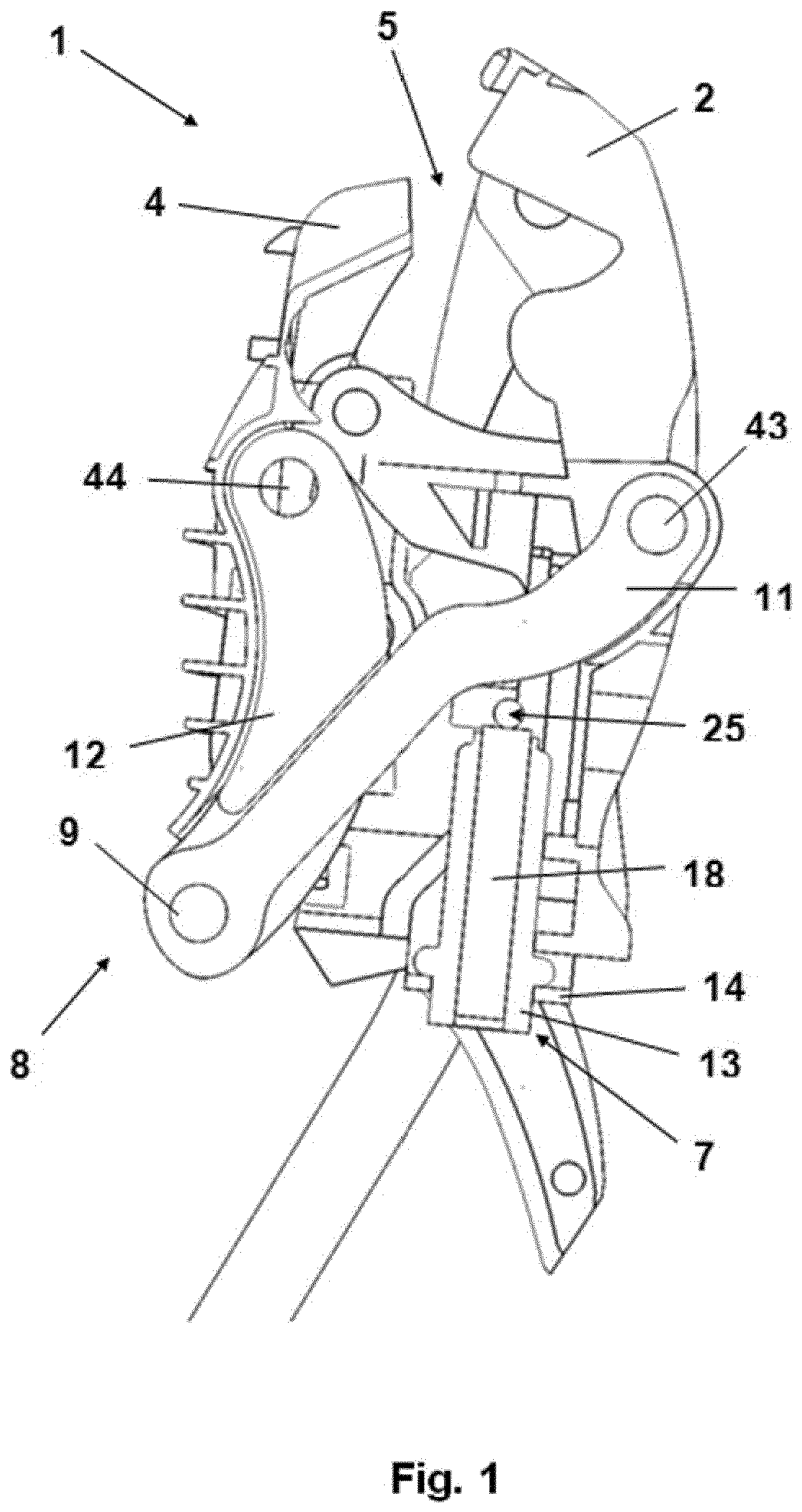 Figure 1
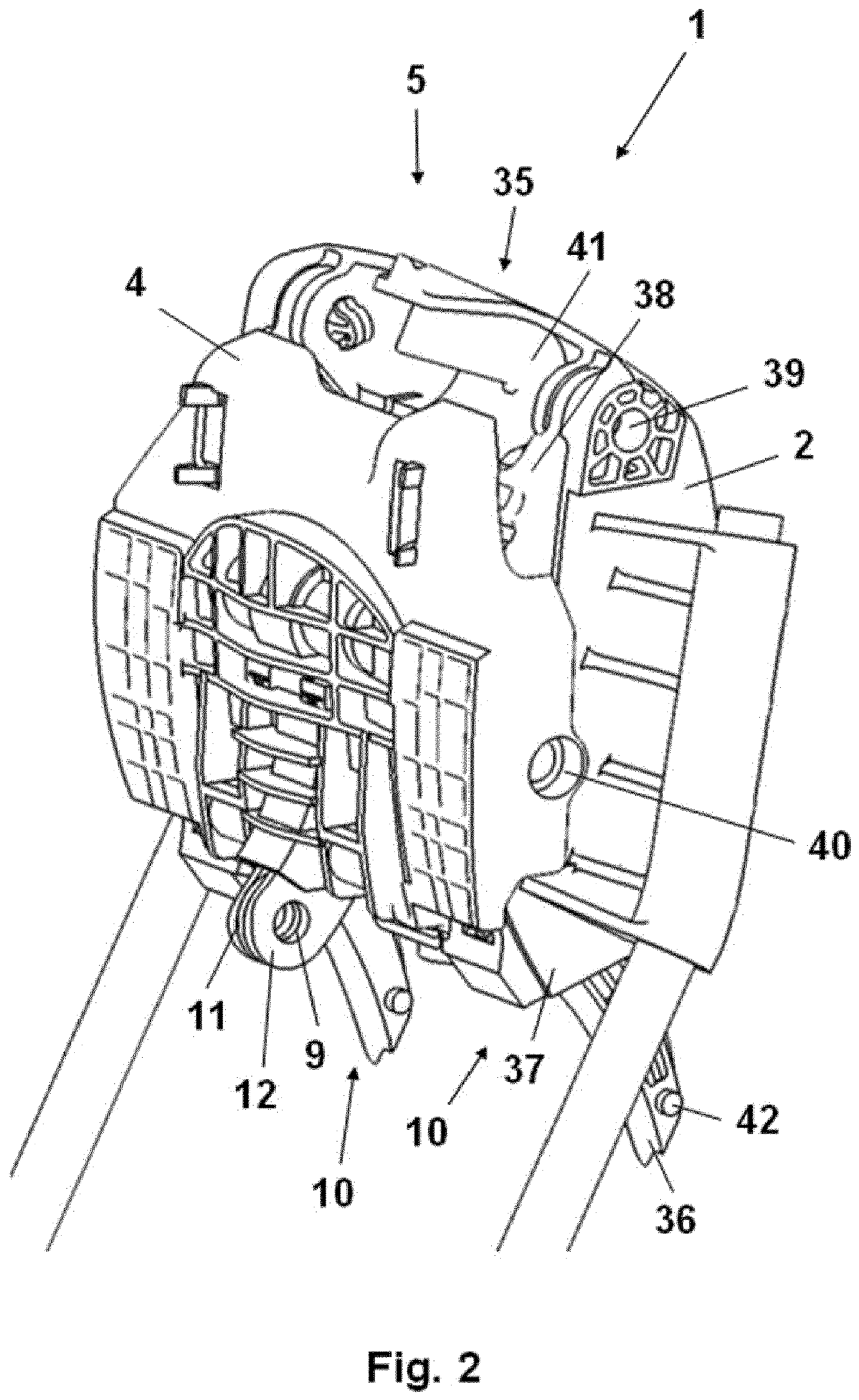 Figure 2
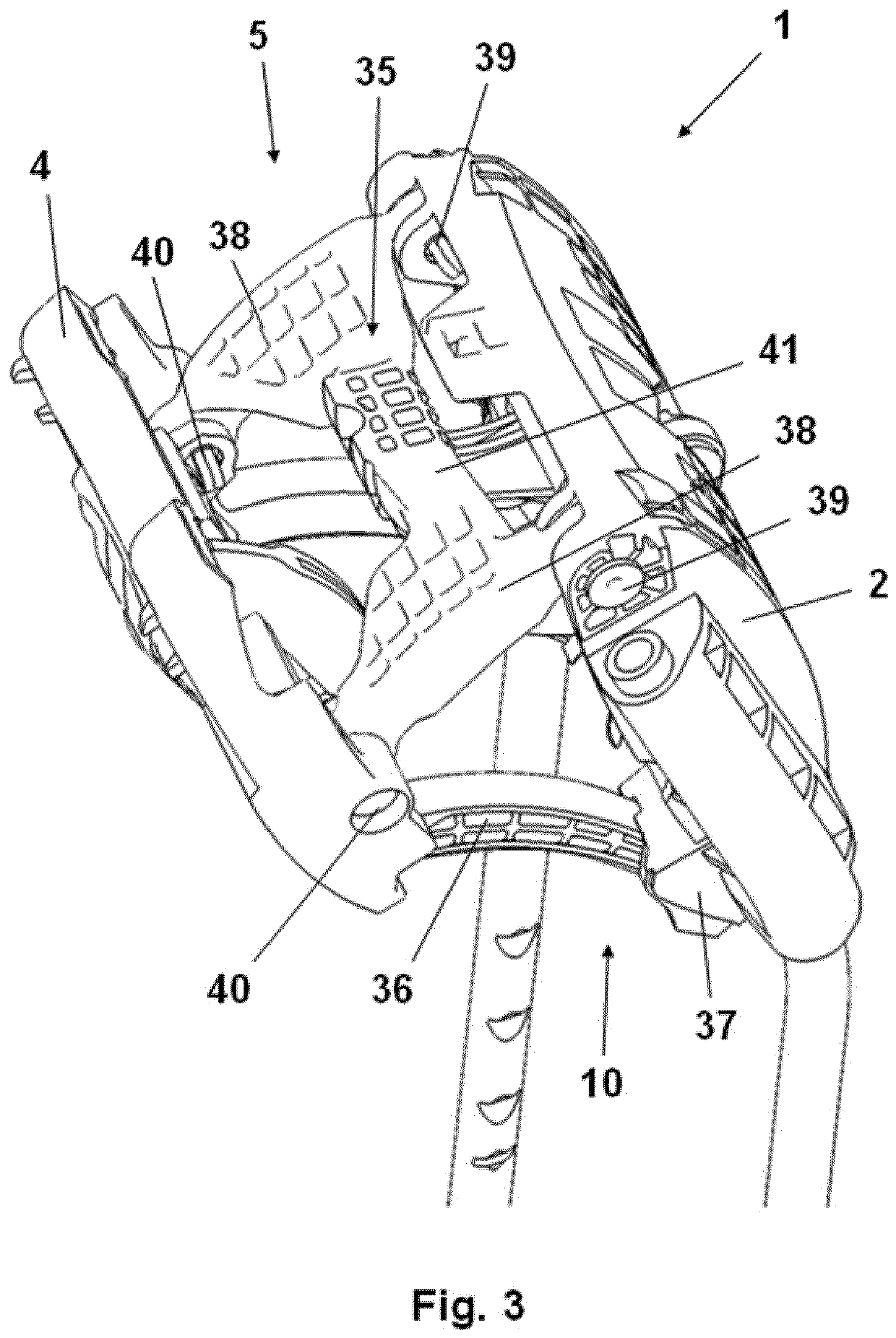 Figure 3
AI summary
Headrest (1) for motor vehicle seats, comprising a fixed part (2), a moving part (4) movable in relation to said fixed part (2) from a rest position to an active position, at least one connection means (5) that connects said fixed part (2) and said moving part (4) to determine the path and the position of the moving part (4), and a drive system that comprises a drive device (7) connected to the fixed part (2), to drive and move the moving part (4) in relation to the fixed one (2), wherein the drive system comprises an articulated device (8) connected in a pivoting manner at its ends to the fixed part (2) and to the moving part (4), and with at least one pivoting intermediate connection (9), the drive device (7) cooperating operationally with said articulated device (8).