

Hinged Roller Mounting for Consistent Cutting Depth
Find Innovative SolutionsGenerate Solutions
Solution Overview
Problem
Existing roller mounting arrangements for cutting and creasing rollers in converting plants are influenced by thermal expansion and dimensional variations, leading to inconsistent cutting and creasing depths, and often require external hydraulic or pneumatic adjustments.
Innovation Solution
A robust roller mounting arrangement with a hinge mechanism and flexible spring connection between bearing blocks, allowing for pivotal movement and maintaining a constant pre-load force, thereby isolating the bearer load from thermal expansion and dimensional changes without needing external pressure sources.
Engineering Contradictions & Design Principles
Engineering Contradiction Analysis
1Manufacturing precision
If traditional rigid mounting arrangements are used for rollers, then structural stability is maintained, but thermal expansion and dimensional variations cause inconsistent cutting and creasing depths
Solution Approach 1:
The mounting arrangement incorporates a hinge mechanism that allows the bearing block to pivot dynamically in response to thermal expansion and dimensional variations. This dynamic adjustment capability enables the system to maintain consistent cutting and creasing depths despite temperature changes, resolving the contradiction between structural rigidity and manufacturing precision.
Solution Approach 2:
The system changes the physical state of the mounting arrangement from rigid to flexible by introducing a hinge mechanism. This parameter change allows the bearing block to adjust its position and orientation in response to thermal expansion, thereby maintaining cutting precision while accommodating dimensional variations.
2Manufacturing precision
If external hydraulic or pneumatic systems are added to adjust roller mounting, then cutting and creasing depth consistency is improved, but device complexity increases
Solution Approach 1:
The hinge mechanism enables the mounting arrangement to self-adjust automatically in response to thermal expansion and dimensional variations. This self-service capability eliminates the need for external hydraulic or pneumatic systems, achieving consistent cutting and creasing depths while keeping the device simple and free from complex external control systems.
Solution Approach 2:
The invention extracts and eliminates the need for complex external hydraulic or pneumatic adjustment systems by implementing a simple mechanical hinge mechanism that provides the necessary adjustment functionality through passive thermal response, thereby reducing device complexity while maintaining precision.
3Manufacturing precision
If heavy-duty springs are used to preset bearer load, then cutting depth consistency is maintained, but the system becomes sensitive to thermal expansion of bearing blocks
Solution Approach 1:
The hinge mechanism transforms the static, thermal-sensitive spring-preloaded system into a dynamic system that can pivot and adjust its position in response to thermal expansion. This dynamic capability allows the system to maintain consistent bearer load and cutting depth without being adversely affected by thermal expansion of the bearing blocks.
Solution Approach 2:
The hinge acts as an intermediary element between the bearing block and the mounting structure, mediating the effects of thermal expansion. By introducing this intermediate pivot mechanism, the system can accommodate dimensional changes while maintaining consistent cutting and creasing depths, thereby reducing sensitivity to thermal expansion.
Applied Scientific Principles
This section explains which scientific principles are used to turn an abstract innovation direction into a practical engineering solution.
Function Achieved in This Case
This solution provides a stable and consistent cutting and creasing performance by decoupling the bearer load from thermal and dimensional variations, eliminating the need for external pressure sources and ensuring consistent cutting and creasing depths across temperature ranges.
Implementation Method 1
a spring connection between the bearing blocks... maintaining a constant pre-load force
Implementation Method 2
isolating the bearer load from thermal expansion and dimensional changes
Data Source
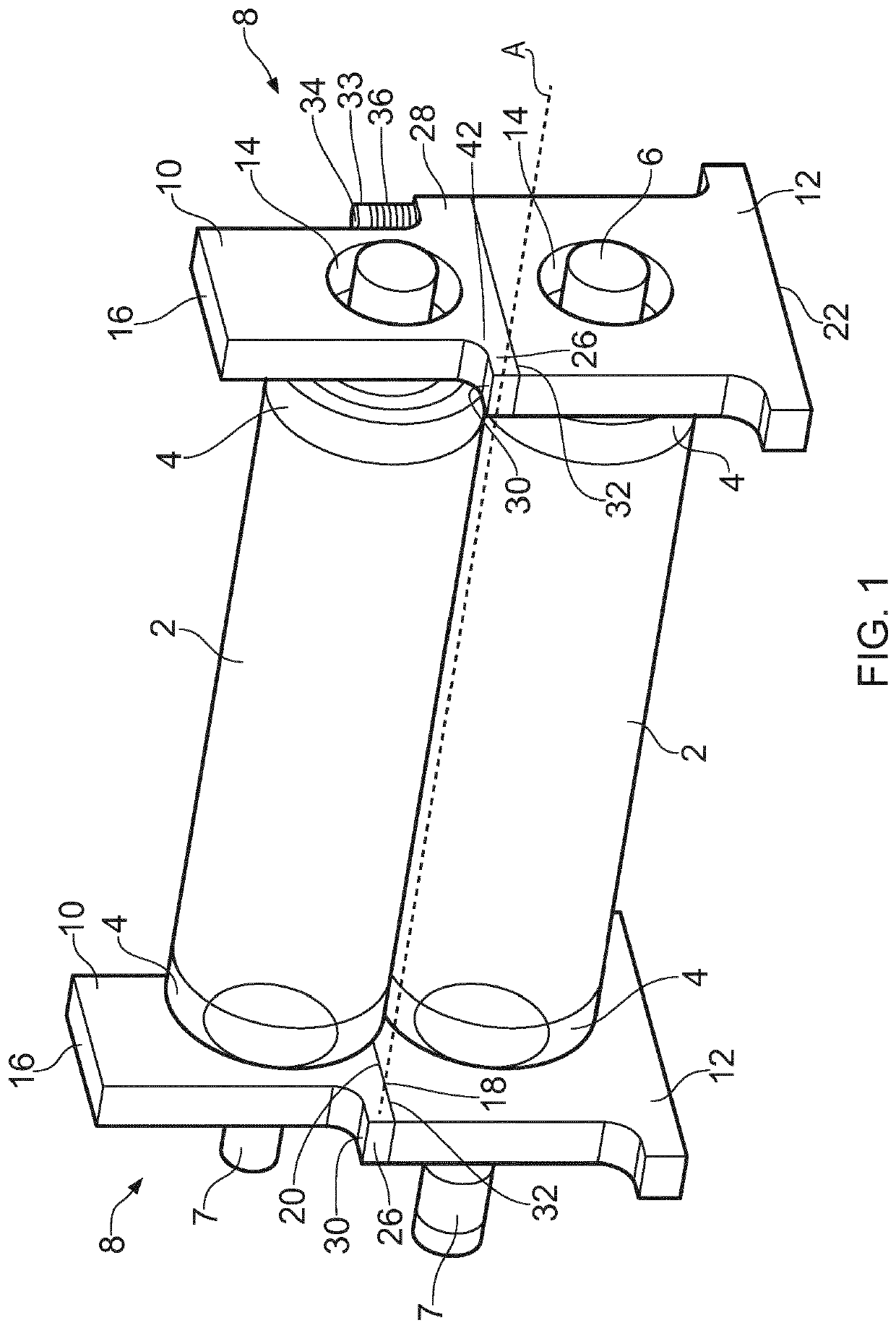 Figure 1
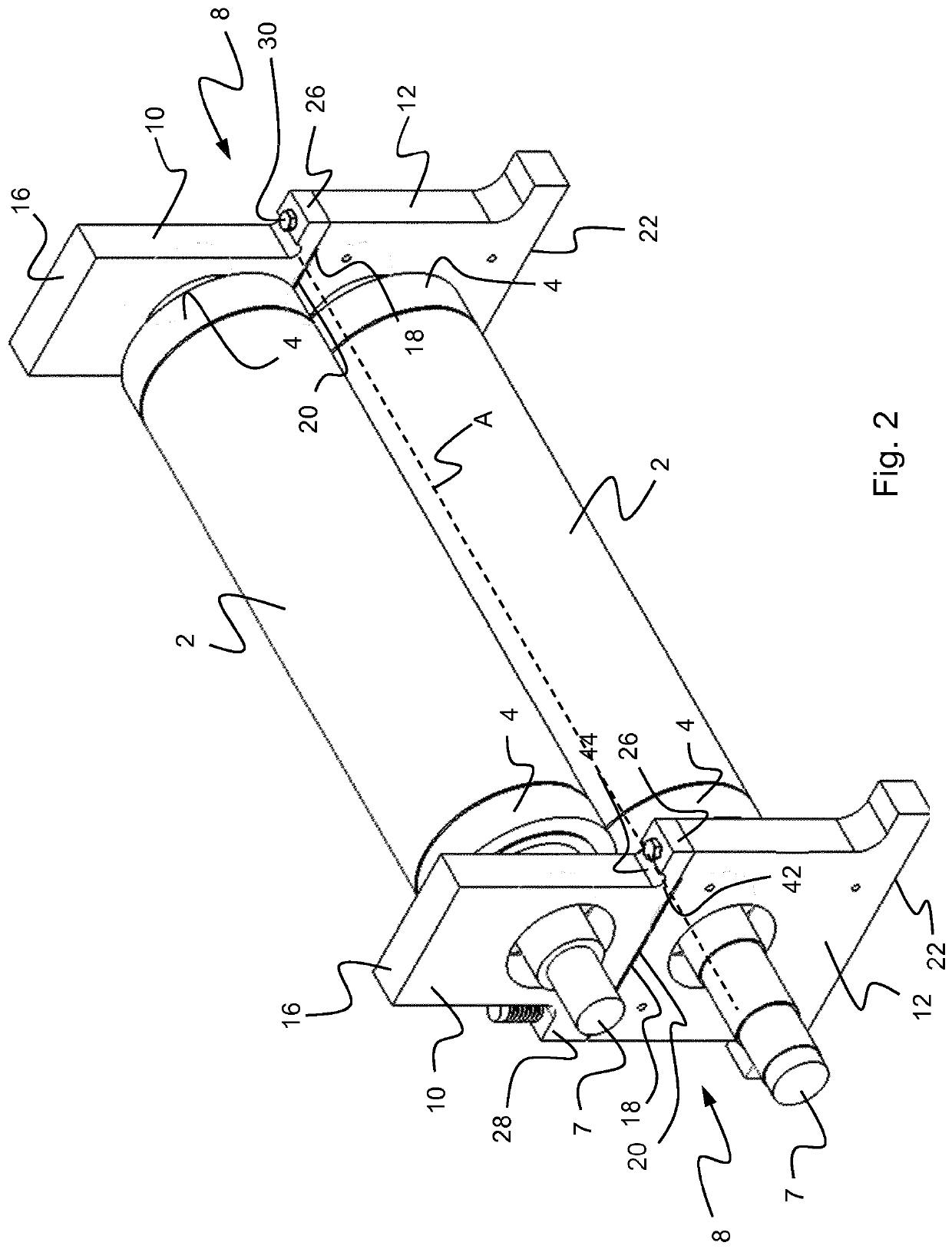 Figure 2
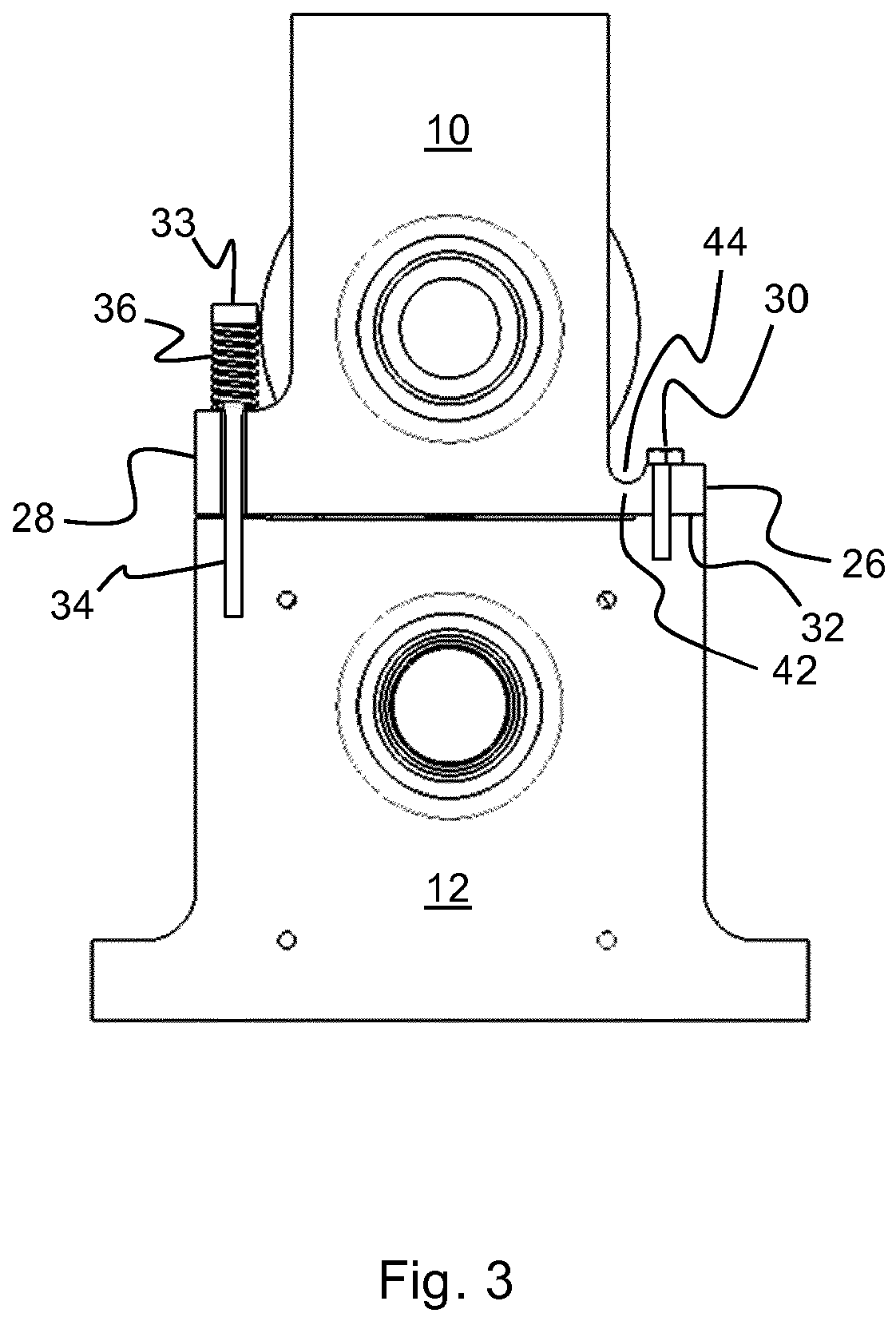 Figure 3
AI summary
The invention relates to an apparatus comprising a pair of rollers (2) with a nip and having respective axes thereof in a common plane therebetween, first and second roller mounting arrangements (8) at respective opposite ends of said pair (2), said arrangements having a hinging system (26, 30) at one side of said common plane and whereby one of the pair of rollers (2) can be turned relative to the other. The invention also relates to an associated method.