
Home Network Device Control via Motion and Location Recognition
Find Innovative SolutionsGenerate Solutions
Solution Overview
Problem
Current home network systems require users to manually select and repeatedly input commands through remote controls to control devices, leading to inconvenience.
Innovation Solution
Implementing indoor location recognition and motion sensing technology to automatically activate a control UI when a user is within range of a device, allowing intuitive and convenient control through synchronized motion recognition between multiple terminals.
Engineering Contradictions & Design Principles
Engineering Contradiction Analysis
1Ease of operation
If manual selection and repeated key input through remote control is used, then device control functionality is achieved, but user convenience deteriorates and operation time increases
Solution Approach 1:
The system automatically identifies the user's intended device control target by analyzing motion recognition data and indoor location information, eliminating the need for manual device selection and repeated key inputs. The control interface automatically activates for the identified target device, allowing the system to serve itself by determining user intent without explicit user commands.
Solution Approach 2:
The system performs preliminary identification of the user's intended control target by continuously monitoring motion recognition and location data before the user actually attempts to control a device. This preliminary action prepares the control interface in advance, so when the user approaches or gestures toward a device, the control UI is already activated and ready, eliminating the time-consuming manual selection process.
2Ease of operation
If continuous indoor location recognition is performed, then automatic control UI activation is achieved, but power consumption increases
Solution Approach 1:
Instead of continuous location recognition, the system performs indoor location recognition periodically or event-driven based on motion detection. When motion is detected that suggests the user is approaching or interacting with a device, the system activates location recognition temporarily to determine whether to activate the control UI. This periodic approach maintains automatic activation functionality while significantly reducing overall power consumption compared to continuous operation.
Solution Approach 2:
The system dynamically adjusts the activation state of indoor location recognition based on current operational conditions. Location recognition is activated only when motion sensors detect user movement patterns that suggest interaction intent, and deactivated when no such motion is detected. This dynamic on-demand approach allows the system to provide automatic control UI activation when needed while minimizing power consumption during idle periods.
3Device complexity
If single terminal performs motion recognition, then system simplicity is maintained, but intent determination accuracy deteriorates
Solution Approach 1:
The system merges motion recognition data from multiple terminals (portable terminal and wearable device) to comprehensively determine user intent. By combining the sensing capabilities and data from both terminals, the system achieves more accurate intent determination than a single terminal could provide alone. The merged data from multiple sources allows for more reliable identification of user actions and intended target devices.
Solution Approach 2:
The system is designed to work with multiple types of terminals (portable terminals and wearable devices) that each have different sensing capabilities. Each terminal type contributes its specialized sensors and data to the overall motion recognition process, creating a universal system that leverages the strengths of different device types to improve intent determination accuracy while maintaining flexibility in which terminals the user employs.
Data Source
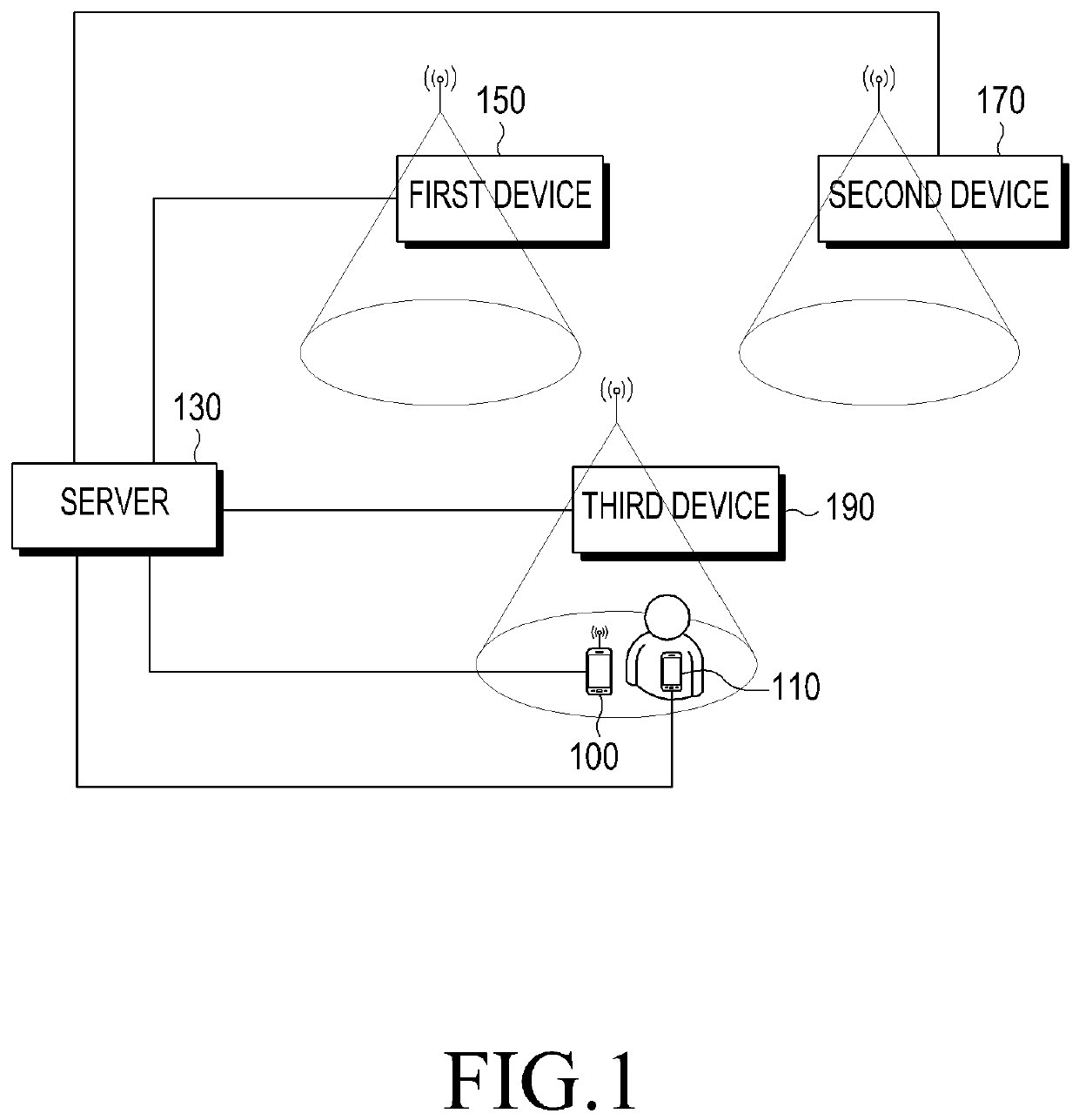 Figure 1
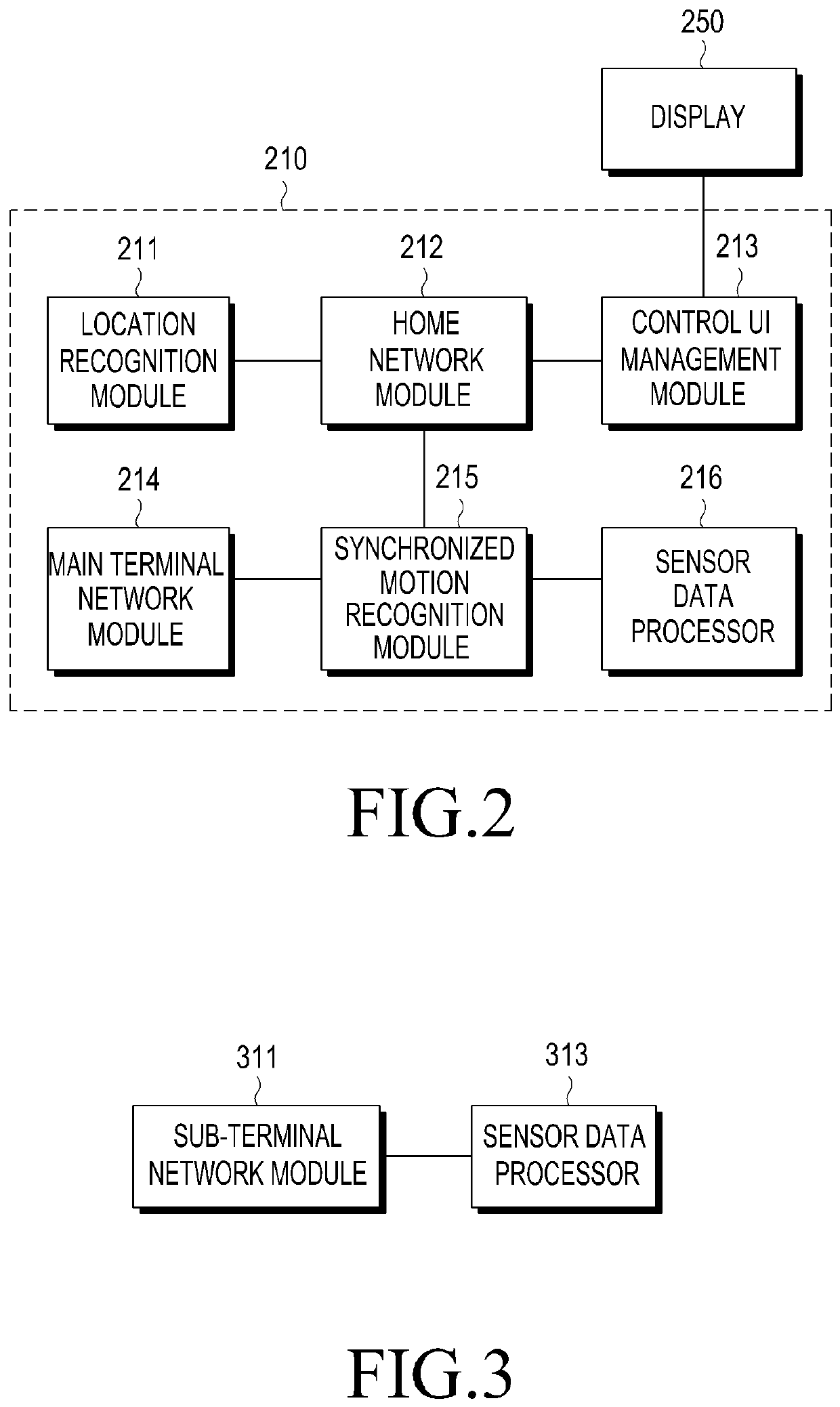 Figure 2~3
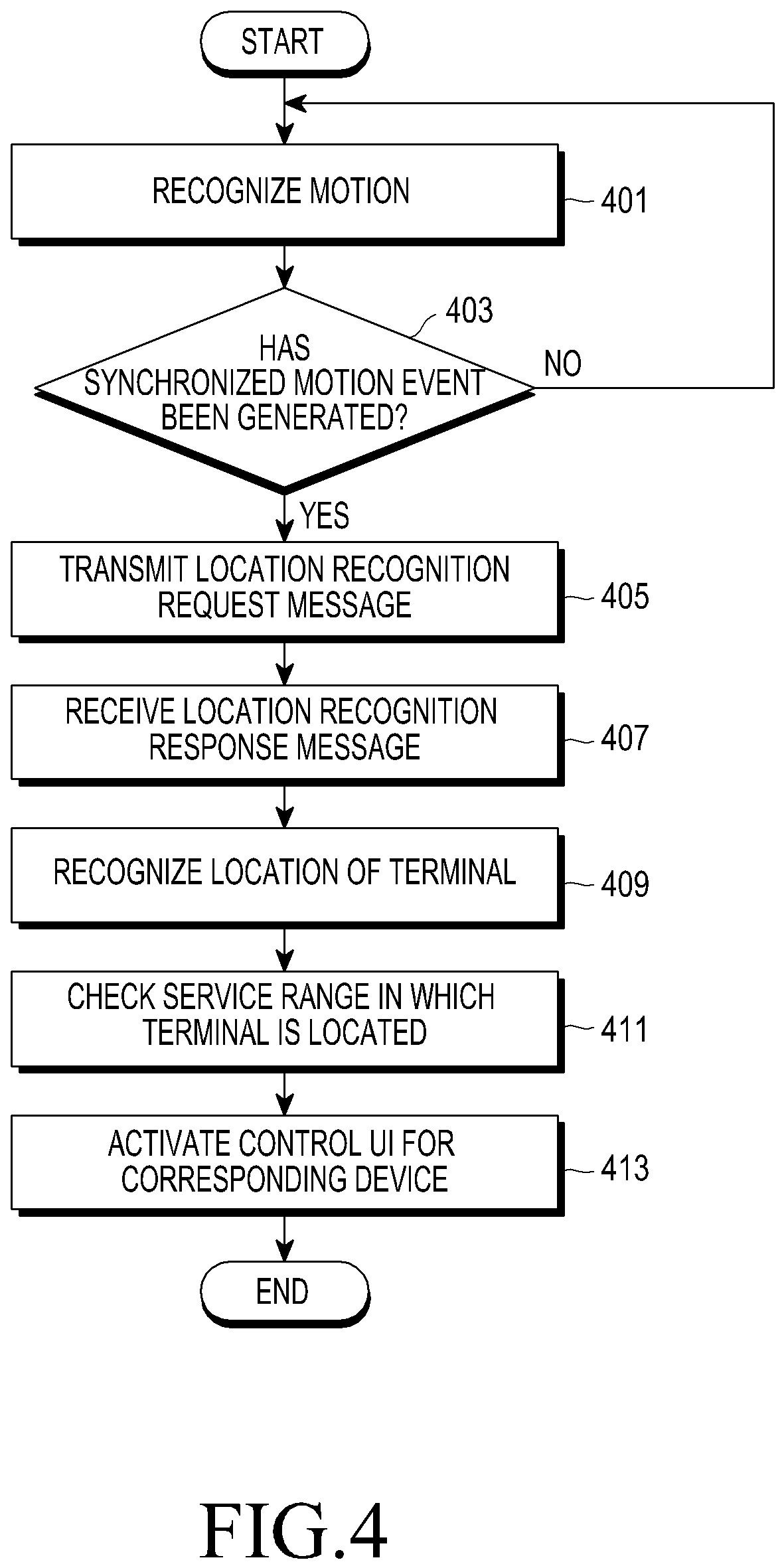 Figure 4
AI summary
The present invention provides a method and an apparatus for controlling devices in a home network system by using the recognition of motion and an indoor location of a user. A method for controlling devices providing services in a first terminal of a home network system, according to the present invention, comprises the steps of: receiving motion recognition information from a second terminal within a predetermined time after the motion of the first terminal is recognized; checking whether the first terminal is located within an available service range for at least one device; and activating an interface for controlling the at least one device on the basis of the motion recognition information and whether the first terminal is located within the available service range.