
On-Site IV Saline Production Device
Find Innovative SolutionsGenerate Solutions
Solution Overview
Problem
Current IV solution delivery systems are cumbersome due to the size, weight, and bulkiness of IV bags, posing challenges in production, transportation, storage, and inventory management, especially in mobile or remote settings.
Innovation Solution
A portable device that produces medically-deliverable intravenous saline solution from a source of liquid using a housing with a conduit, purification device, pump, container for concentrated solution, and controller to create and deliver the solution, allowing for on-demand production and reducing the need for bulky IV bags.
Engineering Contradictions & Design Principles
Engineering Contradiction Analysis
1Quantity of substance
If traditional IV bags are used for fluid administration, then the solution can be stored and transported, but the size, weight, and bulkiness become problematic for production, transportation, storage, and inventory maintenance
Solution Approach 1:
The patent changes the concentration parameter of the IV solution by using highly concentrated formulations (e.g., 23.4% dextrose, 50% dextrose, 10% saline) instead of traditional diluted solutions. This allows the same therapeutic effect to be achieved with much smaller volumes, directly reducing weight and bulk while maintaining the required fluid administration capabilities.
Solution Approach 2:
The system segments the IV fluid administration into two components: a concentrated base solution that is pre-packaged and transported, and sterile water for injection that is added at the point of use. This segmentation allows the heavy concentrated solution to be stored in small quantities while the bulk water is obtained locally, significantly reducing transportation and storage requirements.
2Quantity of substance
If traditional IV bags are used for fluid administration, then the solution can be stored and transported, but the size, weight, and bulkiness become problematic for production, transportation, storage, and inventory maintenance
Solution Approach 1:
The patent changes the concentration parameter of the IV solution by using highly concentrated formulations (e.g., 23.4% dextrose, 50% dextrose, 10% saline) instead of traditional diluted solutions. This allows the same therapeutic effect to be achieved with much smaller volumes, directly reducing weight and bulk while maintaining the required fluid administration capabilities.
Solution Approach 2:
The system segments the IV fluid administration into two components: a concentrated base solution that is pre-packaged and transported, and sterile water for injection that is added at the point of use. This segmentation allows the heavy concentrated solution to be stored in small quantities while the bulk water is obtained locally, significantly reducing transportation and storage requirements.
3Weight of moving object
If concentrated IV solutions are used, then the bulk and weight are reduced, but the solutions must be diluted and mixed on-site which adds complexity to the delivery system
Solution Approach 1:
The system employs self-service mechanisms where the concentrated IV solution containers are designed with built-in mixing chambers and injection ports that allow healthcare providers to simply add sterile water and activate the mixing mechanism. The containers automatically mix the concentrate with the added water through controlled fluid dynamics, eliminating the need for complex external mixing equipment while maintaining solution accuracy.
Solution Approach 2:
The patent introduces sterile water for injection as an intermediary substance that facilitates the on-site dilution of concentrated IV solutions. This intermediary allows the concentrated solution to be transformed into the required diluted formulation through a simple mixing process, enabling flexibility and adaptability without requiring complex delivery infrastructure.
4Weight of moving object
If concentrated IV solutions are used, then the bulk and weight are reduced, but the solutions must be diluted and mixed on-site which adds complexity to the delivery system
Solution Approach 1:
The system employs self-service mechanisms where the concentrated IV solution containers are designed with built-in mixing chambers and injection ports that allow healthcare providers to simply add sterile water and activate the mixing mechanism. The containers automatically mix the concentrate with the added water through controlled fluid dynamics, eliminating the need for complex external mixing equipment while maintaining solution accuracy.
Solution Approach 2:
The patent introduces sterile water for injection as an intermediary substance that facilitates the on-site dilution of concentrated IV solutions. This intermediary allows the concentrated solution to be transformed into the required diluted formulation through a simple mixing process, enabling flexibility and adaptability without requiring complex delivery infrastructure.
Applied Scientific Principles
This section explains which scientific principles are used to turn an abstract innovation direction into a practical engineering solution.
Function Achieved in This Case
The device simplifies transportation and storage by enabling on-site production of IV solutions, reducing bulk and weight, and can be used in various settings, including remote locations, while ensuring sterile and effective delivery.
Implementation Method 1
a pump within the housing for pumping the water through the conduit
Implementation Method 2
a purification device located along the conduit downstream of the inlet for purifying the water
Implementation Method 3
a metering device for dispensing the concentrated intravenous saline solution from the container into the water
Data Source
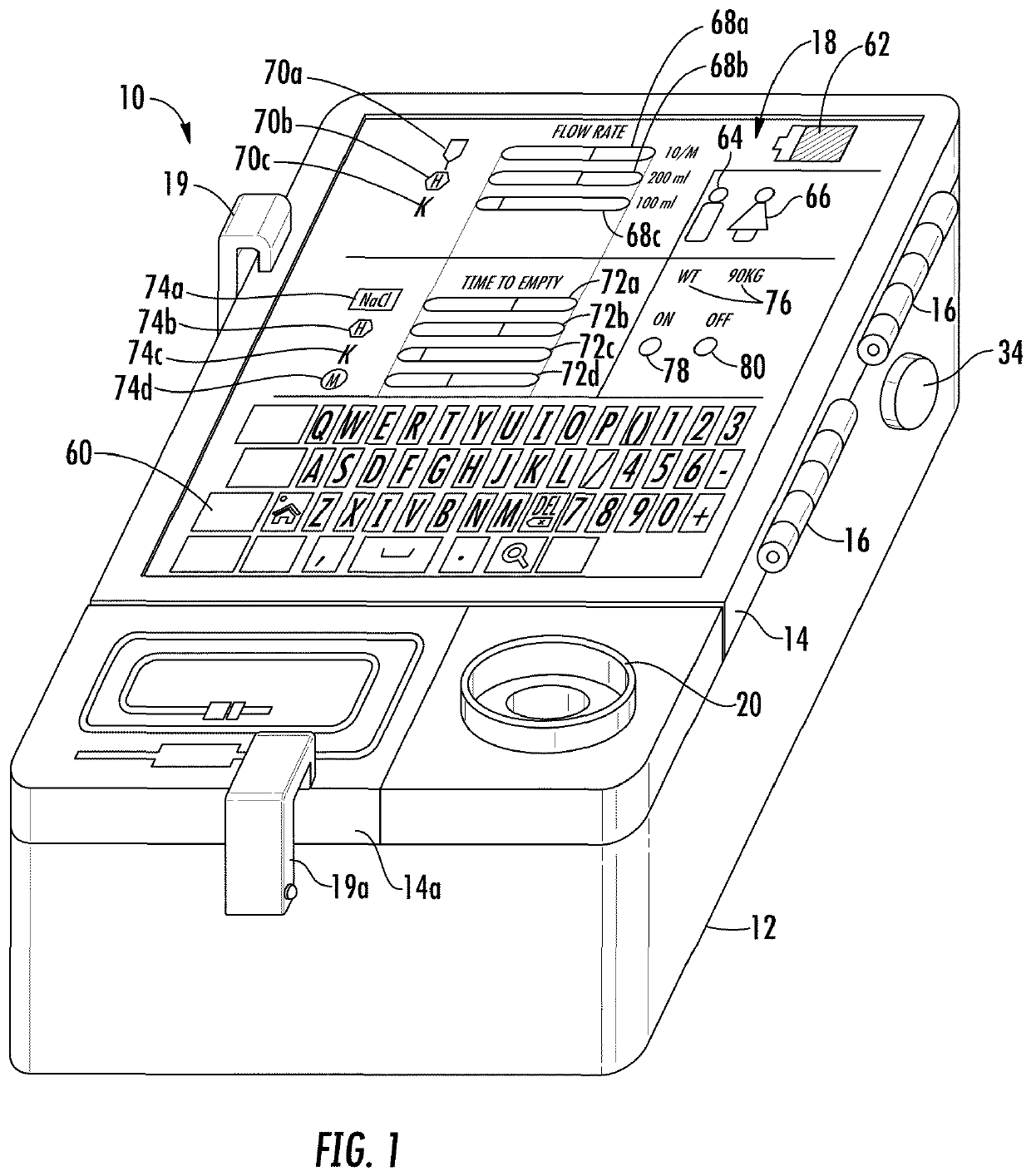 Figure 1
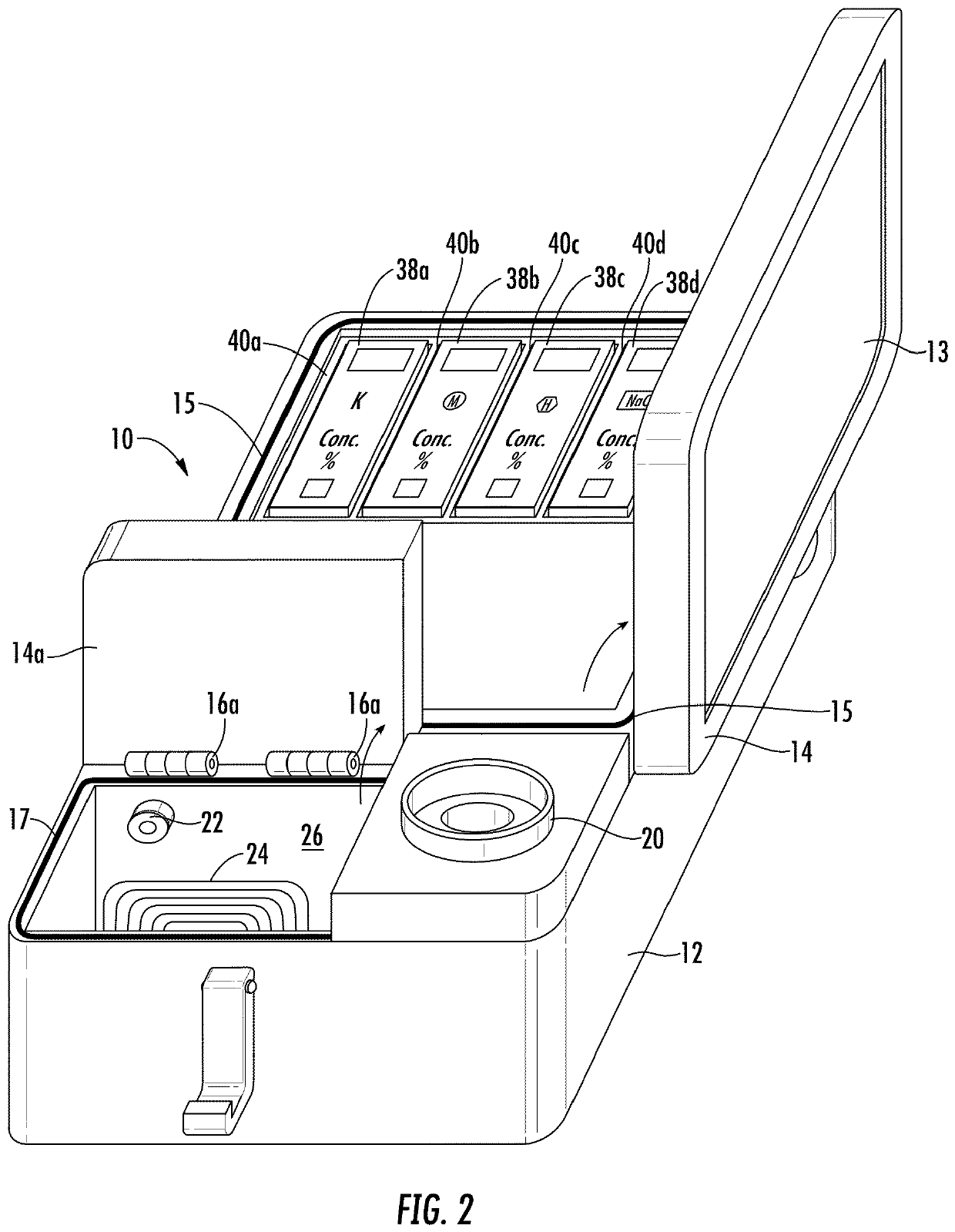 Figure 2
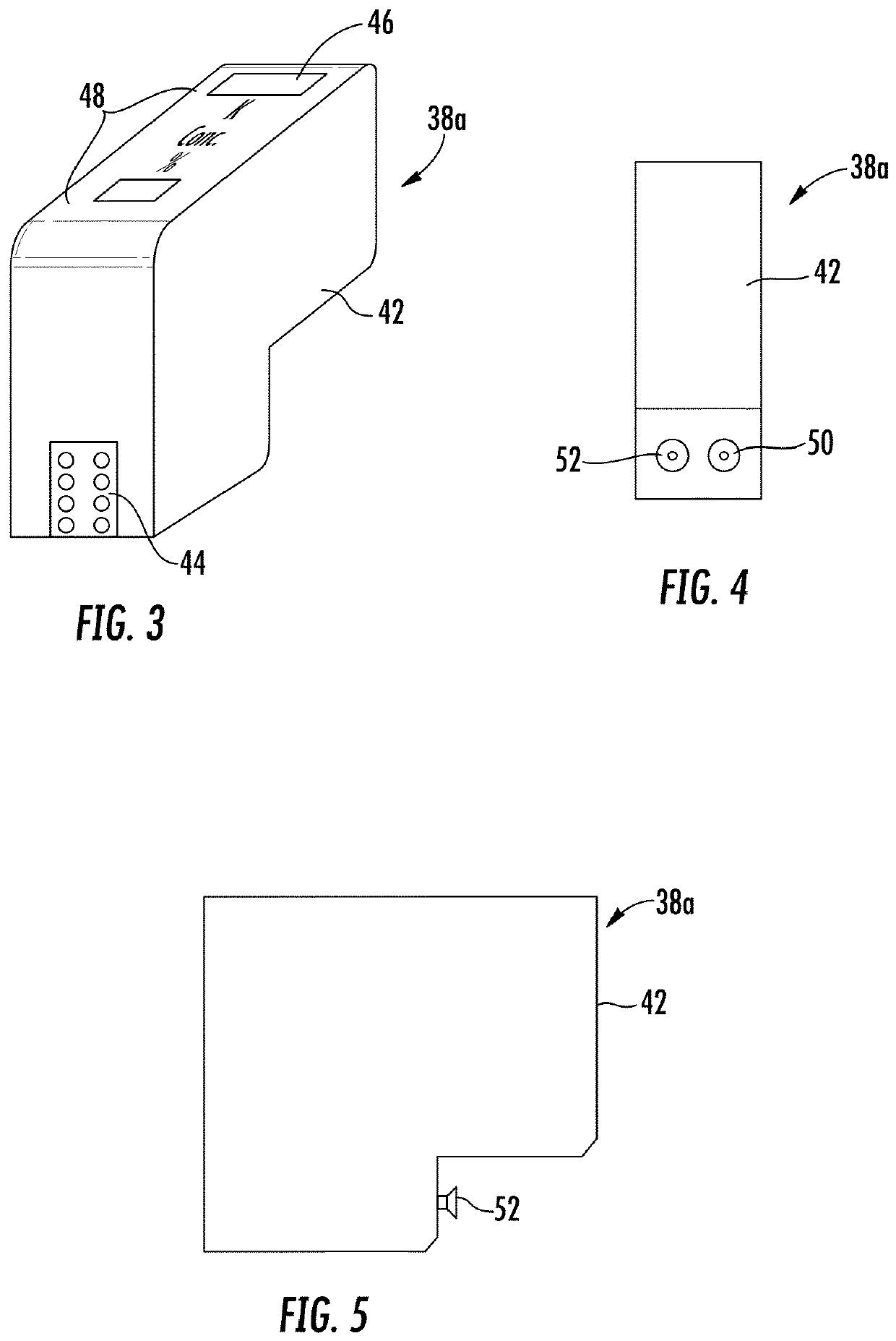 Figure 3~5
AI summary
A device, kit, and method for producing medically-deliverable intravenous saline solution may include supplying water to a housing, pumping the water through the housing while purifying the water, metering concentrated intravenous saline solution into the water to create a medically-deliverable intravenous saline solution, and dispensing the medically-deliverable intravenous saline solution.