
Modular Drawer Rear Wall Layout for Under-Sink Clearance
Find Innovative SolutionsGenerate Solutions
Solution Overview
Problem
In the furniture sector, existing solutions are technically and economically unsatisfactory for adjusting furniture to accommodate varying installation situations, particularly when movable furniture parts protrude into movement spaces, requiring individual adjustments that are often not optimally coordinated.
Innovation Solution
A drawer rear wall design featuring a standard middle rear wall element and laterally adjacent, taller, narrower wall elements with a separation point, allowing for adjustable height and connection to different standardized rear wall elements, enabling adaptation to specific installation conditions, such as those under sinks with protruding elements.
Engineering Contradictions & Design Principles
Engineering Contradiction Analysis
1Ease of manufacture
If the rear wall of the drawer is made as a single standardized element, then manufacturing and assembly are simplified, but adaptability to different installation situations is reduced
Solution Approach 1:
The drawer rear wall is divided into multiple standardized wall elements of different heights that can be selectively combined. This segmentation allows the furniture to be manufactured with standardized components while providing flexibility to adapt to different installation situations by choosing appropriate combinations of wall elements.
Solution Approach 2:
The standardized wall elements are designed to be universally applicable across different drawer configurations and installation scenarios. The same basic wall element designs can serve multiple functions and be used in various combinations to accommodate different spatial constraints and objects.
2Adaptability or versatility
If the rear wall height is reduced to accommodate protruding objects, then the drawer can be installed in more locations, but the storage space capacity is reduced
Solution Approach 1:
The rear wall is segmented into modular elements of different heights, allowing the drawer to maintain a standardized overall structure while accommodating varying local height requirements. This enables installation flexibility without compromising storage capacity in areas where full height is available.
Solution Approach 2:
Different sections of the rear wall have different heights tailored to local installation requirements. The wall elements provide locally adapted heights where needed while maintaining standardized dimensions in other areas, optimizing both installation flexibility and storage capacity.
3Adaptability or versatility
If individual adjustments are made to the drawer for each installation situation, then adaptability is improved, but device complexity and assembly time increase
Solution Approach 1:
The drawer rear wall consists of pre-fabricated standardized wall elements that can be easily assembled in different configurations. This segmentation provides adaptability through simple modular assembly rather than complex individual adjustments, reducing both device complexity and assembly time.
Data Source
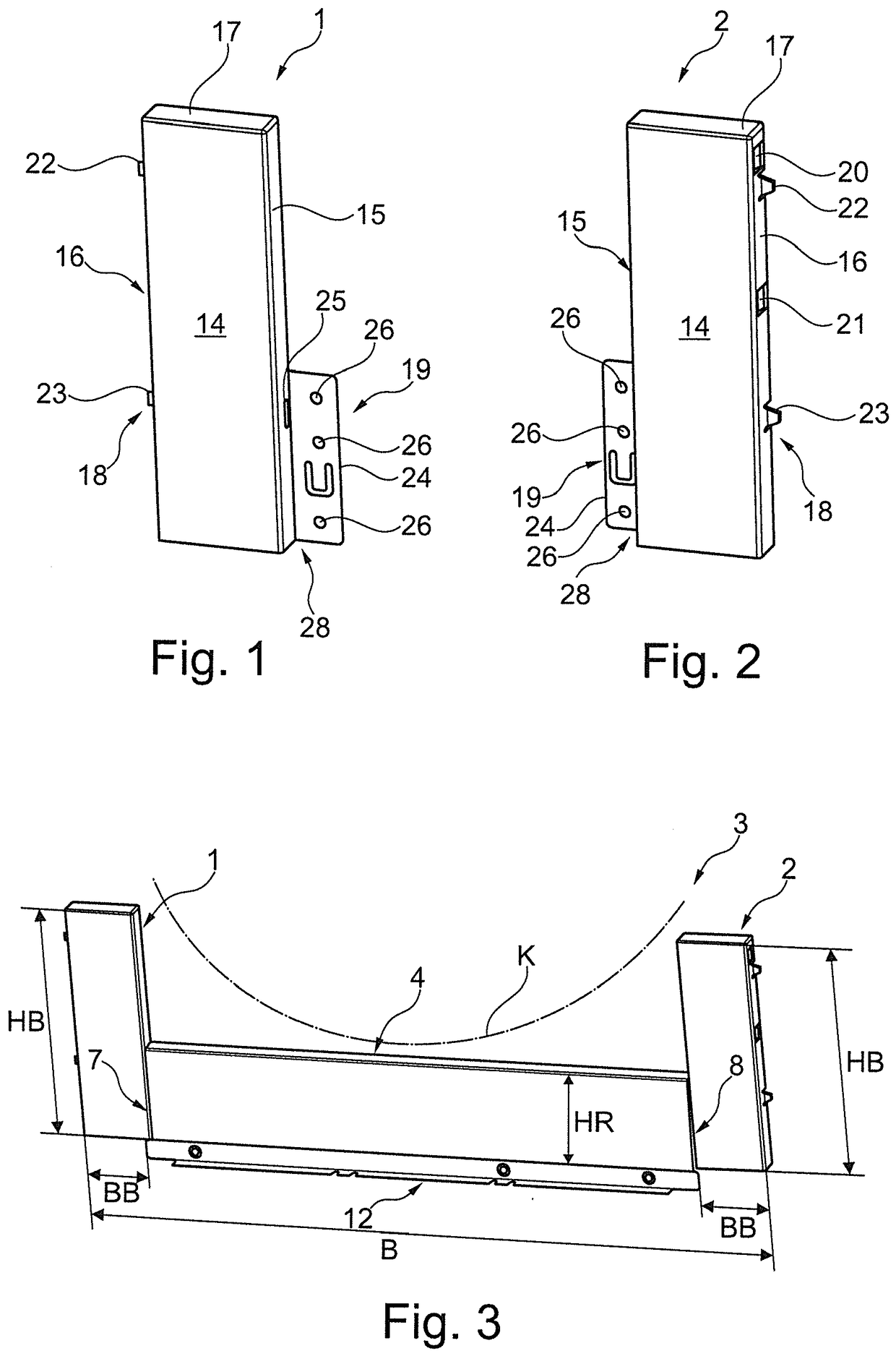 Figure 1~3
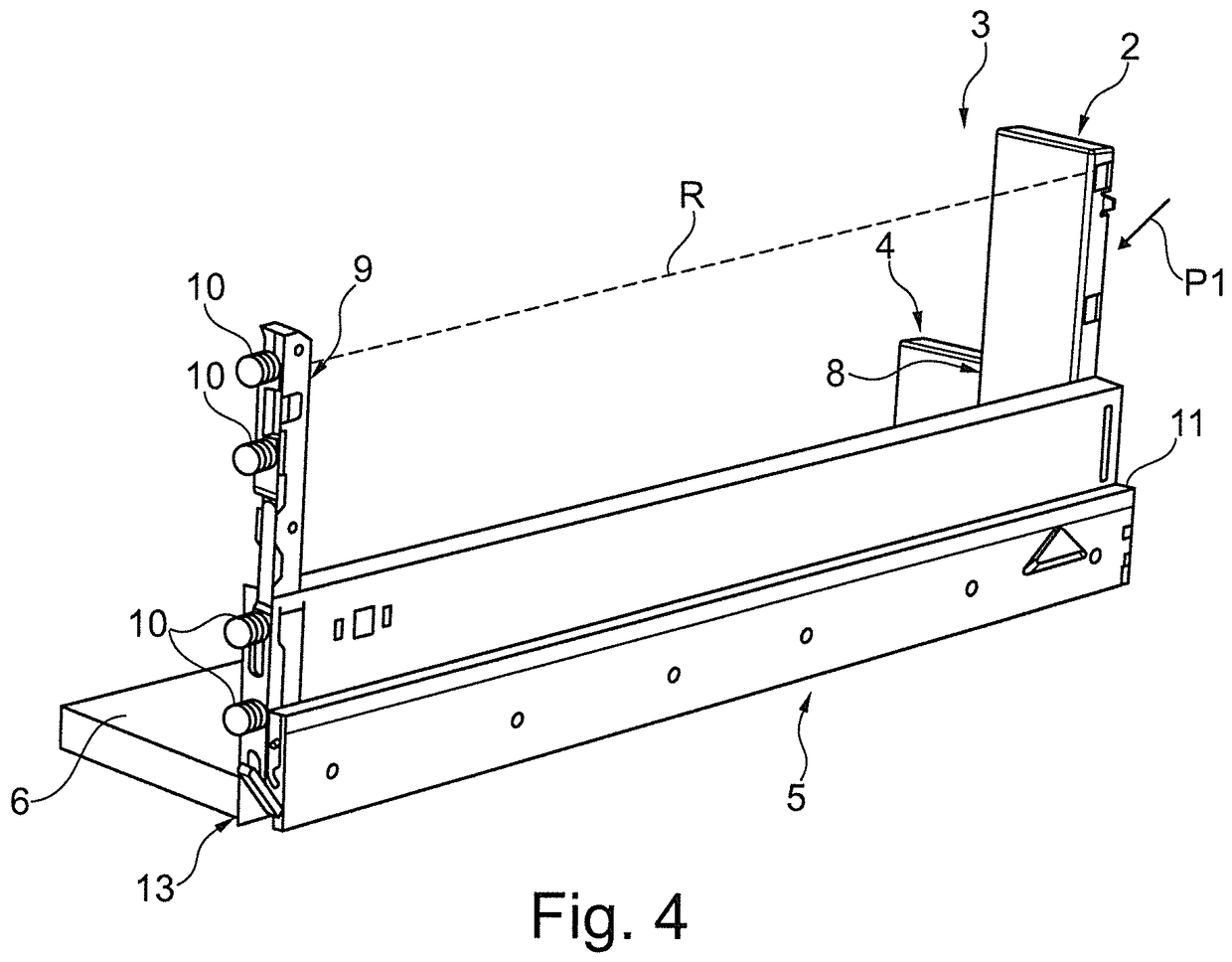 Figure 4
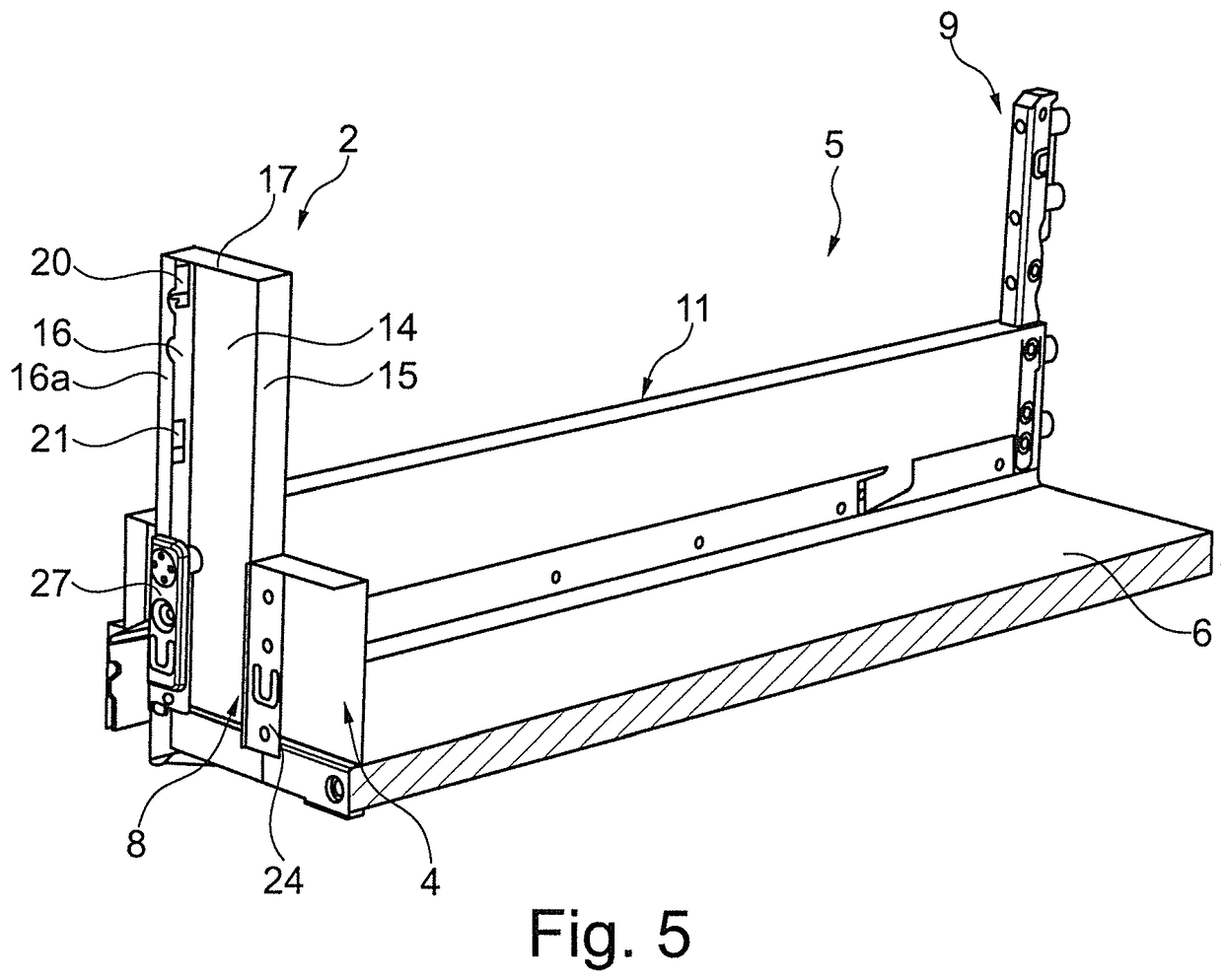 Figure 5
AI summary
A wall element (1, 2) for a drawer with opposite long sides of the drawer and a drawer rear wall (3) between the long sides of the drawer is proposed. According to the invention, the drawer rear wall (3) is in several parts and comprises the wall element (1, 2), the drawer rear wall (3) having a separation point (7, 8) in relation to the longitudinal axis of the drawer rear wall (3) which a height of the drawer rear wall (3) is continuous.