
Modular HV Cable Shielding Box for Compact Sectioning and Monitoring
Find Innovative SolutionsGenerate Solutions
Solution Overview
Problem
Existing three-phase high-voltage alternating current circuit sectioning boxes are bulky, heavy, require multiple operators for installation, and necessitate lengthy outages for maintenance, while sensors for monitoring induced currents and partial discharges cannot be easily integrated due to space constraints, leading to potential malfunctions and increased costs.
Innovation Solution
A modular sectioning box with solid dielectric insulation, allowing compact design, easy assembly by one person, and integration of sensors on individual conductors, enabling pre-assembly and testing for reduced downtime and improved monitoring capabilities.
Engineering Contradictions & Design Principles
Engineering Contradiction Analysis
1Reliability
If traditional sectioning boxes are designed with adequate air insulation between conductors at different potentials, then discharge prevention is ensured, but the box dimensions become large and the device becomes heavy
Solution Approach 1:
The patent changes the insulation medium from air to oil, fundamentally altering the physical parameter of the insulating material. Oil has higher dielectric strength than air, allowing for reduced insulation distances and compact box dimensions while maintaining adequate discharge prevention capability
Solution Approach 2:
The patent uses oil as a substitute medium that replicates and enhances the insulating function of air. The oil immersion technique creates a controlled environment where the conductors are surrounded by an superior insulating medium, achieving better isolation in a smaller space
2Object-affected harmful factors
If sectioning boxes are made airtight with numerous locking bolts to prevent water ingress, then water protection is ensured, but the device complexity and assembly difficulty increase
Solution Approach 1:
The patent extracts the water protection function from the mechanical locking system and relocates it to the oil itself. The oil acts as a barrier that prevents water ingress, eliminating the need for complex airtight sealing mechanisms and multiple locking bolts
Solution Approach 2:
The oil serves as an intermediary substance between the external environment and the internal conductors. It provides a protective interface that naturally repels water while allowing electrical insulation, simplifying the overall sealing design
3Strength
If sectioning boxes are designed to withstand limiter explosions with robust construction, then safety is ensured, but the box becomes heavier and requires multiple operators for installation
Solution Approach 1:
The patent changes the internal environment by filling with oil, which fundamentally alters how explosion forces are distributed and absorbed. The oil-filled environment provides cushioning and pressure distribution that reduces the structural reinforcement needed compared to air-filled boxes
Solution Approach 2:
The oil medium replicates and enhances the protective function against explosions. It acts as a shock-absorbing material that mitigates explosion forces, allowing for lighter box construction while maintaining safety standards
4Manufacturing precision
If testing of surge voltage limiters requires network outage, then proper testing is ensured, but costly downtime occurs
Solution Approach 1:
The patent implements preliminary action by pre-assembling and pre-testing module assemblies in the factory before field installation. The modular design allows testing to be performed on complete functional units beforehand, so that field installation requires minimal or no network outage
Solution Approach 2:
The patent segments the sectioning box into modular functional units that can be independently tested and assembled. This modular architecture allows for factory pre-testing of individual modules, reducing the need for extensive on-site testing that would require network downtime
Applied Scientific Principles
This section explains which scientific principles are used to turn an abstract innovation direction into a practical engineering solution.
Function Achieved in This Case
The modular design reduces installation complexity, minimizes incorrect connections, allows quick module replacement, and enables real-time monitoring without network outages, enhancing maintenance efficiency and sensor sensitivity.
Implementation Method 1
the gap (17) presenting a dielectric filler material in solid or gel form
Implementation Method 2
Surge voltage limiters are non-linear resistive elements whose function is to keep the voltages induced in the shields below a certain value
Data Source
 Figure 1
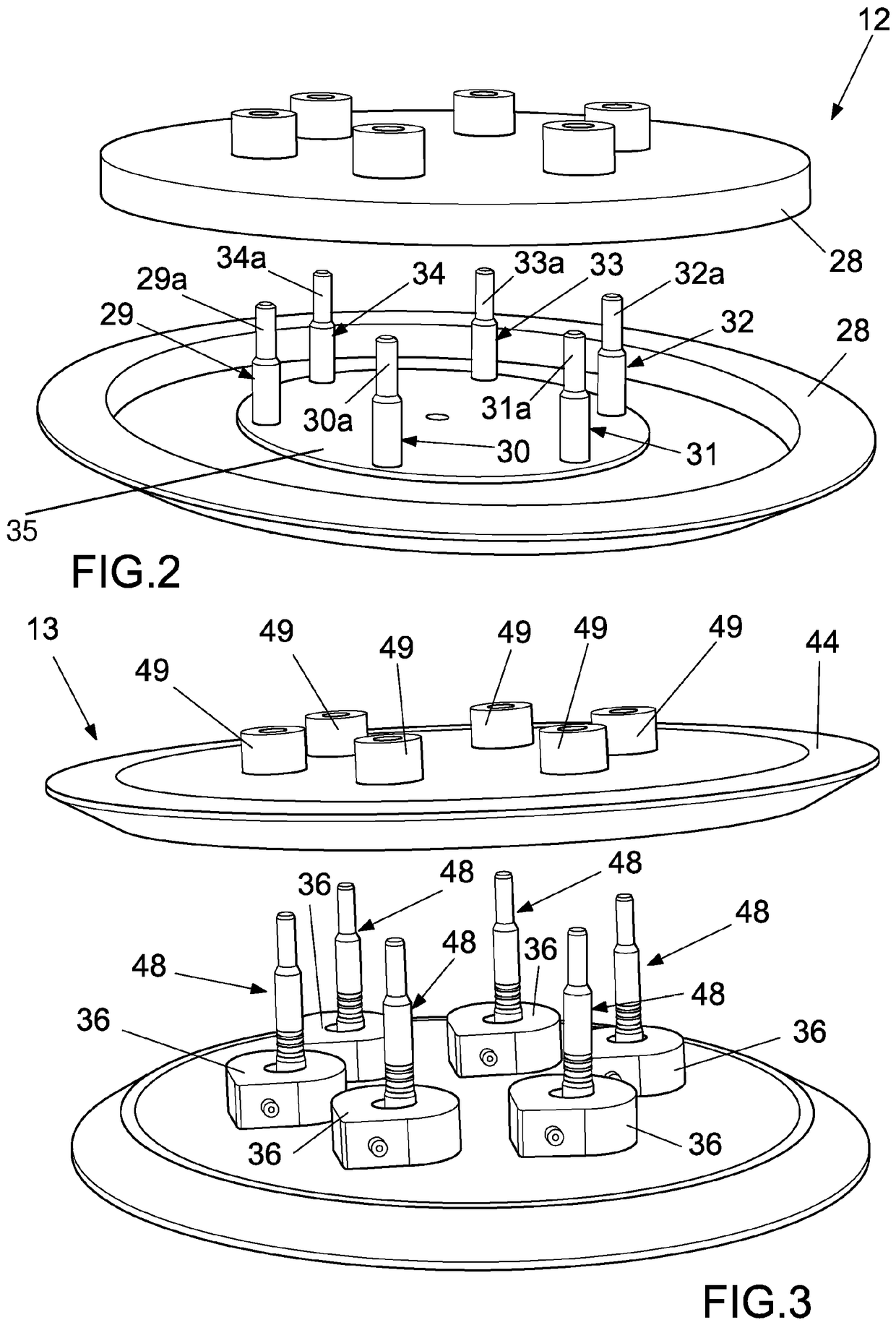 Figure 2~3
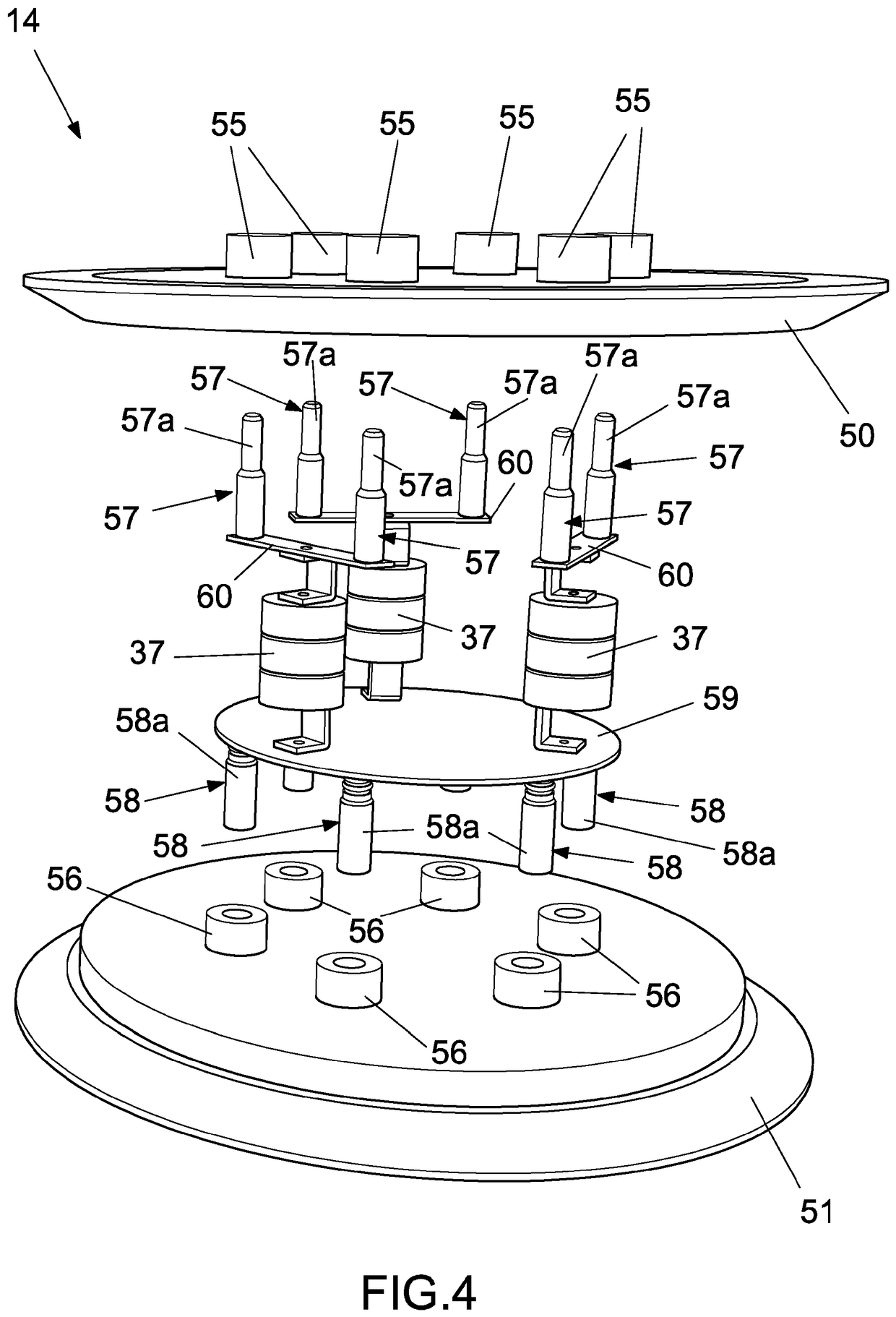 Figure 4
AI summary
The sectioning box (1) of the cable shielding (2, 3, 4) of a three-phase high voltage alternating current electrical circuit, has electrically connected modular modules (11, 12, 13, 14) comprising at least one head module (11) and one tail module (12), wherein the head module (11) comprises a front head flange (15) and a rear head flange (16) separated by a gap (17) wherein a dielectric filling material (21) in solid or gel form is present, wherein the head module (11) includes electrical connectors of the conductors (8a, 9a, 10a, 8b, 9b, 10b) of the bonding cables (8, 9, 10), and wherein the tail module (12) includes a flange (28) provided with electrical connectors (29, 30, 31, 32, 33, 34) short-circuited for grounding the conductors (8a, 9a, 10a, 8b, 9b, 10b) of the bonding cables (8, 9, 10).