
Profile Strip with Segmented Closed Profile for Transport Protection
Find Innovative SolutionsGenerate Solutions
Solution Overview
Problem
Profile strips for vehicle windshields are prone to transport damage and require complex assembly processes due to tight tolerances and the need for separate transport protection profiles, which increase costs and complexity.
Innovation Solution
A profile strip with a second connection area featuring alternating open and closed sections, where the closed sections provide integral transport protection and stabilize the strip, eliminating the need for additional protection profiles and simplifying assembly by reducing degrees of freedom during component alignment.
Engineering Contradictions & Design Principles
Engineering Contradiction Analysis
1Object-affected harmful factors
If a separate transport protection profile (keder) is inserted in the latching area, then the profile strip is protected against transport damage, but the assembly process becomes more complex and requires additional components to be removed and disposed of
Solution Approach 1:
The transport protection function is merged with the profile strip itself by forming an integrated closed-profile section that serves both as structural element and transport protection, eliminating the need for separate keder components
Solution Approach 2:
The harmful function of separate transport protection profiles (which require removal and disposal) is extracted and replaced by the intrinsic closed-profile design that provides protection without requiring additional components
2Stability of the object's composition
If the second connection area has a closed profile for transport protection, then the profile strip is stabilized and protected against deformation, but connecting elements cannot be introduced into the closed profile
Solution Approach 1:
The second connection area is segmented into alternating closed and open profile sections along the longitudinal direction, allowing the closed sections to provide stability while open sections allow connecting element insertion
Solution Approach 2:
Different sections of the profile strip have different qualities: closed profile sections provide stability and protection, while open profile sections provide access for connecting elements, with each section optimized for its specific function
3Loss of information
If optical center markings are attached to the profile strip and cover, then orientation is provided, but misalignment during assembly cannot be prevented
Solution Approach 1:
The closed profile sections act as self-aligning features that guide and constrain the connecting elements during assembly, automatically ensuring proper alignment without requiring external marking systems
Solution Approach 2:
The closed profile sections serve as intermediary alignment features between the profile strip and adjoining components, providing physical guidance that ensures precise positioning during assembly
Data Source
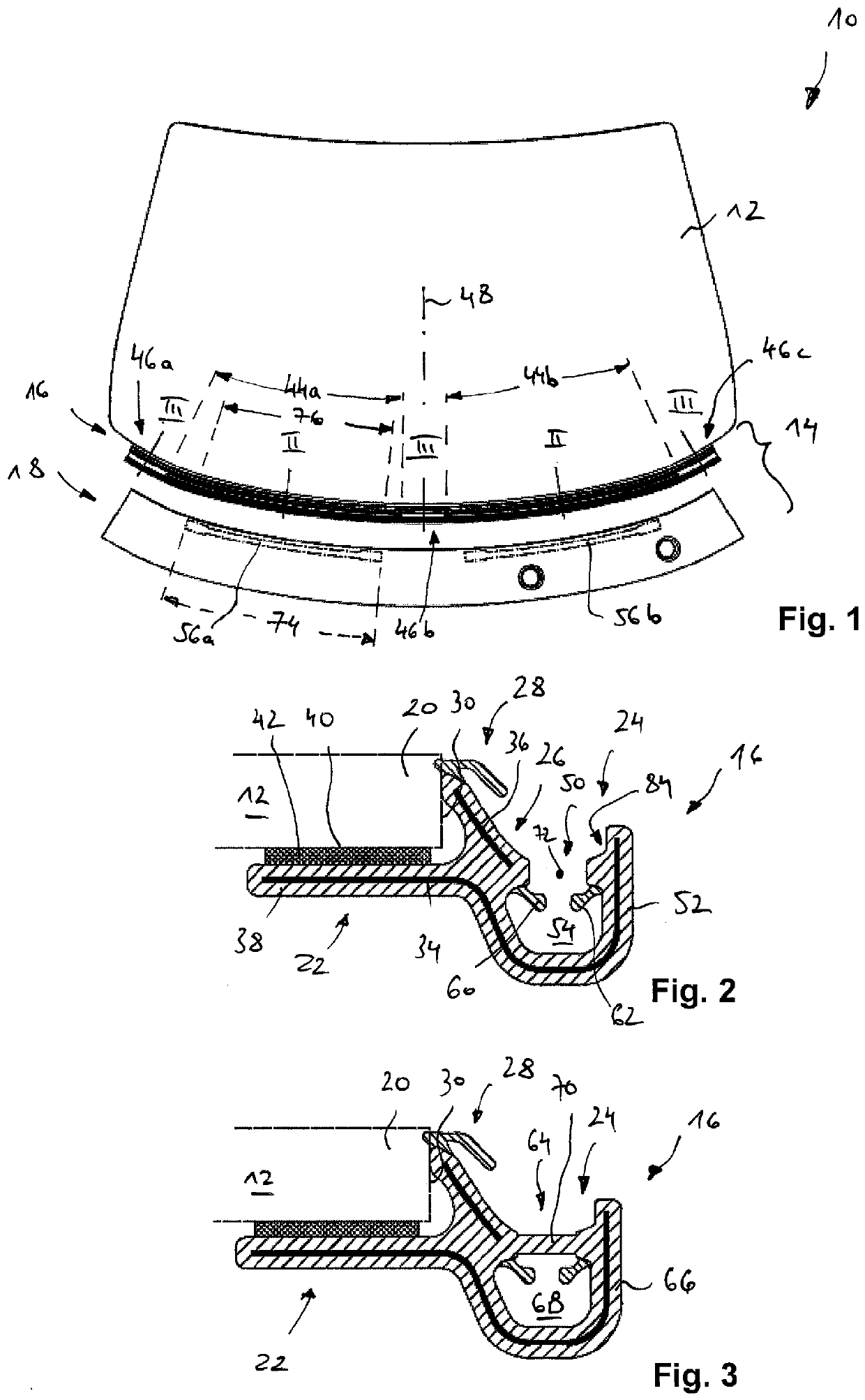 Figure 1~3
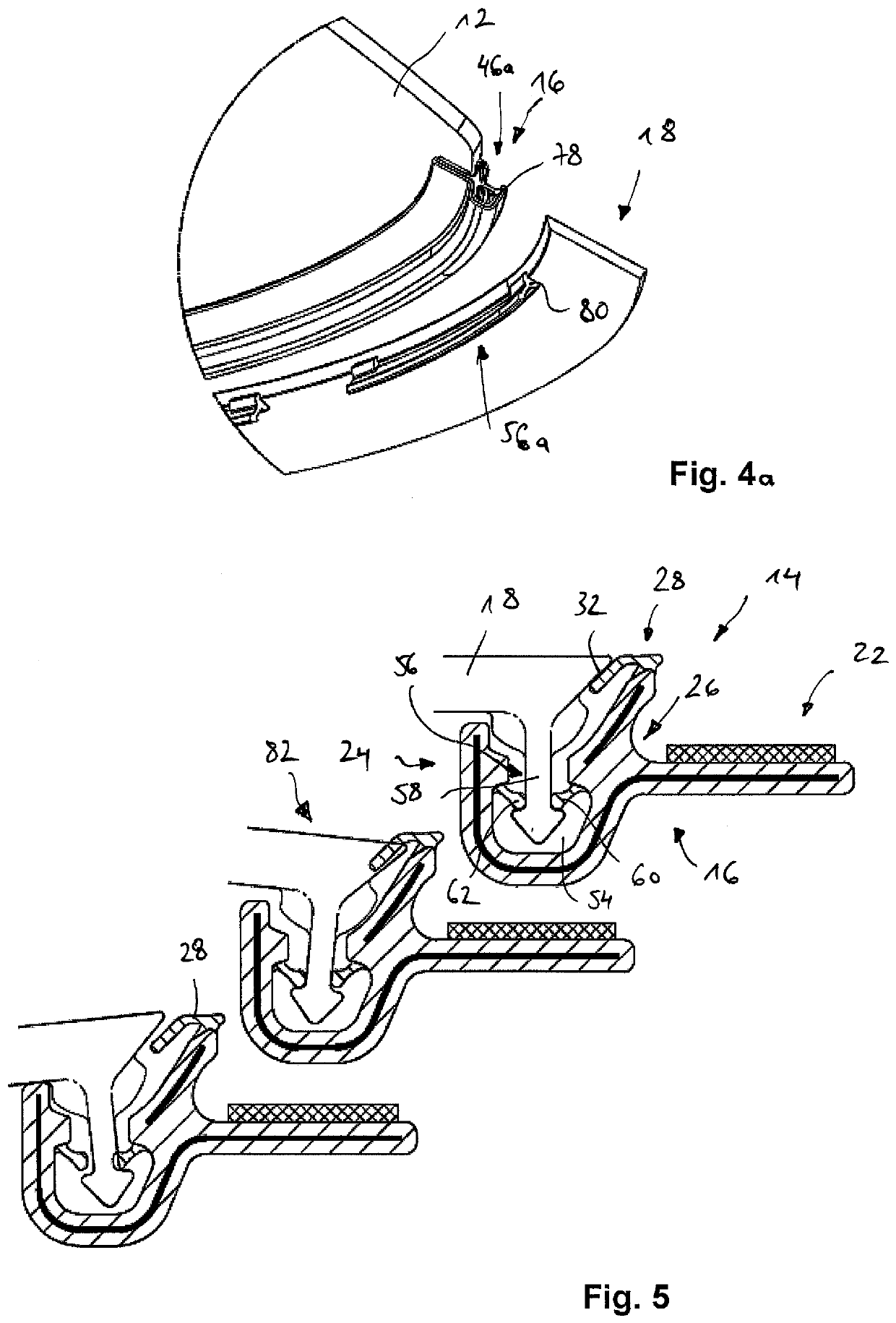 Figure 4a~5
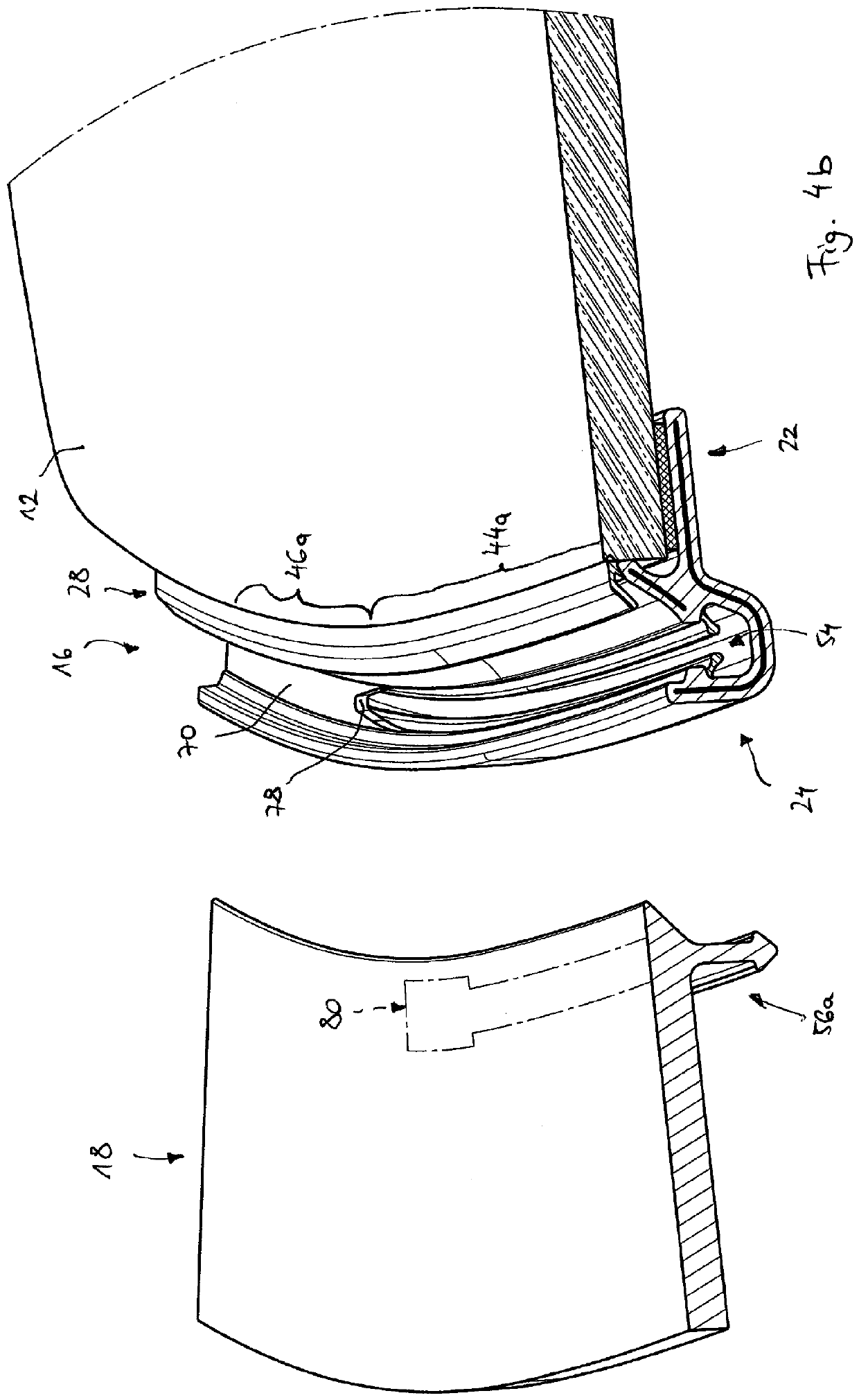 Figure 4b
AI summary
A profiled strip includes a first connecting area configured to connect to an edge area of a windshield of a motor vehicle, and a second connecting area configured to connect to a component to be adjoined to the windshield. The second connecting area has an open profile along at least one first partial section of a lengthwise extension of the profiled strip, which allows a connecting element of the adjoining component to be inserted into a receiving area delimited by the open profile. The second connecting area has a closed profile along at least one second partial section of the lengthwise extension of the profiled strip, which prevents the insertion of the connecting element into the closed profile.