
Pulsed Light Decontaminating Unit for Thermoplastic Parisons
Find Innovative SolutionsGenerate Solutions
Solution Overview
Problem
Existing decontamination units for thermoplastic parisons face structural complexity and difficulty in reaching all surfaces, especially in bottles with complex geometries, leading to incomplete treatment due to shaded zones, particularly in ESL product packaging where high decontamination performance is critical.
Innovation Solution
A decontaminating unit featuring a rotary carousel with a pulsed light generating device positioned along a secant of the circumferential pathway, emitting radiations directly onto the mouth of the parisons, combined with a gripping mechanism that ensures effective treatment of both internal and external surfaces, and a reflecting element to concentrate the light and prevent dispersion.
Engineering Contradictions & Design Principles
Engineering Contradiction Analysis
1Reliability
If UV radiation emitters are inserted into containers to penetrate and decontaminate internal surfaces, then decontamination performance is improved, but structural complexity increases and difficulty to reach all surfaces worsens due to shaded zones
Solution Approach 1:
Instead of inserting the radiation source inside the container, the invention inverts the approach by placing the pulsed light source externally and using a reflector to direct radiation inward. This eliminates the need for complex internal structures while achieving effective decontamination of all surfaces including shaded zones.
Solution Approach 2:
The invention introduces a reflector as an intermediary element between the external light source and the container interior. The reflector mediates the delivery of pulsed light radiation, directing it into the container to treat internal surfaces without requiring the source to be inserted inside, thereby simplifying the overall device structure.
2Reliability
If multiple decontaminating devices are arranged tangentially to treat different surface areas or micro-organism varieties, then decontamination effectiveness is improved, but device complexity and cost increase
Solution Approach 1:
The invention makes a single pulsed light source perform multiple functions by using a reflector to direct radiation at different angles and wavelengths onto various parts of the container. This single device can treat different surface areas and target different varieties of micro-organisms, eliminating the need for multiple separate decontaminating devices.
3Device complexity
If a single pulsed light device is used to treat parisons, then structural complexity is reduced, but treatment completeness may worsen due to potential shaded zones
Solution Approach 1:
The invention uses a reflector with a curved (spheroidal) surface to distribute pulsed light radiation evenly across the container interior. The curved geometry of the reflector ensures that radiation reaches all surfaces including curved and shaded areas, maintaining treatment completeness while using a single external light source.
Applied Scientific Principles
This section explains which scientific principles are used to turn an abstract innovation direction into a practical engineering solution.
Function Achieved in This Case
This configuration ensures thorough decontamination with reduced structural complexity, enhanced treatment effectiveness, and cost savings by using a single pulsed light device to deliver two flashes per parison, improving the decimal reduction of microorganisms while maintaining the integrity of thermoplastic materials.
Implementation Method 1
a generating device for generating pulsed light, arranged along a secant of the circumferential pathway in order to send radiations onto the mouth of the parisons in transit
Implementation Method 2
the use of pulsed light lamps arranged in proximity to the neck of the parison to break the covalent bond between the two oxygen atoms of the hydrogen peroxide deposited there
Implementation Method 3
a reflecting element to concentrate the light and prevent dispersion
Data Source
 Figure 1
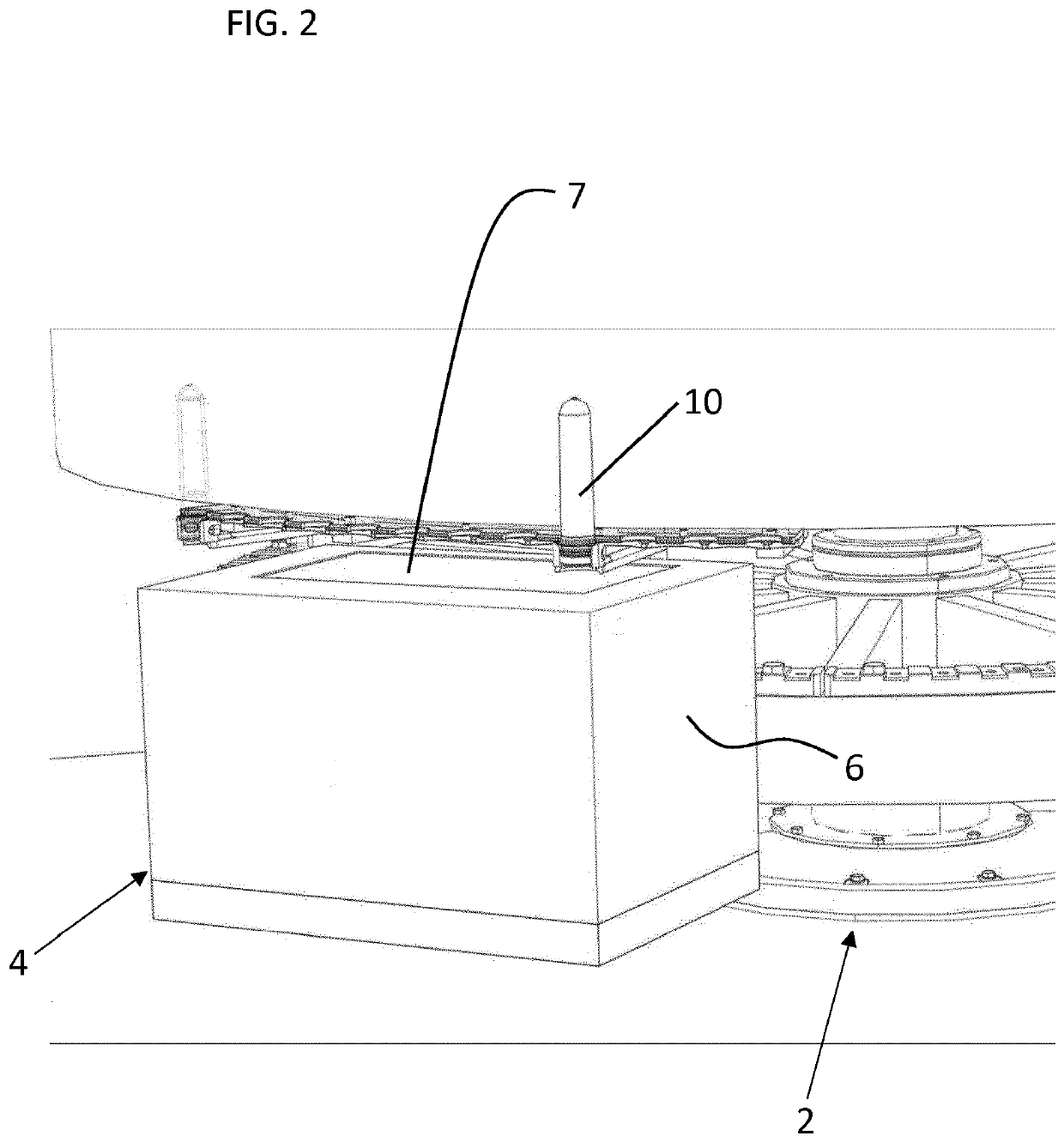 Figure 2
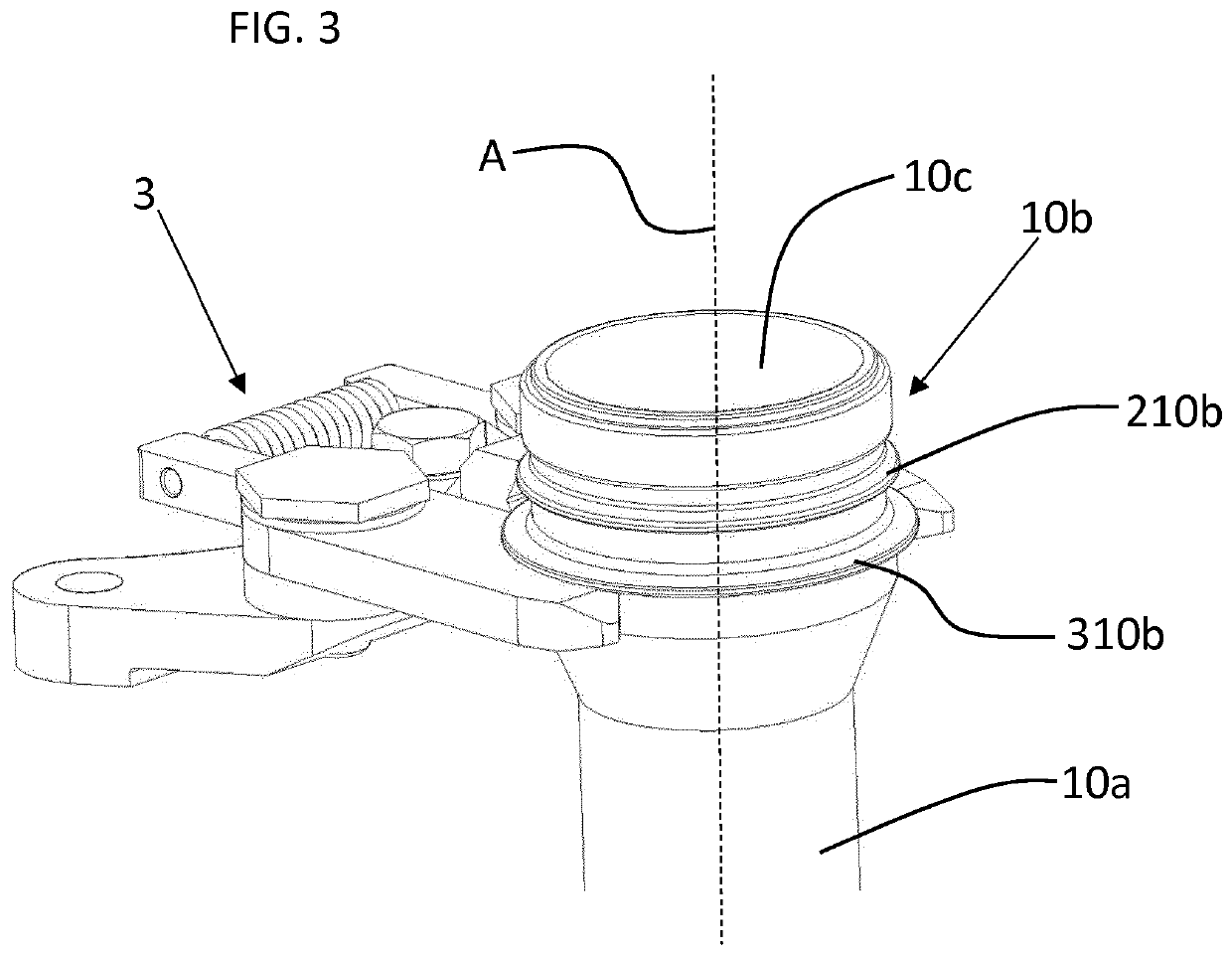 Figure 3
AI summary
A decontaminating unit (1) for decontaminating parisons (10) made of a thermoplastic material, comprising: a rotary carousel (2); gripping means (3) for gripping the parisons (10) to support them during their advancement along a circumferential pathway (C) on the rotary carousel (2); a generating device for generating pulsed light (4), arranged along a secant (S) of the circumferential pathway (C) in order to send radiations onto the mouth (10c) of the parisons (10) in transit.