
Sealing Cord Dispenser Cap That Prevents Retraction During Transport
Find Innovative SolutionsGenerate Solutions
Solution Overview
Problem
Existing cord dispensers for sealing threaded pipework are difficult to handle due to the risk of the cord slipping back into the dispenser during transportation, and the cap can get in the way when winding the cord, leading to incomplete sealing and potential loss of the screw cap.
Innovation Solution
A dispenser design featuring a cap with a protrusion that clamps the cord between the opening rim and itself, preventing it from slipping back into the hollow body, combined with a locking mechanism to secure the cap in the open position and a cutting device for easy cord management.
Engineering Contradictions & Design Principles
Engineering Contradiction Analysis
1Reliability
If the cap is pivotally connected to the lid member and covers the opening in closed position, then the dispenser provides a seal between the hollow body and environment, but the cord can get caught on the unfolded cap during circular swiveling motion making it difficult to seal the thread
Solution Approach 1:
The cap is completely separated from the hollow body, allowing it to be removed entirely. This extraction eliminates the interference problem where the cap would catch the cord during winding operations, while the cap can still be used to cover and seal the opening when needed.
Solution Approach 2:
The cap transitions from a static pivoting connection to a completely removable dynamic state. This allows the cap to be positioned optimally for each operation phase: removed during winding to avoid interference, and attached during storage to provide sealing.
2Ease of operation
If the screw cap is completely separated from the hollow body, then the cap does not impede the winding of the cord onto the thread, but the screw cap can be got lost
Solution Approach 1:
The opening rim acts as an intermediary element that provides a retention feature for the cap. The protrusion on the cap engages with the opening rim to create a locking connection, serving as a mediator between the cap and hollow body that prevents loss while allowing easy removal when needed.
3Reliability
If the cap is placed in closed position to cover the opening, then the dispenser can be placed on shelf or taken to new location, but the free end of cord will slip through opening into hollow body due to vibrations during transportation
Solution Approach 1:
The protrusion is extracted from the cap body as a separate functional element that engages with the opening rim. This creates a dedicated cord retention mechanism that prevents the cord end from slipping through the opening during transportation vibrations.
Solution Approach 2:
The protrusion applies preliminary clamping force to the cord end before transportation vibrations can cause it to slip through the opening. This pre-applied counter-action prevents the harmful effect of vibration-induced cord movement.
4Reliability
If a protrusion is added to the cap to clamp the cord between the protrusion and opening rim, then the cord is prevented from slipping down into the hollow body, but the device complexity increases
Solution Approach 1:
The protrusion is a localized feature added only to the specific area of the cap where cord retention is needed. This local modification provides the necessary cord clamping function without requiring complex changes to the overall cap structure or adding multiple components.
Data Source
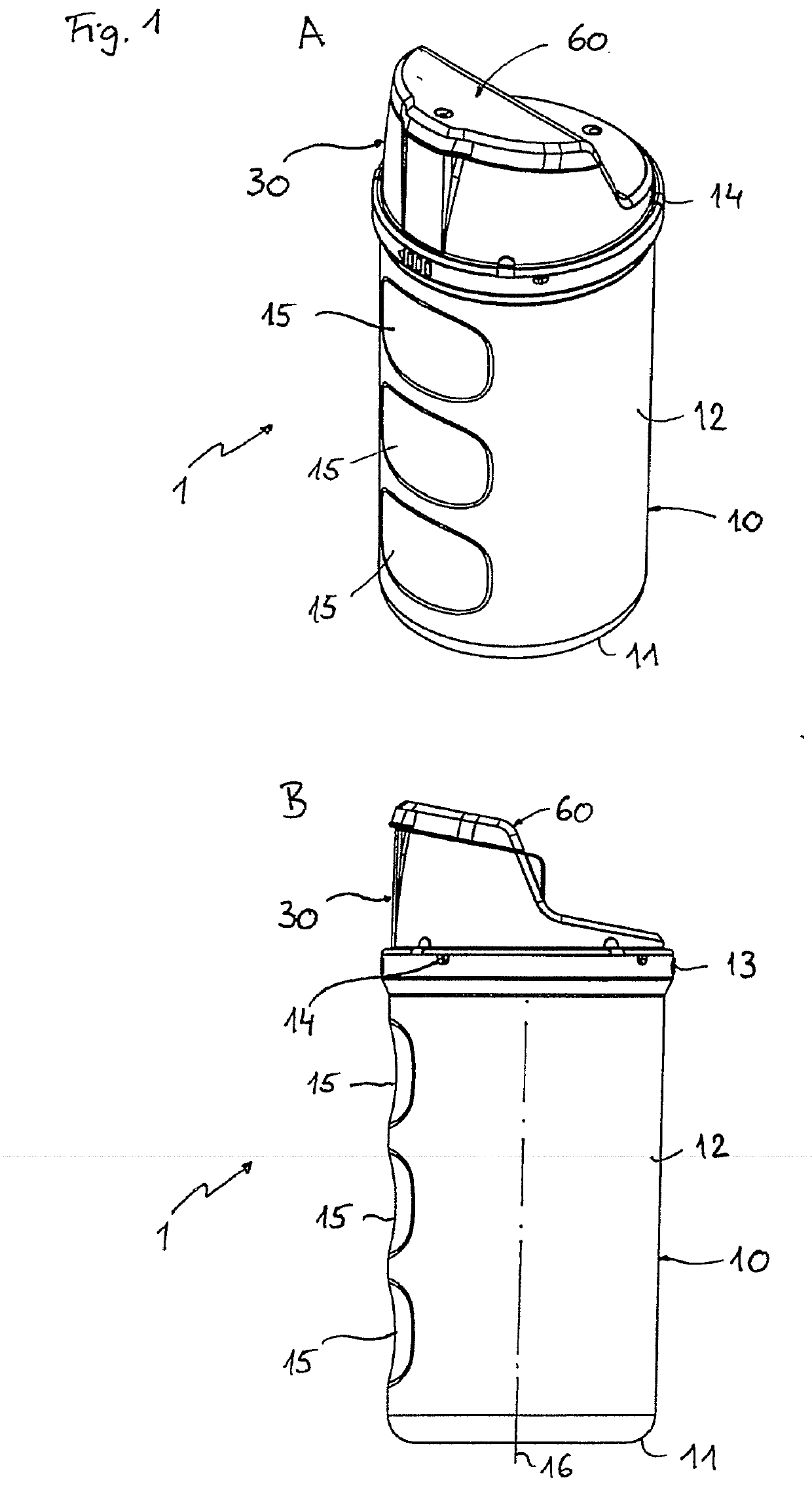 Figure 1A~1B
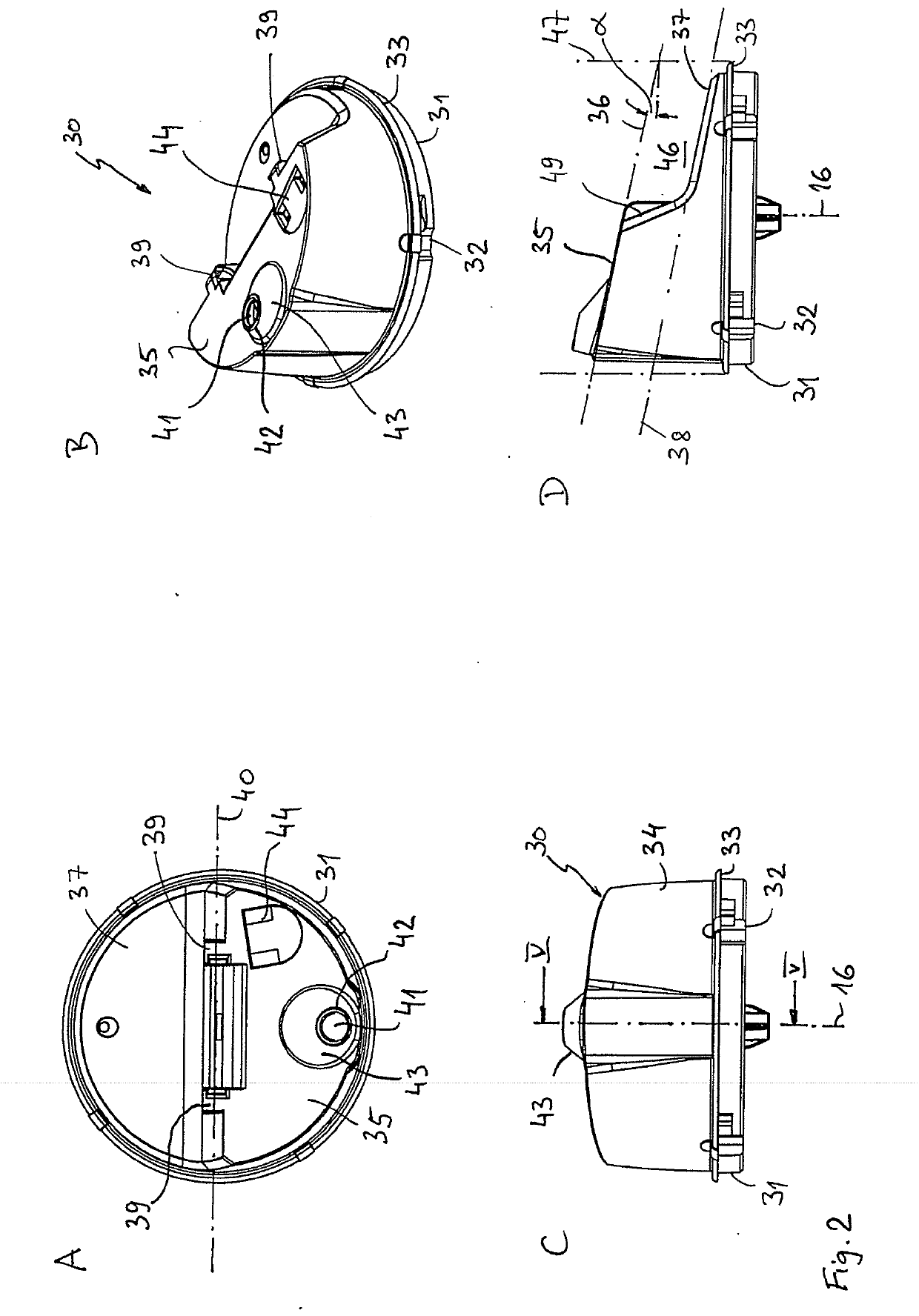 Figure 2A~2D
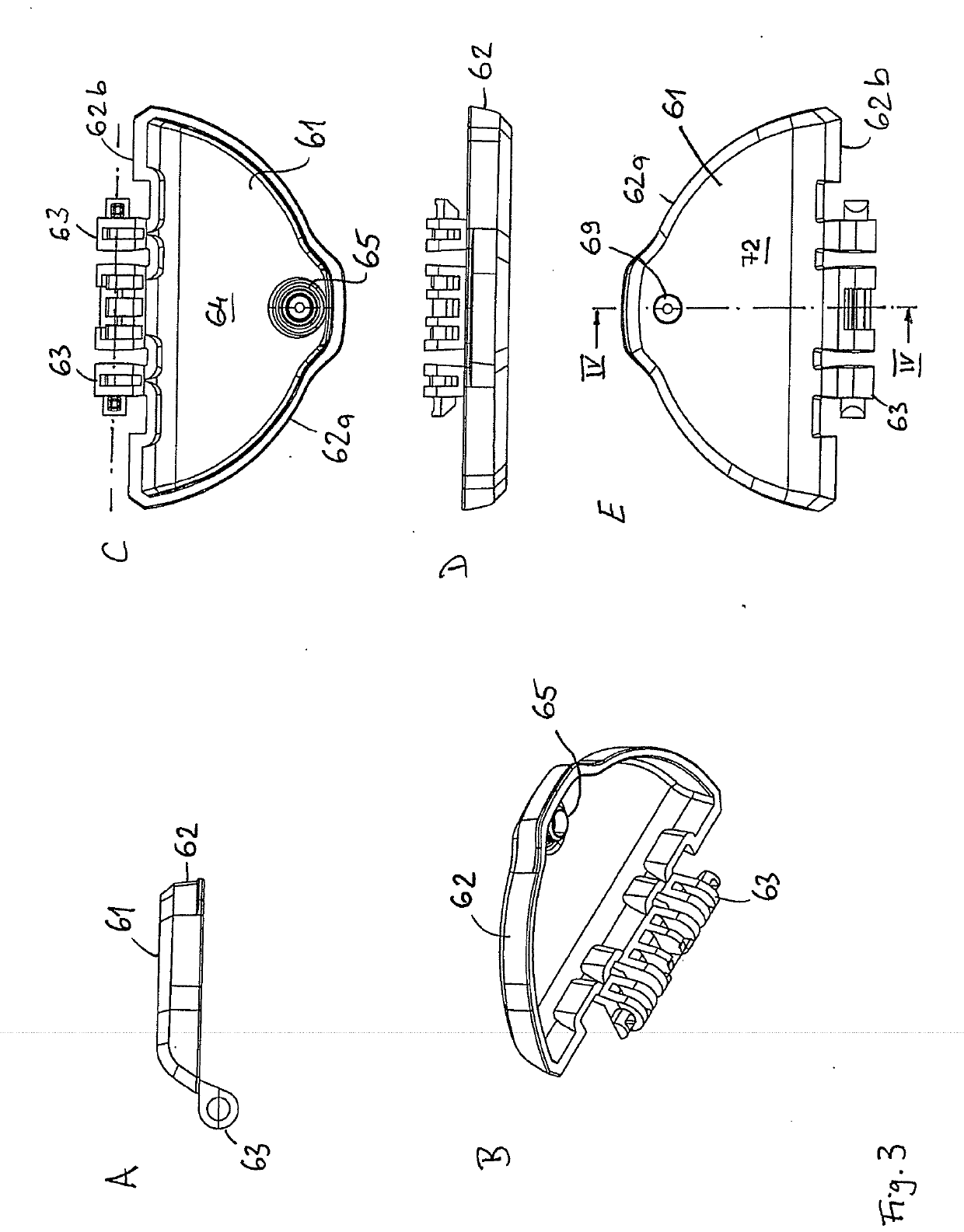 Figure 3A~3E
AI summary
The invention relates to a dispenser (1) for a cord, preferably for a cord for sealing a threaded pipework, comprising a hollow body (10) for receiving the cord, a cover part (30) being arranged on a top edge (13) of the hollow body (10) and having an opening (41) through which the thread can be removed from the hollow body (10), and a cap (60) which is connected to the cover part (30) so as to be pivotable about a pivot axis (40) and, in a closed position, covers the opening (41). The dispenser (1) is characterized in that the cap (60) has a protrusion (65) which, in the closed position of the cap (60), engages in the opening (41), so that the cord can be clamped between the protrusion (65) and opening rim (42).