

Seat Spring Preload Mechanism With Rod-Guided Adjustment
Find Innovative SolutionsGenerate Solutions
Solution Overview
Problem
Existing mechanisms for regulating the preload of stiffening springs in seating devices, such as office chairs, are complex, prone to jamming, and difficult to use, with issues like oversized components, inaccurate calibration, and mechanical interference, which affect the precision and ease of operation.
Innovation Solution
A mechanism featuring a mobile striker constrained to the rotating element and a regulating cursor that slides on a rod-shaped guide element fixed to the support frame, combined with a telescopic coupling and a manual operating knob connected to a control shaft with a worm screw, allowing precise preload regulation without jamming.
Engineering Contradictions & Design Principles
Engineering Contradiction Analysis
1Ease of operation
If a complex lever and crank system is used to regulate the preload of the stiffening spring, then the preload can be adjusted, but the device complexity increases and the mechanism becomes prone to jamming
Solution Approach 1:
The patent extracts the regulating cursor from the complex lever and crank system, making it an independent element that slides directly on a rod. This simplifies the mechanism by removing unnecessary intermediate components while maintaining the preload regulation function. The cursor is now directly connected to the spring and rod, eliminating the need for complex transmission mechanisms.
Solution Approach 2:
The patent introduces a rod as a simple intermediary element between the support frame and the regulating cursor. This rod serves as a guide that allows the cursor to slide smoothly while maintaining precise control over the spring preload. The rod replaces the complex lever and crank system with a simple linear guidance mechanism.
2Manufacturing precision
If the rod stroke inside the sleeve is increased to prevent end-of-stroke during rotation, then the precision is maintained, but the overall dimensions of the mechanism increase
Solution Approach 1:
The patent changes the orientation and arrangement of the rod and cursor mechanism to optimize the stroke path. By carefully positioning the rod and cursor, the mechanism achieves the necessary adjustment range within a more compact dimensional envelope. The rod is positioned to allow the cursor to slide along its length while maintaining adequate clearance during rotation.
Solution Approach 2:
The patent applies local quality by providing guidance and clearance only where needed - specifically at the ends of the rod stroke. The support frame and mobile element are designed with appropriate clearances and guidance features at critical locations to prevent end-of-stroke conditions during rotation, while the rest of the mechanism maintains compact dimensions.
3Manufacturing precision
If the rod is appropriately dimensioned and positioned to prevent loss of calibration during rotation, then the precision is maintained, but the device complexity and difficulty of manufacture increase
Solution Approach 1:
The patent designs the rod and cursor mechanism to be self-aligning and self-regulating during rotation. The cursor is constrained to slide along the rod in a way that automatically maintains the correct geometric relationship between the spring, rod, and support frame. This self-service mechanism ensures calibration stability without requiring complex positioning features or precision adjustments during assembly.
Solution Approach 2:
The patent creates an equipotential geometric relationship where the rod, cursor, and spring are arranged such that the preload calibration remains stable throughout the rotation range. The mechanism is designed so that the relative positions and orientations of components maintain consistent geometric relationships, ensuring that calibration is preserved regardless of the rotation angle.
4Volume of moving object
If a telescopic coupling is used between the rod and mobile striker, then the mechanism becomes more compact, but the manufacturing precision requirements increase
Solution Approach 1:
The patent extracts the telescopic coupling from a complex articulated connection and simplifies it to a direct sliding interface between the rod and mobile striker. This extraction reduces the number of components and simplifies the manufacturing requirements while maintaining the compactness benefit. The mobile striker slides directly on the rod without intermediate telescopic sections.
Solution Approach 2:
The rod itself serves as the intermediary element that provides both the telescopic function and the guidance function. By using the rod as the direct sliding surface for the mobile striker, the patent eliminates the need for separate telescopic coupling components, thereby reducing manufacturing precision requirements while maintaining compact dimensions.
Applied Scientific Principles
This section explains which scientific principles are used to turn an abstract innovation direction into a practical engineering solution.
Function Achieved in This Case
The solution provides a compact, structurally simple, and precise preload regulation mechanism that prevents unguided sliding and ensures easy operation, maintaining the structural integrity and precision of the stiffening spring calibration.
Implementation Method 1
a manual operating knob (8) connected to a control shaft (11) with a worm screw, allowing precise preload regulation
Implementation Method 2
presenting an elastic reaction by returning to its non-deformed conformation
Implementation Method 3
a stiffening spring (3), wherein said spring (3) presents an elastic reaction
Data Source
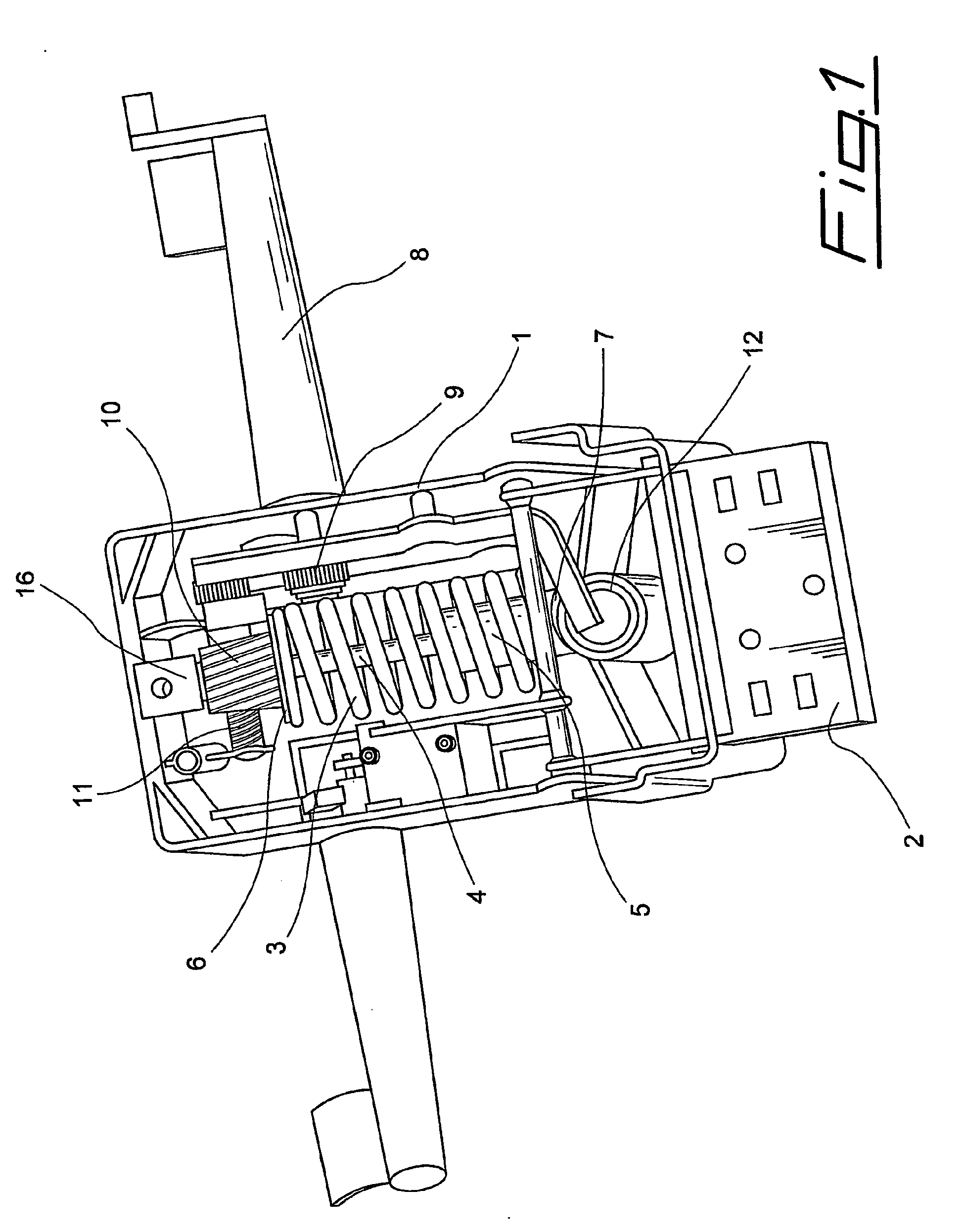 Figure 1
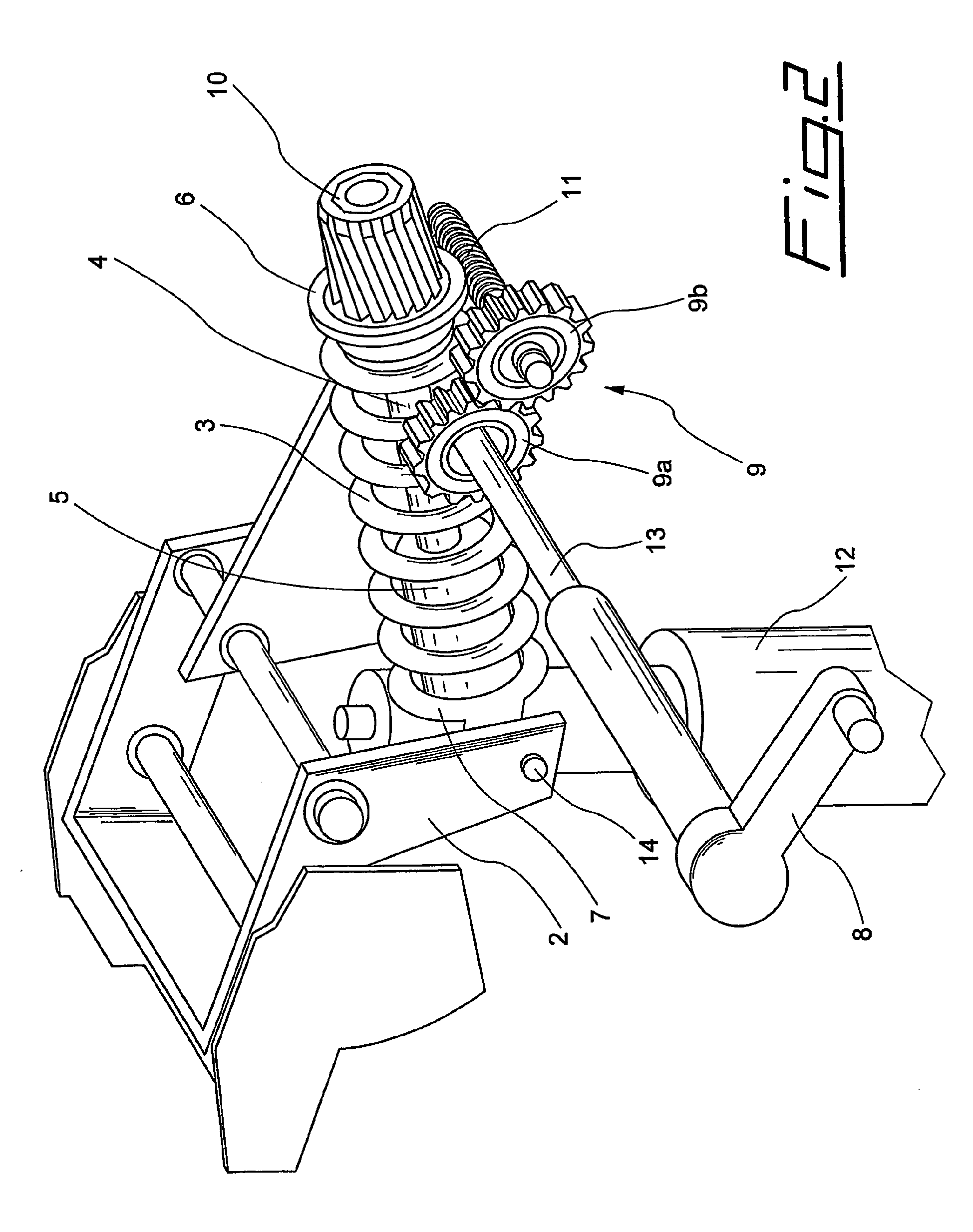 Figure 2
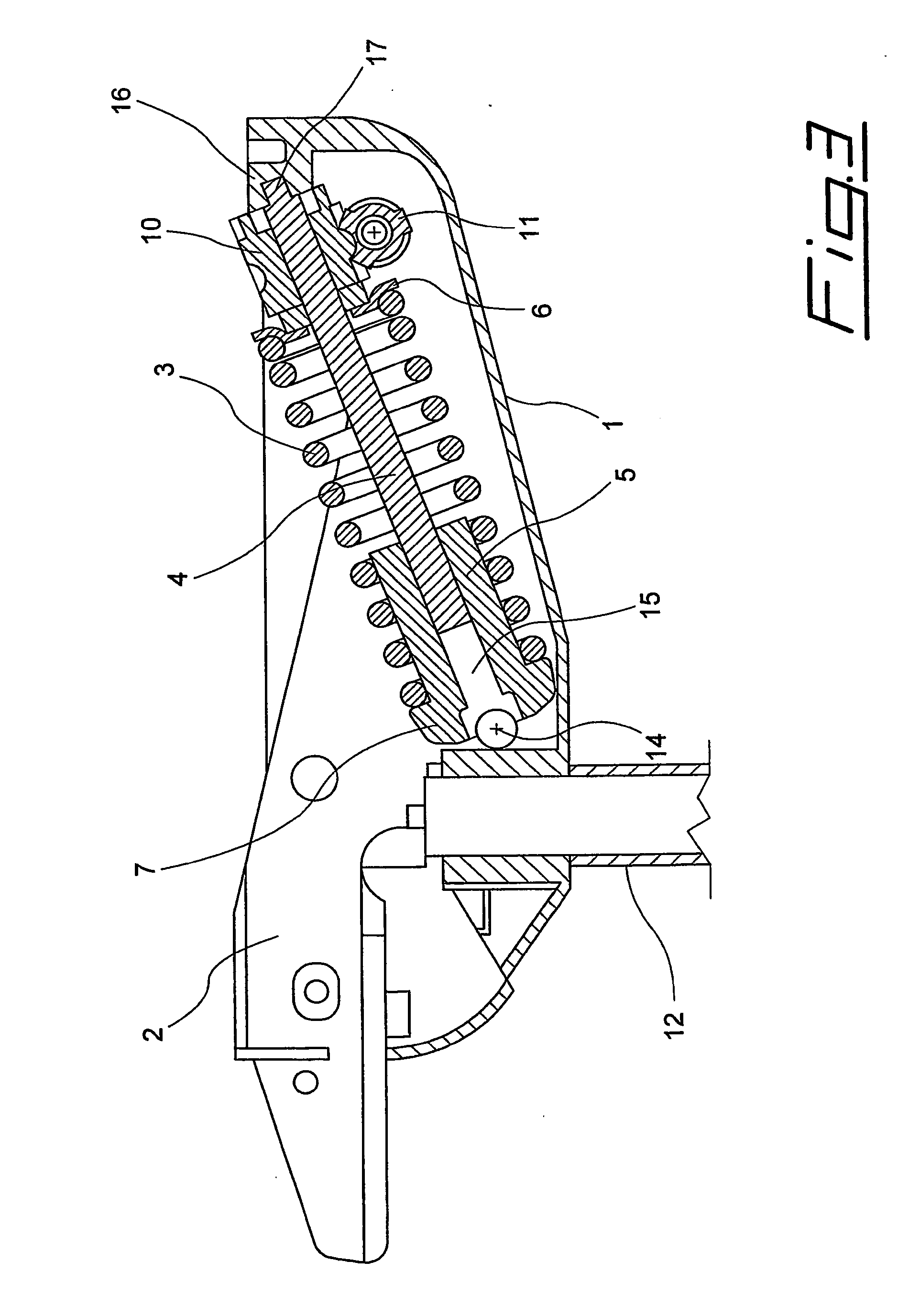 Figure 3
AI summary
Mechanism for regulating the preload of at least a stiffening spring (3) for a revolving element (2) with respect to at least a support frame (1) of a seating device, of the type comprising a mobile striker (7) for on end of said at least one spring (3), connected to said revolvin element (2), and a regulating cursor (6, 10), onto which the other en of said at least one spring (3) rests, said regulating cursor (6, 10) bein conceived to slide along a rod-shaped guide element (4) characterised in that said rod-shaped guide element (4) is connected at one end thereof, in a sliding manner, to said mobile striker (7), and i is also integrally fixed to said support frame (1).