
Track Construction Machine Control with Operator Verification
Find Innovative SolutionsGenerate Solutions
Solution Overview
Problem
Existing track-laying machines lack a robust mechanism for operators to verify and adjust working positions before automated processes, potentially leading to incorrect positioning due to obstacles detected after passing the sensor device, which can impair work progress.
Innovation Solution
Incorporating a display device to show determined working positions, allowing operators to verify and adjust them using control elements, with a virtual representation of the track and photographic displays to enhance situational awareness, and a confirmation query system to ensure accurate positioning before automated operation.
Engineering Contradictions & Design Principles
Engineering Contradiction Analysis
1Productivity
If automated control of working units is implemented based on sensor data, then work progress efficiency is improved, but reliability deteriorates due to potential undetected obstacles causing incorrect positioning
Solution Approach 1:
The system displays determined working positions to the operator before the working units are activated. This preliminary display allows the operator to verify positions and make corrections before automated execution, preventing errors from undetected obstacles while maintaining automated efficiency.
Solution Approach 2:
The system provides visual feedback by displaying determined working positions, virtual track representations, and photographic images to the operator. This feedback loop enables the operator to monitor automated positioning decisions and intervene if necessary, improving reliability without sacrificing productivity.
2Productivity
If working positions are automatically determined and executed without manual verification, then productivity is improved, but manufacturing precision deteriorates due to potential positioning errors
Solution Approach 1:
The system performs preliminary display of determined working positions before automated execution. This allows the operator to review and correct positions based on visual information from virtual representations and photographic images, ensuring precision before the automated work process begins.
Solution Approach 2:
The display device acts as an intermediary between the automated positioning system and the operator. It translates complex sensor data and calculated positions into visual representations that the operator can understand and verify, enabling precise manual intervention when needed while maintaining automated efficiency.
3Reliability
If a display device showing working positions is added to allow manual verification, then reliability is improved, but device complexity increases
Solution Approach 1:
The display device serves multiple functions: it shows determined working positions, displays virtual representations of the track, presents photographic images of the work area, and provides interface controls for manual adjustment. This multi-functionality consolidates several verification and control tasks into a single device, improving reliability without proportionally increasing complexity.
Solution Approach 2:
The system uses existing sensor data and processing capabilities to generate the display information. The virtual representation and photographic images are created from data already collected by the sensor device, allowing the display to provide comprehensive verification information without requiring additional complex sensing or processing systems.
4Manufacturing precision
If operators can manually adjust working positions using control elements, then manufacturing precision is improved, but ease of operation deteriorates due to additional manual intervention requirements
Solution Approach 1:
The display device with its integrated controls serves as an intermediary interface that simplifies manual adjustment. Rather than requiring complex manual positioning procedures, the operator can use the provided control elements to adjust working positions based on visual feedback from the display, making precision adjustment more intuitive and easier to perform.
Solution Approach 2:
The system provides immediate visual feedback when working positions are adjusted through the control elements. The display shows updated positions in relation to the virtual track representation and photographic images, allowing the operator to verify adjustments in real-time and make precise corrections without trial and error, thereby maintaining ease of operation while improving precision.
Data Source
 Figure 1~2
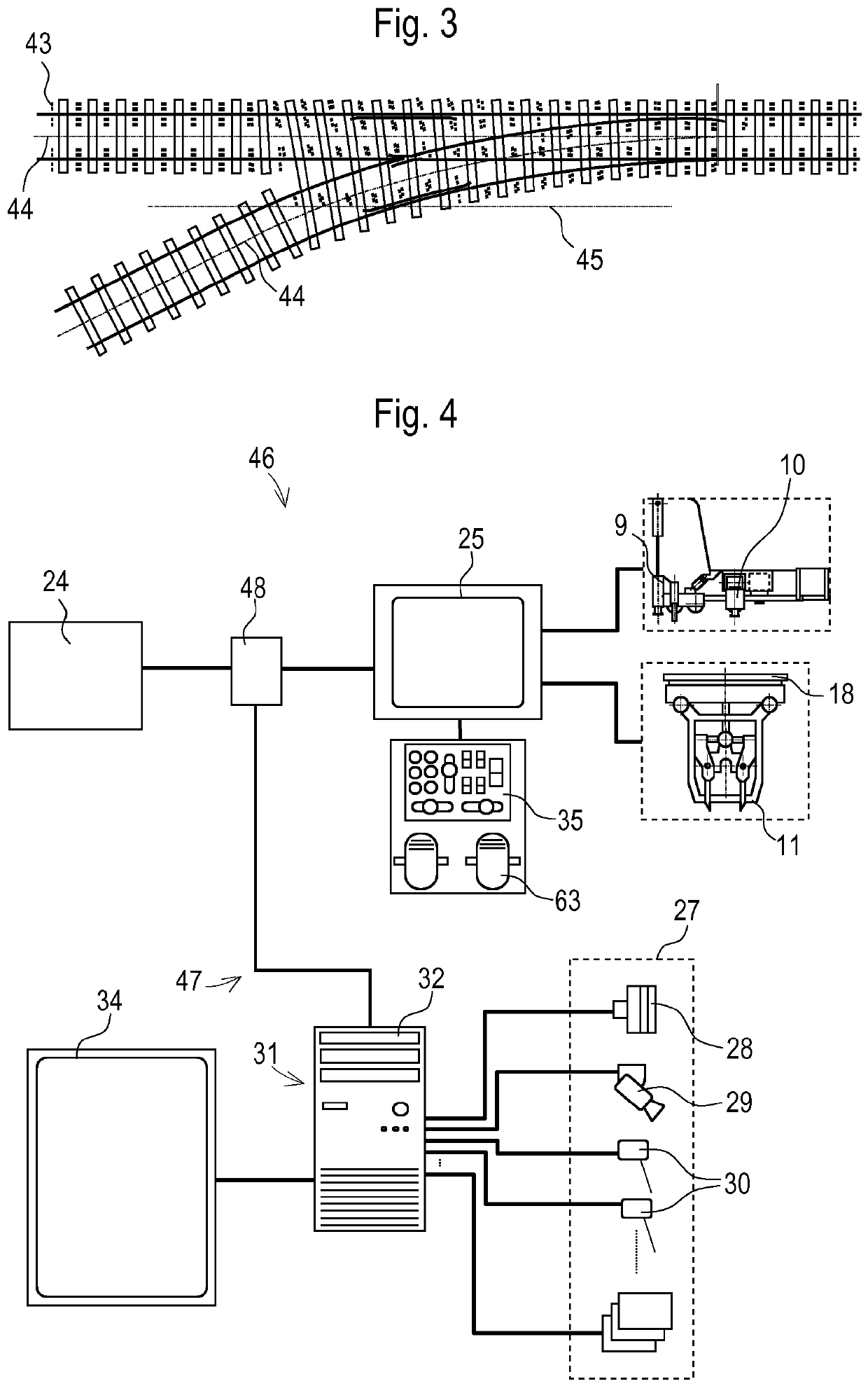 Figure 3~4
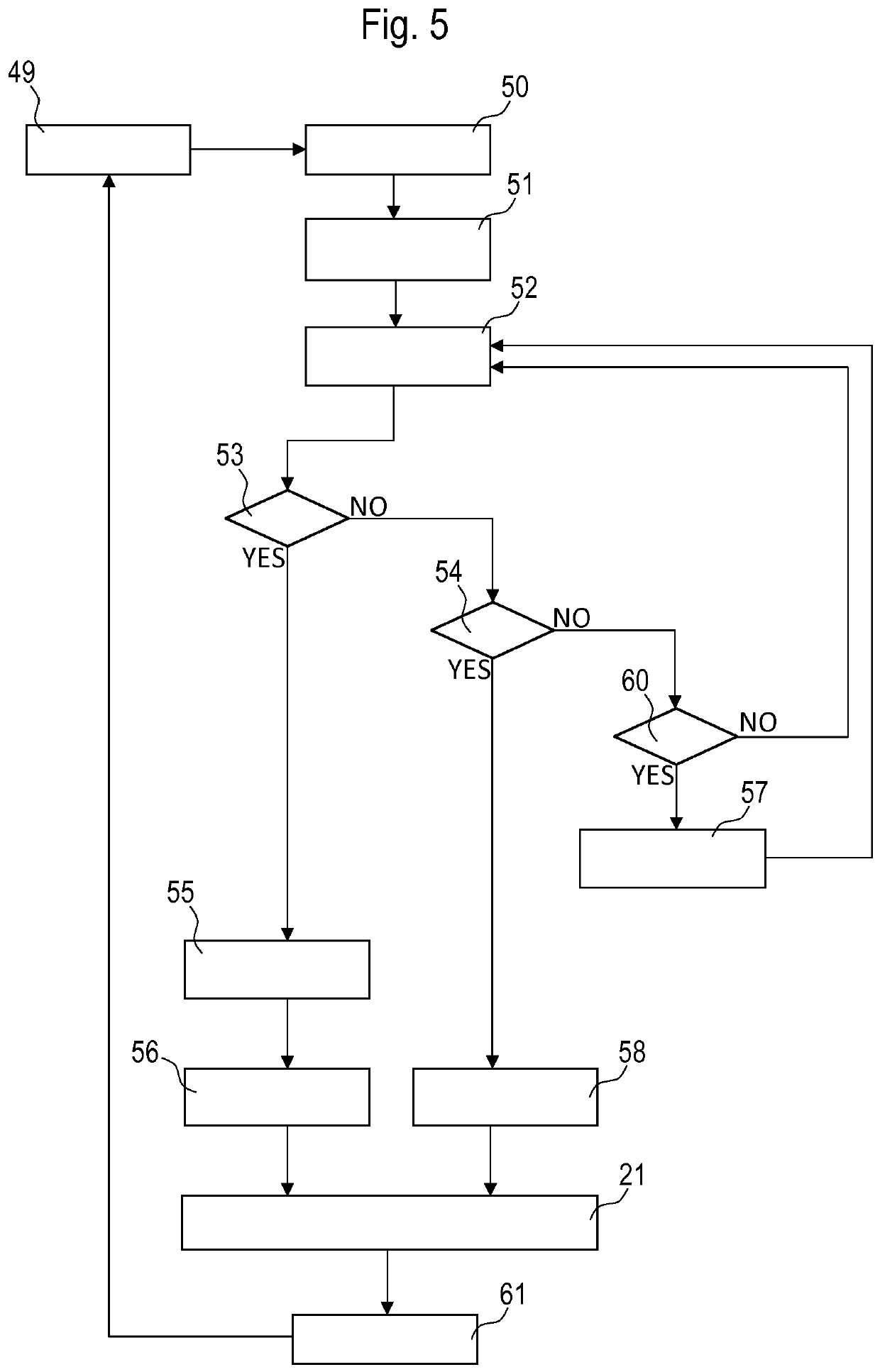 Figure 5
AI summary
Method for controlling a track construction machine (1) which comprises adjustable working units (9, 10, 11) relative to a machine frame (3), wherein position and geometry data of track objects (5, 17, 22, 37-42) are acquired by means of a sensor device (27) and wherein a track model is determined from the geometry data of the track construction machine (1) and the position and geometry data of the track objects, wherein for a work operation (21) at a track location (33) the optimal working positions of the working units (9, 10, 11) at a track location to be worked on are determined from the track model, wherein the current position of the working units relative to the track is acquired by means of the sensor device (27), wherein by comparing these data an assignment of the corresponding working positions of the working units (9, 10, 11) upon reaching a track location (33).