

Venturi Post-Mix Nozzle for Viscous Concentrate Dispensing
Find Innovative SolutionsGenerate Solutions
Solution Overview
Problem
Current post-mix drink dispensers are inadequate for dispensing highly viscous concentrates, as they often result in dribbling instead of jetting, leading to poor mixing and incorrect concentrate delivery due to the high diluent to concentrate ratio and particulates causing striction issues in ceramic components.
Innovation Solution
A high diluent to concentrate volumetric ratio post-mix drink dispenser with a valve body and nozzle cover, featuring a manually adjustable plug valve with an elongated side port and a solenoid-operated flow rate control valve, along with a venturi-shaped mixing pathway to manage pressure and flow rates precisely, ensuring proper mixing and delivery of viscous concentrates.
Engineering Contradictions & Design Principles
Engineering Contradiction Analysis
1Reliability
If a spring-loaded ceramic piston flow controller is used to control concentrate flow, then the device structure is simple and reliable, but particulates in highly viscous concentrates lodge between the ceramic piston and sleeve causing striction and incorrect flow delivery
Solution Approach 1:
The invention removes the problematic ceramic piston and sleeve components from the concentrate flow control path. Instead, it uses a flow controller positioned in the diluent line only, eliminating the mechanical components that caused particulate lodging and striction while maintaining flow control capability through a different mechanism location.
Solution Approach 2:
The invention introduces an intermediary approach by controlling diluent flow rather than concentrate flow directly. The diluent flow controller acts as a mediator to achieve the desired mixing ratio without subjecting concentrate-containing particulates to mechanical restriction, thereby avoiding striction issues.
2Quantity of substance
If a high diluent to concentrate volumetric ratio (e.g., 24:1) is used for highly viscous concentrates, then the concentrate can be properly diluted, but the concentrate enters the dispensing nozzle in reduced volume causing dribbling instead of jetting and failure to mix
Solution Approach 1:
The invention replaces the traditional mechanical jetting mechanism with a pressure-driven mixing system. Instead of relying on concentrate jetting velocity created by mechanical pressure, it uses a venturi mixer that creates a low-pressure zone to draw diluent through a restrictor, allowing the concentrate to be drawn into and mixed with the diluent stream without requiring high jetting velocity.
Solution Approach 2:
The invention employs hydraulic principles through the venturi mixer design, where the flowing diluent creates a pressure differential that draws concentrate into the mix. This pneumatic-hydraulic approach enables proper mixing of highly viscous concentrates at high dilution ratios without requiring the concentrate to jet at high speed.
3Stability of the object's composition
If the concentrate flow rate is increased to achieve proper mixing, then mixing quality improves, but the precision of flow control decreases due to viscous resistance and particulates
Solution Approach 1:
The invention employs a self-regulating flow control mechanism where the diluent flow through the restrictor automatically creates the necessary suction to draw concentrate into the mix. The system self-adjusts to maintain proper mixing ratios without requiring precise manual control, as the venturi effect and pressure differential naturally regulate the concentrate intake based on diluent flow rate.
Applied Scientific Principles
This section explains which scientific principles are used to turn an abstract innovation direction into a practical engineering solution.
Function Achieved in This Case
The solution enables precise control over concentrate and diluent flow rates, ensuring uniform and stable dispensing of highly viscous drinks, preventing particulates from fouling the system and ensuring accurate delivery of the desired concentrate-to-diluent ratio, resulting in improved taste and consistency.
Implementation Method 1
The mixing pathway manipulates a diluent flow to decrease the pressure, thereby creating a low pressure region that promotes introduction of the concentrate into the diluent for mixing
Data Source
 Figure 1
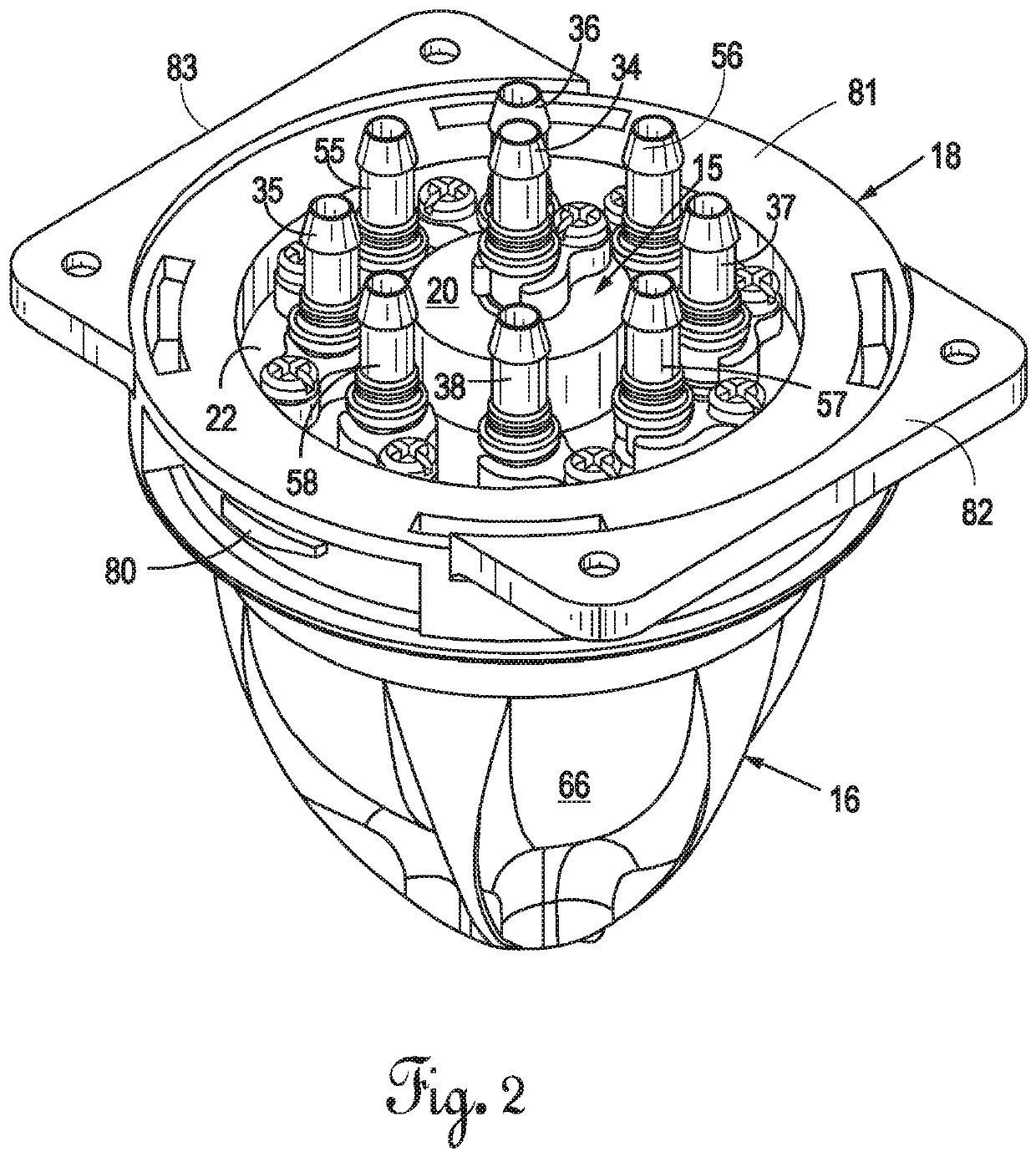 Figure 2
 Figure 3
AI summary
A high diluent to concentrate volumetric ratio post-mix drink dispenser includes a mixer and a nozzle housing. The mixer defines a mixing pathway adapted to receive a diluent flow from a diluent source and a concentrate pathway adapted to receive a concentrate flow from a concentrate source. The concentrate pathway communicates with the mixing pathway to deliver concentrate therein. The mixing pathway manipulates the diluent flow therein to decrease the pressure thereof thereby creating a low pressure region at the concentrate pathway that promotes introduction of the concentrate into the diluent for mixing therewith. The nozzle housing couples with the mixer such that the nozzle housing receives mixed diluent and concentrate from the mixing pathway and delivers the mixed diluent and concentrate therefrom.